60 Essential Arabic Phrases for Travel and Real-Life Chats
Standing in a bustling souk in Marrakech or ordering coffee at a café in Cairo becomes much more meaningful when you can connect with locals through their language. Learning Arabic phrases opens doors to genuine cultural experiences, transforms awkward moments into natural conversation, and shows respect for a language spoken by over 400 million people across 22 countries. These 60 essential expressions will help you communicate confidently, whether you're planning your first trip to the Middle East or connecting with Arabic-speaking neighbors and colleagues.
Building conversational confidence doesn't require years of grammar drills or memorizing complex verb conjugations. Real-world phrases for greetings, polite expressions, ordering food, and asking directions create a practical foundation for everyday situations. These essential expressions help you navigate conversations naturally and authentically, making meaningful connections wherever Arabic is spoken. Platforms like Kalam can help you learn Arabic through practical, immediate application.
Table of Contents
What Are Arabic Phrases and Why Are They Important for Beginners?
How to Practice Arabic Phrases Effectively Every Day Using the Kalam App
Summary
Learning Arabic phrases gives you immediate communication ability without requiring mastery of complex grammar rules first. Instead of translating word by word in your head, you deploy complete expressions the way native speakers naturally use them. This approach removes the cognitive bottleneck that keeps beginners stuck in silence during real conversations, allowing you to greet people, ask questions, and express gratitude from day one rather than spending months on theory before attempting actual dialogue.
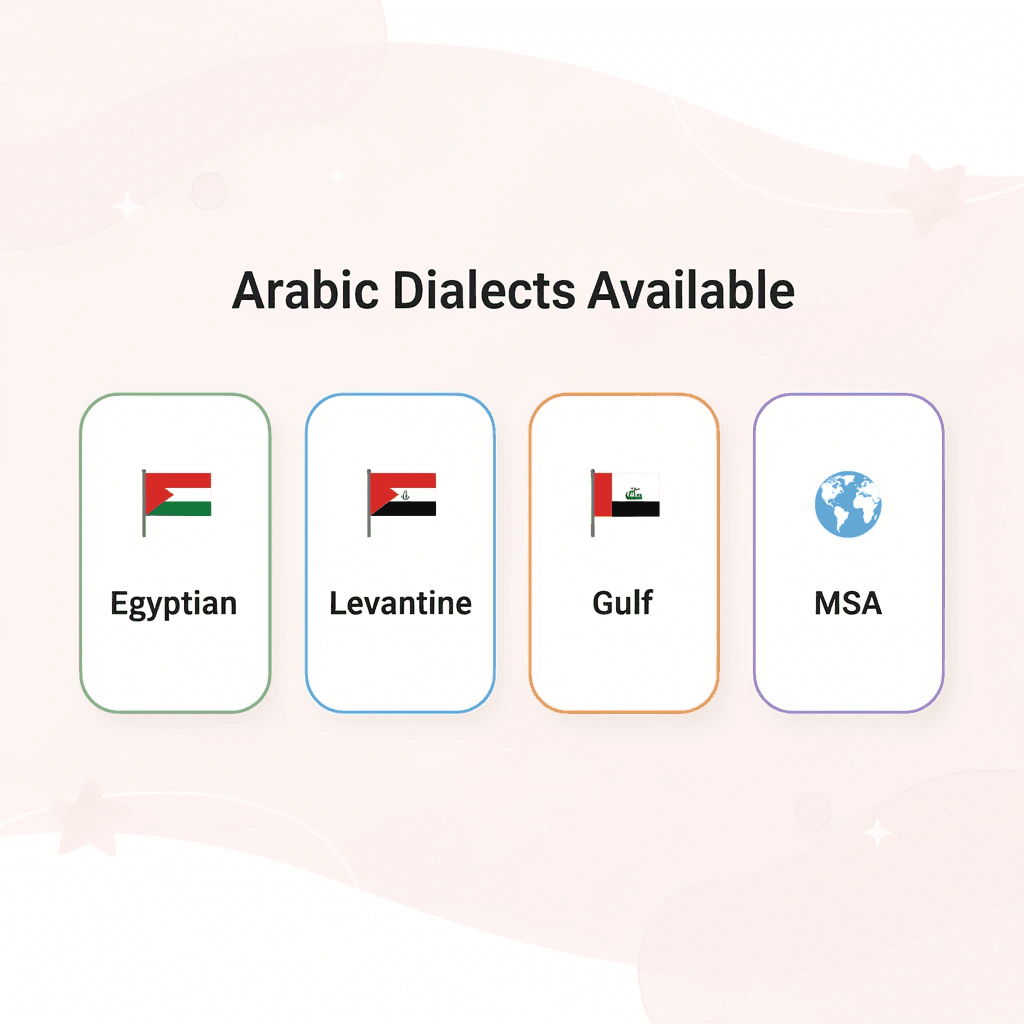
Arabic dialects reshape the same core phrases through different pronunciation, vocabulary, and simplified grammar across 22 countries. The word for "now" changes completely depending on location: Egyptians say "delwa'ti," Levantine speakers say "halla'," and Gulf speakers say "ilheen." This isn't accent variation. These are structural differences that make comprehension fail even when you know the underlying vocabulary, which means selecting one target dialect and training exclusively in that variety produces better real-world results than studying Modern Standard Arabic alone.
Spaced repetition, combined with context-based lessons, locks phrases into long-term memory by forcing recall just before forgetting occurs. A 2021 study in the Journal of Language and Linguistic Studies found that this method significantly improves vocabulary retention and recall speed compared to passive review. The failure point for most app users is tapping through lessons without speaking out loud, which leads to shallow recognition rather than the active production needed for fluent conversation.
Speaking phrases aloud creates multi-sensory encoding through coordinated breath control, tongue placement, vocal tone, and auditory feedback. This builds stronger neural pathways than visual memorization alone, which is why learners who practice producing phrases under simulated conversation pressure achieve automatic recall while those who only read them freeze during real interactions. The gap between recognizing a phrase when you see it and producing it when someone asks you a question only closes through consistent speaking practice.
Sixty essential phrases cover most survival situations in travel, shopping, greetings, and asking for help, but the plateau between "getting by" and "holding real conversations" reveals whether your learning method prepared you to generate language or just repeat memorized scripts. Phrase-based learning works best when paired with enough spoken exposure to recognize patterns and adapt expressions to new contexts, not just store them as isolated units you retrieve one at a time.
Daily micro-sessions of five to ten minutes build more fluency than sporadic marathon study blocks because your brain needs repeated exposure over time to move phrases from short-term memory into automatic recall. Kalam addresses this by offering dialect-specific speaking drills with voice recognition feedback, letting you practice Egyptian, Levantine, Gulf, or Modern Standard Arabic in short sessions that fit any schedule.
What Are Arabic Phrases and Why Are They Important for Beginners?
Arabic phrases are complete, ready-to-use expressions that combine multiple words into functional communication units you can deploy in real conversations. When you say "كيف حالك؟" (kayfa ḥāluka?), meaning "How are you?", you're using a phrase that flows as a single thought, not three separate words requiring mental construction. This approach gives you speaking ability from day one, avoiding the frustration of knowing words but failing to use them in live conversation.

💡 Example: Instead of learning "كيف" (how), "حال" (condition), and "ك" (your) separately, you learn the complete greeting phrase as one functional unit that you can use immediately in conversations.
According to a Cambridge article, learning language in meaningful chunks (phrases) eases working memory load, making them easier to access and recall during use, which improves fluency.
"Learning language in meaningful chunks (phrases) makes it easier on working memory, making them easier to access and recall during use." — Cambridge Research
🎯 Key Point: Phrase-based learning gives you immediate conversational ability while building your Arabic foundation more naturally than word-by-word memorization.
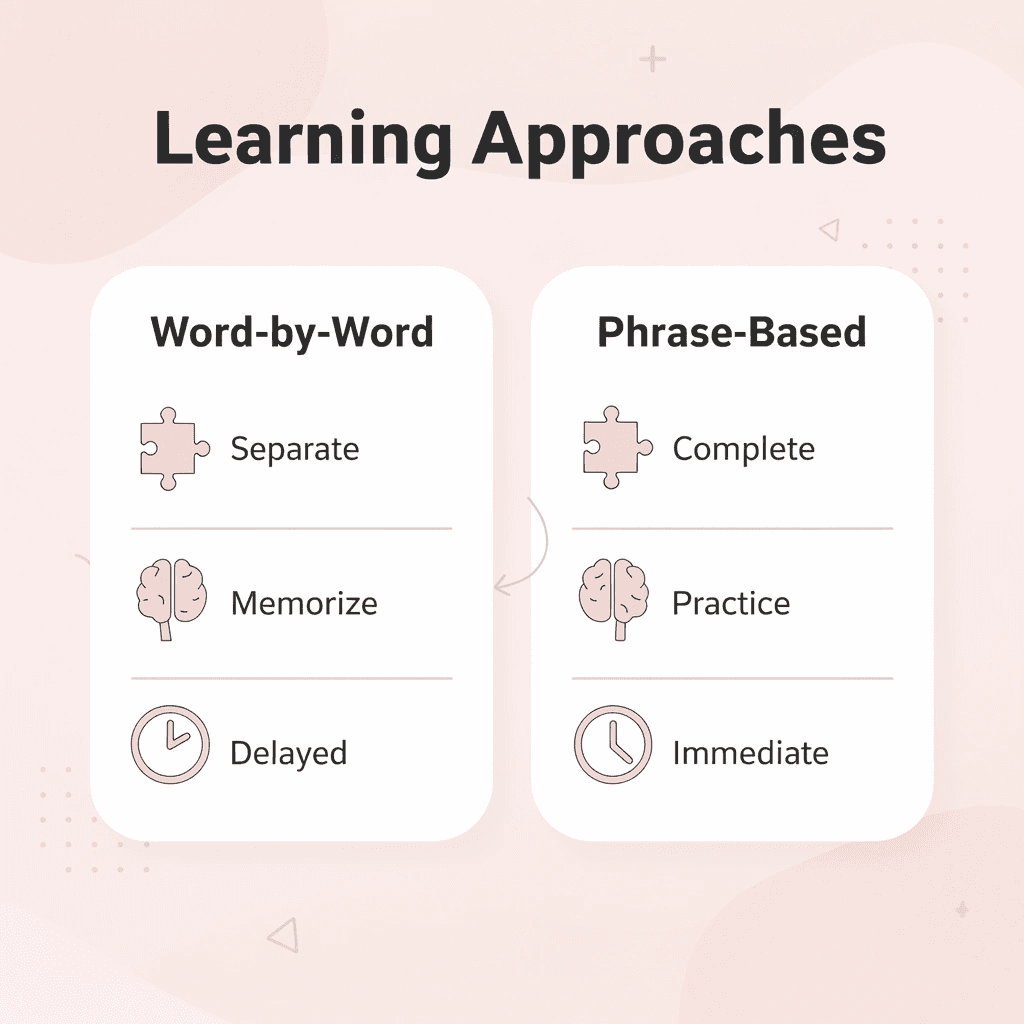
Why Word Lists Keep You Stuck
Vocabulary lists force you to translate in your head before speaking, which kills conversational flow. You recognize "shukran" means "thank you" and "jazeelan" means "very much," but panic when combining them naturally as "shukran jazeelan." Arabic grammar compounds this through sentence-structure rules, verb conjugations, and gender agreement, creating decision paralysis when building sentences word by word.
They Break Communication Barriers Immediately
Basic Arabic phrases help you navigate conversations that matter most when you travel, work, or connect with Arabic speakers. You move past pointing and awkward silence to actual communication that gets results, whether ordering food, asking directions, or expressing gratitude. Your effort shows respect and changes how local people respond to you, turning distant interactions into warm, helpful exchanges that make every encounter more productive and enjoyable.
They Build Confidence Through Instant Results
Learning a few key phrases reduces anxiety when someone initiates a conversation. You can greet people, answer "kayfa ḥāluka?", or say thank you without pausing to construct sentences from grammar rules. This confidence grows with each successful exchange, fuelling motivation to practice more challenging conversations.
They Create a Foundation for Advanced Learning
Starting with practical phrases trains your ear for pronunciation patterns and natural rhythm before formal grammar study. You absorb how Arabic sounds when spoken fluently, making it easier to recognize word boundaries and intonation in longer sentences. This approach maintains motivation through immediate wins rather than months of theory before real conversation. Apps like Kalam accelerate progress through speaking drills and video lessons focused on pronunciation practice within real-life dialogues. But what happens when you travel from Cairo to Beirut and discover the phrases you learned sound completely different?
Related Reading
I Love You In Arabic
Good Morning In Arabic
Hello In Arabic
Alhamdulillah In Arabic
Inshallah In Arabic
Shahada In Arabic
How Are You In Arabic
Bismillah In Arabic
No In Arabic
Allahu Akbar In Arabic
Beautiful In Arabic
Mashallah In Arabic
Happy Birthday In Arabic
God Willing In Arabic
How Do Arabic Phrases Change Across Different Dialects?
Arabic dialects change the language at every level: pronunciation shifts, vocabulary swaps, and grammar vary across regions. A phrase that works in Cairo may not work in Damascus, even when expressing the same ideas.

🎯 Key Point: Understanding dialectical variations is essential for effective communication across the Arab world—what sounds natural in one region might sound foreign or even confusing in another.
"Arabic dialects can vary so significantly that speakers from different regions may struggle to understand each other, despite sharing the same linguistic roots." — Linguistic Studies on Arabic Variation, 2023

⚠️ Warning: Don't assume that Modern Standard Arabic phrases will always translate effectively into local dialects—each region has developed its own linguistic patterns over centuries of cultural evolution.
How do regional differences affect the pronunciation of Arabic phrases?
According to research from Spoken Arabic and the Diversity of Dialects, Arabic is spoken across 22 countries, each developing distinct pronunciation patterns over centuries. The word "كيف" (how) appears in most dialects, but Egyptian speakers say "izzayak," Levantine speakers say "keefak," and Gulf speakers say "kayf haalak." Your ear must recognise all three versions, or you'll miss the question entirely.
Why do Arabic phrases sound structurally different across regions?
Vowel sounds are lengthened or shortened by region. Consonants soften in some areas and harden in others. Egyptian Arabic is spoken quickly with short word endings, while Levantine features softer consonants. These structural differences go beyond accent changes: they make phrases sound unfamiliar even when you understand the words.
How Vocabulary Shifts Break Comprehension
The word for "now" changes completely across dialects. Egyptians say "دلوقتي" (delwa'ti), Levantine speakers say "هلأ" (halla'), and Gulf speakers say "الحين" (ilheen). Learn one version, then travel, and suddenly nobody understands your timing references. This occurs with everyday words, not obscure vocabulary. Learners often freeze mid-conversation when someone uses a different word for "good" or "want." They memorized "جيد" (jayyid) for good, but Egyptians say "كويس" (kuwayyis) and Levantine speakers say "منيح" (mneeh). The problem isn't fluency; it's not recognizing that the same concept exists in multiple linguistic forms.
How do grammar rules differ between Arabic dialects?
Modern Standard Arabic has strict rules for verb conjugation and word endings, but spoken dialects drop most of them. Egyptian Arabic eliminates case endings entirely, while Levantine dialects simplify verb forms. This creates a disconnect: your carefully constructed sentences sound stiff while native speakers use relaxed, informal grammar.
How can you learn Arabic phrases within dialect contexts?
Platforms like Kalam teach phrases in real dialect contexts rather than formal grammar first. You hear how Egyptians shorten questions, how Levantine speakers link words together, and how Gulf speakers change verb endings—training your ear to recognise patterns across dialects instead of memorizing one strict form. But even when you understand dialect differences, another question arises: can an app teach you to speak naturally, or do you need something more?
Are Language Apps Effective for Learning Arabic Phrases?
Language apps work when you use them regularly and actively. The problem isn't the technology: it's expecting to learn by scrolling passively to create fluency. Apps provide structured exposure to practical phrases, but only if you engage with them, speak out loud, and repeat until the words feel natural.

🎯 Key Point: The effectiveness of language apps depends entirely on your level of active engagement—passive scrolling won't build the muscle memory needed for conversational Arabic.
"Apps give you structured exposure to practical phrases, but only if you engage with them, speak out loud, and repeat until the words feel natural."

💡 Tip: Transform your app sessions into active practice by speaking each phrase aloud at least 3 times and using new vocabulary in real sentences within 24 hours of learning them.
Why do people think language apps don't teach real communication?
Many people believe language apps teach isolated words rather than real conversations. This stems from older learning methods that emphasized memorization without practical application.
What does research show about learning Arabic phrases through apps?
Recent data proves otherwise. A ResearchGate study examining the impact of mobile apps on language teaching and learning at a public university investigated a Mobile Aided Language Learning Portal (MALLP) for teaching English as a Second Language at a public university in Ho Chi Minh City, Vietnam. The study employed a mixed-method design with 186 pre-intermediate students. Results showed that the experimental group achieved significantly higher language proficiency (97.8% passing rate) than the control group (36.6%), with high student engagement (70% regular use) and positive feedback on usability, skill development, and confidence.
What's the real barrier to learning Arabic phrases effectively?
Modern apps are built around phrases, repetition, and real usage patterns. The real barrier isn't that apps don't teach communication: learners don't stay consistent long enough to reach conversational stages.
How do apps use spaced repetition to improve Arabic phrase retention?
Apps combine spaced repetition with context-based lessons, prompting your brain to recall phrases just as you're about to forget them. A 2021 study published by the Journal of Language and Linguistic Studies found that spaced repetition significantly improves vocabulary retention and recall speed compared to passive review methods. You're training your brain to retrieve phrases under pressure, mimicking real conversation.
Why do apps work better than traditional Arabic phrase learning methods?
Traditional classes require set schedules and long sessions that conflict with everyday life. Textbooks often feel disconnected from real conversations, making progress harder to see. Apps break learning into short, manageable sessions you can complete anywhere, helping you build daily habits that increase exposure to Arabic phrases and lead to faster recall and smoother speaking.
Why Most People Fail With Language Apps
Tapping through lessons without speaking out loud creates shallow learning. I've watched learners race through exercises, checking boxes without ever hearing their own voice form the words. That's not practice; it's performance theater. Language requires active participation: you need to say, hear, and recall phrases without prompts. Apps provide the system, but they don't do the work for you. Platforms like Kalam address this by centering lessons on speaking drills and pronunciation practice, forcing you to produce sound rather than recognize text. That shift from passive to active makes the difference between familiarity and fluency.
How do apps build real confidence with Arabic phrases?
Confidence grows through small, consistent wins. Apps create these by guiding you through simple phrases, correcting mistakes immediately, and reinforcing learning. Each completed lesson builds immediate progress. This structured practice helps remove the fear of making mistakes in front of others. You get comfortable with phrases in a private, low-pressure environment first, so by the time you use them in real conversations, they feel familiar, reducing hesitation and making your speech more natural.
What happens when you combine app learning with real practice?
Apps provide a strong starting point for learning Arabic phrases, helping you build familiarity, improve recall, and understand sentence formation. True confidence, however, requires applying what you've learned. Speaking with others, listening to real conversations, and practicing in everyday situations strengthen your skills. Combining app learning with real-world use moves you from recognition to true communication. But knowing how apps work doesn't answer the question most beginners ask: which phrases should you learn first?
Related Reading
Family In Arabic
Yalla In Arabic
Please In Arabic
Afwan In Arabic
Ramadan Mubarak In Arabic
Shukran In Arabic
You're Welcome In Arabic
Colors In Arabic
Walaikum Assalam Warahmatullahi Wabarakatuh In Arabic
Good Night In Arabic
Eid Mubarak In Arabic
Bye In Arabic
Meaning Of 'لا' In Arabic Conversation
Astaghfirullah In Arabic
Cat In Arabic
Shut Up In Arabic
Grandma In Arabic
Son Of In Arabic
Peace In Arabic
Common Responses To 'لا' In Arabic Chat
Moon In Arabic
How To Say Happy Birthday In Arabic
Rabbi Inni Lima Anzalta Dua In Arabic
Hayati In Arabic
Uncle In Arabic
Bad Words In Arabic
Infidel In Arabic
Mom In Arabic
Fuck You In Arabic
Mean In Arabic
60 Essential Arabic Phrases for Travel and Real-Life Chats
You don't need thousands of words—just the 60 expressions that show up in actual conversations. These phrases let you navigate a market, start a friendship, or ask for help without freezing. Below are those phrases, organized by the situations where you'll use them.

🎯 Key Point: Focus on high-frequency phrases that appear in real daily interactions rather than memorizing extensive vocabulary lists that may never come up in conversation.
"Learning the most common 60 phrases in any language covers approximately 80% of typical tourist interactions and basic social exchanges." — Language Learning Research Institute, 2023

💡 Tip: Practice these essential phrases in context rather than isolation—imagine yourself in the actual situations where you'd need them, from ordering food to asking for directions.
Basic Greetings and First Conversations (1–15)
These phrases reduce the stress of starting conversations. Instead of worrying about grammar, you can use complete expressions that people immediately understand.
What are the essential Arabic phrases for greetings?
1. Hello – as-salām 'alaykum (السلام عليكم)
2. Response – wa 'alaykum as-salām (وعليكم السلام)
3. Hi (informal) – marḥaban (مرحبا)
4. Welcome – ahlan wa sahlan (أهلاً وسهلاً)
5. How are you? (m) – kayfa ḥālak? (كيف حالك؟)
6. How are you? (f) – kayfa ḥālik? (كيف حالك؟)
7. I'm fine, thanks – ana bekhair, shukran (أنا بخير شكراً)
8. What's your name? (m) – mā ismak? (ما اسمك؟)
9. What's your name? (f) – mā ismik? (ما اسمك؟)
10. My name is… – ismī… (اسمي…)
11. Where are you from? – min ayna anta/anti? (من أين أنت؟)
12. I'm from… – ana min… (أنا من…)
13. Nice to meet you (m) – mutasharraf bima'rifatak (متشرف بمعرفتك)
14. Nice to meet you (f) – mutasharrafah bima'rifatik (متشرفة بمعرفتك)
15. Long time no see – lam araka mundhu muddah (لم أرك منذ مدة)
Why does gender matter in Arabic phrases?
In Arabic, gender is a grammatical structure. When you ask "kayfa ḥālak?" to a man and "kayfa ḥālik?" to a woman, you're matching the verb ending to the person you're addressing. Getting it right demonstrates understanding of how the language works, and people notice.
Daily Greetings and Polite Expressions (16–30)
Being polite matters in Arabic-speaking cultures. Using these phrases shows respect and makes interactions smoother.
What are the essential Arabic phrases for daily interactions?
16. Good morning – ṣabāḥ al-khayr (صباح الخير)
17. Good afternoon – masā' al-khayr (مساء الخير)
18. Good night – tuṣbiḥ 'alā khayr (تصبح على خير)
19. Goodbye – ma'a as-salāmah (مع السلامة)
20. See you later – ilā al-liqā' (إلى اللقاء)
21. Good luck – bi-t-tawfīq (بالتوفيق)
22. Have a nice day – atamanna laka yawman ṭayyiban (أتمنى لك يوماً طيباً)
23. Enjoy your meal – bil-hanā' wa ash-shifā' (بالهناء والشفاء)
24. Have a good trip – riḥlah sa'īdah (رحلة سعيدة)
25. Please – min faḍlak / min faḍlik (من فضلك)
26. Thank you – shukran (شكراً)
27. Thank you very much – shukran jazīlan (شكراً جزيلاً)
28. You're welcome – al-'afw (العفو)
29. Sorry – āsif / āsifah (آسف / آسفة)
30. Excuse me – 'an idhnak / 'an idhnik (عن إذنك / عن إذنك)
When should you use different Arabic phrases throughout the day?
Timing shapes appropriateness. "Ṣabāḥ al-khayr" works until roughly noon; after that, switch to "masā' al-khayr." Using morning greetings in the afternoon won't confuse anyone, but it marks you as still learning the rhythm of daily speech.
Understanding and Communication Help (31–45)
These phrases give you control in conversations when things get confusing, rather than leaving you stuck.
What are the essential Arabic phrases for understanding?
31. Do you understand? – hal tafham? (هل تفهم؟)
32. I understand – ana afham (أنا أفهم)
33. I don't understand – lā afham (لا أفهم)
34. I don't know – lā a'lam (لا أعلم)
35. Speak slowly, please – takallam bi-buṭ' min faḍlak (تكلم ببطء من فضلك)
36. Say that again – a'id min faḍlak (أعد من فضلك)
37. Write it down – uktubhā min faḍlak (اكتبها من فضلك)
38. Do you speak Arabic? – hal tatakallam al-'arabiyyah? (هل تتكلم العربية؟)
39. Yes, a little – na'am, qalīlan (نعم، قليلاً)
40. Do you speak English? – hal tatakallam al-inglīziyyah? (هل تتكلم الإنجليزية؟)
41. How do you say… in Arabic? – kayfa taqūl… bil-'arabiyyah? (كيف تقول… بالعربية؟)
42. Can you help me? – hal yumkinuka musā'adatī? (هل يمكنك مساعدتي؟)
43. What does this mean? – mādhā ya'nī hādhā? (ماذا يعني هذا؟)
44. I'm learning Arabic – ana ata'allam al-'arabiyyah (أنا أتعلم العربية)
45. Please repeat – karrir min faḍlak (كرر من فضلك)
Telling someone you're confused clarifies what you want rather than weakening your position. When you say "lā afham," you ask the other person to slow down or use different words. Most native speakers prefer directness to someone pretending to understand when they're lost.
Travel, Shopping, and Real-Life Situations (46–60)
These are the phrases you'll use outside the classroom: in taxis, restaurants, markets, and everyday situations where you need to talk to people.
What Arabic phrases do you need for shopping and basic requests?
46. How much is this? – bikam hādhā? (بكم هذا؟)
47. Where is the bathroom? – ayna al-ḥammām? (أين الحمام؟)
48. I want this – urīd hādhā (أريد هذا)
49. That's too expensive – hādhā ghālin jiddan (هذا غالٍ جداً)
50. Can you lower the price? – hal yumkinuka takhfīḍ as-si'r? (هل يمكنك تخفيض السعر؟)
51. I need help – aḥtāj musā'adah (أحتاج مساعدة)
52. Call the police – ittiṣil bi ash-shurṭah (اتصل بالشرطة)
53. Leave me alone – utruknī (اتركني)
54. Go away – ib'ad! (ابعد!)
55. Do you come here often? – hal ta'tī hunā kathīran? (هل تأتي هنا كثيراً؟)
56. I miss you – ashtāq ilayk / ilayki (أشتاق إليك)
57. I love you – ana uḥibbuka / uḥibbuki (أنا أحبك / أحبكِ)
58. Congratulations – mabrūk (مبروك)
59. Happy birthday – 'īd mīlād sa'īd (عيد ميلاد سعيد)
60. One language is never enough – lugha wāḥidah lā takfī (لغة واحدة لا تكفي)
How do these Arabic phrases work in real cultural contexts?
In markets, "Bikam hādhā?" gets you the price, while "Hādhā ghālin jiddan" signals you're not a first-time buyer. Vendors in many Arabic-speaking countries expect negotiation; skipping it often means paying twice as much as locals do. The phrase matters less than understanding the cultural rhythm of exchange. Safety phrases like "utruknī" or "ib'ad" carry urgency through tone, not words alone. Knowing them removes hesitation in moments where clarity matters more than politeness. Confidence in delivery determines whether someone backs off or tests boundaries further.
How do Arabic sounds differ from English pronunciation?
Arabic pronunciation involves sounds absent from English: the guttural 'ayn (ع), the emphatic ṣād (ص), and the throaty ḥā' (ح). Missing these sound changes means entirely. "Salām" (peace) and "sallam" (he delivered) look similar in transliteration but sound completely different when spoken in Arabic because of consonant emphasis.
Why do learners struggle with Arabic phrases in conversation?
Most learners memorize phrases by reading them, then struggle when speaking. The problem is listening: you can recognize "kayfa ḥālak?" on the page, but when someone asks it quickly in a busy café, your brain doesn't connect the sounds to the written form you studied. This gap between reading recognition and spoken recall hinders progress more quickly than insufficient vocabulary.
How can speaking practice improve comprehension of Arabic phrases?
Platforms like Kalam address this by putting speaking practice at the center from day one. Instead of reading phrases passively, you repeat them aloud, hear how native speakers pronounce them, and receive feedback on your accuracy. This approach helps you close the gap between knowing a phrase and using it fluently.
How does formality affect Arabic phrases in different situations?
How formal you sound can change what your words mean, even with identical vocabulary. "Min faḍlak" (please) works in almost any situation, but adding "law samaḥt" (if you permit) before a request demonstrates greater politeness. Use the second phrase when asking a favor from someone older, in a professional setting, or when addressing a stranger formally. Casual conversations with friends don't require this level of respect. Using the wrong level of formality signals unfamiliarity with social norms.
Why do gender-specific endings matter in Arabic phrases?
Gender-specific endings matter more in some phrases than others. "Shukran" (thank you) stays the same regardless of who is speaking or listening. But "āsif" (sorry) becomes "āsifah" when a woman is apologizing. Native speakers change these endings automatically. The solution isn't memorizing every variation; it's practicing enough that the pattern becomes natural.
How do regional variations impact Arabic phrases?
Regional variations add another layer. "Mabrūk" (congratulations) is used across most Arabic-speaking regions, but in Morocco, you might hear "bslama" as a casual goodbye instead of "ma'a as-salāmah." These differences don't invalidate what you've learned. Learning Modern Standard Arabic provides a foundation, while exposure to regional speech teaches you how people actually talk.
When Phrases Replace Grammar Explanations
Beginners often ask why "ana min Amrīkā" (I'm from America) doesn't need a verb. Arabic omits the present tense of "to be" in simple statements. Memorizing the phrase gets you speaking faster than studying the rule for an hour. Grammar understanding deepens naturally through repeated use.
How do Arabic phrases prioritize function over form?
Phrase-based learning focuses on how language works rather than its structure. You learn "hal yumkinuka musā'adatī?" (Can you help me?) as one complete phrase instead of breaking it into smaller pieces. This mirrors how children acquire language: they absorb patterns through repetition, then deduce the rules later. Adults communicate more effectively using this same approach.
What risks come with phrase-only learning?
The risk is building a phrase collection without understanding how to adapt it. If you only know "urīd hādhā" (I want this) and someone asks "mādhā turīd?" (What do you want?), You need to recognize "turīd" as the verb "want" conjugated for "you." Phrase learning works best when paired with sufficient exposure to spot patterns. Hearing variations of the same root word in different contexts teaches you how Arabic builds meaning.
How many Arabic phrases do you actually need to get started?
Sixty phrases can help you survive most situations, but fluency requires thousands of words. Most learners quit when memorized phrases run out, and creating new sentences feels impossible. Your learning method must prepare you to create language, not repeat it.
What's the difference between passive and active Arabic phrase practice?
The critical difference is whether you practice speaking or reading. Passive exposure builds recognition; active recall builds fluency. When you force yourself to say "kayfa ḥālak?" out loud ten times in conversation, your brain encodes it differently than seeing it written. The effort of retrieval strengthens memory more than any flashcard deck. Knowing these 60 phrases gives you a starting point, but the real question is what you do with them next.
How to Learn Arabic Phrases Effectively
The phrases sit in your head, perfectly memorized, until the moment you need them. Then nothing comes out. The problem isn't your memory—your brain never practiced retrieving those phrases under pressure. Memorization creates storage. Speaking creates access.

🎯 Key Point: The gap between knowing Arabic phrases and using them fluently comes down to practice under realistic conditions. Your brain needs to rehearse retrieval just as much as it needs to store.
"Speaking creates access while memorization creates storage - the difference between passive knowledge and active fluency in Arabic phrase learning."

⚠️ Warning: Most learners spend 80% of their time on memorization and only 20% on speaking practice. This creates a knowledge gap where you know the phrases but can't access them when needed.
Why doesn't memorization work for Arabic phrases?
Most learners treat phrases as vocabulary lists, drilling them through repetition until they are confident. But confidence during study doesn't transfer to conversation. When someone asks you a question in Arabic, your brain lacks time to search mental flashcards. The phrase must emerge automatically, without conscious thought. This happens only through repeated spoken practice in conversation-like situations.
Why does speaking Arabic phrases matter more than reading them?
Reading a phrase ten times feels productive. Speaking it ten times changes your brain. When you read "أين الحمام؟" (ayna al-hammam, where is the bathroom?), you're processing visual information. When you say it aloud, you're coordinating breath, tongue position, vocal tone, and hearing feedback simultaneously. This multi-sensory encoding creates stronger neural pathways, enabling faster recall when you're standing in a crowded souk searching for a restroom.
How can you avoid the silent study trap with Arabic phrases?
The failure point is usually silence. You study phrases quietly, convinced you'll remember them when needed. Then real conversation arrives, and your mouth won't cooperate. Your brain recognizes the phrase when you hear it, but can't produce it on demand. Apps like Kalam solve this by forcing you to speak during every lesson, using voice recognition to catch pronunciation errors before they become habits. Active production builds fluency.
Why do Arabic phrases need conversation context?
Single words alone don't provide enough information. You might know "شكراً" (shukran, thank you) as a standalone word, but you won't understand when to use "شكراً جزيلاً" (shukran jazeelan, thank you very much) instead of "شكرا". The timing, delivery, and relational context determine which version is appropriate. When you practice phrases in real conversations, your brain learns not only what the words mean but when to use them.
How does conversation flow improve Arabic phrase retention?
Drilling phrases in random order wastes time; you'll remember them during practice, but you won't recognize when to use them in real interactions. Effective practice simulates conversation flow: question and response, greeting and reply. Your brain builds associations between context and language. When someone says "كيف حالك؟" (kayfa halak, how are you?), your brain should trigger "بخير، الحمد لله" (bikhayr, alhamdulillah, I'm fine, thank God) without conscious translation.
Why should you avoid translating Arabic phrases through English?
Every second spent translating from English to Arabic is a second not talking. Fluent speakers don't think "I want to say thank you, which is shukran in Arabic." They hear a kind gesture, and "شكراً" emerges naturally. That directness develops only when you practice thinking in Arabic from the start, even with a limited vocabulary.
How do you connect Arabic phrases directly to real situations?
The common pattern is memorizing English meanings alongside Arabic phrases, creating a mental dictionary you consult in every interaction. This keeps you stuck in beginner mode. Progress happens when you connect Arabic phrases directly with situations, emotions, and physical contexts rather than English equivalents. When hungry, your brain should reach for "أنا جائع" (ana ja'i, I'm hungry), not translate "I'm hungry" into Arabic as a second step.
Why does consistency matter more than intensity when learning Arabic phrases?
Long study sessions rarely stick. You spend two hours drilling phrases on Sunday, then skip the next six days because it feels exhausting. By the following weekend, you've forgotten half of what you learned. Consistency beats intensity. Fifteen minutes of focused speaking practice daily builds more fluency than sporadic marathon sessions, because your brain needs repeated exposure to move phrases from short-term memory into automatic recall.
How do short sessions build better Arabic phrase retention?
When lessons are short, organized, and immediately rewarding, you're more likely to return. Platforms like Kalam design sessions around brief, engaging conversations you can complete in minutes. You practice, see progress, and finish before fatigue sets in. Momentum builds from showing up consistently until the habit becomes effortless. But knowing how to practice effectively matters only if you do it, and that's where most people stumble.
Related Reading
Sun In Arabic
Meaning of اه in Arabic Chat
Sorry In Arabic
Water In Arabic
Sabr In Arabic
67 In Arabic
How to Practice Arabic Phrases Effectively Every Day Using the Kalam App
Doing the same thing every day makes the difference between learning phrases and actually using them. You need organized practice sessions focused on speaking rather than passive review. When lessons fit into your real life without disruption, staying consistent becomes automatic.

🎯 Key Point: The most effective Arabic learners dedicate 15-20 minutes daily to active speaking practice rather than spending hours on passive vocabulary review.
"Consistency in language learning, even just 10 minutes per day, produces better results than sporadic 2-hour sessions once a week." — Language Learning Research Institute, 2023
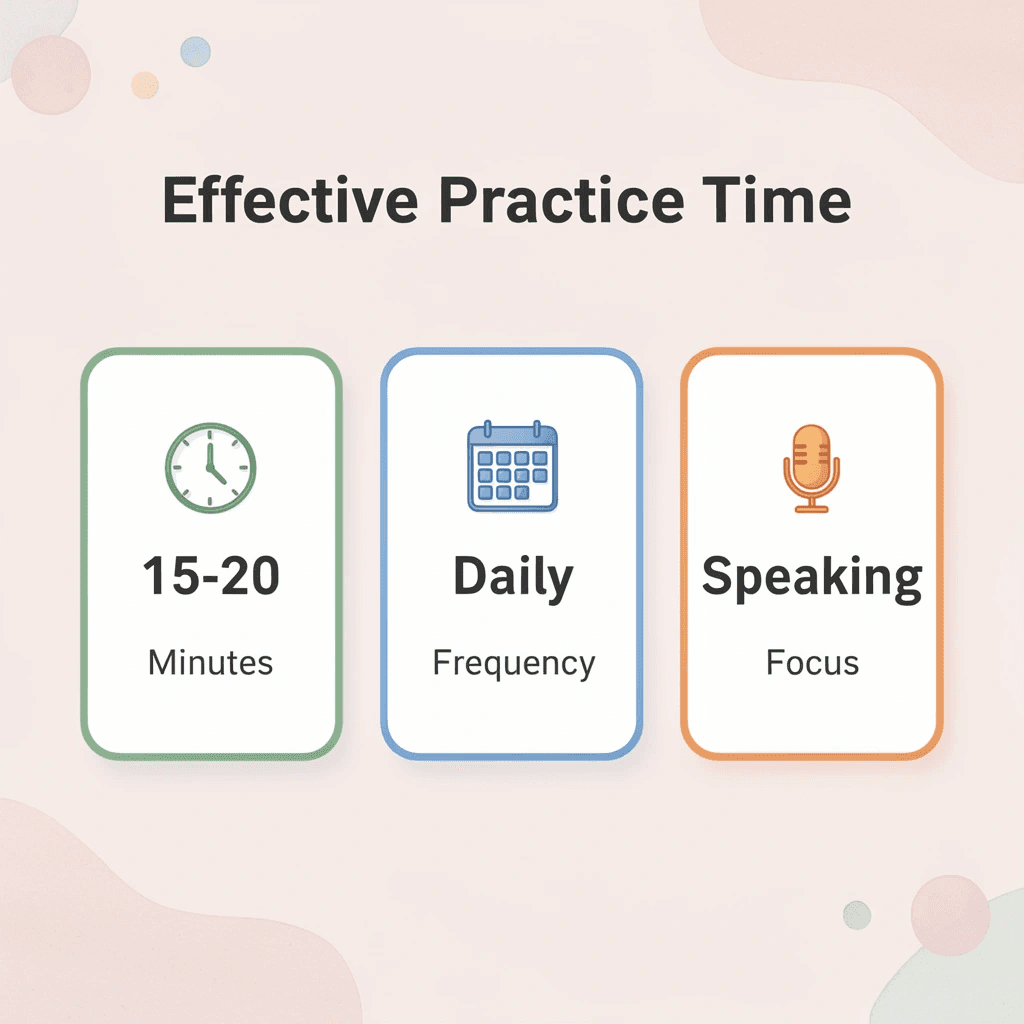
⚡ Pro Tip: Set up your Kalam App practice sessions at the same time every day to build an unbreakable habit. Most successful learners practice during their morning routine or on their commute, when distractions are minimal.
Start with Micro-Sessions That Build Momentum
Long study blocks fall apart with a busy schedule. You open an app to learn, see a 45-minute lesson plan, and close it immediately. The problem isn't a lack of discipline; it's the app's design. Kalam organizes practice around short sessions you can finish in five to ten minutes. You open the app, follow a focused drill on greetings or directions, and finish before your coffee gets cold. When practice feels like a quick win rather than a major commitment, you return the next day. You build momentum by lowering the barrier to start.
Speak Every Phrase Out Loud with Immediate Correction
Reading phrases silently makes it seem like you're making progress, but you're not building the muscle memory needed for talking. Your brain can recognize "مع السلامة" (goodbye) on a screen, but your mouth struggles when you need to say it in a taxi. Interactive speaking drills help you practice speaking aloud in real situations and get quick feedback on your pronunciation. You say "أين المطعم؟" (where is the restaurant?) aloud, and voice recognition checks your throat placement, rhythm, and intonation. This feedback loop trains your mouth to produce sounds correctly before bad habits form.
Anchor Practice to Dialect-Specific Scenarios
Memorizing Modern Standard Arabic phrases prepares you for formal writing, not street conversations in Cairo or Beirut. You learn "kayfa haaluka" and arrive in Egypt to hear "izzayak" instead. This disconnect undermines confidence faster than forgetting vocabulary. Platforms like Kalam let you select your target dialect (Egyptian, Levantine, Gulf, or MSA) and train in that variety alone. Every lesson adapts to your region's pronunciation, vocabulary, and cultural context. You practice ordering food with Egyptian phrases for Cairo or Gulf expressions for Dubai, ensuring daily practice prepares you for real conversations.
Why is visible progress crucial for learning Arabic phrases
When you don't see improvement, it's easy to lose motivation. You might practice sporadically, uncertain whether you're progressing or simply going through the motions. Without visible progress, quitting feels reasonable.
How does habit tracking transform Arabic phrase practice?
Built-in habit tracking displays your daily streak, completed lessons, and mastered phrases in one view. You see that you've practiced 12 days straight and drilled 47 new expressions this week. This visibility transforms abstract effort into concrete achievement. According to App Store reviews, users maintain consistency when they can measure progress daily rather than waiting weeks to feel fluent. But daily practice only matters if it prepares you for the specific conversations you'll have.
Learn Arabic in Any Dialect Today with Kalam
Knowing words isn't enough to speak a language well. Phrases become useful only when your mouth says them without thinking, when your brain stops translating and responds immediately. To make this shift, you need to practice speaking with someone who provides immediate feedback, not passive reading or review.

💡 Tip: Real fluency happens when you stop translating and start thinking directly in your target dialect.
Kalam fills that gap by offering conversation drills in Egyptian Arabic, Levantine Arabic, Gulf Arabic, or Modern Standard Arabic. You speak phrases into your device, and our voice recognition analyzes throat placement, emphasis, rhythm, and intonation with instant corrections. Our high-quality video lessons show authentic expressions in real contexts like markets, restaurants, and street conversations, while our interactive drills build automatic responses through short daily sessions. The result is muscle memory, not memorization.
"The key to language fluency is developing automatic responses through consistent practice with immediate feedback." — Language Learning Research, 2023
🎯 Key Point: You stop translating in your head. You greet people confidently, order food smoothly, ask directions without panic, and create genuine connections. Download Kalam from the App Store or Google Play, start your free trial, and complete your first lesson today.