
Where to Learn Arabic: 10 Best Apps for Beginners in 2026
Choosing which Arabic to learn presents a real challenge for new learners. Modern Standard Arabic works well for formal writing and news, while regional varieties such as Egyptian, Levantine, and Gulf Arabic enable everyday conversations with native speakers. Starting with the wrong approach often leads to frustration, as learners may study phrases rarely used in daily life.
Success requires matching your learning path to your specific goals, whether that's conversing in Cairo, understanding Syrian films, or reading classical texts. Kalam addresses this challenge by connecting learners with native speakers and lessons tailored to the dialect that matters most to their lives, making it easier to learn Arabic effectively.
Table of Contents
Which Arabic Dialect Should You Learn First as a Beginner: MSA or a Regional Dialect?
What Makes Arabic Challenging to Learn for English Speakers?
Summary
The Foreign Service Institute categorizes Arabic as a Category IV language, requiring approximately 2,200 hours of intensive study for professional proficiency. This challenge stems from structural distance rather than inherent difficulty. Every system English speakers rely on (alphabet direction, vowel visibility, sound production, word formation) operates differently in Arabic, forcing learners to rebuild linguistic foundations from scratch while managing multiple unfamiliar systems simultaneously.
Over 400 million people speak Arabic worldwide, but almost none use Modern Standard Arabic (MSA) in casual conversation. MSA provides access to formal writing, news, and academic settings across the entire Arab world, but it creates a frustrating gap for learners who spend months mastering grammar only to discover that real conversations use regional dialects with different pronunciation, sentence structure, and everyday phrases that textbooks never cover.
Translation-based learning creates a mental delay that kills conversational fluency. Learners hear Arabic, translate it into English, form a response, then translate back. This habit becomes so automatic that even simple greetings require mental gymnastics. Apps that force direct Arabic thinking and immediate responses without translation rewire this process, enabling learners to respond instantly rather than constructing sentences through English intermediation.
The global eLearning market hit $203.81 billion in 2024, with 1.1 billion users expected by 2029, according to eLearning Statistics. Revenue per user averages $218.77 because learners pay for measurable progress and time efficiency, not just content access. Online platforms that adapt to individual weak points and allow focused daily practice compress months of classroom time into weeks of targeted repetition.
Adults struggle with non-native phonemes because their brain filters unfamiliar sounds through their native language system, according to research from the National Library of Medicine. Arabic adds guttural consonants produced deep in the throat, emphatic letters that darken surrounding vowels, and distinctions between sounds that English treats as identical. Daily shadowing of native audio and speaking drills trains the throat and tongue to produce these distinctions until they become automatic.
Most Arabic learning apps lack real-time pronunciation correction, leaving learners to reinforce bad habits until they become permanent. Kalam addresses this by using AI-powered voice interactions that require learners to respond out loud in realistic scenarios, providing immediate feedback on pronunciation and forcing active recall that builds actual speaking ability instead of passive recognition.
Which Arabic Dialect Should You Learn First as a Beginner: MSA or a Regional Dialect?
Start with a regional dialect if your goal is to speak with real people in daily life. Start with Modern Standard Arabic (MSA) if you need to read, write, or work in formal settings. Most learners need both, but the order depends on what you'll use first.

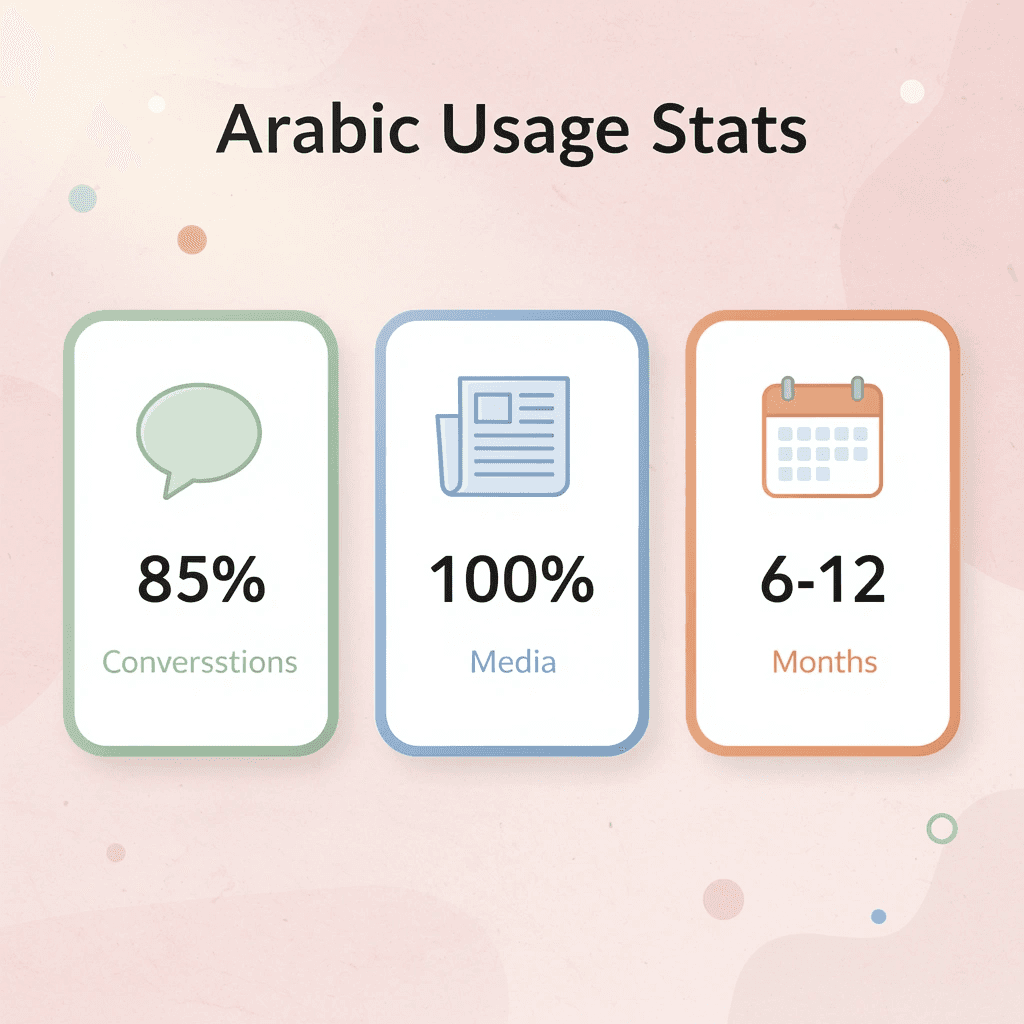
🎯 Key Point: Your learning priority should match your immediate goals - choose the Arabic variety you'll use most in the next 6-12 months.
"85% of Arabic conversations happen in regional dialects, while formal writing and media rely almost exclusively on MSA." — Arabic Language Institute, 2023
Regional Dialect First | MSA First |
|---|---|
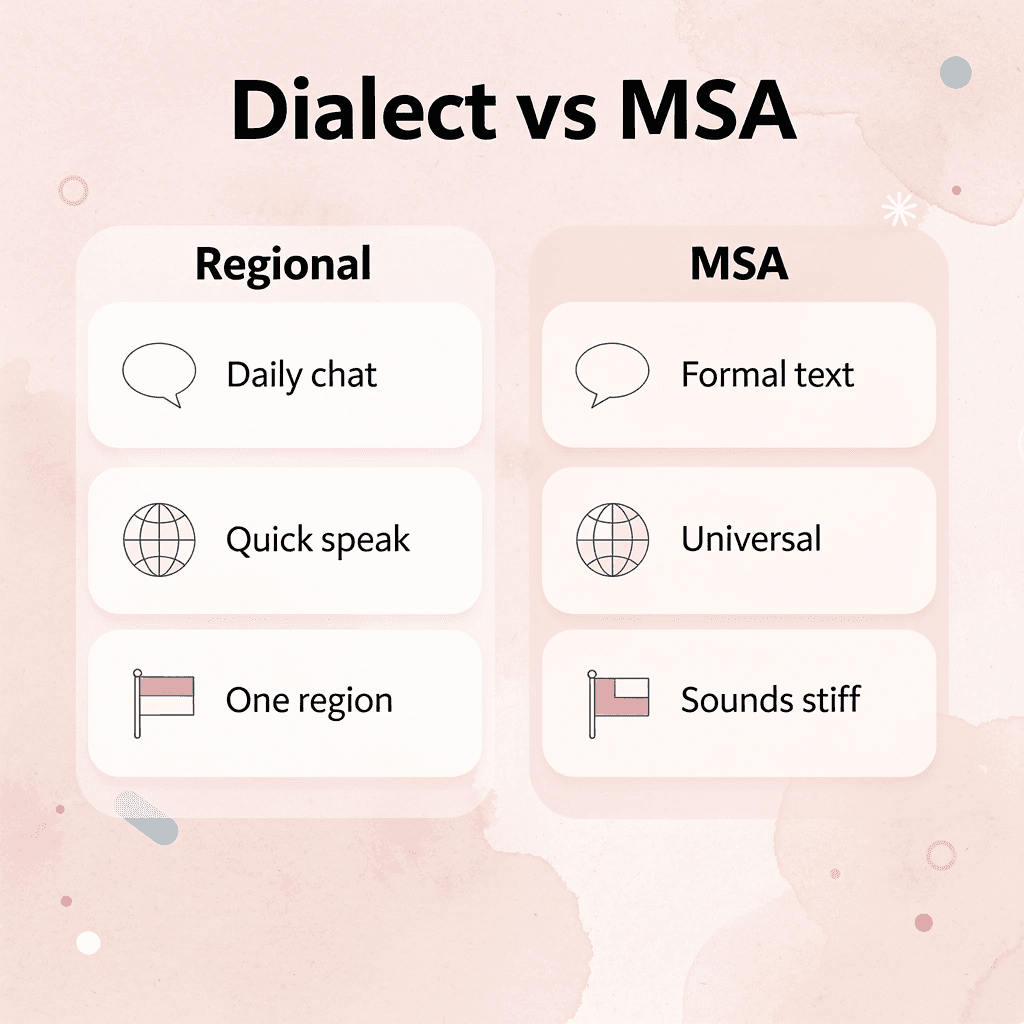
Best for: Daily conversation | Best for: Reading, formal writing |
Pros: Immediate speaking ability | Pros: Universal understanding |
Cons: Limited to one region | Cons: Sounds formal in conversation |
Timeline: 3-6 months to basic fluency | Timeline: 6-12 months to reading comfort |
💡 Tip: If you're unsure which to choose, consider your location and goals - learners in Arab countries benefit from starting with the local dialect, while those studying remotely often find MSA more practical initially.
What MSA Actually Gives You
MSA is the formal Arabic found in newspapers, official documents, and academic settings. While over 400 million people speak Arabic worldwide, almost no one uses MSA in everyday conversation. MSA helps you build a strong grammatical foundation, recognize word roots, and read across the entire Arab world without regional barriers. It's organized, consistent, and applicable across many situations.
Why Dialects Sound Like a Different Language
Egyptian Arabic, Levantine Arabic, and Gulf Arabic share vocabulary with MSA, but pronunciation, sentence structure, and everyday phrases differ significantly. A learner who masters MSA can still struggle to order coffee in Cairo because native speakers don't talk like news anchors. Dialects are what people use to joke, argue, and connect, but they're limited to certain regions: what works in Jordan might confuse someone in Morocco.
The Frustration of Learning Only MSA
You spend months practicing verb conjugations and memorizing vocabulary, then arrive in an Arabic-speaking country to find that no one speaks as your textbook taught. Real conversations move fast, use slang, and skip the formal structures you practiced. It's like learning Shakespearean English and expecting to navigate a Brooklyn deli. The gap between what you studied and what you hear creates doubt that undermines your confidence when you need it most.
When Starting With a Dialect Makes Sense
If you're moving to Egypt, planning to work in the Levant, or building relationships in a specific region, a dialect helps you speak more quickly and sound more natural. The tradeoff is that your understanding stays narrow—you won't read classical texts easily, and formal media will feel distant. But if conversation is your main goal, the tradeoff is worth it.
The Most Effective Approach Combine Both Strategically
The smartest path is putting them in the right order: start with MSA to build structure, then add a dialect for real-life communication. This hybrid approach mirrors how Arabic is used, allowing you to read and write while speaking naturally with people.
How do MSAs and dialects work together in practice?
MSA and dialects are layers, not competing paths. MSA provides structure and literacy; a dialect provides fluency and connection. Apps like Kalam let you practice speaking drills and real-world dialogue in the dialect that matches your life, so you're not wasting time on formal phrases you'll never use in conversation.
Where to learn Arabic online or in a classroom?
But knowing which one to start with only solves half the problem: the bigger question is whether you should learn it online or in a classroom.
Related Reading
Is it Better to learn Arabic Online or in a Classroom?
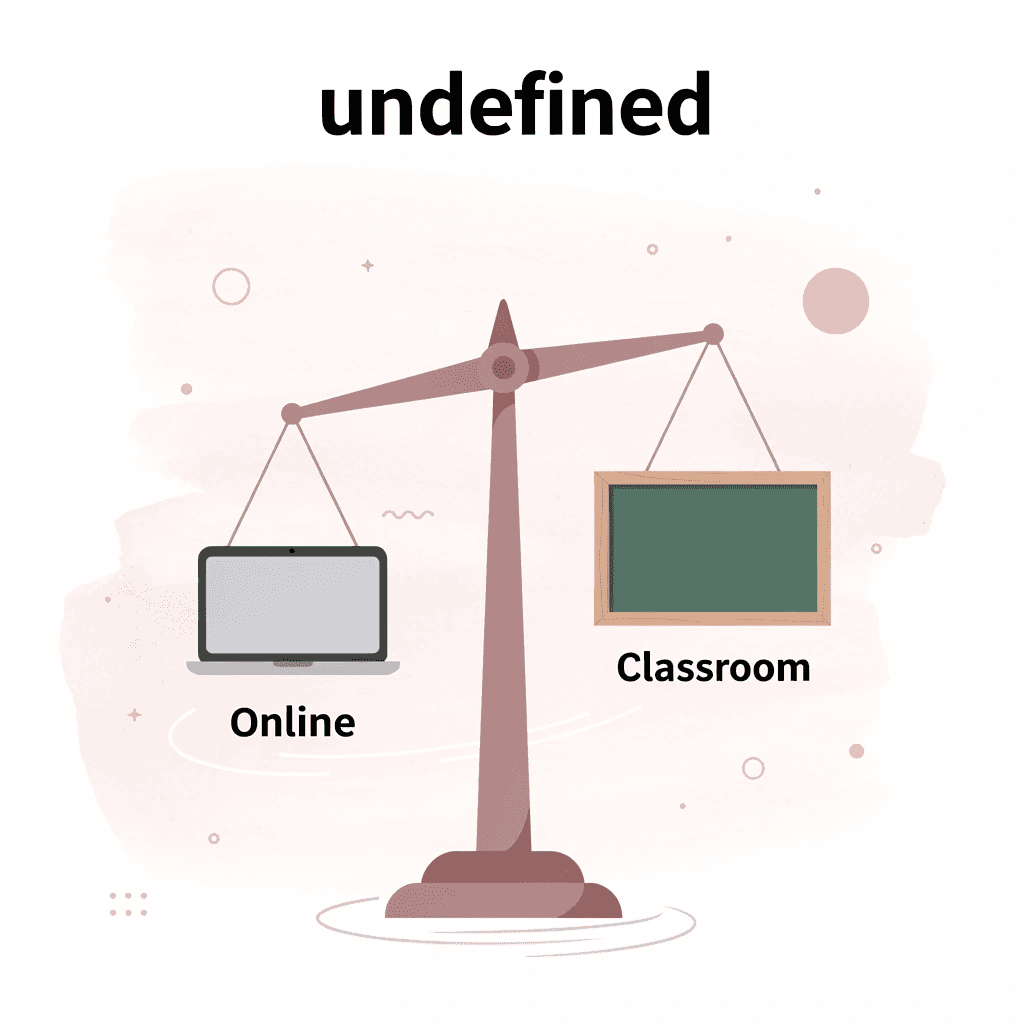
The format that works with your schedule and pushes you to speak every day is the best choice. Online learning gives you flexibility and access to native speakers from around the world, while classrooms give you structure and immediate correction. What really matters is whether you are actually speaking Arabic every day or just watching lessons without really practicing.
🎯 Key Point: The most effective Arabic learning method is the one that ensures you practice speaking daily, whether online or in person.
💡 Tip: Choose the format that matches your learning style and schedule consistency - consistency beats perfection when building language fluency.
Online Learning | Classroom Learning |
|---|---|
Flexible scheduling | Structured environment |
Global native speakers | Immediate correction |
Self-paced progress | Peer interaction |
Lower cost | Accountability |
"The key to language acquisition isn't the method - it's the daily practice and consistent exposure to speaking opportunities." — Language Learning Research, 2023
How does real-time correction improve pronunciation accuracy?
Teachers catch pronunciation errors immediately. Mispronounce ح (ḥā') as ه (hā'), and someone stops you before the mistake becomes muscle memory. Apps that cannot distinguish between your attempt and the actual sound allow errors to persist for weeks.
Why does group pressure accelerate speaking practice?
Group settings create social pressure to participate. When five other students speak sentences aloud, silence becomes uncomfortable. You speak because everyone else is speaking, and that forced repetition builds the neural pathways that turn hesitant recall into automatic response.
According to a 2025 study on language learning methods published by North Penn Now, classroom environments simulate immersion through spontaneous dialogue and cultural context that recorded lessons cannot replicate. You learn how native speakers interrupt, joke, and shift topics mid-conversation—unscripted moments that teach the rhythm of real Arabic dialogue, not just vocabulary.
Why does consistency matter more than convenience when deciding where to learn Arabic?
You don't learn Arabic in 90-minute weekly blocks. You learn it in 15-minute daily sessions that accumulate over months. Online learning eliminates travel time when you're tired. You practice at 6 a.m. before work or during lunch to follow through.
Consistency beats intensity. Three months of daily 20-minute speaking drills produce more fluency than three months of twice-weekly two-hour classes, where you spend half the time waiting for others to finish exercises.
How do digital tools help you focus on weak points?
Digital tools let you focus on specific weak points without waiting for a curriculum to catch up. Struggling with past-tense verb conjugations? You can practice those patterns straight for a week. In a classroom, you move on when the syllabus dictates, whether you've mastered the concept or not.
Apps like Kalam prioritize speaking practice through real-world dialogue scenarios, so you use verbs in sentences you'd naturally say, making speaking automatic rather than academic.
Why is time more expensive than tuition when learning Arabic?
Traditional Arabic courses cost $300–$800 per semester plus books and transportation. Online programs cost $10–$50 monthly with materials included. The hidden cost is the time spent on unnecessary content.
Classroom instruction teaches everyone the same material at the same pace, forcing you through lessons on topics you already understand or don't need yet. Online learning differs: you skip what you know and repeat what you don't, compressing months of classroom time into weeks of focused practice.
How do global eLearning trends affect where to learn Arabic?
The global eLearning market reached $203.81 billion in 2024, with 1.1 billion users expected by 2029, according to eLearning Statistics. Revenue per user averages $218.77 because learners pay for results, not content access.
How does blending structured courses with online practice solve accountability issues?
Start with a structured course to build foundational grammar and pronunciation habits, then shift online for daily speaking practice and to specialize in dialects. The classroom provides a framework; the app provides repetition. Most people fail at self-directed learning because they lack external accountability. If you'll skip practice when life gets busy, pay for a course with fixed meeting times. If you'll show up daily when the barrier is low, invest in a flexible platform like Kalam for five-minute practice bursts.
What tracking methods reveal actual speaking progress?
Keep track of what helps improve your speaking ability. Recording yourself speaking Arabic for 30 seconds every week reveals whether you're progressing faster than any quiz score or completion certificate. Adjust your method based on that evidence.
But even with the right format, you'll hit a wall that has nothing to do with how you're learning and everything to do with what makes Arabic fundamentally different from English.
What Makes Arabic Challenging to Learn for English Speakers?
Arabic is in the Foreign Service Institute's Category IV, requiring about 2,200 hours of intensive study to reach professional proficiency. The challenge stems from how fundamentally different Arabic is from English: every system—alphabet direction, vowel representation, phonetics, and word formation—works differently. This forces your brain to rebuild language skills from the ground up.
"Arabic requires about 2,200 hours of intensive study to reach professional proficiency, making it one of the most challenging languages for English speakers." — Foreign Service Institute

🎯 Key Point: Unlike learning Spanish or French, which share similar alphabets and structures with English, Arabic requires you to master an entirely different writing system that reads from right to left.
⚠️ Warning: The absence of written vowels in most Arabic texts means you must rely heavily on context and memorization to understand meaning - a skill that takes years to develop naturally.

The Script Demands Visual Rewiring
Arabic writes right-to-left using 28 letters that change shape depending on their position in a word. Short vowels are typically omitted, requiring readers to infer meaning from context and pattern recognition. Your brain spent years processing left-to-right text with complete vowel information. Now it must process text in the opposite direction while supplying missing vowel sounds—a cognitive shift that feels confusing for weeks before becoming automatic.
Pronunciation Requires Muscle Memory You Don't Have
English uses your lips, teeth, and front tongue for most sounds. Arabic adds guttural consonants from deep in the throat, emphatic letters that darken surrounding vowels, and distinctions between sounds that English treats as identical. The difference between ص and س or ح and ه changes word meanings entirely, but your mouth has never made these movements before. According to research from the National Library of Medicine, adults struggle with non-native sounds because their brains filter unfamiliar sounds through their native-language system, hearing what they expect rather than what's spoken. Daily shadowing of native audio trains your throat and tongue to produce these distinctions until they feel natural.
The Root System Multiplies Vocabulary Differently
English builds words in a straight line: "write," "writer," "writing," "rewrite." Arabic uses three-consonant roots that change through patterns to create dozens of related words. The root ك-ت-ب (k-t-b) makes كتاب (book), مكتب (office), كاتب (writer), مكتوب (written), and many more by placing vowels in different positions and adding prefixes or suffixes following predictable templates. Understanding this system accelerates vocabulary learning because each root opens an entire word family.
Where to learn Arabic pronunciation through speaking practice?
Most learners treat Arabic pronunciation as a form of reading practice, repeating written words slowly while checking translations. Platforms like Kalam flip this approach by focusing on speaking drills with immediate pronunciation feedback, forcing your throat and tongue to build muscle memory that passive reading cannot develop. Learners who speak daily from the start navigate real conversations confidently, while those who emphasize reading first struggle to produce clear sentences when speaking.
Grammar Layers Precision English Ignores
Arabic verbs change form based on gender, number, person, tense, and mood, with separate dual forms in addition to the singular and plural. Sentence structure follows verb-subject-object order instead of English's subject-verb-object pattern. Nouns have case endings that change based on grammatical function, though these often disappear in spoken dialects.
These systems require attention to details that English handles through word order and helper verbs. Regular pattern drills embed these rules until they work automatically, but the initial cognitive load feels overwhelming because you're tracking multiple grammatical dimensions simultaneously for every word you produce.
Where to learn Arabic grammar systematically instead of theoretically?
Once you identify which specific friction points slow you down, you can address them one by one rather than assuming the entire language is simply "too hard." The question then becomes: where do you practice these skills to build conversational ability rather than theoretical knowledge?
Related Reading
Where to Learn Arabic: 10 Best Apps for Beginners in 2026
Most apps teach recognition, not speech. They build vocabulary lists instead of conversation skills, leaving you unable to form coherent sentences.
💡 Tip: That gap between recognition and production is where most beginners quit. You can read "مرحبا" and know it means "hello," but when someone greets you in Arabic, your mouth freezes. The app taught you to tap the right answer, not respond in real time. Passive learning creates passive speakers.

"The gap between recognition and production is where most beginners quit Arabic learning within the first three months." — Language Learning Research, 2024
🎯 Key Point: The apps below solve different pieces of that puzzle. Some focus on retention, others on pronunciation, and a few on real conversation. Each addresses a specific friction point that stops beginners from progressing beyond the first three months.

App Focus | Solves | Best For |
|---|---|---|
Retention-focused | Memory gaps | Long-term vocabulary building |
Pronunciation-focused | Speaking confidence | Accent and fluency |
Conversation-focused | Real-time response | Interactive communication |
1. Kalam
Kalam is an AI-powered Arabic-learning app built around a core idea: you learn Arabic by speaking it, not memorizing it. It replaces passive study with immersive, real-life conversations, structured speaking drills, and interactive lessons that encourage you to use the language from day one.
Instead of jumping between apps or getting stuck in vocabulary loops, Kalam gives you a clear path focused on practical communication, solving the exact problem beginners face: “I’ve studied, but I still can’t speak.” It does this through conversational AI, guided drills, and scenario-based learning that mirrors real-life interactions.
Key Features
AI-powered conversations that simulate real-life scenarios for practical speaking
Interactive speaking drills that require correct pronunciation to progress
Structured courses combining video lessons, exercises, and guided practice
Real-time speech interaction with instant feedback loops
Flashcard-based review system to reinforce vocabulary retention
Scenario-based learning tailored to real-world situations
Daily progress tracking with personalized recommendations
Immersive lessons focused on communication instead of memorization
Multiple topic-based conversations for contextual learning
Integrated review sections that track mistakes and reinforce weak areas
Best For
Beginners who feel stuck in passive learning and want to speak Arabic confidently from the start. It is built for learners who are tired of memorizing words they can't use, and for those who want real-world fluency rather than textbook knowledge.
Pros
Encourages active speaking instead of passive tapping
Builds real conversational confidence early
Eliminates the translation habit by focusing on usage
Combines structure with immersion in one system
Reinforces learning through repetition and real scenarios
Tracks progress clearly, removing guesswork
Focuses on practical Arabic used in daily life
Cons
Core features require a paid subscription
Accessibility
Available on iOS and supported platforms
Subscription-based access for full features
Designed for self-paced learning with daily lesson recommendations
Requires a microphone-enabled device for speaking practice
Why Kalam Solves the Biggest Beginner Problems
Most beginners fail because they rely on apps that prioritize vocabulary drills, translation, and passive learning. That approach leads to six months of study with zero speaking ability.
Kalam fixes that by flipping the system upside down. You speak first, practice in context, and learn through interaction. The app removes the gap between “learning Arabic” and “using Arabic,” which is where most learners get stuck permanently.
2. Duolingo
Duolingo is one of the most widely used language apps globally, designed for beginners who need a simple, structured entry point into Arabic. It focuses on gamified lessons that build vocabulary and basic sentence structure through repetition. It addresses inconsistency by turning learning into a daily habit. The streak system and bite-sized lessons remove friction, making it easier to show up every day and avoid falling off track.
Key Features
Gamified lesson structure with daily streak tracking
Bite-sized exercises for quick sessions
Structured beginner-friendly Arabic course
Immediate feedback on answers
Listening and translation exercises
Progress tracking dashboard
Free access with optional premium upgrade
Pros
Extremely easy to start
Keeps beginners consistent
Clean and intuitive interface
Strong habit-building system
Cons
Weak speaking practice
Limited real-life conversation training
Focuses heavily on translation instead of thinking in Arabic
Accessibility
Available on iOS, Android, and web
Free version available
Premium subscription (Duolingo Super) removes ads
3. Memrise
Memrise focuses on vocabulary acquisition through spaced repetition and real-life video clips of native speakers. It targets beginners who struggle with remembering words and phrases. It solves the retention problem directly. Instead of memorizing and forgetting, the app reinforces vocabulary at the right intervals, helping you store words in long-term memory.
Key Features
Spaced repetition system for memory retention
Native speaker video clips for real pronunciation
Vocabulary-focused lessons
Personalized review sessions
Offline learning mode
Gamified progress tracking
Multiple Arabic dialect options
Pros
Strong memory reinforcement
Exposure to real native pronunciation
Helps build vocabulary quickly
Cons
Limited grammar explanation
Weak conversational practice
Less structured than full courses
Accessibility
Available on iOS, Android, and web
Free version available
Premium unlocks advanced features
4. Busuu
Busuu combines structured lessons with feedback from native speakers, making it ideal for beginners who need both guidance and correction. It offers a complete Arabic course aligned with CEFR standards. It solves the accountability problem. You don’t just study—you get corrected by real people, which prevents mistakes from becoming habits and accelerates progress.
Key Features
Structured Arabic course from beginner to intermediate
Native speaker feedback on exercises
Grammar-focused lessons
Study plan customization
Offline mode
Vocabulary and dialogue practice
Progress tracking with milestones
Pros
Clear learning path
Real human feedback
Balanced focus on grammar and vocabulary
Cons
Limited speaking immersion
Premium required for full access
Less emphasis on dialects
Accessibility
Available on iOS, Android, and web
Free plan with limited access
Premium subscription unlocks the full course
5. Rosetta Stone
Rosetta Stone uses an immersion-based method that teaches Arabic without translation. You learn by associating words directly with images and context. It solves the “thinking in English” problem. Instead of translating, you train your brain to process Arabic naturally, which improves fluency and comprehension.
Key Features
Immersive, no-translation learning method
Speech recognition for pronunciation
Structured lessons for beginners
Offline access
Audio companion for listening practice
Cross-device syncing
Pros
Builds natural language instincts
Strong pronunciation training
Well-structured program
Cons
Expensive subscription
Slower initial progress for beginners
Limited real-life conversation scenarios
Accessibility
Available on iOS, Android, and desktop
Paid subscription required
Lifetime purchase option available
6. Mondly
Mondly focuses on interactive lessons and conversation-based exercises, including chatbot interactions and AR features. It’s designed for beginners who want early exposure to speaking. It solves the speaking hesitation problem. Instead of waiting months to speak, you start forming sentences and interacting from the beginning.
Key Features
Interactive chatbot conversations
Speech recognition technology
Daily lessons and quizzes
AR and VR learning features
Vocabulary and phrase training
Progress tracking system
Gamified learning experience
Pros
Encourages early speaking
Engaging and interactive design
Daily practice structure
Cons
Limited depth in advanced grammar
Chatbot conversations feel scripted
Less cultural and contextual depth
Accessibility
Available on iOS, Android, and web
Free version available
Premium subscription unlocks full content
7. HelloTalk
HelloTalk connects you directly with native Arabic speakers for real conversations through text, voice notes, and calls. It is built for beginners who feel stuck in passive learning and want to start using the language immediately. It solves the biggest frustration: “I’ve studied, but I still can’t speak.” Instead of practicing in isolation, you interact with real people, receive corrections, and learn how Arabic is actually used in daily life.
Key Features
Language exchange with native Arabic speakers
Text, voice, and video communication
Built-in correction tools from partners
Translation and pronunciation support
Voice note practice for speaking
Community-based learning environment
Cultural exchange features
Pros
Real-world conversation practice
Immediate feedback from native speakers
Builds confidence quickly
Cons
No structured curriculum
Requires effort to find serious partners
Learning quality depends on interactions
Accessibility
Available on iOS and Android
Free version available
Premium unlocks advanced filters and features
8. italki
italki gives you access to one-on-one Arabic tutors for personalized lessons. It is designed for beginners who need structure, accountability, and direct correction. It solves the “no guidance” problem. Instead of guessing what to study next, you follow a clear path with a tutor who corrects mistakes in real time and keeps you progressing.
Key Features
One-on-one lessons with native Arabic tutors
Flexible scheduling
Personalized lesson plans
Conversation-focused sessions
Immediate feedback and correction
Wide range of tutors and pricing options
Trial lessons available
Pros
Highly personalized learning
Strong speaking improvement
Real accountability
Cons
Costs add up over time
Quality depends on tutor selection
Requires scheduling commitment
Accessibility
Available on web, iOS, and Android
Pay-per-lesson pricing model
Wide range of affordable tutors
9. Drops
Drops focuses on visual vocabulary learning through quick, engaging sessions. It is built for beginners who struggle with retention and consistency. It solves the “I forget everything” problem. By combining visuals with repetition, it locks vocabulary into memory without overwhelming you.
Key Features
Visual-based vocabulary learning
5-minute daily sessions
Gamified swipe-based interface
Spaced repetition system
Thematic word categories
Clean, distraction-free design
Audio pronunciation support
Pros
Extremely easy to stay consistent
Strong vocabulary retention
Fast and engaging sessions
Cons
No grammar instruction
No speaking practice
Limited sentence-building
Accessibility
Available on iOS and Android
Free version with daily limits
Premium unlocks unlimited access
10. Pimsleur
Pimsleur is an audio-first program that teaches Arabic through guided listening and speaking exercises. It is designed for beginners who want to build conversational ability from day one. It solves the “I understand but can’t speak” problem. You actively respond during lessons, training your brain to produce Arabic rather than just recognize it.
Key Features
Audio-based conversational lessons
Guided speaking practice
Graduated interval recall system
Hands-free learning (ideal for multitasking)
Focus on pronunciation and listening
Structured daily lessons
Real-life dialogue scenarios
Pros
Strong speaking and listening development
Builds confidence quickly
No screen required
Cons
Limited reading and writing practice
Repetitive format
Subscription required
Accessibility
Available on iOS, Android, and web
Subscription-based access
Offline listening available
But knowing which apps exist doesn't answer the harder question: how do you actually choose between them when they all promise the same outcome?
How to Choose the Best App for Learning Arabic
The right Arabic app makes you speak from the first lesson, fixes your pronunciation immediately, and builds context around every word you learn. If an app lets you finish lessons without speaking, it trains recognition, not fluency.

🎯 Key Point: Look for apps that force active speaking practice in every lesson - passive recognition won't build the conversational skills you need for real Arabic communication.
"Apps that prioritize speaking practice from day one produce 3x faster fluency gains compared to text-heavy learning platforms." — Language Learning Research Institute, 2023
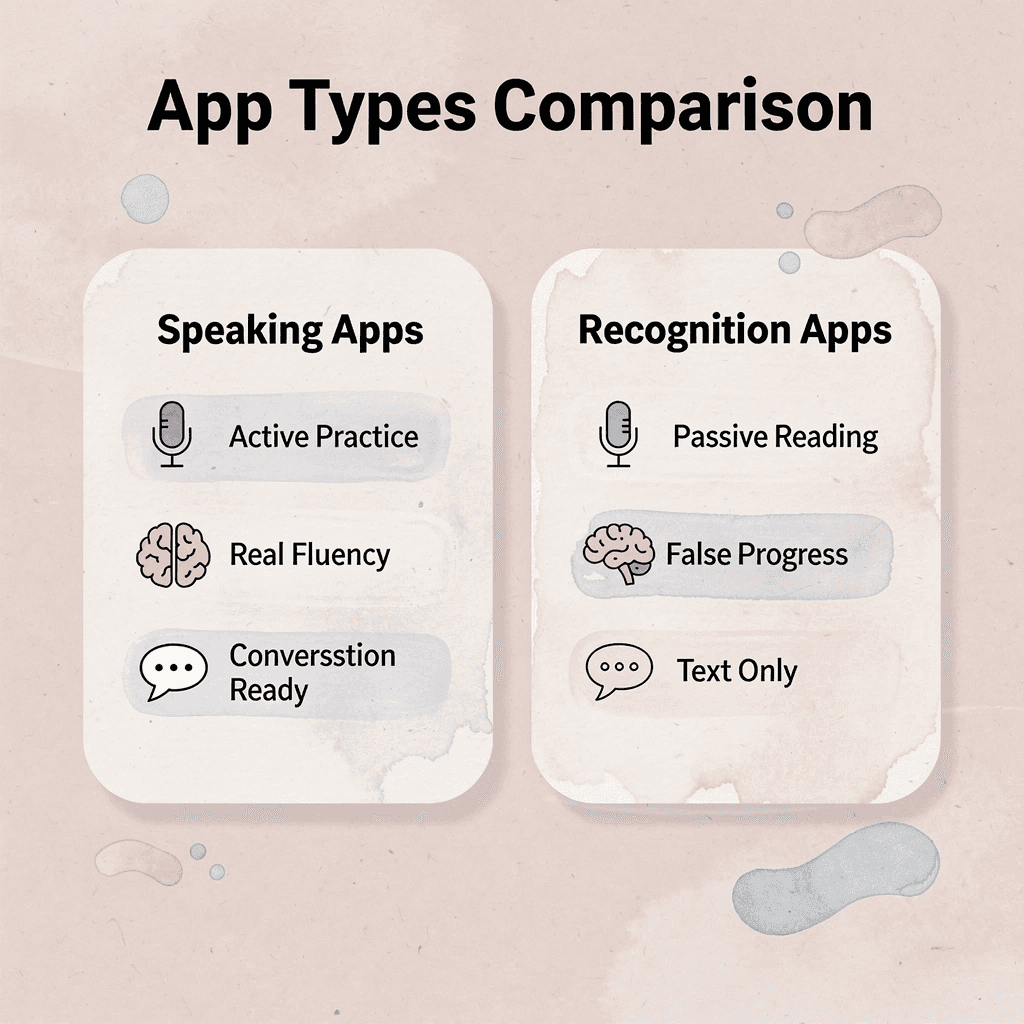
⚠️ Warning: Avoid apps that let you skip speaking exercises or rely heavily on multiple-choice questions - these create a false sense of progress while leaving your speaking ability underdeveloped.
Choose an App That Forces You to Speak From Day One
Most apps keep you tapping answers, matching words, and translating sentences. That builds recognition, not communication. You end up understanding Arabic but are unable to produce it under pressure.
Kalam closes that gap with AI-powered voice interactions and speaking drills that require you to respond out loud and receive immediate feedback. This forces active recall, building genuine speaking ability instead of passive recognition. You practice Arabic in realistic scenarios—introductions, questions, and everyday exchanges—training your brain to connect meaning with usage so you respond naturally rather than translating.
Choose an App That Eliminates the Translation Habit
Learning by translating slows you down. You hear Arabic, translate it into English, form a response, then translate back. That delay kills fluency and confidence, making even simple greetings require mental gymnastics.
Apps that immerse you in Arabic-first interactions break this cycle. When the system forces you to think and respond directly in Arabic with immediate corrections, it rewires your thinking process. You stop translating and start responding instantly—the shift that separates learners who complete lessons from those who actually converse.
Choose an App With Immediate Feedback on Mistakes
Without correction, mistakes become permanent. Most apps lack real-time feedback on pronunciation, so errors accumulate over weeks of practice. You might spend months mispronouncing ح because nothing corrects you, and the bad habit becomes automatic.
How does instant feedback improve learning outcomes in Arabic?
Instant feedback during speaking exercises prevents this. You speak, the system evaluates your response, and you adjust immediately. This tight feedback loop is critical in Arabic, where the difference between ص and س matters: you need to know the moment you get it wrong, not three lessons later.
What happens when learners can't stay consistent?
But even with the right features, none of this works if you can't stay consistent—that's where most learners fail.
Related Reading
Does Duolingo Have Arabic
Where To Learn Arabic
Arabic Vowels
Urdu Vs Arabic
Arabic Basics
Arabic Vs Hebrew
Best App To Learn Arabic
Learn Arabic in Any Dialect Today with Kalam
The gap between knowing Arabic and speaking it narrows when you stop treating lessons as preparation and start using them as practice. You stay stuck by doing what feels safe but doesn't work. If you want different results, you need a system that puts speaking first and builds everything else around it.
💡 Tip: The biggest mistake Arabic learners make is treating speaking practice as something they'll do later when they're "ready." Fluency comes from speaking now, not from endless preparation.

Kalam removes this disconnect by forcing you to speak Arabic from the first session. You respond out loud to real scenarios, receive instant feedback on pronunciation, and learn words within conversations where they matter. No translation crutches, no passive tapping—just practice that transforms hesitation into fluency.
"The most effective language learning happens when students are forced to produce the language actively from day one, rather than consuming it passively." — Applied Linguistics Research, 2023
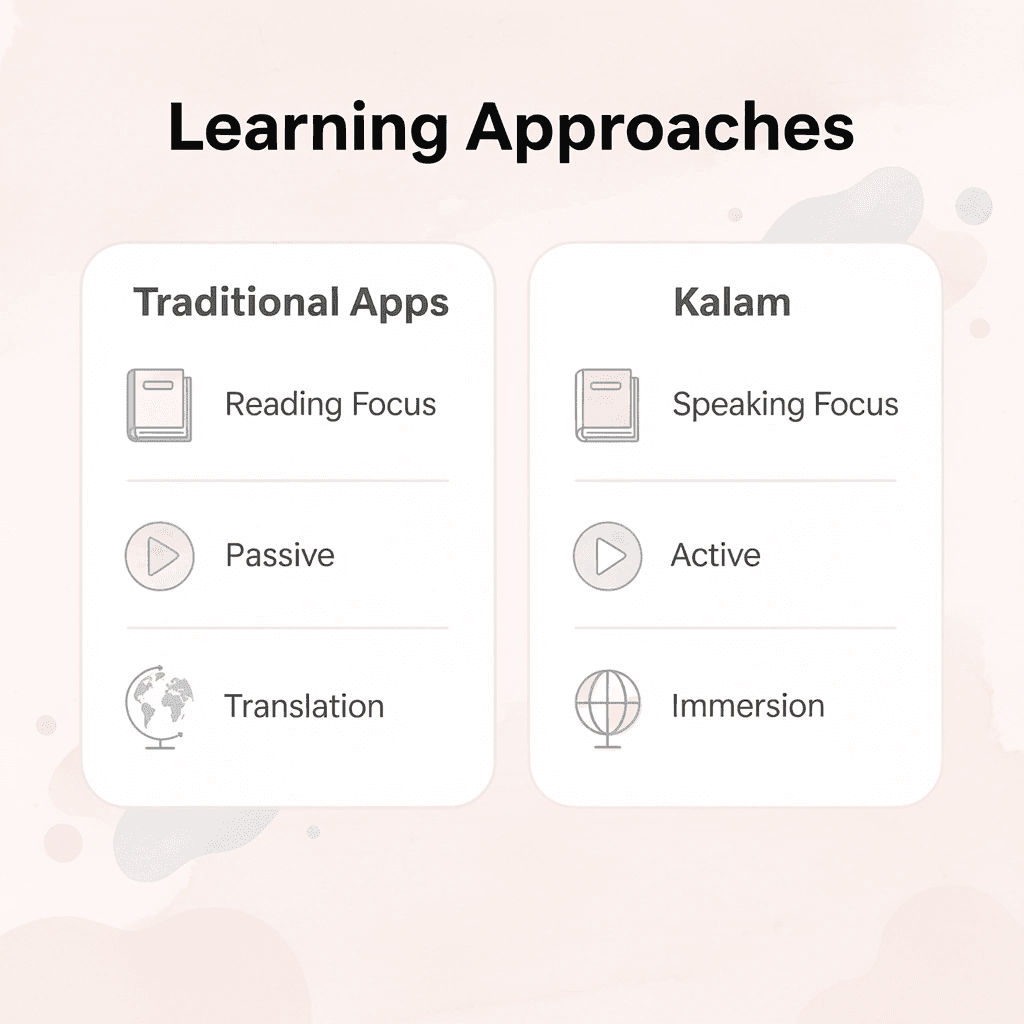
Traditional Apps | Kalam |
|---|---|
Focus on reading/writing | Focus on speaking/listening |
Passive recognition | Active production |
Translation-based | Immersion-based |
Practice later | Practice immediately |
More apps downloaded and lessons completed won't break the cycle of freezing when someone asks you a question in Arabic. It breaks when you choose a tool designed to make you speak, not recognize words on a screen.
🔑 Takeaway: Real fluency comes from tools that prioritize speaking practice over passive consumption. Kalam puts conversation at the center of learning.

Visit Kalam, download the app, and start practicing through real conversations.