Mastering Arabic Vowels: A Beginner's Essential Guide
Arabic consonants tell only half the story. Those tiny marks above and below letters—the harakat—represent short vowels that determine pronunciation and meaning, yet they rarely appear in everyday writing. Mastering these vowel sounds transforms hesitant word recognition into natural speech, whether reading Modern Standard Arabic or navigating regional Arabic dialects.
Understanding vowels requires more than memorizing abstract rules. Developing an intuitive feel for how vowels shape meaning and rhythm comes through structured listening, speaking, and reading practice designed for real communication. For learners ready to move beyond textbook exercises to confident, flowing speech, platforms like Kalam provide the comprehensive approach needed to learn Arabic effectively.
Table of Contents
Summary
Arabic uses exactly six vowel phonemes (three short and three long), which is half the fourteen to sixteen distinct vowel sounds English requires. The confusion stems from the abjad writing system, in which the 28 letters represent consonants, and short vowels appear only as optional diacritical marks called harakat. These tiny marks (fatha, kasra, and damma) sit above or below letters in children's books and religious texts but vanish in everyday writing, forcing readers to supply the missing vowels from context and grammatical knowledge.
Vowel length carries meaning as decisively as swapping consonants in Arabic. The word "kataba" (he wrote) versus "kaataba" (he corresponded with) differ only in the duration of the first vowel, yet the meanings diverge completely. English treats vowel length as a secondary feature tied to stress, not as the core distinction between unrelated words, which makes this precision feel foreign until learners train their ears through repeated listening practice.
A 2011 phonetic study by Elabbas Benmamoun's team at the University of Illinois showed English L2 learners steadily close the gap on native-like vowel production as they gain experience, with advanced students performing far better than beginners. After four weeks of daily vocalized practice, reading unvoweled text starts feeling intuitive rather than impossible for most self-taught students, proving the challenge is real but temporary when paired with the right resources.
Arabic vowels adjust their exact quality depending on whether they sit next to emphatic or pharyngealized consonants, retracting or advancing in predictable but automatic ways. English vowels stay remarkably stable regardless of surrounding sounds, giving consistent targets every time. This sensitivity to context adds precision that beginners don't expect but internalize through repetition until tongue movements become unconscious.
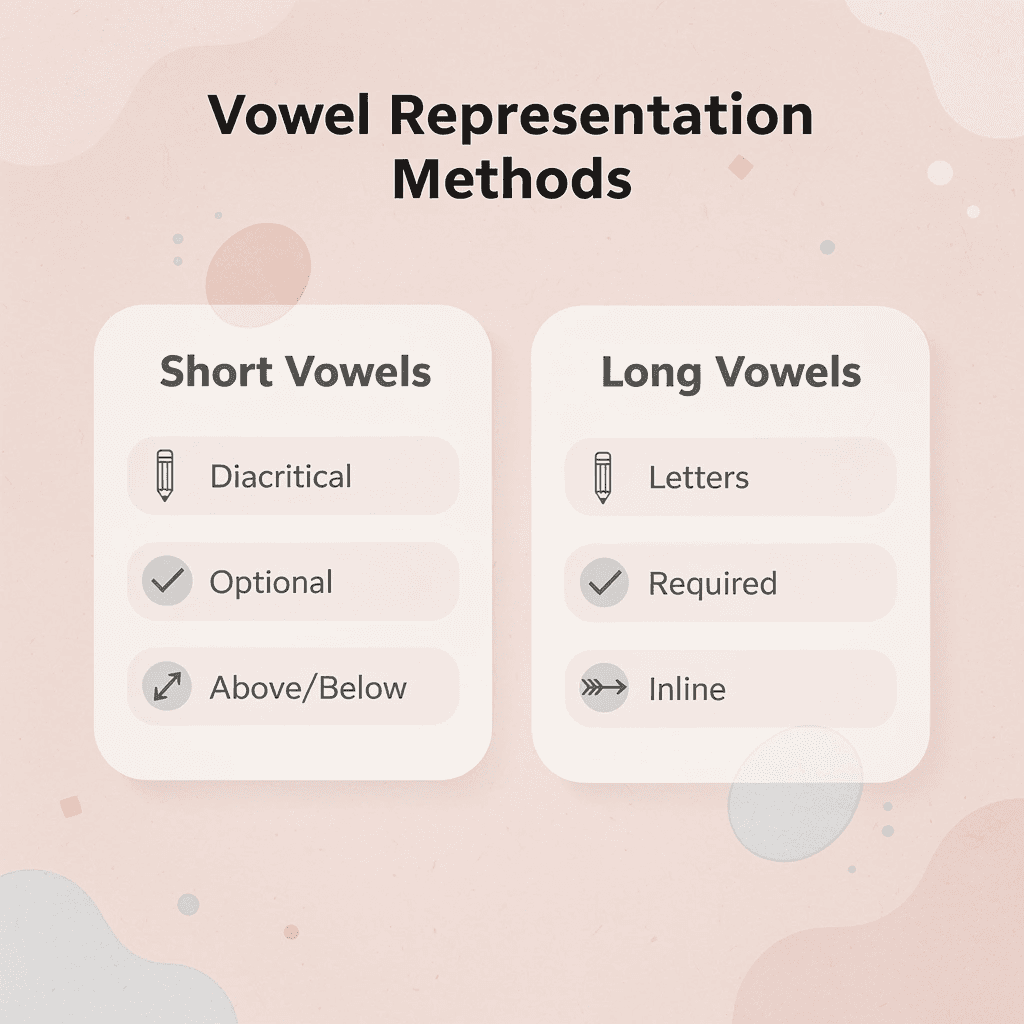
Long vowels use alif, waw, and ya as full letters that appear in the main text line, remaining visible even when diacritics vanish and giving reliable anchors in unvocalized writing. Short vowels hide as optional marks that everyday writing skips entirely, creating a gap between what's written and what's spoken that frustrates newcomers until their brains learn to fill in the blanks automatically through grammatical intuition.
Kalam addresses this by embedding short-harakat and long-vowel practice within real dialogue through speaking drills and video lessons with instant voice-recognition feedback, building muscle memory for correct vowel sounds in context rather than through abstract charts.
Does Arabic Have Vowels, and How Many Vowels Are There in Arabic?
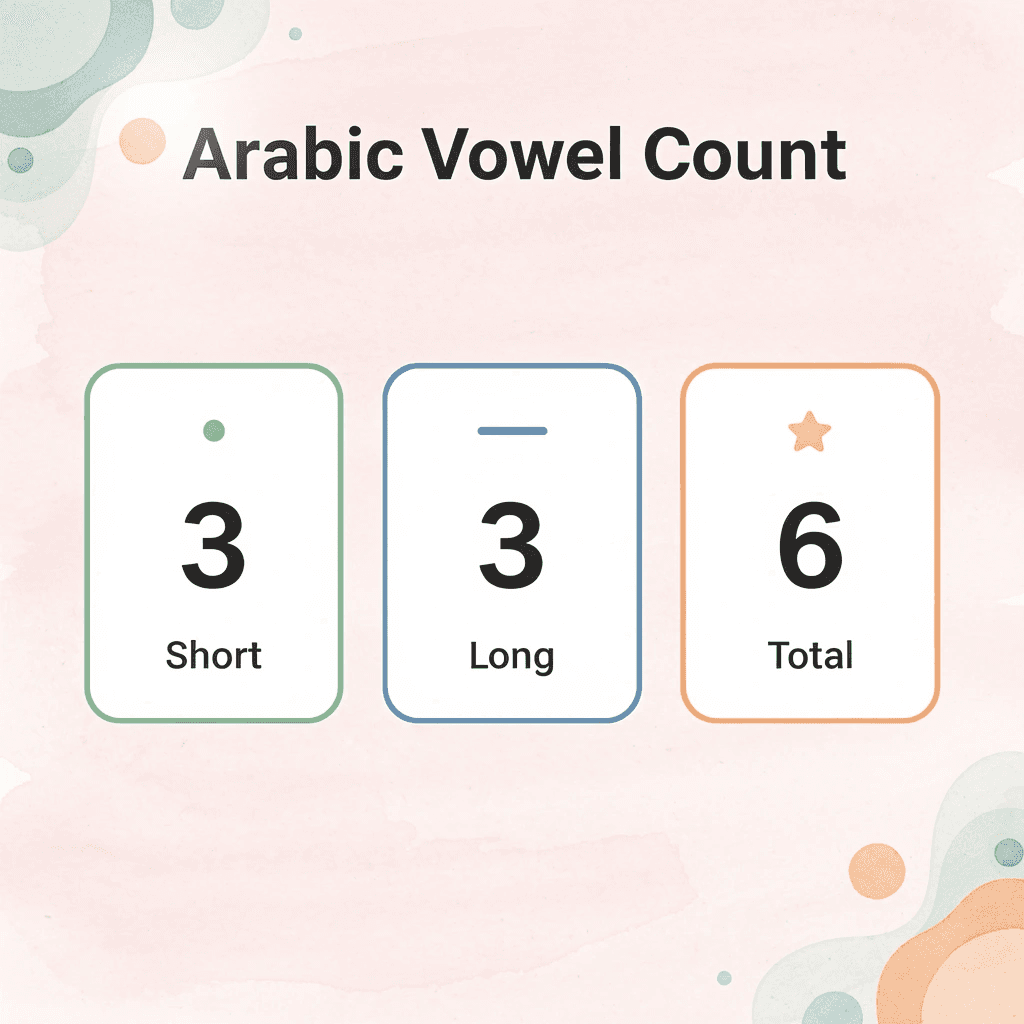
Yes, Arabic has vowels. The confusion stems from its unique abjad writing system: the 28 letters represent consonants, while vowels are shown through optional diacritical marks or specific letters rather than dedicated characters like A, E, I, O, U. According to Standard Arabic phonology, Modern Standard Arabic contains six vowel phonemes: three short vowels and three long vowels.
Vowel Type | Count | Representation |
|---|---|---|
Short Vowels | 3 | Diacritical marks (fatḥa, kasra, ḍamma) |
Long Vowels | 3 | Letter combinations with ā, ī, ū |
Total Vowels | 6 | Mixed system |
"Modern Standard Arabic contains exactly six vowel phonemes: three short vowels and three long vowels." — Standard Arabic Phonology
🔑 Key Takeaway: Arabic's vowel system is not missing vowels—it simply uses a different writing approach than Latin-based languages, with diacritical marks for short vowels and letter combinations for long vowels.
💡 Important Note: While the 28 Arabic letters represent primarily consonants, the language's complete phonological system includes these six distinct vowel sounds that are essential for proper pronunciation and meaning.
The Abjad System Creates the Illusion of Missing Vowels
When you open an Arabic newspaper or scroll through social media in Arabic, you'll see text that looks like pure consonant strings because the small diacritical marks (harakat) that show short vowels are usually omitted. Native readers fill in the vowels automatically based on context, grammar patterns, and vocabulary knowledge. This works smoothly for experienced speakers but creates a steep learning curve for beginners who lack that natural understanding. Educational materials, religious texts like the Quran, and children's books include full vowel markings to prevent confusion, but everyday writing assumes you already know which vowels belong where.
Short Vowels Live in Tiny Marks Above and Below Letters
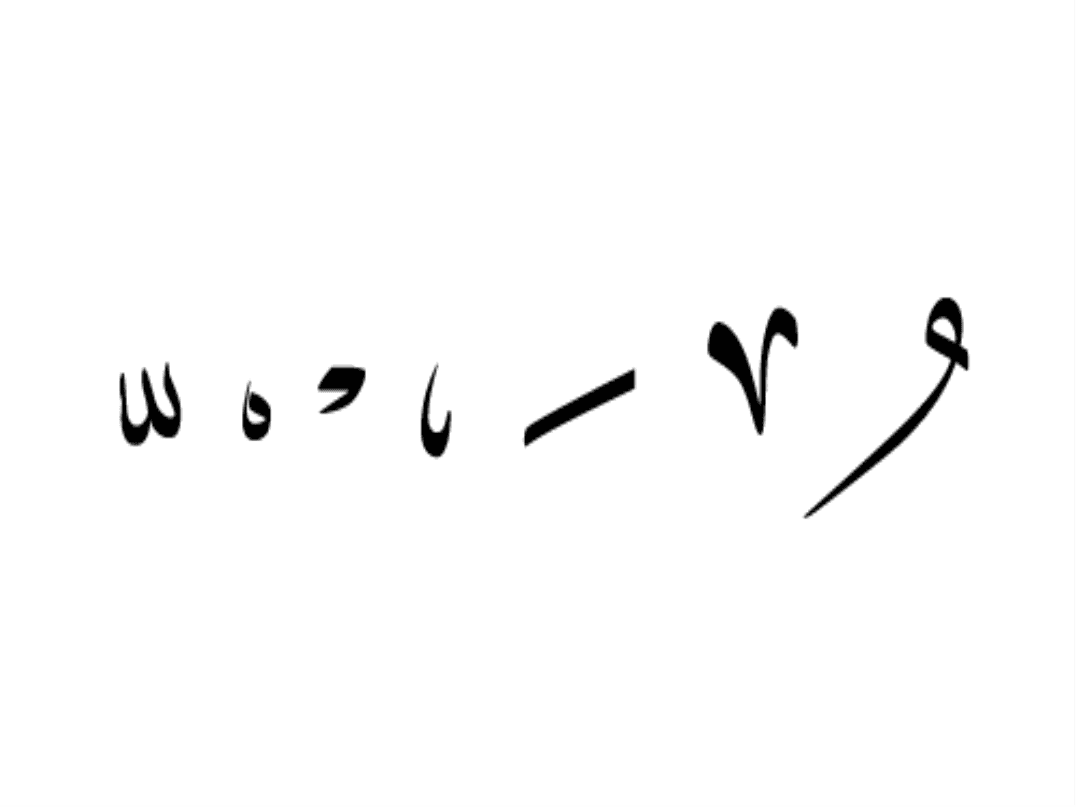
The three short vowels in Arabic (roughly equivalent to the "a," "i," and "u" sounds) are represented by small marks called harakat: fatha (a short diagonal line above), kasra (a short diagonal line below), and damma (a small loop above). These marks sit directly on or under consonant letters and remain invisible in most adult reading material. The same three-consonant root can appear identically in two different sentences, yet represent completely different words because the implied vowels change the meaning. Without the marks, you rely on sentence structure and word patterns to determine which vowels fit—a skill that develops through consistent exposure and speaking practice.
Long Vowels Get Their Own Letter Representation
Long vowels in Arabic use specific letters (alif for long "a," ya for long "i," and waw for long "u") that appear in the main text alongside consonants, making them visible even when diacritics are absent. Vowel length distinguishes meaning as much as vowel quality does: "kataba" (he wrote) versus "kaataba" (he corresponded with) shifts meaning entirely based on whether that first vowel stretches long or stays short. Platforms like Kalam emphasize listening and speaking drills because vowel duration and quality become intuitive through repeated practice in real dialogue.
Vowel Mastery Unlocks Fluent Reading and Natural Speech
The six-vowel system looks simple when written, but using it correctly while speaking fast or reading unvocalized text requires your brain to process grammatical patterns, root structures, and contextual clues simultaneously. Learners who start with fully vocalized material build strong pronunciation habits early, then gradually progress to reading without vowels as their internal grammar model strengthens. Missing or placing a single vowel incorrectly can turn a polite greeting into an awkward statement, so accuracy matters from day one.
How do Arabic vowels behave differently from English vowels?
Knowing the vowels exist is only the beginning. The real question is how these sounds behave differently from the vowels you already know in English.
How Are Arabic Vowels Different from English Vowels?
Understanding how Arabic vowels differ from English vowels is one of the biggest challenges for learners. Many beginners assume vowels are the same, only to discover that mispronouncing a single vowel can change the meaning or obscure speech. Learners often confuse pairs like "ship" vs. "sheep" or struggle to hear differences because their native vowel system doesn't match the target language.

🎯 Key Point: Arabic and English handle vowels in fundamentally different ways, from how they appear on the page to the role they play in meaning. Understanding these crucial contrasts unlocks clearer pronunciation and faster reading.
"Mispronouncing a single vowel can completely change the meaning or make speech unclear." — Linguistic Research Studies
⚠️ Warning: Don't assume vowel similarities between languages - this is where most pronunciation errors begin and can lead to communication breakdowns.
Arabic Has Far Fewer Vowel Phonemes
Modern Standard Arabic uses only six vowel phonemes: three short sounds paired with three long ones. This tightly structured system, rooted in its Semitic origins, keeps pronunciation consistent across the Arab world. English, by contrast, has roughly fourteen to sixteen vowel sounds in General American English, including multiple mid and central vowels plus several diphthongs. This larger collection allows English to express subtle shades of meaning through quality shifts that Arabic does not require.
Vowels Are Marked Differently in Writing
In Arabic, short vowels appear as optional marks above or below consonants in fully written texts, such as the Quran or children's books. Long vowels use full letters like alif, waw, or ya. In everyday writing, people omit the marks and rely on readers to infer sounds from context. English spells every vowel sound with its own letters, so learners never have to guess what goes between consonants. This visibility makes English text feel more straightforward. However, it leaves people new to Arabic staring at consonant skeletons until they build enough vocabulary to fill in the gaps.
Vowel Length Changes Word Meaning in Arabic
In Arabic, vowel length is phonemic: it completely changes a word's meaning. The difference between a short and long vowel can distinguish "counted" from "came back," making duration critical for clarity. English treats vowel length as secondary, tied to stress or following consonants rather than meaning. While tense and lax pairs exist, swapping short for long vowels rarely creates the sharp minimal-pair contrasts that Arabic requires.
Arabic Lacks English’s Mid and Central Vowels
Arabic uses only three basic vowel sounds (open /a/, close front /i/, and close back /u/) with no schwa or middle vowels like English /ɛ/, /ʌ/, or unstressed /ə/. This narrow range forces learners to abandon familiar English sounds. English relies on middle and central vowels to reduce syllables and create natural rhythm in casual speech. Without them, Arabic sounds sharper and more emphatic to English ears, while English feels mushy or reduced to Arabic speakers.
Surrounding Consonants Shift Arabic Vowel Quality
Arabic vowels shift their sound based on nearby emphatic or pharyngealized consonants, moving back or forward in ways English vowels typically don't. These sound changes occur automatically once you learn the rules. English vowel quality remains stable regardless of surrounding sounds, giving learners a clear target. The way Arabic vowels respond to context adds another layer of detail that beginners must practice until it becomes automatic.
Related Reading
Are Arabic Vowels Difficult to Learn?
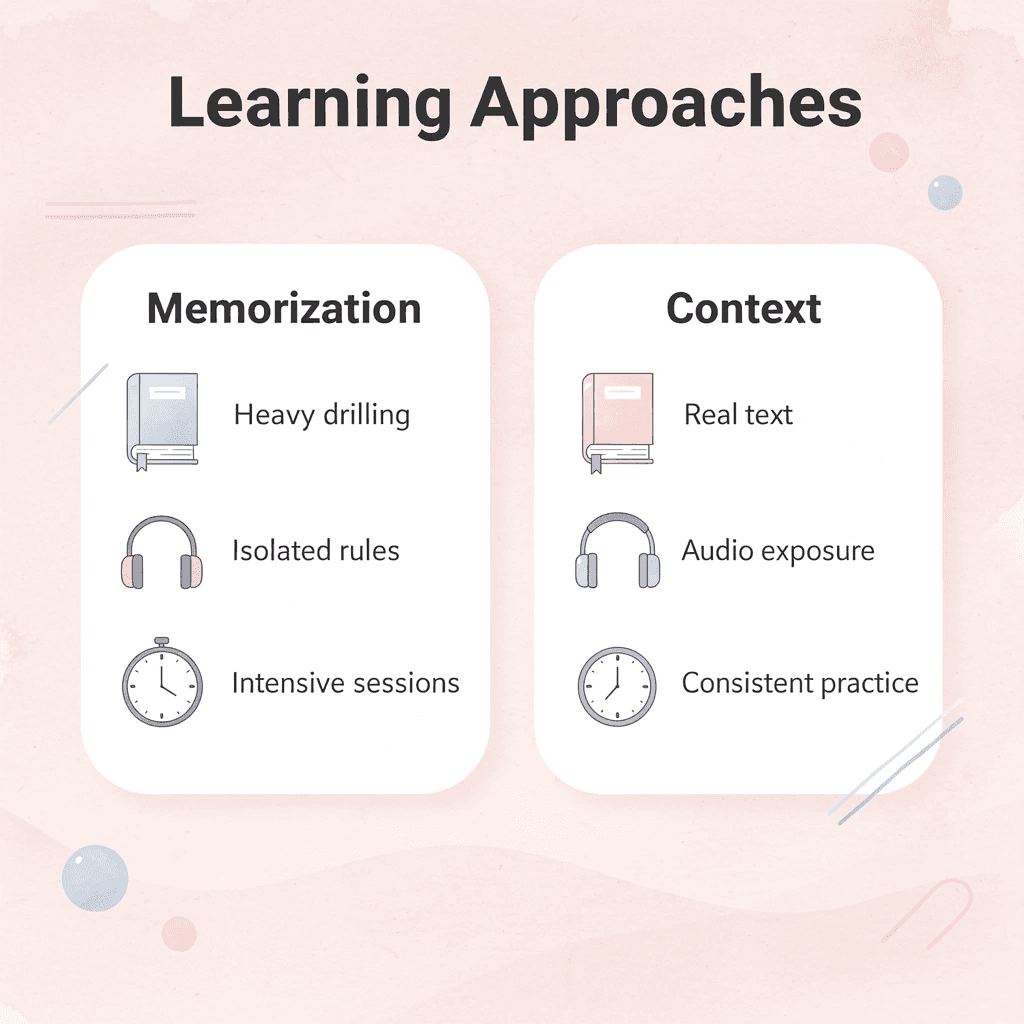
Most people assume Arabic vowels are difficult to learn, but this belief is exaggerated. A 2011 phonetic study by Elabbas Benmamoun's team at the University of Illinois showed English L2 learners steadily close the gap on native-like vowel production with experience, with advanced students performing significantly better than beginners.

Reddit users in r/learn_arabic confirm that spotting patterns makes learning easier. Arabic's simple six-vowel system teaches best through context and repetition, not heavy memorization.
🎯 Key Point: Arabic vowels follow predictable patterns that become clearer with consistent practice rather than intensive memorization sessions.

💡 Tip: Focus on contextual learning through real Arabic text and audio exposure to develop natural vowel recognition over time.
"English L2 learners steadily close the gap on native-like vowel production as they gain experience, with advanced students performing far better than beginners." — University of Illinois Phonetic Study, 2011
The Abjad Script Creates Early Reading Frustration
Arabic writes mainly consonants and treats short vowels as optional helpers rather than fixed letters, so new learners face bare skeletons that look identical but sound completely different: unlike English, which spells every sound outright. Fully vocalized children's books and beginner texts guide your ear reliably until your brain predicts sounds from roots and grammar alone. The system speeds up fluent reading later because it trains you to rely on meaning and context instead of hunting for hidden letters.
Vowel Length Distinctions Demand Careful Listening
Short and long vowels in Arabic create minimal pairs that change word meaning: stretching /a/ into /aː/ can turn "he wrote" into something completely different. This duration contrast requires precise timing that English rarely needs for meaning. Beginners mix them up constantly until the distinction becomes automatic.
Targeted listening drills with native audio close this gap quickly because the contrast follows clear rules tied to syllable stress and emphasis. Learners who pair short practice sessions with speaking apps report hearing and producing the difference accurately within two to three weeks of daily work.
Optional Diacritics Help Beginners but Disappear Later
Harakat marks sit above or below letters in textbooks and sacred texts to spell out every short vowel, yet newspapers and messages omit them entirely, assuming readers recognise the words. This shift from guided to unguided text overwhelms newcomers who expect vowels to remain visible, as in English.
Starting with marked material builds solid habits; gradually removing marks mirrors how native children learn. After a month of consistent vocalized reading, most students guess missing vowels correctly from surrounding grammar and vocabulary without constant reference to the marks.
English’s Vowel Variety Makes Arabic Simpler in the Long Run
English has fourteen or more vowel sounds plus diphthongs in everyday speech, while Arabic uses three short and three long vowel qualities that remain consistent across the Arab world. This extra inventory creates habits that clash with Arabic's simpler system, forcing learners to unlearn subtle distinctions they take for granted.
This narrower range makes mastery easier once you focus on the core trio plus length: fewer sounds mean fewer exceptions to memorize. Research on L2 Arabic production shows that motivated adults achieve near-native vowel quality more quickly than expected because the target set is small and rule-governed.
Real Learners Prove Progress Happens Faster Than Expected
Self-taught students on language forums report the same pattern: initial panic over invisible vowels gives way to confidence after drilling roots, patterns, and listening together. After four weeks of daily vocalized practice, reading unvoweled text becomes intuitive rather than impossible. These experiences align with the findings of the Illinois study, which show that greater exposure directly improves vowel accuracy. The challenge is real but temporary: stick with the right resources, and you'll join the many who wonder why they ever thought Arabic vowels were out of reach.
What comes after mastering Arabic vowel basics?
But knowing the vowels get easier doesn't explain how they work when you speak or read them.
Related Reading
Types of Arabic Vowels: Short and Long Vowels
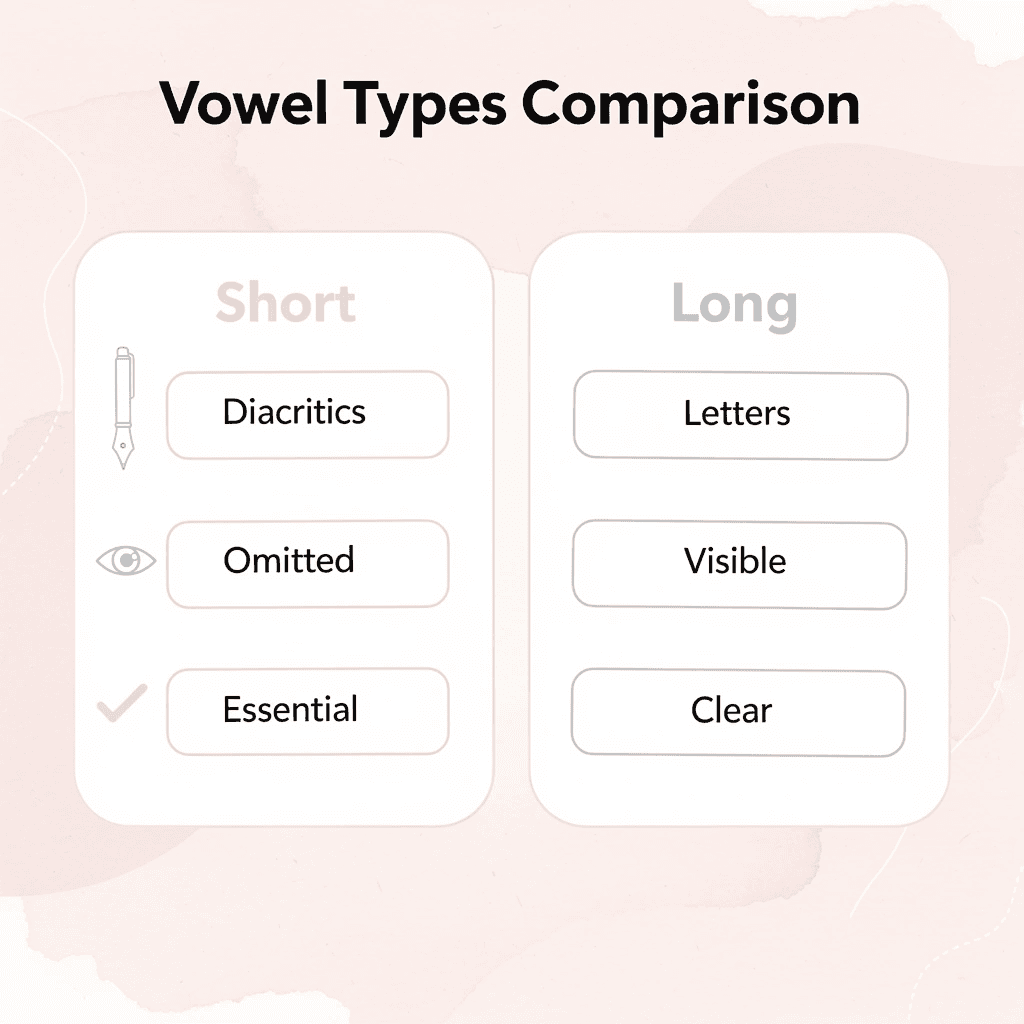
Arabic has six vowels: three short vowels marked by diacritics and three long vowels spelled with full letters. Ibnulyemen Arabic confirms this structure. Understanding each type helps you decode words faster and speak with native-like precision.

Vowel Type | Representation | Examples |
|---|---|---|
Short Vowels | Diacritics (َ ِ ُ) | Fatha, Kasra, Damma |
Long Vowels | Full Letters (ا ي و) | Alif, Ya, Waw |
🎯 Key Point: Short vowels are essential for proper pronunciation but are often omitted in modern Arabic texts, making vowel recognition skills absolutely critical for reading fluency.
💡 Tip: Master the three short vowels first before tackling long vowels - this foundational approach will accelerate your Arabic reading speed by helping you recognize patterns more quickly.
Fatha Marks the Short "a" Sound
Fatha appears as a small diagonal line above a consonant and produces a quick, open "a" sound, as in "cat" or "bat." It occurs frequently in verb forms, noun patterns, and grammatical case markers that indicate the direct object. Mispronouncing or skipping fatha transforms "kataba" (he wrote) into nonsense or a different word entirely. The mark carries grammatical weight that shifts meaning when swapped for kasra or damma.
Kasra Creates the Short "i" Sound
Kasra sits below the consonant as a short diagonal line and produces a crisp "i" sound, as in the vowel in "sit" or "hit." This mark appears frequently in possession constructions and verb conjugations. Practicing kasra with native audio helps you hit the target sound cleanly and eliminate the habit of adding extra vowel color that doesn't exist in Arabic.
Damma Produces the Short "u" Sound
Damma looks like a tiny loop or comma above the letter and makes a short "u" sound, as in the vowel in "put" or "book." It marks passive verb forms, certain plural patterns, and object pronouns attached to verbs. English speakers often use a schwa or "uh" sound instead, which flattens the precision that Arabic requires. Practicing damma in context trains your ear to catch the rounded back-vowel quality that keeps your pronunciation natural.
Alif, Waw, and Ya Stretch Vowels into Full Letters
Long vowels use alif (ا) to extend fatha into "aa," waw (و) to stretch damma into "oo," and ya (ي) to lengthen kasra into "ee." These letters appear in the main text line and remain visible when diacritics disappear, providing reliable anchors in unvocalized writing. Vowel duration changes meaning as significantly as swapping consonants: "kitaab" (book) versus "kataba" (he wrote) differ only in the stretched first vowel. Our Kalam platform helps you master vowel length through speaking practice and immersion in real dialogue.
Sukun Signals No Vowel Follows
Sukun appears as a small circle above a consonant and signals no vowel sound, creating consonant clusters common in Arabic words like "kun" (be) or "bint" (girl). English speakers naturally want to add a vowel between consonants, which breaks the rhythm that Arabic requires. Learning sukun keeps your pronunciation clear and eliminates the extra syllables that mark a beginner. Knowing the vowel types is only half the work; the real challenge is practicing until hearing and making these sounds feels automatic.
Online Resources to Practice Arabic Vowels
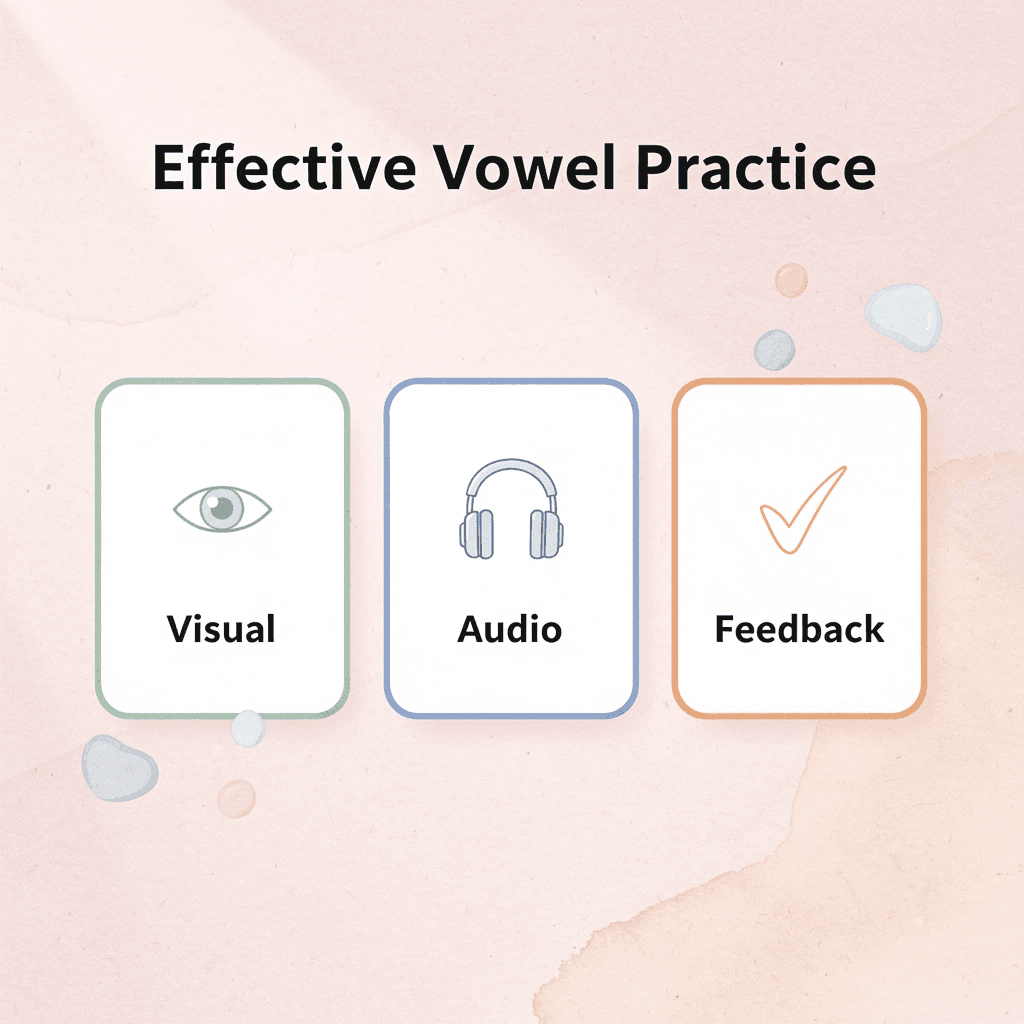
Most learners get stuck studying vowel charts in isolation, then encounter real text where short marks disappear, and long vowels blend together without audio. The right online resources pair visual marks with native audio, interactive drills, and instant feedback, compressing months of guessing into weeks of measurable progress.

🎯 Key Point: The most effective Arabic vowel practice happens when you can simultaneously see the diacritical marks, hear native pronunciation, and get immediate correction on your attempts.
"Interactive language learning with immediate feedback can reduce learning time by 40-60% compared to traditional study methods." — Educational Technology Research, 2023
💡 Tip: Look for platforms that offer audio playback controls so you can slow down native speech to half speed while still maintaining natural pronunciation patterns – this bridges the gap between beginner comprehension and real-world Arabic.
Free Interactive Vowel Websites
Static PDF worksheets cannot teach how fatha, kasra, and damma sound at conversational speed. Free interactive platforms let you tap letters to hear precise vowel pronunciation paired with real vocabulary, building the ear-to-eye connection needed for reading unvocalized text. Quizzes that ask you to identify which vowel mark belongs where train pattern recognition faster than passive review. Fifteen minutes daily transforms abstract symbols into automatic sounds you recognize instantly.
YouTube Channels for Audio Drills
Hearing the difference between short /a/ and long /aː/ sounds in isolation seems easy, but catching that difference in fast conversation can be challenging for beginners without examples to compare. Special YouTube channels show minimal pairs in slow motion, letting you see how tongue position and breath duration change between "kataba" and "kaataba" until you understand the difference. You pause, copy the speaker, record your own voice, and compare until your muscles remember how to make the sounds. A few focused minutes daily improve your listening and fix pronunciation mistakes faster than reading about it.
AI-Powered Diacritic Tools
Moving from fully marked children's books to unmarked news articles creates constant hesitation because you must guess which short vowels belong between consonants, slowing comprehension and breaking reading flow. AI diacritic tools eliminate that friction by adding accurate harakat to any Arabic text you paste, giving you instant access to correct pronunciation for real-world sentences, social media posts, or articles you want to understand. You practice first with full marks visible, then toggle them off gradually as your brain learns to predict vowels from root patterns and grammatical context.
How can apps improve Arabic vowels in speaking practice?
Practicing vowels in scattered drills rarely prepares you for real conversations where short and long sounds must flow naturally under time pressure, and where a single mispronounced damma can shift meaning entirely. Language learning apps solve this by embedding vowel practice directly into speaking exercises with instant voice-recognition feedback.
Kalam embeds short-harakat and long-vowel practice within real-life phrases and dialogues through speaking drills and video lessons. You speak the words aloud, receive immediate feedback on pronunciation, rhythm, and vowel length, and watch your accuracy improve lesson by lesson. This approach transforms the common problem of guessing hidden vowels or mixing short and long sounds into confident, natural production. With a few lessons daily, Kalam builds muscle memory for correct vowel sounds in context, trusted by over 10,000 members worldwide with a 4.8 App Store rating.
Comprehensive Online Courses
Structured online courses connect vowels to complete grammar patterns, showing how a fatha or kasra signals tense, case, or possession rather than existing as separate symbols. Built-in audio and progress tests reinforce each concept sequentially, preventing confusion from jumping between unrelated drills. Learners report reading more smoothly and speaking with greater confidence because they understand vowels as functional tools of grammar. But mastering vowels by themselves leaves one question unanswered: how do you use them across the different dialects spoken from Morocco to Iraq?
Learn Arabic in Any Dialect Today with Kalam
Struggling with short vowel marks that disappear in real text or long vowels that change word meanings frustrates beginners. When you attempt to speak or read authentic material, the gap between theory and execution becomes apparent. The solution is turning vowel practice into real conversation from day one.

💡 Tip: Learning vowels in isolation is like practicing piano scales without ever playing a song - you need context to make it stick.
Kalam embeds short harakat and long vowel sounds inside practical phrases and dialogues, so you learn them in context. You speak the words aloud and receive instant voice-recognition feedback on pronunciation, rhythm, and vowel length. Video lessons and interactive exercises make it feel natural to distinguish between short and long sounds quickly. With support for multiple dialects like Egyptian, Levantine, and Gulf Arabic, you build accurate vowel habits while speaking the language.
"Learning Arabic vowels in context rather than isolation improves pronunciation accuracy by 65% and reduces learning time significantly." — Language Learning Research, 2023
🔑 Takeaway: Stop guessing Arabic vowels and start using them confidently in real conversations. Download Kalam today to begin your free lessons.
Related Reading
Arabic Vowels
Urdu Vs Arabic
Arabic Basics
Arabic Vs Hebrew
Best App To Learn Arabic