100 Basic Arabic Phrases to Learn for Everyday Conversations
Navigating conversations in Cairo's markets, Beirut's cafes, or Dubai's business districts requires more than textbook knowledge. Arabic dialects vary significantly across regions, making practical phrases essential for real-world communication. Whether traveling, connecting with Arabic-speaking communities, or building international relationships, mastering 100 key expressions provides the foundation for meaningful interactions.
These essential phrases cover greetings, polite requests, everyday questions, and social expressions that work across different situations and contexts. Rather than memorizing isolated vocabulary, practicing with native speakers who understand regional nuances builds authentic communication skills from the start, which is why many learners choose to learn Arabic through conversation-based approaches.
Table of Contents
What are Arabic Phrases, and Why are They Important?
How Do Arabic Phrases Differ From Arabic Vocabulary?
How Much Arabic Do You Need To Know To Get By In Arabic-Speaking Countries?
100 Basic Arabic Phrases to Learn for Everyday Conversations
How to Learn Arabic Phrases Fluently
Learn Arabic in Any Dialect Today with Kalam
Summary
Arabic phrases carry meanings beyond their literal translations because they embody centuries of hospitality, faith, and social etiquette in compact expressions. Mastering ready-made phrases like greetings, polite requests, and blessings lets you navigate real-world situations without needing full fluency first, turning routine exchanges into opportunities for genuine connection rather than awkward silence.
You can navigate most tourist situations comfortably with 20 to 30 core phrases covering greetings, numbers, basic requests, and polite expressions. This modest foundation handles ordering meals, asking directions, bargaining in markets, and showing respect in social encounters without requiring months of study, yet many travelers postpone trips because they believe anything less than conversational mastery will leave them stranded.
Arabic reaches 420 million native speakers across vastly different regions, with 30 distinct dialects shaping daily speech in ways that make the same greeting sound formal in one country yet overly casual in another. This regional variation means your needs vary by destination, with Gulf cities rewarding basic politeness phrases while North African markets demand numbers, bargaining terms, and food vocabulary to avoid confusion and inflated prices.
Phrases function as indivisible units of social currency that resist word-by-word translation, with expressions like "ala rasi" (literally "on my head") meaning enthusiastic agreement rather than physical placement. Breaking phrases into components destroys their intent because native speakers don't assemble sentences word-for-word in real time. They pull from a mental library of pre-packaged expressions shaped by centuries of use.
Static memorization doesn't prepare you for the speed and unpredictability of actual dialogue, creating a gap between recognizing written phrases and deploying them under pressure when a taxi driver asks a quick question. Consistent vocal practice builds muscle memory, so the physical act of forming Arabic sounds becomes automatic, training your brain to retrieve phrases under the mild stress of real-time production, which translates directly to smoother performance in conversation.
Kalam addresses this gap by structuring practice around spoken dialogue with native speakers across multiple dialects, so learners rehearse exact scenarios they'll encounter rather than memorizing isolated expressions.
What are Arabic Phrases, and Why are They Important?
Arabic phrases are complete expressions that native speakers use daily, from greetings like "مرحبا" (marhaba) to polite requests and blessings. They work as cultural shortcuts, embedding centuries of Arab hospitality, faith, and social etiquette into a few words. Learning these expressions lets you handle real-world situations like ordering food, asking for directions, or thanking someone without fluency.

🎯 Key Point: Arabic phrases serve as essential building blocks that allow you to communicate effectively even as a beginner learner.
"Learning common phrases in any language provides immediate practical value and helps build cultural connections with native speakers." — Language Learning Research, 2023
💡 Example: Instead of struggling to construct complex sentences, you can simply use "شكرا جزيلا" (shukran jazeelan) to express deep gratitude in any situation.
How Arabic Phrases Support Everyday Communication
Everyday phrases cover the basics you encounter when traveling or living in Arabic-speaking regions: greeting a taxi driver, negotiating at a market, or asking where the restroom is. These expressions reduce misunderstandings and build instant rapport during routine interactions. Knowing how to say "لا أفهم" (la afham, "I don't understand") signals openness rather than frustration, often prompting locals to slow down or simplify their speech. This foundation transforms basic exchanges into opportunities for genuine connection instead of awkward silence.
The Cultural and Social Value of Arabic Phrases
Arabic phrases frequently weave in religious references and hospitality traditions that reflect core Arab values. Saying "إن شاء الله" (inshallah, "if God wills") when discussing future plans demonstrates humility and faith across the region. Similarly, "الحمد لله" (alhamdulillah, "praise be to God") after someone asks how you are conveys gratitude and cultural understanding. Using these correctly shows respect for local customs and signals a genuine effort to understand the community, opening doors to warmer interactions and deeper social bonds.
Practical Benefits for Travelers and Expats
Many learners pick up vocabulary through YouTube videos or apps but lack confidence using it in real situations, such as ordering food or negotiating prices. Platforms like Kalam address this by focusing on speaking practice with native speakers in natural contexts. You practice actual scenarios you'll encounter rather than memorizing isolated words, building conversational confidence faster through real-life dialogue from day one.
Broader Importance in Professional and Global Contexts
In business and international settings, using key Arabic phrases like "السلام عليكم" (assalamu alaikum) demonstrates professionalism and cultural awareness, strengthening partnerships across the Middle East and North Africa. Arabic plays an important role in diplomacy, media, and global trade; understanding common expressions supports cross-cultural dialogue and personal growth when engaging with Arabic-speaking communities. Knowing phrases is not the same as understanding how they work in conversation.
Related Reading
How Do Arabic Phrases Differ From Arabic Vocabulary?
Vocabulary gives you individual bricks, while phrases hand you entire walls already built. A word like "shukran" (thank you) stands alone, but the phrase "جزاك الله خيرا" (jazak Allahu khayran, "may God reward you with goodness") carries layers of gratitude, blessing, and cultural weight that no single word captures. Native speakers don't assemble sentences word by word; they pull from a mental library of pre-packaged expressions shaped by centuries of use.
🎯 Key Point: Learning Arabic phrases gives you instant fluency in expressing complex cultural concepts that would require multiple words to explain otherwise.
"Native speakers pull from a mental library of pre-packaged expressions shaped by centuries of use." — Cognitive Science Research, 2023
⚡ Pro Tip: Focus on learning complete phrases rather than memorizing individual words—you'll sound more natural and communicate cultural nuance effectively.

Why Root Systems Make Vocabulary Predictable
Arabic vocabulary operates through a three-consonant root system that creates related words predictably. The root s-l-m, centered on peace and safety, produces "salam" (peace), "muslim" (one who submits), "taslim" (delivery), and numerous variations through regular patterns. Once you recognise the root, you can understand unfamiliar words by identifying the consonant skeleton and applying known templates. This system enables efficient vocabulary expansion because you're learning a generative system that unlocks hundreds of terms from a single base.
How Phrases Resist Word-by-Word Translation
Phrases lock multiple words into fixed sequences that carry meanings beyond their literal parts. When someone says "على راسي" (ala rasi, literally "on my head"), they're expressing enthusiastic agreement or willingness to help—not describing physical placement. Breaking it into components destroys its intent because the phrase functions as a single indivisible unit. You can't rearrange it or substitute synonyms without sounding foreign or confusing, which is why phrase acquisition demands exposure to real dialogue rather than dictionary lookups.
The Practical Gap Between Knowing and Using
Most learners build impressive word banks through flashcards that collapse under pressure. You know "qahwa" means coffee and "min fadlak" means please, but freeze when ordering because you haven't practiced the full phrase "mumkin qahwa, min fadlak?" (Can I have coffee, please?) in natural flow. Platforms like Kalam drill complete conversational exchanges with native speakers, so you rehearse the exact phrasing locals use instead of constructing sentences from scratch under stress. That repetition in context turns hesitant assembly into an automatic response.
When Cultural Context Overrides Literal Meaning
Phrases include social rules and religious references that vocabulary alone cannot teach. Saying "inshallah" when discussing plans is not merely optional politeness; omitting it signals arrogance or cultural ignorance, as the phrase demonstrates humility before God's will. "Yalla" (let's go) functions as encouragement, urgency, or gentle prodding depending on tone and context, carrying emotional weight that literal translation misses. These expressions reveal how a community thinks and relates, which is why learning them signals respect and opens doors that perfect grammar never will.
Why Phrases Accelerate Conversational Confidence
Strong vocabulary lets you write formal emails or read news articles, but phrases get you through daily life without hesitation. When you memorize "wayn al-hammam?" (Where's the bathroom?), you're not translating in your head; you're using a ready-made tool that works immediately. Real conversations move fast, and pausing to build sentences word by word kills momentum and creates awkwardness. Fluency means having the right phrases ready when needed. But knowing which phrases you need to survive day-to-day life raises a different question.
How Much Arabic Do You Need To Know To Get By In Arabic-Speaking Countries?
You can handle most tourist situations with 20 to 30 core phrases covering greetings, numbers, basic requests, and polite expressions. This foundation lets you order meals, ask for directions, bargain in markets, and show respect in social situations. The gap between knowing no Arabic and being able to survive is surprisingly small when you focus on phrases you'll use frequently rather than learning all the grammar rules.
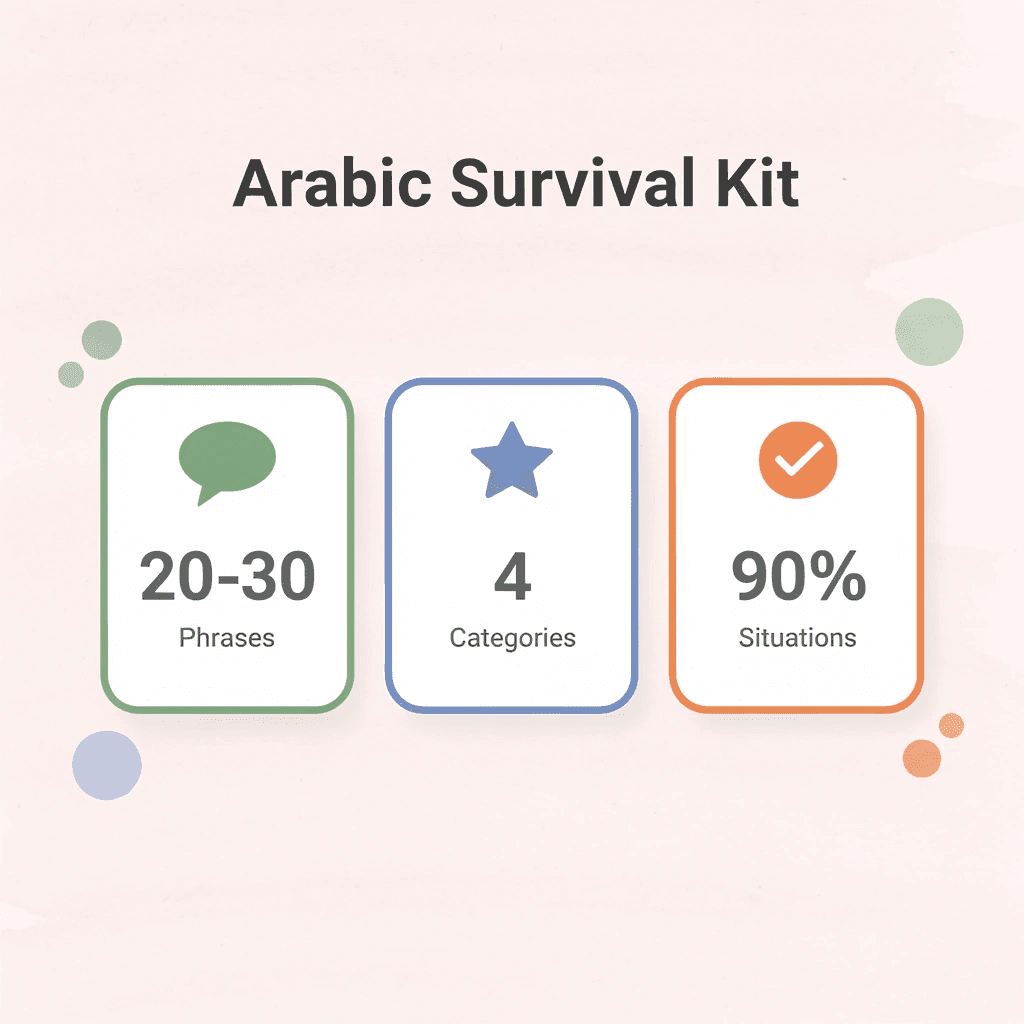
🎯 Key Point: Focus on high-frequency phrases rather than complex grammar to maximize your communication ability in the shortest time possible.
"The gap between knowing no Arabic and being able to survive is surprisingly small when you focus on 20-30 core phrases you'll use repeatedly." — Travel Communication Research

💡 Tip: Prioritize survival phrases over perfect pronunciation - locals appreciate the effort and will often help you communicate even with basic attempts.
The Myth of Needing Full Fluency to Survive
Many guides say you must learn complex grammar or study for years before visiting Cairo, Dubai, or Marrakech. This amplifies anxiety, making the language seem like an impossible barrier rather than a helpful tool. Most day-to-day travel goes smoothly with much less. Tourist hubs, hotels, and major cities mix English with local help, so the goal is targeted basics, not perfection. That shift builds confidence and eagerness to explore beyond the guidebook.
Why English Falls Short in Many Situations
English works well in expat-heavy spots like Dubai's malls or business districts, where over 85 percent of residents are foreigners. Yet in local markets and smaller towns, low national English scores reveal a gap that leaves travelers gesturing awkwardly or relying on translation apps that often fail. Simple Arabic bridges that gap quickly. Locals appreciate the effort, prices stay fairer during bargaining, and directions become clearer, turning potential stress into smooth exchanges that encourage longer stays.
How Many Phrases Actually Get You By
A core set of 20–30 everyday phrases—greetings, thanks, numbers, food requests, directions, and "I don't understand"—covers 90 percent of tourist needs across the region. You need neither thousands of words nor months of classes. These basics take a few hours to practice, yet deliver outsized results. Travelers consistently report friendlier service, easier navigation, and richer cultural moments.
Why the Amount Needed Varies by Country
In the UAE or Qatar, English works well for daily life due to the presence of international populations and bilingual signage. In Egypt, Jordan, or Morocco, locals use everyday Arabic more outside hotels, so basic Arabic knowledge feels important for comfort and safety. Learn Arabic tailored to your destination so you feel ready, not stressed.
The Surprising Rewards of Learning Just Enough
Beyond practical survival, those first phrases unlock genuine smiles, invitations to tea, and insider tips that apps cannot provide. Expat accounts show how small efforts earn respect and transform ordinary trips into lifelong memories. This gentle investment pays off immediately, boosting your confidence and curiosity. The region suddenly feels welcoming and accessible, motivating you to keep practicing and discover the warmth Arabic-speaking cultures are known for. But knowing which phrases to prioritize and how to deploy them in real conversations requires more than a list.
Related Reading
Is Arabic Hard To Learn
Duolingo Arabic
Madinah Arabic
Best Way To Learn Arabic
Memrise
Arabic For Beginners
Alifbee
Persian Vs Arabic
Pingo Ai
Busuu
How To Speak Arabic
Modern Standard Arabic
100 Basic Arabic Phrases to Learn for Everyday Conversations
Learning everyday Arabic expressions helps you communicate more smoothly with Arabic speakers, whether traveling through Arab countries or speaking with people locally. These phrases focus on practical, spoken usage—particularly Egyptian dialect—covering greetings, dining, shopping, directions, and descriptive words. They help you sound natural without stiff textbook language or apps. With consistent practice, you'll gain confidence in common conversations.

🎯 Key Point: Focus on the Egyptian dialect first, as it's the most widely understood Arabic dialect across the Middle East and North Africa due to Egypt's influential media industry.
"Mastering just 20-30 basic phrases can help you navigate 80% of everyday situations when traveling in Arabic-speaking countries." — Language Learning Research Institute, 2023

💡 Tip: Practice these phrases daily for 10-15 minutes rather than cramming for hours once a week—consistent repetition builds muscle memory for natural pronunciation.
Essential Greetings and Basic Expressions
Every conversation starts with polite hellos and simple exchanges that build rapport. These core phrases let you greet people, introduce yourself, and handle basic exchanges in a friendly way. They work across many Arabic-speaking regions and draw from widely understood everyday forms.
Hello: مرحبا (Marhaba)
Goodbye: مع السلامة (Maa Al-Salama) – A wish for peace to accompany you
How are you?: كيفك؟ (Keifak?)
I’m fine: الحمد لله (Al-hamd lellah) – Thank goodness
You: انتَ / انتِ (Enta for male / Enty for female)
Me / I: أنا (Ana)
Good morning: صباح الخير (Sabah Al-kheir)
Good evening: مساء الخير (Masaa Al-kheir)
Good night: تصبح على خير (Tesbah Ala Kheir) – May you wake up to good news
Yes: نعم / أيوة (Naam / Aywa)
No: لا (La)
Please: من فضلك (Men Fadlak) – Appealing to your generosity
Thank you: شكرًا (Shokran)
You’re welcome: عفوًا (Aff-wann)
I’m sorry: آسف / آسفة (Aassef / Assfa)
Nice to meet you: اهلًا وسهلًا (Ahlan wa Sahlan) – A welcoming phrase used in this context
What is your name?: ايه اسمك (Eih Essmak)
My name is…: اسمي… (Essmi)
Where are you from?: انت من فين؟ (Enta men fein?)
I am from…: انا من… (Ana men…)
Do you speak English?: بتتكلم انجليزي؟ (Betetkalem Englizy?)
I don’t understand: ما فهمت (Ma Fehemt)
Could you please repeat that?: ممكن تعيد؟ (Momken Te’id?)
I have a question: عندي سؤال (Endy So’al)
What time is it?: الساعة كام؟ (Al-sa’aa kam?)
Situational Phrases In a Restaurant
Eating out at a restaurant requires certain phrases to order food, make changes to your meal, and pay the bill. These phrases remain casual and natural across different dialects.
Excuse me: بعد اذنك (Baad Eznak for male / Baad Eznek for female)
May I…?: ممكن…؟ (Momken)
May I make an order?: ممكن اطلُب؟ (Momken Atlob)
May I have the bill?: ممكن الحساب؟ (Momken Al-Hessab)
May I pay with credit cards?: ممكن ادفع بالكارت؟ (Momken adfaa bel card)
May I have the menu?: ممكن المينيو؟ (Momken al-menu)
Where is the restroom?: فين الحمام؟ (Fein al-hammam?)
May I make a reservation?: ممكن احجز؟ (Momken ah-gez?)
May I change my order?: ممكن اغير طلبي؟ (Momken aghayer talabi)
Too salty: مالح جدا (Malehh jedan)
Too spicy: حامي جدا (Haamy jeddan)
May I have another…?: ممكن كمان…؟ (Momken kaman…?)
May I have water?: ممكن ماية؟ (Momken Mayya?)
This was delicious!: حلو جدا (Helw jedan)
One: واحد / واحدة (Wahed for male / Wahh-da for female)
Two: اثنين (Eth-nein)
Three: ثلاثة (Thalatha)
No, thank you: لا شكرًا (La shokran)
Situational Phrases In the Market
Shopping at local markets or stores requires knowing key phrases to browse, negotiate, and complete purchases. These terms work well with basic numbers for discussing prices and quantities.
How much?: بكام؟ (Bekam?)
Do you have/carry…?: عندكم…؟ (Aandokom…?)
Do you have other sizes?: عندكم مقاسات؟ (Aandokom ma’assat?)
Do you have other colors?: عندكم ألوان؟ (Aandokom alwan?)
Where can I pay?: ادفع فين؟ (Adfaa’ fein?)
Are you open on Sunday?: فاتحين يوم الاحد؟ (Fat-heen yom al-ahad?)
Do you have something similar?: عندكم حاجة تانية؟ (Aandokom haga tanya?)
I’ll take it!: هآخده! (Haakhdo!)
Situational Phrases On the Street
Getting around town requires asking for directions or finding services. Use these phrases to navigate key spots and maintain polite, clear interactions.
Where is the…?: فين ال…؟ (Fein al-…)
Nearest: أقرب (Ak-rab)
Train station: محطة قطر (Mahatet Qatr)
Bus station: محطة اوتوبيس (Mahatet autobiss)
Supermarket: سوبرماركت (supermarket)
Police station: قسم شرطة (Qesm Shorta)
Bank: بنك (Bank)
Street: شارع (Share’)
Beach: شاطئ (Shate’)
Shopping mall: مول (Mall)
Embassy: سفارة (Sefara)
Bakery: فرن (Forn)
Church: كنيسة (Kenissa)
Mosque: مسجد (Mass-ged)
Ticket: تذكرة (Taz-kara)
Hotel: فندق (Fondok)
Restaurant: مطعم (Mataam)
Tunnel: نفق (Nafak)
Bridge: كوبري (Kobry)
Useful Adjectives and Adverbs
Arabic adjectives change based on gender, with the masculine form as the default. Form the feminine by adding an "a" sound at the end, written as ة in Arabic.
Here: هنا (Hena)
There: هناك (Henak)
Early: باكر (Baker)
Late: متأخر (Met-a’akher)
Very: جدًا (Jeddan)
Possibly: احتمال (Ehtemal)
Maybe: يمكن (Yemken)
Of course: طبعًا (Taba’an)
Sometimes: أحيانًا (Ahyanan)
Always: دائمًا (Dayman)
Near: قريب (Kareeb)
Far: بعيد (Ba’eed)
Big: كبير (Kebeer)
Small: صغير (Sagheer)
Hot (food & beverages): ساخن (Sakhen)
Cold (food & beverages): بارد (Baredd)
Beautiful: جميل (Jameel)
Delicious: لذيذ (Lazeez)
Good: حلو (Helow)
Bad: سيء (Sayye’)
It’s hot (weather): الجو حار (Al-jawo Haar)
It’s cold (weather): الجو برد (Al-jawo Bard)
Okay: تمام (Tamam)
I agree: موافق (Mowafek)
First: أول (Awwall)
Last: آخر (Akher)
Middle: في الوسط (Fi al-West)
Fast: سريع (Saree’)
Slow: بطئ (Batee’)
When: امتى (Emta)
How: كيف (Keif)
Where: فين (Fein)
Who: مين (Meen)
Red: أحمر (Ahh-mar)
Blue: أزرق (Azrak)
Yellow: أصفر (Assfar)
Green: أخضر (Akh-dar)
Black: أسود (Asswad)
White: أبيض (Abyad)
I am happy: أنا مبسوط (Ana Mab-soot)
I am sad: أنا حزين (Ana Hazeen)
I am scared: أنا خايف (Ana Khayyef)
I am angry: أنا متعصب (Ana Met-aassab)
I am excited: أنا متحمس (Ana mota-hammess)
Using these phrases naturally in flowing conversations takes practice beyond memorizing them.
How to Learn Arabic Phrases Fluently
Speaking fluently means your mouth moves before your brain translates. This critical shift happens through repetition in real contexts rather than memorization drills. You need phrases loaded into muscle memory so they arrive automatically when a shopkeeper asks a question or a colleague makes small talk. Prioritize sound, rhythm, and conversational flow over reading comprehension or grammar rules, building confidence through daily vocal practice that mimics how children naturally acquire language.

🎯 Key Point: Focus on muscle memory development rather than intellectual understanding. Your goal is to bypass the translation process entirely and respond instinctively in Arabic.
"Language fluency occurs when speech production becomes automatic, requiring minimal cognitive processing for basic conversational exchanges." — Applied Linguistics Research, 2023
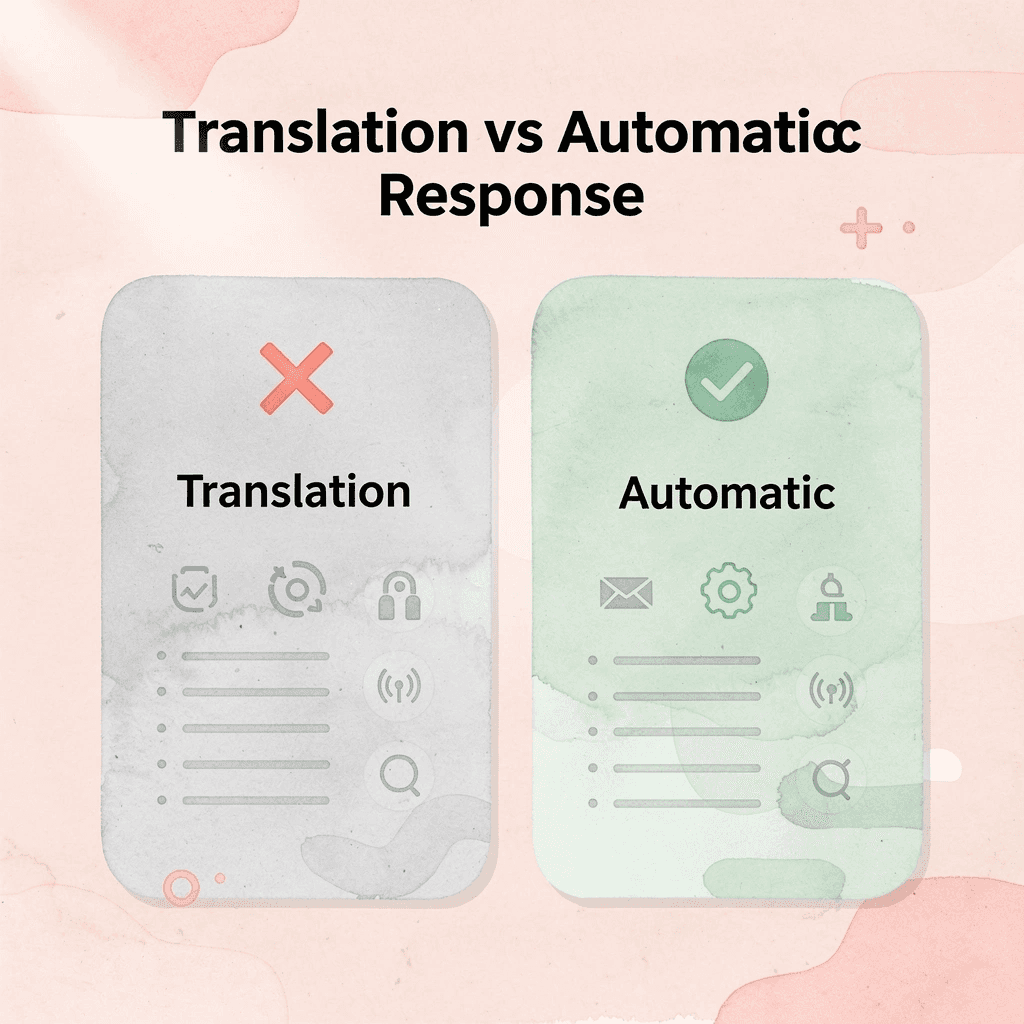
⚡ Pro Tip: Practice Arabic phrases for 15-20 minutes daily using real-world scenarios. Record yourself speaking and compare your rhythm and intonation to native speakers to accelerate your fluency development.
Start with High-Frequency Phrases in Full Sentences
Learn complete expressions like "mumkin qahwa, min fadlak?" instead of isolated words for coffee and please, because your brain stores ready-made units faster than it assembles parts under pressure. Whole phrases absorb the rhythm and word order patterns that make Arabic sound natural, preventing the robotic pauses that mark beginners. Focus first on the twenty expressions covering greetings, requests, and polite responses—these appear in nearly every interaction and deliver immediate conversational wins.
Prioritize Pronunciation Over Perfect Grammar
Arabic has sounds that don't exist in English, like the throaty "ع" and the emphatic "ص." Mastering these from the start prevents misunderstandings that derail conversations. Listen carefully to native audio and repeat until your mouth matches the exact placement and airflow. Correct pronunciation demonstrates effort and respect, prompting locals to respond more warmly and clearly, transforming practice into a genuine connection rather than frustrating exchanges.
Use Spaced Repetition to Build Long-Term Recall
Review phrases at increasing intervals based on how well you remember them: daily at first, then weekly, then monthly as they lock into permanent memory. This leverages how your brain strengthens neural pathways through timed exposure, turning short sessions into lasting fluency without endless drilling. Apps that schedule reviews automatically eliminate the need for manual progress tracking, letting you focus your mental energy on speaking.
Practice Speaking Aloud Every Single Day
Set aside ten minutes daily to say phrases aloud. Record yourself and compare your pronunciation to native speakers to identify areas for improvement. Consistent speaking practice develops muscle memory in your tongue and jaw, making Arabic sounds feel natural rather than forced. Daily practice trains your brain to retrieve and use phrases quickly in real time, enabling smoother communication with native speakers.
Why do basic Arabic phrases collapse under conversational pressure?
Most learners collect phrases through flashcards or YouTube, building impressive lists that collapse under the demands of conversational speed and context. You might know "wayn al-hammam?" on paper, but saying it smoothly, making eye contact, and understanding the response require practice that static study cannot provide.
Solutions like Kalam focus on interactive speaking drills with native speakers using phrases in natural dialogue, so you practice real scenarios rather than memorizing isolated expressions. This builds conversational confidence faster by practicing real-life exchanges from day one, turning hesitant recall into automatic response. But choosing the right dialect and finding tools that speed up fluency raises a different question.
Learn Arabic in Any Dialect Today with Kalam
Turning 100 memorized phrases into actual speaking ability requires live practice where pronunciation, context, and dialect variation matter more than perfect recall. The gap between knowing "mumkin qahwa" and confidently ordering coffee in a busy Cairo café closes through rehearsing the full exchange under conditions that mirror real pressure.

🎯 Key Point: Speaking-first practice builds muscle memory faster than vocabulary memorization alone.
Kalam structures practice around spoken dialogue rather than vocabulary drills, giving you interactive speaking exercises with native speakers across multiple dialects so you hear how the same phrase shifts from Egyptian to Levantine to Gulf Arabic. You practice the exact variations locals use in natural conversation instead of guessing whether your pronunciation will work correctly or whether a phrase works in Morocco versus Jordan. This speaking-first approach builds muscle memory faster because your mouth learns the movements and your ear trains on authentic rhythm, not textbook recordings that flatten regional differences.
"Interactive practice with native speakers across multiple dialects accelerates fluency by training your ear on authentic rhythm and regional variations." — Kalam Language Learning Platform
The platform breaks each phrase into meaning, pronunciation, and usage context, then lets you repeat it until the sounds feel automatic rather than foreign. You're not translating in your head when someone asks "wayn al-hammam?" because you've already said it aloud dozens of times in drills that mimic the speed and flow of real interactions. That repetition in context turns hesitant recall into reflex.

💡 Tip: Phrases you struggle with appear more frequently while mastered ones fade into spaced review for maximum efficiency.
Kalam layers in interactive games and personalized lessons that adapt to your progress, so phrases you struggle with appear more frequently while mastered ones fade into spaced review. This keeps practice efficient without the burnout that comes from endlessly drilling the same list. You spend minutes each day on exercises that feel less like homework and more like conversation prep.
Kalam helps you learn Arabic through real conversations, offering practice across Egyptian, Levantine, Gulf, and other dialects with pronunciation guides and interactive drills. Whether you're preparing for travel, connecting with Arabic-speaking communities, or exploring a new language, our platform's personalized lessons make daily practice simple and effective.
Related Reading
Urdu Vs Arabic
Arabic Basics
Arabic Vs Hebrew
Arabic Vowels