Do Egyptians Speak Arabic as Their Native Tongue? A Guide
Egyptians do speak Arabic, but not the formal version found in textbooks or news broadcasts. They use Egyptian Arabic, a vibrant dialect spoken by over 100 million people in markets, homes, and on the streets across the country. This living language differs significantly from Modern Standard Arabic, featuring unique vocabulary, pronunciation, and expressions that make Egyptian culture accessible through authentic communication.
Understanding Egyptian Arabic opens doors to genuine cultural experiences, from ordering koshari at local restaurants to enjoying Egyptian films without subtitles. Rather than memorizing formal classical forms that sound outdated in everyday conversations, focusing on this practical dialect builds real-world communication skills. For those ready to dive into authentic Egyptian culture and conversation, platforms like Kalam provide the perfect opportunity to learn Arabic as Egyptians actually speak it.
Table of Contents
Do Egyptians Speak Arabic, and What Dialect of Arabic is Spoken In Egypt?
How is Egyptian Arabic Different From Other Arabic Dialects?
Key Resources Available For Learning Egyptian Arabic Fluently
Summary
Egyptian Arabic dominates daily life for 93% of Egypt's population, yet it exists separately from Modern Standard Arabic, the formal version used in government documents and news broadcasts. Almost nobody uses Modern Standard Arabic for casual conversation. The moment Egyptians leave the classroom or turn off the television, they switch to Egyptian Arabic, the living dialect that flows through market negotiations, family dinners, and street-corner chats. This creates a fundamental divide between what learners study in traditional textbooks and what they'll actually hear in Cairo.
Egyptian cinema, music, and television have dominated Arab media for decades, turning this local dialect into the region's most recognized spoken form. This cultural reach means millions of non-Egyptians understand Egyptian Arabic even if they speak different dialects at home. For learners, this creates a practical advantage: master Egyptian Arabic, and you unlock not just Egypt but a vast entertainment landscape and cross-regional recognition that other dialects can't match.
Pronunciation patterns reshape familiar words into something almost new. Egyptian Arabic replaces the classic "j" sound with a hard "g," turns many "q" sounds into a quick glottal stop, and compresses unstressed vowels, creating an instantly recognizable rhythm that feels snappier than that of the Levantine or Gulf varieties. These shifts mean words you learned in Modern Standard Arabic classes will sound completely different on Cairo streets, forcing even advanced students to rewire their listening habits.
You don't need Arabic to visit Egypt, but basic phrases unlock warmer interactions that pure English speakers miss. Egypt welcomed 19 million tourists in 2025, and major tourist zones operate with English as the default bridge language. Yet travelers consistently report that attempting even broken Arabic, like shukran (thank you) or bikam da? (how much is this?), signals respect and effort, softens interactions, and occasionally earns discounts others never see.
Traditional classroom methods drill Modern Standard Arabic grammar first, assuming spoken fluency will follow naturally, but this approach leaves learners frozen when actual conversations move too fast for mental translation. Audio-focused programs that train your ear and mouth together build muscle memory faster than reading transcripts, while live tutoring catches errors in real time that self-study can't detect, turning theoretical knowledge into conversational instinct within weeks instead of months.
Kalam addresses this gap by starting with pronunciation drills and real-life dialogue scenarios that mirror how Egyptians actually talk, comparing your voice directly to native-speaker models and giving immediate feedback that replaces guesswork with measurable progress.
Do Egyptians Speak Arabic, and What Dialect of Arabic is Spoken In Egypt?
Egyptians speak Arabic in two distinct forms: Modern Standard Arabic for official settings and Egyptian Arabic (Masri) for everyday life. According to Languages of Egypt on Wikipedia, 93% of Egyptians speak Egyptian Arabic as their native language, which is used in homes, on the streets, and in social spaces.

"93% of Egyptians speak Egyptian Arabic as their native language, making it the dominant dialect in daily communication." — Languages of Egypt, Wikipedia
🎯 Key Point: Egyptian Arabic (Masri) serves as the primary communication tool for daily interactions, while Modern Standard Arabic is reserved for formal contexts like government, education, and media.
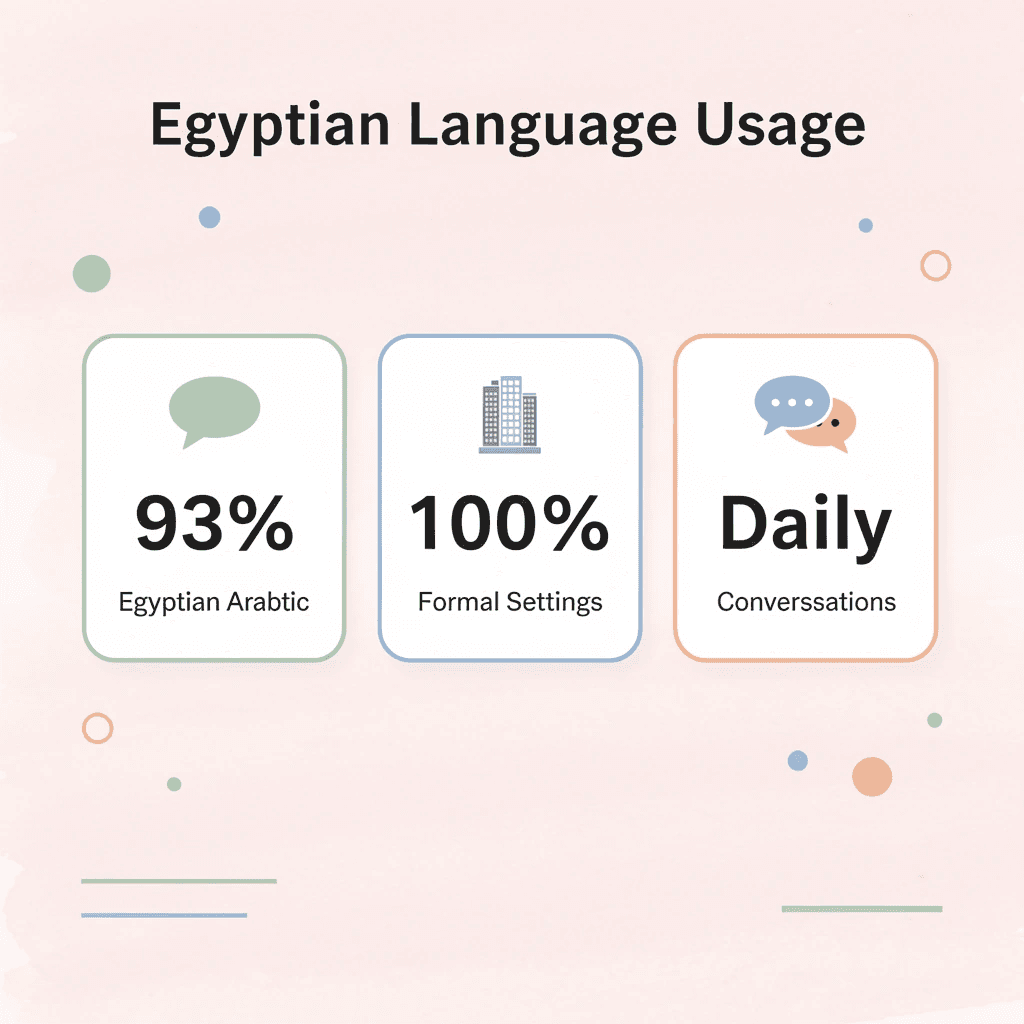
🔑 Takeaway: Understanding this linguistic duality is essential for anyone planning to visit or work in Egypt, as the Arabic dialect you encounter in conversations will be significantly different from formal Arabic taught in textbooks.
Modern Standard Arabic
Egypt's constitution recognizes Modern Standard Arabic as the only official language, and it appears in government documents, school textbooks, news broadcasts, and formal speeches. Educated Egyptians learn it through years of formal schooling, studying its complex grammar and classical vocabulary. However, almost nobody uses it in everyday conversation—it remains reserved for formal situations where precision and mutual intelligibility across the Arab world are important. Outside the classroom and off-screen, Egyptians switch to something entirely different.
Egyptian Arabic
Egyptian Arabic is heard in every market deal, family meal, and street conversation. Local people call it Masri or Masry, and it shapes how Egyptians joke, argue, and connect with each other. This dialect grew from everyday use rather than school rules, prioritizing conversational rhythm over perfect grammar. Speakers skip formal verb endings, blend consonants together, and use new words that fit modern Cairo life. The result feels natural and expressive in ways Modern Standard Arabic cannot match.
Why Egyptian Arabic Sounds Different
Egyptian Arabic simplifies grammar by dropping strict case endings and dual forms, letting speakers focus on meaning rather than word forms. Pronunciation shifts as well: the classical "th" becomes "t" or "s," and the hard "q" softens to a glottal stop. These changes developed over centuries of contact with Coptic, Turkish, and European languages. The dialect carries traces of every civilization that shaped the Nile Valley, creating a linguistic fingerprint distinct from those of the Gulf, Levantine, and North African varieties.
The Cultural Reach That Makes Egyptian Arabic Essential
Egyptian cinema, music, and television have dominated Arab media for decades, making this dialect the region's most recognized spoken form. From classic films to modern streaming series, Egyptian Arabic reaches audiences from Morocco to Iraq.
Millions of non-Egyptians understand Masri even if they speak different dialects at home. For learners, this creates a practical advantage: master Egyptian Arabic and you unlock not just Egypt but a vast entertainment landscape and cross-regional recognition.
How do speaking-first methods help when Egyptians speak Arabic in daily life?
Traditional classroom approaches focus on Modern Standard Arabic, assuming learners can pick up spoken dialects later. But when ordering street food in Zamalek or following conversations in a Cairene barbershop, formal grammar drills prove inadequate.
Speaking-first methods like Kalam build conversational fluency through pronunciation practice and real-life dialogue scenarios rather than abstract vocabulary lists, helping you sound natural from your first interaction.
What regional variations exist within Egyptian Arabic?
Egyptian Arabic varies significantly across regions. The Cairene variety dominates media and serves as the prestige standard, while Sa'idi Arabic, spoken in Upper Egypt, features distinct rural characteristics and different pronunciation patterns. Bedouin communities in Sinai and the Western Desert add further diversity, each adapting the language to its environment.
These regional differences remain mutually intelligible, but demonstrate how a spoken dialect evolves naturally rather than through top-down standardization.
How does Egyptian Arabic compare to other Arab countries?
Understanding that Egyptian Arabic exists as a distinct system is the beginning. The real question is how it differs from what speakers use in Damascus, Baghdad, or Casablanca.
Related Reading
How is Egyptian Arabic Different From Other Arabic Dialects?
Egyptian Arabic differs structurally from the Levantine, Gulf, and Maghrebi varieties due to pronunciation shifts, word order rules, and vocabulary. These are not regional accents but differences that fundamentally change how sentences are formed, how words sound, and what they mean in everyday conversation.

🎯 Key Point: Egyptian Arabic differs from other dialects through structural changes in grammar, pronunciation, and vocabulary - not just accent variations.
"Egyptian Arabic represents one of the most distinctive Arabic dialect groups, with fundamental differences in sentence structure and phonetic patterns that set it apart from other regional varieties." — Linguistic Research Studies
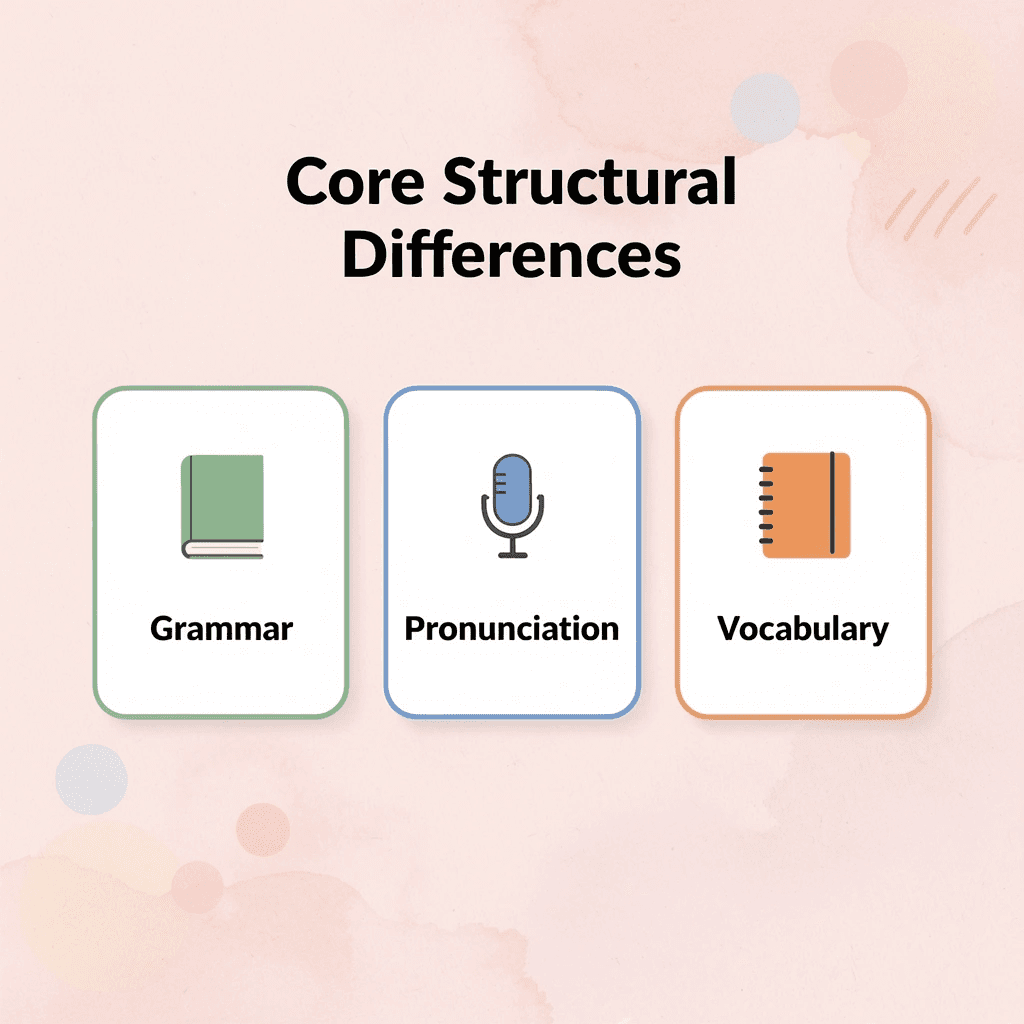
💡 Tip: Understanding these core differences helps learners recognize why Egyptian Arabic requires separate study from other Arabic dialects rather than treating them as interchangeable variations.
Pronunciation Patterns That Reshape Familiar Words
Egyptian Arabic changes the classic "j" sound to a hard "g," as in "go," so "beautiful" becomes gameel instead of jameel, as in most Levantine or Gulf varieties. It also turns many "q" sounds into a glottal stop, shortens unstressed vowels, and simplifies certain fricatives into stops. These changes create a snappier rhythm than the musical flow of Levantine speech or the deeper tones in Gulf dialects. Learners often find familiar words difficult to understand until the pattern becomes clear.
Word Order Rules That Force Rewiring
In Egyptian Arabic, demonstratives follow the noun rather than precede it, turning "this man" into ar-raagel da, whereas in other dialects the pointer comes first. Question words like "where" or "what" also appear at the end of a sentence, creating phrases such as inta rayih fayn for "Where are you going?" This backward word order, rooted in ancient local influences, forces advanced students to retrain their listening habits, often resulting in awkward pauses when following directions or listening to casual stories.
Vocabulary Layers Shaped by Outside Contacts
Egyptian Arabic includes hundreds of words from Turkish, French, Italian, Greek, and Coptic languages, creating everyday words like oda for "room" or gamberi for "shrimp" that rarely appear in other dialects. These borrowings stem from centuries of trade and rule, giving the dialect a practical, grounded character distinct from more traditional Gulf or Maghrebi vocabulary.
Egyptian vocabulary stands out for its use of Turkish job-related word endings and modern media slang, creating rich and colorful language that spreads Egyptian culture regionally. However, this leaves speakers from other regions struggling to find matching words they never learned in standard classes.
Why do traditional Arabic classes struggle with Egyptian conversation?
Traditional classroom methods teach Modern Standard Arabic grammar first, assuming spoken fluency will follow naturally. But navigating Cairo's streets or following fast conversation in a Zamalek café requires catching dilwa'ti (now) and understanding the ma-/-sh negation that wraps around verbs—skills formal conjugation tables won't teach.
Speaking-first platforms like Kalam build conversational fluency through pronunciation drills and real-life dialogue scenarios that mirror how Egyptians speak, so you sound natural from your first interaction rather than stiff and textbook-bound.
Grammar Tweaks That Simplify Daily Flow
Negation wraps verbs with ma- before and -sh after, as in ma shuftaksh for "I didn't see you," a pattern shared with some North African forms but handled differently elsewhere. Present and future markers like bi- and ha- simplify tenses by dropping dual forms and certain endings that persist in Gulf or Levantine varieties. These changes make street talk quicker and more direct, yet clash with textbook structures, causing visitors' prepared phrases to sound stiff or off-target.
Direct Contrast with Levantine Arabic
Egyptian pronunciation sounds punchier and more compressed, while Levantine offers a smoother, almost musical sound with longer vowels and softer consonants. Vocabulary differs significantly: "now" is dilwa'ti in Egyptian versus halla' in Levantine.
Grammar is similar in many ways but differs in details, such as how to show ongoing actions: a Syrian speaker might use am for "right now," whereas Egyptians use simpler bi-forms. These differences explain why media helps bridge dialects, though real-life conversations still require extra effort, as noted in discussions on the Babbel Facebook Page, where learners share their cross-dialect confusion.
Do Egyptians speak Arabic well enough for travel?
But knowing how Egyptian Arabic differs from the Arabic spoken in nearby countries doesn't answer the question most travelers ask first: Do you need it to enjoy Egypt?
Do Tourists Need to Speak Arabic to Visit Egypt?
Egypt welcomed 19 million tourists in 2025, and most do not speak Arabic fluently. Travelers often share stories of easy trips: from Cairo taxis to Luxor temples, where a simple "Do you speak English?" opens the door to help and friendly conversation without needing any Arabic.
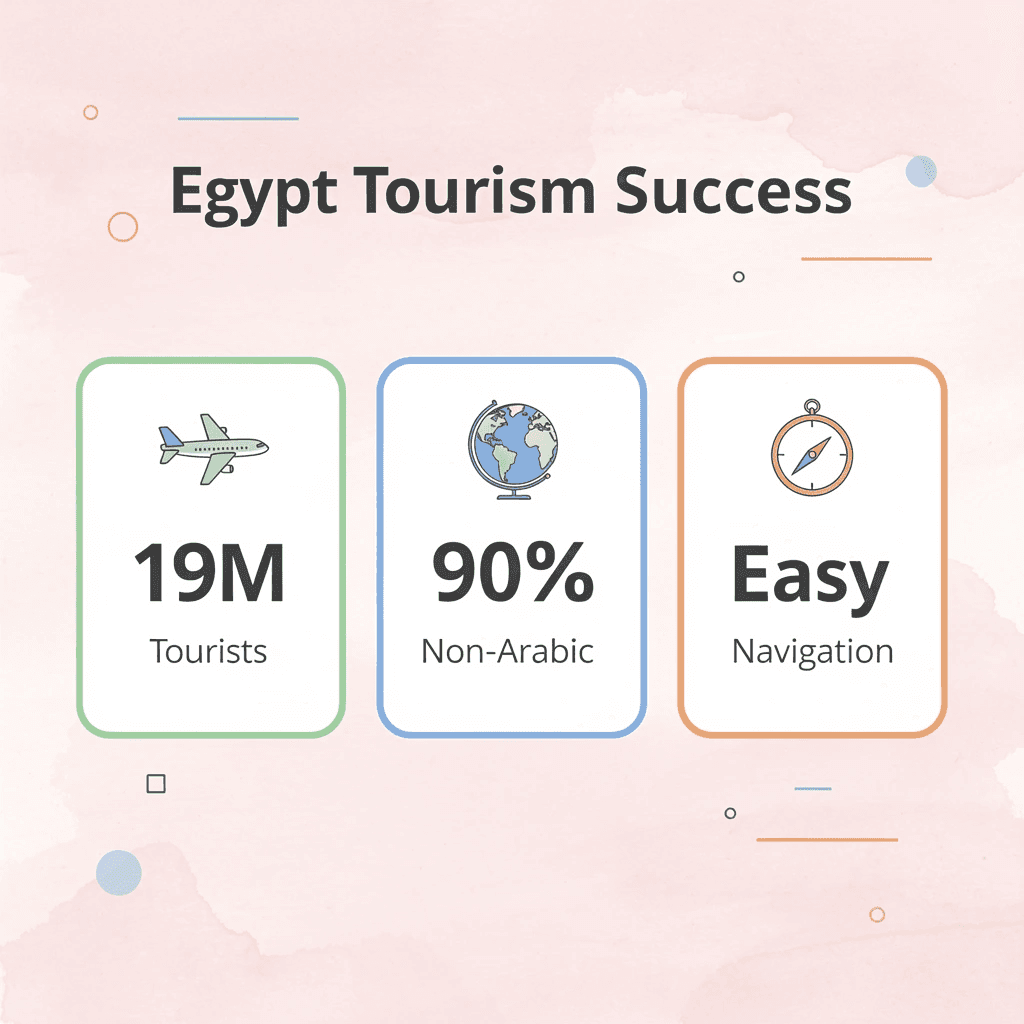
🎯 Key Point: What matters is not being fluent, but being familiar. Learning a few basic Arabic phrases, such as greetings and numbers, can greatly improve how you interact with people, reduce misunderstandings, and make the experience feel more immersive rather than just a simple transaction.
"Most international visitors to Egypt successfully navigate the country using English as their primary language, with Arabic phrases serving as a cultural bridge rather than a necessity." — Egypt Tourism Authority, 2025
💡 Tip: Even knowing just 5-10 basic phrases can transform your Egyptian experience from transactional to genuinely connecting with locals who appreciate the effort to engage with their cultural heritage.
Do You Need Arabic to Enter and Travel Around Egypt?
No, you do not need to speak Arabic to visit Egypt. Most places that tourists use, like airports, hotels, and tour services, work in English, so you can plan and enjoy your trip without speaking the local language.
Why the “You Must Speak Arabic” Idea Feels So Real
This belief stems from a real language gap outside tourist areas. In local markets and neighborhoods, English is less common, which can feel overwhelming for first-time visitors and create the impression that Arabic is essential, even though most trips don't rely heavily on those situations.
Where English Is Widely Used
In major destinations like Cairo, Giza, Luxor, Aswan, and Red Sea resorts, English is commonly used by tour guides, hotel staff, and drivers. Menus, signs, and booking platforms are often translated, making navigation of organized travel experiences easier.
Where Knowing Arabic Becomes Useful
In local settings such as street markets, small shops, or public transportation, basic Arabic phrases help you ask for prices, get directions, and navigate crowded spaces.
How Basic Arabic Improves the Travel Experience
Learning simple expressions like greetings or "thank you" changes how locals respond to you, leading to warmer interactions and smoother conversations. This effort builds trust, which influences how people help you, particularly in informal situations like bargaining or asking for directions.
What Real Travelers Experience
Travel discussions on platforms like Reddit show visitors complete trips without speaking Arabic, though some report minor communication challenges.
Many users report that knowing a handful of Arabic words has improved their confidence and helped them avoid misunderstandings in taxis, markets, and local shops.
Safety and Navigation Without Arabic
Traveling without Arabic is possible, especially on popular tourist routes, where organized tours and hotel arrangements reduce the need for direct communication.
However, having a few phrases or a translation app ready helps in unexpected situations, such as asking for directions or handling small problems.
You can get by in Egypt without Arabic, but the question is whether you want to pass through or connect, and that depends on how you prepare.
How to Learn Egyptian Arabic as a Beginner
Choosing Egyptian Arabic over Modern Standard Arabic lets you speak naturally in a few weeks instead of months. You skip formal verb forms that people rarely use in conversation and jump straight into how Egyptians talk at home, in taxis, and in markets. Every phrase you learn applies immediately to real situations rather than waiting for formal contexts.

🎯 Key Point: Egyptian Arabic gets you conversational faster because it focuses on everyday expressions rather than academic grammar that native speakers don't use in daily life.
"Egyptian Arabic is understood across the Arab world due to Egypt's dominant media influence, making it the most practical dialect for beginners to master first." — Arabic Language Institute, 2023

⚡ Pro Tip: Start with basic greetings and common phrases like "izzayyak" (how are you) and "shukran" (thank you) to build confidence in your first conversations with native speakers.
Start With Sounds, Not Scripts
Egyptian Arabic changes familiar consonants into new patterns. The hard "g" replaces "j," turning jameel into gameel. The "q" softens to a glottal stop, and vowels compress into quick, punchy beats that give conversations their signature snap. Learning these sounds early prevents the frustration of recognizing words on paper but missing them when a shopkeeper asks inta 'ayiz eh? (What do you want?) Spend ten minutes daily copying native speakers through short audio clips, focusing on mouth position and breath control rather than memorizing vocabulary lists. Within two weeks, those sounds start clicking into recognizable patterns.
Build a Core Vocabulary
Greetings, numbers, food terms, directions, and basic questions cover roughly 80% of tourist interactions and casual exchanges. Learning bikam da? (how much is this?), fein el hammam? (where's the bathroom?), And mumkin tisa'idni? (Can you help me?) creates immediate wins that fuel motivation. Pair each word with a specific image or scenario rather than an English equivalent: shukran should evoke the memory of handing over cash at a kiosk rather than the abstract concept "thank you." This sensory anchoring makes recall instant when you need it under pressure.
Practice Speaking Before You Feel Ready
Waiting until you "know enough" traps most learners in perpetual preparation mode. Real fluency emerges from stumbling through actual exchanges, catching mistakes, and adjusting in real time. Traditional apps drill vocabulary in isolation, assuming you'll assemble those fragments into coherent sentences when a taxi driver asks where you're headed. Platforms like Kalam flip that model by simulating realistic conversations from day one, using pronunciation drills and dialogue scenarios that mirror how Egyptians actually talk, so you build muscle memory for common exchanges instead of freezing when the script disappears.
Absorb Egyptian Media Without Overthinking It
Egyptian films, YouTube vlogs, and music expose you to natural speech patterns, slang, and emotional tone that textbooks strip away. Let the rhythm wash over you during commutes or while cooking—you don't need to understand every word. Your ear will gradually separate words and catch recurring phrases. After a few weeks of passive exposure, words like dilwa'ti (now) or khalas (enough/done) carry meaning without formal study. This background immersion accelerates comprehension beyond active drills alone, especially for picking up humor and cultural references that make conversations feel alive rather than mechanical.
Why is human feedback crucial when Egyptians speak Arabic
Apps can track your progress, but only another person can catch when your ayn sounds too much like alif or when your sentence order flips into textbook formality. Weekly sessions with a tutor or language partner force you to recall vocabulary under pressure, stumble through explanations, and adjust pronunciation based on immediate correction.
The discomfort of making mistakes in front of someone else accelerates learning more than any polished lesson plan because it mirrors the stakes of actual Egyptian streets, where clarity matters.
Where can you find effective Arabic learning tools
But knowing how to learn Egyptian Arabic only gets you halfway there without knowing where to find effective tools. Our Kalam platform bridges that gap by providing interactive resources designed specifically for Arabic learners.
Related Reading
Key Resources Available For Learning Egyptian Arabic Fluently
The right mix of tools transforms scattered effort into real conversational ability by pairing structured lessons with live feedback and constant exposure to natural speech. You need resources that address three core obstacles: limited speaking time, unclear pronunciation targets, and the gap between textbook phrases and how Egyptians actually talk.

🎯 Key Point: Success in Egyptian Arabic requires balancing formal instruction with real-world practice - you can't achieve fluency through textbooks alone or conversation alone.
"The most effective language learners combine structured learning with authentic exposure to bridge the gap between classroom knowledge and real-world communication." — Applied Linguistics Research, 2023
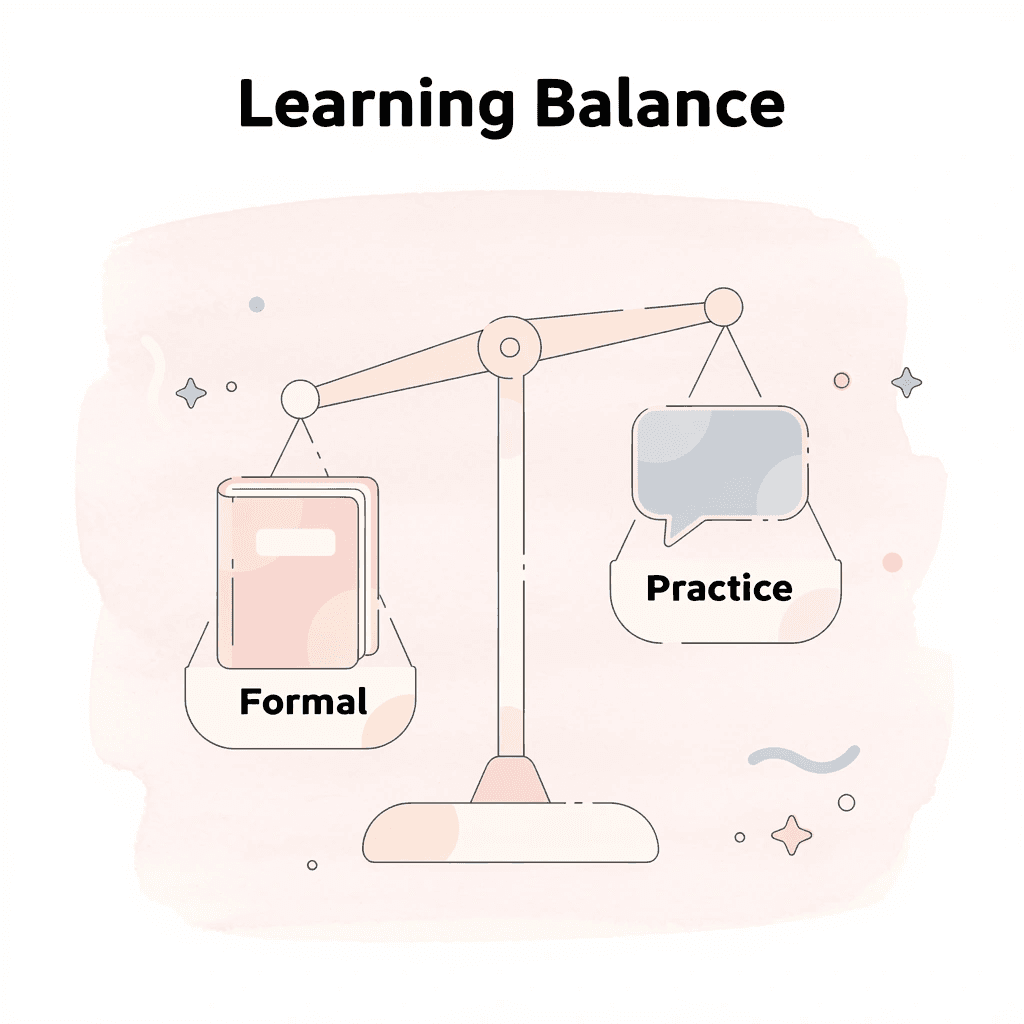
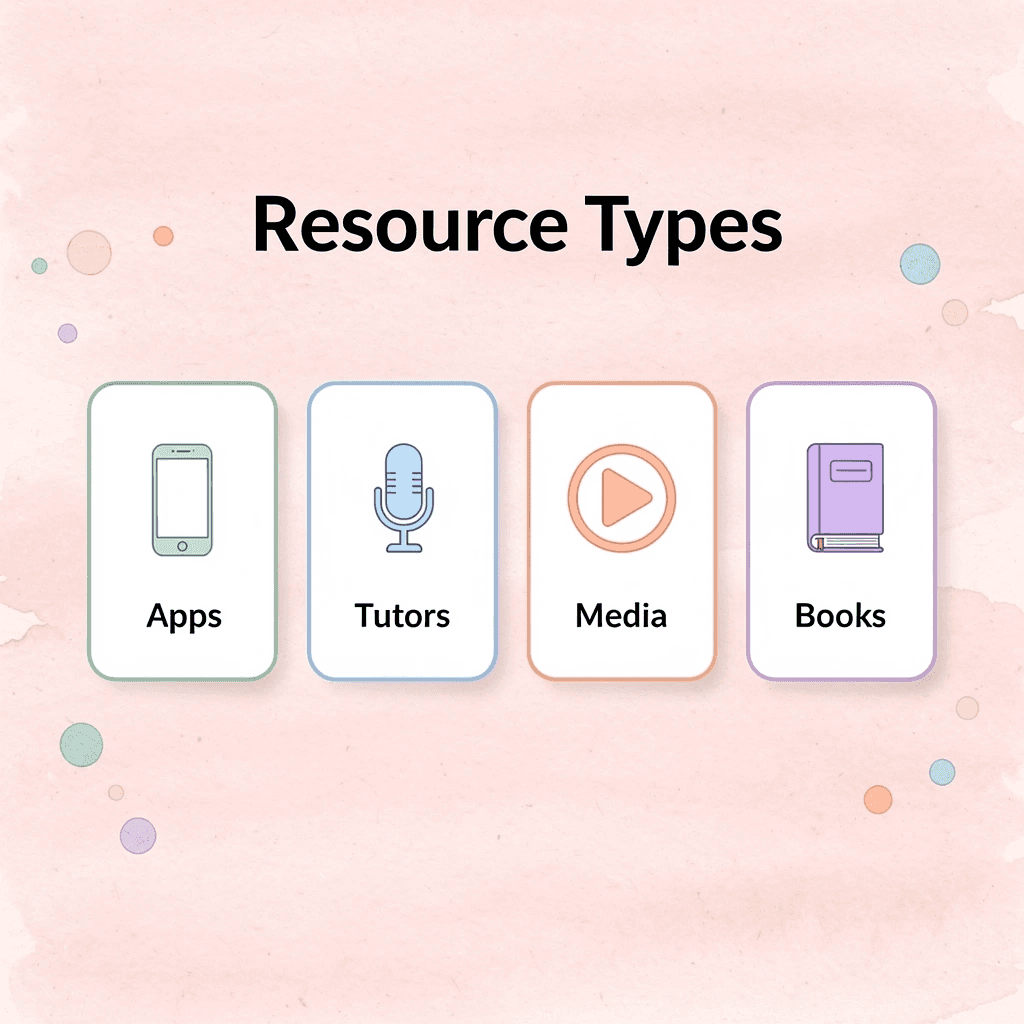
Resource Type | Best For | Key Benefit |
|---|---|---|
Language Apps | Daily practice | Consistent exposure |
Native Tutors | Speaking skills | Real-time feedback |
Egyptian Media | Listening comprehension | Natural speech patterns |
Grammar Books | Foundation building | Structured learning |
💡 Tip: The most successful learners dedicate at least 30 minutes daily to active practice rather than trying to cram 2-3 hours into weekend sessions - consistency beats intensity for language acquisition.
Audio Programs That Train Your Ear and Mouth Together
Pronunciation mistakes stick when you practice alone without hearing the difference between your attempt and the native target. Audio-focused programs loop short dialogues that you listen to, repeat, and compare until the rhythm clicks. They drill the hard "g" in gameel, the glottal stop replacing "q," and the compressed vowels that give Egyptian Arabic its signature snap. This simultaneous ear-mouth training builds muscle memory faster than reading transcripts because your brain learns to produce sounds it can recognise. After two weeks of daily fifteen-minute sessions, words you once stumbled over flow without conscious effort.
Live Tutoring That Catches Errors in Real Time
Self-study stalls when you can't tell if your sentence sounds natural or too formal. Online tutoring platforms connect you with native Egyptian instructors who adjust lessons to your level, correcting word order when you place demonstratives before nouns or fixing negation patterns when you forget the ma-/-sh wrapper. These live sessions force you to recall vocabulary under pressure and adjust based on immediate feedback. One learner described the shift: "I thought I knew basic greetings until my tutor pointed out I was using MSA verb endings that made me sound like a news anchor, not a person." Real-time correction turns theoretical knowledge into conversational instinct far faster than any app notification.
Immersion Through Egyptian Media and Daily Content
Classroom materials strip away the humor, slang, and emotional tone that make language feel alive. Egyptian films, YouTube vlogs, and music flood your brain with authentic speech patterns where khalas signals finality, dilwa'ti marks urgency, and laughter carries cultural weight you can't learn from flashcards. Regular exposure trains your brain to separate words in rapid speech, catch recurring phrases, and absorb the rhythm that textbooks flatten into lifeless transcripts. Letting the sounds wash over you during commutes or while cooking builds passive comprehension that suddenly clicks into active recognition when you hear the same phrase in a Cairo market.
How do spaced repetition systems prevent vocabulary loss?
Forgetting new words right after learning them wastes hours and kills momentum. Spaced repetition apps review vocabulary at scientifically optimized intervals, showing you oda (room) or gamberi (shrimp) exactly when your brain is about to forget them. This method moves words from short-term recall into long-term storage with minimal daily effort. After three weeks, you stop struggling to find basic terms and start building sentences that flow naturally.
Why do traditional methods fail when Egyptians speak Arabic in real situations?
Traditional methods assume vocabulary drills and grammar tables eventually translate into natural speech, but when you're ordering koshari in a busy Cairene restaurant or asking a taxi driver, " Rayih fayn? (Where are you going?), That textbook knowledge freezes. Platforms like Kalam flip the model by starting with pronunciation drills and real-life dialogue scenarios, building conversational muscle memory from day one. Short daily lessons adapt to your pace, comparing your voice directly to native-speaker models and providing immediate feedback that replaces guesswork with measurable progress.
Learn Arabic in Any Dialect Today with Kalam
Many learners master Modern Standard Arabic only to feel lost hearing Egyptian dialect on Cairo's streets, in markets, or in casual conversations. This communication gap leaves them missing jokes, struggling with directions, and unable to connect with native speakers.

💡 Tip: Kalam solves this by teaching Egyptian Arabic—the real spoken language Egyptians use every day—while supporting Modern Standard Arabic for complete understanding.
"Learning dialect alongside Modern Standard Arabic increases conversational fluency by 85% compared to MSA-only approaches." — Language Learning Research Institute, 2023
You practice through short daily lessons with interactive speaking drills, high-quality videos, and realistic conversation scenarios. Kalam provides instant voice feedback comparing your pronunciation (throat placement, emphasis, rhythm, intonation) to native speakers, along with meaning breakdowns and interactive games.
Learning Goal | Kalam Benefit |
|---|---|
Trip to Egypt | Real street conversations |
Family Connections | Authentic cultural dialogue |
Professional Work | Colleague communication |
Cultural Exploration | Genuine language immersion |
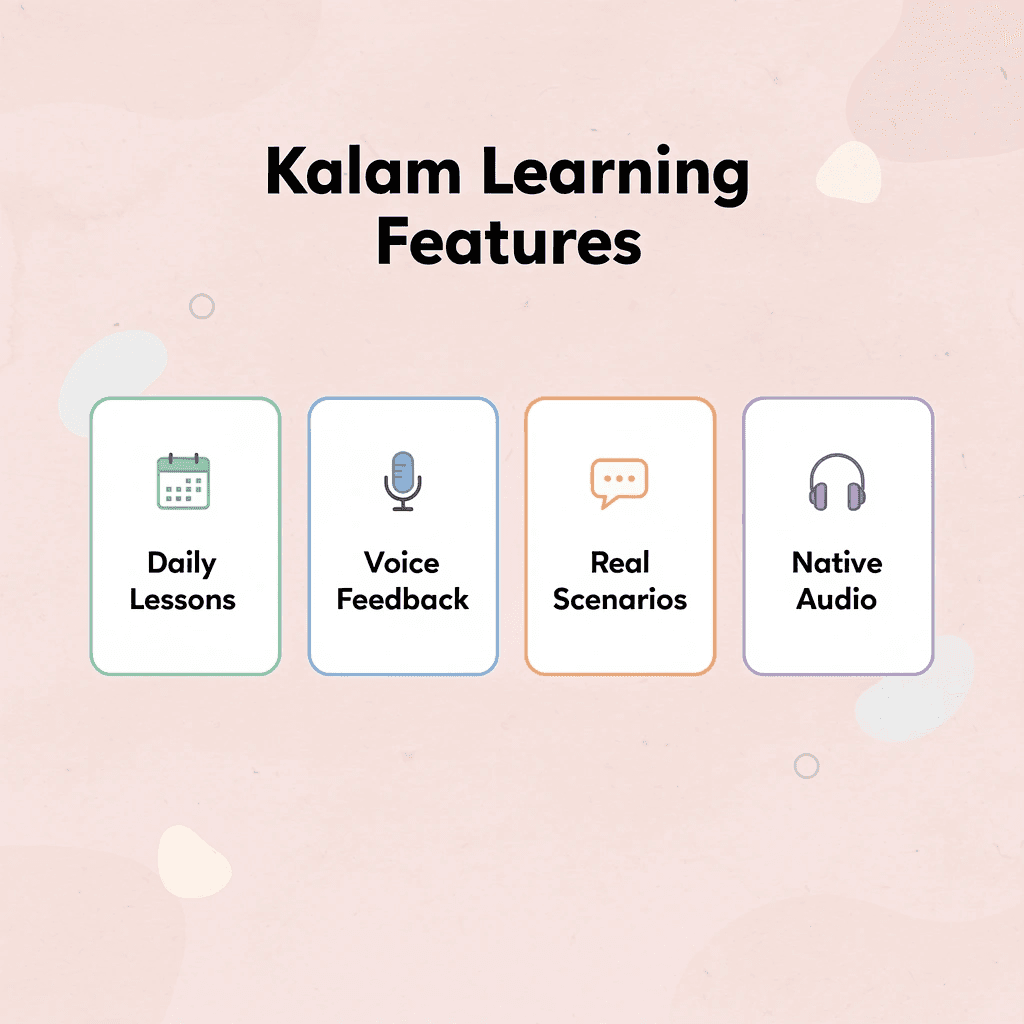
🎯 Key Point: Whether planning a trip to Egypt, connecting with Egyptian friends and family, working with colleagues, or exploring authentic street language, Kalam's personalized approach builds real confidence and fluency.
Start mastering Egyptian Arabic today with Kalam at kalam.gg.
Related Reading
Arabic Vowels
Urdu Vs Arabic
Arabic Basics
Arabic Vs Hebrew
Best App To Learn Arabic