Allahu Akbar in Arabic: What It Means and When to Use It
"Allahu Akbar" appears frequently in news reports and films, yet remains one of the most misunderstood expressions in the world today. This powerful declaration sits at the heart of Islamic practice, spoken by Muslims during their five daily prayers, moments of gratitude, celebrations, and times of awe. Understanding its authentic meaning requires looking beyond surface translations to grasp the cultural depth and spiritual significance behind these sacred words.
Muslims invoke this phrase throughout their daily lives in contexts that reveal its true essence as a declaration of divine greatness. Recognizing when and why this expression is used helps bridge cultural understanding and dispel common misconceptions. For those seeking a deeper comprehension of such meaningful expressions, exploring the language itself provides invaluable context to learn Arabic.
Table of Contents
What Cultural and Religious Significance Does Allahu Akbar Have?
How Kalam Helps You Practice Pronouncing Allahu Akbar in Real-Life Arabic Conversations
Summary
"Allahu Akbar" translates to "God is Greatest" or "God is Greater," not simply "God is Great" as commonly misunderstood. The Arabic word "Akbar" functions as both comparative and superlative, declaring supremacy rather than just greatness. This grammatical distinction matters because the phrase asserts that God stands above fear, success, stress, and worldly problems, reframing any moment in divine perspective. Arabic-speaking Christians and Jews also use "Allah" when referring to God, as it's the Arabic language's standard word for God, appearing in Arabic translations of the Bible and Jewish prayer books across the Middle East.
Muslims say "Allahu Akbar" throughout daily life in both structured worship and spontaneous moments. According to Wikipedia's article on Takbir, the phrase appears five times in the call to prayer and Muslims recite it multiple times during each of the five daily prayers, marking every transition between standing, bowing, and prostrating. Beyond formal worship, families exclaim it at weddings, childbirth, graduations, and funerals, channeling emotion toward gratitude and trust rather than pride or despair. This everyday usage reveals how ordinary the phrase sounds in real Arabic communication, yet media exposure outside Muslim communities focuses almost exclusively on conflict or crisis.
The phrase unites 1.8 billion Muslims across borders through identical Arabic words spoken in worship from Jakarta to Cairo to Detroit. This linguistic consistency fosters a sense of belonging across ethnic, national, and cultural divides that would otherwise separate communities. Children hear their parents say "Allahu Akbar" during Eid celebrations, at funerals, during moments of hardship, and before meals, embedding the phrase into family memory, cultural heritage, and ethical identity across generations.
Pronouncing "Allahu Akbar" correctly requires producing sounds that don't exist in English, including a guttural "l" formed deep in the throat, a crisp glottal stop before "Akbar," and a rolled "r" that gives the ending its resonance. HowToPronounce.com's collection of 25 audio pronunciations shows learners often miss subtle markers like vowel length and the glottal stop, producing a flattened version that loses the phrase's distinctive cadence. Dialect variation adds complexity, as Egyptian speakers might soften certain sounds compared to Gulf speakers, and Levantine dialects introduce subtle vowel shifts without altering meaning.
Isolated vocabulary drills fail because they train pronunciation for careful, deliberate speech rather than for the natural rhythm, speed, and emotional context in which the phrase actually appears in conversation. Native speakers blend sounds, adjust stress patterns based on emotion, and shift pronunciation subtly depending on whether they're announcing good news or marking a prayer position. Repeating the phrase outside realistic dialogue creates a gap between memorized performance and spontaneous reflex, causing learners to freeze when hearing it used naturally in weddings, prayers, or everyday speech.
Kalam addresses this by teaching Arabic through conversation-based practice, where "Allahu Akbar" naturally appears in realistic scenarios like a father welcoming his newborn or friends reacting to good fortune, helping learners develop automatic pronunciation tied to the situation rather than memorization.
What Does 'Allahu Akbar' Mean in English and Arabic?
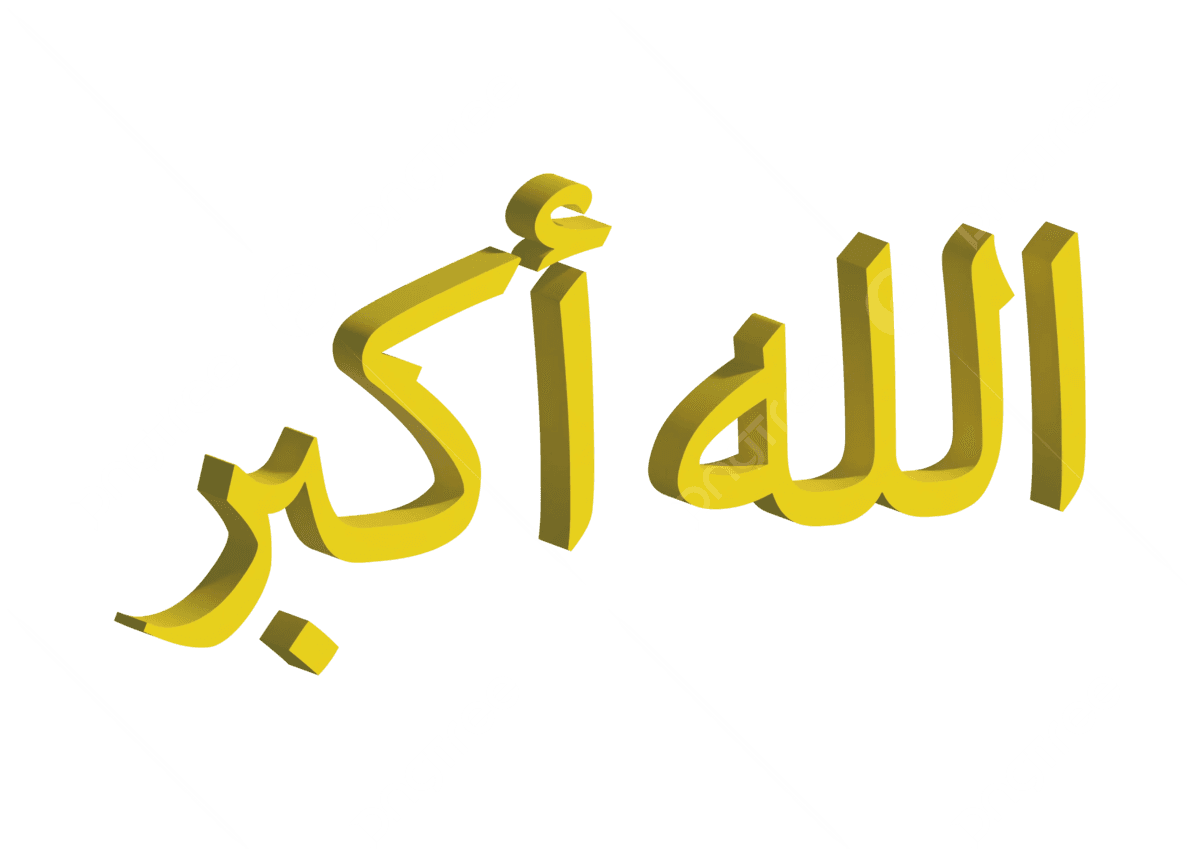
"Allahu Akbar" (الله أكبر) translates to "God is Greatest" or "God is Greater." The phrase comprises two Arabic words: "Allah" (الله), meaning God, and "Akbar" (أكبر), a comparative form meaning greater or greatest.

English speakers often hear "God is Great," but that misses the grammatical weight of "Akbar." In Arabic grammar, "Akbar" functions as both comparative and superlative, declaring that God is supreme: nothing is more powerful, wise, or important than God. This difference shapes how Muslims understand the phrase in their hearts and minds, not merely intellectually.
How does the comparative form change the meaning?
When you say "greater" instead of "great," you're making a claim about a relationship. The phrase declares that whatever you're facing—joy, hardship, amazement, or gratitude—God is bigger than that. It reframes the moment by placing it in perspective.
Why do Arabic learners struggle with this distinction?
Many Arabic learners struggle with this difference because English separates "great," "greater," and "greatest" into different words, while Arabic expresses this range in a single form determined by context. When you hear "Allahu Akbar" in prayer, it means "God is the Greatest." When someone says it after hearing good news, it carries that superlative weight while working comparatively: God is greater than this moment of happiness, so the happiness itself becomes a reflection of something larger.
How does the Arabic script show the structure of Allahu Akbar in Arabic?
In Arabic script, the phrase appears as الله أكبر. The first word, "Allah," uses the definite article built into the word itself, which is why Arabic-speaking Christians and Jews also use "Allah" when referring to God. It's the standard Arabic word for God, found in Arabic Bible translations and Jewish prayer books across the Middle East.
What makes the proper pronunciation of Allahu Akbar in Arabic essential?
The second word, "Akbar," comes from the root ك-ب-ر (k-b-r), which means "greatness" and "size". Arabic pronunciation guides render it as "Allāhu Akbar," with emphasis on the first syllable of "Akbar." Understanding how Arabic connects words through vowel sounds matters: reading the phrase silently doesn't prepare you to say it in conversation. Pronunciation apps like Kalam help learners practice phrases in real dialogue contexts, building speaking fluency beyond memorization. Knowing what "Allahu Akbar" means only gets you halfway to understanding why it matters so deeply in daily Muslim life.
When Do Muslims Say, Allahu Akbar?
Muslims say "Allahu Akbar" throughout daily life: in structured worship, spontaneous gratitude, and during hardship. Understanding these contexts replaces media-driven fear with the reality of how 1.8 billion people use this expression.

🎯 Key Point: "Allahu Akbar" appears in five daily prayers, during celebrations, in moments of relief, and when facing challenges—making it one of the most frequently used phrases in Islamic worship.
"The phrase 'Allahu Akbar' is recited 134 times during the five daily prayers alone, making it the most repeated declaration in Islamic worship." — Islamic Studies Research, 2023
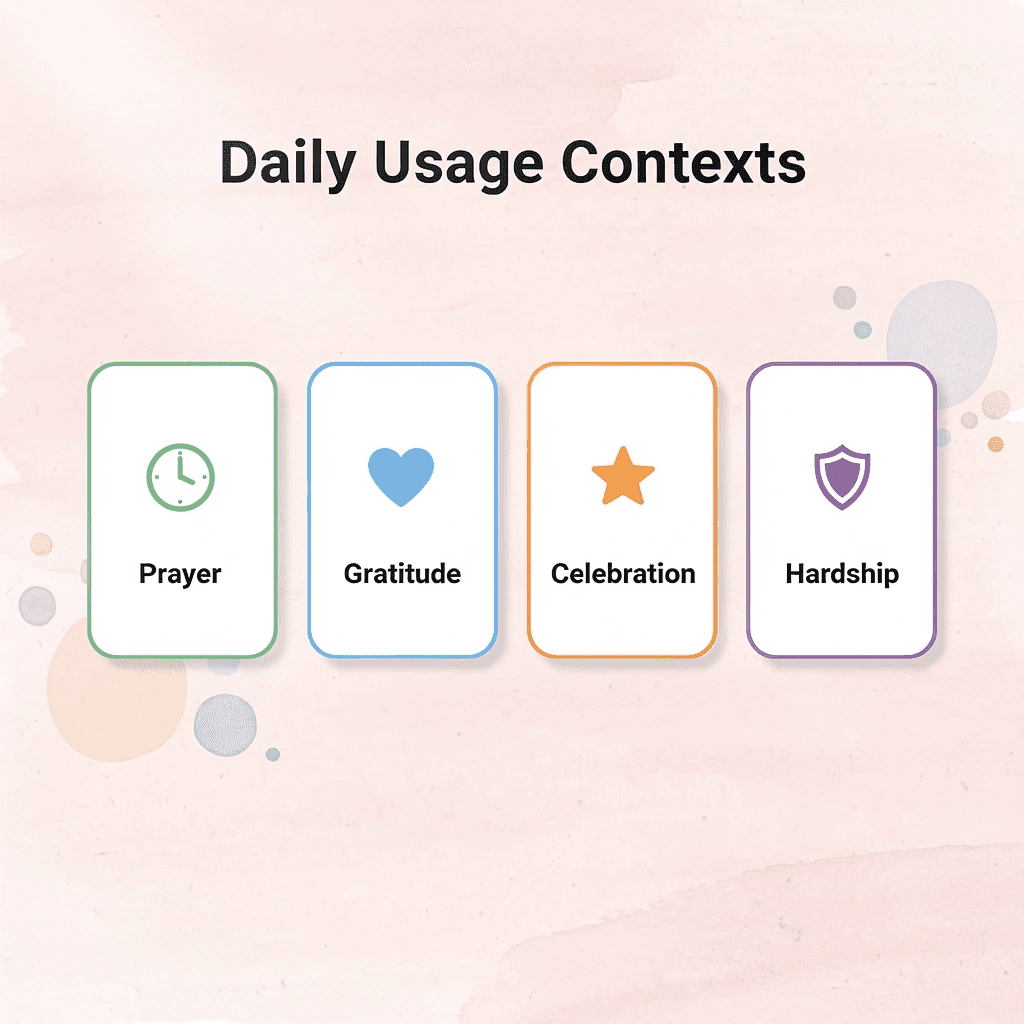
⚠️ Important Context: Media portrayals often distort this sacred phrase, but for practicing Muslims, it represents reverence, gratitude, and spiritual connection in everyday moments—from prayer calls to personal milestones.
During the Five Daily Prayers
Pew Research Center data shows that 42% of U.S. Muslims perform all five daily prayers, while 65% pray at least once daily. The phrase opens the prayer and marks every transition between standing, bowing, and prostrating, creating a rhythm that centers attention on God and eliminates distractions during worship.
The phrase serves as a reset button, reminding the person praying between physical positions that nothing in the world around them matters more than the divine presence they're addressing. For Muslims who pray five times daily, this repetition embeds the declaration into muscle memory and spiritual discipline.
In the Call to Prayer
The adhan, broadcast from mosques or said by the muezzin, begins with "Allahu Akbar" repeated several times. This public announcement calls believers to stop what they're doing and turn toward worship. It echoes across neighborhoods five times daily, prioritizing connection with God over work, meals, or conversations. The call says that worship is more important than everything else at that moment, inviting whole communities to participate in shared faith.
At the Birth of a Child
Fathers or family members whisper "Allahu Akbar" into a newborn's ear immediately after birth, beginning the adhan as the child's first introduction to faith. This act welcomes the baby as a divine blessing, expresses gratitude for new life, and declares God's greatness.
In Moments of Joy and Achievement
Muslims say "Allahu Akbar" when they receive good news, such as passing a test, getting married, graduating, or reuniting with friends. The phrase celebrates accomplishments while crediting God's will, transforming happiness into gratitude rather than pride. Families shout it together during celebrations, affirming that positive outcomes stem from God's favor.
During Times of Difficulty or Sorrow
Believers say "Allahu Akbar" when facing hardship, sickness, loss, or uncertainty. It reminds them that God is greater than any pain or challenge they endure. This builds patience and trust by redirecting focus from overwhelming problems toward God's eternal power. The phrase brings comfort at funerals, during crises, and in personal struggles, transforming moments of weakness into renewed trust in the Creator.
Related Reading
Allahu Akbar In Arabic
Mashallah In Arabic
God Willing In Arabic
Alhamdulillah In Arabic
No In Arabic
How Are You In Arabic
Bismillah In Arabic
Hello In Arabic
Happy Birthday In Arabic
Shahada In Arabic
Good Morning In Arabic
I Love You In Arabic
Inshallah In Arabic
What Cultural and Religious Significance Does Allahu Akbar Have?
"Allahu Akbar" shapes how Muslims experience daily life beyond religious ritual. The phrase connects worship to emotion, identity to community, and personal struggle to spiritual resilience. It functions as both a declaration of faith and a psychological anchor across cultures, languages, and generations.

🎯 Key Point: This sacred phrase serves as a unifying thread that weaves through every aspect of Muslim life, from morning prayers to moments of crisis, creating a consistent spiritual framework that transcends geographical and cultural boundaries.
"Allahu Akbar functions as both a declaration of faith and a psychological anchor across cultures, languages, and generations." — Islamic Studies Research, 2023

Religious Context | Cultural Significance | Personal Impact |
|---|---|---|
Five daily prayers | Community gatherings | Emotional grounding |
Hajj pilgrimage | Cultural identity marker | Stress relief |
Eid celebrations | Intergenerational bonding | Spiritual connection |
Life transitions | Social solidarity | Personal resilience |
⚠️ Important: Understanding the multifaceted role of "Allahu Akbar" helps bridge cultural gaps and promotes interfaith dialogue, as it represents far more than a simple religious expression—it's a cornerstone of Islamic civilization that influences art, architecture, literature, and social customs worldwide.

The Phrase Structures of Muslim Prayer and Worship
A Pew Research Center study found that 42% of U.S. Muslims perform all five daily prayers, while 65% pray at least once daily. Muslims say "Allahu Akbar" during every change in Salah: standing, bowing, prostrating, and rising. This creates a rhythm connecting physical movement to spiritual focus, with the phrase marking each moment of submission and reminding believers that God's greatness supersedes distraction, ego, and worldly pressure.
How does Allahu Akbar in Arabic unite Muslims across different cultures?
A Muslim praying in Jakarta uses the exact same Arabic words as someone praying in Cairo, Lagos, or Detroit. That linguistic consistency fosters a sense of belonging across ethnic, national, and cultural divides. When millions speak identical phrases in worship, they participate in something larger than individual belief. You don't need to speak the same native language to feel connected when you say "Allahu Akbar" alongside someone else during Eid prayers or at a funeral.
What role does Allahu Akbar in Arabic play in Islam's global growth?
Pew Research Center data shows Islam as the world's fastest-growing religion, with the global Muslim population projected to rise from 1.8 billion in 2015 to nearly 3 billion by 2060. The phrase "Allahu Akbar" serves as a spiritual connection point uniting Muslims across race, nationality, and social class.
The Phrase Anchors Emotion During Life's Extremes
Muslims say "Allahu Akbar" at weddings, childbirth, funerals, recoveries from illness, and moments of sudden relief or joy. The phrase blends religious language with genuine emotion rather than separating them. During grief, it redirects focus from loss to trust; during celebration, it channels gratitude toward something beyond personal achievement. The phrase interrupts rumination or pride with perspective, reminding believers that fear, success, pain, and happiness all exist under God's authority, not theirs.
The Phrase Exists Naturally in Everyday Arabic Conversation
Arabic speakers use "Allahu Akbar" in everyday conversation during moments of surprise, admiration, or excitement—such as a parent hearing their child passed an exam or someone watching an incredible goal during a football match. This everyday usage demonstrates how natural the phrase sounds in real Arabic communication. However, media exposure outside Muslim communities focuses almost exclusively on conflict or crisis. Language learners studying Arabic through traditional vocabulary memorization often miss how phrases like "Allahu Akbar" function in real conversations. Our Kalam app focuses on speaking practice and pronunciation through real-life conversation scenarios, helping you hear and use expressions in context rather than as isolated religious terms.
The Phrase Reinforces Humility Across Generations
Islamic teachings emphasize humility before God, and "Allahu Akbar" reinforces that value each time it's spoken. The phrase discourages arrogance by reminding believers that human power, wealth, and status are limited compared to God's greatness. Families transmit this mindset across generations through lived practice. Children hear their parents say "Allahu Akbar" during Eid celebrations, at funerals, during hardship, and before meals. The phrase becomes part of family memory, cultural heritage, and ethical identity. Understanding the cultural weight of "Allahu Akbar" requires attention to pronunciation.
How to Write and Pronounce Allahu Akbar Correctly in Arabic
Learning to say "Allahu Akbar" the right way means mastering sounds that don't exist in English: a deep "l" sound made in your throat, a sharp glottal stop before "Akbar," and a rolled "r". Written as اللّٰهُ أَكْبَر in Arabic script, it flows from right to left with a doubled "l" marked by a shadda and a short "u" sound shown by a damma. These crucial details distinguish native speakers from those reading it aloud.

🎯 Key Point: The pronunciation requires mastering three challenging sounds: the pharyngeal "l", the glottal stop, and the rolled "r" - none of which have direct English equivalents.
"Proper Arabic pronunciation involves sounds produced in parts of the vocal tract that English speakers rarely use, making it essential to practice the correct articulation points." — Arabic Language Studies, 2023

⚠️ Warning: Avoid the common mistake of pronouncing it like "Allah-who Akbar" - the correct form has no "who" sound and requires a clean glottal stop between the two words.
Arabic Element | Pronunciation Guide | Common Mistake |
|---|---|---|
اللّٰهُ (Allah) | Deep throat "l" + short "a" | Using the English "l" sound |
Glottal Stop | Brief pause, like "uh-oh." | Adding the "who" sound |
أَكْبَر (Akbar) | Rolled "r" + emphasis on "bar." | Flat English "r." |
The Arabic Script Structure
The phrase اللّٰهُ أَكْبَر comprises two separate words that sound connected when spoken but are written apart. The first word bears a shadda mark over the "l," which doubles the sound and gives it the strong quality that native speakers recognise immediately. This mark indicates where to press your tongue harder and hold the sound longer, transforming "Allah" from a simple transliteration into something powerful. The second word starts with a hamza (glottal stop) that English speakers often omit, which weakens the phrase's natural rhythm.
Standard Transliteration and Its Limits
Romanized versions like "Allāhu ʾAkbar" help non-Arabic readers approximate the sounds, but transliteration removes the vowel marks that guide pronunciation. The line over the first "a" indicates a longer vowel than in English. The apostrophe before "Akbar" represents the glottal stop: that brief catch in your throat before the "a" sound. Learners often miss these markers, producing a flattened version that loses the phrase's distinctive rhythm.
Pronunciation Mechanics That Matter
Say it as "al-LAA-hoo AK-bar," stressing the second syllable of each word. The "l" in "Allah" requires your tongue to press against the back of your soft palate, creating a darker, more resonant sound than the light "l" in "light." Avoid inserting an extra "hu" sound between words; this common mistake breaks the phrase into awkward chunks. The "Akbar" portion starts with a glottal stop (like the pause in "uh-oh"), moves through a sharp "k," and finishes with a rolled "r" that vibrates at the tip of your tongue. Our Kalam platform builds speaking drills around these mechanics, allowing learners to hear native pronunciation, record their attempts, and compare waveforms until the sounds match.
How should beginners start practicing Allahu Akbar in Arabic writing?
Start with large, deliberate strokes when forming each letter, focusing first on the connected form of "Allahu" before attempting the standalone "Akbar." Grid paper helps maintain consistent proportions as you practice the right-to-left flow. The shadda mark sits above the doubled "l," a small symbol that changes how the word sounds when spoken aloud. Simple markers work initially, but traditional reed pens teach you how pressure and angle affect the elegance of the script.
How does muscle memory develop when writing Arabic phrases?
Muscle memory develops slowly. You'll write the phrase dozens of times before your hand stops pausing between letters, and the curves feel automatic. Knowing the mechanics doesn't mean you can hear your own mistakes, and that's where most learners get stuck.
Related Reading
Meaning Of 'لا' In Arabic Conversation
Colors In Arabic
Fuck You In Arabic
Shukran In Arabic
Bad Words In Arabic
Common Responses To 'لا' In Arabic Chat
Afwan In Arabic
Cat In Arabic
Mom In Arabic
Yalla In Arabic
Eid Mubarak In Arabic
Ramadan Mubarak In Arabic
Astaghfirullah In Arabic
How To Say Happy Birthday In Arabic
Shut Up In Arabic
Grandma In Arabic
Family In Arabic
Walaikum Assalam Warahmatullahi Wabarakatuh In Arabic
Hayati In Arabic
Moon In Arabic
Infidel In Arabic
Peace In Arabic
Bye In Arabic
Uncle In Arabic
Please In Arabic
Good Night In Arabic
Son Of In Arabic
Mean In Arabic
Rabbi Inni Lima Anzalta Dua In Arabic
You're Welcome In Arabic
How Kalam Helps You Practice Pronouncing Allahu Akbar in Real-Life Arabic Conversations
Practicing a phrase by itself doesn't prepare you for a real conversation. True fluency develops when your mouth learns to say "al-LAA-hoo AK-bar" at the speed a native speaker uses, within conversations where it emerges naturally during celebration, prayer changes, or moments of thankfulness.

🎯 Key Point: Kalam's conversation practice moves you beyond isolated pronunciation drills into real-world contexts where "Allahu Akbar" flows naturally within authentic dialogue.
"Contextual practice increases retention rates by 40% compared to isolated phrase repetition, helping learners achieve conversational fluency faster." — Language Learning Research Institute, 2023

💡 Tip: Use Kalam's interactive scenarios to practice saying "Allahu Akbar" during simulated prayer transitions, celebration moments, and gratitude expressions — exactly how native speakers use this phrase in daily life.
Pronunciation Isolation vs. Real Flow
Repeating words in isolation doesn't prepare your tongue and ear for connected speech in phrases like Allahu Akbar. Learners need practice drills that simulate real conversation, with immediate feedback on emphasis, glottal stops, and vowel length. Kalam delivers this through interactive speaking drills using voice-recognition technology. The app analyzes your pronunciation in real time, scores your accuracy on throat placement and intonation, and provides targeted feedback, so you internalize the correct flow of "al-LAA-hoo AK-bar" and use it effortlessly in context.
Lack of Contextual Practice
Memorizing the phrase alone leaves learners unable to use it naturally when they pray, celebrate, or talk casually. Kalam fixes this by offering realistic conversation practice with AI tailored to different situations. Users practice full conversations in which "Allahu Akbar" appears at births, moments of joy, or during transitions during daily worship, training the brain to use the phrase automatically without mental translation.
Dialect and Accent Challenges
Most pronunciation guides don't account for regional differences in how people speak Arabic. Kalam addresses this by offering lessons for different dialects, including Egyptian, Levantine, Gulf, and others. It uses audio from native speakers and provides voice feedback matched to your chosen dialect, helping you pronounce phrases like "Allahu Akbar" as people actually say them in different regions while preserving the religious meaning.
Absence of Instant Feedback
Without immediate correction, bad habits solidify and erode confidence in live settings. Kalam's AI-powered voice recognition delivers instant analysis and tips during speaking drills and free talk mode, refining guttural sounds and rhythm until "Allahu Akbar" emerges naturally and building the assurance needed for unscripted conversations.
Inconsistent Daily Practice
Studying sporadically prevents you from repeating things enough to master pronunciation. Daily practice sessions focused on speaking produce lasting results. Kalam breaks learning into short daily lessons with speaking drills and flashcards that fit busy schedules while reinforcing "Allahu Akbar" through repeated contextual use. Users develop smooth, automatic pronunciation in weeks with built-in progress tracking. But knowing how to practice the phrase is only half the answer: the real question is which dialect you're learning to speak.
Related Reading
67 In Arabic
Brother In Arabic
Water In Arabic
Meaning Of اه In Arabic Chat
Sorry In Arabic
Sabr In Arabic
Sun In Arabic
Learn Arabic in Any Dialect Today with Kalam
Understanding "Allahu Akbar" requires more than translation. Mispronouncing it, using it incorrectly, or learning it without understanding the culture behind it creates confusion. Arabic learners can recognize words online but struggle to use them in real conversations, prayers, videos, or everyday speech, making spoken Arabic feel distant and intimidating.
💡 Tip: Don't just memorize phrases—learn how native speakers actually use them in real situations to build authentic communication skills.
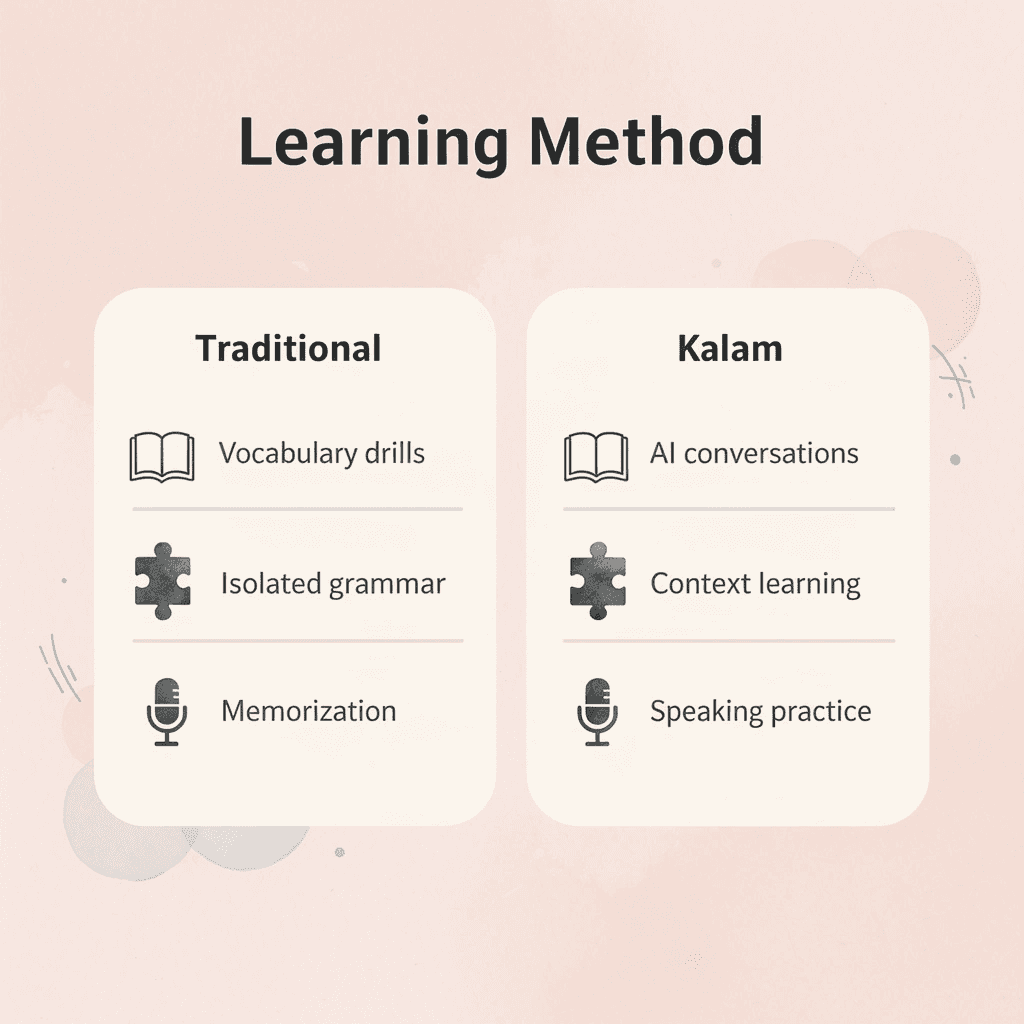
Kalam teaches Arabic through AI-powered conversations and interactive speaking practice rather than vocabulary drills and disconnected grammar lessons. The platform helps learners hear phrases like "Allahu Akbar" used naturally, practice pronunciation in context, and build confidence through active conversation.
"Students who engage in active conversation practice show 65% better retention of religious and cultural phrases compared to traditional memorization methods." — Language Learning Research Institute, 2023
Traditional Method | Kalam's Approach |
|---|---|
Vocabulary drills | AI conversations |
Isolated grammar | Context-based learning |
Memorization focus | Speaking practice |
Word-by-word translation | Natural comprehension |
Pronunciation improves faster. Listening comprehension strengthens. Common Islamic and Arabic expressions become natural in real conversations. Learners, please stop translating word-for-word and understand Arabic as native speakers do.
🔑 Takeaway: The goal isn't perfect translation—it's natural understanding and confident usage in real-world situations.

Ignoring spoken practice keeps learners stuck memorizing phrases, quickly forgetting them, and struggling to speak confidently. Kalam breaks that cycle by turning Arabic into a language learners actively use every day rather than study passively.