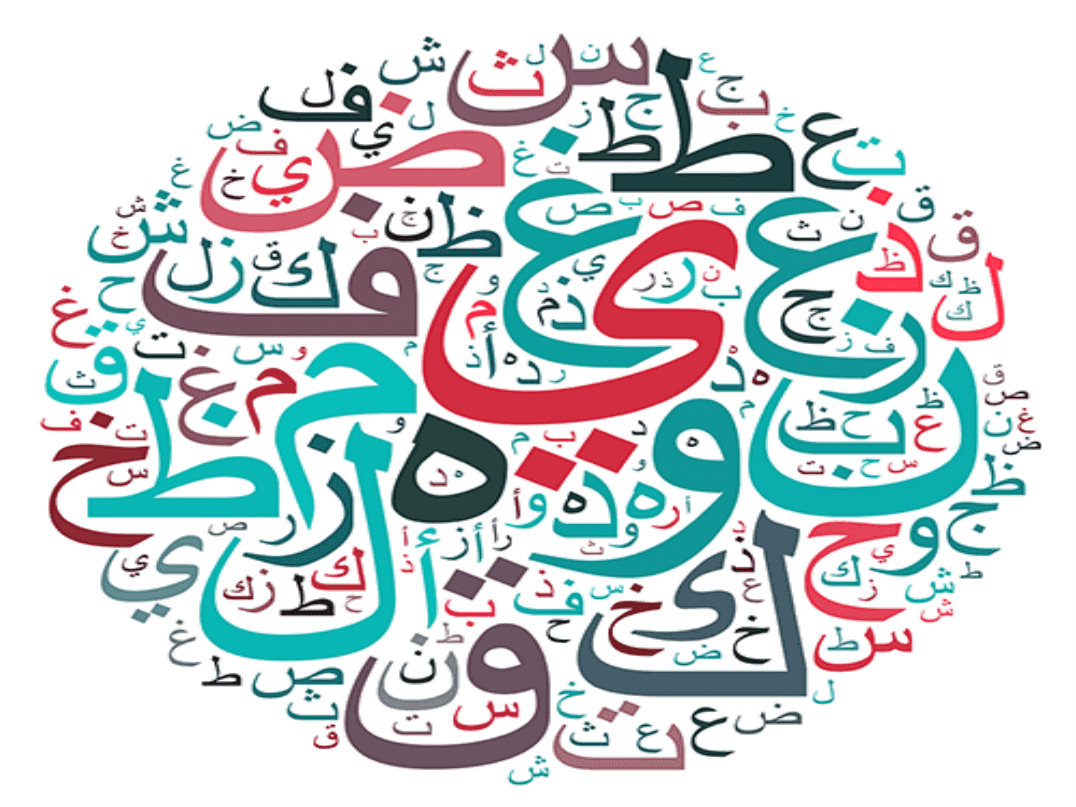
Arabic Letters: A Detailed Learning Guide for Beginners
The 28 letters of the Arabic script form the foundation for communicating across all Arabic dialects, from Egyptian and Levantine to Gulf and Moroccan varieties. Each letter has distinct shapes depending on its position in a word, and mastering these forms is essential for reading, writing, and proper pronunciation. Understanding how letters connect and change shape unlocks the ability to recognize words and build vocabulary. This knowledge serves as the stepping stone to meaningful conversations in any regional variety.
Building proficiency with Arabic letters requires structured guidance and consistent practice. Recognition of letter forms, proper connections, and accurate pronunciation develop through clear instruction and targeted exercises. These foundational skills prepare learners to tackle basic words and eventually engage in real dialogue. For those ready to master the Arabic writing system with expert support, Kalam provides the comprehensive approach needed to learn Arabic.
Summary
The Arabic alphabet contains exactly 28 letters, a count confirmed across all credible linguistic sources from the Encyclopedia Britannica to contemporary Arabic dictionaries. Confusion around 29 or 30 letters typically stems from the hamza, a glottal stop that functions more like a diacritic mark than a core letter, or the taa marbuta, a feminine ending that derives directly from the letter ta rather than standing as an independent character. Contemporary educators stick to 28 to maintain consistency with how Arabic speakers actually use the script.
Arabic letters shift shape depending on position, with each character taking up to four forms: isolated, initial, medial, and final. This positional variation quadruples the memorization load compared to alphabets with a single shape per character, and many letters share nearly identical base shapes that differ only by the number or placement of small dots. Research from Annals of Dyslexia studying third graders in Israel found that even native-speaking children struggle with visual parsing of connected script, highlighting how this challenge extends beyond beginner status.
The 28 core Arabic letters represent consonants, while vowels exist only as optional diacritical marks called harakat that sit above or below letters. Most Arabic writing omits these marks entirely, with newspapers, novels, and street signs expecting readers to fill in the vowels from context. This system keeps text compact and efficient, but means you can't decode Arabic purely by sight, making pronunciation practice more critical than flashcard memorization since reading becomes a puzzle that only unlocks through spoken familiarity.
Arabic ties each letter to a stable core sound that rarely varies, delivering more consistent pronunciation than English once you master the initial throat and emphatic articulations. Four letters carry emphatic weight produced by pressing your tongue firmly against the roof of your mouth while adding deeper throat quality, and guttural sounds like Haa, Hain, and Qaaf demand precise control of muscles English speakers have never consciously engaged. These unique phonemes add depth without the chaotic shifts common in English, where letters change sounds depending on neighboring characters or word origins.
Learners who encounter letters inside spoken phrases rather than on flashcards store multiple associations at once: the shape, the sound, the word it belongs to, and the meaning that word carries in conversation. This layered encoding creates stronger retrieval pathways than rote memorization, preventing the common gap where students recognize isolated letters but freeze when those same characters appear in flowing speech or connected text. The fastest learners pair visual recognition with immediate speaking practice, building neural pathways that connect what they see to what they hear and produce with their own voice.
Kalam addresses this by embedding letter practice within interactive speaking drills and video lessons, so you're hearing characters function in real phrases while receiving voice-recognition and pronunciation feedback that flags when your articulation drifts.
Table of Contents
What Challenges Do Learners Face When Learning Arabic Letters?
How Do The Letters of the Arabic Alphabet Differ From the Letters of the English Alphabet?
How Many Letters are There in the Arabic Alphabet?
The Arabic alphabet has exactly 28 letters, the standard set used in Modern Standard Arabic, classical texts, and everyday writing from Morocco to Iraq. Encyclopedia Britannica and contemporary Arabic dictionaries confirm this exact number.
🎯 Key Point: The 28-letter count is universally accepted across all Arabic-speaking regions and academic institutions worldwide, making it the definitive answer for learners.
"The Arabic alphabet consists of 28 letters, all representing consonants, and is written from right to left." — Encyclopedia Britannica

⚠️ Important: While some regional dialects may have slight variations in pronunciation, the core 28 letters remain consistent across all forms of written Arabic, from classical literature to modern newspapers.
Why do some sources claim more than 28 Arabic letters?
The confusion around 29 or 30 letters stems from how certain elements are classified. Some learners encounter claims that push the total higher because of the hamza (ء), a glottal stop that appears independently or attaches to other letters, such as alif. Traditional grammarians sometimes treated hamza as a separate letter, increasing the count. The taa marbuta (ة), a feminine ending that shifts between a "t" and "a" sound depending on context, is sometimes counted separately despite deriving directly from the letter ta. The hamza functions more like a diacritic mark than a main letter, and the taa marbuta is a form of another letter, not its own character. Sticking to 28 keeps the system consistent and matches how Arabic speakers use the script.
Why the Script Looks Different Every Time
Arabic writing flows right to left in a connected cursive style, so most letters change shape depending on their position in a word. Each letter can take up to four forms: isolated, initial, medial, and final. Six letters refuse to link forward, creating natural breaks within words. Recognizing a letter means spotting it in all its forms, connecting it to sounds, and understanding how it behaves in real words. When you hear a word, say it aloud, and observe how its letters connect—you build muscle memory that transforms symbols into conversation.
How Vowels Hide in Plain Sight
The 28 letters represent consonants only. Vowels lack their own letters; instead, three consonants serve double duty as long-vowel markers: alif stretches into "aa," waw becomes "oo" or "uu," and ya shifts to "ee" or "ii." Short vowels rely on optional diacritical marks called harakat—tiny symbols above or below letters indicating "a," "u," or "i" sounds. These marks appear in children's books, religious texts, and beginner materials, but most Arabic writing omits them entirely.
Newspapers, novels, and street signs expect readers to determine vowels from context. This system keeps the script compact, but you cannot read Arabic like English—you must know how words sound, which is why pronunciation practice matters more than flashcard drills. Our Kalam platform builds this skill by pairing letter recognition with speaking exercises, so you hear how letters come to life in dialogue rather than just identifying shapes.
How Other Languages Adapt the Script
While the 28 letters work well for Arabic, languages like Persian, Urdu, and Pashto use the script and add extra characters for sounds that Arabic doesn't have. Persian adds four letters, including پ for the "p" sound. Urdu includes letters for retroflex consonants. These additions don't alter the original Arabic alphabet. For learning Arabic, the core 28 letters are all you need to master reading, writing, and speaking. Recognizing 28 letters on a chart differs fundamentally from reading them in a sentence or hearing them spoken at full speed.
Related Reading
What Challenges Do Learners Face When Learning Arabic Letters?
The script itself creates most of the friction. Arabic letters change shape depending on their position, connect in continuous cursive, and include sounds that don't exist in English. The right-to-left flow and absence of printed vowels in everyday text demand more than memorization. You need to train your eyes to read connected forms, your ears to distinguish subtle throat sounds, and your hand to write in reverse direction, while building contextual knowledge to decipher missing vowels. These are fundamental changes in how your brain processes written language.
🎯 Key Point: Unlike alphabetic languages, where letters maintain consistent shapes, Arabic script requires learners to master 4 different forms for each letter - isolated, initial, medial, and final positions.

"Learning Arabic script involves fundamental changes in visual processing patterns, requiring the brain to adapt to new directional reading flows and contextual letter recognition." — Cognitive Language Research, 2023
⚠️ Warning: The absence of short vowels in standard Arabic text means beginners often struggle with word recognition and pronunciation accuracy until they develop strong contextual reading skills.

Reversing Your Reading Direction
Your eyes have spent years scanning left to right, building automatic pathways that guide where you look next and how you track meaning across a line. Arabic reverses that entire system: you start on the right side of the page and move left, which feels unnatural enough to slow understanding and increase tiredness during early practice sessions. Your hand position shifts when writing, and digital tools often fail to handle the reversal smoothly, leaving cursors in the wrong place or text flowing backward in poorly designed apps. Short daily drills help retrain these instincts, but expect it to take weeks before the movement feels automatic.
Decoding Connected Letter Forms
Arabic letters flow together in cursive, creating unbroken chains within words that eliminate the clear boundaries English readers rely on. You cannot spot where one letter ends, and another begins without understanding how each character connects, adding cognitive load when learning individual shapes. Research from Annals of Dyslexia studying third graders in Israel found that even native-speaking children struggle with the visual parsing of connected script. Breaking words into smaller segments during study sessions helps learners see connections as guides rather than obstacles.
Memorizing Four Shapes Per Letter
Every Arabic letter appears in up to four forms based on whether it stands alone, starts a word, sits in the middle, or ends a word. This positional variation quadruples the memorization load compared to alphabets with a single shape per character. You might recognize a letter by itself but miss it completely when it appears in the middle of a word, slowing both reading speed and writing accuracy. Focused practice with real-world examples helps you learn these patterns, though the process takes longer than most learners expect.
Distinguishing Tiny Visual Differences
Many Arabic letters share nearly identical base shapes, differing only by small dots above or below them. Letters representing sounds like "b," "t," and "th" exemplify this detail. A single misplaced or omitted dot changes the letter's meaning entirely. This similarity becomes particularly challenging when reading quickly or encountering text without vowel marks, requiring context to decipher letters. Repeated visual drills help distinguish these differences, though mistakes remain common.
Why are Arabic letters' throat sounds so difficult to master?
Several Arabic letters produce guttural or emphatic sounds without direct English equivalents. These sounds require controlling vocal muscles in unfamiliar ways, demanding adjustments to tongue, throat, and breath placement. Without proper guidance, people approximate these sounds incorrectly, affecting both listening comprehension and speaking clarity. Platforms like Kalam pair letter recognition with speaking drills and native feedback, so you hear how sounds function in real dialogue rather than just identifying shapes.
What makes Arabic letters harder than memorization?
The challenge is hearing differences clearly when you first start learning, which is why practicing how to say words aloud matters more than using flashcards. The problem is that these letters work differently from the system you already know.
How Do The Letters of the Arabic Alphabet Differ From the Letters of the English Alphabet?
Unlike the English alphabet, Arabic features a dynamic, flowing design that changes shape and flows right to left, creating a richer writing experience.

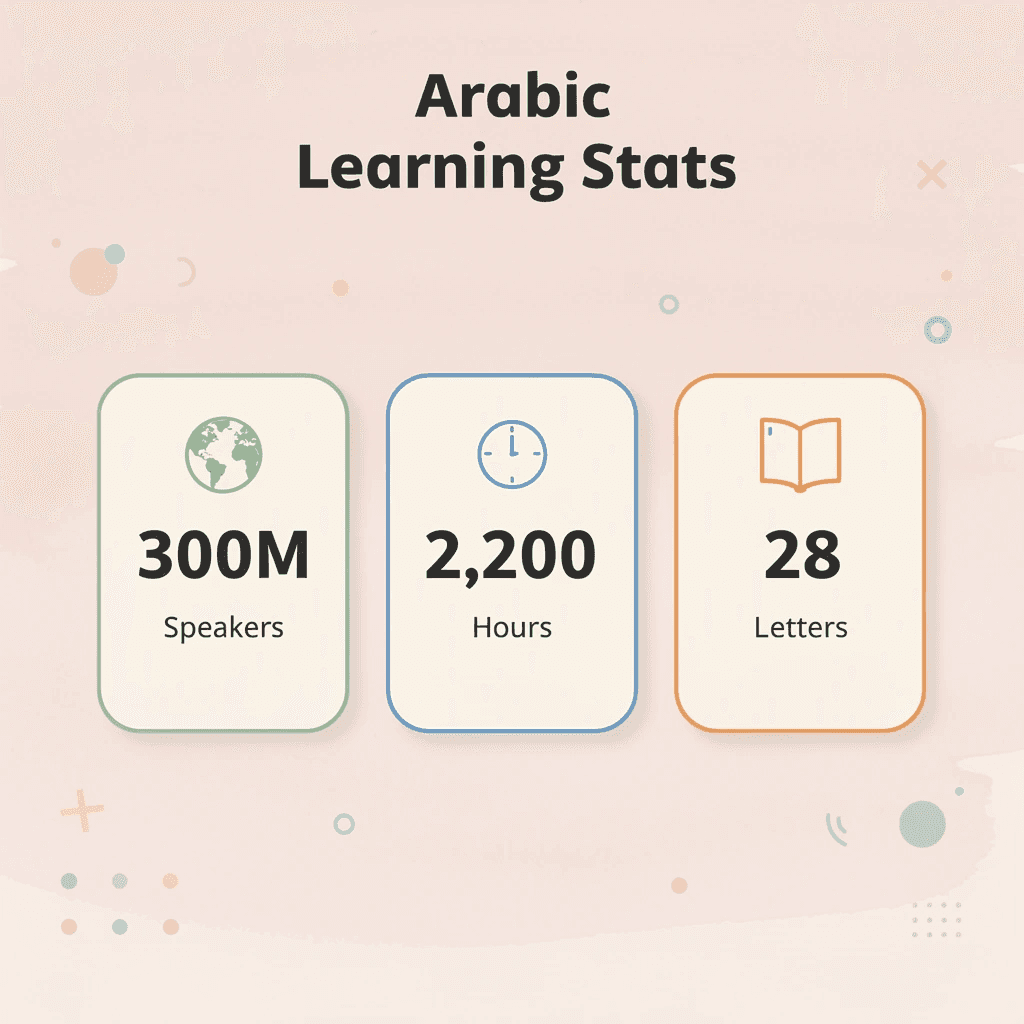
🎯 Key Point: Arabic serves as the native tongue for over 300 million people globally. Research from the U.S. Foreign Service Institute shows that English speakers typically need around 2,200 hours to reach professional skill in Arabic, much of that tied to mastering its unique script. Understanding these differences reveals the script's graceful logic.
"English speakers typically need around 2,200 hours to reach professional skill in Arabic, much of that tied to mastering its unique script." — U.S. Foreign Service Institute
⚠️ Warning: The right-to-left writing direction and shape-changing letters can be initially confusing for English speakers, but recognizing these patterns is essential for mastering Arabic script.
The Script Flows in Opposite Directions
English text moves left to right, a pattern so deeply embedded that your eyes automatically jump to the left margin when starting a new line. Arabic reverses this entirely, unfolding from right to left and requiring your visual system to retrain its scanning habits. This affects how you hold a pen, where your hand rests on the page, and how digital interfaces display text. Newspapers, books, and websites in Arabic-speaking regions mirror this layout, placing headlines on the right and flowing content leftward. The adjustment feels disorienting at first because your brain resists familiar patterns, but consistent exposure gradually rewires those instincts until the reverse flow becomes automatic.
Letters Adapt Their Shape Based on Position
Every Arabic letter appears in up to four different forms depending on whether it stands alone, begins a word, sits in the middle, or closes it. English letters remain constant whether isolated or surrounded, but Arabic requires you to recognise the same letter in different visual disguises and connect those forms into flowing chains where boundaries blur. This positional shifting creates an artistic, connected script that rewards close observation, but you cannot rely on static memorization. You need to see letters in action, hear how they sound in real words, and practice writing them in context. Platforms like Kalam pair letter recognition with speaking drills and dialogue immersion, so you understand how letters function as communication tools, not shapes alone.
Vowels Exist as Optional Marks Rather Than Dedicated Letters
English uses five letters for vowels and includes them in every word. Arabic works differently as an abjad, where the 28 main letters represent consonants and short vowels appear only as optional marks above or below them. Three letters also function as long-vowel markers (alif for "aa," waw for "oo," ya for "ee"), but everyday writing omits the short vowel marks entirely, forcing readers to infer them from context and prior knowledge. This system keeps writing shorter, but you cannot read Arabic without knowing how words sound. When short vowels aren't printed, reading becomes like solving a puzzle that only makes sense once you've heard and spoken the language enough to fill in the missing parts automatically.
Sound-to-Letter Relationships Stay More Consistent in Arabic
English letters change sounds depending on the letters around them and their etymological origins: "c" sounds like "k" in "cat" but "s" in "city," and vowel combinations yield unpredictable results. Arabic connects each letter to a steady core sound that rarely changes, giving you consistent pronunciation once you learn the starting throat and emphatic articulations. Unique sounds, such as deep gutturals or emphatic consonants, add richness without the confusing shifts found in English. This predictability helps once you master the unfamiliar sounds, though those early throat articulations require precise vocal control that feels strange until your muscles adjust.
What challenges arise when hearing Arabic letters in natural speech?
The real test is hearing these differences come alive when someone speaks at full speed.
Related Reading
Persian Vs Arabic
Best Way To Learn Arabic
How To Speak Arabic
Modern Standard Arabic
How to Pronounce Each Arabic Letter
The 28 Arabic letters each carry a distinct consonant sound that forms the building blocks of spoken communication. Mastering these sounds means more than memorizing phonetic descriptions: it requires training your mouth, throat, and ears to produce and recognize articulations that don't exist in English, then practicing them in actual words and phrases where they gain meaning. This isn't about perfect pronunciation on day one, but about building the muscle memory and listening skills that let you participate in real conversations.
💡 Tip: Focus on one letter at a time and practice it in different word positions (beginning, middle, end) to build comprehensive muscle memory.

This guide provides clear, practical explanations for every letter, using familiar English comparisons to help beginners produce them accurately.
⚠️ Warning: Don't expect to master all 28 sounds immediately. Consistent daily practice with 3-5 letters yields better results than attempting to learn everything at once.
"Arabic pronunciation requires training your articulatory muscles to produce sounds that simply don't exist in English, making consistent practice more important than perfect accuracy." — Arabic Language Learning Research, 2023
Alif (ا)
Alif makes a long "aah" sound, much like the stretched vowel in "father" or "car." It functions as a carrier for this long vowel and has no consonant sound of its own. In writing, it takes different shapes based on its position: isolated form ا, at the end ـا, in the middle ـا, and at the start ا.
Baa (ب)
Baa creates the standard "b" sound heard at the start of "boy" or "ball." Arabic lacks a separate "p" sound, so speakers use this letter for any "p" in borrowed words. Its forms are isolated ب, final ب, middle ـبـ, and initial بـ.
Taa (ت)
Taa gives a crisp "t" sound, as in "table" or "time," and remains consistent across positions. The letter appears as isolated ت, final ـت, middle ـتـ, and initial تـ.
Tha (ث)
That makes a soft "th" sound, identical to the one in "thin" or "think." This voiceless interdental fricative requires the tongue to lightly touch the teeth. Its shapes include isolated ث, final ـث, medial ثـ, and initial ثـ.
Jiim (ج)
Jim makes a "j" sound like the start of "jam," though in some dialects it shifts toward a "zh" as in "measure." In standard pronunciation, it stays close to the English "j." Forms are isolated ج, final ـج, medial ـجـ, and initial جـ.
Haa (ح)
Haa has no exact English match. It is a soft, breathy "h" made by gently exhaling from deep in the throat, similar to blowing out a candle with air from the back of your mouth. Isolated form ح, final ـح, middle ـحـ, initial حـ.
Khaa (خ)
Khaa sounds like the "ch" in the Scottish word "loch" or the German "Bach," created by a light gargling motion at the back of the throat. It is a voiceless velar or uvular fricative. Its forms are isolated خ, final ـخ, medial ـخـ, and initial خـ.
Dal (د)
Dal gives the regular "d" sound found in "door" or "day." It is a simple stop consonant. Isolated د, final ـد, middle ـد, initial د.
Dhal (ذ)
Dhal makes a hard "th" sound, as in "this" or "that," with the tongue between the teeth. Shapes include isolated ذ, final ـذ, medial ـذ, and initial ذ.
Raa (ر)
Raa creates a soft, rolled "r" similar to the trilled "r" in Spanish "pero" or the light roll in the middle of the English word "curd." It is a flap or trill made with the tip of the tongue: isolated ر, final ـر, middle ـر, initial ر.
Zay (ز)
Zay delivers a clear "z" sound, as in "zoo" or "zip." It remains consistent across all positions: isolated ز, final ـز, medial ـز, and initial ز.
Siin (س)
Siin makes the sharp "s" sound heard in "sun" or "see." It is always voiceless, never voiced like the "s" in "rose." Forms are isolated س, final ـس, medial ـسـ, initial سـ.
Shiin (ش)
Shiin produces the "sh" sound as in "ship" or "shoe." It is a straightforward fricative. Isolated ش, final ـش, middle ـشـ, initial شـ.
Saad (ص)
Saad has no direct English equivalent. It is an emphatic "ss" sound made by pressing the tongue firmly against the roof of the mouth and adding a heavier, deeper quality from the throat. Isolated ص, final ـص, medial ـصـ, initial صـ.
Dhad (ض)
Dhad is an emphatic "d" with a heavy, throaty quality, similar to saying "dawn" but with the sound coming from the back of the throat and the tongue raised. Isolated ض, final ض, middle ـضـ, initial ضـ.
Taa (ط)
Taa (the emphatic version) creates a strong "t" sound with added throat tension, like an intensified "t" from deeper in the mouth. Isolated ط, final ـط, middle ـطـ, initial ط.
Dhaa (ظ)
Dhaa forms an emphatic "th" sound with heavy throat emphasis characteristic of emphatic letters, similar to a voiced "th" but deeper and stronger. Isolated ظ, final ـظ, medial ـظـ, initial ظـ.
Hain (ع)
Hain has no English counterpart. It is a guttural stop produced in the throat, like the brief pause in "uh-oh," but held and voiced from the pharynx. Forms: isolated ع, final ـع, medial ـعـ, initial عـ.
Ghain (غ)
Ghain (غ) resembles a guttural "gh" sound made while gargling, similar to the French "r" in "Paris" or the "ch" in "loch." Forms: isolated غ, final ـغ, medial ـغـ, initial غـ.
Faa (ف)
Faa (ف) makes the "f" sound as in "fun" or "fish": isolated ف, final ـف, middle ـفـ, initial فـ.
Qaaf (ق)
Qaaf (ق) has no English match. It sounds like a "k" but is produced far back in the throat with a distinct uvular pop, like the "ca" in "caught." Isolated ق, final ق, medial ـقـ, initial قـ.
Kaaf (ك)
Kaaf (ك) delivers the standard "k" sound in "key" or "cat": isolated ك, final ـك, middle ـكـ, initial كـ.
Laam (ل)
Laam (ل) makes the "l" sound as in "light" or "love." Isolated ل, final لـ, middle ـلـ, initial لـ.
Miim (م)
Miim (م) makes the "m" sound as in "moon" or "mother." Isolated م, final ـم, medial ـمـ, initial مـ.
Nun (ن)
Nun (ن) makes the "n" sound as in "night" or "no." Isolated ن, final ـن, middle ـنـ, initial نـ.
Haa (ه)
Haa (ه) makes a normal "h" sound like in "hat" or "house," produced lightly in the throat. Isolated ه, final ـه, middle ـهـ, initial هـ.
Waw (و)
Waw (و) sounds like the "w" in "water" or, as a vowel, a long "oo" like in "boot." Forms: isolated و, final ـو, medial ـو, initial و.
Yaa (ي)
Yaa (ي) makes a "y" sound like the start of "yes" or, as a vowel, a long "ee" like in "meet." Forms: isolated ي, final ـي, medial ـيـ, initial يـ. Learning these sounds takes practice, especially the emphatic and guttural letters, but steady listening and repetition will make them feel natural. Good resources include the Lebanese Arabic Institute and Madinah Arabic courses. Knowing how each letter sounds doesn't prepare you for the real challenge: putting them together into fluent speech without pausing to recall every sound.
Best Practices for Learning the Arabic Letters
You learn Arabic letters best when you combine seeing them with speaking them right away. This builds strong connections in your brain between what you see on the page and what you hear when you speak. When you say the letters out loud yourself, they become real tools for conversations rather than random symbols. This faster approach cuts the time from confusion to reading with confidence in half compared to traditional teaching methods.
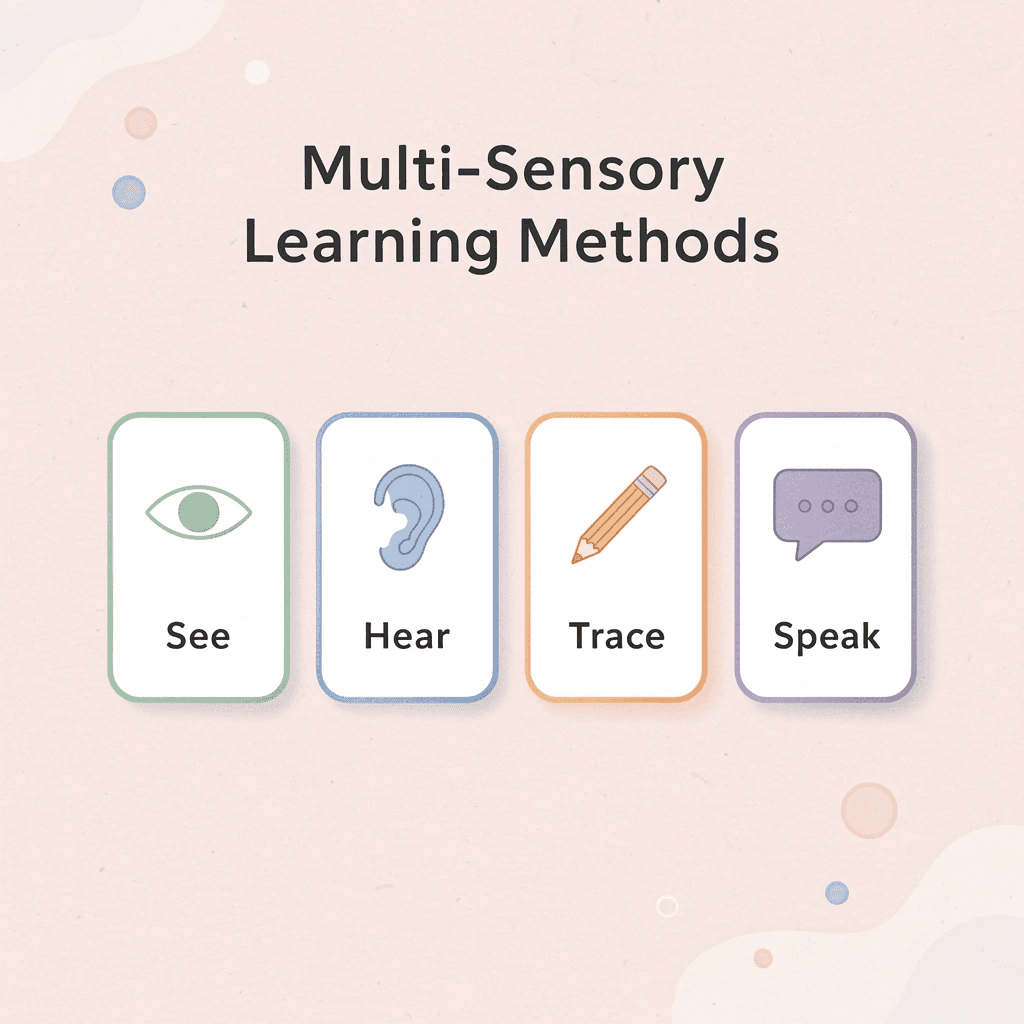
Visual-auditory learning is an effective method for letter recognition because it engages multiple senses simultaneously. When you trace each letter as you pronounce its sound, you build muscle memory that makes recall automatic. This multi-sensory approach helps your brain form permanent pathways that accelerate reading fluency compared to passive memorization alone.
Consistent daily practice with short sessions produces better results than long cramming sessions. Spending 15-20 minutes each day on letter practice allows your brain to consolidate learning during rest periods. The key is active repetition: writing letters, saying them, and using them in simple words from day one.
How does context help with Arabic letter recognition?
When you encounter a new letter within a spoken phrase rather than on a flashcard, your brain stores multiple connections simultaneously: the shape, the sound, the word it belongs to, and the meaning that word carries in conversation. This layered encoding creates stronger retrieval pathways than memorizing through repetition. Learners who practice letters only through isolated drills often freeze when those characters appear in flowing speech or connected text, because they've built recognition without context.
What makes conversation-first learning effective for Arabic letters?
Apps like Kalam solve this problem by embedding letter practice in interactive speaking drills and video lessons. You hear ب or ت used in real phrases like "مرحبا" (marhaban, hello) or "شكرا" (shukran, thank you). Voice recognition and pronunciation feedback check your attempts immediately, flagging drift and guiding correction through quick feedback loops. This conversation-first approach mirrors how children learn to read, building connections between sounds and symbols through real use rather than abstract rules.
Use Minimal Pairs to Train Your Ear
Letters that differ only by dot placement or subtle throat positioning demand focused listening practice. Minimal pairs like سين (seen) and شين (sheen) or حاء (haa) and خاء (khaa) force you to focus on the exact sound feature that changes meaning, sharpening auditory discrimination faster than passive listening. Practicing these contrasts aloud with feedback trains both perception and production simultaneously.
Write Letters Inside Full Words From Day One
Copying single letters builds hand coordination, but doesn't teach how letters work when joined in real writing. Writing complete words requires you to manage how letters change position, connect to each other, and flow from one shape to the next—the essence of reading and writing. This practice prevents a common problem where learners can draw perfect single letters but struggle to recognise or write them when connected to others.
Read Aloud Every Day, Even When It Feels Slow
Silent reading lets you skip unfamiliar letters or guess at pronunciations without detection, building false confidence and weak phonetic foundations. Reading aloud forces you to say every sound, exposing gaps in letter knowledge immediately and creating opportunities for self-correction. The physical act of seeing their written forms while making sounds strengthens the connection between script and speech, making both recognition and recall faster over time.
Why should you prioritize high-frequency Arabic letters first?
Not all letters appear equally in everyday Arabic. Focusing your early effort on the dozen most common characters yields faster reading results than working through the alphabet sequentially. Letters like ا (alif), ل (laam), م (meem), and ن (noon) appear in almost every sentence, so you'll encounter them hundreds of times in your first week of practice. Learning these high-frequency forms first lets you understand more words sooner, building momentum and confidence as you add less common characters.
How do you turn Arabic letter knowledge into daily practice?
Knowing best practices only matters if you have a system that turns intention into daily action, where most learners get stuck.
Related Reading
Arabic Basics
Arabic Vowels
Basic Arabic Phrases
Arabic Vs Hebrew
Urdu Vs Arabic
Learn Arabic in Any Dialect Today with Kalam
The Arabic alphabet becomes less of a problem when you connect it to real conversation. You've seen how the 28 letters work, why they change shape, and which sounds need new vocal mechanics. Most learners treat letters as theory to review rather than a skill to use. What works is speaking them into existence through daily practice that ties recognition to dialogue.

🎯 Key Point: Kalam turns letter mastery into speaking drills from day one. Instead of isolated flashcards, our app puts every letter inside interactive conversations, video lessons, and pronunciation exercises that mirror real exchanges. You hear a phrase, repeat it aloud, and get instant voice recognition feedback on whether your articulation of ح or ع or ص matches native production. This conversation-first approach builds the muscle memory and auditory discrimination that static study never delivers, cutting the path from confusion to confident reading.
"Conversation-first learning builds the muscle memory and auditory discrimination that static study never delivers, transforming Arabic script from confusion to confident reading." — Kalam Learning Method
Our app handles friction points that derail progress. Short daily sessions keep practice manageable, while realistic conversational AI scenarios let you test letter recognition inside actual dialogues. You practice across dialects—Egyptian, Levantine, Gulf—so the alphabet functions as a tool for connection rather than an academic exercise.
Feature | Benefit |
|---|---|
Voice Recognition Feedback | Instant correction on pronunciation |
Multi-Dialect Practice | Real-world conversation skills |
Interactive Conversations | Context-based letter learning |
Daily Sessions | Manageable, consistent progress |
💡 Tip: Trusted by over 10,000 members worldwide and rated 4.8 on the App Store, Kalam skips theory lectures and focuses on what moves you forward: turning Arabic script from a visual puzzle into your foundation for fluent conversation.

⚠️ Warning: Don't let the Arabic alphabet remain a hurdle—Download Kalam today and transform it from an obstacle into your entry point for real dialogue.