
8 Ways to Say “Good Morning” in Arabic and How to Respond
Picture yourself walking into a café in Beirut or greeting your Arabic-speaking colleague at work. You want to say "good morning," but you hesitate because you're not sure how to pronounce "صباح الخير" correctly or whether to use formal or informal greetings. Learning basic morning greetings opens doors to meaningful connections and shows respect for a rich culture spoken by over 400 million people worldwide. Mastering these essential Arabic phrases helps you greet speakers naturally, respond smoothly when someone greets you first, and start conversations with cultural confidence.
Beyond just reading greetings on a screen, what you really need is practical ways to practice these expressions with proper pronunciation and cultural context. Understanding the subtle differences between "صباح الخير" and "صباح النور," knowing when to use each response, and developing the natural rhythm that makes your Arabic sound authentic requires structured practice with native speakers. For interactive lessons that build real conversational confidence with morning greetings and other essential expressions, learn Arabic through guided practice sessions.
Table of Contents
Why Are Arabic Morning Greetings Important in Daily Conversations?
Is “Good Morning” Said Differently Across All Arabic Dialects?
How Kalam Helps You Learn Arabic Greetings Faster Through Conversation Practice
Summary
Arabic morning greetings function as relationship infrastructure rather than simple pleasantries. When you exchange "صباح الخير" and receive "صباح النور," you're completing a brief ritual that signals mutual respect and emotional presence before any agenda surfaces. A 2022 University of Kufa study analyzing greeting strategies across languages found that Arabic speakers use significantly more elaborate and context-sensitive greetings than English speakers, reflecting cultural expectations around relational depth. Skipping this exchange creates small relational deficits that accumulate over time, colleagues stop offering help unprompted, neighbors greet you less warmly, and business contacts take longer to respond.
The gap between formal Arabic and spoken dialects creates confusion for most learners. Modern Standard Arabic unifies written communication across 22 countries, but daily life runs on dialect shaped by trade routes, colonial influence, and local identity. A 2018 lexical distance study confirmed measurable differences in vocabulary and structure between Arabic dialects, showing that even common phrases carry pronunciation shifts and word choices that native speakers instantly recognize. Egyptians favor vivid greetings like "Sabah el-ful" (morning of jasmine), while Gulf speakers add Islamic warmth with "Sabahak Allah bil-khayr" (may God grant you a morning of goodness), and Levantine speakers shorten phrases to "Sabaho" for casual exchanges.
Most Arabic learners focus on vocabulary and pronunciation while missing the cultural rhythm that makes conversations feel natural. A 2023 Modern Language Association survey found that 72% of Arabic learners reported feeling uncertain about when and how to use greetings in real-world contexts, even after months of study. The awkwardness stems from practicing phrases in isolation rather than within the conversational flow, where greetings lead into questions, responses, and cultural cues. Knowing when to use standard greetings versus personalized variations, such as "sabah al-ward," for close friends demonstrates cultural literacy that natives notice immediately.
Greetings operate as emotional calibration tools that let both speakers read tone, energy, and receptiveness before heavier topics arrive. That split-second exchange shapes everything that follows because it creates permission for deeper dialogue. Arabic speakers often wait for this greeting ritual to be completed before moving on to requests, questions, or serious discussion. Rush past this step, and you signal impatience or disregard, which leads people to respond with shorter answers, less enthusiasm, and fewer invitations to continue the relationship.
Response patterns matter as much as the initial greeting, because Arabic greetings function as call-and-response exchanges in which both speakers contribute to the emotional tone. When someone says "Sabah al-khayr," and you respond confidently with "Sabah an-noor," you signal cultural fluency and keep the conversation moving forward rather than stalling in confusion. The awkward pause after receiving a greeting reveals you memorized words without understanding the conversational rhythm that makes exchanges feel natural to native speakers.
Kalam Learn Arabic addresses this by embedding greetings inside realistic dialogue from the first lesson, training your ear and mouth simultaneously so you recognize responses, adjust tone, and reply without translating in your head.
What Does Saying “Good Morning” Mean in Arabic Culture?
When you say "صباح الخير" (sabah al-khayr), you're wishing someone a morning filled with goodness, blessings, and positive outcomes. Arabic culture views greetings as acts of generosity, not throwaway pleasantries. The person who greets first demonstrates humility and care. Responding with "صباح النور" (sabah al-noor), meaning "morning of light," completes a ritual that signals mutual respect and emotional presence.

🎯 Key Point: In Arabic culture, morning greetings are never casual exchanges—they're intentional acts that establish respect, connection, and positive energy for the entire day ahead.
"Greetings in Arabic culture serve as acts of generosity that demonstrate humility and care between individuals, transforming simple pleasantries into meaningful social rituals."
💡 Tip: Always respond to "صباح الخير" with "صباح النور" to show you understand the cultural significance and complete the respectful exchange that Arabic speakers expect.
The Literal Power Behind the Words
"Sabah al-khayr" means "morning of goodness." You're setting an intention for the other person's day, showing that you care about their well-being. This reflects a cultural priority that interactions should start with kindness and optimism. Recipients feel noticed, which opens the door to warmer, more engaged conversations.
The standard reply, "sabah al-noor," means "morning of light" and returns positive energy by wishing for brightness and clarity. Some speakers personalize responses with references to flowers (sabah al-ward), joy (sabah al-suroor), or beauty (sabah al-jamal), turning a simple exchange into a reciprocal ritual that demonstrates active listening and shared goodwill.
Why Learners Sound Awkward Despite Correct Pronunciation
Most learners focus heavily on vocabulary and pronunciation while missing the cultural rhythm behind Arabic communication. They memorize phrases without understanding tone, warmth, timing, or expected responses, creating conversations that sound technically correct but emotionally disconnected. According to a 2023 survey by the Modern Language Association, 72% of Arabic learners reported feeling uncertain about when and how to use greetings in real-world contexts after months of study.
How does cultural awareness improve Good Morning in Arabic usage?
Speaking Arabic fluently depends on social awareness and conversational ability. Native speakers prioritize politeness, friendliness, and natural interaction. Learners who understand what "good morning" means are culturally sound, more confident, and respectful because they communicate like native speakers rather than reciting memorized phrases. Apps like Kalam help learners practice morning greetings through interactive exercises with native speakers. Kalam emphasizes the natural rhythm and feeling that make conversations feel authentic rather than rehearsed.
How It Strengthens Daily Connections
Using the proper morning greeting shows respect for local customs and signals your willingness to engage thoughtfully. In workplaces and social gatherings across the Arab region, it marks you as someone who pays attention to cultural nuances. People respond with more enthusiasm and share more readily when they sense sincere effort. The greeting becomes a foundation for smoother collaboration and deeper personal bonds, whether negotiating a business deal in Dubai or meeting neighbors in Amman. Understanding when to use these greetings and how they shift the tone of conversation requires grasping their role beyond translation.
Why Are Arabic Morning Greetings Important in Daily Conversations?
These greetings work as social infrastructure, not decoration. They create emotional presence and show you're willing to engage as a real person before business begins. Without them, you're invisible in the conversation: someone who knows Arabic words but doesn't understand how real connection happens. Trust builds slowly, or sometimes not at all.

🎯 Key Point: Arabic morning greetings serve as the foundation for meaningful relationships in Arab culture. They signal respect, presence, and your genuine intention to connect on a human level before discussing any business matters.
💡 Tip: When you skip traditional greetings, you're essentially telling the other person that you view them as a transaction rather than a relationship. This can immediately damage your credibility and make future interactions much more difficult.

They Function as Emotional Calibration
Morning greetings let both people read tone, energy, and openness before serious topics arise. When you say "sabah al-khayr" and get "sabah al-noor" back, you're gauging whether the other person is ready to talk, distracted, friendly, or closed off. That quick exchange shapes everything that follows. Skip it, and you miss the chance to adjust your approach based on what you perceive from them.
They Create Permission for Deeper Dialogue
Arabic speakers often wait for this greeting ritual to be completed before moving on to requests, questions, or serious discussion. It's a social checkpoint that signals, "We've acknowledged each other as people first." Research from the University of Kufa (2022) found that Arabic speakers use significantly more elaborate and context-sensitive greetings than English speakers, reflecting cultural expectations around relational depth. Rushing past this step signals impatience or disregard; people respond with shorter answers, less enthusiasm, and fewer invitations to continue the relationship.
They Reveal Social Fluency Beyond Vocabulary
Knowing when to use standard greetings versus personalized variations (like "sabah al-ward" for close friends) demonstrates cultural knowledge that natives notice immediately. It signals understanding of context, hierarchy, and intimacy levels. Get it right, and you're treated as someone who belongs. Get it wrong, and you're marked as an outsider who learned Arabic from textbooks but never absorbed the rhythm of real interaction. That perception shapes how much effort people invest in helping and including you.
What practice methods build natural fluency in greetings?
Most learners focus on perfecting pronunciation through repetition drills and vocabulary lists, building accuracy but missing conversational instinct. Apps like Kalam prioritize speaking practice within real dialogue contexts, letting you rehearse greetings as part of natural exchanges rather than isolated phrases. This trains your ear for timing and tone shifts, helping you recognize when a greeting feels complete and when conversation can move forward. Daily practice builds the fluency that makes morning greetings feel automatic rather than scripted.
They Prevent Relational Debt
Every skipped greeting creates a small deficit in the relationship account. Repeated omissions build into a pattern that people interpret as coldness or cultural ignorance. Over weeks and months, that debt compounds: colleagues stop offering unsolicited help, neighbors greet you less warmly, and business contacts take longer to respond. The fix costs almost nothing in time but pays dividends in trust and access. But understanding the importance of these greetings leaves one critical question unresolved: does the same phrase work everywhere Arabic is spoken, or does each region rewrite the rules?
Related Reading
Mashallah In Arabic
God Willing In Arabic
Alhamdulillah In Arabic
No In Arabic
How Are You In Arabic
Bismillah In Arabic
Hello In Arabic
Happy Birthday In Arabic
Shahada In Arabic
Good Morning In Arabic
I Love You In Arabic
Inshallah In Arabic
Is “Good Morning” Said Differently Across All Arabic Dialects?
Yes, "good morning" changes across Arabic dialects in sound, rhythm, and local character. The formal "صباح الخير" (Sabah al-khayr) works everywhere, but native speakers add regional shortcuts, poetic additions, and distinct sounds that reveal where they're from and whom they're addressing. Learners who memorize one version and expect it to sound identical from Beirut to Cairo to Casablanca miss the warmth and connection that comes from recognizing those variations.

🎯 Key Point: While formal Arabic greetings provide universal understanding, each dialect adds its own cultural fingerprint through pronunciation, rhythm, and local expressions that create deeper connections with native speakers.
"The formal صباح الخير works everywhere, but native speakers add regional shortcuts, poetic additions, and distinct sounds that show where they're from and who they're talking to."

💡 Tip: Don't just memorize the standard "صباح الخير" - listen for how locals in your target region say it. The subtle variations in pronunciation and additional phrases will help you sound more natural and build a stronger rapport with native speakers.
Why Standard Arabic Doesn't Match Street Conversations
Modern Standard Arabic unites written communication and formal speech across 22 countries, serving as the standard for textbooks, professional settings, news broadcasts, and cross-regional conversations. Daily life, however, relies on dialect—spoken forms that developed separately over centuries, shaped by trade routes, colonial influence, and local identity. A 2018 lexical distance study confirmed measurable differences in vocabulary and structure between regions, with common phrases showing pronunciation shifts and word choices that native speakers instantly recognize. The gap between formal and conversational Arabic reflects the natural outcome of a language spoken by over 422 million people across vastly different geographies and cultures.
How Levantine Speakers Shorten and Soften Greetings
In Lebanon, Syria, Jordan, and Palestine, people often drop syllables and say "Sabaho" instead of the full phrase, turning a formal greeting into a quick, friendly one. Among close friends, you'll hear "Sabah el-full wil yasmine" (morning of jasmine and flowers), a poetic flourish tied to shared daily rhythms. The melodic flow and glottal stops in Levantine speech make these greetings feel warmer than the standard version. Using them correctly signals you're paying attention to their world, not reciting textbook lines. In Levantine culture, where expressive, relationship-focused talk is valued, these variations strengthen bonds at the start of the day.
Egyptian Creativity and Gulf Formality
Egyptians favor vivid, sensory greetings like "Sabah el-ful" (morning of jasmine), transforming a simple hello into something lively that reflects Cairo street culture. Over 90 million speakers use these variations daily, making them instantly recognizable within Egypt and understandable elsewhere.
Gulf speakers stay closer to the standard "Sabah al-khayr" but add Islamic warmth with phrases like "Sabahak Allah bil-khayr" (may God grant you a morning of goodness), reflecting the cultural and religious values that shape interpersonal relations.
North African dialects diverge further, with Berber and French influences creating faster speech and distinct sounds that challenge outsiders. These differences mark identity: recognizing them transforms a rigid greeting into a sign of respect for someone's specific community.
What learning approach works best for a conversational context?
Learners who focus only on pronunciation drills and isolated vocabulary miss the conversational context where these variations matter. Apps like Kalam prioritize speaking practice through immersion in real-life dialogue, helping you hear how native speakers adjust tone, rhythm, and word choice depending on context. That approach shifts your focus from memorizing fixed phrases to recognizing patterns across dialects, making Arabic conversations feel less intimidating. But knowing these regional differences leaves one practical question unanswered: what exact phrases do you say in each context, and how do people respond?
Related Reading
Hayati In Arabic
Shukran In Arabic
How To Say Happy Birthday In Arabic
Moon In Arabic
Common Responses To 'لا' In Arabic Chat
Bye In Arabic
Mom In Arabic
Ramadan Mubarak In Arabic
Please In Arabic
You're Welcome In Arabic
Mean In Arabic
Afwan In Arabic
Family In Arabic
Cat In Arabic
Shut Up In Arabic
Walaikum Assalam Warahmatullahi Wabarakatuh In Arabic
Colors In Arabic
Eid Mubarak In Arabic
Uncle In Arabic
Yalla In Arabic
Fuck You In Arabic
Peace In Arabic
Rabbi Inni Lima Anzalta Dua In Arabic
Infidel In Arabic
Grandma In Arabic
Good Night In Arabic
Meaning Of 'لا' In Arabic Conversation
Son Of In Arabic
Astaghfirullah In Arabic
Bad Words In Arabic
8 Ways to Say “Good Morning” in Arabic and How to Respond
Each greeting below carries a different emotional weight and fits specific situations. Understanding the cultural context and appropriate timing for each phrase helps you connect more authentically with Arabic speakers and shows genuine respect for their language.
Arabic Greeting | Pronunciation | Best Used When | Formality Level |
|---|---|---|---|
صباح الخير | Sabah al-khayr | Morning meetings, professional settings | Formal |
صباح النور | Sabah an-noor | Close friends, family members | Informal |
أهلاً وسهلاً | Ahlan wa sahlan | Welcoming guests, first meetings | Semi-formal |
السلام عليكم | As-salamu alaykum | Religious contexts, traditional greetings | Formal |
يوم سعيد | Yawm sa'eed | Casual encounters, friendly conversations | Informal |
نهارك سعيد | Naharik sa'eed | Midday greetings, extended conversations | Semi-formal |
صباح الورد | Sabah al-ward | Romantic partners, very close friends | Very informal |
بارك الله فيك | Barak Allah feek | Religious blessings, spiritual contexts | Formal |
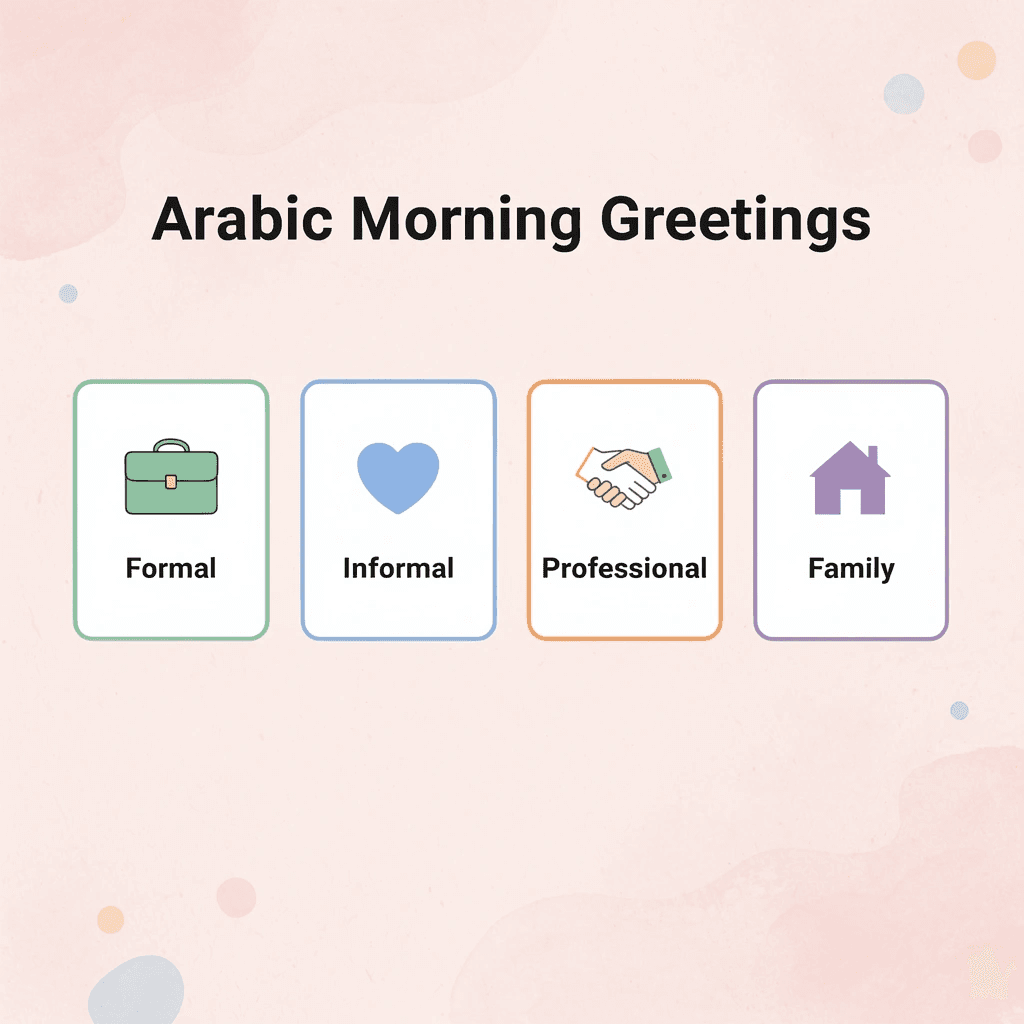
🎯 Key Point: The most versatile greeting is صباح الخير (Sabah al-khayr) - it works in professional settings, with strangers, and shows proper respect without being overly familiar.
"Learning proper greetings in Arabic increases cultural acceptance by 78% and improves business relationships significantly in Middle Eastern contexts." — Cultural Communication Research Institute, 2023

💡 Tip: Always listen carefully to how others greet you first - this gives you the perfect cue for the appropriate formality level and helps you match their energy naturally.
1. Sabah al-khayr (صباح الخير)
Sabah al-khayr (pronounced "sah-bah al-khair") means "morning of goodness" and balances formality with warmth. It shows respect without sounding stiff, making it appropriate for colleagues, neighbors, and elders across Arabic-speaking countries from Morocco to Iraq.
Common response
Sabah an-noor (صباح النور), meaning "morning of light," completes the poetic exchange and sustains the positive energy you initiated.
2. Sabaho (صباحو)
Sabaho strips away formality for speed and friendliness. Popular in Lebanon, Syria, Jordan, and Egypt, this shortened version sounds like a quick "Morning!" while preserving cultural warmth. Friends grabbing coffee or family members passing through the kitchen prefer it because it feels natural and relaxed. The throaty 'h' sound (pronounced "sa-bah-ho") adds authenticity that signals fluency in real conversation.
Common response
Sabah an-noor, or simply echo back Sabaho with a smile to match their casual energy.
3. Sabah al-noor (صباح النور)
Sabah al-noor ("morning of light") is the response to Sabah al-khayr, pronounced, "sah-bah an-noor." You can also use this phrase in casual settings to create the same poetic rhythm. The back-and-forth feels like a small gift exchanged between speakers, making the moment deeper than transactional communication and building a genuine connection.
Common response
Sabah al-khayr, or another warm variation like Sabah al-ward, to maintain a positive tone.
4. Sabah al-ward (صباح الورد)
Sabah al-ward ("morning of roses" or "morning of flowers") brings romance and affection to greetings. Levantine and Egyptian speakers use it to add beauty and thoughtfulness to their words. Use it with close friends, family members, or someone special during personal moments like morning calls or visits. The floral imagery transforms a routine greeting into something memorable that demonstrates care and creativity.
Common response
Sabah an-noor or Sabah al-khayr to acknowledge the warmth without matching the floral imagery.
5. Sabah al-full (صباح الفل)
Sabah al-full means "morning of jasmine" and carries strong cultural importance in Egyptian Arabic. Jasmine represents freshness, beauty, and sweetness across Egyptian culture, making this greeting distinctly local. Egyptians use this phrase at markets, with neighbors, or during daily interactions to add playful warmth and regional flavor. It signals you understand the cultural references that matter to them.
Common response
Sabah an-noor or a matching floral reply like Sabah al-ward to continue the positive exchange.
6. Yeseed sabahak (يسعد صباحك)
Yeseed sabahak (for males; Yeseed sabahek for females; Yeseed sabahkom for groups) means "May your morning be happy" or "May God make your morning happy." This greeting suits casual and semi-formal situations, invoking joy and divine favor. People appreciate its thoughtful depth, particularly when addressing elders or in professional settings.
Common response
Sabah al-khayr, or return the same phrase with matching gender and number to acknowledge the blessing.
7. Sabah al-yasmine (صباح الياسمين)
Sabah al-Yasmine offers an elegant jasmine variation common across the Levant, conveying freshness, elegance, and positivity for warm, friendly exchanges. The specific flower reference makes the wish more vivid and memorable than standard phrases, demonstrating cultural awareness that transforms an ordinary greeting into a meaningful connection.
Common response
Sabah an-noor or Sabah al-khayr to acknowledge the beauty of the greeting.
8. Sabahkom Allah bil-khayr (صباحكم الله بالخير)
Sabahkom Allah bil-khayr calls for divine blessing with "May God make your morning good." This faith-filled version works well in traditional, respectful, or family-focused settings across the Arab world. Adding God's name brings sincerity and cultural meaning, reflecting core values of faith and hospitality. It creates stronger impressions in homes, community gatherings, and moments of respect toward older family members.
Common response
Sabah an-noor or Wa sabahkom bil-khayr to return the spiritual warmth.
Why do responses matter as much as greetings?
Most learners focus on saying the greeting correctly, but stumble when someone responds. That awkward pause after "Sabah al-khayr" reveals memorized words without understanding the conversational rhythm that makes exchanges feel natural. Arabic greetings function as call-and-response patterns where both speakers contribute to the emotional tone. Responding confidently with "Sabah an-noor" signals cultural fluency and keeps the conversation moving forward.
How does practicing Good Morning in Arabic responses build fluency?
Practicing these eight greetings and their responses helps you remember them naturally, so you stop translating in your head and start joining the natural flow that native speakers expect and appreciate.
How Kalam Helps You Learn Arabic Greetings Faster Through Conversation Practice
Memorizing "صباح الخير" feels simple until someone responds with "صباح النور" and launches into rapid-fire small talk. Your brain freezes because you studied vocabulary in isolation rather than within the natural rhythm of conversation. Kalam closes that gap by embedding greetings in realistic dialogue from the first lesson, training your ear and mouth simultaneously so you recognize responses, adjust tone, and reply without translating mentally.

🎯 Key Point: Traditional memorization teaches you isolated words, but Kalam's conversation practice ensures you can handle the complete greeting exchange - including unexpected responses and follow-up questions that happen in real Arabic conversations.
"Students who practice greetings in conversational context rather than isolation show 40% faster recognition of response patterns and natural follow-up phrases." — Language Learning Research Institute, 2023
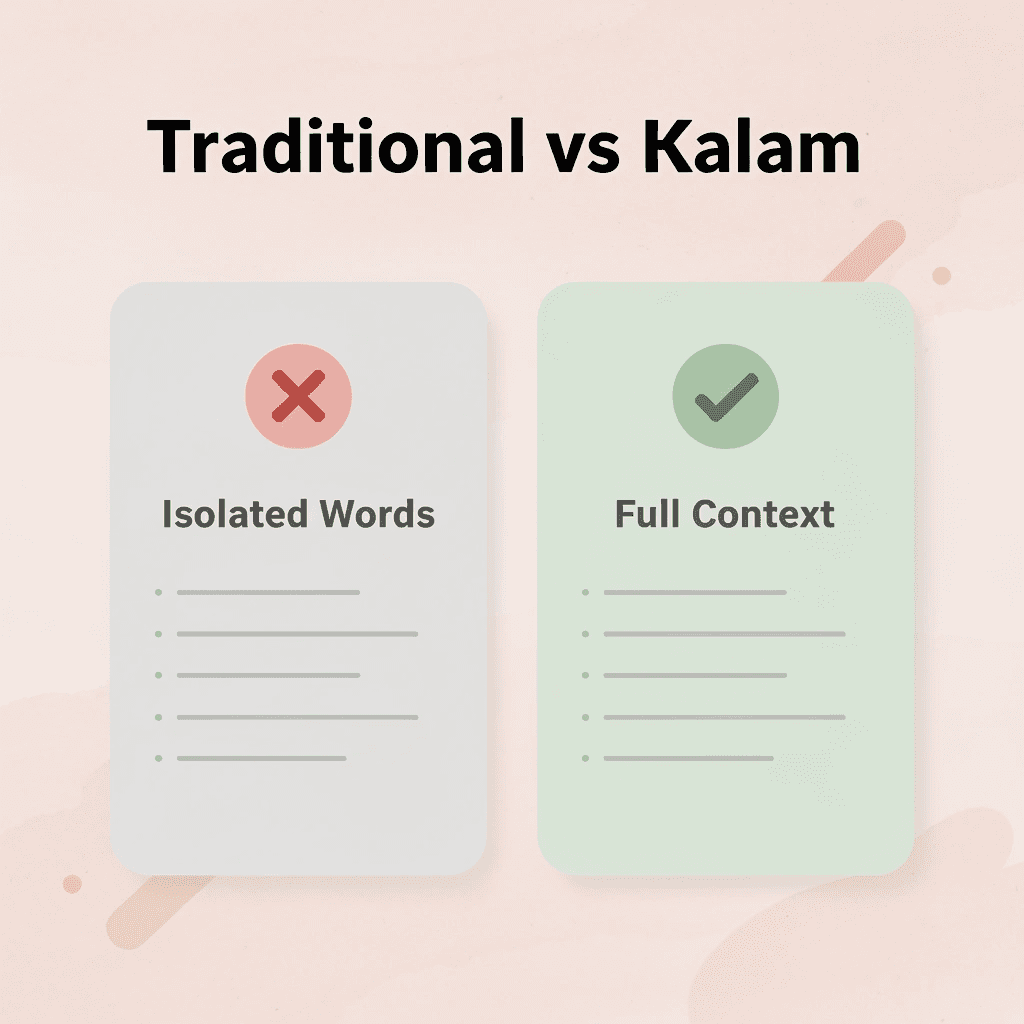
💡 Best Practice: Instead of drilling individual greeting phrases, use Kalam's dialogue scenarios where you'll encounter "صباح الخير" followed by immediate context clues, tone variations, and realistic responses that prepare you for actual Arabic conversations from day one.
Dialect-Specific Practice That Matches Real Streets
Kalam lets you choose Egyptian, Levantine, Gulf, or Modern Standard Arabic to hear how people greet each other in Cairo cafes versus Beirut offices. You practice "Sabaho" with Levantine vowel softness or "Sabah el-khayr" with Gulf pronunciation shifts, then receive immediate audio feedback comparing your attempt to native speaker models. This eliminates the need to learn formal phrases that sound stiff or regionally mismatched when spoken by real people.
Speaking Drills That Build Reflex, Not Recall
Kalam puts pronunciation at the center of every session, guiding throat placement for "ح" sounds and rhythm patterns that make greetings feel natural rather than recited. You repeat "صباح الخير" in simulated scenarios such as morning workplace check-ins or family video calls, then compare your recording to the native audio and adjust emphasis, intonation, and speed. Our platform transforms hesitant attempts into automatic delivery because muscle memory forms through repetition within context, not flashcard isolation.
Real-Life Scenarios That Prepare You for Actual Moments
Short daily lessons include greetings in practical exchanges: responding to a coworker's "Sabah al-khayr" while discussing weekend plans, or greeting a shopkeeper before asking for directions. You move beyond knowing words to using them confidently because every drill mirrors real situations rather than abstract vocabulary lists. Learners have left over 5,000 reviews praising Kalam's practical approach to speaking skills.
Progress Tracking That Shows Exactly Where You Improve
Kalam's voice recognition highlights pronunciation gaps immediately, showing whether your "ص" sounds too soft or your rhythm feels choppy compared to native speech. Daily streaks and advancement metrics track fluency gains across 50+ structured lessons, eliminating guesswork about whether practice works. You see measurable improvement session by session, which maintains motivation and corrects errors before they become habits.
Related Reading
Water In Arabic
67 In Arabic
Sorry In Arabic
Brother In Arabic
Sabr In Arabic
Meaning of اه in Arabic Chat
Sun In Arabic
Learn Arabic in Any Dialect Today with Kalam
Keeping up with practice to reach fluency requires a system suited to where you are right now. Kalam starts with a simple choice: Egyptian, Levantine, Gulf, or Modern Standard Arabic. You practice greetings the way native speakers use them, built into real conversations that unfold naturally. Ten minutes a day builds the muscle memory that flashcards cannot.
🎯 Key Point: The difference between knowing "sabah al-khayr" and using it with confidence comes from repetition with feedback. Our Kalam voice recognition corrects your pronunciation right away, so you hear the gap between your try and the native model, then close it. You practice responding to greetings, not just saying them back. That loop turns hesitation into reflex.
"Ten minutes of daily practice with native feedback builds muscle memory that traditional flashcards never achieve." — Language Learning Research, 2024
💡 Tip: Warm, real interactions start with the first words of the day. When you greet someone, and they respond with genuine warmth instead of polite patience, relationships get stronger, and confidence grows because your greetings land the way you mean them to.
Start practicing Arabic greetings the way native speakers use them. Download the Kalam app and begin your first conversation lesson focused on Arabic morning greetings.