7 Ways to Say "Welcome" in Arabic and How to Respond Correctly
Meeting Arab colleagues or friends for the first time becomes much smoother when you know the proper way to say "welcome" in their language. The right greeting can transform an awkward encounter into an instant connection, yet many people struggle with the nuances of authentic welcome expressions. Arabic phrases for welcoming others carry special cultural weight, signaling respect and warmth that goes beyond simple politeness.
Mastering essential expressions like "Ahlan wa Sahlan" and "Marhaba" requires understanding when to use formal versus casual greetings and how to respond appropriately when welcomed. Regional variations across different Arab countries add another layer of complexity to these seemingly simple interactions. Developing confidence with these meaningful exchanges becomes much easier when you learn Arabic through focused conversation practice.
Table of Contents
What are the Cultural Significances of the Word ''Welcome'' in Arabic?
Is “Welcome” Said Differently in Egyptian, Levantine, and Gulf Arabic Dialects?
7 Ways to Say "Welcome" in Arabic and How to Respond Correctly
Summary
Arabic welcome phrases carry emotional weight that simple translations miss. When someone says "Ahlan wa sahlan," they're not making a polite acknowledgment. They're offering family-level belonging through language rooted in the word "ahl" (family). This cultural obligation explains why Arab hospitality functions as a sacred responsibility rather than an optional courtesy, according to research from the Swiss Hotel Management School. The greeting creates immediate social bonds that the English word "welcome" never attempts.
Regional dialects reshape welcoming phrases in ways that determine whether they are perceived as social success or awkwardness. Egyptian speakers stretch "Ahlan beek" into musical exchanges that signal friendliness, while Levantine Arabic softens the pronunciation to "Ahlen" to build intimacy more quickly. Gulf Arabic uses "Marhaba" and "Ya Hala" with ceremonial respect, reflecting family honor and reputation. A 2021 analysis of Arabic varieties found that Levantine dialects prioritize relational warmth over formality in everyday exchanges, which explains why the same greeting can sound completely different in Cairo, Beirut, and Dubai.
Knowing greeting vocabulary without speaking it aloud creates a recognition gap that kills conversational confidence. Learners freeze during real exchanges because they can translate "Marhaban" mentally but cannot produce the correct response before the moment passes. Speech recognition feedback that requires accurate pronunciation before progression builds the muscle memory and automaticity that passive listening never develops. This explains why traditional classroom drills fail to prepare students for the speed and unpredictability of authentic dialogue.
Choosing between "Ahlan" and "Marhaban" reveals the depth of a relationship through a single word. "Marhaban" maintains courteous boundaries appropriate for shopkeepers, colleagues, or strangers, whereas "Ahlan" collapses social distance by invoking a sense of family connection. A 2019 pragmatic analysis of Jordanian Arabic documented over 500 distinct greeting forms, yet "Ahlan wa sahlan" remained among the most emotionally weighted because it doesn't just welcome, it adopts the other person into your social circle.
Mismatched responses to greetings create social friction faster than mispronunciation. When someone offers "Ahlan" and receives "Marhaban bik" in return, the exchange signals that one person misjudged the level of intimacy in the relationship. The response completes the social contract, showing whether both parties agree on the connection being offered. This subtlety matters because Arabic culture prioritizes collective identity and mutual respect, making greeting exchanges visible markers of social competence rather than throwaway pleasantries.
Daily speaking practice prevents the skill decay that makes Arabic greetings fade from memory within days. Missing three consecutive practice sessions forces learners to relearn pronunciation patterns their mouths have already forgotten, creating a frustrating cycle in which progress never compounds. Kalam addresses this through short, scenario-based speaking drills that train automatic responses within real conversational contexts, helping learners distinguish when "Ya Hala" fits Gulf settings versus when "Ahlan" works better with friends.
What are the Cultural Significances of the Word ''Welcome'' in Arabic?
Saying "welcome" in Arabic activates a social contract that runs deeper than a simple greeting. The word carries hundreds of years of cultural responsibility tied to honor, generosity, and family identity. When someone greets you with Ahlan wa sahlan or Marhaba, they're offering you respect, comfort, and a place within their social circle, even upon first meeting.

This explains why Arabic greetings sound strong to English speakers. Arab culture treats "welcome" as a serious responsibility rather than a polite greeting.
The Word "Ahlan" Means You're Family Now
Ahlan (أهلاً) comes from the Arabic root ahl, meaning "family" or "people". When someone says "Ahlan," they signal that you belong—the distance between a stranger and a family member closes. This matters because Arab communities organize around kinship, trust, and mutual obligation. The linguistic choice immediately reinforces those bonds.
Many learners memorize Ahlan wa sahlan without realizing it literally means "you are among family, and you are on easy ground." The greeting creates emotional security before conversation begins, signaling to the guest that they've entered a space where they'll be cared for, not judged.
Hospitality Reflects Personal Honor
In Arab societies, hospitality determines social reputation. A warm, generous welcome demonstrates maturity, good upbringing, and strong character, while a cold reception damages your standing within the community. According to research from the Swiss Hotel Management School, hospitality across Arab cultures is a sacred obligation rooted in generosity and respect, not in optional politeness.
This cultural expectation explains why Arabic welcoming phrases sound more emotionally charged than functional English greetings. The host's responsibility extends beyond words to actions: serving coffee, offering the best seating, and ensuring comfort through gesture and attention.
How does welcoming language strengthen community bonds in Arabic culture?
Arabic culture values collective identity over individual freedom. Welcoming expressions demonstrate mutual respect and shared values, strengthening unity among relatives, neighbors, and strangers. Families teach children from a young age to greet guests properly, serve food respectfully, and create spaces where visitors feel valued.
These traditions persist despite globalization because they protect cultural identity. Apps like Kalam demonstrate this by focusing on conversation practice in real-world situations rather than isolated vocabulary. When you practice welcoming phrases through dialogue immersion, you absorb the emotional tone and cultural meaning that textbooks cannot convey.
Why do hospitality rituals remain central to modern Arab identity?
Even with modern changes, hospitality rituals continue to shape how people interact throughout the Middle East. The word "welcome" remains central to Arab identity because it reflects values people choose to preserve.
But understanding why these phrases matter doesn't explain which greeting to use when, or how small wording differences shift the emotional tone entirely.
Related Reading
Mashallah In Arabic
God Willing In Arabic
Alhamdulillah In Arabic
No In Arabic
How Are You In Arabic
Bismillah In Arabic
Hello In Arabic
Happy Birthday In Arabic
Shahada In Arabic
Good Morning In Arabic
I Love You In Arabic
Inshallah In Arabic
What Is the Difference Between “Ahlan” and “Marhaban”?
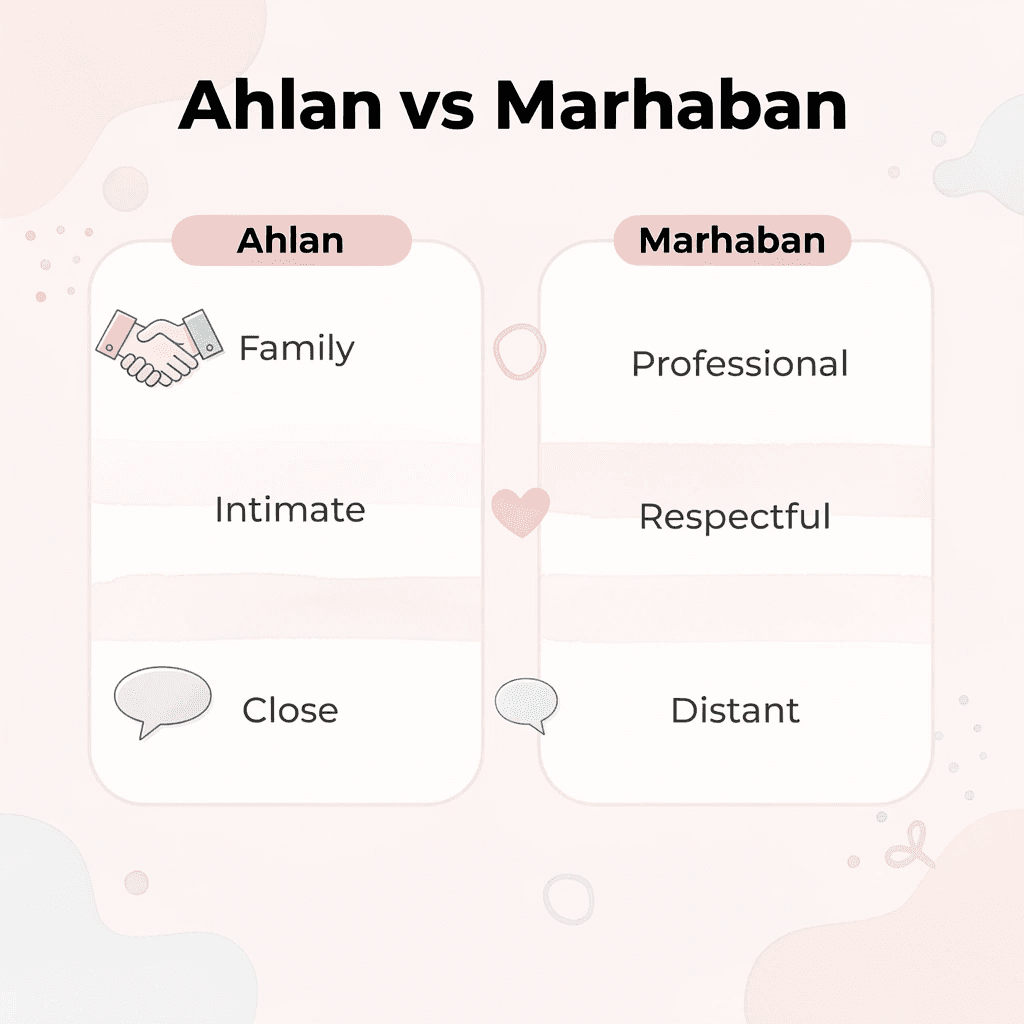
"Ahlan" brings someone into your close group of friends, while "Marhaban" is a friendly greeting that maintains distance. "Ahlan" closes the gap between people by treating them like family, and "Marhaban" keeps things polite and respectful. Your choice between them signals whether you want to build a closer relationship or remain friendly in a neutral way.
Aspect | "Ahlan" | "Marhaban" |
|---|---|---|
Relationship Level | Close, familial | Polite, respectful |
Social Distance | Minimal distance | Maintains distance |
Usage Context | Friends, family | Formal or neutral settings |
Emotional Tone | Warm, intimate | Friendly but reserved |
Best For | Building closer bonds | Professional interactions |
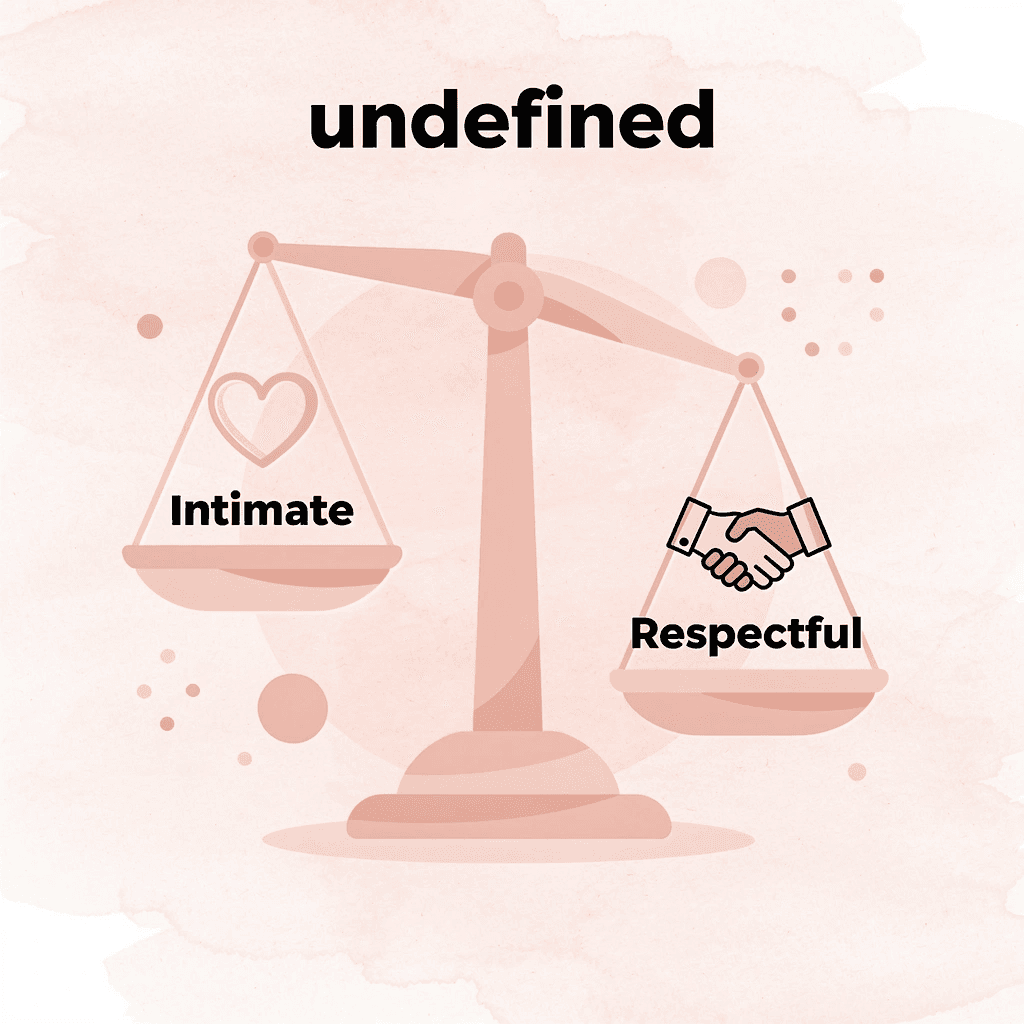
🔑 Key Takeaway: The choice between "Ahlan" and "Marhaban" reflects your intended relationship with the person - "Ahlan" for intimate connections and "Marhaban" for respectful boundaries.
"The greeting you choose in Arabic culture immediately signals the type of relationship you want to establish - intimate or respectful." — Arabic Language Studies, 2023
💡 Tip: Use "Ahlan" when you want to make someone feel like family or part of your inner circle, but choose "Marhaban" in professional settings or when meeting someone for the first time.
When "Marhaban" keeps interactions accessible
"Marhaban" works like a handshake at a networking event: it creates space without demanding emotional investment. The root meaning centers on making room, on welcoming without assuming closeness. Use it when the relationship hasn't earned deeper language yet —when efficiency and politeness matter more than affection—such as shopkeepers greeting customers, colleagues meeting for the first time, or travelers navigating unfamiliar cities. It's the default choice because it never oversteps.
How does Ahlan transform social interactions when saying Welcome In Arabic?
"Ahlan" rewrites the social contract in a single word. By invoking family (the literal root of the term), you tell someone they belong and that formality ends. Hosts use it when guests arrive, when reuniting with friends after time apart, or when signaling that professional distance no longer applies.
Why do researchers consider Ahlan emotionally weighted?
A 2019 study of Jordanian Arabic greetings found over 500 different forms, but "Ahlan wa sahlan" (you are among family and on easy ground) remains one of the most emotionally powerful. It welcomes someone and makes them part of the family. Traditional classroom lessons teach both words as synonymous, leaving learners confused about which to use. Apps like Kalam help you practice by simulating real conversations, where tone and situation determine the appropriate greeting, letting you hear how native speakers choose between greetings in shops, homes, and offices.
How do greeting responses reveal relationship dynamics?
When someone greets you with "Marhaban," replying "Marhaban bik" mirrors the courtesy and keeps the exchange balanced. But "Ahlan" invites "Ahlan bik" or "Ahlan feek," responses that accept the closeness and strengthen the bond.
Mismatched responses create awkwardness faster than mispronunciation: a subtle signal that one person misjudged the social temperature.
What happens when you choose the wrong Welcome In Arabic phrase?
Choosing "Marhaban" in a deeply personal setting sounds like you're keeping someone at arm's length, while "Ahlan" in a formal business introduction feels presumptuous. Mastering this distinction prevents mistakes, builds trust faster, and opens doors that politeness alone cannot.
But even a perfect command of these two greetings won't prepare you for what happens when you cross from one Arabic-speaking region to another.
Is “Welcome” Said Differently in Egyptian, Levantine, and Gulf Arabic Dialects?
Regional Arabic dialects shape how people say welcoming phrases in ways that textbooks don't show. Egyptian, Levantine, and Gulf speakers adjust the tone, repetition, formality, and emotional warmth to match their local communities' expectations. What sounds natural in Cairo can sound oddly formal in Beirut, and what feels polite in Dubai might seem stiff in Amman.

🎯 Key Point: The same Arabic welcome phrase can carry completely different social meanings depending on which dialect region you're in - context matters more than vocabulary.
"What sounds natural in one Arabic dialect can sound oddly formal or stiff in another, making regional awareness essential for authentic communication."

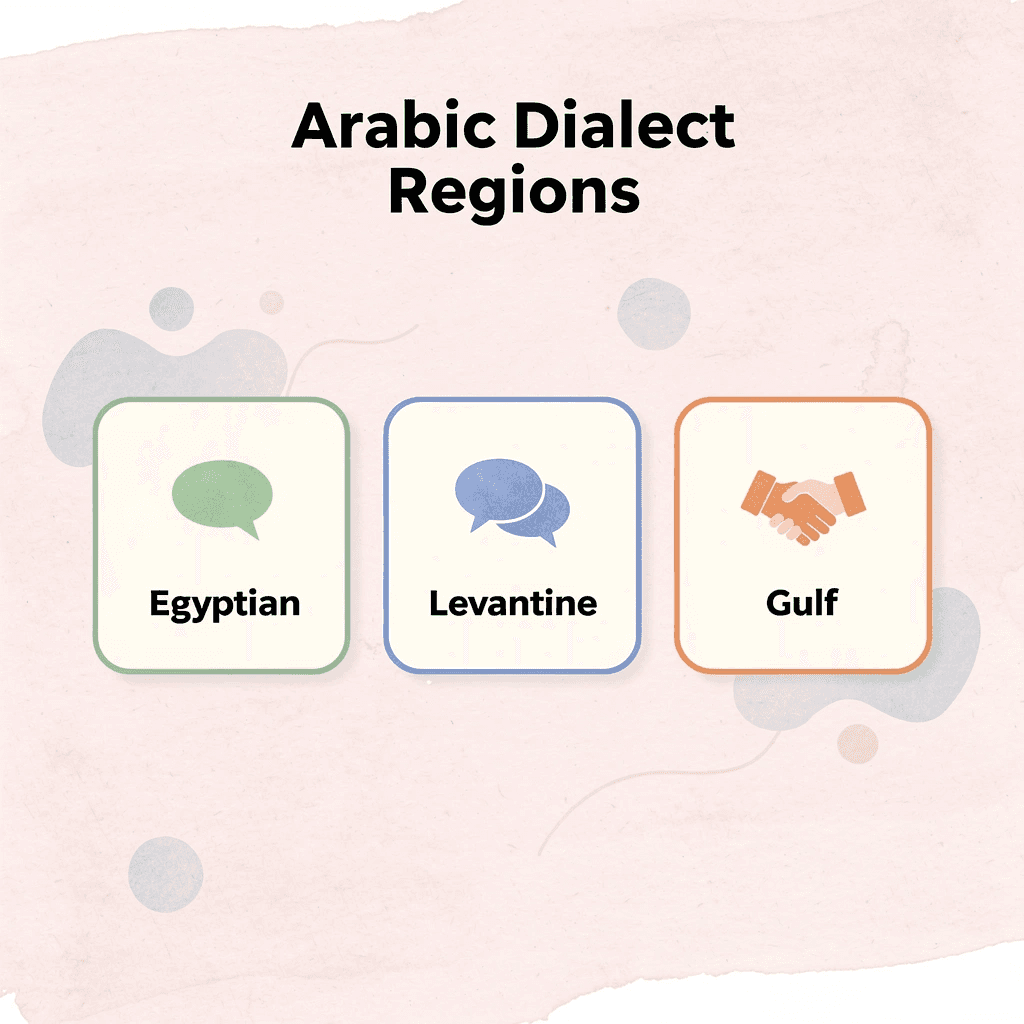
Dialect Region | Welcome Style | Key Characteristics |
|---|---|---|
Egyptian | Warm & Direct | Natural tone, less formal structure |
Levantine | Casual & Flowing | Relaxed formality, community-focused |
Gulf | Polite & Structured | Higher formality, traditional courtesy |
💡 Tip: When learning Arabic, always consider the regional context - what works in one dialect may sound unnatural in another, even if the core vocabulary remains the same.
Egyptian Arabic Welcomes Through Melody and Ease
Egyptian speakers favor Ahlan or Ahlan beek (for men) and Ahlan beeki (for women), stretching the greeting into a warm, musical exchange. The tone remains relaxed and emotionally open. Egyptians layer greetings with follow-up questions, smiles, and humor, transforming brief encounters into mini-conversations. This melodic repetition reflects a culture in which friendliness signals social competence: the greeting serves as an invitation to connect rather than a formality.
Levantine Arabic Builds Intimacy Through Sound
Levantine speakers say "Ahlen" instead of "Ahlan," softening the pronunciation while building emotional closeness. In Lebanon, Syria, Jordan, and Palestine, greetings extend beyond simple exchanges: people repeat phrases, prolong conversations, and use welcoming language to foster connection quickly. According to a 2021 analysis of Arabic varieties, Levantine dialects prioritize relational warmth over formality in everyday exchanges, which explains why greetings sound intimate even during first meetings.
Gulf Arabic Emphasizes Honor and Ceremonial Respect
Gulf speakers use Marhaba and Ya Hala to welcome guests in a polished, formal manner. Hospitality is important: welcoming someone properly demonstrates family honor, generosity, and reputation. The Swiss Hotel Management School notes that Gulf hospitality traditions remain deeply connected to respect and guest treatment. This cultural foundation makes Gulf greetings sound more structured than Egyptian or Levantine versions.
Why do language apps miss regional variations in Arabic?
Most language apps teach Modern Standard Arabic greetings without explaining how regional culture shapes them. Learners memorize Ahlan wa sahlan and assume it works everywhere, but dialects carry social meaning beyond vocabulary.
Platforms like Kalam address this gap by offering speaking drills and video lessons that immerse learners in authentic regional dialogues, helping them hear how Egyptians, Levantines, and Gulf speakers naturally adapt welcoming phrases. Daily practice with real-life scenarios builds the conversational instinct that textbooks miss.
What comes after learning the Arabic welcome phrases?
Knowing how to say "welcome" across different dialects solves only part of the challenge. The harder skill is understanding how to respond correctly when someone welcomes you.
Related Reading
Astaghfirullah In Arabic
Colors In Arabic
Moon In Arabic
Common Responses To 'لا' In Arabic Chat
You're Welcome In Arabic
Ramadan Mubarak In Arabic
Fuck You In Arabic
Mom In Arabic
Family In Arabic
Yalla In Arabic
Meaning Of 'لا' In Arabic Conversation
How To Say Happy Birthday In Arabic
Rabbi Inni Lima Anzalta Dua In Arabic
Walaikum Assalam Warahmatullahi Wabarakatuh In Arabic
Grandma In Arabic
Please In Arabic
Afwan In Arabic
Shukran In Arabic
Hayati In Arabic
Infidel In Arabic
Bad Words In Arabic
Son Of In Arabic
Bye In Arabic
Eid Mubarak In Arabic
Cat In Arabic
Peace In Arabic
Shut Up In Arabic
Mean In Arabic
Good Night In Arabic
Uncle In Arabic
7 Ways to Say "Welcome" in Arabic and How to Respond Correctly
Responding correctly matters as much as saying "welcome." Your reply either confirms the connection or breaks it, demonstrating you understand the tone, context, and relationship being offered.

Learners memorize one greeting phrase but freeze during actual conversations because native speakers reply differently, pronounce words differently, or switch greetings depending on context. This gap between textbook knowledge and real interaction creates awkward pauses where confidence should live.
🎯 Key Point: Mastering Arabic welcome responses requires understanding both the formal phrases and the cultural context behind each greeting.

"The difference between knowing Arabic greetings and using them naturally lies in understanding the cultural nuances and appropriate responses for each situation." — Arabic Language Studies, 2023
💡 Tip: Practice response patterns with native speakers to bridge the gap between theoretical knowledge and real-world application.

1. Ahlan wa Sahlan (أهلاً وسهلاً)
Ahlan wa sahlan is the most recognized Arabic expression for "welcome" across homes, stores, restaurants, and everyday conversations. Ahlan comes from ahl, meaning "family," while sahlan comes from sahl, meaning "easy" or "comfortable." Together, the phrase conveys that the guest belongs and should feel at ease.
The correct response is Ahlan beek (to a man), Ahlan beeki (to a woman), or Ahlan beekom (to a group). These replies convey warmth and respect, demonstrating hospitality and family connection rather than a simple greeting.
2. Marhaban (مرحباً)
Marhaban works as both "hello" and "welcome" in Arabic, sounding more neutral and formal than Ahlan wa sahlan. Arabic speakers use it in professional settings, for polite introductions, in customer service interactions, and in conversations with strangers.
The simplest response is to repeat Marhaban back to the speaker. Some speakers also answer with Ahlan to add warmth. Marhaban remains one of the safest greetings for learners because it fits both formal and informal situations without sounding unnatural or overly familiar.
3. Ya Hala (يا هلا)
Ya Hala appears frequently in Gulf Arabic dialects, particularly in Saudi Arabia, Kuwait, Qatar, Bahrain, and the UAE. The phrase expresses excitement and enthusiasm when welcoming someone, rooted in Gulf hospitality traditions that emphasize generosity and friendliness.
Common responses include "Allah yihalleek" or saying "Ya Hala" again. Native speakers extend the greeting with expressions like Ya Hala wallah. In Gulf hospitality culture, respectful and generous greetings carry significant weight, making expressions like Ya Hala sound warm and celebratory.
4. Ahleen (أهلين)
Ahleen is a casual, friendly version of Ahlan used in Levantine dialects (Lebanon, Syria, Jordan, Palestine). Its relaxed, youthful tone makes it common among friends, classmates, and coworkers.
Respond with Ahleen feek or simply repeat Ahleen. According to WordReference Arabic Discussions, Ahleen intensifies Ahlan's warmth through everyday speech patterns, explaining why Levantine conversations sound emotionally expressive and socially close.
5. Salaam Alaikum (السلام عليكم)
Salaam Alaikum means "peace be upon you" and is a respectful greeting used across the Arab and Muslim world. The phrase holds significance in both religion and culture, appearing in formal settings, family gatherings, workplaces, and everyday conversations.
The correct response is Wa Alaikum Salaam, which means "and peace be upon you too." This exchange conveys peace, respect, and goodwill between Arabic speakers.
6. Tafaddal (تفضل)
Tafaddal literally means "please come in" or "go ahead." Arabic speakers use it when welcoming guests into homes, offices, restaurants, or gatherings. The phrase communicates generosity and hospitality through action rather than mere greeting.
The most natural response is Shukran (thank you) or entering politely while acknowledging the invitation. According to LibreTexts Arabic Studies, hospitality rituals in Arab culture extend beyond words into physical gestures of care and respect. Tafaddal reflects that tradition directly.
7. Hala Wallah (هلا والله)
Hala Wallah is one of the warmest expressions in Gulf Arabic. The phrase combines Hala with Wallah ("by God") to create an energetic greeting used when welcoming friends, honored guests, or someone one is excited to see.
How do you respond to this welcome in Arabic?
The response typically mirrors the greeting with another "Hala Wallah" or a similar welcoming phrase. Gulf greetings emphasize enthusiasm, hospitality, and emotional warmth as core elements of social interaction.
How can you master the welcome in Arabic conversations?
Knowing these variations helps you recognize them, but fluency means responding naturally without translating. Platforms like Kalam offer speaking drills and video lessons in authentic regional dialogues, allowing learners to practice until correct responses feel automatic.
Daily practice with real-life scenarios builds the conversational instinct that textbooks cannot teach.
How Kalam Helps You Practice Saying “Welcome" in Arabic
Kalam addresses the greeting gap through structured speaking practice that requires learners to produce correct Arabic phrases before progressing. Interactive dialogue scenarios demand accurate pronunciation of welcoming expressions within conversational contexts, training automatic responses rather than intellectual understanding—closing the distance between knowing what "Ahlan" means and saying it naturally.
🎯 Key Point: The difference between knowing a greeting and using it fluently lies in active pronunciation practice, not passive memorization.
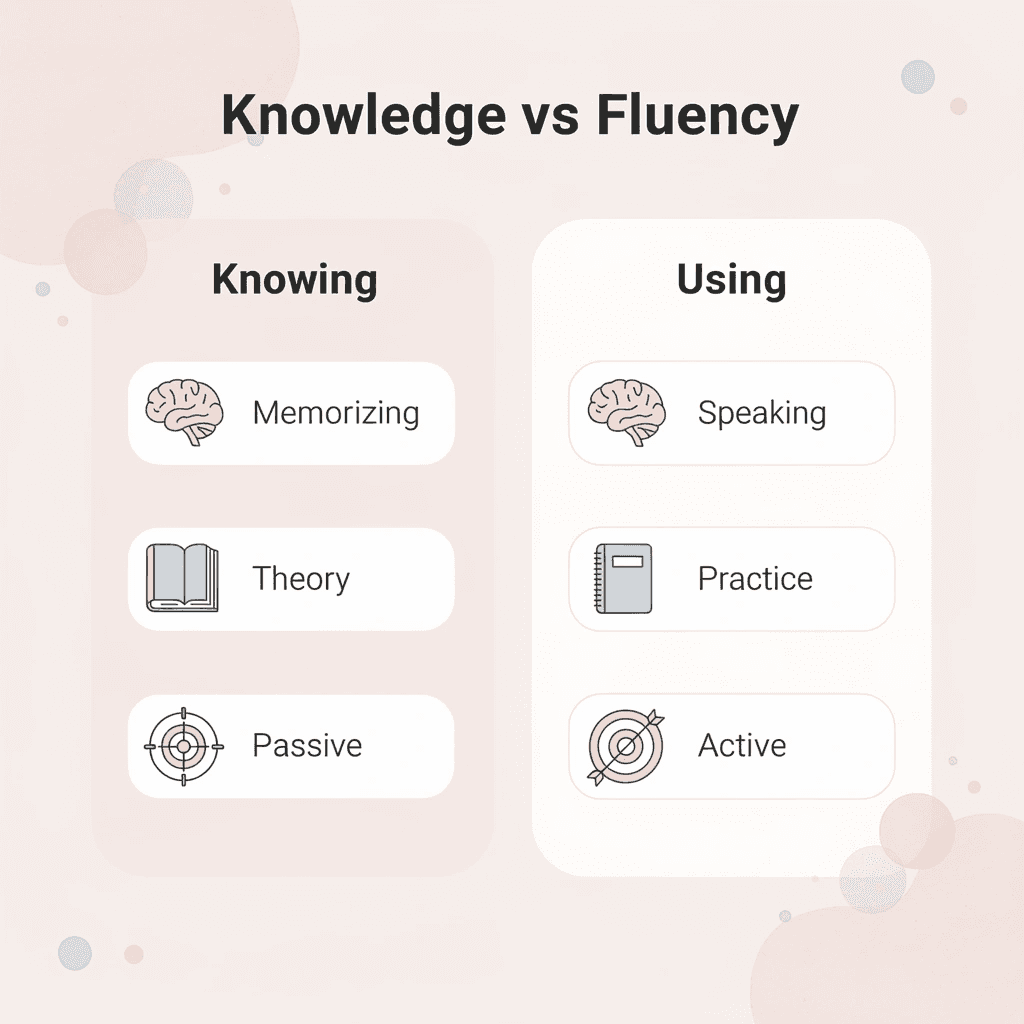
"Training automatic responses rather than intellectual understanding closes the distance between knowing what 'Ahlan' means and actually saying it naturally." — Language Learning Research
💡 Tip: Kalam's interactive scenarios simulate real-world greeting situations, helping you build muscle memory for Arabic welcoming phrases through repetitive practice and immediate feedback.

Speaking Drills Replace Mental Translation
The pause before responding to a greeting reveals the translation trap: your brain searches for the English equivalent, forms the Arabic phrase, and then attempts to pronounce it as the conversational moment passes. Kalam eliminates this delay through repetition-based speaking exercises that bypass the translation layer entirely. You hear "Ahlan wa sahlan," respond with "Ahlan beek," and continue the drill until the response becomes automatic. The platform measures pronunciation accuracy using speech recognition, requiring correct sounds to advance. This creates muscle memory and automaticity—elements that textbooks never build.
Contextual Practice Builds Situational Fluency
Knowing five ways to say "welcome" becomes useless when you cannot tell which phrase fits the moment. Kalam embeds greeting practice in scenario-based lessons that mirror real interactions, such as welcoming a guest at home, greeting a colleague at work, and responding to a shopkeeper's "Marhaban". You learn that "Ya Hala" carries warmth suited to Gulf contexts, while "Ahlan" signals closeness appropriate for friends. The conversational AI adapts dialogue based on your responses, creating unpredictability that prepares you for authentic exchanges rather than scripted performances.
Daily Repetition Prevents Skill Decay
Arabic greetings fade from memory faster than vocabulary because they require correct pronunciation and contextual understanding simultaneously. Missing three days of practice means relearning sounds your mouth has already forgotten. Kalam structures lessons as short, focused speaking sessions to be completed daily. Users report that practicing a few lessons each day maintains pronunciation accuracy and conversational readiness. The platform tracks consistency, nudging you toward the repetition frequency that prevents decay. Daily rhythm matters more than lesson length because speaking skills depend on recent use, not accumulated hours.
Pronunciation Feedback Creates Clarity
Mispronouncing "Marhaban" as "Mar-ha-ban" instead of the correct "Mar-ha-ban" diminishes the warmth the greeting conveys. Regular apps overlook mispronunciation, prioritizing lesson completion over accuracy. Kalam requires correct pronunciation to progress, using speech recognition to identify specific sound errors. When your "h" sound lacks the throat depth Arabic requires, the platform flags it and prompts you to try again. This immediate correction builds pronunciation confidence in ways passive listening cannot.
Dialect Exposure Prepares for Regional Variation
Egyptian friends say "Ahlan beek" with melodic warmth, while Levantine speakers soften it to "Ahlen," and Gulf Arabic speakers favor "Marhaba" with formal respect. Exposure to these variations through spoken practice helps learners recognize and adapt across contexts. Kalam focuses on conversational Arabic that reflects how native speakers speak, preparing learners for when a Jordanian colleague greets them differently from their Egyptian teacher.
Related Reading
Sorry In Arabic
Sun In Arabic
67 In Arabic
Water In Arabic
Meaning of اه in Arabic Chat
Sabr In Arabic
Brother In Arabic
Learn Arabic in Any Dialect Today with Kalam
Memorizing greetings without saying them out loud keeps you stuck in theory. Real Arabic conversations move fast, switch between dialects, and require socially correct responses that feel natural, not rehearsed. The gap between knowing Ahlan wa sahlan and confidently responding to it in a busy Cairo café or Riyadh office lobby closes only through repeated speaking practice that trains your mouth, ears, and reflexes together.

💡 Tip: Practice complete dialogue exchanges rather than isolated vocabulary words to build conversational reflexes that work under pressure.
Kalam teaches Arabic through immersive conversation practice instead of passive vocabulary lists. Our app uses interactive speaking exercises, realistic dialogue scenarios, and pronunciation drills that mirror how native speakers communicate. You practice complete exchanges, not isolated words, so responses become automatic rather than translated. When someone greets you with Marhaban, you reply without hesitation because you've rehearsed that exact interaction dozens of times in context.
"Real Arabic conversations move fast and switch between dialects—you need responses that feel natural, not rehearsed." — Kalam Language Learning Method
That shift from memorization to muscle memory changes everything. Your brain stops searching for translations mid-conversation. Pronunciation improves with our real-time speech-recognition feedback. You learn exactly when Ya Hala fits a Gulf context and when Ahlan works better with friends through repeated exposure to real scenarios, not through rules.
Traditional Method | Kalam Approach |
|---|---|
Memorize vocabulary lists | Practice complete conversations |
Learn grammar rules | Build speaking reflexes |
Translate in your head | Respond automatically |
One-size-fits-all Arabic | Dialect-specific contexts |
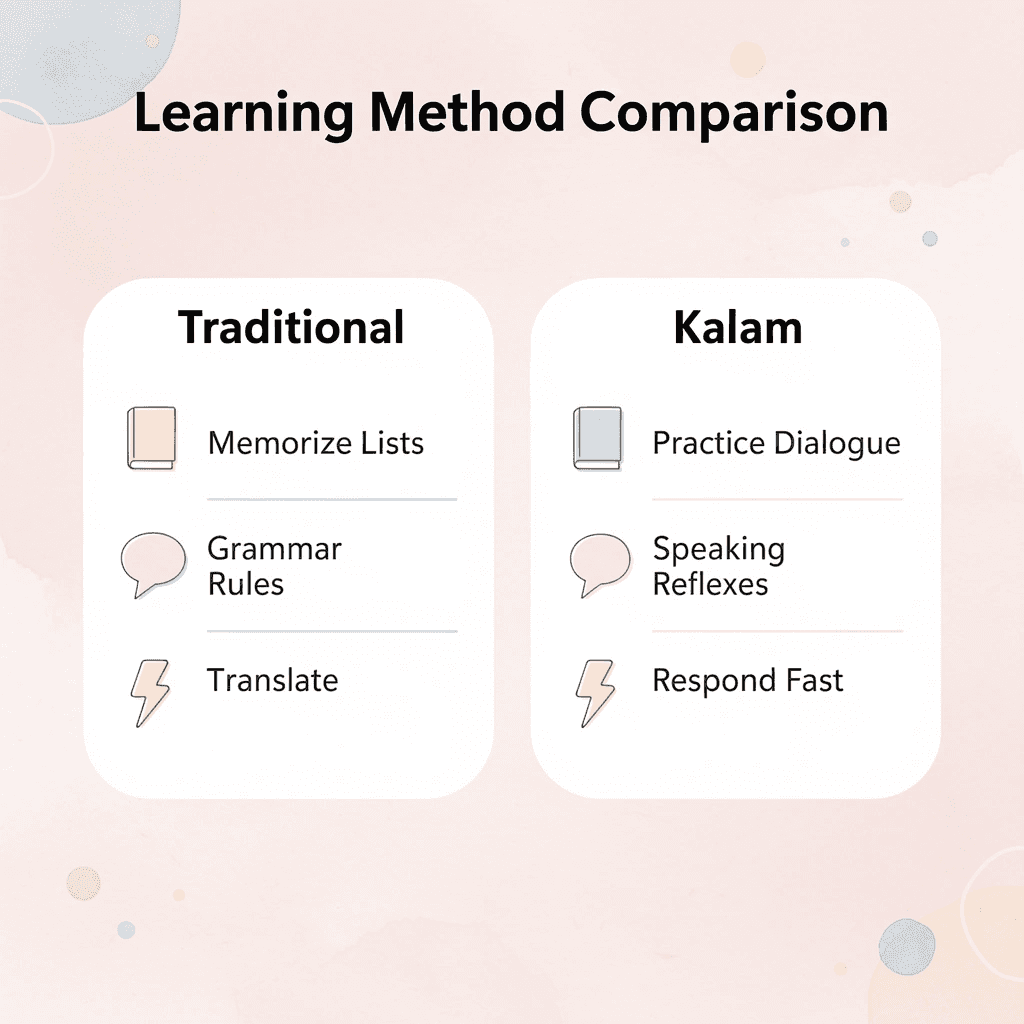
🎯 Key Point: The gap between understanding Arabic and speaking it confidently closes only through consistent speaking practice in realistic scenarios.
Skipping speaking practice keeps Arabic stuck at the recognition stage. You understand greetings when you hear them, but freeze when it's your turn to respond. That delay disrupts conversational flow and erodes confidence. The longer you avoid speaking out loud, the wider the gap grows between what you know and what you can use.

⚠️ Warning: Avoiding speaking practice creates a dangerous gap between passive understanding and active communication skills that becomes harder to bridge over time.
Download Kalam and start your free trial to begin learning Arabic today in any dialect. Transform greetings from memorized phrases into natural conversations that work.