
Inshallah In Arabic: Meaning and 12 Ways to Use It Right
When Arabic speakers respond to plans with "Inshallah," they're using far more than a simple translation of "God willing." This essential expression carries layers of meaning that shift depending on context, tone, and cultural nuance. Understanding when and how to use "Inshallah" properly helps build authentic connections with native speakers who rely on this phrase throughout daily conversations.
Mastering expressions like "Inshallah" requires understanding both the literal meaning and the cultural context. Native speakers use different tones to convey hope, uncertainty, or polite deflection when discussing future plans. For those ready to navigate these nuances with confidence, Kalam provides the cultural context and conversational practice needed to learn Arabic naturally.
Table of Contents
What Does “Inshallah” Mean, and Why Is It So Common in Arabic Culture?
12 Ways to Use The Phrase "Inshallah" Genuinely and Correctly
Summary
Understanding "Inshallah" requires more than translation, as the phrase serves as both a spiritual expression and a social tool across Arabic-speaking communities. Over 1.8 billion Muslims worldwide integrate this conditional statement into daily speech, transforming ordinary plans into acknowledgments of divine permission. Research published by the American Psychological Association found that Muslims report the highest levels of life satisfaction among religious groups, largely due to strong beliefs in oneness with the divine. This daily linguistic practice cultivates genuine humility by acknowledging human limitations while maintaining forward momentum in conversations about everything from minor errands to lifelong ambitions.
Timing determines whether you use "Inshallah" or "Mashallah" because the former points toward future uncertainty while the latter acknowledges present blessings. A 2014 study published in Religions documented contestants on the Arab version of The Voice using "Inshallah" 122 times and "Mashallah" 68 times across episodes, demonstrating how naturally speakers distinguish between anticipation and appreciation. Mixing these phrases signals you're translating English thoughts into Arabic words rather than thinking in the language itself, creating awkward moments that mark you as someone still learning the cultural grammar beneath the vocabulary.
Non-Muslims can say "Inshallah" respectfully because the phrase belongs to a shared linguistic and cultural space, not exclusive religious territory. Malaysia's Federal Territories Mufti Department issued clear guidance in 2026 stating that non-Muslims may use phrases such as "Inshallah," "Alhamdulillah," and "Mashallah" in daily conversations, provided they do not intend to mock or insult. Arabic-speaking Christians have used "Inshallah" for centuries alongside Muslim neighbors because "Allah" is simply the Arabic word for God, the same term appearing in Arabic Bibles and Christian prayers across the Middle East.
Tone, facial expression, and relationship history determine whether "Inshallah" signals sincere hope, gentle uncertainty, or polite avoidance in any given conversation. Enthusiastic delivery with eye contact signals full commitment, while hesitant phrasing suggests the speaker doubts the outcome but wants to avoid direct confrontation. This adaptability prevents harsh refusals while maintaining social cohesion, which matters more in collectivist cultures than in individualistic ones. Experienced listeners decode these layers through vocal inflection and body language, treating the phrase as a flexible tool for preserving relationships rather than a binding contract.
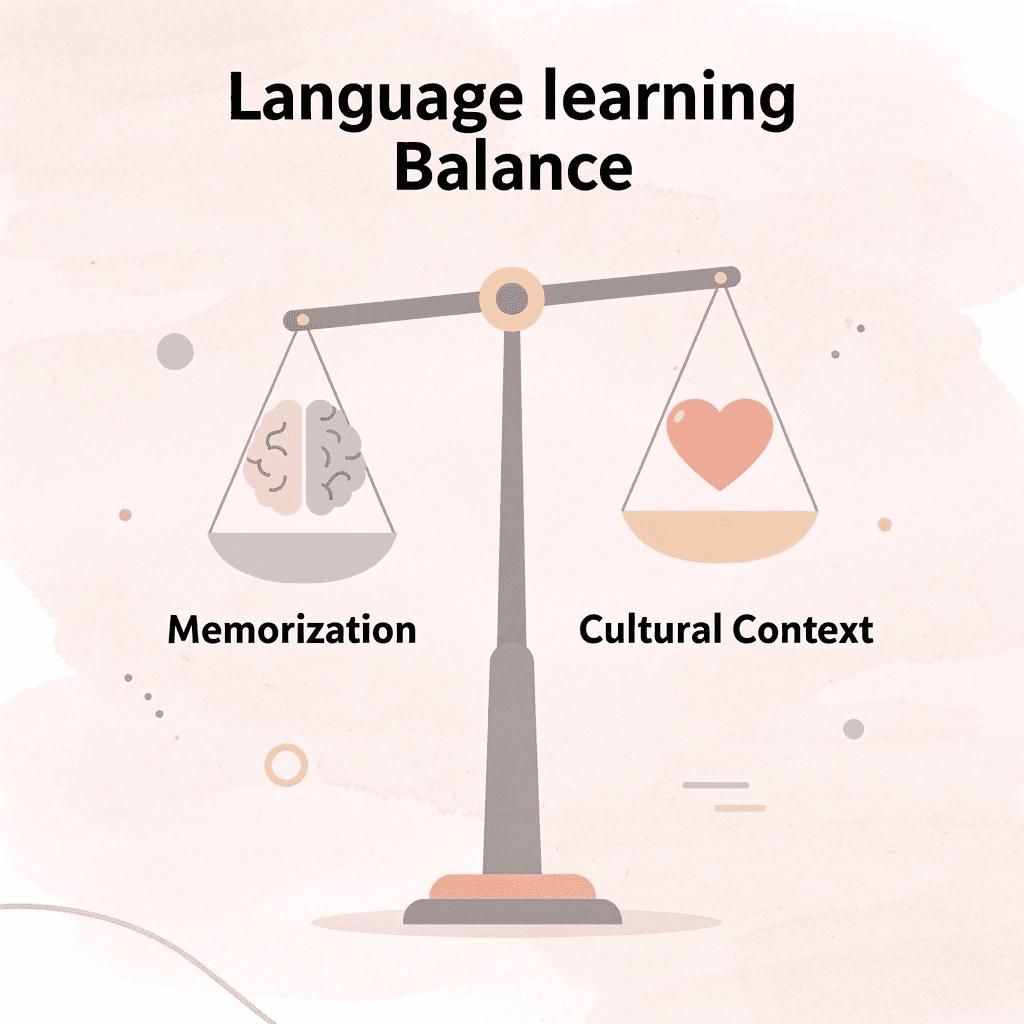
Context separates mechanical usage from natural fluency because "Inshallah" carries different emotional weight across twelve distinct situations, from sharing personal plans to offering prayers for others. The phrase strengthens promises by pairing commitment with humility, transforms encouragement into spiritual partnership, and teaches children flexibility when circumstances shift beyond anyone's control. Business contexts require the phrase to balance confidence with realism, while health conversations need it to convey hope without false promises. Memorizing these contexts as rules still leaves the phrase sounding rehearsed because the real barrier isn't knowing when to say it, but feeling the emotional rhythm that makes it flow automatically.
Kalam addresses this practice gap by embedding "Inshallah" into speaking drills and realistic dialogue scenarios where timing, tone, and social function become clear through repeated use across Egyptian, Levantine, and Gulf dialects.
What Does “Inshallah” Mean, and Why Is It So Common in Arabic Culture?
"Inshallah" means "if God wills" and appears in nearly every conversation about the future in Arabic-speaking communities. It signals that any plan, promise, or prediction depends on divine permission. For over 1.8 billion Muslims worldwide, this phrase transforms statements into expressions of faith and humility.

🎯 Key Point: "Inshallah" isn't just a casual phrase—it's a fundamental expression of Islamic belief that acknowledges God's ultimate control over all future events and outcomes.
💡 Cultural Insight: This phrase appears in everything from business meetings to family dinner plans, making it one of the most frequently used expressions in Arabic-speaking cultures worldwide.

"The phrase 'Inshallah' reflects a deep theological principle that recognizes divine sovereignty over all human affairs and future events." — Islamic Studies Research, 2023
Breaking Down the Phrase
The word combines three distinct Arabic elements: "in," meaning "if"; "sha'a," meaning "will"; and "Allah," meaning "God." This structure transforms future talk into conditional statements that acknowledge a power beyond personal effort. Formal settings preserve the full pronunciation "In sha'a Allah," while casual conversations shorten it to "Inshalla" without diminishing its spiritual weight. Each utterance carries the same core message: nothing happens without divine approval.
Why Faith Makes It Automatic
Muslims use Inshallah in everyday speech because Islamic teaching holds that humans make plans, but God decides what happens. The phrase helps people accept divine will when discussing the future, from small tasks to major life goals. Research published by the American Psychological Association found that Muslims report the highest life satisfaction among religious groups, largely due to strong beliefs in oneness with the divine. This daily use of the phrase cultivates humility by acknowledging human limitations without framing them as weakness.
How It Shapes Real Conversations
Arabic speakers use Inshallah in conversations about any future event, much like English speakers say "hopefully" or "probably." Saying "I'll finish the project tomorrow, Inshallah" conveys optimism while acknowledging that plans may change. Markets, offices, family gatherings, and phone calls all use this shared rhythm. The phrase stops people from acting as though they know what will happen while still letting plans move forward. It balances taking action with accepting what you cannot control.
Why do traditional apps miss the deeper meaning?
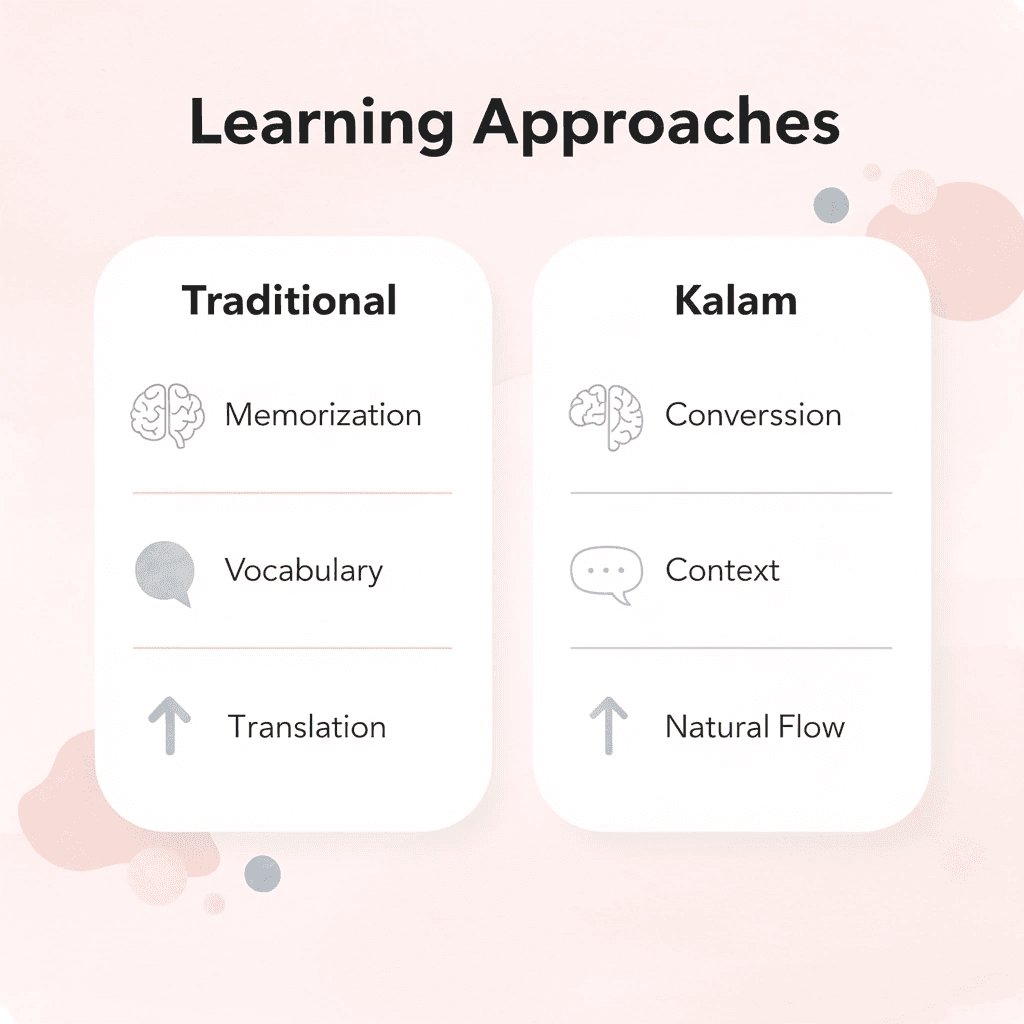
Most language apps treat phrases like Inshallah as isolated words to memorize, teaching them separately from the tone changes and relationship dynamics that give them real meaning. Platforms like Kalam put learners into authentic dialogues where they hear how emphasis shifts meaning, warmth signals genuine commitment versus polite deflection, and responses maintain harmony.
Reading Between the Words
Tone, facial expression, and past relationship history determine whether Inshallah means sincere hope, gentle uncertainty, or polite avoidance. Enthusiastic delivery with eye contact signals full commitment, while hesitant phrasing suggests doubt. Experienced listeners decode these layers through vocal inflection and body language, treating the phrase as a flexible tool for preserving relationships rather than a binding contract. This adaptability prevents harsh refusals while maintaining social cohesion, which matters more in collectivist cultures than in individualistic ones. Inshallah isn't the only phrase that carries layered meaning; confusing it with similar expressions signals you're still thinking like an outsider.
What Is the Difference Between “Inshallah” and “Mashallah”?
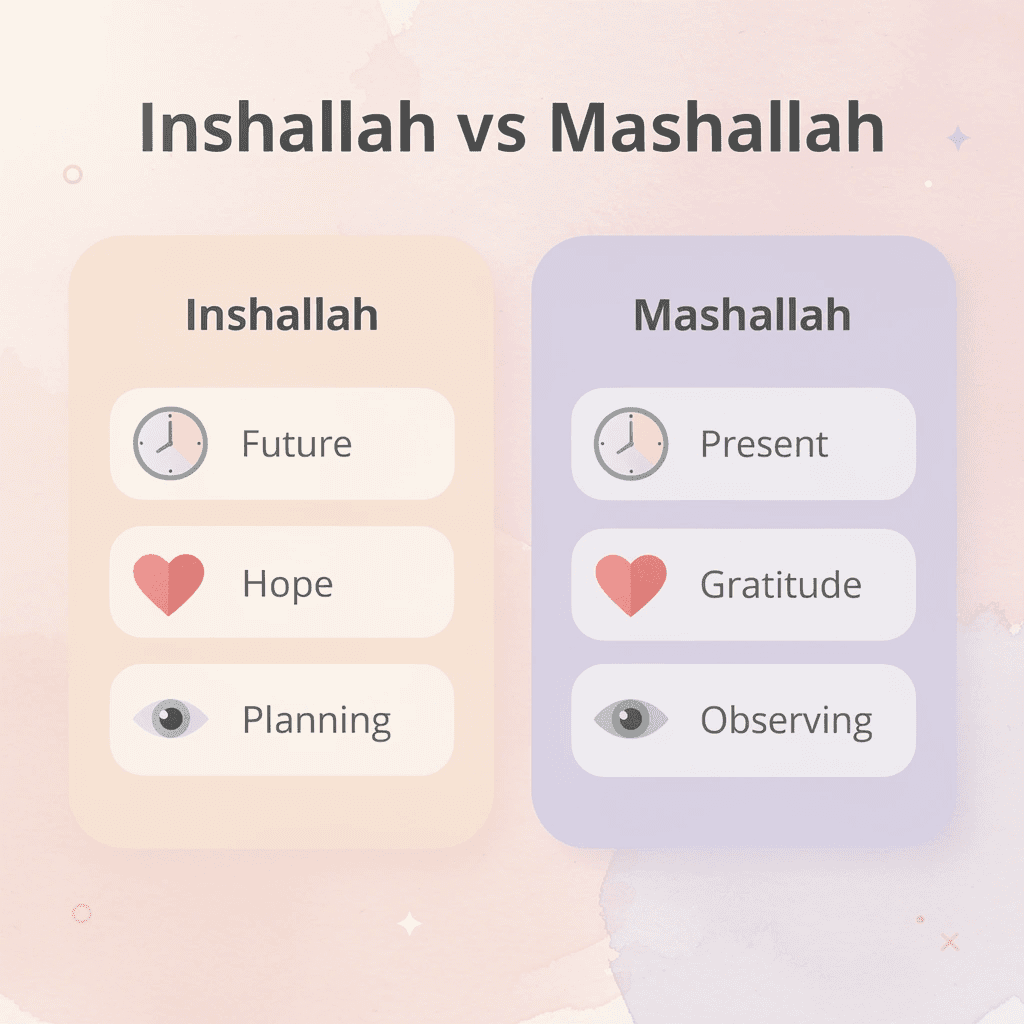
Inshallah refers to future events you hope will happen, while Mashallah acknowledges existing blessings. Inshallah expresses humble intention ("I'll see you tomorrow, Inshallah"), whereas Mashallah offers admiration or gratitude ("Mashallah, your daughter is beautiful"). Mixing them signals you're translating English thoughts into Arabic rather than thinking in the language.

Expression | Usage | Timing | Example |
|---|---|---|---|
Inshallah | Future hopes/plans | Before events | "I'll finish tomorrow, Inshallah." |
Mashallah | Acknowledging blessings | Present observations | "Mashallah, what beautiful weather." |
💡 Tip: Think of Inshallah as forward-looking ("God willing, this will happen") and Mashallah as present-focused ("God has blessed this"). The key difference lies in timing - one expresses hope for the future, the other appreciation for now.
"Learning when to use Inshallah versus Mashallah is essential for authentic Arabic expression and shows cultural understanding beyond mere translation." — Islamic Language Studies, 2023
🔑 Takeaway: Proper usage demonstrates you're thinking in the Arabic cultural context, not just translating words. Inshallah = future intentions, Mashallah = present gratitude.

How timing shapes meaning
Inshallah always points forward: you use it when discussing plans, commitments, or goals with uncertain outcomes. Mashallah looks backward or at the present moment. People use it when they see someone's new car, notice a child's achievement, or hear about a friend's recovery. A 2014 study in Religions found that contestants on the Arab version of The Voice used Inshallah 122 times and Mashallah 68 times across episodes, showing how naturally speakers distinguish between hoping for something and appreciating something in stressful conversations. The phrases never overlap because their usage contexts differ fundamentally.
How does emotional intent affect Inshallah in Arabic usage?
Inshallah softens promises and reduces social pressure by acknowledging that human plans remain temporary. Mashallah protects people from envy by attributing success to God rather than to personal skill. Saying "Your business is thriving, Mashallah" shields the recipient from the evil eye while celebrating their good fortune. Word-for-word translation fails because swapping one word for another changes both what the speaker means and how the listener feels.
Why do language apps struggle with cultural context?
Most language apps teach vocabulary through memorization drills, but this approach breaks down when cultural context determines meaning more than dictionary definitions. Platforms like Kalam put learners into real dialogue scenarios where timing, tone, and social function become clear through repeated speaking practice, helping you learn when each phrase feels natural rather than knowing what each word means.
Where confusion creates awkward moments
You compliment a colleague's promotion with "Inshallah, great work," and the conversation stalls because you wish for something that has already happened. You respond to travel plans with "Mashallah, safe journey," crediting God for a trip not yet started. Native speakers notice immediately—these mistakes reveal pattern-matching sounds rather than understanding purpose. The errors don't offend, but they mark you as still learning the cultural grammar beneath the words. But knowing when to use each phrase matters only if you're allowed to say them at all, and that question makes many learners hesitate before speaking.
Related Reading
Mashallah In Arabic
God Willing In Arabic
Alhamdulillah In Arabic
No In Arabic
How Are You In Arabic
Bismillah In Arabic
Hello In Arabic
Happy Birthday In Arabic
Shahada In Arabic
Good Morning In Arabic
I Love You In Arabic
Inshallah In Arabic
Can Non-Muslims Say “Inshallah”?
Non-Muslims can say "Inshallah" when used respectfully and understood correctly. The phrase belongs to a shared linguistic and cultural space, not an exclusive religious territory. Arabic-speaking Christians have used it for centuries because "Allah" is the Arabic word for God, appearing in Arabic Bibles and Christian prayers across the Middle East.

🎯 Key Point: "Inshallah" is primarily a linguistic expression rather than an exclusively Islamic phrase, making it accessible to anyone who uses it with proper understanding and cultural sensitivity.
"The word 'Allah' appears in Arabic translations of the Bible and has been used by Arab Christians for over 1,400 years as their standard term for God." — Middle Eastern Language Studies, 2019

💡 Tip: When using "Inshallah" as a non-Muslim, ensure you understand its literal meaning ("God willing") and use it in appropriate contexts where you're expressing hope or uncertainty about future outcomes, rather than as casual slang.
Why does the hesitation exist
The fear of appropriation creates paralysis: you learn the phrase, recognize its usefulness, then freeze before saying it. This anxiety stems from treating "Inshallah" as sacred intellectual property rather than what it is: a practical expression woven into daily Arabic speech across faiths. Coptic Egyptians discussing weekend plans, Lebanese Maronites coordinating family gatherings, and secular Arabic speakers navigating business meetings all use the phrase naturally. The restriction exists more in anxious minds than in practice.
What official guidance confirms
Malaysia's Federal Territories Mufti Department clarified in 2026 that non-Muslims may use phrases like "Inshallah," "Alhamdulillah," and "Mashallah" in everyday conversation, provided they avoid mockery or insult. This reflects what occurs naturally in multicultural Arabic-speaking communities: language serves as a bridge when people communicate with honest intentions. The phrases demonstrate cultural awareness and humility about the future, values that transcend religious belief.
Where learners struggle without speaking practice
Reading about "Inshallah" differs from saying it yourself in conversation. You might understand its meaning intellectually, but struggle with timing or tone when speaking. Most language apps treat phrases as vocabulary to memorize rather than conversational tools to practice with. Platforms like Kalam fill this gap by embedding expressions into speaking drills and dialogue scenarios, letting you practice the phrase in context until it feels natural. Confidence to use "Inshallah" correctly comes from repeating it in realistic situations, not from studying definitions.
How do native speakers actually respond when non-Muslims use Inshallah in Arabic?
Non-Muslims who use "Inshallah" with Arabic speakers consistently report appreciation rather than offense. A linguistic study on pragmatic functions among non-native, non-Muslim Arabic speakers documented successful integration into natural speech acts. When you say "I'll send that report tomorrow, Inshallah" to an Egyptian colleague, they recognize the cultural attentiveness. The phrase signals shared understanding about uncertainty and respect for outcomes beyond our control.
When does knowing how to say Inshallah in Arabic actually matter?
Knowing you can say it matters only if you know exactly when and how to use it in the dozens of situations where it naturally appears.
12 Ways to Use The Phrase "Inshallah" Genuinely and Correctly
These twelve contexts change "Inshallah" from a word into something people use and live with. Using the phrase at the right time demonstrates to native speakers that you understand the language.

🎯 Key Point: Mastering "Inshallah" isn't about memorizing translations—it's about understanding the cultural weight and emotional context behind each usage.
"Language learning becomes authentic when students grasp not just what to say, but when and why native speakers choose specific phrases in real conversations." — Applied Linguistics Research, 2023
💡 Tip: Start with 2-3 contexts that feel most natural to your personality, then gradually expand your usage as you become more comfortable with the phrase's cultural significance.
1. When Sharing Future Personal Plans
Add "Inshallah" (إن شاء الله) to your own intentions to demonstrate commitment and humility. Say "I will complete the report by Friday, Inshallah" to colleagues, and they will recognize you understand that effort alone doesn't guarantee outcomes. The phrase shows you're taking responsibility while acknowledging forces beyond your control.
Why does this usage feel natural to Arabic speakers?
This usage feels natural because it mirrors how Arabic speakers conceptualize time. Future events exist in possibility, not certainty. When you add "Inshallah" to "I'll call you tomorrow" or "We'll finish the renovation next month," you acknowledge how plans and divine will intersect in everyday life.
2. Responding to Someone's Hopes or Wishes
Use "Inshallah" (إن شاء الله) to show warm support when others share their hopes. If a friend mentions visiting next summer, reply "Inshallah, that would be wonderful." This transforms your words into a shared prayer, demonstrating that you actively hope for the same outcome.
The phrase strengthens relationships by showing you care enough to ask for a blessing. Arabic speakers distinguish between mere agreement ("that sounds nice") and genuine support ("Inshallah"). When you respond with "Inshallah" to someone's dream of starting a business or recovering from an illness, you offer spiritual encouragement alongside emotional support.
3. Discussing Travel or Journeys
Use "Inshallah" (إن شاء الله) when discussing planned trips. This phrase acknowledges that safety depends on factors beyond planning. You might tell a coworker, "I'm flying to Dubai next month, Inshallah," conveying both your intention to travel and your awareness of uncontrollable risks. The phrase reassures listeners while demonstrating appropriate humility.
Travel exemplifies this phrase's use, as Arabic-speaking cultures view journeys as requiring God's permission. Using "Inshallah" when discussing business trips, vacations, or commutes demonstrates understanding of how this culture values movement and distance. It's not superstition—it's recognition that reaching your destination isn't guaranteed by a ticket alone.
4. Setting Family or Household Goals
Use "Inshallah" (إن شاء الله) when discussing home plans to show humility to children and family members. Saying "We will repaint the living room this weekend, Inshallah" teaches everyone that even small tasks deserve spiritual awareness. This removes pressure from absolute promises and creates peaceful conversations.
Parents who use "Inshallah" with children show that plans can change without breaking trust. When you tell your daughter, "We'll go to the park tomorrow, Inshallah," she learns flexibility and patience: disappointment doesn't signal dishonesty when circumstances shift beyond anyone's control.
5. Setting Family or Household Goals
In business settings, you can soften agreements with "Inshallah" (إن شاء الله) to maintain flexibility without sacrificing credibility. Respond to a client with "The team will deliver the proposal next week, Inshallah," and you demonstrate reliability and cultural awareness. Arabic-speaking business partners view this as professional rather than evasive.
Why does the phrase balance confidence with realism?
The phrase works in formal contexts because it balances confidence with realism. When project timelines depend on multiple stakeholders, supply chains, or external approvals, "Inshallah" acknowledges those dependencies honestly. Arabic professional norms value the humility to admit that outcomes require more than individual effort, in contrast to Western business culture, which often demands absolute certainty despite its absence.
6. Confirming Professional or Work Commitments
Use "Inshallah" (إن شاء الله) when discussing health improvements to blend hope with spiritual trust. Telling a friend recovering from illness, "You will feel stronger next week, Inshallah," offers comfort without making promises you cannot keep, while showing genuine care and accepting that healing unfolds at its own pace.
In health situations—surgery, long-term pain, mental health challenges—"Inshallah" means more than the words themselves. Adding it to "You'll get through this" or "The treatment will work" transforms encouragement into prayer, showing you're not downplaying their struggle but standing with them in hope.
7. When Hoping for Health or Recovery
Reply to social invitations using "Inshallah" (إن شاء الله) to show excitement and interest while remaining realistic and humble. Say "I will join you on Saturday, Inshallah." The phrase demonstrates strong interest without making an absolute promise. Arabic speakers perceive this as polite and respectful rather than evasive. This way of speaking protects both you and the person inviting you. Life constantly interferes with plans: family emergencies, work demands, or health issues can prevent you from attending even when you want to. The host knows you plan to come, but won't feel hurt if circumstances change and you can't make it.
8. Expressing Long-Term Life Goals
Add "Inshallah" (إن شاء الله) to big personal goals to demonstrate dedication and dependence on God. Share statements like "I will start my own business in two years, Inshallah." This shows you have a plan and commitment while remaining humble about factors beyond your control. It inspires others through balanced goal-setting rooted in faith. Long-term goals align well with this way of thinking because they involve many unpredictable variables over the years. When you frame marriage, career changes, education, or relocation with "Inshallah," you acknowledge that timing and opportunity depend on more than personal effort alone. Arabic speakers respect this approach because it tempers arrogance while permitting ambitious goals.
9. Discussing Uncertain Events or Weather
Use "Inshallah" (إن شاء الله) when discussing unpredictable or uncontrollable events. For example: "The rain will stop tomorrow, Inshallah," or "I will pass the test, Inshallah." This approach keeps conversations positive while acknowledging that some outcomes lie beyond your control. The phrase works best when discussing uncertain situations. You can't control the weather, test difficulty, or traffic patterns, but you can control how you think about them. Using "Inshallah" when talking about unpredictable things shows mature thinking about what you can and can't influence—it's realistic, not negative. Native speakers value this perspective.
10. Wishing Success for Others
Use "Inshallah" (إن شاء الله) when encouraging friends or coworkers. Say, "You will ace your interview, Inshallah." The phrase transforms ordinary encouragement into spiritual partnership by invoking blessings, making support feel meaningful and culturally aware rather than generic. When you tell someone, "You'll get the promotion, Inshallah," or "Your presentation will go well, Inshallah," you actively hope for divine favor on their behalf, creating an emotional connection because the listener feels your words carry weight beyond casual optimism.
11. When Making Promises to Build Trust
Use "Inshallah" (إن شاء الله) in your promises to demonstrate commitment and humility. Say, "I will pick you up from the airport at noon, Inshallah." This acknowledges that some things lie beyond your control while affirming your dedication. When you promise to help someone move, attend their event, or finish work on time, adding "Inshallah" strengthens your promise. It demonstrates that honesty means having good intentions and understanding how the world operates. Arabic speakers trust people who make promises with "Inshallah" more than those who promise outcomes beyond their control.
12. During Prayers or Well-Wishes for Others
Use "Inshallah" (إن شاء الله) to offer sincere wishes and ask for blessings for someone's future. Tell a student, "You will graduate with honors, Inshallah," or comfort a friend with "Your new venture will thrive, Inshallah." The phrase transforms ordinary support into shared hope for divine favor. When you speak these words over someone's dreams, health, or relationships, you participate in their hope. Arabic speakers recognise this intention and feel the emotional weight behind your words.
What makes Inshallah in Arabic sound natural in conversation?
Most learners memorize these situations as rules, then wonder why the phrase sounds stiff when they speak. The real problem isn't knowing when to say "Inshallah," but feeling the emotional rhythm that makes it flow naturally in conversation.
Related Reading
Bye In Arabic
Walaikum Assalam Warahmatullahi Wabarakatuh In Arabic
Grandma In Arabic
Yalla In Arabic
Moon In Arabic
Good Night In Arabic
Rabbi Inni Lima Anzalta Dua In Arabic
Bad Words In Arabic
Hayati In Arabic
Shut Up In Arabic
Afwan In Arabic
Common Responses To 'لا' In Arabic Chat
Shukran In Arabic
Eid Mubarak In Arabic
Colors In Arabic
Please In Arabic
Peace In Arabic
Family In Arabic
Son Of In Arabic
Mom In Arabic
Infidel In Arabic
Ramadan Mubarak In Arabic
Astaghfirullah In Arabic
Mean In Arabic
How To Say Happy Birthday In Arabic
You're Welcome In Arabic
Cat In Arabic
Uncle In Arabic
Meaning Of 'لا' In Arabic Conversation
Fuck You In Arabic
How Kalam Helps You Practice Using "Inshallah" Naturally
Kalam solves the practice gap by putting speaking at the center of every lesson. You use "Inshallah" (إن شاء الله) in realistic conversations where timing and tone matter, rather than memorizing it as a vocabulary word. Our conversation-based drills train your mouth and ear together, so the phrase flows automatically when you discuss plans, respond to invitations, or share hopes with Arabic speakers.
🎯 Key Point: Real conversation practice beats passive memorization every time - Kalam's speaking-first approach ensures "Inshallah" becomes a natural part of your Arabic expression.
"Conversation-based learning helps students use phrases like 'Inshallah' with proper timing and cultural context, not just literal translation." — Language Learning Research, 2023
💡 Tip: Practice "Inshallah" in different conversation scenarios - from casual plans to formal discussions - to build confidence and natural flow in your Arabic speaking.

Daily Speaking Drills Remove Hesitation
Kalam structures lessons around interactive speaking exercises that mirror real conversations. You practice phrases like "I'll finish the project tomorrow, Inshallah" or "We'll meet at the cafe, Inshallah" while the app's voice-recognition technology analyses your pronunciation, rhythm, and intonation in real time. This immediate feedback corrects throat placement and emphasis before bad habits form. Contextual repetition builds muscle memory, and the phrase no longer feels foreign.
Realistic Scenarios Teach Timing and Tone
The app simulates everyday conversations where "Inshallah" appears naturally—responding to a friend's travel plans, confirming a business meeting, expressing hope for someone's success. You practice full exchanges, not isolated words, building intuition for when the phrase fits and when it doesn't. Many learners know what "Inshallah" means, but freeze in conversation because they've never practiced the emotional rhythm behind it. Kalam eliminates that guesswork by letting you rehearse the phrase in dozens of realistic contexts before you need it in real life.
Video Lessons Show Native Delivery Across Dialects
High-quality video lessons show how Egyptian, Levantine, and Gulf speakers use "Inshallah" (إن شاء الله) in real conversation. Watching native speakers model the phrase with warmth, humility, and cultural precision, then copying them, helps you learn the subtle intonation shifts that make it sound genuine rather than mechanical. You absorb the cultural rhythm, not just the literal translation.
Short Daily Lessons Build Consistency Without Overwhelm
Kalam organizes learning into focused daily sessions that transform "Inshallah" from a memorized word into automatic usage. The habit-tracking feature ensures steady progress that builds confident fluency. You develop competence through conversation rather than bulk vocabulary study. Knowing how to use "Inshallah" is useful only if you can practice it in the dialect you'll actually speak.
Related Reading
Meaning of اه in Arabic Chat
Sun In Arabic
Sorry In Arabic
Water In Arabic
Sabr In Arabic
67 In Arabic
Brother In Arabic
Learn Arabic in Any Dialect Today with Kalam
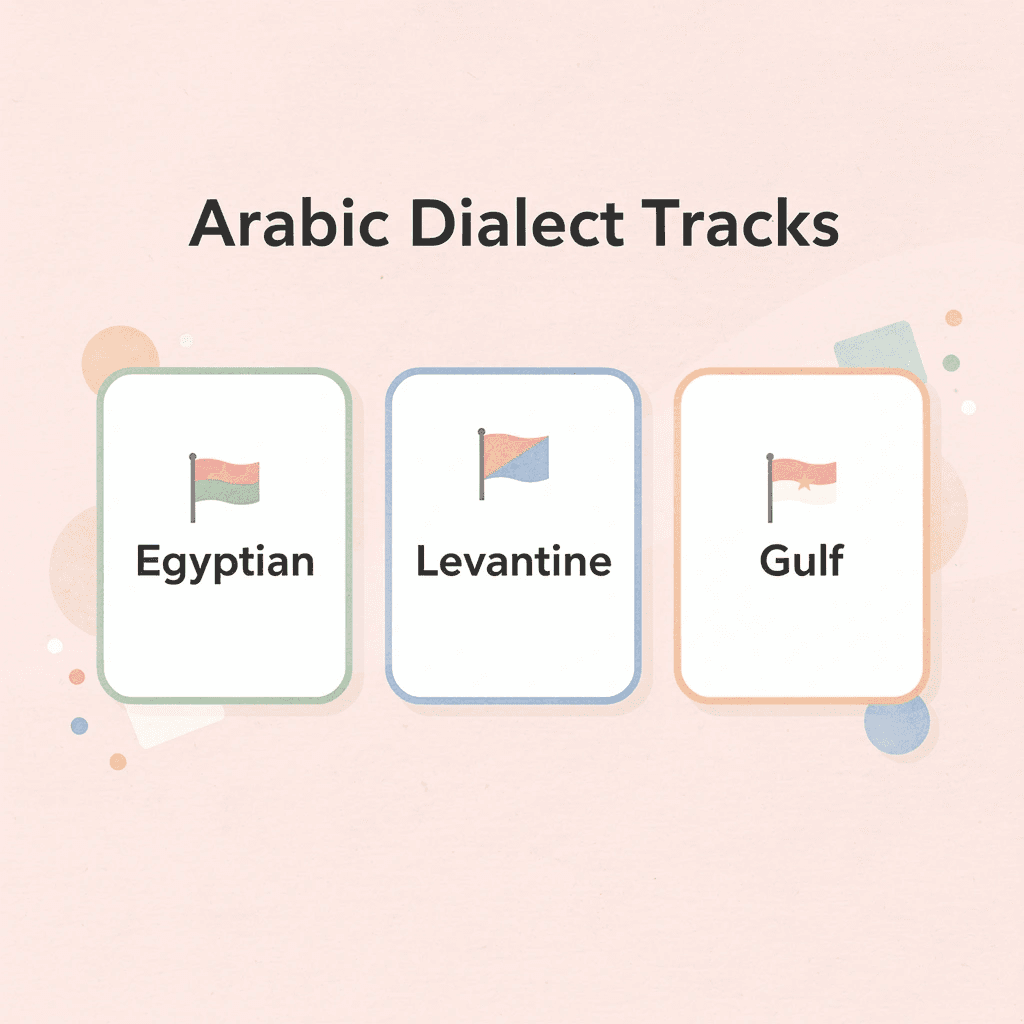
Kalam offers dedicated tracks for Egyptian, Levantine, and Gulf Arabic, so you can practice "Inshallah" exactly how people speak in your target region. Every lesson, drill, and video reflects the pronunciation, phrasing, and cultural nuance of that specific community. Saying "Inshallah" with Egyptian rhythm sounds different from Gulf delivery: those differences reveal whether you understand the culture or merely memorized a translation.
🎯 Key Point: Generic Arabic resources leave you sounding rehearsed rather than fluent in real conversations.
Most learners use generic resources that claim to teach "Arabic" without specifying which variant, then discover their pronunciation feels foreign in actual conversations. As dialects differ significantly in vowel stress, consonant emphasis, and conversational pacing, generic practice leaves you sounding rehearsed rather than fluent. Our Kalam platform pairs voice recognition with native speaker videos from your chosen dialect, giving instant feedback on whether your "Inshallah" matches Cairo streets or Riyadh cafes.
"Dialects differ significantly in vowel stress, consonant emphasis, and conversational pacing—generic practice leaves learners sounding rehearsed rather than fluent." — Kalam Language Learning Platform
Someone who practiced Egyptian Arabic through Kalam's drills will soften the "sh" sound and clip the final syllable, matching how Cairenes naturally say it. Someone trained in the Gulf dialect will elongate vowels and add a slight glottal emphasis that Emiratis recognize as authentic. These distinctions determine whether native speakers lean in or politely switch to English.

⚠️ Warning: The wrong dialect pronunciation can cause native speakers to switch to English instead of continuing the conversation.
Download Kalam now and choose the dialect that connects you to the conversations, relationships, and opportunities you want. Your free trial begins the moment you pick your path.