
Is Arabic Hard to Learn? A Realistic Analysis For Beginners
Arabic presents unique challenges that stop many learners before they start. The script reads right to left, sounds don't exist in English, and Arabic dialects vary so dramatically across regions that Egyptian Arabic sounds completely different from Moroccan Arabic. These obstacles are real, but they're also conquerable with the right approach and realistic expectations.
Success comes down to choosing the right starting point and following a structured path. Rather than getting lost in conflicting advice or giving up when textbook Arabic doesn't match real conversations, learners need a system designed specifically for beginners. Kalam provides exactly that foundation to learn Arabic effectively from day one.
Table of Contents
Summary
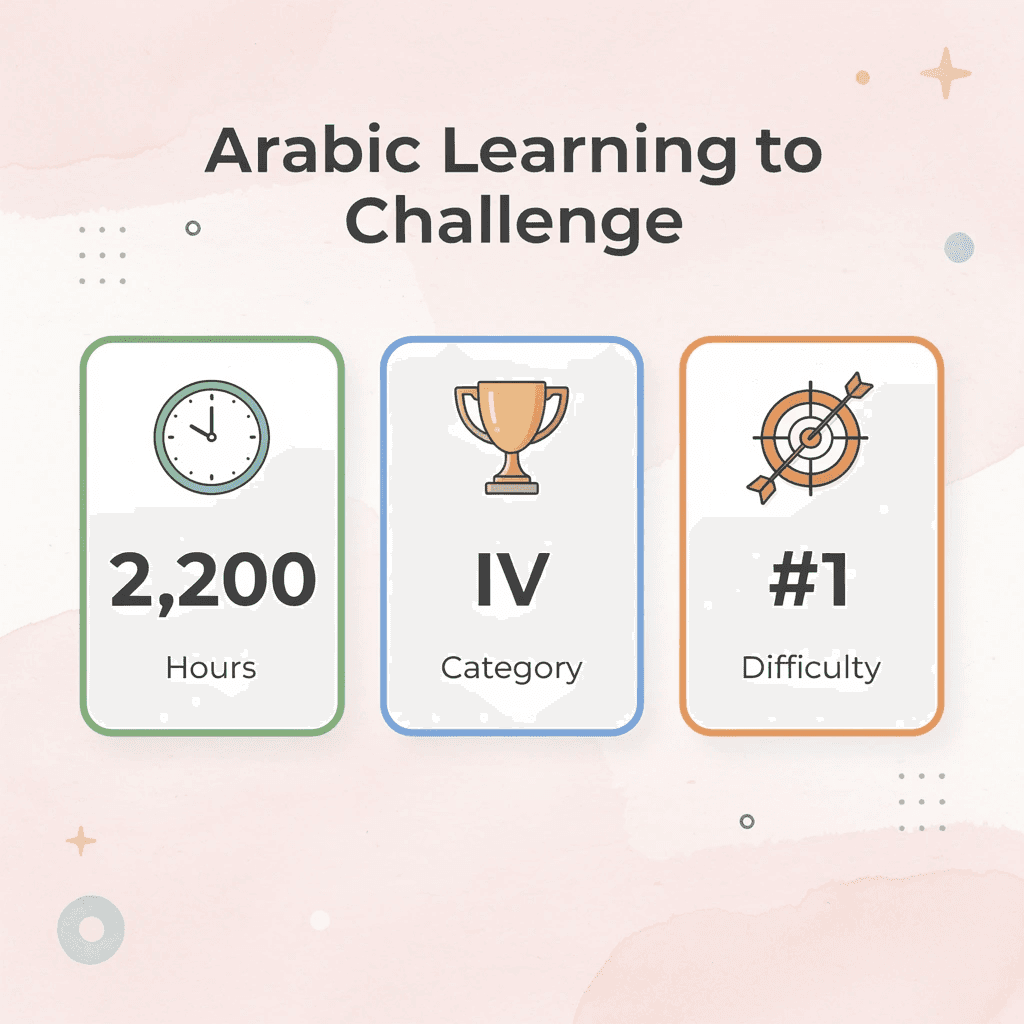
The Foreign Service Institute classifies Arabic as Category IV, requiring approximately 2,200 hours of study to achieve proficiency. That timeline triples the investment needed for Spanish or French, reflecting structural differences that demand patience and consistent effort. The 28-letter alphabet flows right to left, and each letter shifts shape depending on whether it sits at the beginning, middle, or end of a word, creating reading habits that feel completely foreign to English speakers who must also infer pronunciation from context since short vowels rarely appear in print.
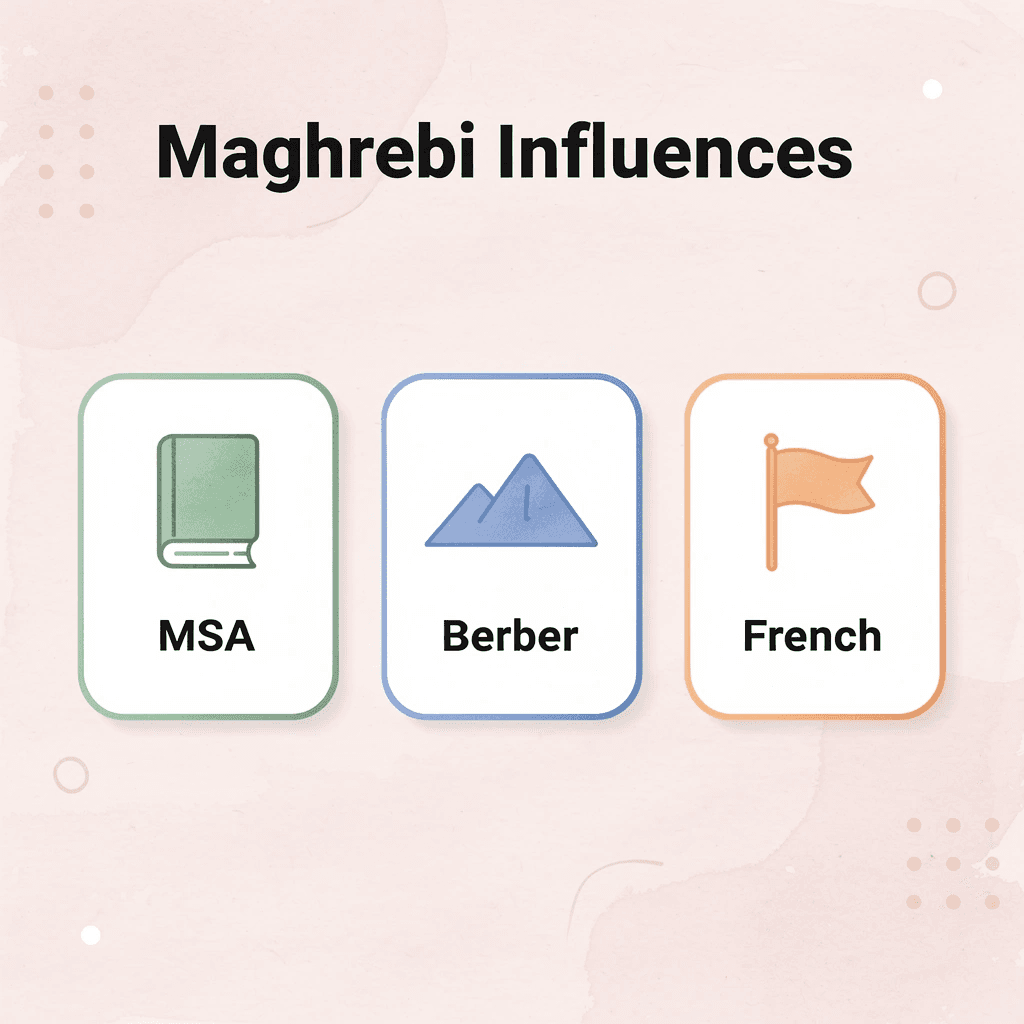
Maghrebi Arabic, spoken across Morocco, Algeria, and Tunisia, consistently earns the reputation as the hardest dialect for learners to master. Over 300 million speakers across the Arab world face mutual intelligibility barriers when encountering Darija, because the dialect borrows throaty sounds from Berber languages, weaves in French and Spanish vocabulary, and compresses consonant clusters at a pace that makes even fluent Egyptian or Levantine speakers pause to decode unfamiliar terms. Native speakers from Syria or Iraq need significant exposure before they can follow Moroccan or Algerian conversations comfortably, yet North Africans often understand Eastern dialects thanks to widespread Egyptian media.
Egyptian Arabic dominates film, television, music, and social media content consumed across the entire Arab world, giving it unmatched passive recognition even among speakers of other dialects. Decades of Cairo's entertainment industry have made it the region's unofficial lingua franca for pop culture, with YouTube channels, podcasts, and apps offering more resources than any other colloquial variety. That one-way intelligibility makes it a practical first choice for travelers, content creators, or anyone seeking broad informal communication without committing to multiple regional forms.
Traditional classroom methods often prioritize written exercises and vocabulary drills, assuming that speaking skills will emerge naturally once learners have accumulated enough vocabulary. That assumption leaves many students fluent on paper but frozen in real conversations, realizing too late that pronunciation errors and unnatural phrasing undermine their credibility. Splitting attention between Modern Standard Arabic and a spoken variety sounds efficient but usually just doubles confusion and slows progress in both, making dialect commitment essential for conversational confidence that comes from repetition in a single system until responses feel automatic.
Memorizing isolated words creates a mental dictionary that doesn't teach you how Arabic actually assembles meaning. The language relies on root-and-pattern logic, where three consonants shift through templates to generate families of related terms, so learning words in context shows you the system instead of hiding it. Recording yourself and comparing playback to native models catches pronunciation errors before they harden into habits that take months to unlearn, especially for emphatic consonants and guttural sounds that textbooks describe but don't drill.
Kalam addresses this by starting with speaking drills and real-time pronunciation feedback, so learners build conversational muscle memory from day one instead of correcting fossilized habits months down the road.
What is the History Of Arabic, and What Countries Speak Arabic?
Arabic's roots go back more than 1,500 years to the nomadic tribes of the Arabian Peninsula, where spoken poetry and oral storytelling shaped a language for desert survival and cultural memory. Early communities developed flexible dialects through trade routes and tribal interactions. The Quran, revealed in the seventh century, gave classical Arabic its enduring structure, which has remained stable across fourteen centuries.
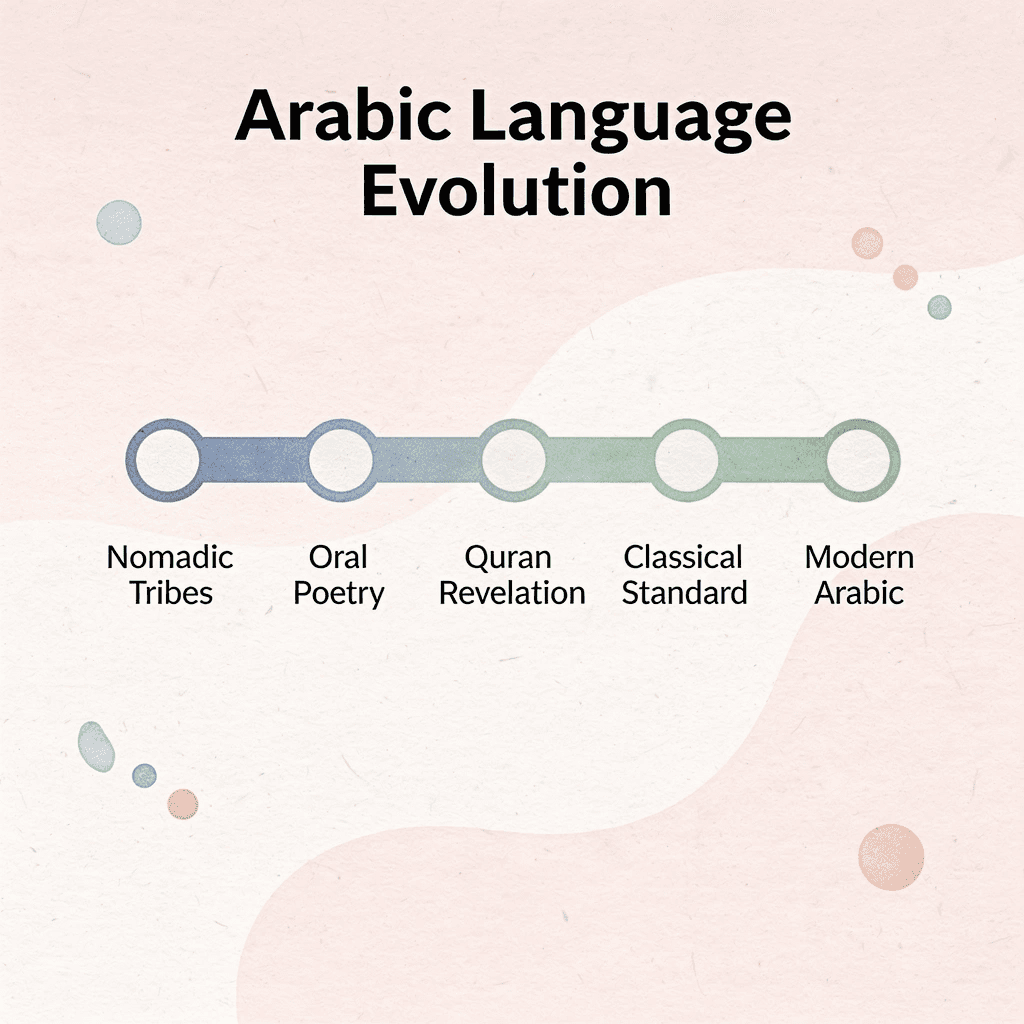
🔑 Key Point: Classical Arabic became the standardized form of the language through the Quran's revelation, creating a unified linguistic foundation that transcends regional dialects and has remained virtually unchanged for over 1,400 years.
"Arabic has maintained remarkable stability across fourteen centuries, making it one of the world's most enduring literary languages." — Linguistic Research, 2023

💡 Historical Insight: The Arabian Peninsula's trade networks were crucial in spreading Arabic dialects before the language's standardization, as merchants and nomadic tribes carried linguistic variations across vast desert territories and established cultural exchanges that shaped the language's evolution.
The Arabic Writing System
Arabic flows from right to left in a connected script of 28 letters, with each letter changing shape depending on its position in a word. This elegant system developed from the Nabataean version of Aramaic script and became more precise when dots and diacritical marks were added to guide pronunciation. The writing tradition has remained so consistent that readers today can access manuscripts written a thousand years ago with ease.
Arabic's Place in the Semitic Language Family
Arabic is part of the Semitic branch of the Afro-Asiatic family and shares basic grammar patterns and root-based vocabulary with Hebrew and Aramaic. The language builds words from three-consonant roots, allowing speakers to create related meanings through predictable patterns. Linguists value Arabic for preserving ancient Semitic features that have disappeared from its sister languages, making it a living window into how early Near Eastern peoples communicated.
The Spread Through Islamic Influence
Starting in the seventh century, Islamic expansion spread Arabic beyond the Arabian Peninsula as new groups adopted the language for government, business, and learning. During the Middle Ages, Arabic became the worldwide language for advances in mathematics, medicine, and philosophy, reaching from Spain to Central Asia. Today, 420 million people speak Arabic as their first language, reflecting centuries of cultural transmission that transformed a regional language into one of the world's major languages.
Arabic-Speaking Countries Today
Industry Arabic identifies Arabic as the official language in 22 countries spanning the Middle East and North Africa, from Algeria to Yemen. Each country has distinct dialects; a speaker from Morocco may need time adjusting to a conversation with someone from Iraq. Modern Standard Arabic unifies written communication, news broadcasts, and formal discussion across these borders, while everyday speech reflects regional identity and cultural diversity.
But knowing where Arabic is spoken doesn't answer the question that stops most learners before they start.
Is Arabic Hard to Learn?
Yes, Arabic is one of the hardest languages for English speakers to learn. It uses an unfamiliar alphabet, features new sounds, and maintains a significant gap between formal writing and everyday conversation. Middlebury Language Schools confirms that the Foreign Service Institute places Arabic in Category IV, requiring approximately 2,200 hours of study to achieve proficiency—three times more than Spanish or French.

🎯 Key Point: Arabic requires 2,200 hours of dedicated study time, making it one of the most challenging languages for English speakers to master.
"Arabic is classified as Category IV by the Foreign Service Institute, requiring 2,200 hours of study—significantly more than Romance languages." — Foreign Service Institute
⚠️ Warning: The gap between formal Arabic and spoken dialects can be particularly challenging for new learners, as you'll encounter different vocabulary and grammar structures in everyday conversation.
The Arabic Script Demands New Reading Habits
The 28-letter alphabet flows right to left, with each letter changing shape based on its position in a word. Short vowels rarely appear in print, requiring readers to infer pronunciation through context and grammar rules. Daily flashcards and simple texts help new learners adapt to the unusual direction and connected letters.
Pronunciation Involves Sounds Unfamiliar to English Ears
Arabic includes guttural and emphatic consonants, such as the deep-throated "q" or the "ayn" sound, with no close English matches. Tiny differences in these sounds can completely change word meanings, such as mixing up "heart" and "dog." Traditional methods rely on vocabulary drills and written exercises, assuming pronunciation will follow naturally. As learners accumulate words, mispronounced patterns harden into habits difficult to break later. Apps like Kalam flip that approach by starting with speaking drills and real-time pronunciation feedback, so learners build correct muscle memory from day one rather than correcting fossilized errors months later.
Grammar Follows a Logical Root-and-Pattern Framework
Arabic words come from three-consonant roots that change according to set patterns to convey related ideas. Verbs change form based on gender, number, and person, and include a dual category that English lacks. Once you understand how the root works, conjugation becomes predictable and regular, far less confusing than irregular verbs in French or German, which accelerates vocabulary acquisition.
Diglossia Splits Formal and Everyday Arabic
Modern Standard Arabic is used for writing, news, and formal speech, while regional dialects are used for everyday conversation. Fluency in one does not guarantee understanding of the other. Many programs begin with Modern Standard Arabic for reading and grammar, then add a chosen dialect for speaking.
But choosing which dialect to learn first is a question most beginners never consider.
Related Reading
Which Arabic Dialect is the Hardest to Learn?
Many learners think that understanding Modern Standard Arabic makes spoken dialects feel like a natural next step. Yet one variety does not follow that pattern, standing out as uniquely hard even for those with basic knowledge.
Maghrebi Arabic, spoken across Morocco, Algeria, and Tunisia, is frequently regarded as the hardest Arabic dialect to learn. This overview examines why, drawing on native-speaker experiences and linguistic insights, and shows how understanding these differences transforms the challenge into an exciting opportunity.
🎯 Key Point: Even students with solid MSA foundations often struggle with Maghrebi Arabic due to its dramatic departure from standard forms and heavy influence from Berber and French languages.

"Maghrebi Arabic presents unique challenges that make it stand out as the most difficult dialect for learners, even those with prior Arabic experience." — Linguistic Research Studies, 2024
⚠️ Warning: Don't let the difficulty reputation discourage you - understanding why Maghrebi Arabic is challenging helps you approach it with the right strategies and realistic expectations.
Maghrebi Arabic is the Hardest Dialect to Learn
Maghrebi Arabic is often considered the hardest dialect for non-native speakers and even for native speakers living outside North Africa. Centuries of blending with Berber languages, plus heavy French and Spanish influences from colonial history, have created a form that differs significantly from that of the Eastern varieties.
Learners often find it surprising how different it is, but mastering it opens a rewarding path to understanding rich North African cultures and everyday communication in the region.
Pronunciation Differences Create the Biggest Initial Barrier
Maghrebi dialects differ significantly from Modern Standard Arabic and other dialects like Egyptian and Levantine in sound and rhythm. Speakers tend to talk quickly, drop vowels, and incorporate sound changes that include non-Arabic words borrowed from Berber.
English speakers often struggle with unfamiliar consonant clusters and fast speech that blurs words together. Focused listening practice makes these patterns familiar, transforming initial confusion into a distinguishing skill.
Foreign Language Influences Add Layers of Unique Vocabulary
Maghrebi Arabic incorporates French, Spanish, and Berber words absent from other varieties of Arabic. Everyday vocabulary for food, technology, and everyday objects often derives from these sources, requiring even speakers of Eastern dialects to mentally translate.
This mix enriches the dialect culturally but requires extra vocabulary work. The benefit is practical fluency that connects you directly to local life in immediate, tangible ways.
Lower Mutual Intelligibility Sets It Apart from Other Dialects
Linguistic studies show that mutual intelligibility between Maghrebi Arabic and Levantine or Gulf dialects decreases. Native speakers from Egypt or Syria require exposure to understand Moroccan or Algerian Darija, while North Africans find the reverse easier due to media exposure.
This one-way dynamic makes Maghrebi especially hard for outsiders. Recognizing this helps learners set realistic goals and understand how targeted practice closes the gap.
Scarce Resources Make Self-Study More Demanding
Maghrebi dialects have fewer movies, songs, apps, and textbooks than Egyptian Arabic. Learners must supplement limited formal resources by finding native speakers, local media, or community groups.
This lack of resources pushes learners to try creative approaches, such as downloading unique apps, doing conversation exchanges, and traveling, which many find more interesting and effective than traditional study methods.
Other Dialects Present Challenges but Fall Short of the Top Spot
Iraqi and Sudanese Arabic rank high on difficulty lists due to throaty sounds, unique vocabulary, and stretched vowels. However, they remain closer to the broader Eastern Arabic family and have better resources available. Yemeni dialects pose similar challenges due to their isolation and distinct features.
These varieties require effort, yet learners with a solid base in Modern Standard Arabic adapt more quickly than those with Maghrebi dialects. This explains why the North African group consistently tops the "hardest" charts.
Turning the Challenge into an Advantage Through Smart Strategies
The idea that Maghrebi Arabic is the hardest can motivate you by offering the reward of connecting with a vibrant part of the Arab world. Start with Modern Standard Arabic to learn the structure, then add Maghrebi by listening daily, using Darija phrasebooks, and practicing with native tutors or apps.
Many learners who push through early frustration report deeper cultural appreciation and practical confidence that make the journey worthwhile. With patience and the right tools, what once seemed hard becomes a skill you're proud to own.
5 Key Arabic Dialects Learners Can Choose From
Arabic has five major dialect groups that serve different practical purposes: from navigating Cairo's streets to conducting business deals in Dubai or building friendships in Beirut. Each has its own unique sound, distinct vocabulary, and cultural significance. The right choice depends on where you'll use the language and what you aim to accomplish.

🎯 Key Point: Your dialect choice should align with your specific goals—whether that's travel, business, or cultural connection. Each major dialect opens doors to different opportunities and regions.
💡 Tip: Consider starting with Egyptian Arabic if you're unsure—it's the most widely understood across the Arab world due to Egypt's dominant media influence and film industry.

"Egyptian Arabic is understood by approximately 300 million Arabic speakers across the Middle East, making it the most practical choice for beginners." — Arabic Language Institute, 2023
1. Modern Standard Arabic (MSA / Fus'ha)
MSA serves as the shared written and formal spoken code across every Arabic-speaking nation, appearing in news broadcasts, government documents, academic papers, and official speeches. It provides the grammatical foundation that makes switching to colloquial dialects later feel less like starting over and more like adding conversational shortcuts to a structure you already understand.
How does MSA help with professional opportunities?
People who work in journalism, diplomacy, translation, or religious scholarship rely on it because contracts, research, and formal discussions require accuracy that regional dialects cannot provide. Using MSA with a spoken dialect creates strong fluency for both boardroom presentations and casual conversations.
The formal variety opens doors to classical literature and legal texts, while everyday dialects let you joke with colleagues or haggle at markets without sounding like a news anchor.
2. Egyptian Arabic
Egyptian Arabic is used in most films, television shows, music, and social media across the Arab world, giving it unmatched passive recognition. Cairo's entertainment industry has made it the region's unofficial lingua franca for pop culture. Learners can gain quick conversational wins with abundant resources: YouTube channels, podcasts, and apps offer more content than any other medium.
A Syrian or Moroccan listener will likely follow your Egyptian even if they wouldn't naturally speak it themselves. This one-way intelligibility makes it practical for travelers, content creators, or anyone seeking broad informal communication without learning multiple regional forms.
3. Levantine Arabic
Levantine Arabic, spoken across Syria, Lebanon, Palestine, and Jordan, has a smooth rhythm closer to MSA than faster dialects. Its grammar feels less confusing for learners who have studied formal Arabic, easing the shift between written exercises and real conversations. The variety appears frequently in contemporary dramas, music videos, and social media, providing steady exposure to natural speech.
Humanitarian workers, students studying abroad in the Levant, and anyone building relationships in the eastern Mediterranean benefit from learning it well. The dialect's melodic flow and transparent structure make it accessible, while its popularity in modern media provides abundant authentic listening practice.
4. Gulf Arabic
Gulf Arabic helps professionals working in major business hubs such as Dubai, Riyadh, Doha, and Kuwait City, where business meetings, energy-sector negotiations, and workplace exchanges require fluency in the local dialect. More than 90 million people speak Gulf varieties, and professionals quickly learn that the dialect builds trust and credibility in ways that MSA alone cannot. The variety's clearer articulation compared with fast-paced Levantine or clipped Egyptian makes listening practice more accessible once you master core vocabulary.
Why do professionals find Gulf Arabic essential for career success?
Business owners, engineers, finance professionals, and anyone relocating to the Arabian Peninsula need Gulf Arabic for both formal and informal settings. Traditional classroom methods often leave learners trapped in textbook drills, assuming speaking skills will develop naturally—yet many professionals struggle through client dinners or team meetings, where pronunciation errors and unnatural phrasing undermine their credibility. Platforms like Kalam focus on speaking drills and real-time pronunciation feedback from day one, enabling learners to arrive in the Gulf with conversational confidence that matches their technical expertise.
5. Maghrebi (North African) Arabic
Maghrebi dialects, found in Morocco, Algeria, Tunisia, and Libya, blend Arabic with strong influences from Berber, French, and Spanish. Speakers compress syllables, drop short vowels, and incorporate borrowed vocabulary, leaving even fluent Egyptian or Levantine speakers struggling with unfamiliar terms.
Why do learners choose Maghrebi despite its complexity?
Learners typically plan to live, work, or study in North Africa, where these dialects are the main languages used in street conversations, markets, and social gatherings, despite limited mutual intelligibility with Middle Eastern forms.
What rewards come from mastering this challenging dialect?
The faster speech rate and unique sound patterns require dedicated effort to learn, but the reward is deeper access to vibrant traditions, food, and communities. Persistence opens rewarding connections in a region where formal learning resources are scarce and everyday conversations rely on casual speech that textbooks rarely teach.
Related Reading
Persian Vs Arabic
Best Way To Learn Arabic
How To Speak Arabic
Modern Standard Arabic
How to Learn Arabic Fluently as a Beginner
Fluency happens when you stop treating Arabic as a puzzle to figure out and start using it as a tool for real conversation. This requires speaking from day one, not memorizing vocabulary lists or working through grammar tables in isolation. Arabic is the sixth most spoken language in the world, with nearly 420 million people speaking it worldwide, yet most beginners waste months on approaches that never produce confident, natural dialogue. The gap between knowing rules and speaking closes only when your practice mirrors how language works in the real world.
🎯 Key Point: Start speaking Arabic immediately rather than spending months on passive study methods that don't translate to real conversations.
"Arabic is the sixth most spoken language in the world, with nearly 420 million people speaking it worldwide." — Ethnologue, 2023
⚠️ Warning: Avoid endless grammar study without speaking practice; this approach rarely leads to conversational fluency.
Start with Sound, Not Script Alone
Most programs teach the alphabet and assume you'll learn pronunciation naturally once you recognize letters. This leaves learners reading correctly but speaking awkwardly, mispronouncing emphatic consonants and guttural sounds that textbooks describe but don't practice. Spend your first two weeks listening to native audio of individual letters and common words, repeating aloud until your mouth adjusts to throat positions English never uses. Recording yourself and comparing playback to native models catches errors before they harden into habits requiring months to unlearn.
Build Sentences Before You Build Vocabulary
Memorizing isolated words creates a mental dictionary that doesn't teach you how Arabic assembles meaning. The language relies on root-and-pattern logic, where three consonants shift through templates to generate families of related terms. Learning words in context shows you the system instead of hiding it. Practice short, high-frequency phrases like greetings, requests, and simple questions that force you to manipulate verb forms and noun cases in real sentences. This reveals grammar as a living structure rather than abstract rules, making conjugation patterns stick faster because you've already used them dozens of times before anyone explains the formal terminology.
Choose One Dialect and Commit Fully
Splitting your attention between Modern Standard Arabic and a spoken variety doubles confusion and slows progress in both. Pick the dialect that matches your goals—Egyptian for media access, Levantine for travel, or Gulf for business—then immerse yourself in its unique vocabulary and pronunciation from the start. Conversational confidence comes from repetition in a single system until responses feel automatic. You can add formal Arabic later for reading and writing.
Speak Daily, Even When It Feels Uncomfortable
Many beginners wait to start speaking until they've "studied enough," creating a gap between passive knowledge and active use. The longer you wait, the wider this gap becomes. Find a language partner online or join a speaking group and push yourself to form sentences with limited tools. Accept mistakes as feedback, not failure. Traditional classroom methods emphasize written exercises and vocabulary drills, leaving many students able to read and write but frozen in real conversations. They discover too late that pronunciation errors and unnatural phrasing undermine their credibility. Apps like Kalam shift this approach by starting with speaking drills and real-time pronunciation feedback, allowing learners to build conversational muscle memory from day one instead of correcting bad habits months later.
Track Small Wins to Sustain Momentum
The 2,200-hour timeline to proficiency becomes manageable when broken into weekly milestones. Set specific, measurable goals such as holding a three-minute conversation, understanding a short podcast episode without pausing, or writing a paragraph without consulting a dictionary. Celebrating these achievements sustains motivation and reinforces the idea that fluency builds through small, incremental steps rather than sudden breakthroughs.
Yet all this tactical advice works only if you choose the right tools to support daily practice and maintain accountability.
Related Reading
Arabic Vs Hebrew
Basic Arabic Phrases
Urdu Vs Arabic
Arabic Vowels
Best App To Learn Arabic
Arabic Basics
Learn Arabic in Any Dialect Today with Kalam
Kalam cuts through traditional study-then-speak sequences by putting conversation first, using immersive speaking drills and real-time pronunciation feedback that build muscle memory from your first lesson. You practice through realistic AI conversations tailored to real-life scenarios, review with spaced-repetition flashcards, and work on tricky guttural sounds in context rather than isolation. Whether you're drawn to Egyptian for its media reach, Levantine for its approachable rhythm, Gulf for business credibility, Maghrebi for North African connections, or Modern Standard Arabic for formal foundations, the app supports all major dialects so your effort aligns with your goals.
🎯 Key Point: Unlike traditional methods that delay speaking for months, Kalam gets you conversing from day one through AI-powered dialogue practice.
"The 2,200-hour journey to fluency becomes manageable when every session focuses on real dialogue rather than theoretical memorization." — Language Learning Research, 2024
Download Kalam from the App Store and start your daily conversation practice. The 2,200-hour journey to fluency shrinks when each session moves you closer to real dialogue rather than theoretical knowledge. Your first three-minute conversation in Arabic starts today, not months from now, after memorizing vocabulary. Progress happens when you choose tools that respect how language actually works—speaking first and letting grammar clarify itself through use.
💡 Tip: Start with just 5 minutes daily of conversation practice rather than hours of grammar study—you'll see faster progress toward actual fluency.
Traditional Method | Kalam Approach |
|---|---|
Months of grammar study first | Speaking practice from day 1 |
Memorize then speak | Learn through conversation |
One-size-fits-all Arabic | Choose your target dialect |
Delayed real-world application | Immediate practical scenarios |