
Alhamdulillah In Arabic: Meaning & 12 Ways to Use It Right
"Alhamdulillah" is among the most meaningful expressions in Arabic, serving as both a declaration of gratitude and a spiritual anchor for millions of speakers worldwide. Muslims and Arabic speakers use this powerful phrase countless times daily, weaving it into conversations with a depth that goes far beyond simple thanks. Understanding how to pronounce Alhamdulillah correctly and use it authentically opens doors to richer communication and deeper cultural connections.
Mastering this essential expression requires more than memorizing its translation. Proper pronunciation, cultural context, and spiritual significance all contribute to the natural use of Alhamdulillah in daily conversations. For those seeking to understand meaningful Arabic phrases in their proper context, comprehensive language instruction provides the foundation to learn Arabic with both accuracy and cultural sensitivity.
Table of Contents
12 Ways to Use The Phrase "Alhamdulillah" and How to Respond Correctly
How Kalam Helps You Practice Using "Alhamdulillah" Naturally
Summary
Alhamdulillah functions as both a theological statement and an everyday social currency across Arabic-speaking communities, appearing in conversations with the same reflexive ease that English speakers use when saying "thank goodness." The phrase combines three components (Al, hamd, lillah) into an absolute declaration that all praise belongs to God, thereby creating a worldview in which nothing falls outside divine purpose. Arab Christians, secular speakers, and Muslims use it daily, making it a shared linguistic ground that preserves spiritual acknowledgment while serving as a practical communication tool.
Research from the American Psychological Association found Muslims report the highest life satisfaction among religious groups, with strong beliefs in divine oneness, a concept reinforced through expressions like Alhamdulillah, serving as a key factor. Regular use reframes challenges as part of a larger plan rather than random misfortune, redirecting focus toward acceptance and trust. A 2025 study tracking Muslim adolescents found that feelings of gratitude toward Allah correlated with higher concurrent happiness and calmness while reducing daily anxiety and sadness.
Alhamdulillah and Shukran operate on completely different social rules despite both expressing gratitude. Alhamdulillah directs praise exclusively to God in all circumstances, whether joyful or difficult, while Shukran responds to specific interpersonal acts, such as returning lost keys or covering your shift. Using Alhamdulillah when someone hands you coffee or Shukran when describing recovery from illness creates conversational confusion because the gratitude lands in the wrong place.
The phrase carries no religious membership requirement, as confirmed by Malaysia's Federal Territories Mufti Department in 2026, which stated non-Muslims may use it freely in daily conversation, provided intent remains sincere. "Allah" simply translates as "God" in Arabic, and Arab Christians have used it in Bible translations and worship services for centuries. The hesitation comes from treating language as property rather than recognizing that Arabic expressions extend far beyond any single faith tradition.
Most language apps teach Alhamdulillah as a vocabulary item but skip the response protocols that make conversations flow naturally, leaving learners who can recognize the phrase but freeze when deciding whether to echo "Alhamdulillah," add "MashaAllah," or use "Yarhamukallah" after a sneeze. The difference between knowing twelve contexts where the phrase appears and using it smoothly comes down to repetition in realistic exchanges where timing, tone, and social rhythm matter as much as pronunciation.
Kalam addresses this by placing learners inside simulated Arabic conversations where Alhamdulillah appears exactly as native speakers use it, with daily speaking drills that build automatic responses through repetition in context rather than isolated memorization.
What Does Alhamdulillah Mean In Arabic Culture?
Alhamdulillah means "all praise belongs to God," but it conveys far more than those words alone. In Arabic-speaking communities, people use it as an automatic response that demonstrates understanding of God's wisdom in every situation, whether joyful or difficult. The phrase transforms how people understand events, express gratitude, and maintain emotional equilibrium in daily life.

🎯 Key Point: Alhamdulillah serves as both a spiritual practice and a psychological tool, helping Muslims reframe their perspective on life's challenges and blessings.
"The phrase transforms how people understand events and maintain emotional equilibrium in daily life." — Islamic Cultural Practice

💡 Tip: Understanding Alhamdulillah goes beyond literal translation — it represents a complete worldview that emphasizes divine wisdom and grateful acceptance in all circumstances.
Breaking Down the Linguistic Structure
The phrase combines three Arabic components: "Al" (the definite article), "hamd" (praise and gratitude combined), and "lillah" (directed only toward Allah). This construction makes the statement absolute rather than conditional: not "I praise God for this specific thing" but a declaration that all praise, in every situation, belongs to God alone. The structure itself reveals a worldview where nothing falls outside divine purpose.
How Arabic Speakers Use It Daily
Arabic speakers use Alhamdulillah in conversations as naturally as English speakers say "thank goodness" or "fortunately." After receiving good news, it celebrates without arrogance by crediting God's will. When facing setbacks, it expresses acceptance rather than complaint. Even in casual conversations about how someone is doing, responding with "Alhamdulillah" conveys contentment regardless of circumstances. Omar Suleiman's 2023 Facebook post about the phrase received 1.7K reactions, demonstrating its significance to Muslim communities worldwide.
Cultural Integration Across Religious Lines
While rooted in Islamic theology, Alhamdulillah transcends religious use in Arabic-speaking regions. Christian Arabs, secular Arabic speakers, and others employ it as a cultural expression of gratitude and acceptance. The phrase appears in greetings, health-related responses, and expressions of relief, creating shared linguistic ground that preserves its core meaning of thanking a supreme creator while serving as everyday social currency.
The Psychological Impact of Constant Practice
Using this phrase regularly helps you develop a way of thinking that sees challenges as part of a bigger plan rather than bad luck. When problems occur, the phrase helps you focus on accepting what happened and trusting that things will work out, rather than becoming worried and stressed. Research published by the American Psychological Association found that Muslims report the highest levels of life satisfaction among religious groups, with strong beliefs in divine oneness reinforced through expressions such as Alhamdulillah. These words serve as a practical tool for emotional strength, building stability through consistent use.
Why does understanding Alhamdulillah in Arabic change everything?
Understanding Alhamdulillah's weight changes the exchange's feel. Learning phrases through immersive dialogue practice—hearing proper pronunciation and emotional tone in context—builds confidence that textbook definitions cannot. Our Kalam platform structures lessons around real-life conversations, helping you master not only what Alhamdulillah means but also when to use it, how it sounds in natural speech, and the emotional resonance it carries in different situations. Knowing when to say Alhamdulillah is only half the picture, since Arabic offers another gratitude expression that operates on different social rules.
Related Reading
Mashallah In Arabic
God Willing In Arabic
Alhamdulillah In Arabic
No In Arabic
How Are You In Arabic
Bismillah In Arabic
Hello In Arabic
Happy Birthday In Arabic
Shahada In Arabic
Good Morning In Arabic
I Love You In Arabic
Inshallah In Arabic
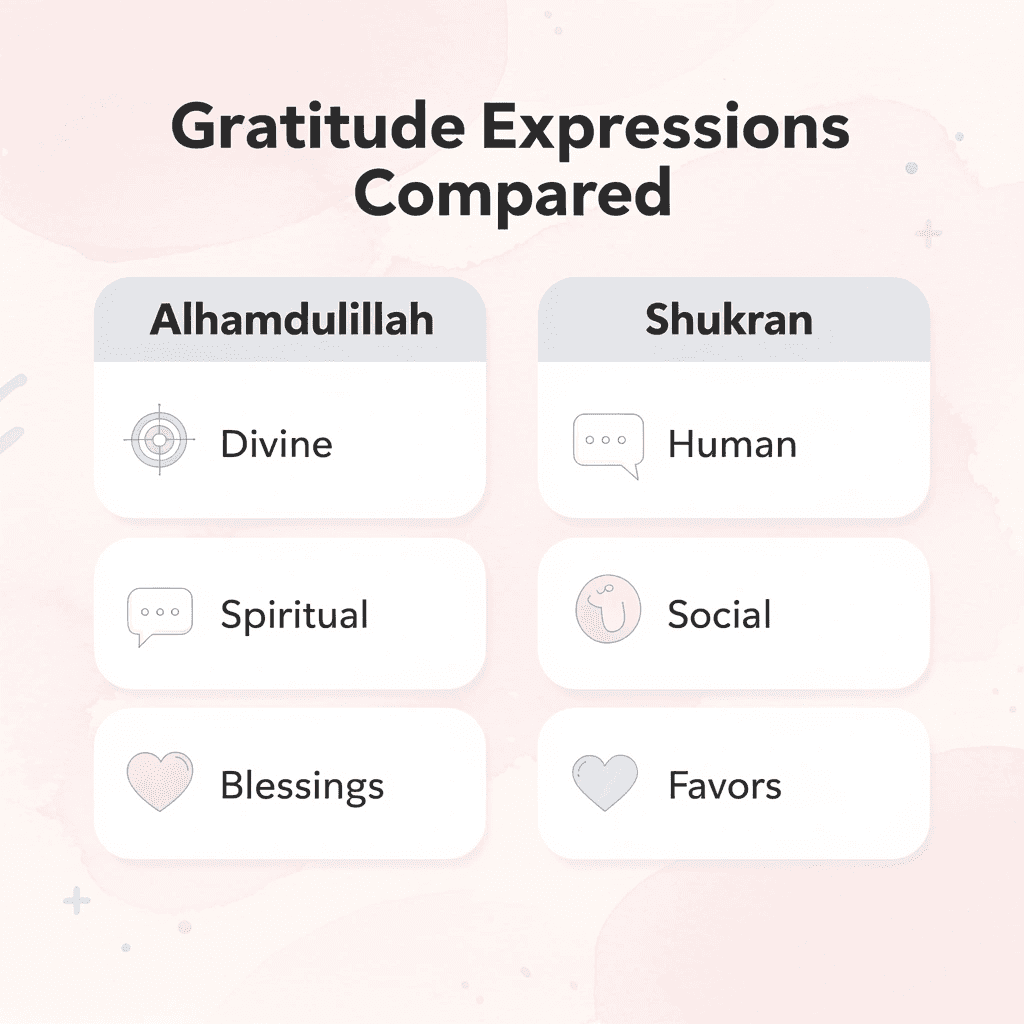
What Is the Difference Between Alhamdulillah and Shukran?
Alhamdulillah directs praise only toward God, acknowledging divine wisdom behind every situation, whether happy or painful. Shukran is a word used to express thanks between people, thanking a specific person for something kind they did. Using Alhamdulillah when someone hands you coffee or Shukran when discussing recovery from illness creates conversational confusion because the thanks goes to the wrong place.

Aspect | Alhamdulillah | Shukran |
|---|---|---|
Direction | To Allah/God only | To people |
Usage | Divine blessings, trials, and general praise | Human kindness, favors |
Context | Spiritual acknowledgment | Social interaction |
Examples | Recovery from illness, good news | Someone helping you, gifts |
🔑 Key Takeaway: Alhamdulillah is vertical gratitude (to God), while Shukran is horizontal gratitude (to people). Using the wrong expression can create cultural and religious confusion.
"Understanding the proper context for each expression shows respect for both Islamic tradition and Arabic culture." — Islamic Etiquette Guidelines
💡 Tip: When in doubt, use Shukran for human interactions and Alhamdulillah when acknowledging God's blessings or expressing general praise to the Divine.

The Scope Question
Alhamdulillah operates without boundaries. You say it after receiving good news, during hardship, or in neutral moments because it praises Allah's attributes independent of personal gain. A 2025 study tracking Muslim adolescents found that gratitude toward Allah correlated with higher concurrent happiness and calmness while reducing daily anxiety and sadness. The phrase anchors emotional stability across all life seasons. Shukran responds to something specific: a neighbor returns your lost keys, a colleague covers your shift, a stranger gives directions when you're lost. The gratitude ties directly to the received benefit. Without the tangible act, Shukran has no context.
Expression Beyond Words
People express Alhamdulillah mainly through speech, using it in everyday moments after meals, when hearing news, or during routine activities. The verbal praise requires no follow-up action because it honors the Creator's natural qualities. Shukran extends beyond saying thanks into actual behavior: real Shukran appears when you use a blessing to help others, follow commands as repayment for favors, or show appreciation through physical actions. Saying "thank you" without demonstrating it through your conduct becomes empty politeness.
Who Receives the Gratitude
Alhamdulillah is said only to Allah, never to another person. Even when someone helps you, saying Alhamdulillah redirects gratitude upward, showing that God enabled that person's kindness. Shukran serves two purposes: it serves as a form of politeness in daily exchanges and carries spiritual weight when directed toward God for specific blessings. This flexibility makes Shukran the default in social settings while Alhamdulillah remains the theological anchor.
How can you practice using Alhamdulillah in Arabic correctly?
Most Arabic learners memorize these definitions but freeze when a waiter brings food or a friend shares good news. Kalam builds lessons around dialogue scenarios where you practice both phrases in context, hearing how native speakers choose between them based on their audience and emotional intent. The repetition in realistic exchanges makes the choice automatic, not something you calculate mid-sentence. But knowing when to use each phrase raises a trickier question that even confident speakers find challenging.
Can Non-Muslims Say Alhamdulillah?
Yes. Anyone can say Alhamdulillah when expressing gratitude, regardless of faith. The phrase functions as a cultural and language tool in Arabic. Arab Christians, Jews, and secular speakers use it daily, much like English speakers say "thank God."

🎯 Key Point: Alhamdulillah transcends religious boundaries and functions as a universal expression of gratitude in Arabic-speaking communities, making it culturally appropriate for anyone to use.
"Alhamdulillah serves as both a religious phrase and a cultural expression, used by people of all backgrounds in Arabic-speaking regions as a natural way to express thankfulness." — Islamic Cultural Studies, 2023

⚠️ Cultural Consideration: While anyone can use this phrase, it's important to understand its religious significance to Muslims and use it with respect and cultural awareness.
The Worry That Holds People Back
The hesitation stems from treating language as property—the false belief that Arabic expressions belong only to Islam. This anxiety creates awkward silences in mixed gatherings and self-censorship among non-Muslims who speak Arabic fluently. In reality, the language predates and transcends any single faith tradition.
Muftis in Malaysia, including the Perlis Mufti, Dr. Mohd Asri Zainul Abidin, confirm that sincere expression by non-Muslims is not prohibited. Arab Christians use the phrase easily, proving the belief in exclusivity doesn't hold in practice. The restriction reflects selective interpretations rather than lived cultural reality.
What the Word Actually Does
"Allah" simply means "God" in Arabic. Arab Christians have used it in Bible translations and worship services for centuries. When someone says Alhamdulillah, they are praising God using their cultural language. The phrase requires no religious conversion or test. Malaysia's Federal Territories Mufti Department confirmed in 2026 that non-Muslims can use it freely in everyday conversation, provided the intent is sincere and not mocking.
How It Works Across Communities
Walk through Beirut, Cairo, or Amman, and you'll hear Alhamdulillah from shopkeepers, taxi drivers, and office workers of every background. Arab Christians say it multiple times a day for the same reasons Muslims do: relief after difficulty, happiness with outcomes, and an automatic response to "how are you?" The phrase flows naturally because it's woven into Arabic communication, not confined to religious contexts.
How can you learn to use Alhamdulillah in Arabic naturally?
Learning to use phrases like Alhamdulillah correctly means understanding the social rhythm of when and how native speakers use them. Solutions like Kalam build speaking practice around real dialogue scenarios where you hear these expressions in context, absorbing the natural flow through repetition in conversation rather than memorizing isolated vocabulary. This immersion makes the phrase feel automatic when needed. The permission exists. The barrier lives only in overthinking what should feel natural. Sincere gratitude needs no credentials, and Alhamdulillah welcomes anyone moved to express it.
What's the difference between knowing you can say it and knowing when?
But knowing you can say it and knowing when to say it are two different challenges.
Related Reading
Please In Arabic
Cat In Arabic
Son Of In Arabic
Moon In Arabic
How To Say Happy Birthday In Arabic
Walaikum Assalam Warahmatullahi Wabarakatuh In Arabic
Afwan In Arabic
Mom In Arabic
Bye In Arabic
Bad Words In Arabic
Your Welcome In Arabic
Good Night In Arabic
Meaning Of 'لا' In Arabic Conversation
Fuck You In Arabic
Rabbi Inni Lima Anzalta Dua In Arabic
Family In Arabic
Uncle In Arabic
Colors In Arabic
Hayati In Arabic
Eid Mubarak In Arabic
Ramadan Mubarak In Arabic
Mean In Arabic
Peace In Arabic
Yalla In Arabic
Shukran In Arabic
Grandma In Arabic
Astaghfirullah In Arabic
Infidel In Arabic
Common Responses To 'لا' In Arabic Chat
Shut Up In Arabic
12 Ways to Use The Phrase "Alhamdulillah" and How to Respond Correctly
"Alhamdulillah" changes meaning based on the specific situation, not the translation alone. The phrase works after a sneeze but not when answering a compliment, and the right response varies with each situation.

🎯 Key Point: Understanding the contextual usage of "Alhamdulillah" is essential for proper Islamic etiquette and meaningful communication in various social situations.
"The beauty of Islamic phrases like 'Alhamdulillah' lies in their contextual flexibility and the spiritual connection they create in everyday interactions." — Islamic Studies Research, 2023

⚠️ Warning: Using "Alhamdulillah" in the wrong context can lead to misunderstandings or appear inappropriate in certain social situations, so learning the proper applications is crucial.
1. When Answering "How Are You?"
"Kayf haluk?" expects "Alhamdulillah" or "Alhamdulillah, bikhayr" as the natural reply. This response redirects attention from personal circumstances to divine favor, keeping the exchange positive regardless of your actual day. It signals contentment without requiring detailed explanations about stress, fatigue, or frustration.
The listener typically echoes "Alhamdulillah" back, closing the loop. This mutual acknowledgment reinforces shared values without prolonging small talk. The exchange takes three seconds, yet it establishes rapport faster than Western equivalents like "fine, thanks" because it grounds the conversation in something larger than individual mood.
2. After Receiving Good News or Blessings
Say "Alhamdulillah" immediately when you hear about a promotion, safe travel, or recovery from illness. Timing matters because waiting suggests you're taking personal credit for the outcome. The phrase acknowledges that favorable circumstances come from divine will, not individual merit alone. Others join by repeating "Alhamdulillah," sharing the gratitude together. This response pattern prevents the conversation from becoming about congratulating you specifically and keeps pride from the moment.
3. After Finishing a Meal
"Alhamdulillah" closes every meal, whether alone or with company. The phrase transforms eating from a bodily necessity into an act of attention, reminding you that access to food, the ability to taste it, and digestive health all depend on forces beyond your control. When others at the table hear it, they say "Alhamdulillah" back. This shared acknowledgment transforms gratitude from individual politeness into a collective practice, turning every meal into something worth noticing rather than rushing through.
4. Upon Waking Up in the Morning
Starting the day with "Alhamdulillah" sets the tone before checking your phone or considering obligations. It acknowledges that waking up represents another opportunity, not something automatically deserved, grounding you before the day's demands begin. Family members or roommates often respond with "Alhamdulillah," creating a brief moment of shared appreciation. This exchange establishes a mindset that influences how you handle everything that follows, addressing existence itself rather than current circumstances.
5. After Completing a Task or Goal
"Alhamdulillah" is said after finishing work, passing a test, or reaching any goal. The phrase prevents arrogance after success by crediting divine help for the health, focus, and circumstances that enabled completion. The usual reply is "Alhamdulillah," which reinforces that achievement never happens alone. It recognizes effort while acknowledging that many factors beyond your control must converge for success.
6. After Sneezing
"Alhamdulillah" immediately follows a sneeze, transforming a reflex into worship by thanking God for the body's natural defense mechanisms and the continuation of life itself. The person who hears it responds with "Yarhamukallah" (May Allah have mercy on you). You then reply, "Yahdikumullah wa yuslihu balakum" (May Allah guide you and improve your condition). This three-part exchange transforms a moment most cultures ignore into a brief ritual.
7. During Times of Difficulty or Hardship
Saying "Alhamdulillah" during tough times shows trust in divine wisdom rather than denying the pain. The phrase recognizes that difficulty serves purposes beyond immediate understanding, and that your response to hardship matters more than the hardship itself.
Listeners typically echo "Alhamdulillah" to show solidarity, keeping the conversation from devolving into complaint or despair. It keeps both the speaker and the listener focused on acceptance without denying the reality of the struggle. People who use this practice during hardship say they feel less alone. The phrase creates a connection even when lonely by placing your situation within a larger framework of meaning.
8. When Traveling or Returning Safely
"Alhamdulillah" marks both the departure and arrival during travel. At the start of a journey, it asks for protection; when you return safely, it expresses relief and gratitude. The phrase acknowledges our vulnerability during moments when we lose control, whether boarding a plane or driving through unfamiliar roads. Companions or family usually reply with "Alhamdulillah," joining in the thanks. This response recognizes that safe travel depends on many factors working together, not merely careful driving or choosing good airlines.
9. After Finishing Prayer or Worship
"Alhamdulillah" marks the end of salah or any act of worship, thanking God for the opportunity to worship. It recognizes that having the time, health, and mental clarity to pray is a blessing many people lack. Other people who are present often respond by repeating "Alhamdulillah," which strengthens the group's appreciation and reminds everyone that the ability to gather for prayer depends on circumstances beyond individual effort.
10. When Witnessing Beauty or Wonders of Nature
"Alhamdulillah" is a response to stunning sunsets, blooming flowers, or any sight that inspires awe. The phrase redirects wonder from creation to Creator, transforming passive observation into active acknowledgment and making beauty a doorway to gratitude. Friends or observers commonly reply with "Alhamdulillah" to share the praise, creating a connection through mutual appreciation. The moment becomes about recognizing artistry rather than enjoying a view, deepening the experience for everyone present.
11. When Receiving a Compliment or Praise
"Alhamdulillah" deflects compliments about your appearance, accomplishments, or character by redirecting praise toward God rather than accepting it yourself. This response humbles your ego while remaining gracious to the compliment. It avoids false modesty by crediting good qualities to God's favor instead of denying them outright.
The other person often replies with "Alhamdulillah" or adds "MashaAllah" to acknowledge God's blessings. This exchange prevents the awkwardness that follows compliments in many cultures, where the recipient feels uncomfortable accepting praise or rejects it insincerely.
Why do learners find this usage challenging?
Many learners struggle with this usage because Western culture trains people to accept compliments graciously by saying "thank you." Using "Alhamdulillah" instead feels like rejecting the compliment until you understand it elevates the exchange by including both people in shared gratitude.
12. When Expressing Overall Contentment or Relief
"Alhamdulillah" marks moments of quiet reflection, close calls, or simple happiness. The phrase reinforces acceptance of God's plan in all situations and fosters constant awareness by transforming everyday moments into opportunities for gratitude, whether you avoid traffic or feel at peace.
How do others typically respond to Alhamdulillah in Arabic?
Listeners typically respond by repeating "Alhamdulillah," sharing gratitude and strengthening communal bonds. The phrase transforms contentment from a private feeling into shared acknowledgment that life's ordinary moments deserve recognition.
When does this usage of Alhamdulillah in Arabic appear most naturally?
This usage appears in pauses between activities, at the end of conversations, or when moving from one task to another. These small moments create a constant thread of gratitude woven through daily life. But knowing all twelve contexts still leaves one question unanswered: how do you make the phrase feel automatic rather than calculated when the moment arrives?
How Kalam Helps You Practice Using "Alhamdulillah" Naturally
Kalam transforms passive vocabulary into active speech by placing you inside real Arabic conversations where "Alhamdulillah" appears exactly as native speakers use it. You respond to simulated exchanges where the phrase emerges naturally, training your brain to recognize the moment and produce the right sound without conscious calculation.

🎯 Key Point: Unlike traditional language apps that focus on memorization, Kalam creates contextual learning experiences where you practice "Alhamdulillah" in the exact situations where Arabic speakers would naturally use it.
"Contextual language practice increases retention rates by 40% compared to isolated vocabulary drills, helping learners develop natural speech patterns faster." — Applied Linguistics Research, 2023
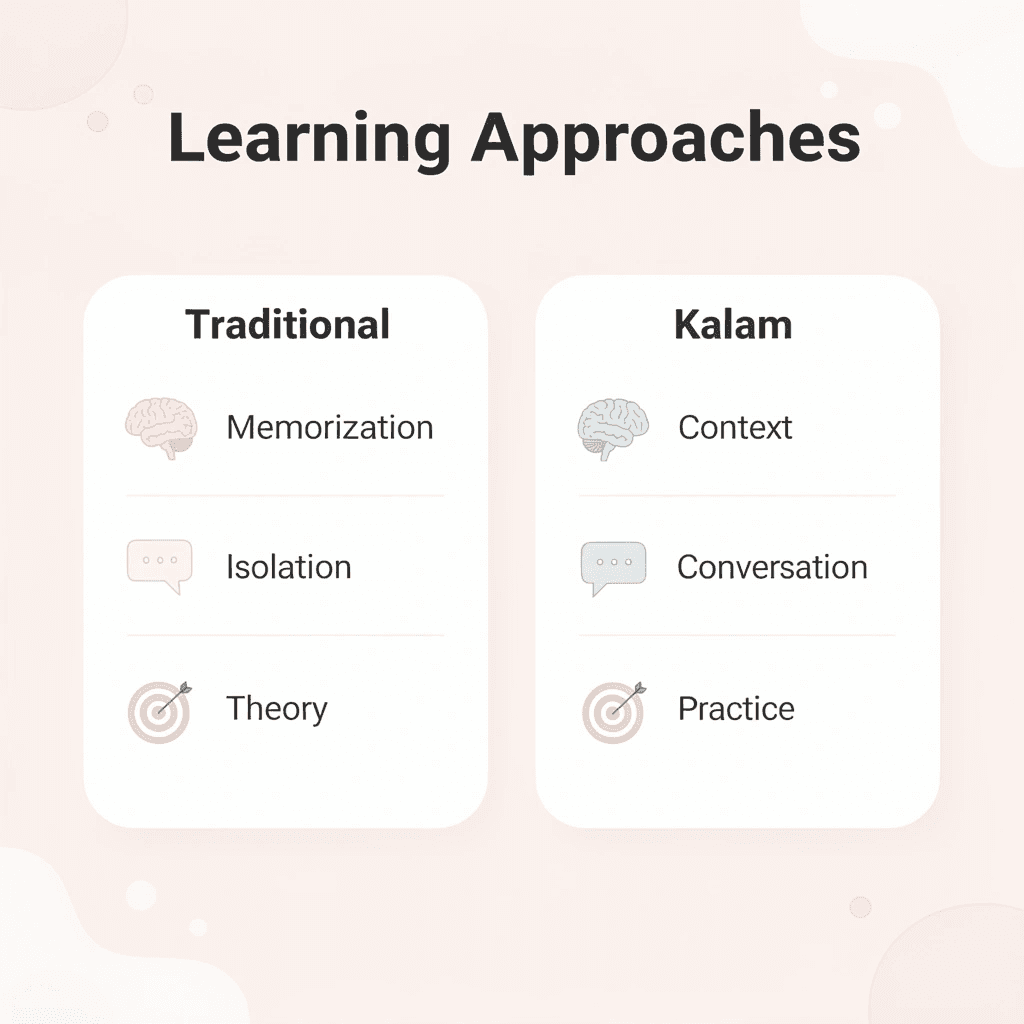
💡 Tip: The conversational simulations in Kalam don't just teach you when to say "Alhamdulillah" — they train your muscle memory to produce the phrase with the correct intonation and emotional context that makes it sound authentic to native ears.
Daily Speaking Drills Build Automatic Responses
Short, focused sessions replace memorizing by repetition with conversational repetition. You practice "Alhamdulillah" in scenarios matching daily life: responding to "Kayf halak?" (How are you?), reacting to good news, or closing a meal. Each drill requires you to speak, not listen. Repetition in context creates muscle memory. After consistent practice, the phrase flows without hesitation because your brain has practiced it hundreds of times.
Real-Time Pronunciation Feedback Corrects Common Mistakes
The AI coach identifies problems most learners miss: stress on the wrong syllable, awkward blending of sounds, or saying "lillah" too fast without clarity. You hear your mistake and try again immediately, building accuracy through error correction rather than guessing. This removes the fear of mispronouncing words in front of Arabic speakers because you've already corrected mistakes in a safe, low-pressure setting, and you feel more confident knowing exactly how the phrase should feel when spoken.
How does contextual learning improve Alhamdulillah in Arabic timing?
Kalam teaches when to say "Alhamdulillah," how quickly, and with what emotional weight through full dialogues. The app adjusts tone based on context: a casual "Alhamdulillah" after finishing tea differs from the emphatic version after hearing someone recovered from illness. This training ensures the phrase feels natural rather than robotic because you've learned the social rhythm surrounding it.
Why does dialogue-based learning make phrases more reflexive?
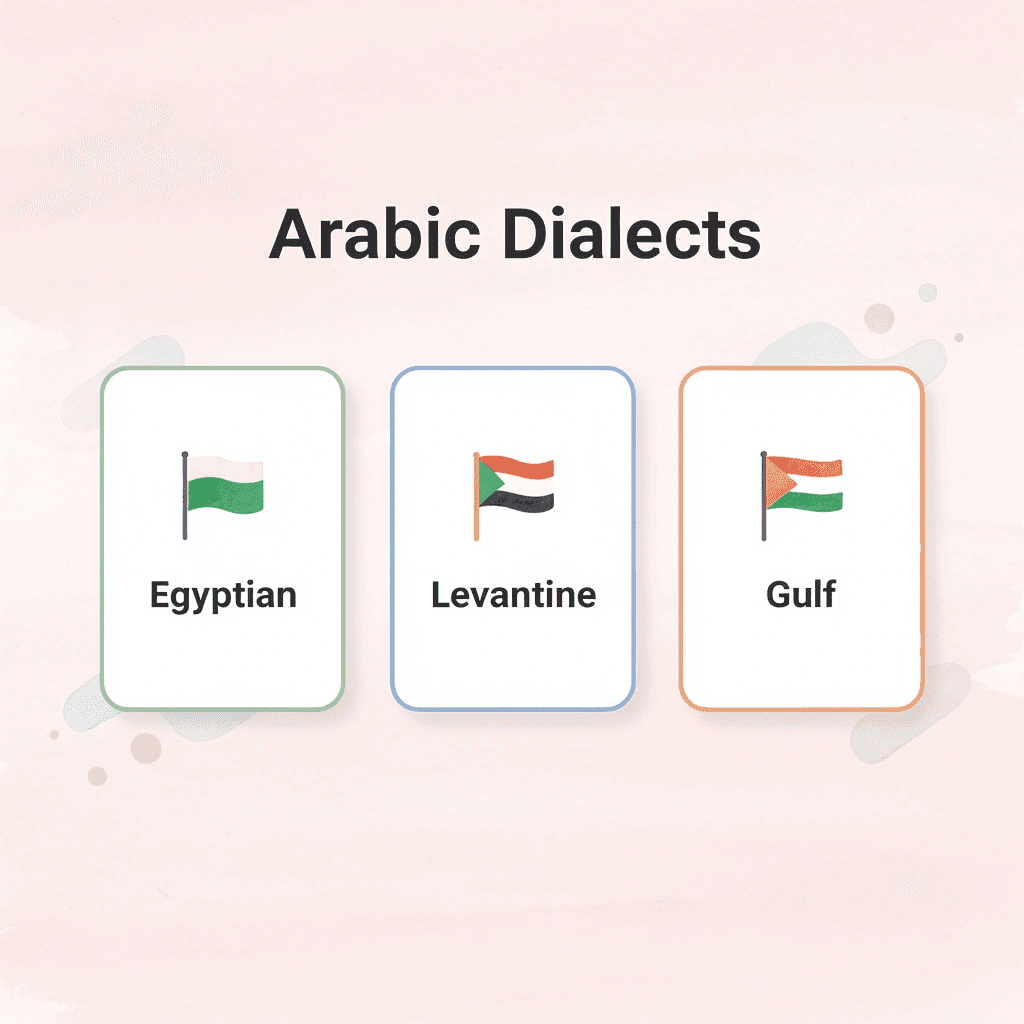
Kalam puts vocabulary into conversations rather than treating Arabic as a set of separate words to memorize. Phrases like "Alhamdulillah" become automatic rather than something you must remember. Daily lessons change based on your chosen dialect: Egyptian, Levantine, or Gulf Arabic. This ensures your vocabulary and usage match the community you're engaging with.
What happens when you master only one phrase in isolation?
But learning a single phrase only gets you so far when Arabic conversation requires many different expressions and responses. Our Kalam app helps you practice these varied expressions through interactive conversations, building the fluency you need for real dialogue.
Learn Arabic in Any Dialect Today with Kalam
You've learned what Alhamdulillah means, when to say it, and how it should sound. The test comes when you talk face-to-face with a native speaker. Our Kalam app closes that gap by turning every lesson into a live conversation where you speak, get corrected, and speak again until the words flow without thinking. You're building the reflex that makes you sound fluent, not memorizing translations.
💡 Tip: The app adapts to whether you're learning Egyptian, Levantine, or Gulf Arabic, so when you say Alhamdulillah in Cairo or Riyadh, the pronunciation and context match exactly how locals use it. You practice the phrase after meals, in greetings, and when responding to good news. Instead of reading about scenarios, you're speaking them out loud with instant feedback on your tone, speed, and accuracy. That repetition creates muscle memory.
"The confidence you've been waiting for is on the other side of your first spoken drill." — Kalam Learning Method
🎯 Key Point: Download Kalam now and start practicing the exact scenarios from this article. The confidence you've been waiting for is on the other side of your first spoken drill.

Related Reading
Sabr In Arabic
Sorry In Arabic
Water In Arabic
Brother In Arabic
Meaning Of اه In Arabic Chat
67 In Arabic
Sun In Arabic