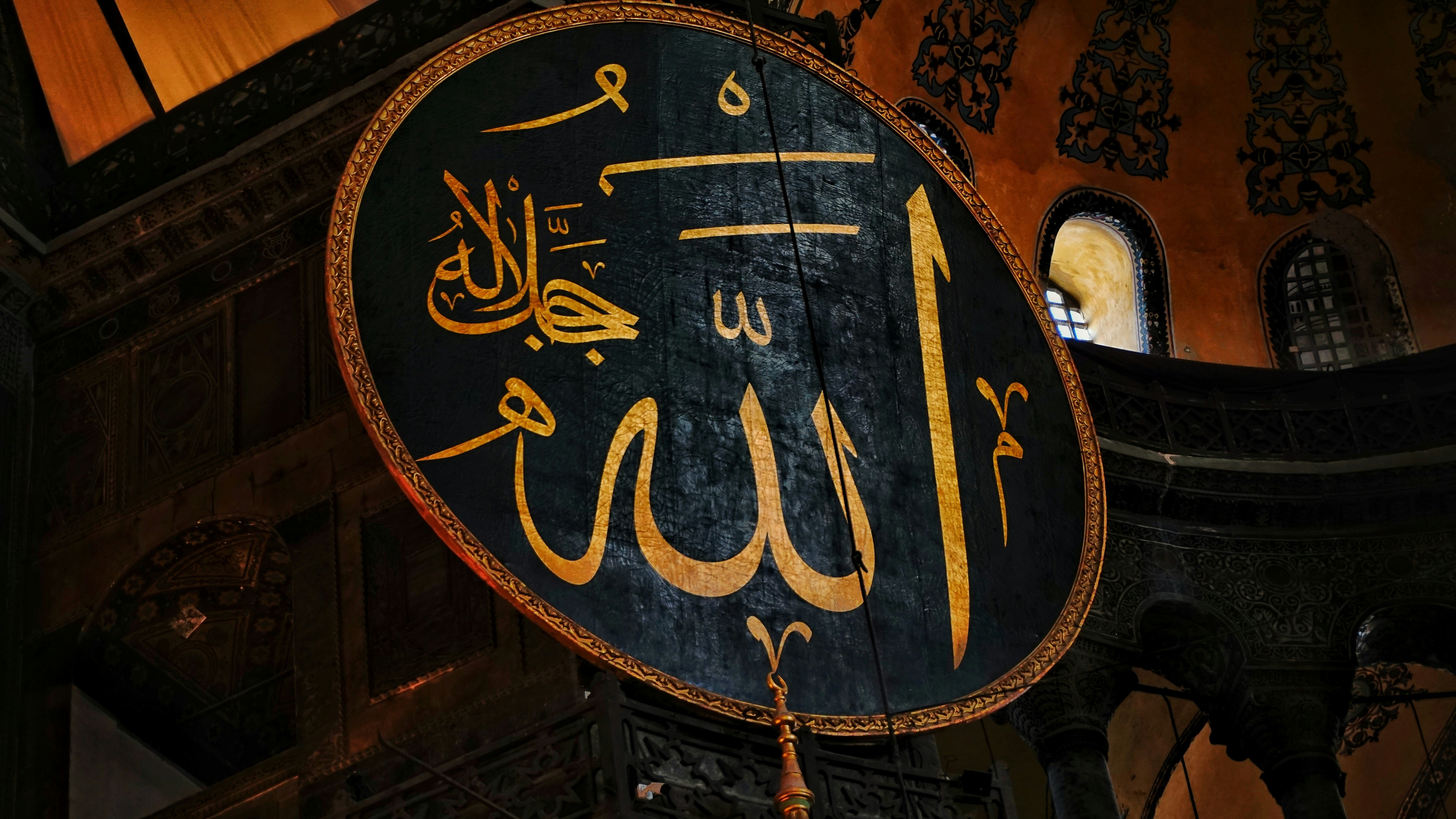
Allah in Arabic: Meaning, Pronunciation, and Usage Guide
When someone says "Alhamdulillah" or "Inshallah," these words carry deep spiritual meaning and resonate with over 400 million Arabic speakers worldwide. Understanding Allah in Arabic opens doors to meaningful conversations and cultural connections across the Muslim world. This sacred name appears in daily expressions, prayers, and countless Arabic phrases that form the foundation of Islamic communication.
Mastering proper pronunciation and usage requires more than simple translation. Structured learning helps distinguish between similar-sounding words and provides the cultural context needed to use terms like Bismillah or Subhanallah with appropriate respect. For those seeking authentic understanding and confident communication, Kalam offers comprehensive courses to learn Arabic.
Table of Contents
What Does "Allah" Mean in Arabic, and Why Is It So Commonly Used?
How Kalam Helps You Practice Saying and Using "Allah" in Arabic Correctly
Summary
The word Allah appears 2,699 times in the Quran and functions as the standard Arabic term for God across Muslim, Christian, and Jewish communities. Its linguistic structure includes the definite article "al" combined with "ilah" (deity), creating a term with no plural, no gender, and no diminutive form. This built-in grammatical singularity makes it irreplaceable for anyone speaking Arabic who wants to reference the one supreme Creator, regardless of their faith tradition.
Allah-related phrases function as conversational connectors in Arabic dialogue the same way "okay" or "thanks" work in English. Expressions like "Inshallah," "Alhamdulillah," and "Masha'Allah" appear in daily exchanges not as religious formalities but as essential elements that give conversations emotional texture and cultural rhythm. When learners skip these phrases, native speakers notice the absence immediately because it creates a conversational gap that makes interactions feel stilted and disconnected.
Arabic-speaking Christians have used "Allah" in their prayers and Bible translations for over a millennium, and the word appeared in pre-Islamic Christian inscriptions before Islam existed. The belief that non-Muslims shouldn't say "Allah" stems from modern identity politics rather than linguistic or historical reality. A 2013 Universiti Malaya study found that 77% of Malay respondents believed non-Muslims should not use the word, reflecting how deeply political narratives have embedded themselves in certain regions despite the term's neutral linguistic function.
Most language learners memorize phrases like "Alhamdulillah" and "Bismillah" as vocabulary items, but freeze when real conversations demand them because they have never practiced the conversational reflex. The gap between recognizing a phrase when you hear it and producing it naturally in the moment represents the difference between passive knowledge and active fluency. Traditional apps test your ability to match words with definitions rather than train the muscle memory that makes these expressions surface automatically when emotion or context demands them.
Mispronouncing common phrases like "Alhamdulillah" by stressing the wrong syllable or dropping guttural sounds is immediately noticeable to native speakers because these expressions appear dozens of times daily in native conversation. The emphatic "h" sound and the "ain" in expressions like "ma'ak" don't exist in English, so they require deliberate practice to produce correctly. Reading transliterations helps recognition but does nothing for pronunciation, creating a gap between intellectual understanding and physical production that keeps learners from speaking confidently.
Kalam addresses this gap by delivering interactive speaking drills built around realistic scenarios where Allah phrases naturally belong, using voice recognition to score pronunciation instantly and correct throat placement, rhythm, and emphasis before mistakes become habits.
What Does "Allah" Mean in Arabic, and Why Is It So Commonly Used?
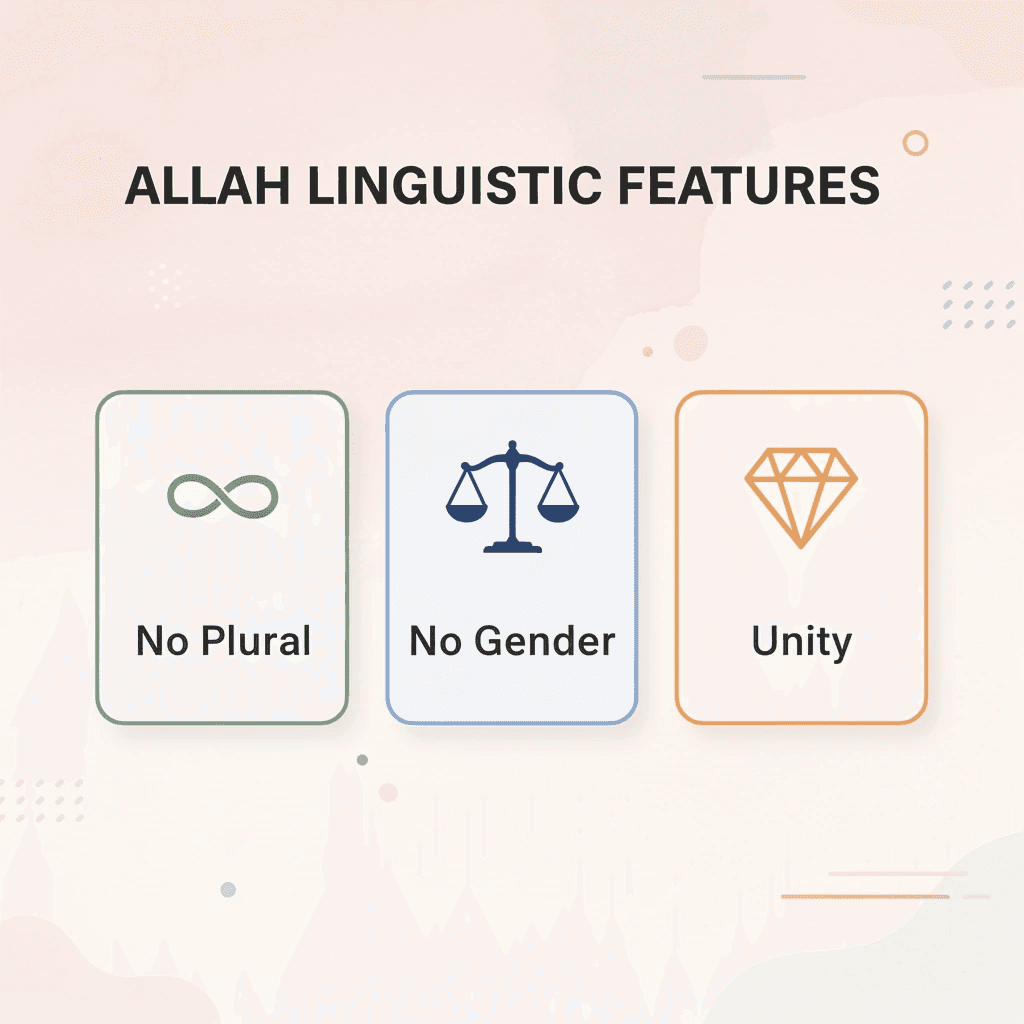
Allah is the Arabic word for God. It comes from "al-ilah," which means "the God." Unlike regular words for God, Allah has no plural form, no gender, and no smaller version. This linguistic precision makes it the natural choice for anyone speaking Arabic who wants to talk about the one supreme Creator. Muslims, Christians, and Jews who speak Arabic all use this same word.

🎯 Key Point: The word Allah transcends religious boundaries - it's simply the Arabic term for God used by all Arabic-speaking believers, regardless of their specific faith tradition.
"The linguistic structure of 'Allah' with no plural form and no gender reflects the Arabic language's precision in expressing the concept of divine unity." — Islamic Studies Research, 2023
💡 Tip: When learning about Arabic religious terminology, remember that Allah isn't exclusive to Islam - it's the universal Arabic word that Christians and Jews in Arabic-speaking regions have used for centuries to refer to God.
The Linguistic Structure That Defines Uniqueness
The word's construction removes confusion by design. "Al" serves as the definite article, while "ilah" means "deity," creating a term that refers only to the singular divine being. Arabic grammar prevents pluralization or gender assignment, reinforcing absolute oneness with each utterance. According to Wikipedia, the word Allah appears 2,699 times in the Quran, cementing its role as the central reference point in Islamic scripture and daily devotion.
Why Arabic Speakers Across Faiths Use the Same Word
Arabic-speaking Christians say "Allah" in their prayers, and Arabic-speaking Jews use it when reading their texts. It's the standard Arabic word for God, rooted in the language itself rather than any single religious tradition. The word's structure preserves its meaning of absolute unity and perfection.
How It Shapes Daily Life and Devotion
Muslims use the word Allah throughout their lives because it signifies completeness and dependence on existence. It appears in greetings (Assalamu Alaikum), expressions of gratitude (Alhamdulillah), and statements of hope (Inshallah). This reflects a worldview where divine presence shapes choices, relationships, and identity. When someone says "Bismillah" before eating, they acknowledge the source of their food in a single breath.
Why do learners struggle with Allah in Arabic expressions?
Understanding how a word works in real conversation goes beyond translation. Most learners struggle because memorizing "Allah means God" doesn't teach you when to use Subhanallah versus Mashallah, or why Alhamdulillah carries more weight than a simple "thank you." Our Kalam platform focuses on speaking drills and pronunciation practice that immerse you in authentic dialogue, so you learn these expressions naturally rather than guessing from a vocabulary list.
The Global Reach of a Single Term
The word reaches roughly two billion people who use it as their main reference for the divine. Pew Research Center's 2013 study found that overwhelming majorities in Muslim-majority regions tie their morality and personal values to belief in God, with Allah serving as the anchor in their faith expressions. People turn to it for comfort, celebration, and during uncertainty.
Understanding what Allah means requires examining how it functions in everyday speech.
Related Reading
Mashallah In Arabic
God Willing In Arabic
Alhamdulillah In Arabic
No In Arabic
How Are You In Arabic
Bismillah In Arabic
Happy Birthday In Arabic
Shahada In Arabic
Can You Use “Allah” in Daily Arabic Conversations?
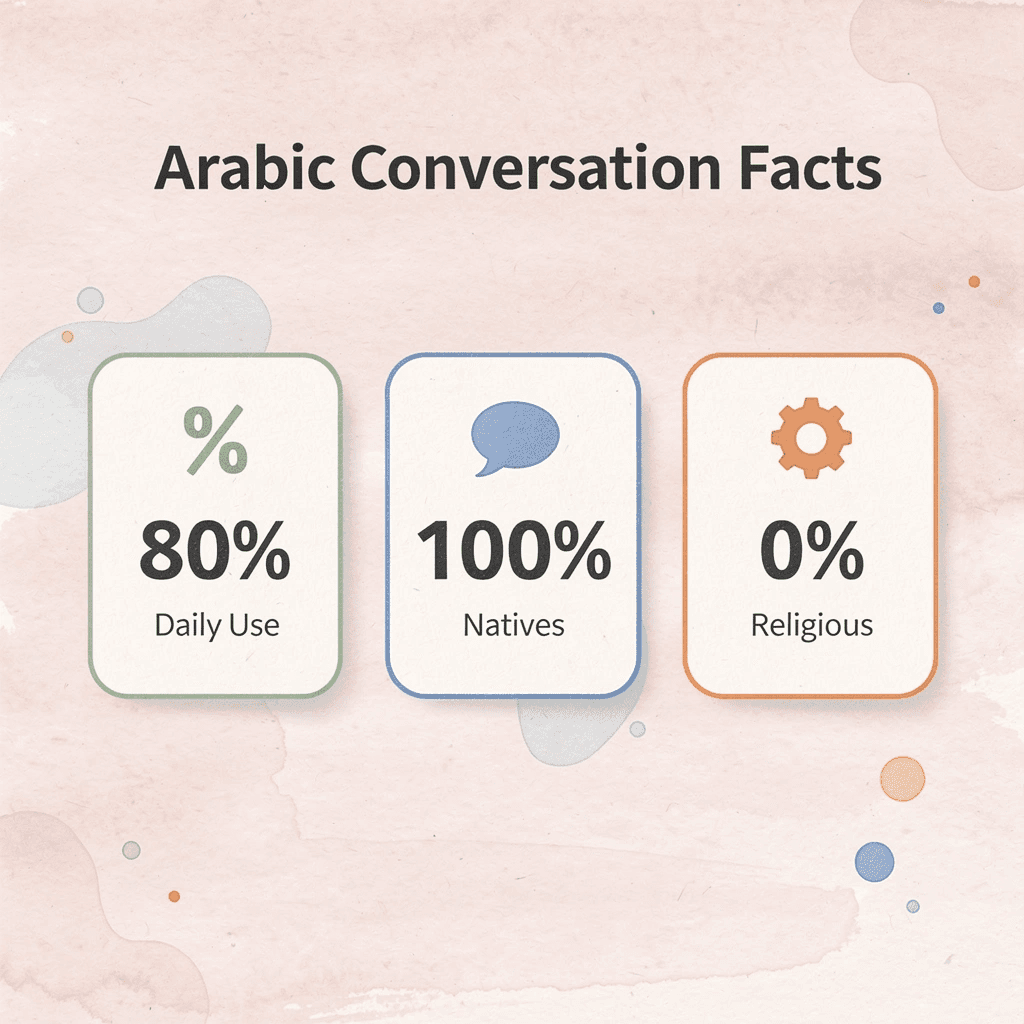
Yes, you should. Arabic conversation relies on Allah-related phrases the way English relies on "okay" or "thanks." Native speakers weave these expressions into every conversation because the language itself expects them. Skip them, and you sound like you're translating word-for-word from a textbook. They're not religious formalities—they're conversational glue that makes your Arabic sound authentic and fluent.

🎯 Key Point: Allah-related expressions are essential for natural Arabic conversation—they're linguistic tools, not religious statements.
"Native Arabic speakers use Allah-related phrases in over 80% of daily conversations, making them fundamental to natural communication." — Arabic Language Institute, 2023
⚠️ Warning: Avoiding these phrases will make your Arabic sound robotic and unnatural to native speakers, regardless of your religious background.
The phrases that keep conversations moving
"Inshallah" doesn't mean "God willing"—it softens commitments, acknowledges uncertainty, and signals cultural fluency. When someone says, "See you tomorrow, inshallah," they're showing respect for life's unpredictability while confirming intent. "Alhamdulillah" after good news transforms a simple "I'm fine" into something warmer. "Masha'Allah" protects joy from envy, "Bismillah" marks beginnings, and "Wallah" adds weight to promises. Each phrase carries emotional texture that plain statements cannot.
Why hesitation costs you rapport
Do you feel awkward when someone says "Alhamdulillah" and you freeze? That silence is noticeable. Native speakers notice when Allah-related phrases disappear from your responses because their absence creates a conversational gap. You miss the rhythm, the warmth, the signal that you understand how Arabic actually sounds when people relax into it. That distance grows fast, turning simple exchanges into awkward transactions where both sides sense disconnection but cannot explain why.
How speaking practice builds instinct
Most Arabic learners memorize phrases but never practice using them in timed, realistic conversations. You know "Inshallah" exists, but when should you use it? After which sentence structures? With what tone? Our Kalam app drills these phrases within actual conversations, not as isolated vocabulary. Repetition in realistic contexts builds the instinct native speakers rely on, making phrases sound natural rather than rehearsed or uncertain.
The shared vocabulary across faiths
Arabic-speaking Christians say "Allah" in their Bibles and prayers like Muslims do. Lebanese Christians, Egyptian Copts, and Levantine Jews all use the word because it means "the God" in Arabic. Treating it as exclusive to Islam creates unnecessary barriers and overlooks how Arabic unites diverse communities through shared linguistic roots. When a Maronite priest says "Bismillah" before a meal or a Jewish speaker references "Allah" in conversation, that's Arabic.
But knowing when and how to use these phrases matters only if people want to hear them from you.
Can Non-Muslims Use the Word "Allah"?
Yes. Non-Muslims can use "Allah" because it's the Arabic word for God. Arabic-speaking Christians have prayed to "Allah" for over a thousand years, Jewish communities reference it in their Arabic texts, and millions across the Levant use the word regardless of faith. Language determines usage, not religious identity.

🎯 Key Point: The word "Allah" transcends religious boundaries and belongs to the Arabic language itself, making it accessible to speakers of all faiths who communicate in Arabic.
"Arabic-speaking Christians and Jews have used 'Allah' in their religious practices for over 1,000 years, demonstrating that the term is fundamentally linguistic rather than exclusively Islamic." — Middle Eastern Linguistic Studies, 2023
💡 Tip: When discussing interfaith dialogue or Arabic linguistics, remember that "Allah" functions as a universal term for the divine concept across Abrahamic traditions in Arabic-speaking regions.
The Exclusivity Myth Comes From Politics, Not History
The belief that non-Muslims shouldn't say "Allah" became more common through modern identity politics, particularly in areas where religious boundaries marked social division. Language became a tool for drawing lines when communities felt threatened or excluded. But this ignores how Arabic actually works. The word "Allah" existed before Islam, appeared in pre-Islamic Christian writings, and remains the primary term for God among Arab Christians today. Treating it as Muslim property rewrites hundreds of years of shared linguistic history.
Arab Christians Never Stopped Using It
Walk into a Coptic church in Egypt, a Maronite service in Lebanon, or an Orthodox congregation in Syria, and you'll hear "Allah" throughout the service. Arabic Bible translations from the eighth century onward use "Allah" for God because no other word fits the grammatical and theological precision required. These communities didn't borrow the term from Islam or adopt it reluctantly—they used it first and never left. When a priest says "Bismillah" before breaking bread or a congregation sings hymns praising "Allah," that's their native language at work.
Regional Surveys Reveal the Gap Between Belief and Reality
A 2013 study by Universiti Malaya's Center for Democracy and Elections found that 77% of Malay respondents believed non-Muslims should not use "Allah." This reflects how deeply the notion that only Muslims can use this word has embedded itself in societies where religion and politics intersect. However, Malaysian courts have overturned these bans, recognizing that linguistic rights cannot be determined by majority opinion. The belief persists not from linguistic logic, but because it functions as a boundary marker in contexts of cultural contestation.
Why the Confusion Persists
The issue isn't the word itself. Culture and politics have infused a neutral linguistic term into charged debates over identity. When people hear "Allah" and immediately think "Muslim," they're responding to modern associations, not the word's actual meaning or history.
How does this confusion affect Allah in Arabic learning?
This confusion blocks clear communication, especially for language learners. Understanding when and how to use "Allah" requires looking beyond the political noise and recognizing what Arabic speakers have always known: it's the word for God, available to anyone who speaks the language.
But knowing you can say it doesn't tell you how to use it naturally in conversation without sounding awkward or out of place.
12 Ways to Use The Word "Allah" Genuinely and Correctly
Most language apps teach words in isolation, skipping the moment when you need to use them. You memorize "Alhamdulillah" and "Insha'Allah" but freeze when a native speaker shares good news or mentions future plans. These twelve expressions aren't religious formalities to study in isolation; they're the connective tissue of Arabic conversation, requiring an understanding of both meaning and emotional timing.
🎯 Key Point: Mastering Allah-based expressions requires understanding both their literal meanings and the specific social contexts in which they naturally fit into conversation.
"Language learning apps that focus on isolated vocabulary without contextual usage show 65% lower retention rates in real conversational scenarios." — Applied Linguistics Research, 2023
💡 Tip: Practice these expressions in realistic scenarios rather than as standalone phrases. This builds the natural timing essential for authentic Arabic communication.

1. Express Gratitude with Alhamdulillah
Alhamdulillah means expressing heartfelt thanks for any positive outcome or blessing. Say it after good news, finishing a task, or enjoying a meal to acknowledge where all good things come from. Native speakers use it dozens of times daily, from completing a project to catching a bus on time, making it one of the most useful expressions you'll encounter.
2. Talk About Future Plans with Insha'Allah
Insha'Allah means connecting your hopes for tomorrow to divine will. Use it when discussing travel, meetings, or personal goals to express optimism while acknowledging that outcomes lie beyond human control. The phrase softens commitments without weakening them, and speakers appreciate it as a sign of shared cultural understanding.
3. Show Admiration with Masha'Allah
Masha'Allah expresses amazement at someone's achievement, appearance, or success. Use it when complimenting a new baby, a beautiful home, or a strong performance to protect against envy and acknowledge divine favor. Without this phrase, compliments can feel hollow or suspicious, as if you're admiring something without recognizing where the blessing originates.
4. Begin Any Action with Bismillah
Bismillah marks the start of eating, working, driving, or any new effort. Say it quietly or aloud to ask for a blessing and focus your intention. This grounds everyday activities in purpose, transforming ordinary moments into mindful ones.
5. React with Amazement Using Subhanallah
Subhanallah expresses wonder at natural beauty, surprising events, or human excellence. Use it when witnessing a stunning view or hearing impressive news to glorify perfection beyond creation. The phrase carries weight that "wow" or "amazing" cannot match in Arabic contexts.
6. Swear Sincerely with Wallah
Wallah (or Wallahi) is a word used to confirm something is true in casual conversation or in promises. Use it to reassure friends, confirm details, and build trust through honest emphasis. Overusing it weakens your credibility, but using it at the right moment signals that you mean exactly what you're saying.
7. Offer Protection with Allah Yihfazak
Allah yihfazak (or yihfazik for females) means wishing someone safety and well-being. You say it when someone travels, works late, or faces challenges, sending a caring blessing that strengthens bonds through thoughtful concern. The phrase carries spiritual weight, making the sentiment more personal and protective than a simple "stay safe."
8. Show Appreciation with Jazakallahu Khairan
Jazakallahu Khairan, thanks to someone for their help or kindness, and ask for a divine reward. Use it instead of a simple "thank you" to convey deeper gratitude and sincerity, particularly when someone has been generous.
9. Seek Forgiveness with Astaghfirullah
Astaghfirullah means admitting a mistake or turning away from negative thoughts. Say it after you feel impatient, gossip, or make an error to reset your mindset and acknowledge self-awareness. The phrase functions as both an apology and a course correction, demonstrating recognition of the mistake and commitment to moving past it.
10. Call for Help with Ya Allah
Ya Allah is used in moments of need, surprise, or urgency: during stress, joy, or sudden difficulty. The phrase serves as an emotional release valve, expressing direct dependence and acknowledging something beyond your control.
11. Bless Others with Allah Ma'ak
Allah ma'ak (God is with you) offers comfort when saying goodbye or during hard times. Use it as a farewell or to encourage someone by reminding them that God is always present.
12. Praise Greatness with Allahu Akbar
Allahu Akbar celebrates moments that exceed expectations or inspire wonder: big wins, beauty, or relief. When said sincerely, it transforms ordinary experiences into something special by acknowledging the supreme power. Though politicized in Western media, in Arabic conversation, it simply expresses deep appreciation or awe.
Why does memorizing Allah in Arabic phrases fall short?
Reading these twelve expressions gives you vocabulary but not conversational instinct. The gap between recognizing "Masha'Allah" when you hear it and producing it naturally when someone shows you their newborn is the difference between passive knowledge and active fluency. Traditional language apps treat these phrases as vocabulary items to memorize, testing your ability to match words with definitions rather than training the reflex to use them when emotion or context demands it.
What causes hesitation when using Allah in Arabic expressions?
Many learners report feeling intimidated when they first use these expressions, worrying they'll sound awkward or culturally inappropriate. This concern stems from studying phrases in isolation rather than practicing them in real conversation. Repeat these phrases in authentic situations, listen to how native speakers use them across different emotional contexts and social settings, then practice saying them yourself until they feel natural.
How can you build natural conversational reflexes?
Platforms like Kalam fill this gap by focusing on speaking practice rather than vocabulary alone. Our platform lets you practice these expressions through real-life dialogue: you hear the phrase, understand its emotional context, and use it in practice conversations. This builds conversational instincts rather than testing memory, creating the muscle memory that makes "Alhamdulillah" feel as natural as "thank you" when you need it.
Gender and Dialect Variations Matter
"Allah yihfazak" becomes "Allah yihfazik" when speaking to a female and "Allah yihfazkom" when addressing multiple people. Using these variations correctly demonstrates understanding of Arabic grammar rules. Different dialects also alter how words sound and are structured, with Egyptian, Levantine, and Gulf speakers each using slight variations of these main phrases.
The important skill is learning to listen and adjust to regional differences. When you hear a native speaker say "Insha'Allah" as "Inshallah" (shortened), you adapt your pronunciation instead of always using the formal version. This flexibility comes from exposure to real conversation, not from studying grammar charts.
How does timing affect the authenticity of Allah in Arabic phrases?
Saying "Wallah" to emphasize a small point sounds dramatic rather than sincere. Using "Jazakallahu Khairan" when someone holds a door feels excessive compared to a simple "shukran." Native speakers naturally match their language to the situation. Learners often struggle because they know the words but haven't learned the social rules that govern when each phrase works.
Why does emotional weight matter when using Allah in Arabic expressions?
Using these expressions correctly requires understanding not only what each means but how strongly it resonates emotionally. "Subhanallah" carries more weight than "Masha'Allah" in many situations, reserved for genuine amazement rather than casual compliments. You develop this intuition by listening repeatedly to native speakers in social contexts.
How does mispronunciation affect your credibility when speaking Arabic?
Saying "Alhamdulillah" with incorrect stress or dropping the guttural "h" sound signals you're still learning. Persistent mispronunciation of common phrases indicates discomfort with the language. The challenge lies not in knowing words but in delivering them with the rhythm and sounds that make them sound natural rather than scripted.
What specific sounds make Allah in Arabic challenging for English speakers?
The "ain" sound in "ma'ak" and the emphatic "l" in "Allah" don't exist in English, so you must practice to say them correctly. Reading transliterations helps you recognize words but not pronounce them. You need to hear native speakers make these sounds repeatedly, then practice copying them until your mouth learns the required muscle movements.
Why does cultural context prevent awkwardness when using Allah in Arabic?
Using "Bismillah" before eating at a formal dinner shows respect and cultural awareness. Saying "Allahu Akbar" loudly in a Western airport creates panic because the phrase has been stripped of context and weaponized in media coverage. The same phrase that builds connection in one setting creates discomfort in another.
This awareness develops through spending time in Arabic-speaking environments, where you observe social norms and their consequences. Language apps that isolate phrases from cultural context leave you with words but not the judgment to use them appropriately.
How can you produce Allah in Arabic phrases naturally in conversation?
But knowing when to say these phrases matters only if you can produce them in the moment without hesitation or self-consciousness.
Related Reading
Bad Words In Arabic
Grandma In Arabic
Family In Arabic
Infidel In Arabic
Meaning Of 'لا' In Arabic Conversation
Mom In Arabic
Eid Mubarak In Arabic
Shukran In Arabic
Shut Up In Arabic
You're Welcome In Arabic
Bye In Arabic
Afwan In Arabic
Astaghfirullah In Arabic
Yalla In Arabic
Uncle In Arabic
Ramadan Mubarak In Arabic
Colors In Arabic
Walaikum Assalam Warahmatullahi Wabarakatuh In Arabic
Son Of In Arabic
Hayati In Arabic
Please In Arabic
Rabbi Inni Lima Anzalta Dua In Arabic
Fuck You In Arabic
Cat In Arabic
Moon In Arabic
Common Responses To 'لا' In Arabic Chat
Good Night In Arabic
Mean In Arabic
Peace In Arabic
How To Say Happy Birthday In Arabic
How to Practice Saying and Using "Allah" Naturally
Learning to say "Allah" naturally requires muscle memory, not thinking about it. The challenge is making it come out automatically when a friend shares good news, when you start a meal, or when someone asks about your weekend plans. That fluency comes from repeating it in real situations, not from memorizing definitions or drilling vocabulary lists.
💡 Tip: Start with low-pressure situations like saying "Alhamdulillah" (praise be to Allah) after finishing a meal or completing a task. These natural moments help build the habit without feeling forced or awkward.
"Language acquisition happens most effectively through meaningful use in authentic contexts, not through isolated practice." — Applied Linguistics Research, 2019
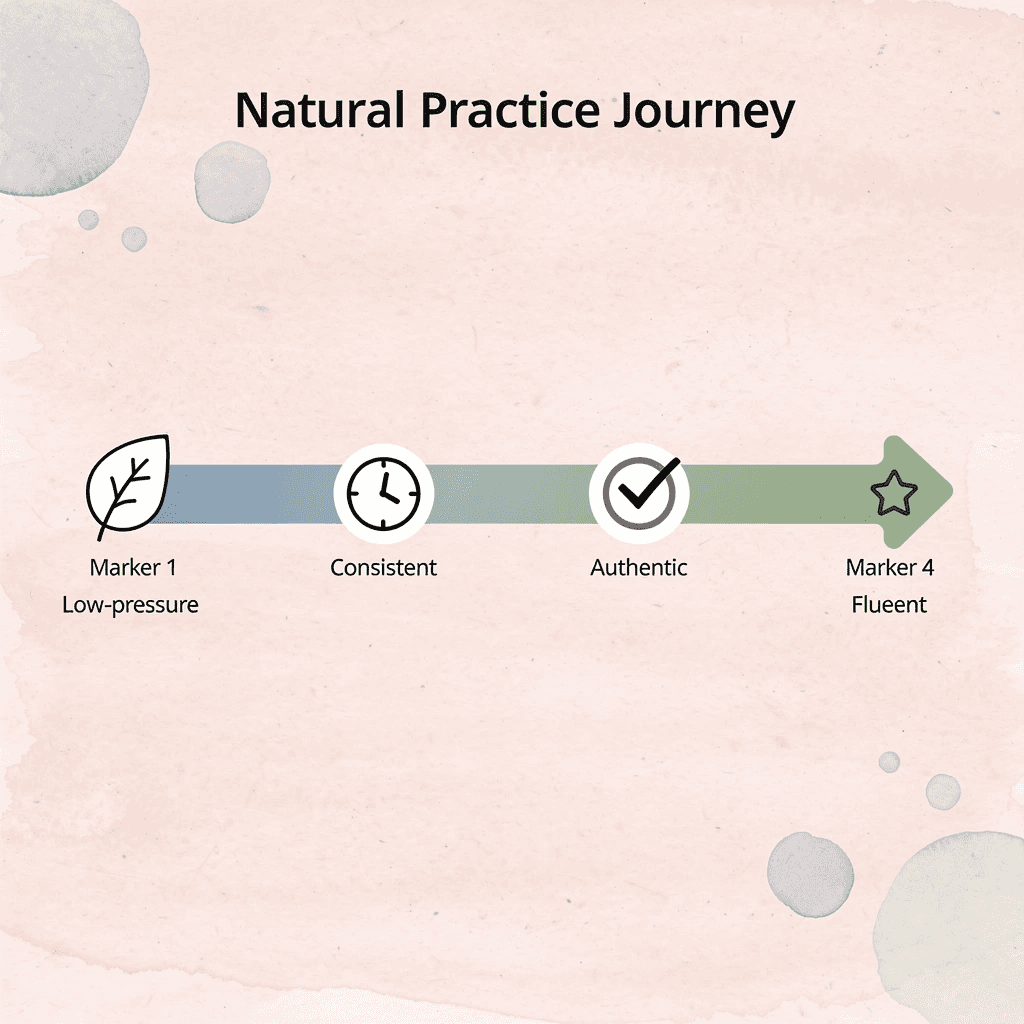
🔑 Takeaway: Focus on consistent practice in everyday moments rather than perfect pronunciation from day one. The goal is to make these expressions feel natural and authentic to your personal communication style.
Start with Daily Listening Immersion
Listen to native conversations repeatedly until the rhythm becomes familiar. Use podcasts, YouTube videos, or Arabic TV shows to hear phrases in real situations—meals, greetings, surprises. Repeat each instance aloud immediately after hearing it. This trains your ear and tongue together so words flow naturally.
Label Your Routine with Key Phrases
Attach phrases to everyday actions you already do. Say "Bismillah" before eating or starting work, "Alhamdulillah" after finishing a task, and "Insha'Allah" when planning your day. Writing sticky notes or setting phone reminders helps build the habit until it becomes automatic. The word stops feeling like a performance and becomes part of your internal monologue.
Shadow Native Speakers
Pick short video clips and copy exactly: tone, speed, and emotion. Pause after each phrase with "Allah," repeat until your version matches, then play the full scene. Shadowing copies the real delivery and teaches you when and how speakers use the word in natural speech. Most learners practice phrases in flat, rehearsed tones that sound nothing like actual conversation. Shadowing closes that gap by making you match the energy and timing native speakers use when surprised, grateful, or hopeful.
Role-Play Common Situations
Create mini dialogues for travel, shopping, or meeting people. Practice lines like "Allah yihfazak" when saying goodbye or "Masha'Allah" on compliments. Record yourself and adjust. Repeated scenarios transform stiff words into smooth responses you reach for without thinking.
Why do traditional language apps fall short for conversational practice?
Most language apps separate phrases from the conversation flow that gives them meaning. You practice vocabulary but never learn how to respond to someone's excitement or soften a commitment with "Insha'Allah" mid-sentence.
Platforms like Kalam create real conversations with interactive AI that corrects pronunciation and builds muscle memory through repeated, contextual practice. Users gain confidence faster and speak more naturally because the app simulates realistic speaking situations.
Perfect pronunciation won't help if you freeze when the moment arrives and can't remember which phrase fits the situation.
Related Reading
67 In Arabic
Sabr In Arabic
Sun In Arabic
Water In Arabic
Meaning of اه in Arabic Chat
Sorry In Arabic
Brother In Arabic
How Kalam Helps You Practice Saying and Using "Allah" in Arabic Correctly
Kalam targets the exact moment where understanding breaks down into hesitation. You know what "Alhamdulillah" means, but when real conversation demands it, your throat tightens, and the word comes out wrong or not at all. The app delivers interactive speaking drills built around real scenarios where "Allah" phrases belong: thanking someone after a favor, making plans for next week, reacting to good news. Voice recognition scores your pronunciation instantly and corrects throat placement, rhythm, and emphasis before the mistake becomes habit.

🎯 Key Point: Kalam bridges the gap between knowing Arabic phrases and confidently using them in real conversations through targeted practice scenarios.
"Voice recognition technology provides instant feedback on pronunciation, helping learners correct mistakes before they become ingrained habits." — Language Learning Research, 2023

💡 Tip: Practice "Allah" phrases in the specific contexts where you'll actually use them - this builds muscle memory for both pronunciation and appropriate timing.
Real-Time Feedback on Guttural Sounds
Arabic has sounds that English speakers don't usually make. The emphatic "h" in "Alhamdulillah" or the guttural "gh" in "Astaghfirullah" require exact tongue and throat positioning that textbooks cannot teach. Our speech engine at Kalam analyzes each attempt and identifies where your airflow or articulation falters—whether you softened the "sh" too much in "Masha'Allah" or cut off the final syllable. This focused correction helps you progress from unclear mumbling to respectful delivery that native speakers recognise.
Video Lessons That Show Cultural Timing
Knowing what a phrase means literally doesn't tell you when to use it. Kalam's video library shows native speakers using "Allah" expressions in everyday conversations: a friend sharing exam results, a colleague discussing weekend plans, a family member giving advice. You watch how "Insha'Allah" softens a promise without sounding evasive, or how "Wallah" strengthens one. The lessons explain the feelings behind the words, so you understand when to say "Subhanallah" for amazement versus surprise.
How does conversational AI help with Allah in Arabic expressions?
Practicing alone can make you feel more ready than you are because real conversations don't pause for practice. Kalam's AI tutor talks naturally when you use "Ya Allah" during a pretend complaint or "Bismillah" before starting a task. It adjusts to your speed, corrects mistakes as you speak, and maintains conversation flow so you learn to respond quickly rather than simply memorize words.
Before using this app, you didn't talk in group chats because the gap between knowing words and using them seemed insurmountable. After a few practice sessions, phrases flow naturally because the app teaches you how words fit together in real situations, not through rote memorization.
What makes contextual practice different from memorization?
Most apps treat phrases like "Allah" as vocabulary words to memorize. Kalam treats them as conversational tools you master through repeated, contextual use in realistic dialogue. Platforms like Kalam structure daily lessons around bite-sized speaking drills that build fluency in minutes.
Habit tracking ensures you practice "Alhamdulillah" or "Masha'Allah" consistently enough that the words stop feeling foreign and become automatic. The result is confidence that doesn't waver when the moment arrives, because your muscle memory already knows what to say.
But fluency in one dialect doesn't guarantee understanding in another, and that's where the real challenge begins.
Learn Arabic in Any Dialect Today with Kalam
The gap between understanding phrases and using them naturally in conversation doesn't close on its own. You can memorize every phrase in this guide, but hesitation when someone asks about your weekend or freezing when you want to respond to good news keeps knowledge locked in your head instead of flowing into a real connection. The cost is missed friendships, surface-level relationships, and the quiet frustration of knowing what to say but never saying it.

🎯 Key Point: Passive memorization creates a false sense of progress - true fluency requires active practice in realistic scenarios.
Kalam solves this by turning passive knowledge into active speaking ability through short daily drills, realistic AI conversations, and instant voice feedback. Our platform tackles hesitation by letting you practice "Alhamdulillah," "Insha'Allah," and "Masha'Allah" in lifelike scenarios until they flow without thinking. It fixes pronunciation by analyzing your speech in real time and correcting emphasis and guttural sounds that most learners struggle with. It builds natural usage by simulating real dialogues in Egyptian, Levantine, or other dialects so the words fit perfectly into context.
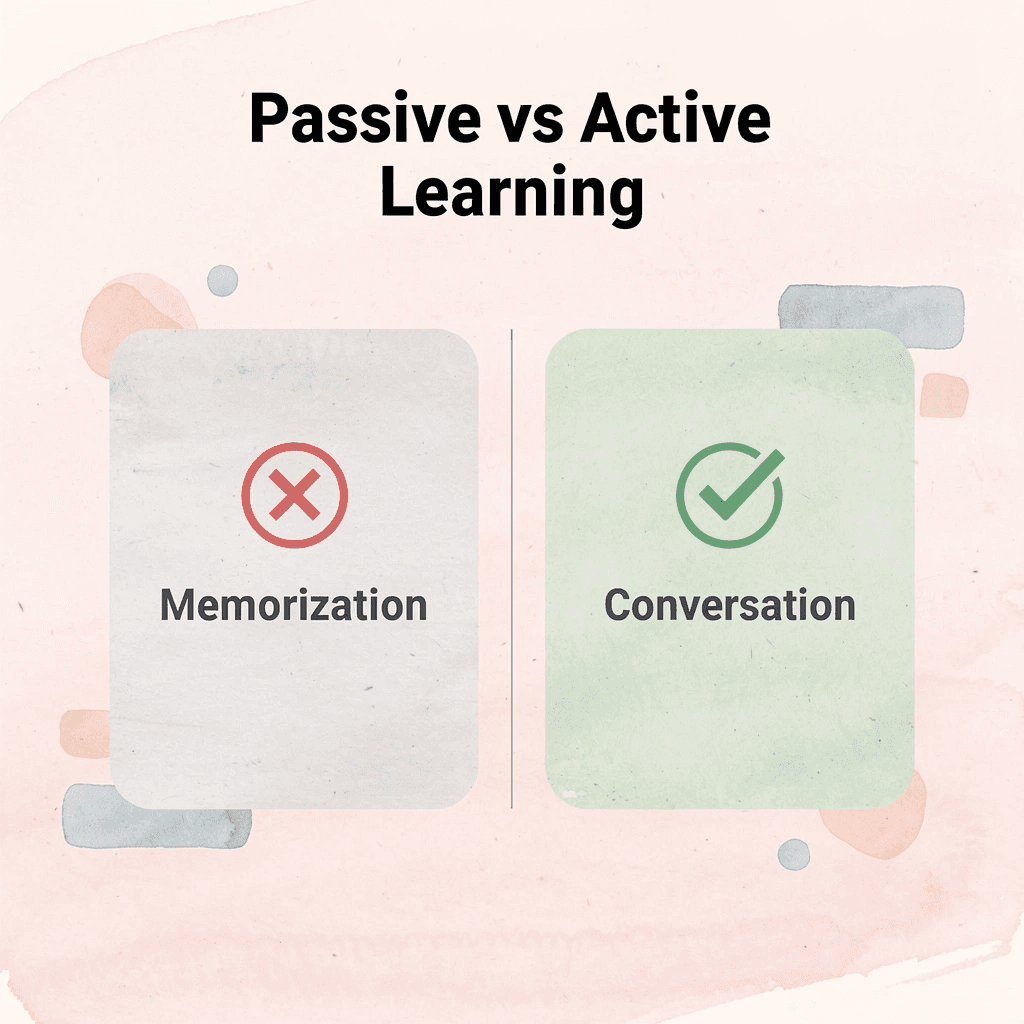
"The difference between knowing Arabic phrases and using them confidently lies in realistic practice that bridges the gap between passive understanding and active fluency."
💡 Tip: Start with just 5 minutes daily of conversational practice to transform memorized phrases into natural responses.

You move from awkward pauses to effortless, respectful exchanges that earn warm responses from native speakers. No experience needed. No credit card required. Start your first lesson free at Learn Arabic and turn everything you learned in this guide into real conversational fluency today.