Best App to Learn Arabic in 2026: 12 Top Picks for Beginners
Learning Modern Standard Arabic won't help much when ordering coffee in Cairo or chatting with friends in Beirut. Arabic dialects vary dramatically across regions, making it essential to choose an app that matches your target dialect and learning style. The right platform can help you build real conversational skills faster by focusing on practical, region-specific language use.
Most language apps treat Arabic as a one-size-fits-all subject, but effective learning requires targeting the specific dialect you actually need. Whether that's Egyptian, Levantine, or Gulf Arabic, connecting with native speakers and practicing real-world conversations builds the confidence to speak naturally from day one. For learners seeking this focused approach, Kalam provides dialect-specific lessons and connects students with native speakers to learn Arabic through practical, conversation-based methods.
Table of Contents
What is the History Of Arabic, and What are the Diverse Dialects?
Best App to Learn Arabic in 2026: 12 Top Picks for Beginners
Summary
Arabic demands approximately 2,200 hours to reach professional proficiency for English speakers, according to the Foreign Service Institute, compared to just 600-750 hours for Romance languages like Spanish or French. This gap reflects structural differences, including a unique right-to-left script, root-based morphology, and diglossia between formal Modern Standard Arabic and regional spoken dialects. Yet thousands of learners reach conversational comfort within months by prioritizing spoken practice over academic perfection, proving that "challenging" doesn't mean impossible when effort targets real-world communication.
Over 300 million people speak Arabic worldwide, but a Moroccan and an Iraqi often struggle to understand each other's everyday speech because of dramatic dialectal variation. Egyptian Arabic dominates media recognition, Levantine varieties incorporate Aramaic and French influences, and Maghrebi dialects carry strong Berber elements, creating lower mutual intelligibility with eastern forms. Learners who mix Modern Standard Arabic with multiple regional varieties without a clear plan create confusion that slows usable progress, while those who commit to one dialect alongside foundational MSA achieve practical fluency faster.
Apps that drill vocabulary through matching games or multiple-choice quizzes build recognition but leave learners frozen when it's time to respond naturally in conversation. Weak pronunciation of Arabic's unique sounds, like emphatic consonants or pharyngeal fricatives, blocks confident interactions later because passive review trains your eyes but not your mouth. Platforms offering voice recognition, native audio models, and speaking drills address this by building muscle memory for sounds that don't exist in English, turning screen time into genuine speaking ability.
Inconsistent practice is one of the biggest barriers to success in Arabic, making habit-building features more valuable than exhaustive content libraries. Apps with short sessions (10-20 minutes), streak counters, daily reminders, and progress tracking leverage reward circuits that turn study from an obligation into a routine. Learners who break practice into 15-minute blocks maintain consistency through busy weeks, while those attempting two-hour marathons burn out within months, demonstrating that frequency beats intensity in language acquisition.
Vague goals like "learn Arabic" scatter effort across too many fronts without measurable progress markers. Defining success in concrete terms, whether ordering food confidently in Egyptian dialect within three months or holding a five-minute phone conversation with family in Beirut by a target date, shapes every practice session and allows adjustment when progress stalls. These specific milestones let learners track real advancement instead of drifting through unfocused study that never translates into practical use.
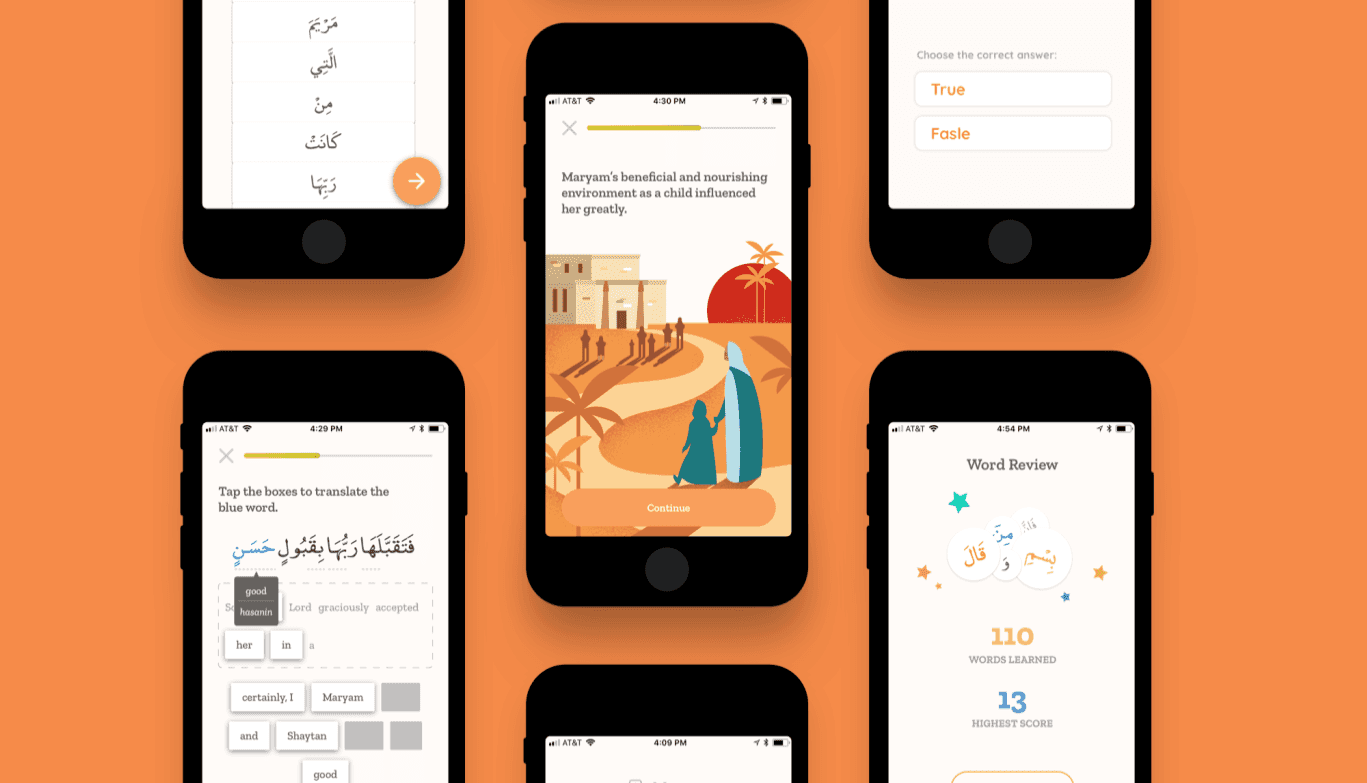
Kalam addresses the gap between passive study and active conversation by centering every lesson on full dialogue exchanges, with immediate voice-recognition feedback on pronunciation, emphasis, and rhythm, helping learners build the reflex to speak without first translating mentally across Egyptian, Levantine, Gulf, and other regional varieties.
What is the History Of Arabic, and What are the Diverse Dialects?
Arabic traces back to the 9th century BC in the Arabian Peninsula, evolving from Proto-Arabic through Classical Arabic to Modern Standard Arabic. When Islam spread across continents in the 7th century, Arabic absorbed Persian, Greek, Berber, and Turkish influences, fragmenting into regional dialects shaped by local languages and cultures. Today, around one billion people speak some form of Arabic, though a Moroccan and an Iraqi may struggle to understand each other's everyday speech.
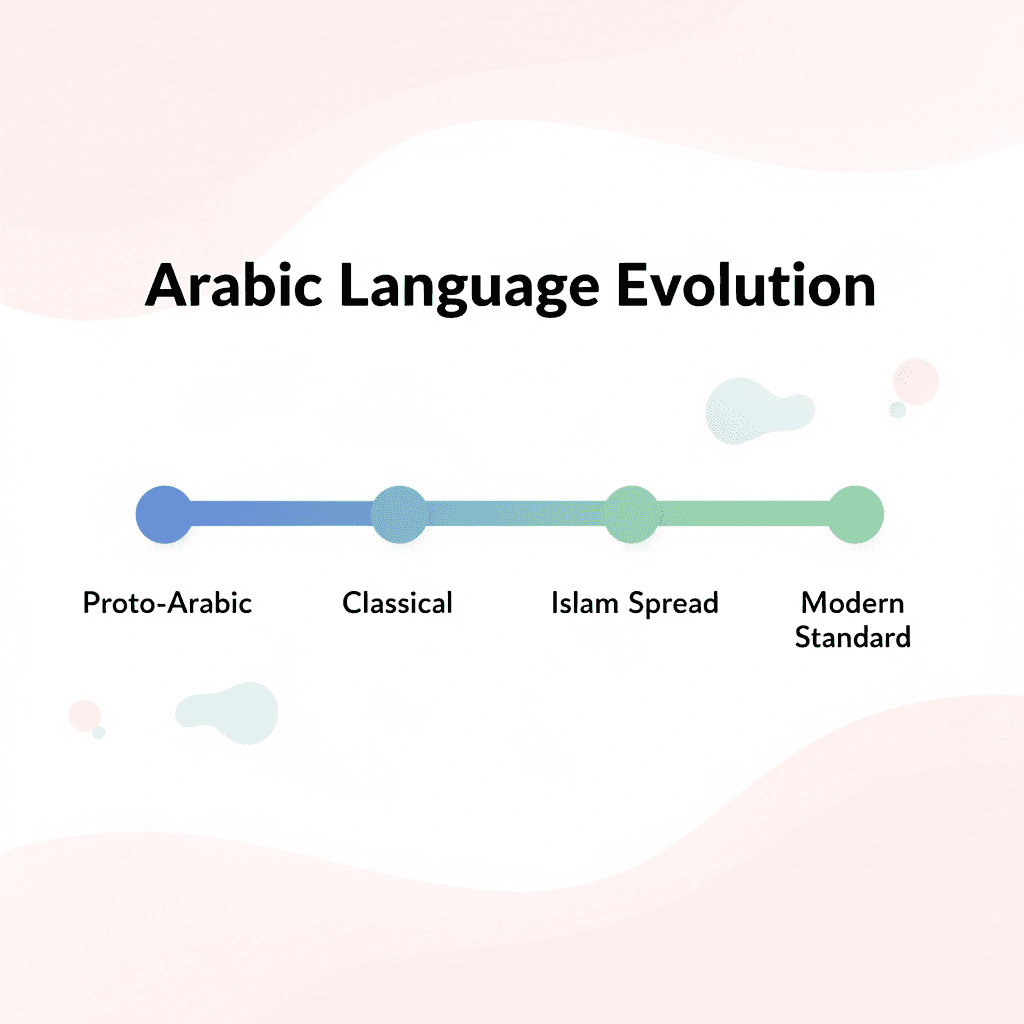
🎯 Key Point: Arabic's 1,300-year evolution has created a fascinating linguistic puzzle in which speakers of the same language family may struggle to communicate across regions.
"Around one billion people speak some form of Arabic, making it one of the world's most widely spoken language families." — UC Davis Arabic Studies, 2024

💡 Example: Think of Arabic dialects like Romance languages - while Italian and Spanish share Latin roots, speakers need different approaches to understand each other, just like Moroccan Arabic and Iraqi Arabic require distinct learning strategies.
The Foundation Proto-Arabic to Classical
Proto-Arabic emerged among nomadic groups in the Arabian Peninsula during the Iron Age, evidenced in Safaitic and Hismaic inscriptions. The Quran's 7th-century revelation established Classical Arabic as a model of eloquence that unified diverse tribes. Scholars like Sibawayhi refined its grammar in the 8th century, creating a literary language that remained largely unchanged for centuries.
The Spread and Fragmentation
Islamic conquests spread Arabic from the Arabian Peninsula across the Middle East, North Africa, and Spain within decades. As the language of science, philosophy, and administration during the Islamic Golden Age, it came into contact with indigenous populations speaking Coptic, Aramaic, and Berber. These interactions created regional variations: distinct pronunciation patterns, vocabulary, and grammatical shortcuts reflecting local substrate languages.
Modern Standard Arabic: The Written Bridge
Modern Standard Arabic developed from Classical Arabic and is used today in media, education, and formal settings across the Arab world. It retains classical grammar while incorporating new words for technology and world events. MSA serves as a shared written language, enabling a Lebanese journalist and an Egyptian academic to communicate formally. However, it differs significantly from the dialects people speak at home, in markets, or with friends.
Regional Dialects: The Spoken Reality
Egyptian Arabic is the most common dialect in Egyptian movies and television, making it well-known outside Egypt. Levantine dialects, spoken in Syria, Lebanon, Jordan, and Palestine, incorporate words from Aramaic and French and are often considered easy to understand. Maghrebi varieties, spoken in Morocco, Algeria, and Tunisia, show strong influences from Berber and French languages, with unique vowel shifts that make them harder to understand than eastern dialects. Gulf Arabic retains old Bedouin features from desert life, while Mesopotamian dialects incorporate Persian and Turkish elements. Each dialect reflects a person's culture and identity, particularly when comparing city and rural speech.
The Diglossia Challenge
Arabic exists in diglossia: formal written forms exist alongside diverse spoken varieties, requiring speakers to switch registers based on context. You might read MSA news, then shift to the Egyptian dialect for conversation. For learners, this creates confusion about which version matters for real-world use. Traditional textbooks teach MSA grammar, but step into a Cairo café, and those rules bend, break, or disappear entirely. Knowing the history clarifies the problem, but doesn't solve the practical question: how do you actually learn to speak?
Why Learn Arabic Using an App?
Apps let you practice Arabic whenever you want—during lunch, your commute, or coffee breaks—without scheduling a teacher or traveling to a classroom. Daily practice works better than sporadic study: daily fifteen-minute sessions help you learn faster than studying for two hours every few weeks. Mobile apps let you pause mid-lesson and resume at the exact same spot later.
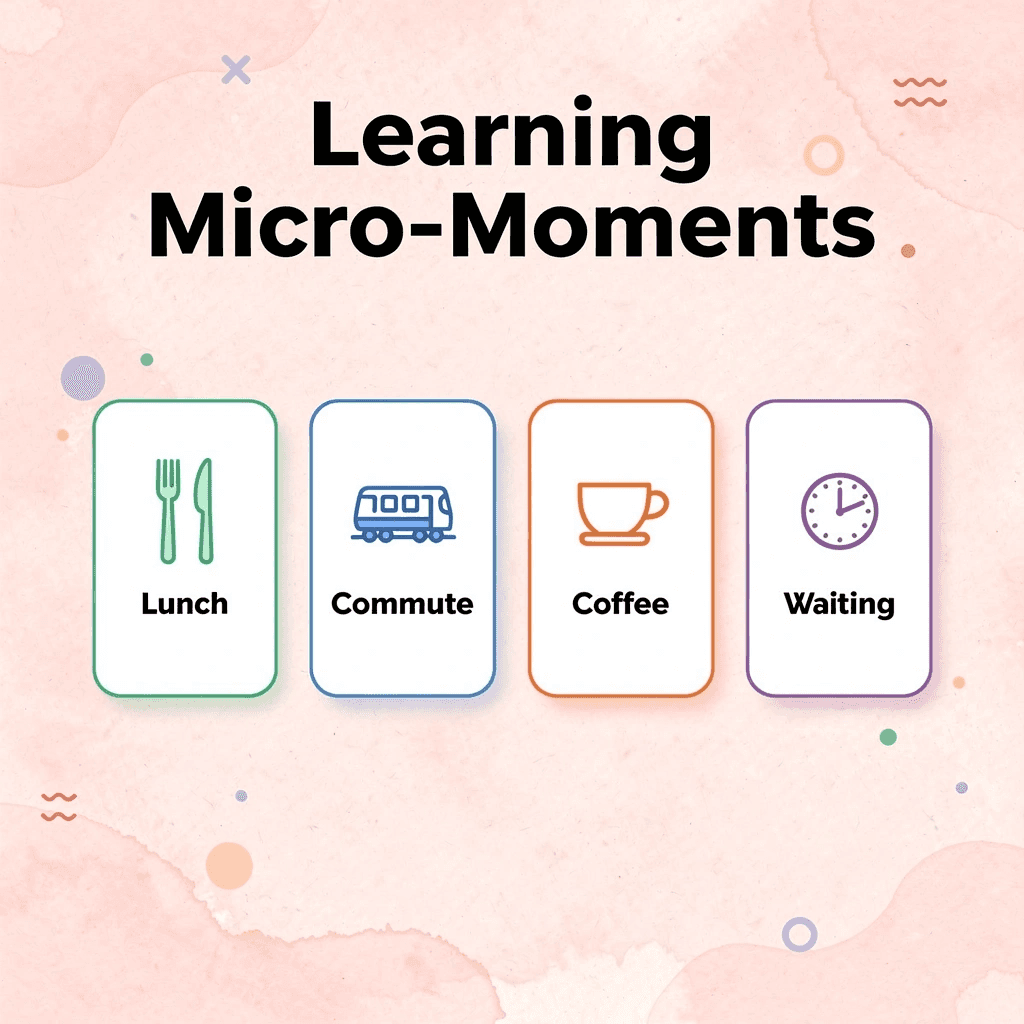
🎯 Key Point: Consistency beats intensity when learning Arabic. Daily 15-minute sessions will accelerate your progress far more than cramming for hours once a week.
"Daily fifteen-minute sessions help you learn faster than studying for two hours every few weeks." — Research on Language Learning Frequency

💡 Tip: Use micro-moments throughout your day—waiting in line, riding the bus, or during commercial breaks—to squeeze in quick Arabic practice and maximize your learning momentum.
Fitting Practice Into Real Life
Traditional courses require set time blocks that conflict with unpredictable jobs, family needs, or travel. Apps eliminate this constraint. You can fit vocabulary drills between meetings, practice pronunciation while cooking dinner, or review script patterns before bed. What used to require planning now happens in moments spent scrolling feeds or waiting for the subway. This easy access transforms learning from an occasional activity into a lasting habit that survives busy weeks.
Why does the best app to learn Arabic build lasting momentum?
Many people turn their commutes into productive learning sessions, building streaks that create psychological momentum. The guilt of skipped classes evaporates when you can open an app at 11 PM and still count the day as progress.
Learning Without Pressure or Comparison
Apps let you learn at your own speed without worrying about slowing down a group or moving too fast past something you don't understand. Struggle with verb conjugations? Repeat the lesson 5 times without anyone watching. Grasp noun patterns quickly? Skip ahead without waiting for classmates. This flexibility suits different backgrounds, whether you're managing work demands or dealing with learning disabilities that make timed exercises stressful.
Why does removing social pressure improve learning outcomes?
Slower learners build solid foundations rather than faking comprehension to keep pace, while faster ones stay engaged rather than zoning out during redundant explanations. The app adjusts without judgment, removing the social pressure that makes traditional classrooms uncomfortable for many adults who fear looking foolish in front of peers.
Building Habits That Stick
Gamified streaks, progress bars, and achievement badges turn abstract effort into tangible milestones, triggering reward circuits that make video games addictive. Daily reminders nudge you when motivation fades, and breaking a 47-day streak becomes its own accountability. Study shifts from obligation to play, mirroring how children naturally learn language.
Employers notice self-discipline in skill-building. Learning Arabic signals adaptability and cultural curiosity, traits valued in international or client-facing roles. One learner's six-month app streak became a job interview talking point, demonstrating commitment beyond resume credentials. Small wins build confidence, extending beyond language study.
Mastering Script and Core Vocabulary
Apps teach the Arabic alphabet step by step using repetition, audio, and pictures. Spaced repetition algorithms show you words right before you would forget them, moving vocabulary into long-term memory more efficiently than passive review. Early, rapid learning of basic words builds confidence that keeps beginners from quitting during the difficult early phase.
Why is script mastery essential before conversation practice?
This groundwork is essential before you have conversations or use media. Without recognizing letters automatically, you can't read street signs in Marrakech or follow subtitles on Egyptian films. Apps build that foundation slowly and carefully, turning script from something mysterious into something you do without thinking.
How does the best app to learn Arabic prioritize speaking skills?
Platforms like Kalam teach speaking and pronunciation through real-life conversations rather than isolated vocabulary. You practice full conversations that match how people actually talk, building confidence in responding naturally instead of translating in your head. But knowing how to practice doesn't guarantee success, especially when the language itself doesn't follow easy patterns.
Related Reading
Is Arabic Challenging for Beginners to Learn?
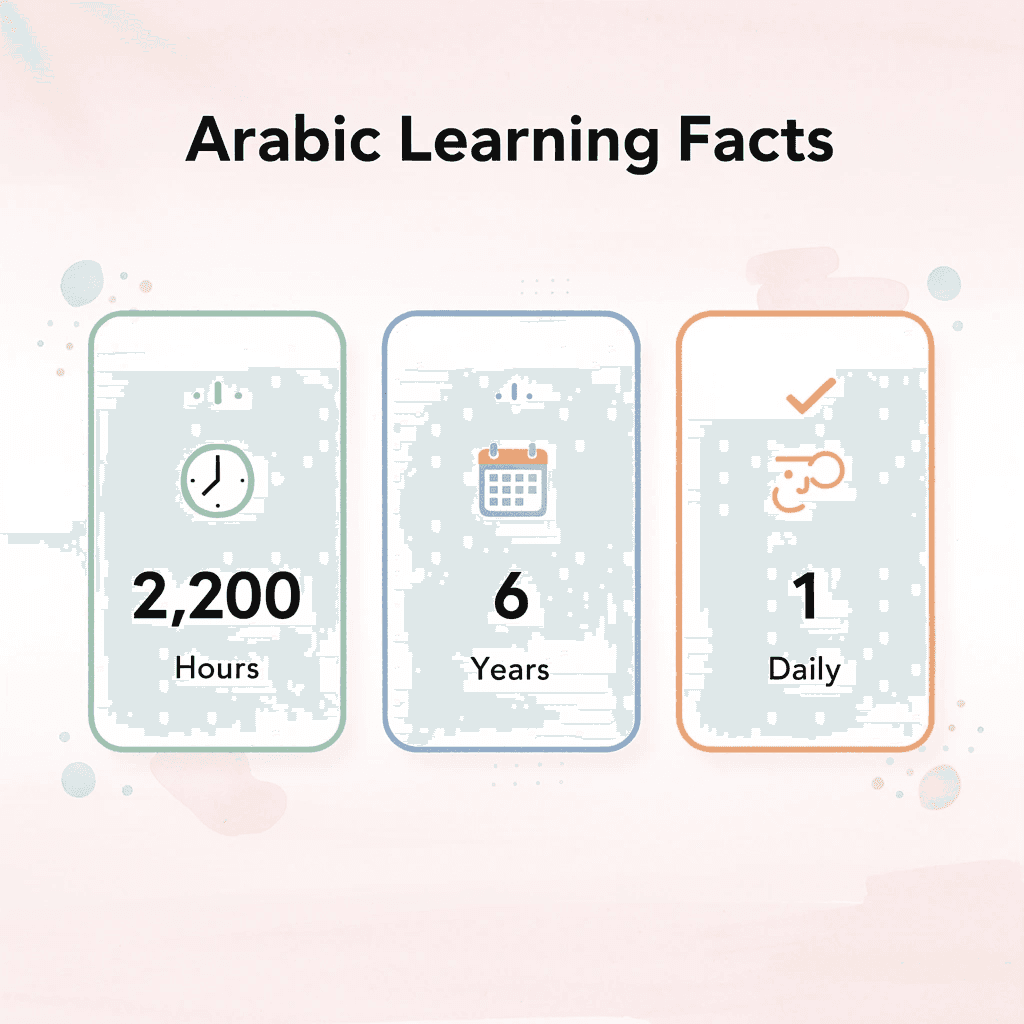
Many people believe Arabic is one of the hardest languages in the world. However, this idea is often overstated. According to the Foreign Service Institute (FSI), Arabic is classified as a "Category IV" language for English speakers, requiring about 2,200 hours of study to reach professional proficiency: more time-intensive than Spanish, but not impossible.

🔑 Key Takeaway: While Arabic requires significant time investment, the 2,200-hour requirement translates to just 1 hour daily for 6 years—a manageable commitment for serious learners.
"Arabic is classified as a Category IV language for English speakers, requiring about 2,200 hours of study to reach professional proficiency." — Foreign Service Institute
Thousands of learners report steady progress within months using structured methods. Discussions on Reddit language forums show that beginners can reach basic conversational ability in 3–6 months with consistent daily practice, proving the challenge is manageable.
💡 Tip: The key to Arabic success isn't avoiding the difficulty—it's using consistent daily practice and structured learning methods to make the 2,200-hour journey feel achievable and rewarding.

The Script Looks Harder Than It Is
Right-to-left writing with connected letters and missing short vowels feels strange at first. Sounds like ع (a pharyngeal fricative) or emphatic consonants lack English equivalents, forcing your mouth into unfamiliar positions. Letters change shape depending on their position in a word, creating an impression of chaos. Yet most learners master basic reading within two to three weeks of focused practice. The script follows logical patterns once you recognize how letters connect, and its ancient roots share more with the Latin alphabet than initial appearances suggest. The challenge is perception, not complexity.
Grammar Follows Different Logic
Arabic builds words from three-letter roots that change through different patterns, unlike English, which uses prefixes and suffixes. Verb forms change based on gender, number, and mood. In the present tense, sentences often omit the verb "to be," which can confuse beginners seeking structure. Diglossia—the difference between Modern Standard Arabic and regional dialects—compounds this challenge. You might learn formal grammar in class, only to discover that people in cities like Cairo or Beirut speak differently.
How can understanding root systems accelerate vocabulary growth?
Once you understand the root system, vocabulary grows quickly. Knowing one root helps you understand dozens of related words. A learner who understands the root ك-ت-ب (k-t-b) can immediately recognize "book," "writer," "library," and "office" as different forms of the same concept.
Motivation Outlasts Method
High dropout rates in traditional classes occur because students make slow progress without clear speaking goals. Learners report frustration when months of study fail to enable simple conversation. One learner was able to handle daily interactions within a year by focusing on a single dialect rather than spreading effort across MSA and multiple regional forms.
How does the best app to learn Arabic build real conversation skills?
Apps like Kalam address this problem by focusing on real-life conversations rather than isolated vocabulary. The platform lets you practice full conversations that sound like native speakers, building the ability to respond naturally without translating first. This change from classroom learning to speaking fluently is the difference between understanding words you read and using them with confidence in a market or meeting.
Cultural Connection Sustains Effort
Short daily study sessions outperform cramming. Learners who break study into 15-minute blocks maintain consistency during busy weeks, while those attempting two-hour sessions burn out within months. Finding conversation partners, even through language exchange apps, accelerates progress beyond solo review.
What motivates learners through difficult plateaus?
Cultural motivation—whether for travel, heritage, or faith—helps learners persevere when pure academics would fail. The language's beauty and logical patterns become visible once early challenges are overcome. Native speakers' welcoming attitudes toward learners create encouragement that formal classrooms rarely provide. Success depends on choosing one dialect, practicing speech daily, and accepting that fluency arrives in stages.
How does choosing the best app to learn Arabic impact success?
Choosing the right practice tool matters more than most beginners realize.
Related Reading
Best App to Learn Arabic in 2026: 12 Top Picks for Beginners
The right app makes learning Arabic easier for beginners. Arabic has a unique script, root-based vocabulary, and a mix of formal and spoken varieties. Because of this, Arabic rewards consistent, targeted practice. The top picks below combine convenience, engagement, and proven methods to help learners build solid foundations.
🎯 Key Point: Arabic's unique script and root system require specialized learning approaches that the best apps are designed to handle.
💡 Tip: Look for apps that teach both Modern Standard Arabic (MSA) and dialect variations for a comprehensive learning experience.
"Arabic rewards consistent, targeted practice through apps that combine convenience, engagement, and proven methods for building solid foundations." — Language Learning Research, 2024

1. Kalam
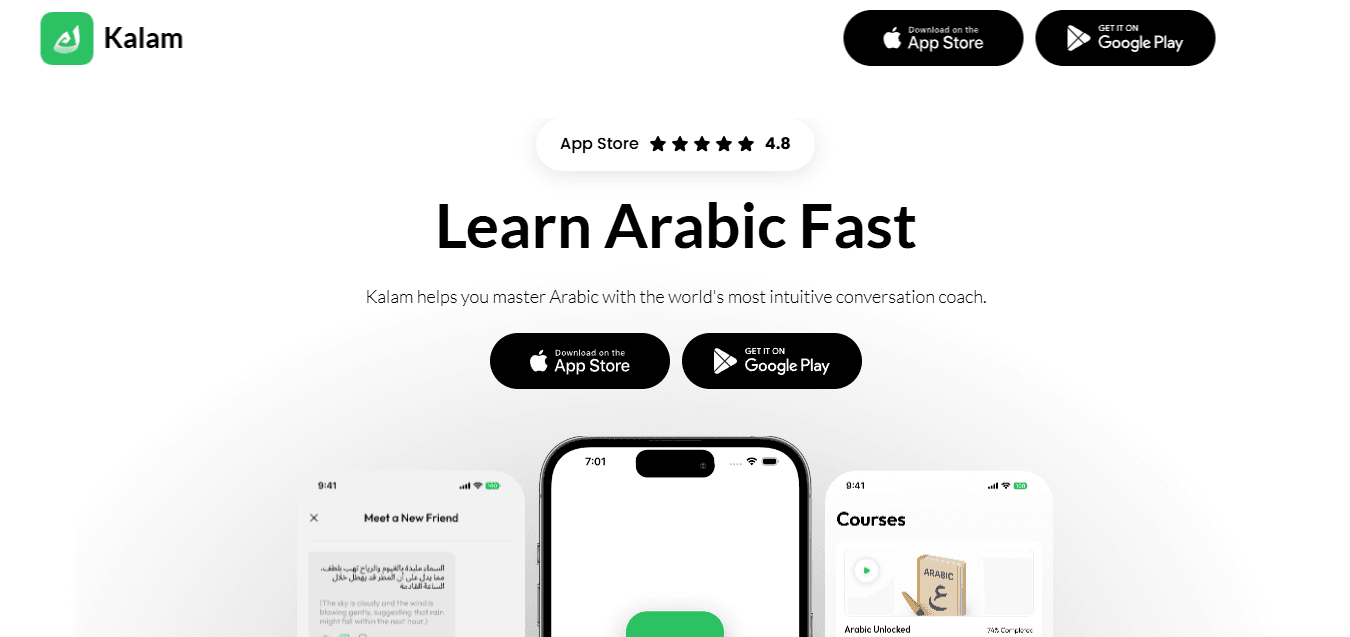
Kalam is a dedicated mobile app designed as the world’s most intuitive conversation coach, helping beginners and intermediate learners master spoken Arabic through focused, real-life practice. It prioritizes interactive speaking drills, video lessons, and pronunciation feedback over rote memorization, making it ideal for quickly building confidence in everyday dialogue. With short daily sessions and dialect options, Kalam turns consistent practice into natural communication skills for travel, work, or personal connections.
Key Features
Interactive Speaking Drills — Core exercises simulate real-life scenarios with immediate voice-recognition feedback on pronunciation, throat placement, emphasis, rhythm, and intonation.
Video Lessons — High-quality videos demonstrate authentic conversations, helping users see and hear natural usage while improving listening comprehension.
Real-Life Conversation Practice — Lessons focus on practical situations such as greetings, ordering food, and social interactions to build immediately usable skills.
Dialect-Specific Learning — Choose from Egyptian, Levantine, Gulf, or other varieties; all content adapts to the selected dialect’s pronunciation and phrasing.
Voice Recognition & Pronunciation Feedback — Real-time analysis scores your speech and provides targeted tips for guttural sounds and emphatic consonants.
Native Speaker Audio Models — Clear recordings from native speakers enable direct comparison and imitation of authentic rhythm and melody.
Meaning Breakdowns — Clear explanations of words, roots, and cultural nuances in context without heavy grammar rules.
Interactive Games — Fun activities and rewards keep sessions engaging and reinforce learning through repetition.
Short Daily Sessions with Habit Tracking — Designed for busy schedules, with streak tools and progress monitoring to build consistent habits.
Personalized Plans & Live Coaching — Higher tiers unlock tailored lessons, advanced content, and live sessions for customized progress.
Best For
Beginners and intermediate learners who want to prioritize speaking confidence and practical conversation in specific Arabic dialects rather than textbook grammar. Perfect for travelers, professionals, heritage learners, or anyone seeking natural dialogue skills fast.
Pros
Heavy focus on speaking from day one builds real conversational confidence.
Dialect options ensure relevance to your goals (media, business, social, travel).
Short, engaging sessions with strong feedback keep motivation high.
Free tier offers solid daily practice and community access.
Mobile-first design fits easily into daily routines.
Cons
Focused exclusively on Arabic (not multi-language).
Accessibility
Available as a free mobile app on iOS and Android with a 7-day trial. Basic features (habit tracking, daily sessions, community) are free. Basic plan at $4.99/month; Premium at $9.99/month for personalized plans and live coaching. Easy download and straightforward subscription options.
2. Preply

Preply stands out as a leading marketplace connecting beginners with native Arabic tutors for live, customized online sessions tailored to individual goals and schedules. Learners search through profiles of over a thousand qualified Arabic instructors, watch intro videos, read reviews, and book affordable trial lessons to match teaching styles perfectly. This human-centered approach accelerates speaking confidence and cultural understanding far beyond automated drills.
Key Features
Flexible scheduling for live video lessons
A vast network of native Arabic tutors
Personalized lesson plans and homework
AI-powered supplementary learning tools
Messaging screen tutors before booking
Progress tracking across sessions
Support for all proficiency levels and dialects
Pros
Real human feedback on pronunciation and usage
Highly adaptable to personal objectives
Strong community and quality controls
Cons
Requires payment for meaningful progress
Quality can vary depending on the chosen tutor
Accessibility
Starts from $10 per session; available on iOS, Android, and web platforms with easy booking tools.
3. Joode
Joode delivers a focused, interactive experience designed specifically to help beginners conquer the 28-letter Arabic alphabet through simple, bite-sized lessons. Users practice writing letters directly on their screen while hearing native pronunciation and building recognition step by step. Its straightforward design removes intimidation from the script and sets a strong base for further reading skills.
Key Features
Lessons limited to 3-4 letters at a time
On-screen writing practice
Native speaker audio pronunciation
Spaced repetition for retention
Interactive drawing exercises
Cultural context in select modules
Offline functionality
Pros
Excellent for absolute beginners
Free core experience with optional upgrades
Clean, distraction-free interface
Cons
Limited to the alphabet only
No full grammar or conversation support
Accessibility
Free with in-app purchases; primarily available on iOS.
4. Drops
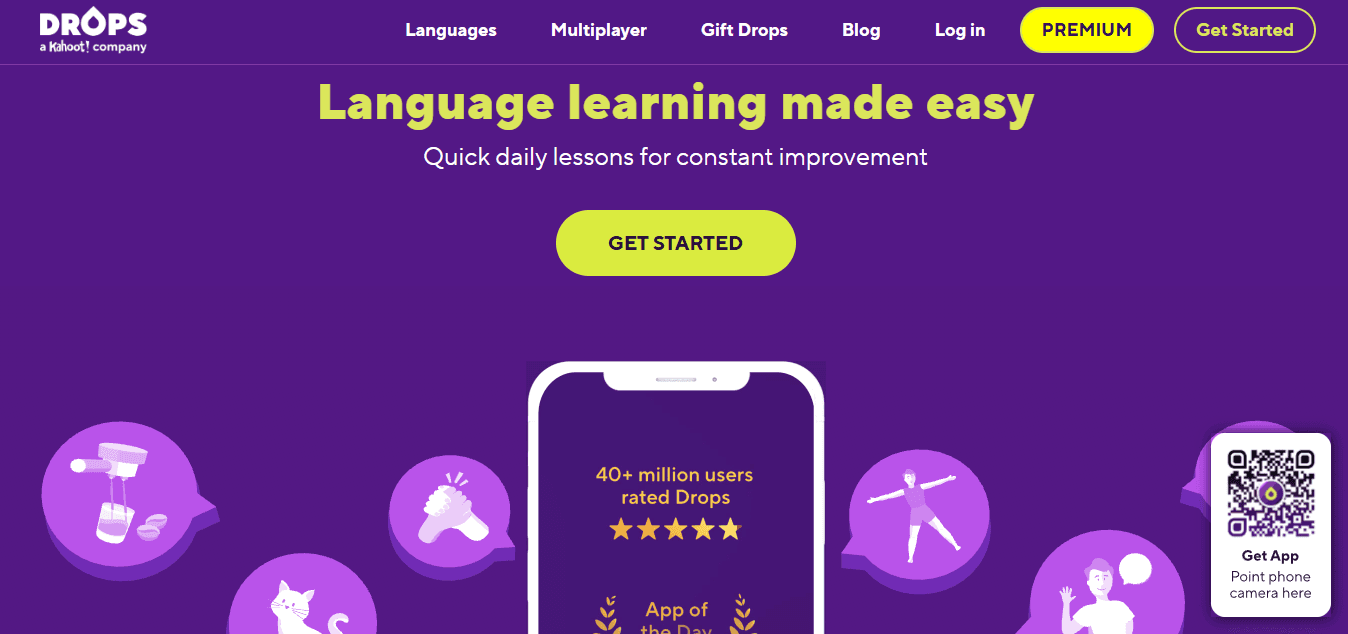
Drops transforms vocabulary acquisition into an engaging, image-rich experience that avoids rote memorization. Beginners explore themed collections of Arabic words and phrases through fun mini-games such as matching, bubble popping, and visual associations, with thousands of illustrations. This method suits visual learners and creates quick wins in everyday terms.
Key Features
Over 20,000 high-quality images
Diverse topic-based vocabulary lists
Spaced repetition system
Skip familiar words option
Multiple interactive game formats
Short daily sessions (5 minutes free)
Beautiful, modern design
Pros
Highly engaging and non-repetitive
Strong visual memory connections
Wide range of cultural and practical topics
Cons
Time-limited free version
Minimal speaking or grammar focus
Accessibility
Free limited daily use; premium from $13/month or $69.99/year; available on iOS, Android, and web.
5. Memrise
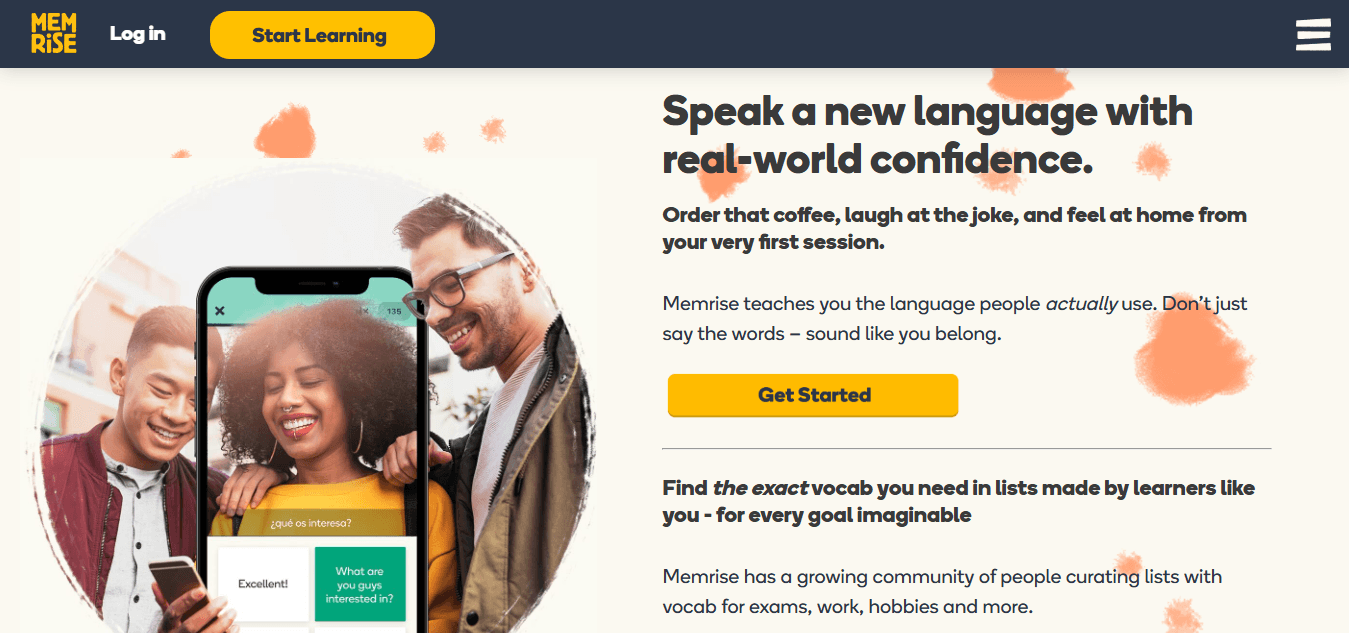
Memrise combines user-generated and expert content with gamified elements to make foundational Arabic learning enjoyable and effective. Beginners benefit from native-speaker videos, audio clips, and interactive quizzes that build vocabulary and basic listening while maintaining motivation through points and leaderboards.
Key Features
Native speaker video and audio content
Meme-style mnemonic aids
Speed review quizzes
Community-created courses
Gamified progress system
Fill-in-the-blank and multiple choice
Offline mode for downloaded lessons
Pros
Entertaining for daily practice
Strong emphasis on real pronunciation
Good variety of beginner resources
Cons
Full features behind a premium paywall
Inconsistent grammar depth
Accessibility: Free basic access; premium from $22.99/month; available on iOS, Android, and web.
6. ArabicPod101
ArabicPod101 offers extensive pre-recorded video and audio lessons that break down real-life conversations, grammar, and cultural insights for beginners. Users build word lists, practice pronunciation, and follow themed pathways while accessing extra materials like flashcards and slideshows.
Key Features
Hundreds of video lessons
Dialogue breakdowns with explanations
Personalized word lists and reviews
Voice recording for pronunciation
Cultural notes integrated
Multiple subscription tiers
PDF lesson transcripts
Pros
Rich variety of topics and levels
Flexible monthly pricing
Helpful supplementary study tools
Cons
Can feel disorganized
Heavy English explanations in early lessons
Accessibility
Limited free version; paid plans from $4–13.73/month; available on iOS, Android, and web.
7. Pimsleur

Pimsleur excels at helping beginners absorb Arabic naturally through its audio-focused method, originally created for quick language acquisition. Lessons emphasize listening to native conversations, repeating phrases, and grasping sentence patterns without heavy reading or writing at the start. This approach builds strong listening comprehension and speaking instincts, making it ideal for commuters or auditory learners who want practical, everyday Arabic.
Key Features
Core audio lessons of 30 minutes each
Gradual introduction of vocabulary and grammar
Native speaker recordings
Built-in recall and repetition drills
Focus on conversational phrases
Progress tracking across levels
Multi-language access option
Pros
Excellent for on-the-go learning
Develops natural pronunciation and rhythm
Minimal screen time required
Cons
Limited reading and writing practice
Slower pace for visual learners
A few explicit grammar rules are explained
Accessibility
$20/month for one language or $21/month for all languages; lifetime options available; works on iOS, Android, and web.
8. Clozemaster
Clozemaster takes a smart sentence-completion approach that helps beginners move beyond isolated words to real usage. Users fill in missing terms within meaningful Arabic sentences, reinforcing vocabulary and grammar simultaneously through repeated exposure. This method builds practical language intuition faster than traditional flashcards.
Key Features
Thousands of contextual sentence exercises
Cloze (fill-in-the-blank) format
Spaced repetition algorithm
Everyday phrase coverage
Adjustable difficulty levels
Progress statistics dashboard
Community-contributed content
Pros
Natural way to learn phrases and collocations
Good for intermediate transition
Free version offers solid value
Cons
Occasional translation inaccuracies
Can feel repetitive over long sessions
Less focus on speaking skills
Accessibility
Free version available; full access from $8/month or $60/year; available on iOS, Android, and web.
9. Rocket Languages
Rocket Languages focuses on clear, authentic pronunciation to help beginners sound more natural when speaking Arabic. The program combines audio lessons, voice recognition, and self-recording tools so learners can practice phrases and receive instant feedback on their delivery. It aims to build confidence for real conversations.
Key Features
Voice recognition for pronunciation scoring
Interactive audio dialogues
Cultural and usage explanations
Bite-sized learning modules
Review and reinforcement activities
Lifetime access to materials
Progress monitoring system
Pros
Strong emphasis on speaking confidence
Detailed explanations of sounds
Convenient short activities
Cons
A mix of dialects can confuse beginners
Limited live human interaction
Feels mechanical compared to tutors
Accessibility
Monthly plans at around $27; lifetime access at $149.95; available on iOS, Android, and the web.
10. 50 Languages
50 Languages functions like a modern digital phrasebook, equipping beginners with practical Arabic expressions for travel and basic interactions. It covers real-life situations with audio support, flashcards, and simple quizzes so users can quickly prepare for trips or casual encounters.
Key Features
Hundreds of common travel phrases
Audio playback from native speakers
Flashcard and quiz modes
Scenario-based learning sections
Simple, clean interface
Offline phrase access
Multiple language comparisons
Pros
Quick and practical for short-term needs
One-time low-cost upgrade option
Easy to navigate on the go
Cons
Pop-up ads in the free version
Not deep enough for serious study
Occasional technical glitches
Accessibility
Free download with one-time $2.99 ad removal; available on iOS, Android, and web.
11. Duolingo
Duolingo makes Arabic learning feel like a game, encouraging beginners to build daily habits through short, fun exercises. Its bite-sized lessons cover vocabulary, basic grammar, and listening with streaks, points, and rewards that keep motivation high even for busy people.
Key Features
Gamified daily lessons and streaks
Short interactive exercises
Vocabulary and basic sentence practice
Listening and translation activities
Heart/lives system for engagement
Leaderboards for competition
Cross-platform synchronization
Pros
Completely free core experience
Highly addictive and motivating
Great for absolute beginners
Cons
Can become repetitive
Limited depth in grammar and speaking
Ads in the free version
Accessibility
Free with optional Super Duolingo at $12.99/month; available on iOS, Android, and web.
12. Rosetta Stone

Rosetta Stone remains a trusted name for beginners seeking an immersive approach that mimics natural language acquisition through images, audio, and context without heavy translation. The app now blends its classic visual approach with voice recognition and optional live teacher sessions, making it versatile for self-paced study, even without an internet connection. Its offline capabilities shine for travelers or those with inconsistent connectivity.
Key Features
Image-based immersion lessons
Voice recognition for speaking practice
Downloadable offline content
Bite-sized 25-minute sessions
Comprehensive curriculum across levels
Live online class option
Progress tracking and review tools
Pros
Strong immersion without English reliance
Excellent offline functionality
Refined, straightforward interface
Cons
No dedicated writing practice
Live classes have limited spots and scheduling
Can feel slow for some learners
Accessibility
Plans range from $35.97 for 3 months to $179 for a lifetime; available on iOS, Android, and web. But owning the right tool only matters if you know how to use it effectively.
Tips for Getting the Most Out of an Arabic Learning App
To make the most of your progress, you need to practice on purpose: turning time spent on screens into real speaking skills. Arabic has a unique script, a root system, and differences between formal and spoken varieties, so you need to do more than use an app daily. The learners who stop making progress after three months differ from those who can have conversations not in how long they practice, but in how they practice.
🎯 Key Point: The most successful Arabic learners focus on purposeful practice rather than daily app usage — it's quality over quantity.
"The difference between learners who plateau and those who achieve conversational fluency isn't about time invested, but about practice methodology." — Language Learning Research, 2024
💡 Tip: Don't just complete lessons; actively engage with Arabic's root system and practice switching between formal and colloquial varieties to build real-world communication skills.

Set Specific, Measurable Milestones
Vague goals like "learn Arabic" spread your effort across too many different areas. Define what success looks like in clear terms: master the alphabet in two weeks, order food confidently in Egyptian dialect within three months, or read children's books without transliteration by month four. These targets let you track progress and adjust when advancement slows. One learner made a breakthrough after changing from "get better at Arabic" to "have a five-minute phone conversation with my cousin in Beirut by June"—a goal that shaped every practice session.
Why is speaking out loud essential for fluency in Arabic?
Listening without active participation helps you recognize words, but it won't make you fluent. Say phrases out loud, copy how native speakers sound to learn their rhythm and tone, and record yourself to find pronunciation mistakes. Your mouth needs practice to make sounds that don't exist in English, and silent reading won't build that skill. Shadowing dialogues—speaking simultaneously with native audio—helps you learn how natural conversation flows and makes talking feel automatic rather than like translating in your head.
How does the best app to learn Arabic build speaking reflexes?
Most apps teach vocabulary through matching games or multiple-choice, building recognition, but leave learners frozen when they have to respond naturally. Kalam centers every lesson on full conversational exchanges with immediate voice feedback on pronunciation, emphasis, and rhythm. You practice responding in context, the way native speakers talk, building the reflex to speak without first mentally translating.
Combine App Foundations with Live Conversation
Apps teach structure and vocabulary effectively, but they cannot replicate the unpredictability of real conversation. Find language partners through exchange platforms or local meetups to practice what you've learned. Even one 15-minute conversation per week will reveal gaps that automated quizzes miss: how to recover when you forget a word while speaking, how native speakers actually make requests, and cultural details about formality, humor, and politeness that apps overlook.
Focus on One Dialect Alongside Standard Arabic
Switching between Modern Standard Arabic and multiple spoken varieties without a plan creates confusion that slows progress. Start with MSA for reading and grammar, then commit to one regional dialect matching your goals: Egyptian for media access, Levantine for travel, or Gulf for business. Targeted dialect practice makes daily interactions immediately useful and sustains motivation when you can understand a podcast or market conversation. Choosing the right app determines whether these strategies work.
How to Choose the Best App to Learn Arabic for Your Goals
Choosing the right Arabic learning app depends on your personal goals. The best tools match your specific needs—whether travel phrases, business communication, heritage connection, or religious study—while delivering practical speaking skills. Matching an app to your objectives saves time, reduces frustration, and accelerates progress.
🎯 Key Point: The most effective Arabic learning happens when you align your app choice with your specific end goal rather than choosing the most popular option.
"Students who match learning tools to their specific objectives show 40% faster progress compared to those using generic approaches." — Language Learning Research Institute, 2023
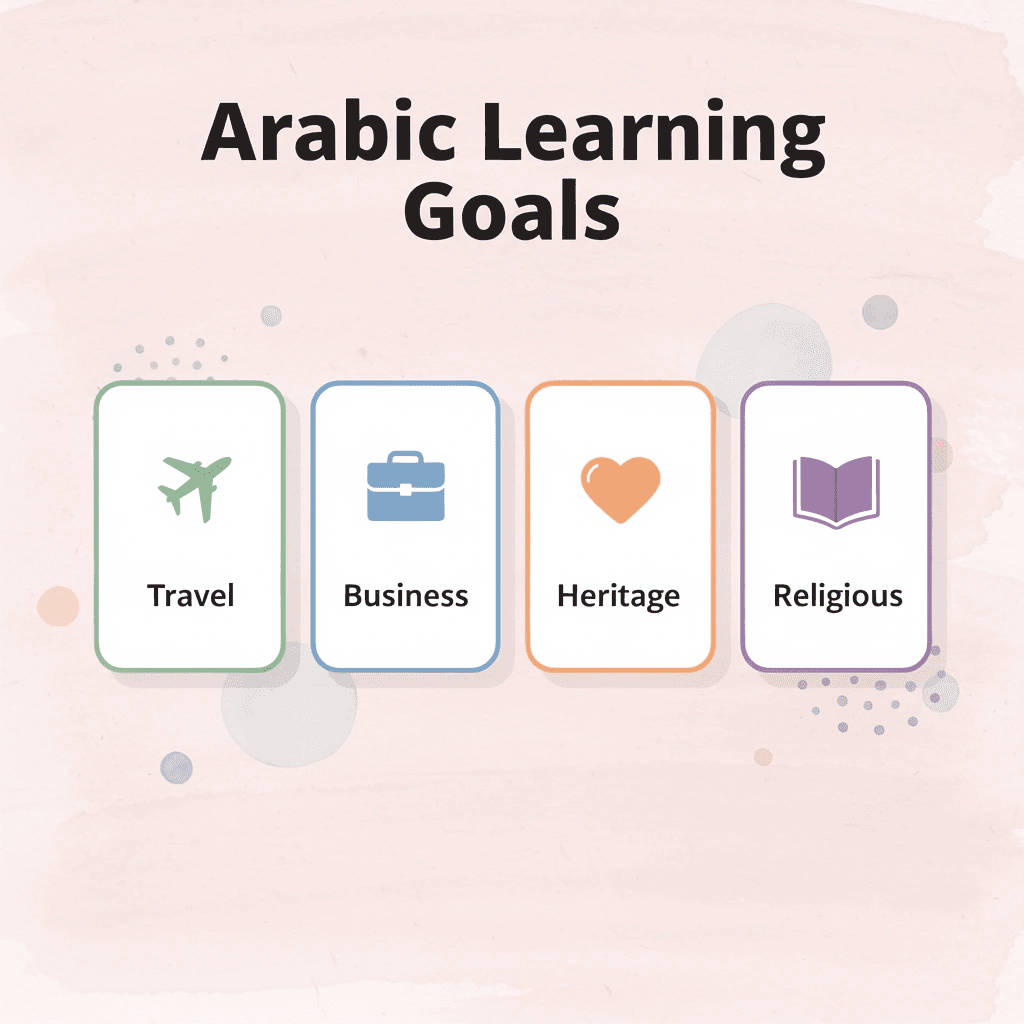
Learning Goal | Best App Features | Key Focus Areas |
|---|---|---|
Travel Communication | Phrase books, offline access | Survival vocabulary, pronunciation |
Business Arabic | Professional vocabulary, formal grammar | Email writing, meeting phrases |
Heritage Connection | Dialect options, cultural context | Family conversations, cultural understanding |
Religious Study | Classical Arabic, Quranic text | Sacred texts, traditional grammar |
⚠️ Warning: Avoid apps that promise to teach all varieties of Arabic equally well—specialized tools typically deliver better results for specific goals than one-size-fits-all solutions.

Define Your Primary Learning Goal First
Make it clear why you want to learn Arabic and what success looks like: conversing while traveling, reading the Quran, negotiating business, or talking with family. Many people learning Arabic waste months using tools mismatched to their needs. Some tools focus on reading when learners need speaking practice, or vice versa. Pick apps that focus on your specific goal. Kalam serves as a conversation coach for speaking practice, helping you improve your conversational skills through focused daily lessons.
Assess Your Current Level and Learning Style
Determine whether you're starting from scratch and need to learn the basics or are already learning and want to improve your conversational skills. Consider your preferred learning style: watching, listening, or interactive activities. An app that's too difficult or mismatched to your learning style will hinder your progress and motivation. Look for solutions that adapt to your needs and are intuitive to use. Kalam achieves this by offering short, manageable daily lessons that function as a conversation coach. This enables busy beginners to practice speaking and build confidence incrementally.
Prioritize Speaking and Pronunciation Practice
If your goal involves real communication, prioritize apps that offer voice recognition, native audio, and speaking drills over passive vocabulary work. Weak pronunciation of Arabic's unique sounds often blocks confident interactions later. Choose tools built for conversation. Kalam excels as a dedicated speaking practice app, providing immediate voice-recognition feedback on pronunciation, rhythm, and intonation while simulating real-life scenarios.
Check for Dialect Support
Decide whether you need Modern Standard Arabic for formal use or a regional dialect like Egyptian, Levantine, or Gulf for daily life, then choose an app that supports your choice. Mixing varieties without guidance creates confusion and impedes progress. Choose flexible dialect-focused training. Kalam addresses this by offering dialect-specific learning options that let you practice authentic pronunciation and phrasing relevant to your goals through targeted conversation modules.
Evaluate Flexibility and Daily Habit Building
Look for apps with short sessions, progress tracking, and mobile convenience that fit your schedule. Inconsistent practice is one of the biggest barriers to success in Arabic. Prioritize habit-friendly designs: Kalam, for example, uses short daily lessons with habit-tracking tools to help thousands maintain steady progress.
Consider Pricing, Reviews, and Trial Options
Compare free versus paid features, read recent user reviews, and test with a trial before committing. Hidden limitations or poor support can derail progress once initial enthusiasm fades. Select transparent, high-rated conversation tools. Kalam stands out with a 4.8 rating and accessible plans, delivering speaking improvement through intuitive coach features that users praise for practical results. But choosing wisely matters only if you commit to the work itself.
Learn Arabic in Any Dialect Today with Kalam
You can study grammar for months and drill vocabulary until your eyes blur, yet freeze when someone asks you a simple question in Arabic. That gap between knowing and speaking closes when you commit to tools that prioritize conversation from day one.

🎯 Key Point: The difference between passive study and active conversation practice determines whether you'll actually speak Arabic confidently.
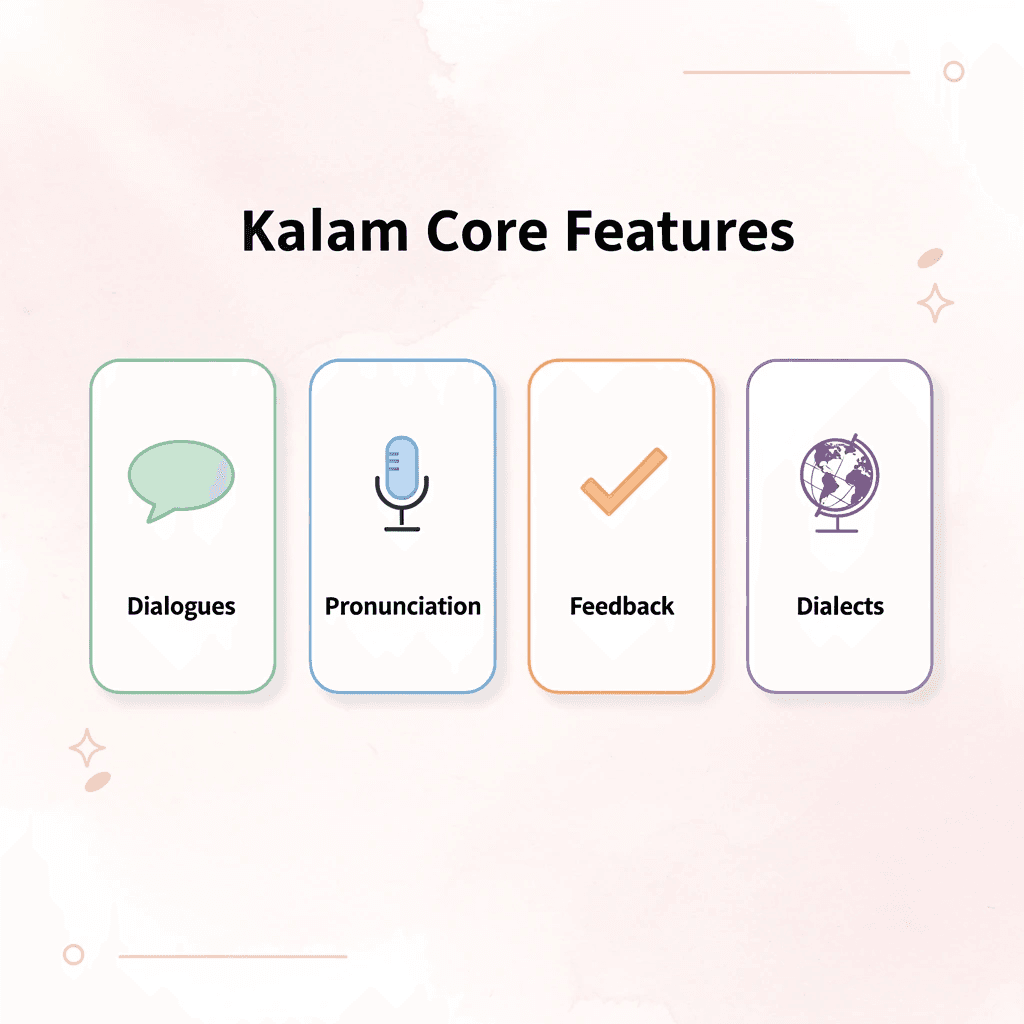
Kalam focuses on how Arabic is used in daily life. You practice full dialogues, hear native pronunciation across dialects, and get immediate feedback on your pronunciation. This shift from passive study to active use makes the difference between recognizing words and confidently responding when it matters.
"The platform adapts to your goals, whether you're preparing for travel to Morocco, reconnecting with family in Lebanon, or building professional skills for Gulf markets."
The platform adapts to your goals, whether you're preparing for travel to Morocco, reconnecting with family in Lebanon, or building professional skills for Gulf markets. Lessons stay short enough for lunch breaks yet structured enough to build real momentum.

Feature | Benefit |
|---|---|
Full Dialogues | Practice real conversations |
Native Pronunciation | Hear authentic accents |
Immediate Feedback | Correct mistakes instantly |
Dialect Options | Learn your target region |
Short Lessons | Fit into busy schedules |
💡 Tip: Start with just 15 minutes daily of conversation practice rather than hours of grammar study for faster speaking progress.
Start with a 7-day trial and see how speaking practice replaces hesitation with instinct. Choose your dialect, set your pace, and build the habit that transforms effort into fluency.
Related Reading
Arabic Vowels
Urdu Vs Arabic
Arabic Basics
Arabic Vs Hebrew
Best App To Learn Arabic