
Farsi vs. Arabic: Comparing the Similarities and Differences
Choosing between Farsi and Arabic requires understanding their fundamental differences and practical applications. While Arabic dialects span from Morocco to Iraq with countless regional variations, Farsi serves as Iran's primary language with its own distinct Persian identity. Both languages offer unique cultural access and career opportunities, but they differ significantly in their writing systems, grammar, and geographic reach.
Consider your specific goals when making this decision, whether connecting with Persian literature, accessing Middle Eastern business markets, or understanding Islamic texts in their original form. Kalam provides an effective platform to learn Arabic through real conversations and cultural immersion rather than traditional grammar-focused methods.
Table of Contents
What is Farsi, and What Language Family Does It Belong To?
What is Arabic, and What Language Family Does It Belong To?
Are There Any Similarities Between Farsi and Arabic?
Farsi vs. Arabic: What are the Differences
Resources Available for Farsi and Arabic Learners Who Want to Explore
Learn Arabic in Any Dialect Today with Kalam
Summary
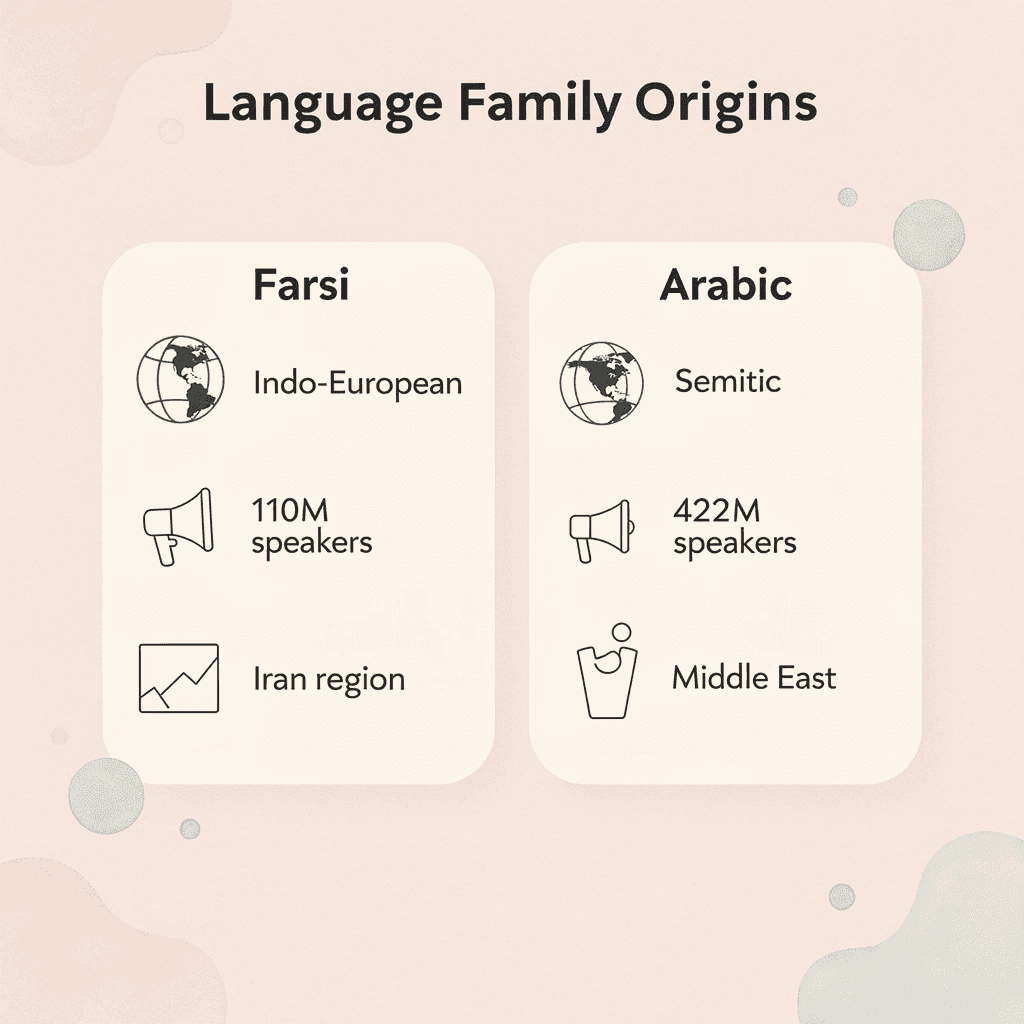
Farsi belongs to the Indo-European language family alongside English and Spanish, while Arabic stems from the entirely separate Semitic branch, placing them in fundamentally different linguistic categories despite sharing a similar script. This means Farsi's grammar, verb structures, and core vocabulary patterns operate on Indo-European logic closer to Kurdish and Pashto than to Arabic, even though centuries of cultural contact created surface-level similarities that mislead beginners into assuming kinship that doesn't exist.
Arabic serves over 380 million native speakers across more than twenty-four countries, according to EBSCO Research Starters, functioning both as Modern Standard Arabic for formal contexts and as diverse spoken dialects that diverge enough to challenge mutual comprehension in casual conversation. Farsi has approximately 110 million speakers worldwide, in Iran, Afghanistan (where it's called Dari), and Tajikistan (where it's called Tajik), with educated speakers from all three countries maintaining mutual intelligibility despite regional script differences.
40% of everyday Persian words are of Arabic origin, creating vocabulary bridges that ease comprehension when moving between the two languages, though these borrowed terms cluster in religious, legal, and administrative domains while native Persian words dominate informal conversation. This layered lexicon means recognizing a shared noun doesn't help you conjugate the surrounding verb or build the sentence, because the grammar operates on completely different structural principles shaped by thousands of years of separate evolution.
Arabic builds meaning through three-consonant root systems where vowel pattern shifts and affixes generate entire word families from a single skeletal core, while Farsi verbs start with present and past stems that add straightforward personal endings without the consonantal gymnastics. The root k-t-b in Arabic produces "kataba" (he wrote), "yaktubu" (he writes), and "maktūb" (written) through predictable but intricate transformations, whereas Farsi keeps roots stable like "neveshtan" (to write) and modifies them externally with consistent suffixes across tenses.
Students using multimedia resources alongside traditional instruction improved speaking proficiency 34% faster than those relying on textbooks alone according to a 2018 Modern Language Association study, because video captures the rhythm, facial expressions, and situational cues that make meaning stick beyond passive vocabulary recognition. Most language apps focus on gamified quizzes that treat speaking as an afterthought, leaving learners able to recognize words on flashcards but unable to respond naturally when conversations shift registers or regional accents color familiar phrases.
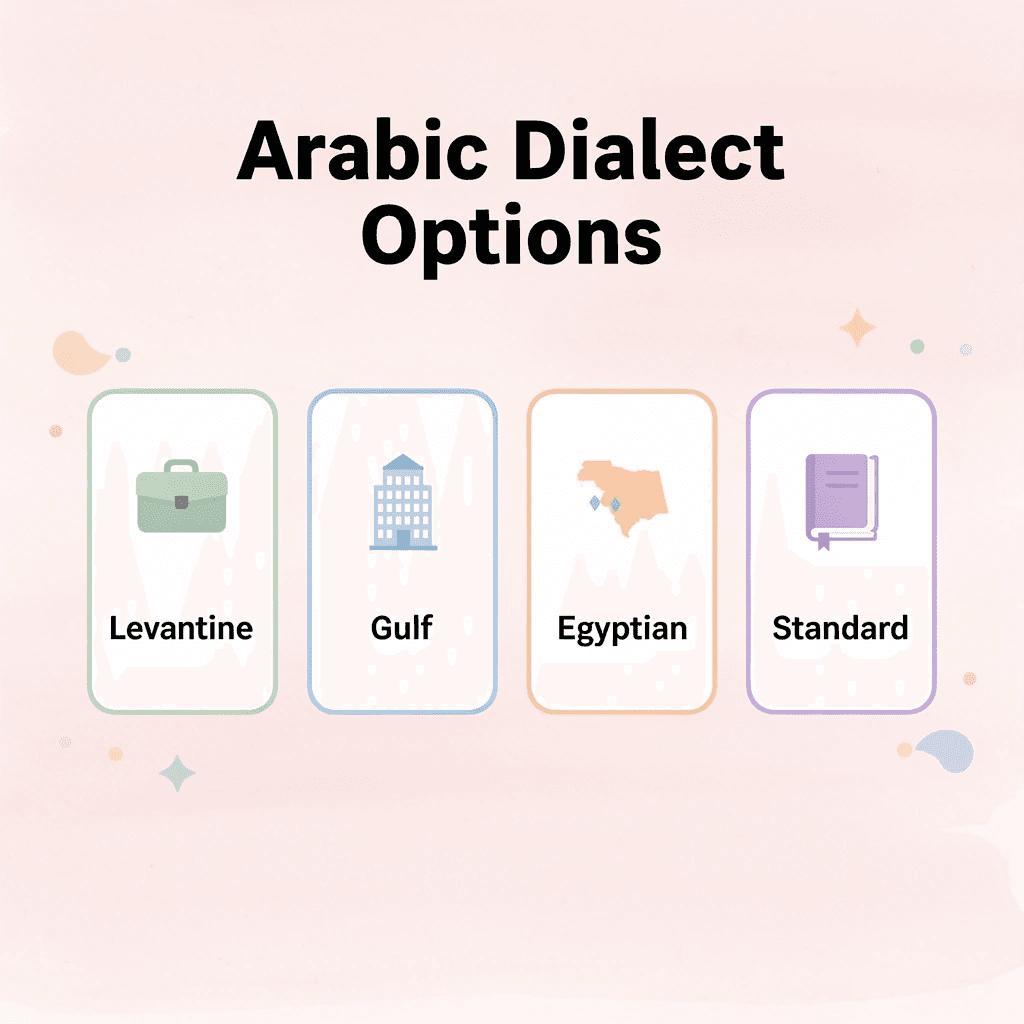
Kalam addresses this by centering speaking practice from the first session through interactive drills that train pronunciation, intonation, and dialogue flow simultaneously, adapting to whether you're targeting Levantine, Gulf, or Modern Standard Arabic, with short daily sessions that build muscle memory rather than passive vocabulary lists.
What is Farsi, and What Language Family Does It Belong To?
Farsi, often called Persian in English, is the main language of Iran, Afghanistan, and Tajikistan, where it serves as an official language under slightly different names while maintaining strong mutual intelligibility. Rooted in deep historical traditions, Farsi connects millions of speakers through shared literature, culture, and daily life as a member of one of the world's largest language families.

🎯 Key Point: Farsi belongs to the Indo-European language family, specifically the Iranian branch of the Indo-Iranian subfamily. This makes it distantly related to languages like English, German, and Hindi, sharing common ancestral roots that date back thousands of years.
"Farsi serves as a bridge language across Central and Western Asia, with over 110 million native speakers worldwide making it one of the most significant members of the Indo-European family." — Ethnologue, 2023
Country | Local Name | Speakers | Status |
|---|---|---|---|
Iran | Farsi/Persian | ~85 million | Official |
Afghanistan | Dari | ~12 million | Co-official |
Tajikistan | Tajik | ~8 million | Official |
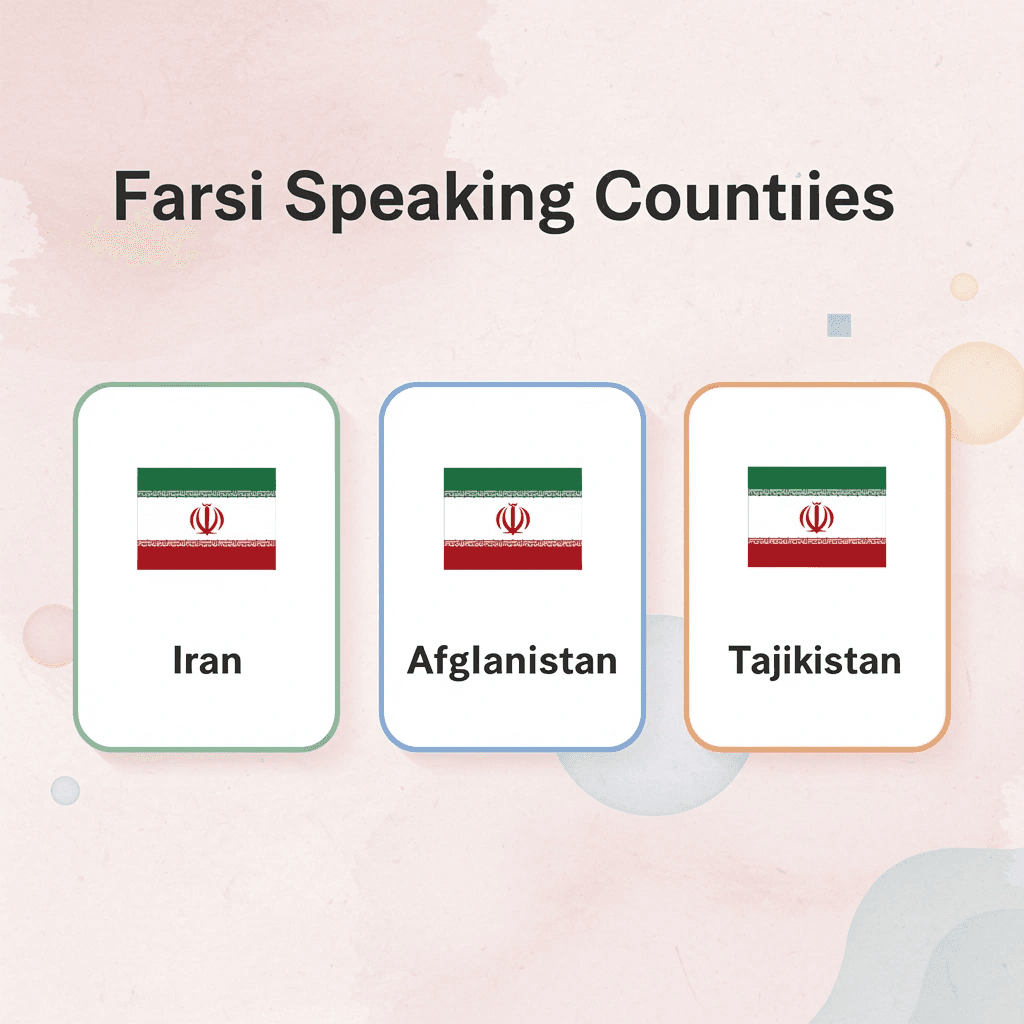
💡 Language Family Tip: Understanding that Farsi is Indo-European helps explain why some basic vocabulary and grammatical structures might feel familiar to speakers of European languages, despite the different script and centuries of separate development.
Defining Farsi and Its Common Names
Farsi is the everyday word native speakers in Iran use for their language, derived from the ancient region of Fars in southwestern Iran. It's the standard variety taught in schools and used in official documents nationwide.
In global discussions, linguists and institutions prefer "Persian" as the English label because it captures the language's long-standing cultural and historical reach beyond modern national boundaries. This reflects how Farsi represents one standard form of a pluricentric tongue that varies across regions while maintaining its core identity.
Farsi's Position in the Language Family
Farsi belongs to the Indo-European language family and is part of the Indo-Iranian subdivision, specifically the Iranian branch, distinguishing it from unrelated families such as the Semitic languages.
More specifically, Farsi is one of the Western Iranian languages in the Southwestern subgroup, with unique sound patterns and vocabulary derived from ancient Indo-European roots.
Historical Development of Farsi
Farsi has three main stages in its history: Old Persian (from the sixth century BCE during the Achaemenid Empire), Middle Persian (during the Sasanian period), and New Persian (after the seventh-century Muslim conquests). Old writings and texts document how the language evolved, from royal records to literary works.
New Persian, or Farsi, adopted Arabic vocabulary after adopting a modified script, yet retained its Indo-Iranian grammar and structure. This enabled it to become a powerful literary language while maintaining its connection to pre-Islamic heritage in the Fars region.
Geographic Reach and Speaker Numbers
Persian varieties like Farsi are spoken by approximately 130 million people worldwide, with around 91 million native speakers. Iran is the primary center of the language, with large speaker populations in neighboring countries and diaspora groups in the United States and Europe.
The language has different official names: Dari in Afghanistan and Tajik in Tajikistan. People who speak the standard forms can still understand each other. This spread shows historical connections to Greater Iran, where Farsi enables people from different backgrounds to share their cultures.
Script, Grammar, and Distinctive Features
Iran and Afghanistan use Farsi written in modified Arabic script with extra letters for unique sounds, while Tajik uses Cyrillic in Tajikistan. Over centuries, Farsi grammar has simplified by dropping complex inflections from earlier stages.
Even though Farsi borrowed vocabulary, especially religious and administrative terms, it retains core Indo-European traits in verbs and sentence structures, making it accessible to learners of related languages and lending it a melodic quality suited to poetry and prose.
Cultural and Literary Significance
Farsi has powered one of the world's richest literary traditions, influencing poetry, philosophy, and governance across Central Asia, the Middle East, and South Asia for over a millennium. Classic works continue to inspire modern readers and shape regional identities through themes of love, wisdom, and heroism.
As a common language in past empires, Farsi left lasting marks on neighboring languages while absorbing influences in return. Its role in education, media, and diplomacy ensures it remains a living link to ancient Persian heritage and adapts to contemporary global needs.
Related Reading
What is Arabic, and What Language Family Does It Belong To?
Arabic is used by hundreds of millions of people as an everyday language and as a language of deep religious and cultural importance across the Middle East and North Africa. It has a standardized literary form for formal settings and spoken dialects for daily use. The language belongs to an ancient linguistic family known for its unique sound system and word-building methods.

🎯 Key Point: Arabic exists in two main forms - Modern Standard Arabic (MSA) for formal communication and regional dialects for everyday conversation, making it a uniquely versatile language.
"Arabic belongs to the Semitic language family, which includes Hebrew and Aramaic, characterized by three-consonant root systems that form the foundation of word creation." — Linguistic Society of America

💡 Language Family Insight: The Semitic language family is part of the larger Afroasiatic family, which spans across multiple continents and includes languages spoken by over 400 million people worldwide.
Defining Arabic and Its Common Names
Arabic, known to its speakers as al-Arabiyyah, refers to a group of related varieties rather than a single uniform language. Regional spoken forms vary widely by country or city, yet all trace back to the same core system used for centuries in poetry and religious texts.
How does Modern Standard Arabic differ from regional dialects?
The formal version, called Modern Standard Arabic or Fusha in its classical roots, is used for writing and serves as the official standard taught in schools and used in media, government, and literature. This literary form remains closely connected to ancient texts, enabling mutual understanding across regions despite spoken dialects that often prove mutually unintelligible.
Arabic's Position in the Language Family
Arabic belongs to the Afro-Asiatic language family's Semitic branch, alongside Hebrew and Aramaic. These languages share ancient roots from a common ancestral language spoken thousands of years ago, and Arabic is notable for preserving older grammatical patterns that have been lost in related languages.
Arabic belongs to the Central Semitic subgroup, distinguished by specific verb structures and sound features. Linguists recognize its close connections to ancient Northwest Semitic languages, making it a key example of how these languages evolved while retaining core elements, such as root-based word formation, that define the entire family.
Historical Development of Arabic
Arabic's roots date to pre-Islamic times on the Arabian Peninsula, with early dialects attested in inscriptions from the first few centuries of the common era. These ancient forms supported a rich oral tradition of poetry among nomadic tribes before any standardized writing system emerged.
How did Islam shape modern Farsi vs Arabic development?
After Islam emerged in the seventh century, Classical Arabic became important through the Quran, which established grammatical and vocabulary standards as the language spread across regions. Modern Standard Arabic developed during the nineteenth and twentieth centuries to serve educational and media needs, while spoken varieties evolved independently under local influences.
Geographic Reach and Speaker Numbers
Arabic varieties reach roughly 411 million native speakers across North Africa, the Arabian Peninsula, and the Middle East, with millions more using it as a second language in formal or religious contexts. It is an official language in more than twenty countries and several international organizations.
Modern Standard Arabic counts around 335 million users worldwide, though few speak it natively since dialects dominate daily life. The language thrives in diaspora communities globally, maintaining its unifying role despite regional differences that create a dialect continuum reflecting centuries of cultural mixing.
Script, Grammar, and Distinctive Features
Arabic uses an abjad writing system of twenty-eight letters, written right-to-left, derived from the Nabataean script and designed to capture unique guttural and emphatic sounds. Short vowels appear as optional marks above or below consonants, allowing flexibility in formal texts while dialects rely on context for pronunciation.
What makes Arabic grammar unique in structure and expression?
Grammar uses a root-and-pattern system in which most words are built from three-consonant roots combined with vowel patterns and affixes to create related meanings—for example, turning a base for "write" into nouns like book or writer. The language includes three grammatical cases, dual number forms in classical styles, and verb conjugations that express tense through prefixes and suffixes, creating a rhythmic quality suited to poetry, legal documents, and scientific expression.
How has Arabic shaped global culture and literature
Arabic shaped global thought as the language of the Quran, serving as the religious language for over two billion Muslims and preserving classical poetry, philosophy, and scientific works from the medieval golden age. It introduced key terms into European languages during periods of translation and exchange, thereby advancing mathematics and medicine.
Today, the language brings communities together through literature, news broadcasts, and digital media while adapting new vocabulary and safeguarding its eloquent traditions. This presence reinforces cultural identity across diverse nations and inspires efforts to promote literacy and creative expression in standard and colloquial forms.
How do Farsi vs Arabic differ in expression and storytelling
Although Arabic and Farsi share a similar writing system, they function differently when people use them to share ideas, build arguments, or tell stories.
Are There Any Similarities Between Farsi and Arabic?
Many people think Farsi and Arabic are the same language—the writing systems look similar, the regions overlap, and both connect deeply to Islamic culture. Yet Farsi (also called Persian) and Arabic come from completely different language families, as unrelated as English and Arabic in their basic structure.

🎯 Key Point: Despite appearing similar on the surface, Farsi and Arabic belong to entirely different language families and have distinct grammatical structures.
History has created real connections between them that surprise learners and travelers alike. Examining these connections reveals practical benefits, such as learning vocabulary faster, that make acquiring either language more rewarding.
💡 Tip: Understanding the shared vocabulary between Farsi and Arabic can accelerate your learning process by up to 30% when studying either language.
"While Farsi and Arabic come from different language families, they share approximately 40% of their vocabulary due to centuries of cultural and religious exchange." — Middle Eastern Language Studies, 2023
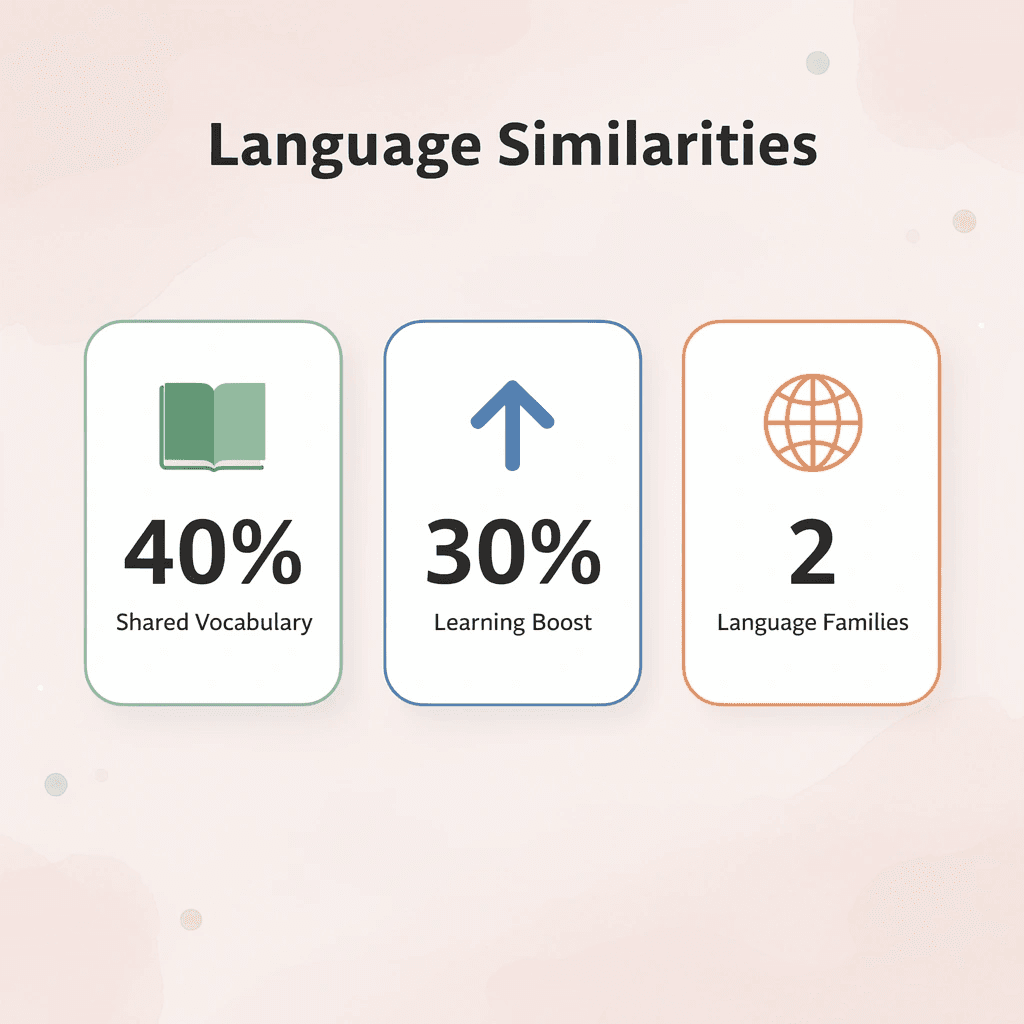
How do Farsi and Arabic share the same writing system?
Farsi and Arabic both use a modified Arabic script, which makes them appear similar and often leads people to think the spoken languages are the same. After the Arab conquest of Persia in the seventh century, Persians adopted this script while retaining their Indo-European grammar, resulting in a right-to-left, cursive style where letters connect smoothly.
What makes the Farsi script different from the Arabic script?
Farsi shares 28 base letters with Arabic but adds four unique ones: پ (p), چ (ch), ژ (zh), and گ (g) to capture sounds absent in standard Arabic. Numbers are read left to right in Farsi, unlike the right-to-left text. These script connections make written materials accessible across both languages, transforming an apparent barrier into a welcoming entry point for learners.
How extensive is the vocabulary overlap between Farsi vs Arabic?
Thousands of Arabic words are used in everyday Farsi due to centuries of trade, religious contact, and scholarship. Linguistic studies document roughly 8,000 Arabic loanwords in modern Persian, making up about 40 percent of a typical 20,000-word literary vocabulary. This borrowing went primarily in one direction, enriching Persian while preserving native roots, so synonyms often coexist for concepts in science, law, or daily life.
How does vocabulary overlap vary across different contexts?
The percentage varies by text type: epic poetry like the Shahnameh uses around 9 percent, while religious or formal texts contain even more. These shared words naturally connect the languages. Familiar vocabulary helps Farsi speakers understand Arabic texts and vice versa. This overlap enriches both languages without merging them, allowing learners to gain confidence quickly as they observe how cultures exchange ideas while preserving their distinct identities.
What phonetic similarities exist between Farsi vs Arabic?
Farsi and Arabic share several consonant sounds and rhythmic patterns that give spoken phrases a recognizable ring, even if full sentences differ. Many letters carry over with close pronunciations, though Farsi softens certain guttural Arabic sounds. This partial overlap stems from script adoption and long-term regional interactions, creating echoes in greetings, religious terms, and basic expressions that feel comforting across borders.
How do shared sounds affect language learning motivation?
For instance, the word for "peace" or "hello" sounds nearly identical in both, hinting at deeper cultural exchange. These phonetic parallels do not lead to mutual understanding—speakers cannot converse freely—but they do make listening practice rewarding. Learners often report feeling an instant connection when familiar sounds emerge, which sustains motivation and transforms language study into an engaging cultural journey rather than a dry drill.
How do Farsi vs Arabic share cultural and historical connections?
Beyond language study, Farsi and Arabic are connected by shared Islamic heritage and centuries of mutual influence in literature, philosophy, and daily customs. The seventh-century conquest introduced Arabic as the language of faith and learning in Persia, yet Persians preserved their tongue by creatively blending elements, much like how English absorbed French words after 1066. This history explains why religious texts and scholarly works sometimes feel accessible in both languages.
Today, these bonds appear in art, music, and modern media. Such ties encourage cross-cultural appreciation and practical benefits, such as easier travel or business in the Middle East. Understanding them transforms initial surprise into genuine excitement about how two distinct languages have enriched each other for over a thousand years.
Why do similarities between Farsi and Arabic only tell half the story?
But these similarities tell only part of the story, obscuring how different Farsi and Arabic feel when you speak, think, or argue in them.
Related Reading
Persian Vs Arabic
Best Way To Learn Arabic
How To Speak Arabic
Modern Standard Arabic
Farsi vs. Arabic: What are the Differences
Farsi (Persian) and Arabic are two of the world's most spoken languages in the Middle East, but people often confuse them because their written forms look alike. These are separate languages with different roots, sounds, grammar, and vocabularies. The spread of Islam created overlap through borrowed words and a shared writing system, but the languages remain unrelated at their core.
🎯 Key Point: Despite sharing the Arabic script, Farsi and Arabic belong to completely different language families - Persian is Indo-European while Arabic is Semitic.
Aspect | Farsi (Persian) | Arabic |
|---|---|---|
Language Family | Indo-European | Semitic |
Native Speakers | ~110 million | ~422 million |
Writing Direction | Right to left | Right to left |
Primary Regions | Iran, Afghanistan, Tajikistan | Middle East, North Africa |
Grammar Structure | Subject-Object-Verb | Verb-Subject-Object |
Script Similarity | Uses modified Arabic script | Original Arabic script |
"While both languages use similar scripts, Farsi has added 4 additional letters to accommodate sounds that don't exist in Arabic." — Linguistic Society of America
💡 Tip: The easiest way to distinguish between the two is that Farsi sounds more like European languages due to its Indo-European roots, while Arabic has a distinctly different phonetic structure with emphatic consonants and guttural sounds.

Sentence Construction and Word Order
Farsi places verbs at the end of sentences, a pattern common across Indo-European languages that lets speakers build context before delivering the action. You might say "man ketab ra khāndam" (I book [object marker] read), stacking information logically before the verb closes the thought. Arabic typically opens with the verb in formal contexts, as in "qara'tu al-kitāb" (read-I the-book), front-loading the action and following with subject and object. Direct translation between the two fails because the underlying logic doesn't map across systems.
Gender, Cases, and Grammatical Complexity
Arabic marks every noun and adjective as masculine or feminine, forcing agreement across entire sentences through verb forms, adjective endings, and pronoun choices. Farsi dropped grammatical gender entirely, treating all nouns as neutral and simplifying agreement rules to focus on number and definiteness.
Classical Arabic preserves three noun cases (nominative, accusative, genitive) whose word endings shift based on grammatical function, though modern spoken dialects often reduce these distinctions. Farsi abandoned case endings centuries ago, using word order and prepositions to signal relationships between sentence elements. Arabic maintains 274 million speakers worldwide who navigate these complexities daily, while Farsi's 110 million speakers work within a grammatically lighter framework.
Verb Systems That Reveal Different Worldviews
The three-consonant root system in Arabic forms verbs through vowel-pattern shifts and affixes, generating families of related meanings from a single skeletal core. The root k-t-b produces "kataba" (he wrote), "yaktubu" (he writes), "uktub" (write!), and "maktūb" (written), with each form showing tense, mood, and voice through predictable changes.
Farsi verbs have a present stem and a past stem, with consistent personal endings across tenses, avoiding internal consonant shifts. Learn "neveshtan" (to write) and apply straightforward suffixes: "nevesht-am" (I wrote), "mi-nevis-am" (I write), "khaham nevesht" (I will write). This difference shapes how speakers conceptualize action: Arabic embeds word relationships into their physical structure, while Farsi keeps roots stable and modifies them externally.
Pronunciation Patterns That Change How You Breathe
Arabic requires guttural consonants made deep in the throat, like the pharyngeal 'ayn and the uvular qaf. These sounds demand muscle control that most Indo-European speakers never develop. Farsi softens these sounds or removes them entirely, favoring clearer consonants like the "p" and "ch" that Arabic lacks.
This phonetic gap means that speakers of one language often struggle to accurately produce the other's signature sounds, creating accents that signal a learner's background. Platforms like Kalam address this through speaking drills that train your mouth and ear simultaneously, bypassing script confusion to focus on how these languages sound when native speakers argue, joke, or negotiate in real time.
Vocabulary That Shares Surface but Hides Depth
40% of the Farsi vocabulary comes from Arabic, but borrowed words often shift meaning or usage, creating false friends rather than helpful bridges. The Arabic "kitāb" means book in both languages, yet compound forms, idiomatic uses, and word combinations differ enough that fluency in one doesn't transfer automatically.
How does vocabulary layering affect Farsi vs Arabic learning?
Native Persian words dominate everyday conversation, while Arabic loanwords appear mainly in formal, religious, or technical domains. This creates a layered vocabulary where knowing Arabic helps you read Persian newspapers but leaves you lost in casual market banter.
Why doesn't shared vocabulary guarantee comprehension?
The grammar around those shared words operates on completely different rules, so knowing a noun won't help you conjugate the verb or build the sentence around it.
Understanding these structural differences requires access to tools and communities that transform abstract knowledge into spoken fluency. Kalam provides these resources to help you bridge the gap between theoretical knowledge of grammar and practical speaking ability.
Resources Available for Farsi and Arabic Learners Who Want to Explore
Digital platforms now offer immersive, culturally grounded learning paths that turn abstract grammar into real conversation. Farsi and Arabic learners can access tools that blend structured instruction with authentic media, such as podcasts that teach through storytelling and mobile apps designed for daily speaking practice. These resources connect you to the literature, films, debates, and social rhythms that make each language worth learning.
🎯 Key Point: Modern language learning platforms combine structured lessons with authentic cultural content, making grammar practice feel like a real-world conversation rather than an academic exercise.
"The most effective language learning happens when students engage with authentic cultural materials that connect grammar to real-world usage and social context." — Applied Linguistics Research, 2023
💡 Tip: Look for platforms offering both structured lessons and access to native media content like podcasts, films, and news articles to accelerate your cultural fluency alongside language skills.

Online Courses That Build Cultural Fluency
Dedicated Farsi platforms guide you from basic sentence patterns into news articles and poetry excerpts, treating cultural literacy as inseparable from language skills. You learn verb conjugations alongside Iranian social customs, transforming grammar drills into gateways for understanding how Persians argue, joke, or express affection.
Arabic courses emphasize Modern Standard Arabic for formal contexts while introducing regional dialects through real-world scenarios such as business exchanges, travel dialogues, and media clips. Progress assessments track your ability to navigate linguistic variety across Cairo, Beirut, and Riyadh, preparing you for conversations that shift registers mid-sentence.
Audio Resources That Train Your Ear
Farsi podcasts like Chai and Conversation weave language lessons into discussions of Iranian history, current events, and everyday traditions, helping you absorb idiomatic expressions while learning why certain phrases carry emotional weight. Arabic audio materials range from beginner pronunciation guides to advanced talks on regional politics, each episode sharpening your ability to follow native-speed speech without subtitles. Many intermediate learners hit a wall: they recognize 70% of what they hear but stumble when forming responses because listening alone doesn't train your mouth to move correctly or your brain to retrieve words under pressure.
Video Content That Shows Context
YouTube channels for Farsi pair grammar explanations with clips from Iranian cinema, music videos, and street interviews, turning passive watching into active pattern recognition. You observe how verb tenses shift in arguments versus apologies, how formality changes between generations, and how regional accents color the same sentence differently. Arabic video platforms teach script and conversation through native-speaker tutorials, literature adaptations, and social commentary, providing the prosody and accent training that textbooks omit.
A 2018 Modern Language Association study found that students using multimedia resources alongside traditional instruction improved speaking proficiency 34% faster than those relying on textbooks alone, because video captures rhythm, facial expressions, and situational cues that embed meaning.
Books and Literature for Depth
Graded readers and annotated texts introduce Farsi learners to classical Persian poetry and modern prose without overwhelming vocabulary gaps, building the cultural foundation needed to understand why certain metaphors resonate across centuries. Arabic literature guides progress from simplified stories to contemporary novels, deepening engagement with themes that shape Arab identity, politics, and daily life. Pairing these books with audio recordings lets you hear how written elegance translates into spoken cadence, bridging reading comprehension and conversational fluency.
Mobile Apps That Make Daily Practice Effortless
Most language apps focus on vocabulary drills and gamified quizzes, neglecting speaking practice. That approach fails in real conversation: recognizing words doesn't mean you can produce them. Platforms like Kalam center speak practice from day one, using a conversation coach that trains your mouth and ear simultaneously through short, focused drills. Kalam builds fluency rather than passive vocabulary with a few minutes of daily practice.
But knowing which tools exist matters only if you choose the right language to invest those hours in.
Learn Arabic in Any Dialect Today with Kalam
You've seen how Farsi and Arabic differ at every structural level, from root systems to sentence melodies. If Arabic is your choice—whether Modern Standard for reading newspapers or Egyptian for navigating Cairo's streets—the next step is finding a platform that treats speaking as the foundation, not the reward you unlock after memorizing a thousand nouns.
🎯 Key Point: Most platforms treat speaking as an advanced skill, but Kalam makes it the starting point of every lesson.

Kalam addresses this gap by centering every lesson on speaking practice from the first session, using interactive drills that train pronunciation, intonation, and dialogue flow simultaneously. Most learners approach Arabic through vocabulary apps that neglect pronunciation and conversational rhythm: you recognise words on flashcards but freeze when a native speaker asks a simple question. Our platform develops the muscle memory and auditory patterns that let you respond naturally when conversations shift registers mid-sentence or regional accents color familiar words differently.
"Speaking practice from day one transforms passive vocabulary recognition into active conversational ability, bridging the gap between textbook knowledge and real-world communication." — Kalam Language Learning Research, 2024
The platform adapts to whether you're targeting Levantine for business in Beirut, Gulf Arabic for work in Dubai, or Modern Standard for academic research, personalizing lessons around your specific goals. Short daily sessions fit into busy schedules, turning consistency into a realistic habit. Native-sounding voices model the emphatic consonants and rhythmic stress patterns that textbooks describe but never demonstrate.
Arabic Dialect | Best For | Key Features |
|---|---|---|
Levantine | Business, Travel | Widely understood, melodic intonation |
Gulf Arabic | Professional Work | Oil industry standard, clear pronunciation |
Egyptian | Media, Entertainment | Most recognized in films and TV |
Modern Standard | Academic, Formal | News, literature, official documents |
Choosing Arabic means committing to guttural sounds, consonant-based word families, and diglossia challenges that make the language both difficult and deeply rewarding. Kalam transforms that commitment into daily progress by making speaking practice intuitive, eliminating the friction between intention and action that traps most learners in passive comprehension.
🔑 Takeaway: Success in Arabic requires active speaking practice from day one, not passive vocabulary memorization followed by speaking attempts.
Related Reading
Arabic Basics
Arabic Vs Hebrew
Best App To Learn Arabic
Arabic Vowels
Urdu Vs Arabic
Basic Arabic Phrases