70 Strong Arabic Baby Names for Boys & Girls + Meanings
Choosing a name for your child becomes more meaningful when that name carries centuries of heritage and beauty. Arabic names offer parents a treasure trove of options that blend spiritual depth with melodic sounds, shaped by rich linguistic traditions and variations across Arabic dialects. These 70 carefully selected names for boys and girls come with authentic meanings and cultural context to help you find one that resonates with your values.
Understanding the language behind these names deepens your connection to their significance. When you know Arabic, you can appreciate how a single name might carry different emotional tones across Egyptian, Levantine, or Gulf communities. This knowledge transforms your search from simply picking a name to truly understanding the gift you're giving your child. For parents who want this deeper connection, Kalam provides an excellent platform to learn Arabic.
Table of Contents
What are the Different Types of Arabic Names, and How are They Structured?
Do Arabic Names Differ By Culture And Region?
Are There Arabic Names That Are Gender Neutral?
30 Strong Arabic Names for Boys and Their Meaning
30 Strong Arabic Names for Girls and Their Meaning
10 Strong Gender Neutral Arabic Names and Their Meaning
Learn Arabic in Any Dialect Today with Kalam
Summary
Arabic names function through five traditional components that construct identity beyond simple first-last patterns. According to Wikipedia, the system includes the ism (personal name), nasab (patronymic lineage), nisbah (relational origin), laqab (descriptive epithet), and kunya (honorific teknonym). While modern documents simplify this to a personal name, father's name, and family identifier, understanding the full structure reveals how these names simultaneously communicate lineage, geography, character, and social standing, making pronunciation and cultural context crucial when you speak them in conversation.
Regional variations dramatically shift how Arabic names express identity across the Arab world. Gulf states emphasize extended lineage through formats such as given name, father's name, grandfather's name, and tribal identifiers, thereby preserving Bedouin clan traditions. The Levant streamlines into three or four parts for modern administrative compatibility, while North Africa blends Islamic devotion with Berber influences through distinct local forms like "Bu" rather than "Abu." These aren't cosmetic differences. They reveal whether communities prioritize ancestry, adapt to global systems, or preserve religious distinctions through naming conventions.
Approximately 11 percent of Arabic names function as gender-neutral, according to a 2021 study published in Ta'lim al-'Arabiyyah. These names avoid typical masculine or feminine grammatical markers, drawing instead on abstract virtues such as hope (Amal), light (Noor), or faith (Iman) that transcend gendered expectations. Parents increasingly choose them to promote equality while staying connected to Arabic linguistic and spiritual heritage, giving children names that celebrate universal qualities like grace and strength without imposing limitations on their personalities before they emerge.
Strong Arabic names for boys carry meanings rooted in courage, authority, and protection rather than aggression. Names like Asad (lion), Malik (king), and Hamza (strength) draw from verified linguistic origins connecting modern children to centuries of tradition that valued the capacity to defend, lead, and endure. These selections don't whisper strength; they announce it through direct translations and historical associations with warriors, commanders, and religious figures who earned respect through competence and moral clarity.
Girls' names in Arabic emphasize different dimensions of strength, celebrating wisdom, resilience, and protective power. Trending names for 2025, like Aziza (mighty), Najida (courageous rescuer), and Qahira (victorious), reflect qualities that have always defined influential women in Arab and Islamic history. These names don't soften daughters but honor the particular forms of strength expressed through justice, leadership, moral fortitude, and the fearless action of someone who steps forward when others retreat.
Kalam addresses this by breaking down pronunciation with accurate audio guides across different Arabic dialects, so you hear how each name is spoken naturally in the region that matters to your family.
What are the Different Types of Arabic Names, and How are They Structured?
Arabic names don't follow the simple first-middle-last pattern familiar to Western ears. Instead, they build identity through a layered chain that simultaneously conveys lineage, geography, character, and social standing. According to Wikipedia, traditional Arabic naming includes five distinct parts: the ism (personal name), nasab (patronymic lineage), nisbah (relational origin), laqab (descriptive epithet), and kunya (honorific teknonym). Modern documents simplify this to a personal name, a father's name, and a family identifier, but understanding the full structure reveals the cultural logic behind every Arabic name you encounter.
🎯 Key Point: Each component of an Arabic name serves a specific cultural function - it's not random, but a deliberate system that communicates family history, social connections, and personal identity.
"Traditional Arabic naming includes five distinct parts that build identity through lineage, geography, character, and social standing." — Wikipedia Arabic Name Structure
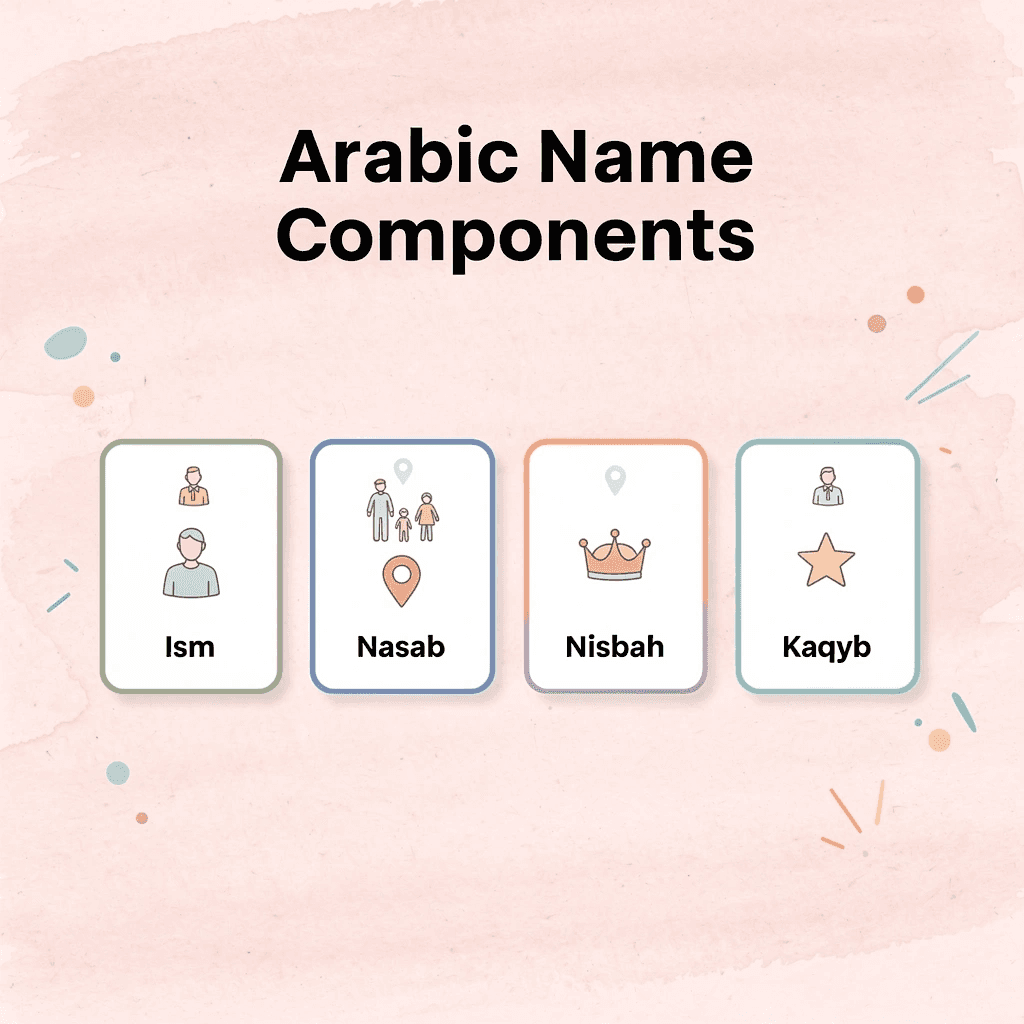
Component | Purpose | Modern Usage |
|---|---|---|
Ism | Personal name | Always included |
Nasab | Patronymic lineage | Often simplified to the father's name |
Nisbah | Geographic/tribal origin | Sometimes used as a family name |
Laqab | Descriptive epithet | Rarely used in modern documents |
Kunya | Honorific teknonym | Used in formal/traditional contexts |
💡 Example: The name Muhammad ibn Abdullah al-Hashimi al-Qurashi Abu al-Qasim demonstrates the complete traditional structure - Muhammad (ism), ibn Abdullah (nasab), al-Hashimi (tribal nisbah), al-Qurashi (geographic nisbah), and Abu al-Qasim (kunya).
The Ism: Your Core Identity
The ism serves as your personal given name, the intimate identifier used in daily conversation and chosen within days of birth. Parents select these names for their meanings, drawing from Arabic words that express aspirational qualities such as strength (Ali, meaning "exalted"), beauty (Jamila, meaning "beautiful"), or devotion (Abdullah, meaning "servant of God").
Unlike compound names in other cultures, the ism remains a single, meaningful unit that rarely changes across a lifetime.
How do Arabic names sound in real conversations?
When learning Arabic through real conversation, the ism is what you'll hear most often in everyday situations. Apps like Kalam focus on this real-world approach by teaching names through speaking drills and conversations, so you learn how names sound in greetings, introductions, and everyday interactions.
The Kunya, the Honorific Parent Name
A kunya identifies someone as the father (abu) or mother (umm) of their firstborn child, functioning as both an honorific and social marker. A man named Hasan with a son named Karim becomes Abu Karim; a woman might be Umm Salim. The kunya appears more in formal or respectful contexts than in casual use today, though it remains deeply valued in traditional settings. It can work symbolically without literal children, serving as a nickname or nom de guerre that conveys respect, such as Abu Bakr for someone known for wisdom.
The Nasab Your Paternal Chain
The nasab traces ancestry through ibn (son of) or bint (daughter of), creating a family tree connecting you to your father, grandfather, or earlier relatives. Muhammad ibn Khalid means Muhammad, son of Khalid, directly linking a person to their immediate family heritage. This part reflects the cultural importance placed on family lineage and fathers, stemming from both pre-Islamic tribal traditions and Islamic legal frameworks, in which social fatherhood mattered alongside biology.
Modern Arab societies often simplify this to the father's name without the ibn prefix on official documents, yet it continues in tribal or formal contexts to confirm identity and inheritance rights. Women retain their birth nasab throughout their lives, never adopting a husband's, which preserves their original family ties across generations.
The Laqab Descriptive Titles That Stick
A laqab works as a nickname or honor title that describes good qualities, achievements, or appearance. These often form compound words ending in al-Din ("of the faith"), such as Salah al-Din ("Righteousness of the Faith") or Harun al-Rashid ("Aaron the Rightly Guided"). Historically, rulers and scholars used laqabs to add prestige and distinction by referencing nature, religion, or character. Over time, they became modern family surnames in some regions, blending into names while retaining their descriptive power.
The Nisba Where You Belong
The nisba is an adjective-like suffix, usually preceded by "al-" (the), that indicates someone's place of origin, tribal affiliation, or occupation. Examples include al-Baghdadi (from Baghdad), al-Khayyat (the tailor), and al-Qahtani (from the Qahtan tribe). Multiple nisbas can appear together to provide more specific information, with geographic ones typically appearing last. In modern names, the nisba often becomes the fixed family name, preserving cultural roots while facilitating global use.
The complexity emerges when these components shift meaning and emphasis across the Arab world.
Related Reading
Do Arabic Names Differ By Culture And Region?
Yes, Arabic names change significantly across different regions, reflecting distinct tribal structures, historical migrations, and local traditions. The Gulf region emphasizes extended lineage, the Levant streamlines names for modernity, and North Africa blends Islamic devotion with indigenous influences. These variations show how communities prioritize ancestry, adapt to administrative realities, or preserve religious distinctions through naming.

🎯 Key Point: Regional variations in Arabic naming aren't just linguistic differences—they're cultural fingerprints that reveal how different Arab communities have adapted their identity markers to local contexts and historical pressures.
"Arabic naming conventions across regions demonstrate how communities balance ancestral preservation with modern practicality, creating distinct regional identities within the broader Arab cultural framework." — Middle Eastern Cultural Studies, 2023

💡 Cultural Insight: Understanding these regional differences is essential for anyone working with Arabic names, whether in genealogy research, international business, or cultural studies. What seems like a simple name variation often carries deep historical significance and social meaning.
Strong Lineage and Tribal Emphasis in the Gulf States and Arabian Peninsula
In Saudi Arabia and neighboring Gulf nations, names reveal paternal lineage through longer formats that include a given name, the father's name, the grandfather's name, and a family or tribal name. These parts are connected by "ibn" or "bin" (meaning "son of"). Ruling families use "Āl" to denote their house or family group, as seen in major royal families. Tribal names function like surnames elsewhere, remaining constant across generations to preserve social and historical connections.
These tribal names stem from Bedouin culture, where identity is closely tied to family honor. Women retain their birth names after marriage, reflecting the enduring importance of the father's family line. Despite modernization, official records and social interaction often maintain these longer name forms to honor tradition.
Simplified and Modern Approaches in the Levant Region
Lebanon, Syria, Jordan, and Palestine typically use three or four-part names: a given name, the father's given name, and a family surname. This simpler style suits modern administrative systems and reflects historical contact with outside cultures through mandates and trade. Name selection tends toward trendy or foreign-sounding options, particularly for girls, mixing Arabic roots with modern appeal in urban centers. While family history remains important, the focus shifts from long tribal chains toward a balanced identity that feels both rooted and forward-looking, distinguishing the Levant from more conservative Gulf traditions.
Islamic Traditions with Local Flavor in North Africa and the Maghreb
Morocco, Algeria, and Tunisia prefer names with strong Islamic and Arabic origins. The kunya appears in local forms such as "Bu" or "Bou" instead of "Abu," drawing on religious figures while incorporating Berber or regional language influences. Full patronymics remain common but adapt to local dialects and administrative norms. These preferences reflect the Maghreb's unique blend of Arab-Islamic heritage with indigenous histories: names that feel deeply traditional yet distinctly North African. Unlike the Gulf's heavy tribal focus or the Levant's modern twists, the region balances religious devotion with locally evolved conventions that maintain cultural continuity.
Religious Distinctions: Arab Muslim and Christian Naming Practices
Among Arab Muslims, names often include theophoric elements, such as "Abd" (servant of), combined with divine attributes, such as Abdullah or Abdul Rahman. These names reinforce faith and avoid polytheistic connotations. Prophetic names like Muhammad appear widely but may be shortened regionally for convenience.
Arab Christians share many structural elements but deliberately avoid certain Islamic-specific names. Instead, they draw on saints, biblical figures in Arabic form (such as Butrus for Peter), or on European influences introduced over centuries. Theophoric references might honor Jesus, such as Abd al-Masih (servant of the Messiah), creating overlap in format while preserving distinct religious identity.
Do Arabic names ever break free from gender distinctions?
The question is whether Arabic names ever break free from gender altogether.
Are There Arabic Names That Are Gender Neutral?
Many Arabic names work beautifully for anyone, drawing from universal ideas like hope or light and transcending traditional gender conventions.

In one detailed study of Arab proper names, researchers found that about 11 percent qualified as gender-neutral. This flexibility allows parents to choose names that honor deep cultural roots while celebrating equality.
"About 11 percent of Arab proper names qualified as gender-neutral, offering parents meaningful options that transcend traditional gender boundaries." — Academic Study on Arab Proper Names
🔑 Key Takeaway: Arabic naming traditions offer significant flexibility with 1 in 9 names being gender-neutral, making them perfect for parents seeking culturally rich yet inclusive options.
💡 Tip: When choosing a gender-neutral Arabic name, focus on those with universal meanings like light, hope, or peace that resonate across all cultures and identities.

Why do some Arabic names work for anyone?
Gender-neutral Arabic names avoid the telltale suffixes that signal gender. Most Arabic names ending in "-a" or "-ah" read as feminine, while those without these markers often default to masculine. Some names skip this pattern entirely, built from roots that describe hope, light, or faith rather than gendered traits. When you hear Amal (hope) or Noor (light), the name doesn't whisper "boy" or "girl"—it resonates.
How does learning Arabic names through dialogue help?
This flexibility matters when learning Arabic through real dialogue. Traditional vocabulary drills teach lists of nouns sorted by gender, reinforcing the idea that every word must choose a side. Apps like Kalam focus on speaking practice through authentic exchanges, where you encounter names in greetings, introductions, and daily interactions. You learn how Iman or Nakia sound in context, not as grammar puzzles but as living identifiers.
Which Arabic names do parents actually choose most often?
Amal tops most lists as a true unisex choice, loved across Arabic-speaking regions for its meaning of aspiration and hope. Noor (or Nur) follows closely, symbolizing light in both spiritual and literal senses, with Quranic references that enhance its significance.
Iman, meaning faith, crosses gender lines easily, while Nakia (pure) offers a softer sound without feminine markers. These names appear regularly in modern birth records, baby-name databases, and family trees spanning generations.
Why do these Arabic names appeal to modern families?
Parents are drawn to these names because they are strong and work for anyone. Choosing Amal for a daughter needs no explanation, and giving it to a son surprises no one. The name celebrates a quality every family wants for their child.
Why do modern families choose gender-neutral Arabic names?
Today's parents increasingly value names that promote equality while staying connected to Arabic linguistic and spiritual heritage. Baby-name resources now feature hundreds of Arabic-origin unisex options, reflecting an evolution where cultural depth and modern values coexist.
This isn't rebellion against tradition: it's tradition adapting to a world where children deserve names that empower rather than constrain.
How do Arabic names provide versatility for children?
These names give children versatility while carrying forward a heritage focused on universal values like grace and strength, free from limiting expectations. For families navigating multiple cultures or seeking timeless names, gender-neutral Arabic names offer a meaningful middle ground that honors the past while opening doors to a more inclusive future.
Choosing the right name requires understanding what those meanings convey, especially when you want strength and character woven into the choice itself.
Related Reading
Persian Vs Arabic
Best Way To Learn Arabic
How To Speak Arabic
Modern Standard Arabic
30 Strong Arabic Names for Boys and Their Meaning
These 30 names carry meanings rooted in courage, authority, protection, and resilience: qualities that Arabic-speaking families have celebrated for centuries. Each comes from verified linguistic origins, connecting modern children to a heritage that valued strength as the ability to defend, lead, and endure.

🎯 Key Point: Arabic names with strong meanings aren't just labels—they're cultural anchors that connect children to centuries of tradition and values.
"Names in Arabic culture serve as bridges between past and present, carrying forward the strength and wisdom of previous generations." — Cultural Heritage Studies

💡 Tip: When choosing from these 30 strong names, consider how the meaning resonates with your family's values and the qualities you hope to nurture in your child.
1. Abbas (عباس)
This name translates to "lion" and signals a stern, commanding presence that protects rather than threatens. Historically, it belonged to figures remembered for their bravery and unwavering determination in conflict. Parents choose it to evoke the animal's fierce loyalty and protective instincts, making it a statement of power and responsibility.
2. Amir (أمير)
Meaning "prince" or "commander," Amir reflects leadership and authority. It carries the weight of noble rulers and military leaders who earned respect through skill rather than birthright. The name suggests capability and responsibility.
3. Arsalan (أرسلان)
Translating to "lion," Arsalan embodies fearlessness and regal power. The name honours the courage and dominance of the king of the jungle, drawing from traditional symbolism that connects lions with physical strength and moral authority. Families choose it, hoping their child will carry both qualities forward.
4. Asad (أسد)
Directly meaning "lion," Asad captures fierce bravery and steady strength. Arabic poetry often compares warriors to this creature, celebrating the calm confidence that comes with knowing your own power. The name distills that entire tradition into a single word.
5. Asif (عاصف)
This name means "strong," "powerful," and "fierce," evoking a forceful storm or a leader who faces challenges directly. It suits a boy expected to handle obstacles with determination, embodying natural forces that reshape landscapes.
6. Aziz (عزيز)
Meaning "mighty," "powerful," and "respected," Aziz is one of the 99 divine attributes in Islamic tradition. It highlights honor gained through demonstrated might and integrity, not charm. Parents choosing Aziz connect their child to a strength that earns reverence.
7. Basel (باسل)
The name means "lion-hearted hero" who fears nothing in battle, celebrating chivalric bravery and bold spirit. It carries historical weight and contemporary appeal for families who admire fearlessness.
8. Fahad (فهد)
Meaning "panther" or "leopard," Fahad represents swift bravery and agile power. The name derives from the animal's reputation for speed, cunning, and fearless hunting: qualities that translate into decisive movement and quick adaptation.
9. Faris (فارس)
This name means "knight" or "horseman," representing skilled fighting and chivalry. It honors warriors on horseback who protected their people with both physical strength and moral courage.
10. Ghazi (غازي)
Meaning "fearless soldier" who fights for a just cause, Ghazi celebrates religious and moral courage. It connects to historical conquerors and defenders of faith who viewed their battles as righteous, framing strength as service to something larger than oneself.
11. Haidar (حيدر)
Another term for "lion," Haidar conveys beauty, royalty, and raw power. It's favored in some communities for its association with noble strength and grace, suggesting that true power need not be brutal to be effective. The name balances ferocity with elegance.
12. Hamza (حمزة)
This powerful name means "lion" and suggests strength and steadfastness. It's famously associated with a brave uncle of the Prophet Muhammad, representing unwavering resolve in the face of overwhelming odds. Hamza carries deep religious significance alongside its literal meaning, honoring both faith and fortitude.
13. Haris (حارس)
Meaning "guardian" or "protector," Haris reflects the role of a steady defender who safeguards what matters most: family, community, or principle. The name emphasises active protection rather than passive strength, suggesting someone who stays alert and ready to act when needed.
14. Jabbar (جبار)
Translating to "mighty" or "powerful," often shown as "almighty," Jabbar means overwhelming force and authority. It is one of the respected names of God in Islamic belief, making it both a statement of strength and an expression of humility before divine power. Parents who choose it hope their child will embody strength balanced by awareness of something greater.
15. Jasser (جاسر)
The name means "brave" and "fearless," derived from words meaning "courage" and "boldness". Parents choose it for boys they hope will display a fearless spirit when facing life's challenges, real or imaginary.
Traditional vocabulary drills teach Arabic names as separate words on a list, sorted by meaning or gender. Apps like Kalam focus on speaking practice through real conversations, where you hear names like Khalid or Malik in greetings, introductions, and everyday interactions. You learn how these names sound in context, building speaking confidence through repetition in actual dialogue rather than memorizing from a list.
16. Khalid (خالد)
Meaning "eternal" or "immortal," Khalid suggests enduring strength and legacy. It honors the famous military commander Khalid ibn al-Walid, a symbol of unbreakable resolve who never lost a battle.
17. Laith (ليث)
Directly meaning "lion," Laith evokes predatory power and noble courage. The name celebrates fierce qualities that define legendary Arabic warriors, distilling centuries of martial tradition into a single, resonant syllable.
18. Malik (مالك)
This name means "king" or "ruler" and is one of the 99 names of God. It represents the power to lead with fairness rather than tyranny, carrying the expectation that leaders bear responsibility alongside their power.
19. Mansoor (منصور)
Meaning "victorious" or "aided by God," Mansoor highlights triumphant strength and divine support in overcoming obstacles. Families choose it to invoke both human effort and spiritual backing.
20. Muzaffar (مظفر)
Meaning "triumphant" and "successful," Muzaffar celebrates perseverance that leads to victory. It emphasizes the outcome of struggle rather than the struggle itself, focusing on the moment when effort pays off. The name carries an optimistic quality, suggesting success is not only possible but expected.
21. Qadir (قادر)
This name means "able" and "powerful," emphasizing capability and strength. It frames power as practical and actionable rather than abstract, suggesting someone who possesses strength and knows how to use it effectively.
22. Saif (سيف)
Meaning "sword," Saif symbolizes sharp strength and readiness for battle, connecting the bearer to a tradition of warriors who valued skill alongside courage.
23. Sultan (سلطان)
Directly meaning "ruler" or "authority," Sultan conveys royal power and commanding presence. It's a bold choice for a future leader, carrying the weight of historical monarchs who shaped nations. The name declares leadership rather than suggesting it.
24. Usama (أسامة)
The name means "lion" and suggests courage and bravery, celebrating wealth paired with fierce protective instincts. It conveys someone who defends what they've built, combining strength with sophistication.
25. Waqas (وقاص)
Signifying "brave warrior," Waqas highlights battlefield courage and bold action. It appeals to parents seeking a name that honors heritage while feeling current, bridging past and present.
26. Zubair (زبير)
This name means "strong" and "powerful," comparing the person to solid stone. It suggests they are robust, intelligent, and unyielding, combining physical strength with mental toughness. Someone with this name cannot be easily moved or broken.
27. Hazem (حازم)
Meaning "strict," "decisive," and "strong-willed," Hazem represents firm determination and clear thinking with authority. It's chosen for boys expected to make tough decisions without wavering, showing strength as mental discipline rather than physical power.
28. Majed (ماجد)
Majed means "glory," "victory," and "honour." The name celebrates high status earned through strength and good values, reflecting the belief that success requires both capability and character. Families who value achievement grounded in integrity favor this name.
29. Faruq (فاروق)
The name means "one who distinguishes truth from falsehood," suggesting moral strength and wise judgment. It indicates someone with the intellectual and ethical courage to make difficult distinctions and see clearly when others are confused or misled.
30. Nasir (ناصر)
Meaning "helper" and "protector," Nasir denotes reliable strength that supports and defends those in need. It frames power as service to others rather than personal gain, embodying duty and loyalty that make strength meaningful.
30 Strong Arabic Names for Girls and Their Meaning
Girls' names in Arabic carry the same weight of meaning as those given to boys, emphasizing different dimensions of strength. These 30 trending Islamic girl names for 2025 reflect qualities like wisdom, resilience, dignity, and protective power, celebrating the particular forms of strength that have always defined influential women in Arab and Islamic history.

Name | Meaning | Origin |
|---|---|---|
Aaliyah | High, exalted | Arabic |
Amara | Eternal, unfading | Arabic |
Farah | Joy, happiness | Arabic |
Layla | Night, dark beauty | Arabic |
Nadia | Hope, caller | Arabic |
Safiya | Pure, sincere | Arabic |
Zara | Blooming flower | Arabic |
Amina | Trustworthy, faithful | Arabic |
Khadija | Early baby, premature | Arabic |
Maryam | Beloved, wished for a child | Arabic |
Aisha | Living, prosperous | Arabic |
Fatima | Captivating, abstainer | Arabic |
Zahra | Bright, shining | Arabic |
Yasmin | Jasmine flower | Arabic |
Samira | Entertaining companion | Arabic |
Leila | Dark-haired beauty | Arabic |
Rana | Elegant, graceful | Arabic |
Dina | Judged, vindicated | Arabic |
Hana | Happiness, bliss | Arabic |
Iman | Faith, belief | Arabic |
Jamila | Beautiful, elegant | Arabic |
Karima | Generous, noble | Arabic |
Malika | Queen, sovereign | Arabic |
Nour | Light, illumination | Arabic |
Qadira | Powerful, capable | Arabic |
Rashida | Rightly guided | Arabic |
Salma | Safe, peaceful | Arabic |
Tahira | Pure, chaste | Arabic |
Widad | Love, friendship | Arabic |
Yusra | Ease, prosperity | Arabic |
1. Amira (أميرة)
This name means "princess" or "commander," reflecting active leadership and authority rather than passive royalty. Amira appears frequently in modern birth records because it balances traditional respect for hierarchy with contemporary expectations of female leadership.
2. Aziza (عزيزة)
Meaning "mighty," "powerful," and "cherished," Aziza is the feminine form of Aziz, one of the 99 names of God. It emphasizes honor earned through demonstrated capability rather than granted by circumstance.
3. Aaliyah (عالية)
This name means "high," "exalted," or "sublime," signifying elevated status earned through character and action. Aaliyah celebrates the inner dignity that enables someone to rise above pettiness and remain calm under pressure, while bridging Arabic heritage with modern global appeal.
4. Najida (ناجدة)
Translating to "courageous" or "brave rescuer," Najida represents fearless action and active intervention. The name honors a bold moral duty: defending justice and protecting vulnerable people, framing courage as action rather than acceptance of difficult situations.
5. Maysa (ميساء)
The name means "one who walks with pride" or "graceful gait," evoking someone poised and confident. Maysa suggests someone who moves through the world with purpose, unshaken by obstacles or others' opinions.
6. Sabika (سابقة)
This name means "one who advances bravely" or "leader," symbolizing pioneering courage and the drive to move forward boldly into unfamiliar territory. Sabika carries the expectation that its bearer will create paths rather than follow them.
7. Qadira (قادرة)
Meaning "capable" and "powerful," Qadira emphasizes competence and practical strength. Parents choose it to nurture skillful determination and the ability to handle complex demands with confidence. The name suggests someone who actively uses their potential to solve problems.
8. Nyla (نائلة)
This name means "winner," "achiever," or "one who attains." Nyla celebrates hard work that transforms obstacles into stepping stones, framing success as something earned through sustained determination and victory as the natural outcome of refusing to quit.
9. Uzma (عظمى)
Translating to "supreme" or "greatest," Uzma conveys unmatched stature and exceptional capability. It reflects the highest form of lasting strength, setting a standard for excellence.
10. Fadwa (فدوى)
The name means "self-sacrifice" and "redemption," reflecting a strong devotion to causes greater than personal comfort. It honors putting collective wellbeing first while maintaining personal dignity and honor. Fadwa suggests strength expressed through service rather than dominance.
11. Ezzah (عزة)
This name means "pride," "honour," and "might." It represents dignified self-respect that refuses to bend under pressure, evoking strong inner strength and quiet certainty that your values matter more than temporary approval. Ezzah carries unshakeable integrity.
12. Adeela (عديلة)
Meaning "just" or "equal," Adeela stands for moral strength and fairness. It frames justice as an active commitment: the balanced power needed to uphold truth and protect the vulnerable, rather than an abstract idea.
13. Ameena (أمينة)
This name means "trustworthy," "faithful," and "secure." It conveys solid dependability and unwavering loyalty, highlighting the reliable inner strength that creates lasting security in relationships and communities.
14. Nabila (نبيلة)
Translating to "noble" or "honourable," Nabila shows elevated character and grace under pressure. It celebrates the refined power that comes from ethical living and high values, suggesting true strength maintains its dignity when tested. The name carries aristocratic overtones without requiring literal nobility.
15. Hafsa (حفصة)
The name means "young lioness," combining fierce protection and vital energy. It evokes a mother's instinct paired with strong defensive ability, suggesting someone who protects what she loves with unwavering fierceness.
Traditional vocabulary drills teach Arabic names as isolated words on a list, reinforcing the idea that memorization equals understanding. Apps like Kalam prioritize speaking practice through authentic exchanges, where you encounter names like Malika or Fauzia in greetings, introductions, and daily interactions. You absorb how these names sound in context as living identifiers, building conversational confidence through repetition in real dialogue rather than rote memorization.
16. Malika (ملكة)
This name means "queen" or "sovereign," representing royal authority and wise leadership. It honors the commanding presence expected of someone who guides nations or communities, blending power with the responsibility to use it fairly.
17. Fauzia (فوزية)
Meaning "victorious" or "successful," Fauzia highlights the triumph achieved through perseverance, celebrating those who persist despite opposition or setbacks.
18. Khaoula (خولة)
The name means a change from a beautiful baby into a "strong and confident" woman. Khaoula celebrates the journey from potential to real ability, suggesting that strength grows through experience and intentional growth.
19. Jalila (جليلة)
This name means "highly respected," "majestic," or "illustrious." It conveys wise authority and thoughtful decision-making combined with a generous, commanding presence: leadership that earns admiration through competence and character.
20. Insaf (إنصاف)
Translating to "fairness," "justice," and "equity," Insaf represents balanced power and integrity. It inspires the clarity and resolve needed to deliver fair outcomes in complex situations, framing justice as requiring both moral courage and practical wisdom.
21. Asiya (آسية)
The name means "one who comforts and heals" or "firm foundation," representing steady stability and supportive strength. It suggests power shown through caring resilience rather than aggressive force.
22. Qahira (قاهرة)
Meaning "overpowering," "victorious," or "dominant," Qahira captures forceful triumph and honors the commanding spirit that overcomes opposition through decisive might and determination.
23. Basila (باسلة)
This name means "brave," "fearless," and "valiant," showing bold courage. Basila sees courage as the normal way to handle hard situations: someone who moves toward danger instead of away from it.
24. Yara (يارا)
The name means "small butterfly" or "courage," evoking bold yet delicate power. Yara balances strength with elegance, suggesting that power need not be large to be effective.
25. Sumayya (سمية)
This name means "high above" and symbolizes resilience and pioneering strength. It connects to historical figures of strong faith who remained firm in the face of trial, embodying moral courage and conviction even when standing alone.
26. Rashida (رشيدة)
Meaning "rightly guided," "wise," or "mature," Rashida highlights intelligent leadership and wisdom as strength. The name suggests someone who leads through insight rather than force.
27. Wafiya (وفية)
The name translates to "trustworthy," "loyal," and "faithful." Wafiya celebrates the lasting strength found in complete devotion and unwavering support: the consistency that builds trust over the years and demonstrates power through unbreakable commitment.
28. Iman (إيمان)
This name means "faith" or "belief," representing spiritual strength as an active source of power. It guides people through life with purpose and courage, rooted in inner certainty.
29. Sultana (سلطانة)
Meaning "queen," "ruler," or "empress," Sultana conveys strong and elegant power. It honors the commanding yet graceful presence of a sovereign leader, blending authority with refinement. The name carries historical weight from actual rulers who shaped empires, making it both aspirational and grounded in reality.
30. Balkiss (بلقيس)
The name refers to the powerful Queen of Sheba from history and Islamic stories, symbolizing legendary strength and wisdom. Balkiss evokes commanding influence and intelligence: strength rooted in both strategic thinking and moral authority.
But what happens when you want strength without declaring gender at all?
10 Strong Gender Neutral Arabic Names and Their Meaning
Gender-neutral Arabic names derive from abstract virtues, natural phenomena, and spiritual concepts that transcend traditional grammatical gender markers. Unlike most Arabic names that signal masculine or feminine through suffixes like "-a" or "-ah," these selections avoid those patterns. They offer parents a way to honor tradition while choosing names free from rigid expectations, and to celebrate characteristics like hope, faith, and excellence that belong to everyone.

🎯 Key Point: These names draw from universal concepts like virtues and nature, making them perfect for parents seeking meaningful options without gender constraints.
"Arabic names rooted in abstract concepts and spiritual meanings offer timeless appeal that transcends traditional gender boundaries." — Islamic Naming Traditions Study

💡 Tip: When choosing a gender-neutral Arabic name, focus on the meaning and cultural significance rather than pronunciation patterns to ensure it aligns with your family's values.
Name | Meaning | Origin Concept |
|---|---|---|
Noor | Light | Spiritual illumination |
Sabr | Patience | Virtue/Character |
Amal | Hope | Abstract emotion |
Hadi | Guide | Spiritual guidance |
Salam | Peace | Universal concept |
Farah | Joy | Emotional state |
Hikma | Wisdom | Intellectual virtue |
Rahma | Mercy | Divine attribute |
Nada | Dew | Natural phenomenon |
Wafa | Loyalty | Character trait |
[IMAGE: https://im.runware.ai/image/os/a11d13/ws/2/ii/664e3db8-c8f2-4949-8244-a05de6922597.webp] Alt: Infographic showing four categories of gender-neutral Arabic name origins
1. Amal (أمل)
The name translates to "hope" or "aspiration" and carries determined optimism. It reflects the inner drive to pursue goals with unwavering positivity, making it a popular choice for parents seeking a gender-neutral name that fuels ambition. Amal resonates with forward momentum and the quiet certainty that better outcomes lie ahead through persistent effort.
2. Iman (إيمان)
Meaning "faith" or "belief," Iman stands for deep spiritual conviction and steady trust. It celebrates the quiet strength that comes from inner certainty, guiding people through challenges with purpose and resilience. The name honors a quality families want to nurture across generations.
3. Ihsan (إحسان)
This name translates to "excellence" or "perfection," reflecting superior character and moral integrity. It honors the drive to act with kindness and precision, representing a commitment to being your best self. Ihsan also carries religious significance, referring to the Islamic concept of worshiping God as if you see Him, which adds spiritual depth to its everyday meaning.
4. Noor (نور)
Meaning "light," Noor represents the guiding brightness that illuminates paths and dispels confusion. It embodies clarity, understanding, and inner radiance that provides strength and direction during uncertain times. Light transcends gender, making it a timeless choice beloved across Arab and Muslim communities.
5. Majd (مجد)
Meaning "glory" or "honour," Majd conveys elevated status earned through noble actions rather than granted by birth. It represents the dignity and pride that come from living with integrity and achieving meaningful success. Parents choose it to inspire a life measured by character rather than circumstance.
6. Dara (دارا)
The name translates to "sovereign" or "possessor," suggesting commanding authority and ownership. It highlights leadership qualities and a strong presence, fitting both historical and modern contexts where leadership transcends traditional gender roles.
7. Inas (إناس)
This name means "friendliness" or "being social," though some interpretations emphasize "powerful" or "majestic" qualities. It evokes someone commanding yet approachable—ideal for a child destined to stand tall with confidence while staying connected to others.
8. Izz (عز)
Meaning "prestige," "high standing," and "power," Izz symbolizes honor, glory, and strength. It reflects an elevated status derived from inner fortitude and a respected character, not from external validation. The name's brevity gives it punch: a single syllable carrying centuries of cultural significance.
9. Fakhr (فخر)
This name means "pride" or "something to feel proud about," representing honor and self-worth. It inspires the bearer to earn accomplishment and respect through their own actions rather than family connections. Fakhr works for any gender, as anyone can achieve honor.
10. Ula (علا)
Translating to "high rank," "prestige," or "glory," Ula captures elevated status and rising prominence through ambition, dignity, and a commitment to excellence. The name's simplicity makes it memorable and easy to pronounce across languages while preserving its Arabic essence.
How can you practice Arabic names in conversation?
Most people learn Arabic names by memorizing them like vocabulary words, organized by meaning or gender. Apps like Kalam work differently. Our platform focuses on speaking practice through real conversations where you hear names like Amal or Noor in greetings, introductions, and everyday situations. You learn how these names sound in actual use and build confidence in conversations by hearing and using them repeatedly in real dialogue.
What makes gender-neutral Arabic names meaningful?
These names demonstrate how Arabic tradition blends power with inclusivity, offering modern families meaningful choices that honor the past while fitting today's world. They share the same deep cultural, religious, and historical roots as gendered names, but highlight qualities of resilience, leadership, inner strength, and moral character that parents wish to nurture regardless of gender. Each selection emphasizes traits such as hope, faith, excellence, sovereignty, and honor.
Why do Arabic names work well across cultures?
Gender-neutral Arabic names offer practical advantages in global contexts where children navigate multiple cultures, providing names that feel authentic to Arabic heritage while translating smoothly across borders. They give children versatility, carrying forward a heritage focused on universal values like grace and strength, free from limiting expectations imposed before a personality emerges.
For families navigating multiple cultures or seeking timeless names, these selections offer meaningful middle ground. They honor the past while opening doors to a more inclusive future, celebrating the full range of human potential rather than limiting children to predetermined roles.
Related Reading
Best App To Learn Arabic
Arabic Vs Hebrew
Urdu Vs Arabic
Basic Arabic Phrases
Arabic Basics
Arabic Vowels
Learn Arabic in Any Dialect Today with Kalam
Choosing the perfect Arabic name requires more than scrolling through lists. You want to hear how Amal sounds in Levantine conversation versus Gulf speech, understand the subtle shift in emphasis when someone introduces their daughter as Noor in Morocco compared to Jordan, and feel confident saying these names out loud. Most baby name websites offer phonetic spellings that flatten regional differences, treating Arabic as a single monolithic language when it's a family of spoken dialects with distinct sounds, rhythms, and cultural contexts.
💡 Tip: Don't rely on written phonetics alone—hearing names spoken by native speakers across different regions gives you the true pronunciation and cultural context you need.
Kalam makes it simple to understand Arabic names through the language itself. Our app breaks down pronunciation with accurate audio guides across different Arabic dialects, so you hear how each name is spoken naturally in the region that matters to your family. Interactive practice sessions let you repeat names until they feel comfortable, while video lessons show real speakers using these names in greetings and introductions. You build conversational confidence to say Khalid, Amira, or Iman the way native speakers do, with correct intonation and cultural awareness.
"Names live in conversation—learning Arabic through daily speaking practice helps you absorb how names function in real dialogue, with natural flow and cultural intuition." — Kalam Language Learning Platform
The platform prioritizes speaking over vocabulary drills because names live in conversation. Through Kalam's daily practice, you absorb how names function in real dialogue, the natural flow of introductions, respectful forms of address, and affectionate nicknames that emerge in families. You're not picking a name that looks beautiful written down, but choosing one you can pronounce with love and teach your child to say with pride.
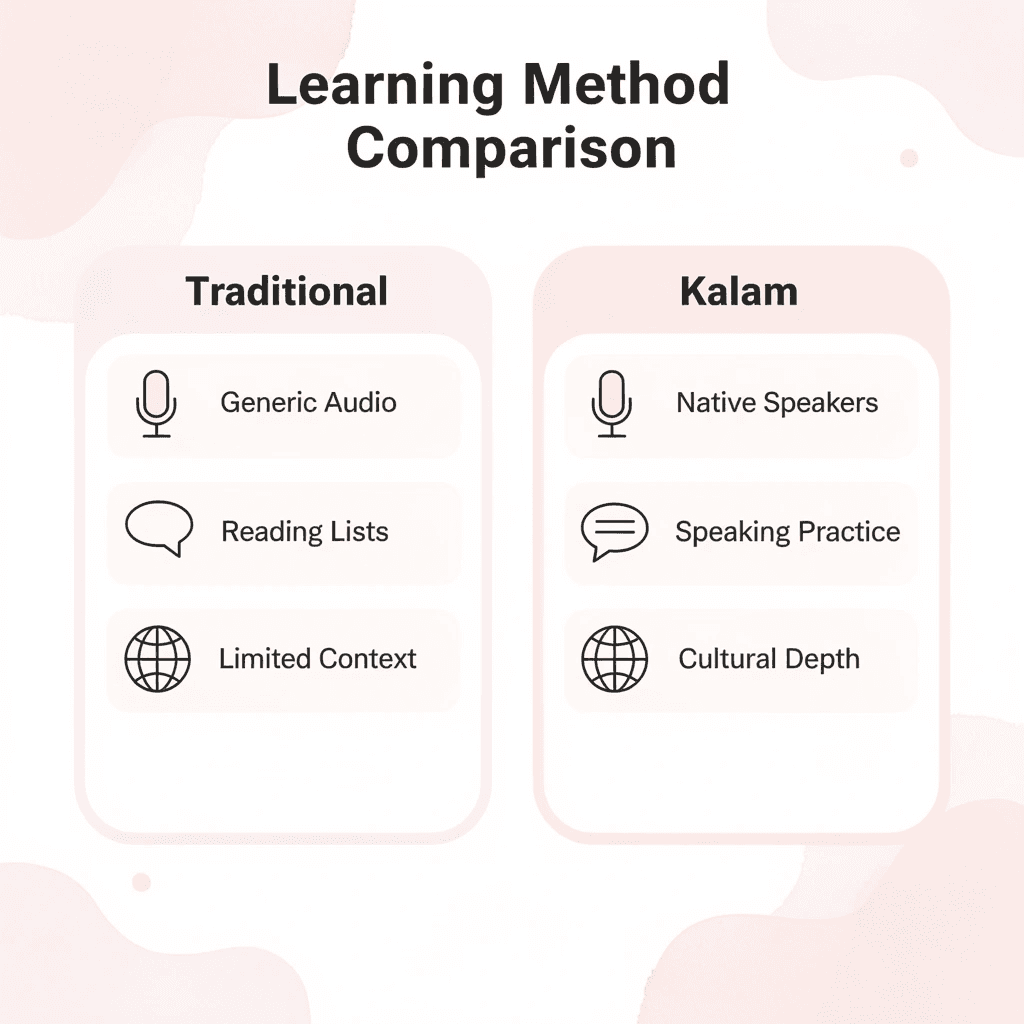
Learning Method | Traditional Approach | Kalam's Method |
|---|---|---|
Audio Quality | Generic phonetics | Dialect-specific native speakers |
Practice Style | Reading lists | Interactive speaking sessions |
Cultural Context | Limited | Real conversational usage |
Confidence Building | Minimal | Muscle memory through repetition |
Whether you're drawn to a strong boy's name steeped in courage or a graceful girl's name filled with blessing, Kalam helps you explore the living Arabic language that gives these names their power. Our app's conversational focus mirrors how you'll use these names: calling your child at the park, introducing them to relatives, and explaining the meaning to curious friends. You master Arabic names through consistent speaking practice that builds muscle memory and cultural intuition.
🔑 Takeaway: The best Arabic name is one you can pronounce with confidence and cultural authenticity—Kalam's speaking-focused approach ensures you master both the sound and the cultural context.

Ready to find and pronounce the perfect Arabic name for your child? Start learning Arabic with Kalam today. The name you choose will shape your child's identity for life. Ensure you can say it with the confidence and beauty it deserves.