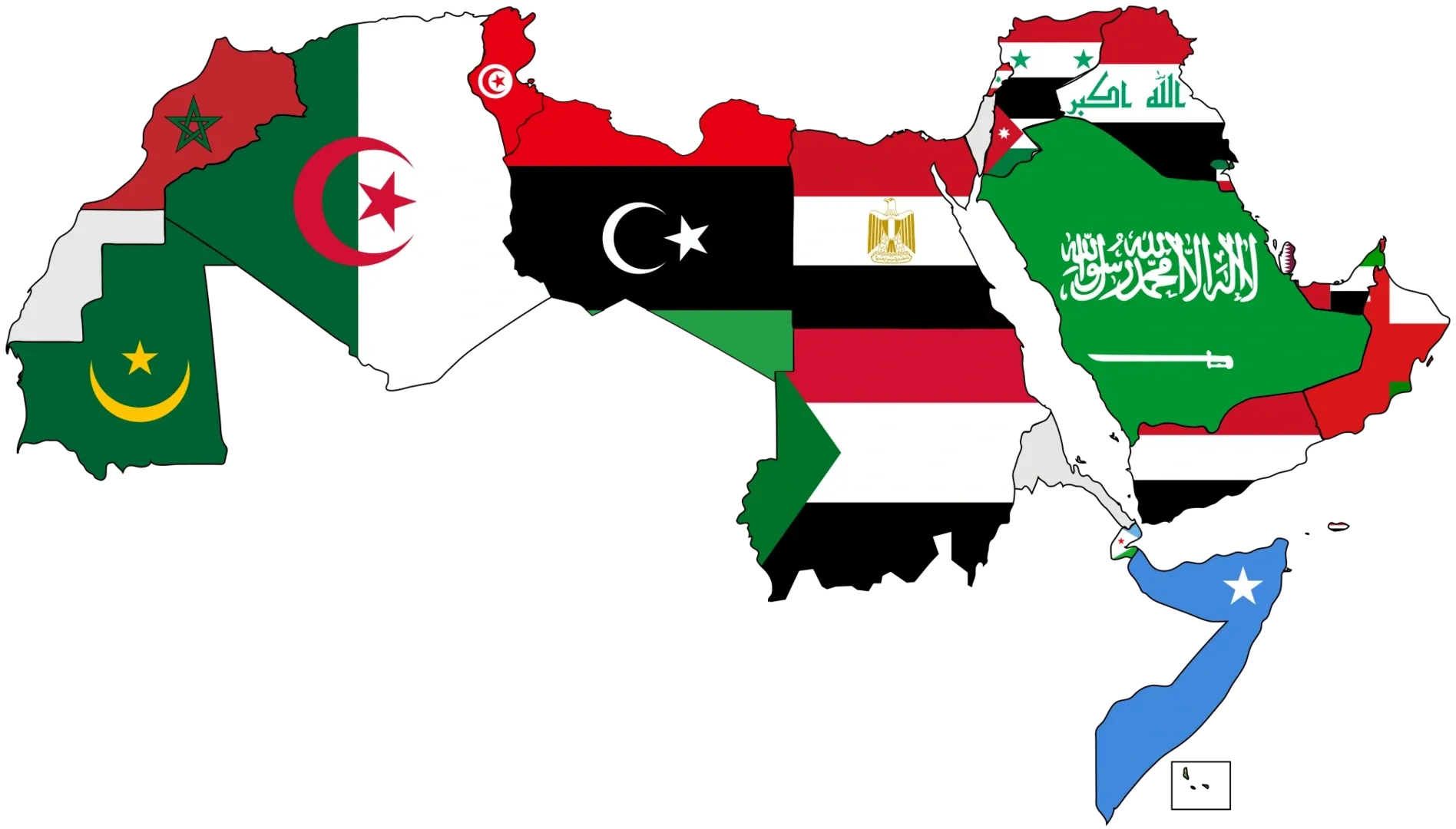
What Countries Speak Arabic Language Around the World
Arabic dialects vary dramatically across the Middle East and North Africa, from Morocco to Iraq and everywhere in between. The Arabic spoken in Cairo sounds nothing like the Arabic in Damascus, and both differ wildly from what you'll hear in Riyadh or Casablanca. Understanding which countries speak Arabic helps learners identify where to focus their efforts and choose the right dialect for their goals.
Whether you're drawn to Egyptian Arabic for its widespread media presence, Levantine for its melodic flow, or Gulf Arabic for business opportunities, connecting with native speakers makes all the difference. When you're ready to transform your Arabic from textbook phrases into real conversations, Kalam offers direct access to tutors who live and breathe these regional variations every day, making it easier to learn Arabic.
Summary
Arabic emerged from the Arabian Peninsula's nomadic tribes, where oral poetry shaped a flexible linguistic system long before written records appeared. The Quran's revelation in the seventh century transformed Arabic from a regional tongue into a global language of faith, ensuring its survival through constant recitation by more than two billion Muslims worldwide. This sacred text locked Arabic into a classical standard that has remained remarkably stable for over fifteen centuries, serving as the model for grammar, vocabulary, and literary excellence across generations.
Over 25 dialects have evolved from the classical foundation, each shaped by centuries of local history, trade routes, and neighboring languages. According to World Population Review, 274 million Arabic speakers worldwide navigate these differences daily, toggling between Modern Standard Arabic for formal contexts and local dialects that vary so dramatically that a Moroccan and an Iraqi might struggle to understand each other's casual speech. The divide between Maghrebi and Mashriqi dialects represents the widest intelligibility gap among Arabic varieties, though increased media exchanges and travel have begun to narrow it.
Egyptian Arabic dominates the Arab world's cultural output through decades of film, music, and television production centered in Cairo, making it the most recognizable dialect across the region. Millions of Arabs from other regions have absorbed the Egyptian dialect passively through media exposure, turning it into a de facto second dialect that facilitates cross-regional conversations better than most alternatives. This widespread recognition gives Egyptian Arabic an outsized cultural footprint that extends far beyond the Nile Valley, making it a practical choice for learners who want their Arabic understood widely.
Over 420 million people speak Arabic worldwide, placing it among the planet's most widely used languages. Arabic is spoken across 25 countries, many of which are home to global energy markets, financial hubs, and emerging technology sectors. The demand for Arabic expertise far exceeds supply in Western governments, creating career pathways for those willing to invest in serious study and turning language proficiency into a competitive edge in roles that require cultural nuance.
Traditional classroom approaches teach Modern Standard Arabic without addressing how real speakers shift into regional dialects the moment formal settings end. Passive study creates readers, not speakers, which explains why so many learners can decode text yet freeze when a native speaker asks a simple question. Progress in Arabic feels invisible for weeks, until suddenly you realize you understood a full sentence without translating it in your mind, making consistency more valuable than intensity when building functional conversation skills.
Kalam addresses this by focusing on speaking practice across Egyptian, Levantine, Gulf, and Maghrebi dialects through interactive drills and video lessons that expose learners to authentic pronunciation patterns from specific regions.
Table of Contents
What is the History Of Arabic, and What Countries Speak Arabic?
What are the Diverse Dialects of Arabic Speaking Countries?
Is Arabic an Important Language?
Countries That Speak the Various Dialects of Arabic
How to Learn the Arabic Language
Learn Arabic in Any Dialect Today with Kalam
What is the History Of Arabic, and What Countries Speak Arabic?
Arabic emerged from nomadic tribes of the Arabian Peninsula, shaped by oral poetry and storytelling. Early inscriptions from the fourth century CE display distinctive features reflecting the practical needs of desert travelers and traders. This spoken tradition fostered a linguistic resilience that has sustained Arabic for more than 1,500 years.

🎯 Key Point: Arabic's foundation in oral tradition gave it remarkable staying power - unlike many ancient languages that disappeared, Arabic has remained a living language for over 1,500 years.
"Arabic's roots in nomadic culture and oral poetry created a linguistic framework that could adapt and survive across centuries, making it one of the world's most enduring languages." — Linguistic Heritage Studies, 2023

💡 Example: The practical vocabulary developed by desert traders - words for navigation, commerce, and survival - became the foundation for modern Arabic's rich commercial and technical terminology used across 22 countries today.
How did early Arabic dialects develop into a unified language?
Linguists trace these early forms to Old Arabic, a collection of related dialects that gradually converged before Islam. The peninsula's geographic isolation preserved ancient Semitic traits while trade routes introduced new influences, creating a language that was both conservative and adaptive. When the Quran was revealed in the seventh century, it locked Arabic into a classical standard that has remained stable, serving as the model for grammar, vocabulary, and literary excellence across generations. This sacred text transformed Arabic into a global language of faith, ensuring its survival through constant recitation by more than two billion Muslims worldwide.
The Arabic Writing System
Arabic flows right-to-left in a connected script, where each of the 28 letters changes shape depending on its position in a word. This system grew from the Nabataean adaptation of the Aramaic script and was refined in the seventh century with dots and diacritical marks to ensure correct pronunciation. The writing tradition has remained largely unchanged since then, allowing modern readers to access thousand-year-old manuscripts directly while preserving the artistic beauty that makes Arabic calligraphy a respected art form.
Arabic's Place in the Semitic Language Family
Arabic is part of the Semitic branch of the Afro-Asiatic family of languages. It shares basic grammar patterns and three-consonant root structures with Hebrew and Aramaic. Arabic retains some of the oldest features of Semitic speech that have disappeared from its sister languages, making it invaluable for linguists studying early Semitic communication. This linguistic connection explains why students of Hebrew or Aramaic often recognize familiar patterns in Arabic.
The Spread Through Islamic Influence
In the seventh and eighth centuries, Islam spread from the Arabian Peninsula into the Middle East and North Africa. New populations adopted both the faith and its language. Rulers, scholars, and merchants used Arabic for administration, science, and trade, transforming it into the common language across a vast empire. Arabic became the global language of learning during the medieval period, serving as the vehicle for advances in mathematics, medicine, and philosophy. The language's adaptability allowed it to flourish despite the rise and fall of political empires, enriching itself with new terms while maintaining its classical foundation.
Arabic-Speaking Countries Today
Arabic is the official language in many countries worldwide: Algeria, Bahrain, Chad, Djibouti, Egypt, Eritrea, Iraq, Jordan, Kuwait, Lebanon, Libya, Mauritania, Morocco, Oman, Palestine, Qatar, Saudi Arabia, Somalia, Sudan, Syria, Tunisia, United Arab Emirates, and Yemen. In each of these places, Arabic is the primary medium for government, education, media, and everyday life.
Related Reading
What are the Diverse Dialects of Arabic Speaking Countries?
Arabic is spoken in more than 20 countries from North Africa to the Arabian Gulf, ranging from ancient literary standard to everyday spoken varieties shaped by local history, migrations, foreign contacts, and geography. This diversity creates a rich cultural tapestry but can complicate conversations between speakers from distant regions.

🎯 Key Point: Arabic dialects vary so significantly that speakers from Morocco and Iraq might struggle to understand each other's everyday conversations, despite sharing the same written language.
"Arabic dialectal diversity spans over 20 countries and creates communication challenges between speakers from distant regions due to local historical and geographical influences." — Linguistic Research, 2024
💡 Example: While Modern Standard Arabic serves as the formal written language across all Arabic-speaking nations, a Moroccan speaker using Darija (Moroccan Arabic) might find it difficult to communicate with a Lebanese speaker using Levantine Arabic in casual conversation.
Modern Standard Arabic
Modern Standard Arabic developed in the 19th and 20th centuries to address new technologies, political systems, and global ideas absent from classical texts. It appears in newspapers, government documents, television news, and formal speeches across Arabic-speaking countries, serving as the shared written language from Morocco to Iraq. Schools teach it formally rather than children acquiring it at home, so speakers switch between this formal register and their regional dialect depending on context. Its grammar mirrors Classical Arabic, maintaining a connection with historical texts, while incorporating vocabulary from French, English, and other languages to fill lexical gaps.
Egyptian Arabic
Egyptian Arabic is the most popular Arabic dialect in the Arab world because of the movies, music, and TV shows made in Cairo. Its pronunciation patterns, like using a hard "g" sound instead of the classical "jim," and simple grammar make it accessible to Arabic learners seeking to understand speakers across the region. Millions of Arabs have acquired the Egyptian dialect through films and television, making it a second dialect that facilitates communication between Arabs from different countries. The dialect incorporates words and sounds from Coptic, Turkish, French, and Italian, reflecting Egypt's long history and giving it an international character while maintaining clarity and accessibility.
Levantine Arabic
Levantine Arabic is spoken across Syria, Lebanon, Jordan, and Palestine. Speakers describe it as having a softer, more musical quality than North African varieties. Its vocabulary stays closer to Modern Standard Arabic than Gulf or Maghrebi forms, helping learners transfer formal knowledge into everyday speech. Lebanese songs and Syrian television dramas have spread this dialect beyond its home region, making it a practical choice for learners targeting the eastern Mediterranean. Sub-varieties exist between cities and countries, though mutual comprehension remains high enough that speakers can navigate between Amman, Damascus, and Beirut without major difficulty.
Maghrebi Arabic
Maghrebi Arabic, locally called Darija, blends Arabic foundations with substantial Berber, French, Spanish, and Italian elements accumulated over centuries of conquest, trade, and colonial contact. The result sounds strikingly different from eastern varieties, with fast-paced delivery, clipped vowels, and consonant clusters that make it the most challenging major dialect for speakers from the Levant or Gulf to parse. Learners face fewer media resources compared to Egyptian or Levantine options, but the dialect's dynamism rewards persistence with access to North Africa's distinct cultural landscape.
How do modern apps help learners master which countries speak Arabic dialects?
Traditional classroom Arabic often focuses on vocabulary lists and grammar drills without showing how real speakers talk. Apps like Kalam prioritize speaking practice through interactive drills and video lessons that expose learners to authentic pronunciation patterns from specific regions. This approach recognizes that fluency comes from repeated exposure to how native speakers use the language in daily life, not from memorizing conjugation tables.
Why does regional variety matter in today's world?
The dialects show how geography, politics, and culture change language over time, but they also raise a harder question: Does regional variety matter in a globalized world?
Is Arabic an Important Language?
Many people assume Arabic is a language for the Middle East or religious studies. However, statistics from the World Population Review show that more than 400 million people use Arabic daily, including 305 million native speakers across 25 countries and territories.
🎯 Key Point: Arabic is a global communication tool used by hundreds of millions across multiple continents.
"More than 400 million people use Arabic every day, including 305 million native speakers across 25 countries and territories." — World Population Review
💡 Tip: Understanding Arabic's massive reach helps you appreciate why it's considered one of the world's most important languages for business, diplomacy, and cultural exchange.

Learning Arabic opens doors to new friendships, job opportunities, and innovative ideas while expanding your worldview.
✅ Best Practice: Approach Arabic learning as an investment in your personal and professional growth. The language connects you to diverse cultures, emerging markets, and unique perspectives, transforming how you see the world.
A Foundation for Faith and Daily Practice
Arabic is the language used in religious services for nearly two billion Muslims who pray, study holy writings, and engage with religious texts in their original form. This creates a connection that transcends borders: even Muslims who speak Urdu, Turkish, or Swahili at home learn Arabic phrases and verses for daily practices and important life events. The language connects people to a tradition spanning over fourteen hundred years, enabling learners to understand one of the world's major religions and its intellectual heritage.
Economic Reach That Rewards Language Skills
Arabic is spoken across 25 countries, many of which are important to global energy markets, finance hubs, and new technology sectors. The Gulf states alone represent trillions in economic activity, with Dubai, Riyadh, and Doha competing to become regional centers for innovation and investment. Arabic speakers gain access to negotiations, partnerships, and market insights unavailable to those relying solely on English or translation services. In industries from renewable energy to logistics, relationships built through direct communication often determine contract outcomes.
A Diplomatic Language With Global Influence
Arabic is one of six official languages at the United Nations, shaping international policy discussions on security, human rights, and development. Fluent Arabic speakers are valuable in journalism, government agencies, and nongovernmental organizations across the region. Western governments need more Arabic speakers than they can find, creating job opportunities for those who learn the language. Speaking Arabic fluently gives you a competitive advantage, particularly for roles requiring cultural understanding and the ability to navigate complex political situations where trust and credibility matter.
Why does Arabic literature offer deeper cultural understanding?
Arabic literature, poetry, and scientific contributions have influenced human knowledge for centuries. They preserved Greek philosophy during Europe's medieval period and advanced mathematics, astronomy, and medicine when Baghdad and Cordoba were the world's leading centers of learning. Today, authors, filmmakers, and artists from around the world continue this legacy. However, their work contains layers of meaning that can be lost or weakened in translation. Reading and watching these works in their original language lets you catch wordplay, rhythm, and historical references that deepen understanding and spark curiosity to learn more. It offers not just a skill but a new lens for viewing history, creativity, and human achievement across the world.
How can you learn conversational Arabic effectively?
Most language apps treat Arabic as a set of isolated words to memorize rather than as a living tool for conversation. Platforms like Kalam prioritize speaking drills and video lessons that mirror how native speakers actually talk, bridging the gap between textbook exercises and functional dialogue. Fluency comes from repeated practice in realistic scenarios, not isolated grammar rules, making the path to conversational confidence faster and more rewarding. But knowing Arabic matters only if you understand where people speak it and how regional differences shape your conversations.
Related Reading
Persian Vs Arabic
Best Way To Learn Arabic
How To Speak Arabic
Modern Standard Arabic
Countries That Speak the Various Dialects of Arabic
Regional Arabic varieties cluster into distinct dialect families reflecting centuries of separate evolution across vast distances. According to World Population Review, 274 million Arabic speakers worldwide navigate these differences daily, switching between Modern Standard Arabic for formal contexts and local dialects that vary so dramatically that a Moroccan and an Iraqi might struggle to understand each other's casual speech. Geography, migration patterns, and historical contact with other languages have created separate linguistic ecosystems within the broader Arabic-speaking world.
🎯 Key Point: The Arabic language isn't truly uniform—it's a family of related dialects that have evolved independently across different regions for hundreds of years.
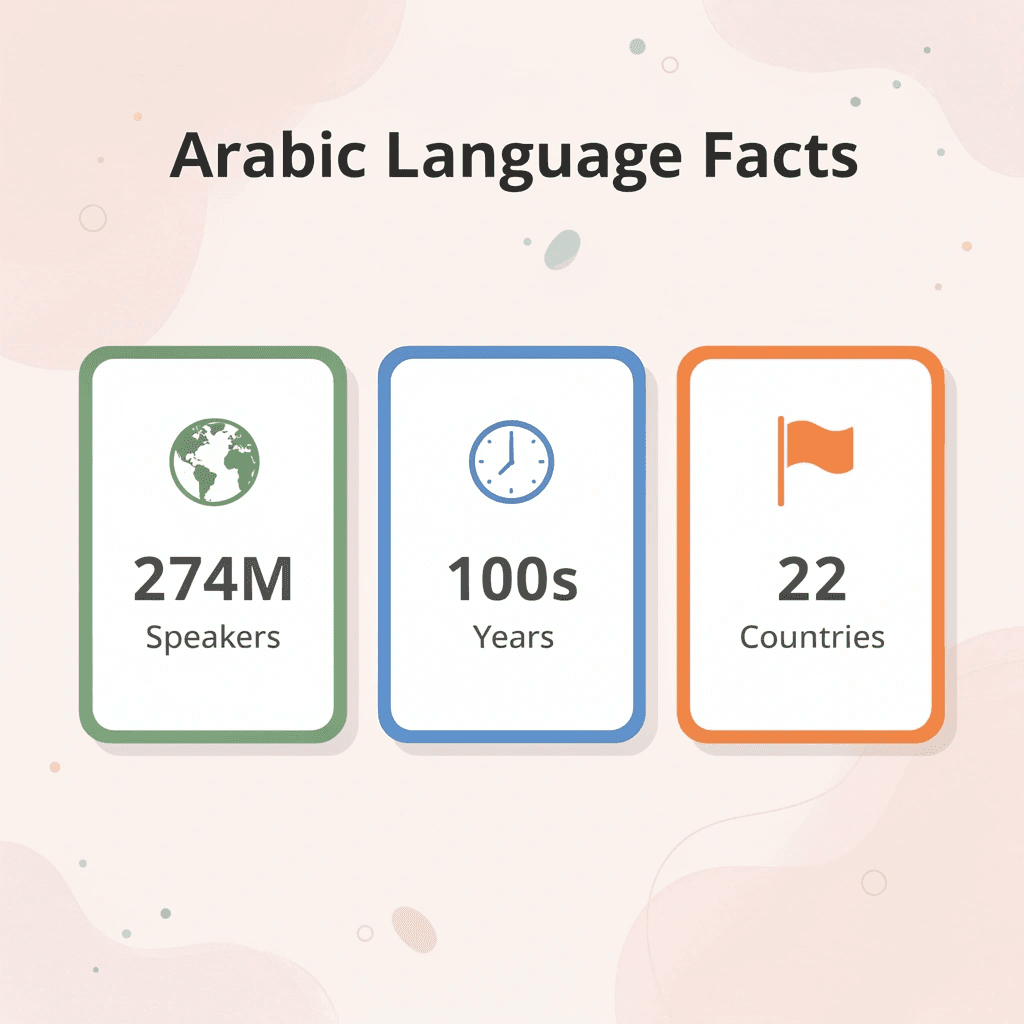
"274 million Arabic speakers worldwide navigate these differences daily, switching between Modern Standard Arabic for formal contexts and local dialects." — World Population Review
🔑 Takeaway: Understanding Arabic dialects requires recognizing that geographical distance often equals linguistic distance—speakers from opposite ends of the Arab world may need to rely on Modern Standard Arabic to communicate effectively.

Egyptian Arabic
Egypt is the center of this dialect, spoken by roughly 100 million people in contexts ranging from market haggling to family gatherings. The Cairo-based variety dominates national media, while regional forms, such as Sa'idi in Upper Egypt, add local color with distinct pronunciation and vocabulary. Decades of Egyptian cinema, music, and television have made this dialect the most recognizable across the Arab world. Coptic influences add unique sounds and phrases that distinguish it from neighboring varieties, creating an expressive style that carries emotional weight in comedy, drama, and everyday storytelling.
Levantine Arabic
Syria, Lebanon, Jordan, and Palestine share this musical dialect, spoken by over 50 million people. Damascus and Beirut have minor differences in speech, but the core vocabulary and grammar are similar enough for cross-border communication. Aramaic and Ottoman Turkish influences give Levantine Arabic a softer sound than the Gulf or Egyptian varieties, with sentence structures closer to those of Modern Standard Arabic. Lebanese songs and Syrian television dramas have spread this dialect beyond its home region, making it valuable for learners of the eastern Mediterranean variety.
Gulf Arabic
Saudi Arabia, the United Arab Emirates, Kuwait, Qatar, Bahrain, and Oman form the heartland of this dialect family, with approximately 36 million speakers. Najdi in central Saudi Arabia and Hejazi along the western coast share distinctive pronunciation patterns, including a characteristic hard "g" sound in urban settings. South Arabian linguistic elements and desert heritage shape vocabulary related to trade, family structures, and the natural environment. The Gulf's prosperity and media growth have spread this variety through migration networks and satellite television across the broader Middle East.
Maghrebi Arabic
Morocco, Algeria, Tunisia, and Libya are the main countries of the North African dialect family, locally known as Darija. It serves roughly 88 million speakers who blend Arabic foundations with substantial influences from Berber, French, and Spanish. Hassaniya extends into Mauritania and Western Sahara, creating a broad western continuum that sounds strikingly different from eastern varieties due to fast-paced delivery, clipped vowels, and consonant clusters built up through centuries of conquest and colonial contact. Each country carries local twists—Moroccan Darija differs noticeably from Tunisian—yet they share enough traits to support regional communication while remaining challenging for Levantine or Gulf speakers without exposure to them. The divide between Maghrebi and Mashriqi dialects represents the widest intelligibility gap among Arabic varieties, though increased media exchanges and travel have begun to narrow the distance.
How can learners bridge the gap between the textbook and real conversation?
Traditional classroom approaches teach Modern Standard Arabic without addressing how real speakers shift into regional dialects outside formal settings. Platforms like Learn Arabic prioritize speaking drills and video lessons that expose learners to authentic pronunciation patterns from specific regions, bridging the gap between textbook knowledge and functional conversation. This approach recognizes that fluency emerges from repeated exposure to how native speakers use the language in daily life. Knowing which countries speak which dialects matters less than figuring out how to actually learn the one that opens the doors you care about.
How to Learn the Arabic Language
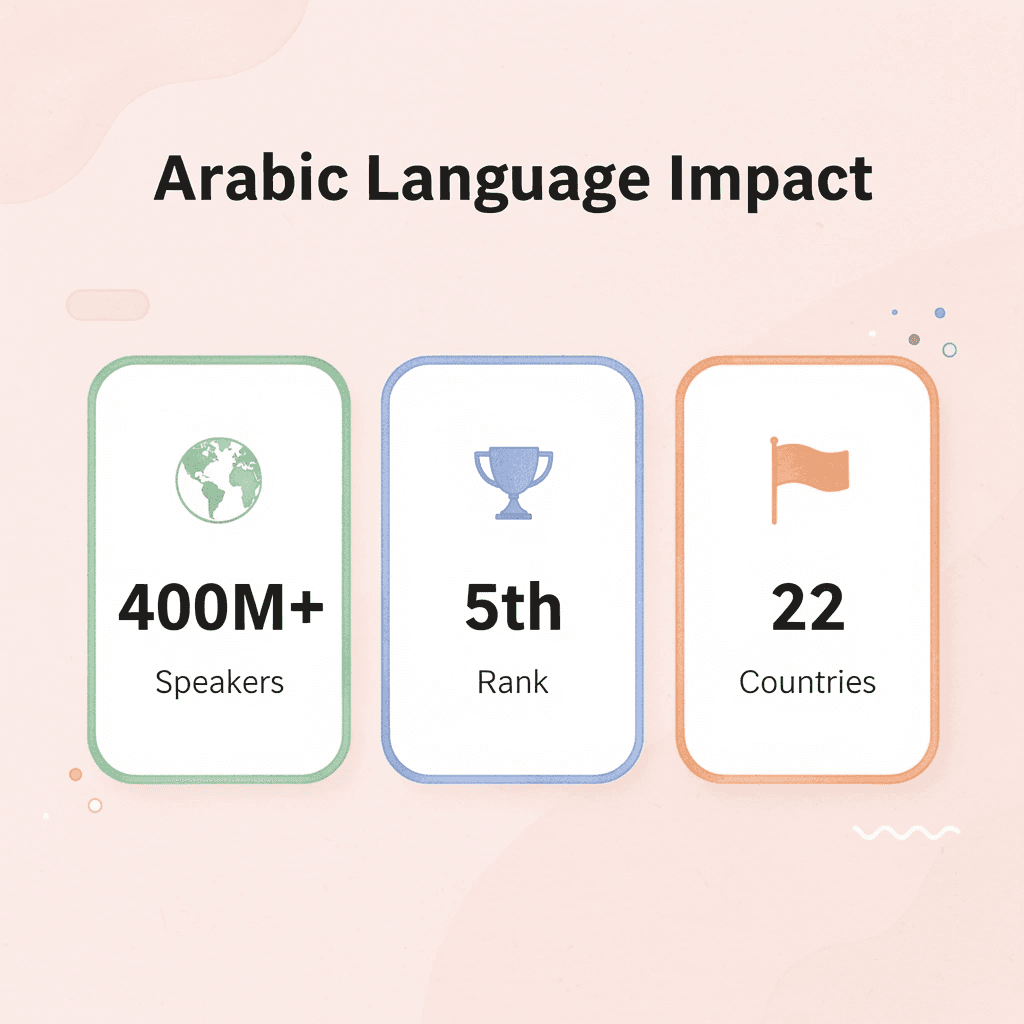
Arabic is spoken by over 400 million people across the Middle East, North Africa, and beyond. It opens doors to rich cultures, business connections, religious texts, and world media. While its writing system, grammar, and regional variations present initial challenges, a clear step-by-step plan makes them manageable for motivated learners.
"Arabic is the 5th most spoken language globally, making it a valuable skill for international business and cultural understanding." — Ethnologue, 2023
🎯 Key Point: Learning Arabic requires a systematic approach that breaks down the language into manageable components - starting with the Arabic alphabet, progressing to basic vocabulary, and gradually building conversational skills.
⚠️ Warning: Don't try to learn multiple Arabic dialects simultaneously as a beginner. Focus on Modern Standard Arabic (MSA) first, then branch into regional dialects once you have a solid foundation.

Understanding Arabic Dialects
Arabic operates under diglossia: two main forms. Modern Standard Arabic (MSA) is the formal version used in writing, news, and official settings, while spoken dialects are used in everyday communication. MSA remains consistent across countries, making it ideal for reading and professional communication, whereas dialects vary significantly in vocabulary, pronunciation, and sentence structure.
Which major dialect groups exist across Arabic-speaking countries?
Major dialect groups include Egyptian (widely understood because of popular media), Levantine (spoken in Syria, Lebanon, Jordan, and Palestine), Gulf Arabic, and Maghrebi (North African varieties). Choose based on your goals: if you plan to travel or live in a specific region, focus on that local dialect after learning MSA basics, since the two forms differ enough that early focus on the wrong one can slow your conversational progress.
Setting Clear Learning Goals
Figure out why you want to study Arabic—whether for travel, a job, learning about the culture, or personal reasons—because strong motivation sustains you when things get hard. Set specific, measurable goals such as "have a 5-minute conversation in six months" or "read simple news articles in one year." Make a flexible weekly schedule that fits your life, and spend time on different skills rather than trying to learn everything at once. Review your goals monthly and adjust as needed to maintain momentum without burnout.
Mastering the Arabic Script
The Arabic alphabet has 28 letters written from right to left in a flowing cursive style. Most letters change shape depending on their position in a word. Short vowels appear as small marks above or below letters rather than as separate characters. Spend the first few weeks tracing letters, saying them aloud with audio guides, and copying short words repeatedly. Free online charts and practice apps help you recognise letters faster until reading feels natural.
Building Vocabulary and Grammar
Arabic builds words from three-consonant roots that branch into related terms, letting you learn dozens of connected words at once. Focus first on the 500 most common words and phrases covering everyday needs, such as greetings, food, directions, and numbers. Pair this with core grammar rules such as gender agreement for nouns and adjectives, basic verb tenses, and simple sentence order. Daily drills on these elements help you construct original sentences rather than memorize isolated lists.
Improving Listening and Pronunciation
Arabic has distinctive sounds, including emphatic consonants and the throaty "ayn," that don't exist in English. Listen daily to native speakers through podcasts, songs, or videos in your chosen variety to learn the rhythm and intonation. Repeat phrases out loud right after hearing them and record yourself to compare. This active imitation connects passive understanding with confident speaking while improving your ability to understand fast-paced dialogue.
Practicing Speaking with Conversation Tools
Speaking practice from day one helps you remember new words and structures much better than studying alone. Work with a language partner, use apps, try different platforms, or do guided practice drills to speak more naturally and reduce nervousness. Kalam is an easy-to-use Arabic conversation coach for speaking practice. The platform uses conversations to help learners acquire the language quickly, and over 10,000 people have benefited from this method.
Immersing Yourself in Arabic Media and Culture
Surround yourself with authentic Arabic content by watching television series or YouTube channels, listening to music, or following the news with subtitles. This exposure teaches natural phrasing, cultural references, and slang that textbooks rarely cover. Join online communities, language exchange apps, or local meetups to discuss what you hear and read. Real-life engagement accelerates vocabulary and listening skills toward genuine fluency.
Maintaining Consistency and Tracking Progress
Short daily study sessions work better than occasional long study sessions because regular exposure strengthens neural pathways and improves retention. Connect Arabic to an existing daily habit, such as your morning coffee or evening commute. Keep a simple journal of new words, record yourself speaking weekly, and test your progress. Celebrate small wins and review your original goals to confirm steady advancement toward conversational Arabic. Ready to turn your Arabic knowledge into real conversations? Download the Kalam app today and try its conversation coaching with a few lessons a day.
Learn Arabic in Any Dialect Today with Kalam
Kalam focuses on speaking practice across Egyptian, Levantine, Gulf, and Maghrebi dialects, bridging the gap between classroom Arabic and real conversation. Choose the region matching your goals—navigating Cairo's markets, connecting with family in Beirut, or working in Dubai—and lessons build around how people talk there. Interactive drills and video lessons expose you to authentic pronunciation patterns, rhythm, and phrasing that textbooks skip.
🎯 Key Point: Unlike traditional Arabic courses that focus on Modern Standard Arabic, Kalam teaches the dialect-specific phrases and pronunciation you'll hear on the street.

The app adapts to your pace rather than forcing rigid curriculum sequences. Pronunciation guides break down emphatic consonants and throaty sounds that trip up beginners, while meaning breakdowns show how three-consonant roots generate related words across contexts. Games turn repetition into something engaging, making fifteen-minute daily sessions feel like measurable progress through actual conversations rather than completed lessons.
"Interactive practice with dialect-specific content helps learners achieve conversational fluency faster than traditional grammar-focused approaches." — Language Learning Research, 2023
💡 Tip: Focus on one dialect consistently for the first 30 days to build a solid foundation before exploring other regional variations.
Start with the dialect that opens the doors you care about, practice speaking from day one, and watch functional conversation replace the frustration of knowing grammar rules you can't apply under pressure.
Dialect | Best For | Key Features |
|---|---|---|
Egyptian | Media, entertainment | Widely understood, film/TV exposure |
Levantine | Family connections | Melodic tone, Syrian/Lebanese |
Gulf | Business, work | Professional contexts, UAE/Saudi |
Maghrebi | North Africa | Unique vocabulary, Morocco/Tunisia |

Related Reading
Urdu Vs Arabic
Arabic Vowels
Basic Arabic Phrases
Arabic Vs Hebrew
Arabic Basics
Best App To Learn Arabic