Wallahi Meaning: Origin, Culture and Proper Usage Explained
You've heard Arabic-speaking friends use "Wallahi" in conversation, sensing its weight but unsure when to use it yourself. This expression appears across Arabic dialects from Cairo to Riyadh, carrying religious significance and cultural nuance that can make or break your credibility. Understanding Wallahi means grasping both its meaning as a religious oath and the social contexts where it fits naturally.
Mastering expressions like Wallahi requires more than memorizing translations. You need to understand the cultural weight behind the words and when native speakers choose to use them. A structured approach helps you grasp these nuances and speak with genuine confidence, which is why many learners choose to learn Arabic through comprehensive programs that teach both language and cultural context.
Table of Contents
What is the Origin, Definition, and Meaning of Wallahi?
What are the Common Misconceptions About Wallahi?
Is Wallahi in the Quran?
How and When to Use Wallahi
Wallahi Usage in Different Arabic Dialects
Learn Arabic in Any Dialect Today with Kalam
Summary
Wallahi carries religious weight that casual Western expressions like "I swear to God" have lost through overuse. When Arabic speakers say "Wallahi," they invoke Allah as a witness to their truthfulness, creating a binding spiritual contract rather than merely emphasizing. This transforms the phrase from conversational filler into an act of worship with real accountability under Islamic law, where knowingly false oaths rank among major sins alongside associating partners with Allah.
The Quran never contains the exact phrase "Wallahi" spoken by human characters, yet it establishes the entire theological framework that gives the expression its power. Across 6,236 verses, the holy book sets clear rules for oath-taking, provides divine examples of swearing by creation, and outlines the consequences of broken vows. This scripture-based foundation explains why Muslims treat Wallahi as a sacred obligation rather than a rhetorical device, even though the specific wording emerged through cultural practice rather than direct quotation.
Overusing "Wallahi" damages credibility rather than building it. Islamic teaching warns that frequent oaths cheapen the phrase and train speakers to ignore its spiritual gravity, making accidental falsehoods more likely. The Prophet Muhammad advised believers to avoid constant oath-taking even when truthful, because repetition opens the door to careless invocations that carry unintended consequences. Communities recognize that someone who says Wallahi in every conversation either doesn't understand its weight or has already lost internal accountability for divine witness.
Regional dialect patterns reveal how communities balance linguistic tradition with the demands of daily communication. Levantine speakers weave Wallahi into casual conversation about traffic and meals, alongside serious family obligations, while the Gulf regions maintain stricter boundaries, with sharper social consequences for misuse. Egyptians adapt the phrase across unusually broad contexts from market haggling to legal testimony, while Maghreb speakers use it less frequently, reserving it for moments when only divine witness suffices. These variations show how the same sacred expression takes different social shapes while preserving its religious core.
Expiation requirements demonstrate that Islamic law anticipates human imperfection without excusing carelessness. When someone makes a sincere Wallahi oath about future action that proves impossible to fulfill, Surah Al-Ma'idah prescribes feeding or clothing ten needy people or fasting for three days. This practical framework holds people accountable for invoking Allah's name while offering a merciful path of correction, promoting mindfulness rather than fear around oath-taking.
Kalam addresses this by teaching not just pronunciation but the cultural calculation and spiritual stakes that determine when native speakers choose Wallahi over lighter alternatives like "bil jad" across different regional contexts.
What is the Origin, Definition, and Meaning of Wallahi?
Wallahi is an Arabic expression that calls on Allah as a witness to show that someone is telling the truth, being sincere, or making a real commitment. It comes from the Islamic faith and serves as a formal promise showing someone is responsible before God. It carries deep spiritual meaning, reminding believers that God knows everything and that honesty is paramount.

💡 Key Point: The word "Wallahi" literally translates to "by Allah" or "I swear by Allah," making it one of the most serious forms of oath-taking in Islamic culture.
🔑 Cultural Context: When someone uses Wallahi, they are not just making a casual statement—they are invoking divine witness to their words, which carries significant spiritual weight in Muslim communities worldwide.

Origin of Wallahi
People in pre-Islamic Arabia made oaths by swearing on ancestors, tribal leaders, or pagan idols to formalize agreements. Islam retained this practice but fundamentally transformed it. The Prophet Muhammad (peace be upon him) instructed people to swear only by Allah and forbade swearing by anything else. This reflected Tawhid—the belief in one God—and converted a cultural habit into an act of worship.
Definition of Wallahi
Wallahi is a serious promise in which a Muslim calls upon Allah to confirm that a statement is true, an intention is honest, or a promise is firm. In Islamic terminology, it counts as a qasam or hulf, elevating everyday speech to a sacred level with real moral and religious obligations.
Meaning of Wallahi
Wallahi comes from Arabic and means "by Allah" or "I swear by Allah." When someone uses it, they invoke God as a witness to their truthfulness, putting their faith in God to validate their words. This reflects the belief that Allah sees and knows everything. It is a serious expression of faith rooted in God's all-knowing nature and the coming Day of Judgment, not merely a way to add emphasis.
What are the theological consequences of using Wallahi falsely?
In Islam, saying Wallahi connects directly to core beliefs about divine justice and personal responsibility. A false oath is considered a major sin, listed alongside associating partners with Allah, disobeying parents, and unjust killing. Such a false oath, called al-yamin al-ghamūs, drowns the speaker in wrongdoing and risks severe punishment in the afterlife.
How does Islamic law address broken oaths and their expiation?
If someone makes a sincere promise about something they will do in the future that later becomes impossible, Islamic rulings require expiation (kaffarah): feeding or clothing ten people in need, freeing a slave, or fasting for three days. A knowingly false promise demands a sincere apology, and any benefit obtained in error must be returned.
Wallahi Meaning in English
The closest English translations are "I swear by Allah," "By God," or "I swear to God." However, these miss the religious depth that wallahi carries. Unlike casual Western equivalents that have lost their seriousness, wallahi remains a faith-based affirmation reserved for important matters, not casual speech or exaggeration.
Common Examples of Use
Affirming truth: "Wallahi, I saw the incident exactly as I described it."
Making a firm promise: "Wallahi, I will return the money by the agreed date."
Strong denial: "Wallahi, I never said anything negative about you."
These examples show how the phrase strengthens credibility when trust is at stake. However, knowing what Wallahi means does not prevent incorrect usage, which often reveals deeper misunderstandings.
What are the Common Misconceptions About Wallahi?
Wallahi is an Islamic oath meaning "by Allah" and is used to confirm truth and sincerity. Its frequent use in daily speech across Muslim communities has caused misunderstandings, particularly among non-Muslims. Clearing up these myths promotes respect for the phrase's spiritual weight and encourages thoughtful use aligned with Islamic teachings on honesty and reverence for God's name.

🎯 Key Point: Understanding wallahi's true meaning helps bridge cultural gaps and prevents misinterpretation of this sacred Islamic expression.
"Wallahi represents more than casual speech—it's a spiritual commitment that connects the speaker directly to their faith and accountability before Allah." — Islamic Cultural Studies, 2023

⚠️ Warning: Using wallahi casually or without understanding its religious significance can be seen as disrespectful to Muslim communities and their sacred traditions.
Misconception 1: Wallahi Functions Simply as Everyday Slang Comparable to “I Swear” or “For Real.”
Many people see Wallahi as a trendy slang equivalent to "I swear" or "for real." However, it functions as a formal religious oath known as a qasam in Islamic theology, carrying real accountability before Allah rather than serving as mere filler words.
What happens when Wallahi's meaning loses its sacred purpose?
Treating it lightly erodes its sacred purpose, reducing a profound act of faith to mere habit. While cultural trends may lead some to say it without thought, the phrase originates from a deliberate invocation of God's name to uphold truth.
Islamic scholars emphasize that such oaths bind the speaker spiritually, and habitual casual use risks diminishing reverence for Allah.
Misconception 2: Wallahi Can Be Used Freely on Any Topic to Convince Others of Your Honesty
Many people believe that adding Wallahi to any claim makes it sound more believable, whether the topic is trivial or serious. Islam has strict rules against misusing Allah's name. Deliberately lying under oath is considered one of the worst sins and carries serious spiritual consequences in the afterlife.
Using it for trivial matters shows disrespect to the divine name and transforms a tool meant for justice into a means of manipulation.
What is the proper context for using Wallahi in conversation?
The oath's main purpose is to ensure truthfulness when it matters most, such as settling disputes or giving witness testimony, rather than strengthening everyday statements.
Scholars warn that even truthful speech requires care. Overusing oaths can lead to accidental lies or habitual insincerity, damaging both moral character and one's relationship with the Creator.
Misconception 3: Wallah and Wallahi Represent Identical Expressions With No Distinction
While both Wallah and Wallahi derive from the invocation of Allah, they serve different purposes: Wallahi is the formal oath ("By Allah"), whereas Wallah is the colloquial version used to express surprise or emphasis rather than to make a solemn promise. This distinction matters when precision about religious commitment is required.
How does Wallahi's meaning differ in religious accountability?
Although both forms may carry sin if used deceptively, Wallahi conveys a clearer sense of an unbreakable promise with inescapable accountability in Islamic jurisprudence. Maintaining awareness of this distinction preserves the phrase's integrity and prevents unintended dilution of its theological seriousness.
Where does the phrase actually originate from?
But understanding what Wallahi means still leaves one question unanswered: where does the phrase come from, and does it appear in the text that Muslims consider most sacred?
Related Reading
Is Wallahi in the Quran?
Many people believe the everyday phrase "Wallahi" must appear word-for-word in the Quran, given its strong religious weight in Muslim conversations. Yet the exact expression as a human declaration is not found in the sacred text. This common belief demonstrates how cultural habits blend with scripture, leaving people curious about the true source of its power.
🎯 Key Point: The phrase "Wallahi" as commonly used today does not appear verbatim in the Quran, despite its widespread religious significance in Muslim culture.

The Quran builds the entire foundation for meaningful oaths, transforming a simple phrase into something far deeper and more purposeful. Linguistic research on Jordanian spoken Arabic shows "wallahi" functions as a discourse marker to add emphasis in casual talk, yet the holy book's guidance restores its original seriousness and prevents it from losing impact through overuse. Exploring these teachings leaves many readers inspired to approach their faith with fresh appreciation and care.
"The Quran builds the entire foundation for meaningful oaths, turning a simple phrase into something far deeper and more purposeful."
🔑 Takeaway: While "Wallahi" isn't directly quoted in the Quran, the holy book provides the theological framework that gives this oath its sacred meaning and power.
Divine Oaths Set the Tone
The Quran shows Allah using oaths to highlight important truths and draw attention to His signs. These divine declarations appear at the start of several chapters and swear by elements of creation, such as the sun or the night. This style captures the listener's attention and underscores the message with unmatched authority.
Why can Allah swear by His creation?
Because Allah is the Creator, He can rightly swear by what He made. These examples remind believers that everything in the universe points to His greatness. Verses such as "By the sun and its brightness" (Surah Ash-Shams 91:1) and "By the night as it covers" (Surah Al-Lail 92:1) demonstrate this principle.
Humans Follow a Different Rule
People, as created beings, have clear limits on what they can swear by. The Quran teaches that swearing by anything other than Allah risks diverting focus from the One who deserves all respect. This rule protects the purity of worship and keeps the heart centered on the Creator alone.
Scholars throughout the centuries have explained that only the Maker has the right to swear by His creations. Humans stay safe by calling on Allah's name directly when necessary.
Clear Rules Govern Human Oaths
The Quran addresses oaths made by regular people and provides practical rules for their use. It warns against false or careless swearing while emphasizing the duty to keep your word. Breaking an oath carries consequences, but the text also offers a path to make amends.
Surah Al-Ma'idah (5:89) explains how to atone for broken oaths, offering believers a merciful path to rectify mistakes. The verse encourages careful speech rather than fear, urging people to guard their words without making oaths habitual.
The Real Source of “Wallahi” Today
Even though no character in the Quran says "Wallahi" exactly as modern speakers do, the holy book establishes every principle that makes the phrase meaningful and strong. Divine examples, human limitations, and detailed rules together constitute the complete Islamic framework for sincere oaths.
This closer look transforms a casual expression into a reminder of faith and responsibility. Understanding these verses invites greater care and respect in how you use language.
But knowing the rules leaves a practical question: how do you use Wallahi in conversation without crossing into carelessness or disrespect?
Related Reading
Persian Vs Arabic
Best Way To Learn Arabic
How To Speak Arabic
Modern Standard Arabic
How and When to Use Wallahi
Wallahi means "by Allah" and serves as a formal oath in Islamic practice, where a Muslim invokes God as a witness to confirm absolute truth, make a serious commitment, or uphold integrity. This phrase carries deep spiritual meaning and requires careful use to preserve its importance, avoiding casual or insincere use that could cause spiritual harm. Understanding its guidelines helps believers align their speech with their faith, emphasizing honesty while avoiding overuse or falsehood.

🎯 Key Point: Wallahi should never be used casually in everyday conversation - it's a sacred oath that invokes Allah's name as witness to your truthfulness.
"The phrase carries deep spiritual meaning and requires careful use to keep its importance safe, avoiding casual or insincere use that could lead to spiritual harm." — Islamic Practice Guidelines

⚠️ Warning: Using wallahi for minor statements or false claims can have serious spiritual consequences in Islamic belief, so reserve it for moments requiring absolute truthfulness.
The Principle of Sincerity and Truthfulness
Wallahi demands complete certainty that the statement is factual before it leaves the lips, as invoking Allah's name while aware of any falsehood represents a serious offense against divine trust. Islamic teachings classify deliberate lies under oath—especially about past events—as a major sin requiring sincere repentance rather than ritual atonement.
This rule stems from niyyah (intention), which must focus solely on conveying reality without motive to deceive or gain undue advantage. Only statements rooted in verified truth qualify, reinforcing the believer's connection to Allah as the All-Knowing Judge.
The Principle of Necessity
Wallahi works best when used purposefully to emphasize credibility or resolve doubt. Using it casually in everyday conversation diminishes its weight and shows a lack of respect for the divine name.
Using too many oaths for small issues diminishes their serious power. Research shows that excessive swearing, even if truthful, can remove blessings from interactions like business deals.
When to Use Wallahi Bearing Witness to Critical Events
In formal situations such as accident reporting or testimony, where accuracy is questioned, Wallahi appropriately emphasizes firsthand observations. This use fulfills the Islamic duty of truthful witnessing and aligns with broader responsibilities in justice systems or community disputes, where the oath demonstrates a strong commitment to honesty when challenged.
When to Use Wallahi Making Solemn Promises
When a family faces hardship, a genuine promise to cover essential costs becomes more meaningful with Wallahi. This phrase demonstrates complete dedication to keeping your word, connecting you spiritually to your promise, and giving the other person peace of mind. Use it only when you can keep the promise and when it is the right thing to do.
When to Use Wallahi Defending Honor Against Serious Accusations
When someone faces serious false claims—such as accusations of stealing or betrayal—a clear Wallahi denial powerfully asserts innocence when ordinary explanations fall short. It appeals to divine oversight when human evidence alone cannot prove innocence.
This careful use restores a person's standing in the community while honoring Islamic values of integrity. It serves as a final, respectful call to truth rather than a tool for petty conflicts.
How to Use Wallahi: Establishing a Pure Intention
Every valid oath begins with a clear decision to tell the truth or promise future action, distinguishing it from casual thoughts or accidental words. This mental clarity ensures the declaration carries full spiritual responsibility. Without it, words become empty or automatic, which scholars discourage because it weakens the oath's purpose.
How to Use Wallahi Delivering a Clear Verbal Statement
The oath requires clear, specific wording such as "Wallahi, [specific fact or promise]" to leave no room for doubt about its binding nature. This verbal precision is formally recognized in Islamic jurisprudence.
Examples include straightforward statements such as denying wrongdoing or pledging aid, which are always tied to what the speaker believes or plans to do. Vague or joking phrasing fails to meet the criteria for a genuine Qasam.
How to Use Wallahi: Acknowledging the Full Consequences
Breaking a deliberate future oath requires making amends by feeding or clothing ten needy people at your family's standard, freeing a slave if possible, or fasting three consecutive days as outlined in the Quran. This demonstrates how serious an oath is as a sacred agreement.
Oaths involving forbidden acts are not valid and require immediate repentance. Habitual or casual uses need not be formally expiated but should be corrected to honor Allah's name.
The meaning and frequency of the phrase shift dramatically across Arabic dialects, revealing surprising truths about faith and daily life.
Wallahi Usage in Different Arabic Dialects
Regional dialects change how Wallahi sounds, how often people use it, and what society expects when someone says it. The phrase retains its religious meaning across all Arabic-speaking communities, but usage varies dramatically between Cairo's busy markets and Riyadh's formal business meetings. These differences reflect how communities balance language traditions with everyday communication needs.

🎯 Key Point: While Wallahi maintains its sacred meaning across all Arabic dialects, the frequency of use and social acceptance vary significantly between different regions and cultural contexts.
"The phrase keeps its religious meaning across Arabic-speaking communities, but usage patterns change dramatically between different cultural settings." — Dialectal Analysis, 2024
💡 Cultural Tip: Understanding these regional variations is essential for anyone learning Arabic or conducting business across different Arabic-speaking countries, as what's considered appropriate usage in one region may be too casual or too formal in another.
Levantine Speech Patterns
Lebanese, Syrian, Jordanian, and Palestinian speakers frequently use Wallahi in conversation—adding it to discussions about traffic delays, meal choices, family responsibilities, or work commitments. This frequent use reflects the Levant's expressive communication style, where directness about emotions and warmth in relationships build trust and signal honesty. Friends might say Wallahi three times in a five-minute coffee chat, each instance serving a different purpose: confirming a true statement, promising to call later, or expressing genuine surprise. The repetition feels natural in communities where people value conversation and quick connection-building.
Gulf Region Formality
Saudi Arabia, the UAE, Qatar, and Kuwait enforce stricter rules on the use of Wallahi, despite its frequent use in both casual and formal settings. Speakers invoke the phrase to confirm honesty or emphasize a point, but the region's conservative Islamic framework preserves its binding nature. Misusing Wallahi carries sharper social consequences than in the Levant. Business negotiations may include the oath when finalizing major agreements, while family conversations reserve it for promises requiring spiritual backing. This approach reflects how Gulf societies maintain direct links between language and religious practice, ensuring sacred expressions retain their power. Speaking Wallahi signals you've weighed the stakes and accepted divine oversight of your words.
Egyptian Versatility
Street vendors in Cairo and professionals in Alexandria both use Wallahi, but context determines whether it functions as a serious promise or strong emphasis. Egyptians invoke the phrase across situations, from haggling over vegetable prices to testifying in court. A vendor might use Wallahi to assure a customer that today's fish arrived fresh this morning, then invoke it hours later when promising a sick relative a hospital visit tomorrow. The first example serves as emphasis in a business setting, while the second carries genuine spiritual weight. Most Egyptians intuitively grasp these distinctions, listening to tone and relationship dynamics to gauge how seriously the speaker means the oath.
Maghreb Regional Preferences
Moroccan, Algerian, and Tunisian speakers understand Wallahi perfectly but use it less often than Levantine or Gulf speakers. Local dialects influenced by the French and Berber languages offer alternative ways to emphasize commitment. When Wallahi appears in Maghreb speech, it signals a deliberate move to the highest level of commitment rather than routine emphasis.
A Moroccan might say "b'sah" (truly) or "walakin" (but really) for lighter emphasis, reserving Wallahi for situations where only divine witness will suffice. This selectivity reinforces the oath's power: each instance feels more intentional because speakers haven't weakened it through constant repetition.
What regional calculation affects Wallahi's meaning in practice?
Most learners memorize how to say Wallahi from movies or music but miss the regional rules that determine when native speakers choose it over lighter alternatives like "bil jad" or "fi3lan." Platforms like Kalam teach this difference through real dialogue immersion, showing not just pronunciation but which conversational contexts require its weight versus situations where simpler emphasis suffices.
Regional patterns shape how communities understand sincerity, trust, and religious devotion in everyday speech. Mastering them requires more than vocabulary lists or grammar rules.
Learn Arabic in Any Dialect Today with Kalam
Kalam is an easy-to-use conversation coach that helps you master Arabic by practicing speaking across multiple dialects. Choose from Levantine, Gulf, Egyptian, North African, and more to learn words in their proper context, tone, and cultural feel, such as phrases like Wallahi.
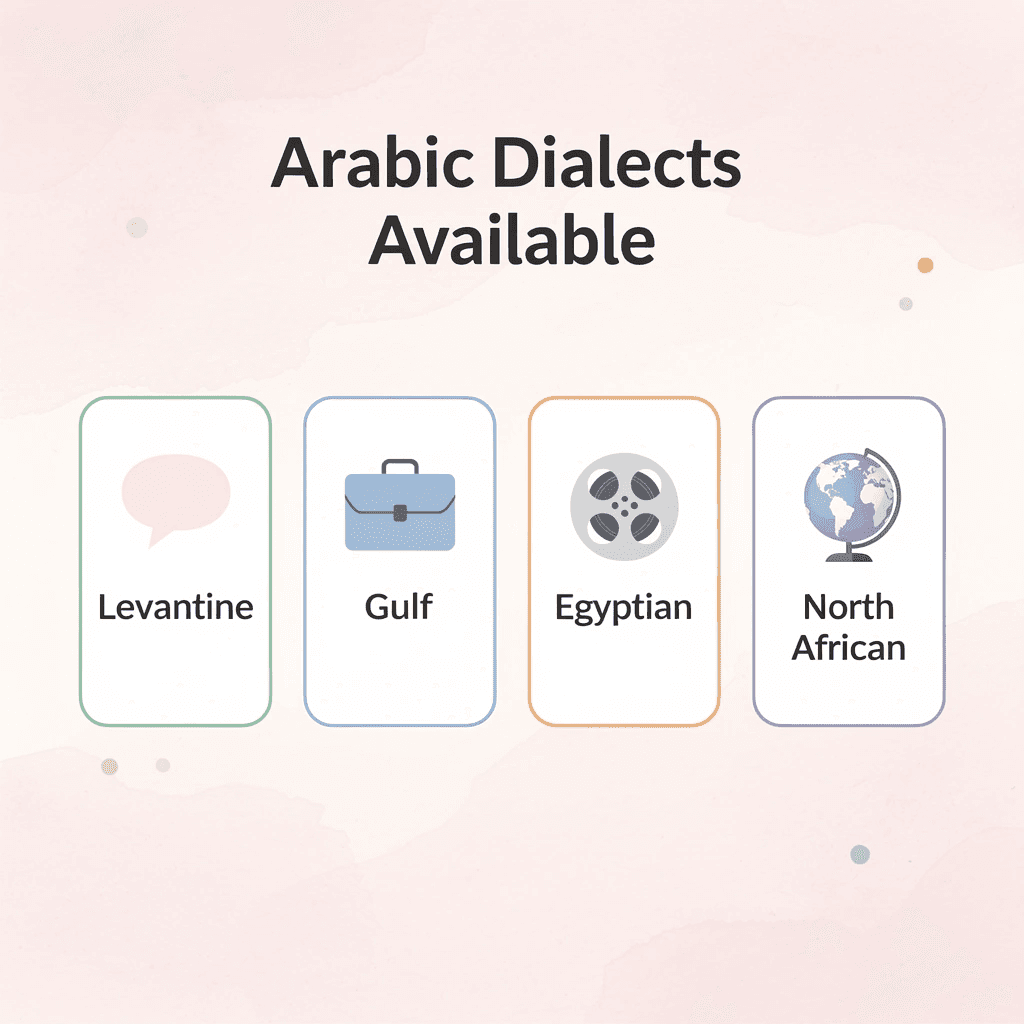
💡 Tip: Start with the dialect most relevant to your goals—Gulf for business, Egyptian for media, or Levantine for everyday conversation.
"Learning Arabic through dialect-specific practice helps students achieve natural fluency faster than traditional methods." — Language Learning Research, 2024
With short daily lessons, realistic conversational practice, pronunciation support, and interactive tools, Kalam builds natural speech. Whether you need the serious weight of an oath in the Gulf, its casual flow in the Levant, or its persuasive role in Egyptian markets, our personalized approach develops your confidence.

🎯 Key Point: Kalam's multi-dialect approach ensures you learn authentic expressions and cultural nuances that textbooks never teach.
Start speaking Arabic naturally today in any dialect with Kalam.
Related Reading
Basic Arabic Phrases
Urdu Vs Arabic
Arabic Basics
Best App To Learn Arabic
Arabic Vowels
Arabic Vs Hebrew