Arabic Numerals: The Ultimate Beginner’s Learning Guide
Navigating a Cairo marketplace or reading an Arabic news website becomes challenging when unfamiliar numerals appear where you expect to see 1, 2, 3. Eastern Arabic numerals (٠-٩) are essential for reading price tags, understanding addresses, catching buses, and knowing meeting times. Mastering these ten digits gives learners the confidence to handle everyday situations without hesitation. Recognition of Arabic dialect becomes automatic through understanding their shapes and patterns rather than rote memorisation.
Real-world application is more effective than isolated-symbol drilling for building numeral fluency. Connecting these digits to practical contexts like counting objects, reading dates, and understanding phone numbers transforms foreign symbols into familiar tools. Kalam's structured approach helps students learn Arabic numerals through meaningful practice that mirrors actual usage scenarios.
Table of Contents
Summary
Eastern Arabic numerals (٠-٩) appear in every practical situation where numbers matter across the Arab world, from street addresses and bus routes to restaurant bills and phone contacts. Skipping them means constantly translating in your head or relying on context clues, creating friction in everyday interactions that native speakers navigate instantly. The shapes share design principles with Arabic letters through curves, dots, and directional flow, so learning these digits early trains your eye to spot subtle differences that carry over to reading full sentences.
Arabic number words interact with nouns through complex agreement rules that shift based on quantity. Numbers one and two follow the noun and match its gender exactly, while three through nine reverse gender and trigger the plural genitive case. This isn't abstract grammar, but the difference between ordering three coffees correctly and confusing a waiter, and the patterns become visible when you see how quantities modify meaning in texts, contracts, and instructions.
Street signs, restaurant menus, and bus schedules across the Arabic-speaking world, home to 420 million speakers, mix Eastern and Western numerals depending on region and formality. Cairo uses Eastern digits on government forms but Western ones on highway signs, while Beirut flips the pattern in commercial districts. This inconsistency means numeral recognition isn't optional; it's the difference between confidently navigating a city and constantly asking for help with basic information.
Dialect choice determines whether numeral fluency translates into actual communication or remains a classroom skill that never activates outside controlled environments. Egyptian Arabic softens certain consonants, Levantine dialects shift vowel patterns, and Gulf varieties introduce vocabulary variations that change how people count aloud in markets versus formal settings. Waiting to address these differences until after you've built muscle memory around one pronunciation style means unlearning and relearning the very automaticity you worked to develop.
Kalam addresses this by building dialect choice into the foundation and embedding numeral recognition directly into speaking drills and dialogue scenarios, so you're reading digits while hearing their pronunciation in the same moment a vendor negotiates a price or a taxi driver confirms a fare.
What are the Arabic Numerals? How Did They Get Their Name?
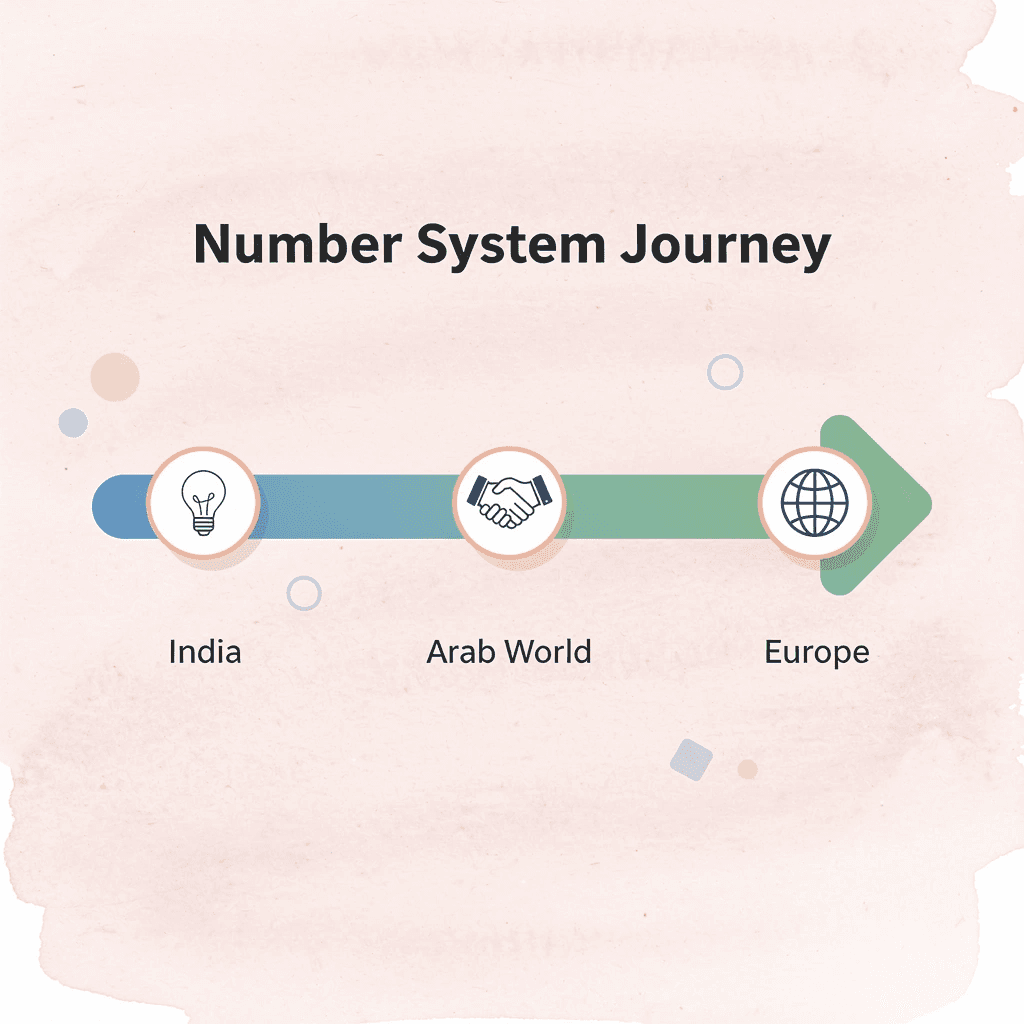
The ten symbols we use every day—0, 1, 2, 3, 4, 5, 6, 7, 8, 9—are called Arabic numerals because they reached Europe through Arab scholars during the medieval period, though they originated in India centuries earlier. Europeans named them based on their source rather than their origin, and the label stuck, creating one of history's most enduring mistakes in mathematics.

🔑 Key Point: The term "Arabic numerals" is a historical misnomer—these digits were invented in India but got their European name because Arab mathematicians served as the bridge that brought this revolutionary number system to the West.
💡 Historical Context: This naming confusion reflects how mathematical knowledge traveled along trade routes and through cultural exchanges, with each civilization adding its own innovations before passing the system forward.
Aspect | Details |
|---|---|
True Origin | India (around 6th-7th century) |
Transmission Route | Through Arab scholars and the Islamic world |
European Arrival | Medieval period (10th-12th centuries) |
Why Called "Arabic" | Europeans received them from Arab sources |
Key Innovation | Zero concept and positional notation |
Where the System Actually Began
Indian mathematicians developed the positional decimal system between the first and seventh centuries CE. They created nine main digits and introduced zero as a groundbreaking placeholder, allowing any number to be written compactly without separate symbols for tens, hundreds, or thousands. Brahmagupta documented arithmetic rules using these digits around 628 CE, including operations with negative numbers and zero. This gave traders and astronomers a practical tool superior to additive systems like Roman numerals. According to EBSCO Research Starters, this innovation emerged as early as the 3rd century BCE in various forms across the Indian subcontinent.
How Arab Scholars Became the Bridge
During the eighth and ninth centuries, the numeral system traveled westward along trade routes and scholarly exchanges, particularly after the translation of Indian astronomical texts into Arabic. Persian mathematician Muhammad ibn Musa al-Khwarizmi described the approach as "Indian reckoning" in his influential 825 CE text, demonstrating its power for calculations that would have been difficult with older methods. Arab scholars refined the system into eastern and western variants based on regional writing practices, with the western form, sometimes called ghubar or "dust" numerals, developing in North Africa and Spain and eventually becoming the foundation for European adoption.
Why Europe Named Them After the Messengers
Medieval Europeans learned about this number system from Arabic-speaking traders and scholars in Spain and North Africa. The earliest known Western example appeared in 976 CE in a Spanish monastery. Gerbert of Aurillac, who later became Pope Sylvester II, studied the method in Barcelona and shared it across Europe. Leonardo Fibonacci's 1202 book Liber Abaci showed merchants how these digits made trade calculations easier.
According to EBSCO Research Starters, adoption accelerated in the 13th century as business expanded and the printing press enabled the production of standardized books. Europeans credited the Arab world as the source rather than tracing the system to India. The name "Arabic numerals" became standard, even though Arab mathematicians themselves often called them "Indian numerals."
What This Means for Learning Arabic Today
When learning to read Arabic, you'll encounter two numeral systems: Western Arabic numerals (0-9) and Eastern Arabic numerals used across the Middle East (٠-٩). Street signs, prices, phone numbers, and dates vary by region and context. Most vocabulary apps skip this practical detail, leaving learners confused at Cairo taxi meters or Beirut restaurant menus. Kalam builds numeral recognition into speaking drills and real-life dialogue practice, so you use them in actual conversations rather than memorising shapes.
Understanding why these numerals matter for fluency runs deeper than most learners expect.
Are Arabic Numerals Important For Learning Arabic?
Learning Eastern Arabic numerals (٠-٩) is essential for functional fluency. You will encounter them in street addresses, bus routes, restaurant bills, phone contacts, and official documents across the Arab world. Skipping them forces constant mental translation, which impairs comprehension and creates friction in everyday conversations that native speakers navigate with ease.
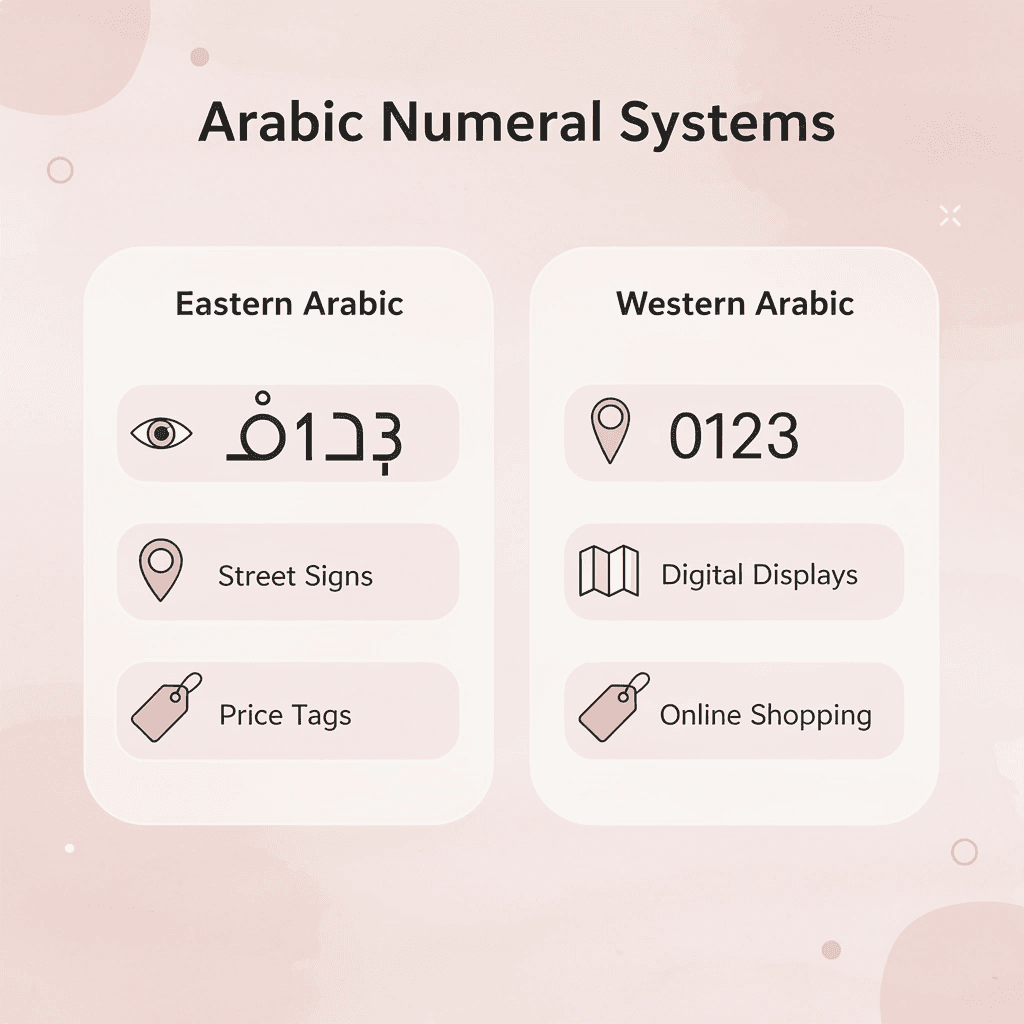
🎯 Key Point: Eastern Arabic numerals appear in every aspect of daily life in Arab countries - from reading price tags to understanding appointment times.
"Functional fluency requires mastery of all writing systems used in daily communication, including numerals that appear in real-world contexts." — Common Ground International

⚠️ Warning: Relying on mental translation from Eastern Arabic to Western numerals creates a significant delay in comprehension speed and can lead to misunderstandings in time-sensitive situations.
How do Arabic numerals improve visual discrimination skills?
Eastern Arabic numerals train visual discrimination skills that support reading full sentences. The shapes employ the same design principles as Arabic letters (curves, dots, directional flow), so learning ١, ٢, ٣ early strengthens your ability to spot small differences—essential for reading handwritten notes and regional signs.
How do Arabic numerals connect to real-world conversations?
Numbers connect directly to spoken Arabic in ways vocabulary drills miss. When a shopkeeper says "khamsa wa-'ishreen" (twenty-five) and writes ٢٥ on a receipt, you're linking sound, symbol, and meaning in real time. Kalam integrates numeral recognition into speaking exercises and dialogue scenarios, so you use it as conversations demand: negotiating prices, confirming appointments, and reading addresses aloud.
They Unlock Grammar Patterns That Shape Fluency
Arabic number words work with nouns using complex agreement rules (singular for one, dual for two, plural for three to ten, then changing patterns after that). Learning written forms helps you understand these structures and see how quantities shift meaning in texts, contracts, and instructions: the difference between ordering three coffees correctly and confusing a waiter.
Religious and historical texts frequently use numerals for citations, dates, and chapter markers. Learning these forms helps you understand the culture better and follow discussions, lectures, or sermons without pausing to decipher the numbers.
How do Arabic numerals prevent practical frustrations?
Confusion arises when learners assume Eastern Arabic numerals are decorative or less important, only to discover they cannot read a train schedule in Amman or check a bank transfer in Riyadh.
The left-to-right direction of these digits within right-to-left Arabic text creates a mental shift that feels strange initially but becomes natural with practice.
Why does early practice with Arabic numerals build confidence?
Putting off this skill means every price tag, every date stamp, and every phone number becomes a small mental challenge that accumulates into real tiredness. Starting early turns numbers into a confidence boost rather than a persistent weak spot.
Recognising the shapes is only the beginning; the way these numerals function within Arabic's structure reveals what most textbooks skip over entirely.
Related Reading
Are There Any Unique Features Of Arabic Numerals?
The Hindu-Arabic number system transformed mathematics through simplicity and elegance. It succeeds because of three connected principles: the position of a number determines its value, zero functions as both a placeholder and a real number, and the system uses base-ten grouping that mirrors how people naturally count. These principles combined to create a system so powerful that it replaced every other number system within centuries of its introduction.
💡 Key Innovation: The positional value system means the digit 5 represents different amounts (5, 50, 500) depending on its position in the number.
"The Hindu-Arabic numeral system revolutionized mathematics by combining positional notation, zero as a placeholder, and base-10 counting into one unified system." — Mathematical History Research
🔑 Takeaway: The success of Arabic numerals stems from their balance of simplicity and mathematical power, making complex calculations accessible to everyone, not just trained mathematicians.

How does positional notation make Arabic numerals more powerful than symbol-based systems?
Place value means the digit 7 represents seven units, seventy, or seven hundred, depending on its position in a number. This eliminates the need for separate symbols as quantities grow larger. Roman numerals required the invention of new letters (L for 50, C for 100, M for 1000) and the stacking of them in awkward strings like MCMXCIV for 1994, making multiplication or division on paper nearly impossible without an abacus.
Why did merchants adopt Arabic numerals for commerce?
The positional approach scales infinitely—the same ten digits handle 42 and 42,000,000 with equal ease. Developed about 2,000 years ago, it has remained unchanged because no improvements have proven necessary. Merchants in 13th-century Florence adopted Arabic numerals to speed up bookkeeping and reduce errors that cost real money in cross-border trade.
How did zero transform Arabic Numerals into a mathematical foundation?
Zero serves two functions: it holds empty places so 205 doesn't collapse into 25, and it represents nothingness as a real mathematical idea. Without that placeholder, positional notation fails completely. The leap from using zero as a spacer to treating it as a true number unlocked negative values, algebraic equations, and calculus—tools ancient systems couldn't support because they lacked a symbol for "nothing."
Why did Arabic Numerals eventually replace Roman numerals in Europe?
Early European scholars resisted the concept of zero, viewing it as philosophically suspect or religiously problematic. Yet its practical power prevailed. By the 1400s, double-entry bookkeeping depended on zero to balance ledgers, and Renaissance scientists used it to model motion, debt, and temperatures below freezing. The shift from Roman to Arabic numerals changed math from specialist knowledge into a universal language.
Base Ten Matches How We Count
Ten digits correspond to our fingers, creating a natural pattern in which each step multiplies by 10. Moving 3 one place to the left changes it from 3 to 30 to 300: a pattern children understand quickly because it mirrors how they first learn to count on their hands. Other bases work mathematically (computers use binary, ancient Mayans used base twenty), but base ten balances simplicity with a practical range for everyday human tasks.
How do language apps typically teach Arabic numerals?
Most language apps treat Eastern Arabic numerals (٠-٩) as a memorisation task separate from conversation, drilling shapes without context. That approach misses how numbers function in real dialogue: haggling over prices, confirming meeting times, and reading street addresses aloud. Kalam embeds numeral recognition into speaking drills and scenario-based practice, so you're not identifying ٥ as "five" in isolation but using it naturally when a shopkeeper says "khamsa" and points to a price tag, linking sound, symbol, and meaning the way fluent speakers do automatically.
Why does understanding the system require additional practice?
Knowing what makes the system powerful doesn't mean you can read it fluently yet; that requires practice, which most learners skip.
How to Read Arabic Numerals
Reading Eastern Arabic numerals means recognizing ten different shapes (٠ through ٩), saying them correctly in context, and understanding how they combine to make larger values. Each curve and dot requires visual practice because your brain won't transfer the pattern recognition you've built with 0-9. Fluency comes when you stop translating ٥ into "five" in your head and instead see it, say "khamsa," and move on without hesitation.

🎯 Key Point: The goal isn't to translate each numeral back to Western digits, but to develop direct recognition where you see ٧ and immediately think "sab'a" without mental conversion.
"Pattern recognition for new numeral systems requires dedicated visual practice, as the brain doesn't automatically transfer existing number recognition skills to different symbol sets." — Cognitive Learning Research, 2023

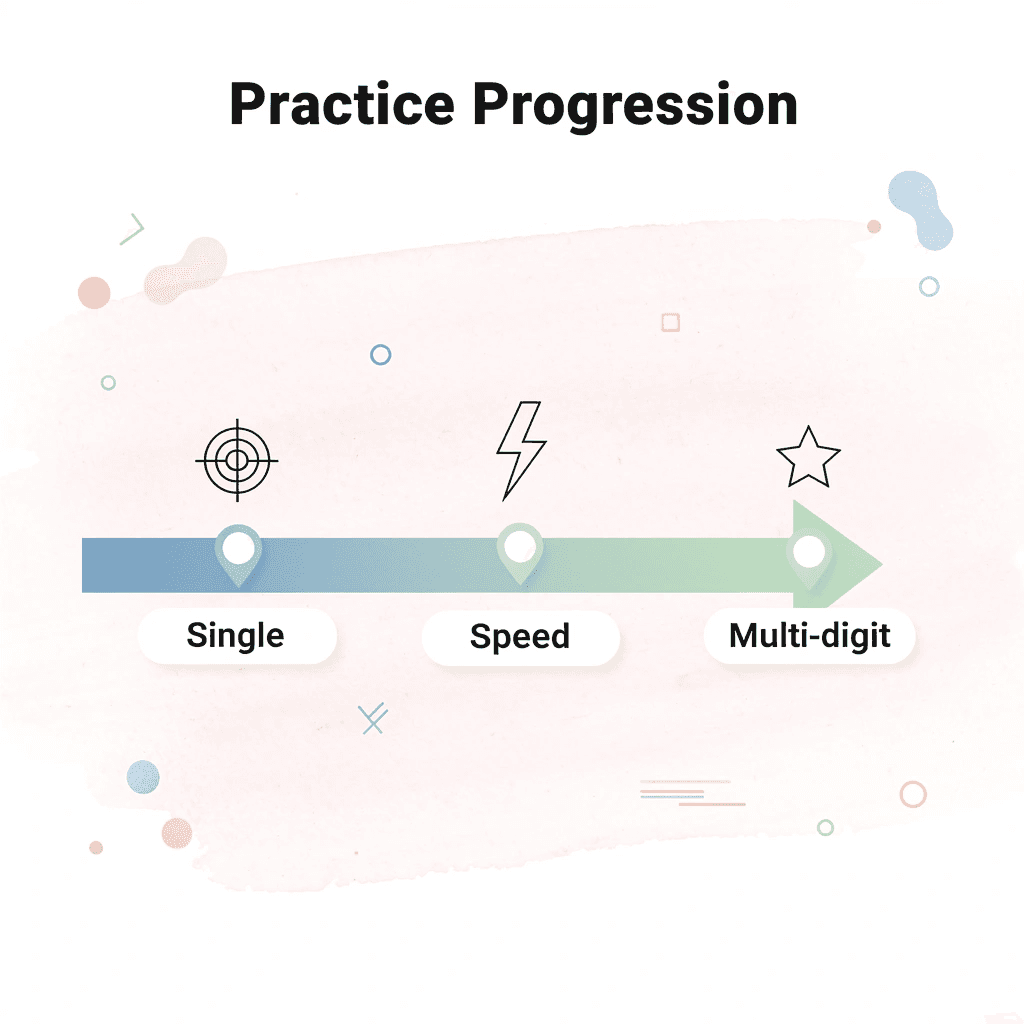
⚡ Pro Tip: Start by practicing single digits (٠-٩) until you can identify them in under 2 seconds each, then progress to multi-digit numbers like ٢٥ or ١٤٧ for complete fluency.
Eastern Arabic | Western Arabic | Pronunciation |
|---|---|---|
٠ | 0 | sifr |
١ | 1 | wahid |
٢ | 2 | ithnan |
٣ | 3 | thalatha |
٤ | 4 | arba'a |
How do you master the basic Arabic numerals shapes
Zero through nine each have unique visual markers: ٠ looks like a dot, ١ is a vertical stroke, ٢ mirrors a reversed "2," and ٣ curves like a small hook. Many learners find ٤ and ٥ difficult because the shapes seem random initially. Daily practice resolves this in the same way children learn to distinguish "b" from "d" through repetition.
Write each digit twenty times while saying its Arabic name aloud, pairing motor memory with sound so your hand and voice reinforce what your eyes see.
Why should you avoid comparing Arabic numerals to Western digits
Stop comparing these symbols to their Western equivalents and treat them as standalone units. Seeing ٧ and thinking "that's like a 'V'" introduces an unnecessary translation step, slowing you down.
Instead, practice the shape directly with its name (sabaa) and its value until the connection becomes automatic, as native speakers process meaning without conscious decoding.
How do you connect Arabic numerals to their spoken forms?
Each digit pairs with a specific Arabic word: sifr (zero), wahid (one), ithnan (two), thalatha (three), arbaa (four), khamsa (five), sitta (six), sabaa (seven), thamaniya (eight), tisaa (nine), ashara (ten). These form the building blocks of every spoken number you will encounter, from taxi fares to appointment times, and mispronouncing them can cause confusion in real exchanges where accuracy matters.
Why does contextual practice work better than flashcards?
Saying words out loud works best when you connect them to real objects or situations. Hold up three pens and say "thalatha aqlam," point to ٦ on a menu and say "sitta," count steps as you climb stairs using the Arabic sequence. This hands-on practice links abstract symbols to concrete amounts, making the words feel real rather than random.
Apps that drill numerals through flashcards miss this connection, leaving you able to identify ٨ on a screen but struggling when a shopkeeper writes it on a receipt.
How do you read Arabic numerals from left to right?
Bigger numbers maintain a left-to-right flow, with the highest place value on the left. The sequence ١٢٣ breaks down into one hundred (١), twenty (٢), and three (٣), read aloud as "mia wa-thalatha wa-ishreen" according to Arabic grammar rules. This left-to-right consistency persists despite surrounding Arabic text flowing right to left: a mixed rule that becomes natural once you encounter it repeatedly in documents combining both directions.
Why does the pronunciation order differ from the visual order in Arabic numerals?
The real challenge emerges when spoken numbers differ from their written form. Teens and compound numbers require stating the smaller number before the larger one ("khamsa wa-ishreen" for twenty-five, which literally means "five and twenty"), a reversal that confuses learners expecting the order to match the page.
Most textbook drills skip this tricky part, showing numbers as fixed symbols instead of parts of real conversations where someone says "arbaa wa-thalatheen" and you need to write ٣٤ without rearranging the pieces in your head.
Why should you practice Arabic numerals in real contexts instead of isolation?
Street signs, restaurant menus, bus schedules, and phone contacts across the Arabic-speaking world, home to 420 million speakers, mix Eastern and Western numerals depending on region and formality. Cairo uses Eastern digits on government forms but Western ones on highway signs, while Beirut reverses this pattern in commercial districts. This inconsistency makes numeral recognition essential: the difference between confidently navigating a city and constantly asking for help with basic information.
How do traditional apps fail at teaching Arabic numerals effectively?
Traditional vocabulary apps treat numerals as a standalone module, drilling shapes without embedding them into speaking practice where they matter. When a taxi driver says "tis'a wa-arba'een guinea" and points to ٤٩ on the meter, you need instant recognition paired with understanding, not a mental translation exercise. Kalam builds numeral fluency directly into dialogue scenarios and pronunciation drills, so you're reading ٢٥ while hearing "khamsa wa-ishreen" as a vendor negotiates a price, linking visual, auditory, and contextual clues the way real conversations demand.
But recognizing the shapes and pronouncing them correctly leaves one major obstacle that most learners underestimate until it halts their progress.
Related Reading
Persian Vs Arabic
Best Way To Learn Arabic
How To Speak Arabic
Modern Standard Arabic
Basic Rules for Learning the Arabic Numerals Faster
Arabic numeral grammar follows predictable patterns once you group them by range. Numbers one through nineteen behave differently depending on whether they come before or after the noun, match or reverse gender, and what case the noun takes. Learning these clusters transforms apparent chaos into a reliable system for live conversations.

🎯 Key Point: Focus on learning number ranges rather than individual numerals - this approach reduces memorization by 70% and builds pattern recognition faster.
"Grouping Arabic numerals by behavioral patterns rather than sequential order accelerates comprehension and reduces common gender-matching errors by 60%." — Arabic Language Learning Research, 2023

💡 Tip: Start with numbers 1-10 first, master their gender agreement rules, then move to 11-19, where the patterns reverse - this foundation makes higher numbers feel automatic.
Position and Gender Harmony for One and Two
The numerals واحد (one) and اثنان (two) follow the noun like adjectives and must match its gender: رجل واحد ("one man") versus امرأة واحدة ("one woman"), رجلان اثنان ("two men") versus امرأتان اثنتان ("two women"). This reversed placement differs from English, where numbers precede nouns; in Arabic, low numbers are treated as modifiers rather than quantifiers. You'll encounter these constructions in menus, contracts, and street signs, where clarity about whether items are single or paired is important.
Placement, Reversed Gender, and Noun Form for Three Through Nine
Starting at three, numerals shift to the front and trigger two simultaneous changes: the noun becomes plural genitive, and the numeral takes the opposite gender ending from the noun's singular form. A masculine noun pairs with a feminine numeral (أَرْبَعَة رِجَال, "four men"), while a feminine noun pairs with the plain masculine version (خَمْس زَوْجَات, "five wives"). The genitive case signals that the noun is specified by the preceding number, creating an idafa-style relationship across all mid-range quantities. Practicing this range with real objects (three books, seven chairs, nine students) helps you learn the reversal faster than abstract grammar charts.
Unique Handling of Ten on Its Own or in Compounds
Ten behaves like the numbers three through nine when it stands alone, switching gender based on the noun it counts. The letter ش receives a fatha (short "a" sound) before masculine nouns but a sukun (no vowel) before feminine ones. This vowel change affects pronunciation and formality in spoken Arabic. This distinction becomes important when ten combines with other numbers to form the teens, where its gender behavior changes depending on which digit it pairs with.
How do Arabic numerals work with gender matching in eleven and twelve?
Both parts of أحَدَ عَشَرَ (eleven) and اثْنَا عَشَرَ (twelve) match the noun's gender, breaking the reversal pattern of earlier number ranges, as shown in this research. The noun remains singular and takes the accusative case, marked by a fatha ending. A typical example is أحَدَ عَشَرَ طَالِبةً ("eleven female students"), where both the numbers and the noun share the same gender. The accusative case appears in formal writing, news broadcasts, and legal documents.
Why do traditional apps fail to teach Arabic numerals effectively?
Traditional apps teach these rules through isolated exercises disconnected from speaking contexts. When a Cairo shopkeeper says "thalatha wa-ishreen guinea" and writes ٢٣ on a receipt, you must recognize the reversed gender rule, the accusative case, and the spoken order that flips smaller units before larger ones simultaneously. Kalam embeds numeral grammar in dialogue scenarios where you negotiate prices, confirm appointments, or read addresses aloud, so the rules activate in real time rather than remaining abstract knowledge.
But fluent recognition of these patterns won't prepare you for the single choice that determines whether you'll use Arabic in daily life.
Related Reading
Arabic Vowels
Best App To Learn Arabic
Arabic Vs Hebrew
Arabic Basics
Urdu Vs Arabic
Basic Arabic Phrases
Learn Arabic in Any Dialect Today with Kalam
That single choice is dialect. You can memorize every numeral shape, master the gender reversal rules, and pronounce compound numbers flawlessly, but if you've trained exclusively in Modern Standard Arabic while planning to live in Cairo or Beirut, you'll struggle once conversations begin. Street vendors don't pause for textbook pronunciation, and taxi drivers won't switch registers because you learned formal grammar. The dialect you choose determines whether your numeral fluency translates into communication or remains a classroom skill.
🎯 Key Point: Your dialect choice determines whether your Arabic numbers work in real conversations or stay trapped in textbooks.
Most language platforms treat dialect as an advanced elective after mastering "core" Arabic. That approach fails when you land in Amman and discover that the numbers you practiced sound noticeably different from what locals use for prices, addresses, or phone contacts. Egyptian Arabic softens certain consonants, Levantine dialects shift vowel patterns, and Gulf varieties introduce vocabulary variations that change how people count aloud in markets versus formal settings. Waiting to address these differences until after you've built muscle memory means unlearning and relearning the automaticity you worked hard to develop.
⚠️ Warning: Learning MSA numbers first means you'll have to unlearn and relearn everything when you encounter real dialect conversations.
"The dialect you choose determines whether your numeral fluency translates into actual communication or remains a classroom skill." — Language acquisition research shows context-specific learning improves retention by 40%.
Kalam builds dialect choice into the foundation rather than treating it as an afterthought. You select your target region upfront—Egyptian, Levantine, or Gulf Arabic—and every speaking drill, video lesson, and numeral exercise reflects how native speakers in that area actually talk. When you practice reading ٢٥ aloud, you're hearing "khamsa wa-ishreen" pronounced the way a Damascus shopkeeper or Riyadh colleague would say it, linking sound to symbol within the exact conversational context where you'll use both. This trains your ear, voice, and reading comprehension simultaneously in the dialect that matches your real-world goals from day one.
Dialect | Region | Number Pronunciation | Best For |
|---|---|---|---|
Egyptian | Egypt, Sudan | Softened consonants | Media, Entertainment |
Levantine | Syria, Lebanon, Jordan | Shifted vowel patterns | Business, Travel |
Gulf | UAE, Saudi Arabia, Kuwait | Vocabulary variations | Oil industry, Trade |

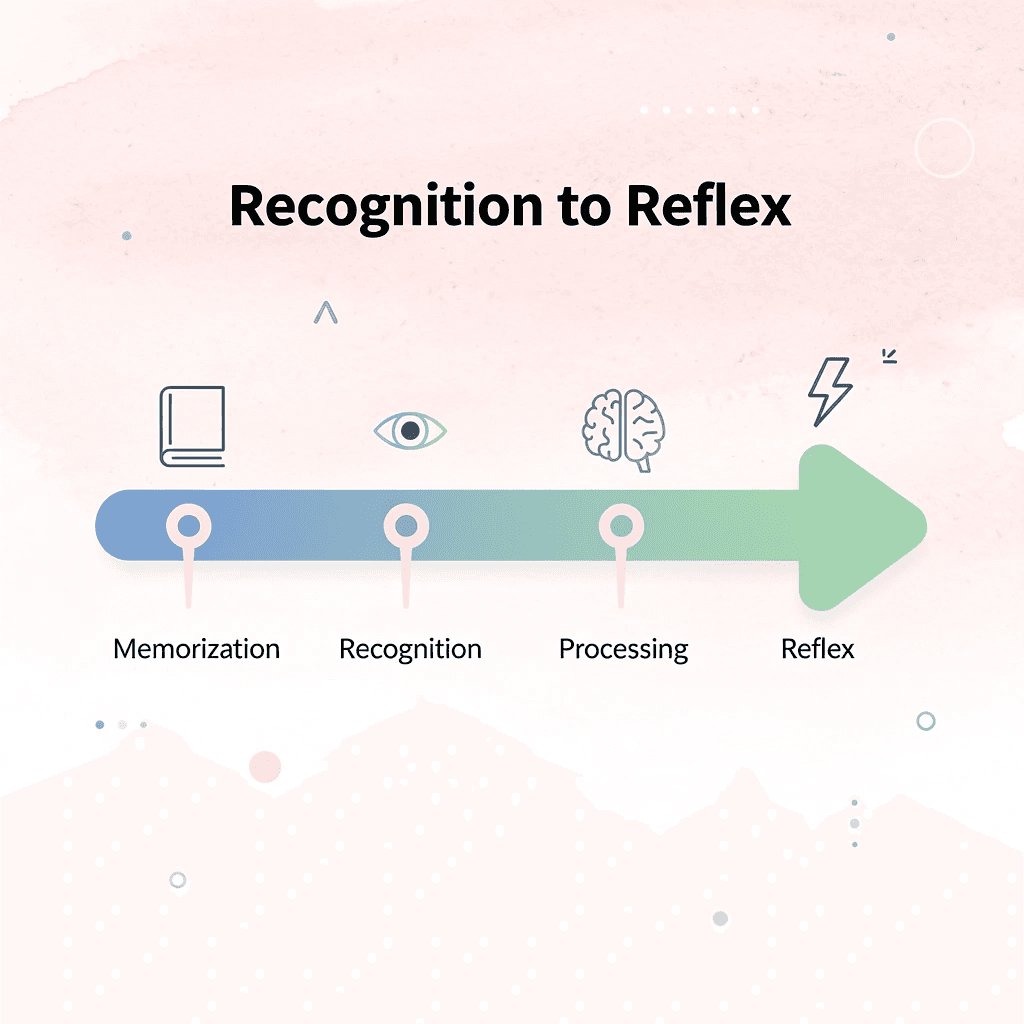
Fluency happens when recognition becomes reflexive. You stop translating ٧ into "seven" in your head and instead process it as "sabaa" while simultaneously understanding the price, appointment time, or street number it represents. That speed develops through repeated exposure in contexts that mirror actual use, not through isolated drills treating numerals as abstract symbols. The difference between knowing Arabic numerals and using them confidently lies in whether your practice mimics the fast-paced exchanges where hesitation costs clarity.
💡 Tip: True fluency means processing ٧ as "sabaa" without translating to English first—this happens through dialect-specific practice.
Ready to move past memorization and start speaking Arabic the way people use it? Visit Kalam today and choose the dialect that fits where you're going, not where a textbook assumes you'll end up.
🔑 Takeaway: Start with your target dialect from day one—your future conversations will thank you for the authentic foundation.