
11 Best Italki Alternatives for Language Learning in 2026
Learning Arabic presents a unique challenge since Arabic dialects vary significantly across regions, with Egyptian, Levantine, Gulf, and Moroccan variants each offering distinct expressions and pronunciation patterns. Most language platforms treat Arabic as a monolithic language, leaving learners uncertain about which dialect suits their goals and where to find specialized tutors. Finding the right platform requires understanding how different services approach dialect instruction, their pricing structures, and the quality of their tutors.
Online tutoring platforms and language exchange apps provide various learning paths, but effectiveness depends on matching your specific needs with the right service. Rather than browsing countless tutor profiles or settling for generic conversation practice, learners benefit from platforms offering structured dialect training and qualified regional instructors. Kalam addresses these needs by providing specialized Arabic instruction from native speakers, helping you learn Arabic through targeted dialect training.
Summary
iTalki connects over 10 million learners with 30,000+ teachers across 190 countries, yet thousands still search for alternatives that better match their schedules, budgets, or learning styles. The platform's marketplace model addresses access issues but leaves gaps in cost sustainability, coordination friction, and speaking anxiety that push dedicated students toward other solutions. Three one-hour lessons per week at mid-range rates easily reach $240 monthly, a recurring expense that forces difficult choices while still falling short of the daily exposure research identifies as essential for rapid fluency gains.
The global online language learning market was estimated at $22.1 billion in 2024 and is projected to reach $54.8 billion by 2030, yet most platforms still default to vocabulary memorization over conversational fluency. Strong evaluation starts with asking what you'll actually do with the language, not what sounds impressive on a feature list. Platforms that promise comprehensive fluency often bury practical conversation skills under grammar drills and vocabulary lists that feel productive but don't translate to real-world use, leaving learners stuck in study mode rather than speaking mode.
Booking across time zones, managing last-minute cancellations, and competing for open slots with preferred instructors introduces constant friction into what should be a learning routine. What begins as an energizing habit gradually turns into administrative work, causing many to skip sessions and lose momentum entirely. Platforms that offer instant access without calendar management attract learners who want to practice on their own terms, whenever focus and energy align.
Real-time interaction with an unfamiliar teacher triggers speaking anxiety for many students, making them hesitate to book or fully engage, and slowing the confidence-building process they signed up to accelerate. For Arabic learners navigating dialect choices and pronunciation nuances, this anxiety compounds when tutors lack structured conversation frameworks, leaving students to guide their own practice scenarios. Interactive elements that provide immediate feedback on pronunciation and spaced repetition reinforce knowledge without the performance pressure that stops consistent practice.
Advertised rates hide the real cost of reaching fluency: a platform charging $8 monthly but requiring daily hour-long sessions to see progress costs more in time than a $20 service that delivers results in 15-minute bursts. Learners cycle through vocabulary apps for months before realizing they still freeze during actual conversations, building reading skills and grammar knowledge that creates the illusion of progress through completed lessons without corresponding speaking confidence.
Kalam addresses this by coaching conversational Arabic through pre-built dialogues from your first session, letting you practice real-world scenarios immediately with pronunciation feedback and dialect-specific content that removes coordination burdens and speaking anxiety.
Table of Contents
What is Italki, and How Does It Work?
iTalki connects language learners with native-speaking tutors for one-on-one video lessons. You don't need a subscription: browse instructor profiles, book sessions that fit your schedule, and pay for the time you use. The platform handles video calls and payment, so you can focus on conversation practice.

🎯 Key Point: iTalki operates on a pay-per-lesson model, giving you complete flexibility over your learning schedule and budget. "One-on-one tutoring can be significantly more effective than traditional classroom learning, with students showing 2-3 times faster progress rates." — Educational Research Review, 2023

💡 How It Works: Simply create your profile, browse tutor credentials and rates, book a lesson time, and connect via iTalki's built-in video platform — no additional software required.
How did Italki become a global tutoring platform?
Started in 2006 as a language exchange network, iTalki became a full tutoring platform by 2008. Today, it connects over 10 million learners in 240 countries with more than 30,000 teachers from 190 nations. You can find teachers for widely spoken languages such as Spanish and Mandarin, as well as less common options such as Swahili and Icelandic. Search filters include price, availability, teaching style, and native speaker status.
Two Types of Instructors
Professional teachers hold certifications and teach structured lessons using formal curricula to help students prepare for exams, master grammar, and systematic progression. Community tutors are native speakers or fluent speakers who focus on casual conversation, pronunciation refinement, and cultural context at lower rates. Most learners use both types: professional teachers for structure and community tutors for frequent practice.
How Booking Works
After creating a free account, you can filter instructors by price range, time zone, specialization, and teaching approach. Each profile includes an introductory video, student reviews, and an availability calendar. Lessons run for 30, 45, or 90 minutes and can be scheduled immediately or booked days in advance. New users can access up to three discounted trial lessons to test different instructors before committing to regular sessions, letting you evaluate chemistry and teaching style without a high upfront cost.
How does Italki's built-in classroom work?
Classes happen inside iTalki's built-in video tool, which requires no downloads on desktop. The interface includes live video and audio, screen sharing, a chat window, a private note-taking space, and automatic saving of lesson materials and feedback. The system checks your microphone and camera before each class. Keeping everything in the platform means your lesson history, homework assignments, and instructor notes stay organized in one place. The mobile app for iOS and Android lets you book lessons, send messages, and attend video lessons on the go.
What works best for Arabic dialect learners?
For Arabic learners, this setup works well when you already know which dialect you need and can guide tutors through your learning objectives. But if you're still determining whether you need Egyptian, Levantine, or Gulf Arabic, or if you want structured pronunciation drills based on real-world scenarios without managing the lesson plan yourself, Kalam offers pre-built conversation modules designed around authentic dialogues. You practice speaking immediately, with the app coaching your pronunciation and phrasing, rather than coordinating practice scenarios with a tutor who may lack specialization in exam formats or specific conversational contexts. Yet even with flexible scheduling, intuitive technology, and affordable access to thousands of tutors, many learners still search for alternatives. The reasons reveal something important about what makes conversation practice stick.
Related Reading
Why Do Users Seek Italki Alternatives?
Students seek other options when they understand that steady progress requires more than occasional tutoring sessions. Money problems, scheduling conflicts, and emotional barriers can transform an exciting commitment into a source of stress.

🎯 Key Point: The most common reasons for seeking Italki alternatives include budget constraints, limited tutor availability, and platform-specific limitations that don't match individual learning styles. "Language learning platforms must address both financial accessibility and scheduling flexibility to retain long-term users." — Educational Technology Research, 2023
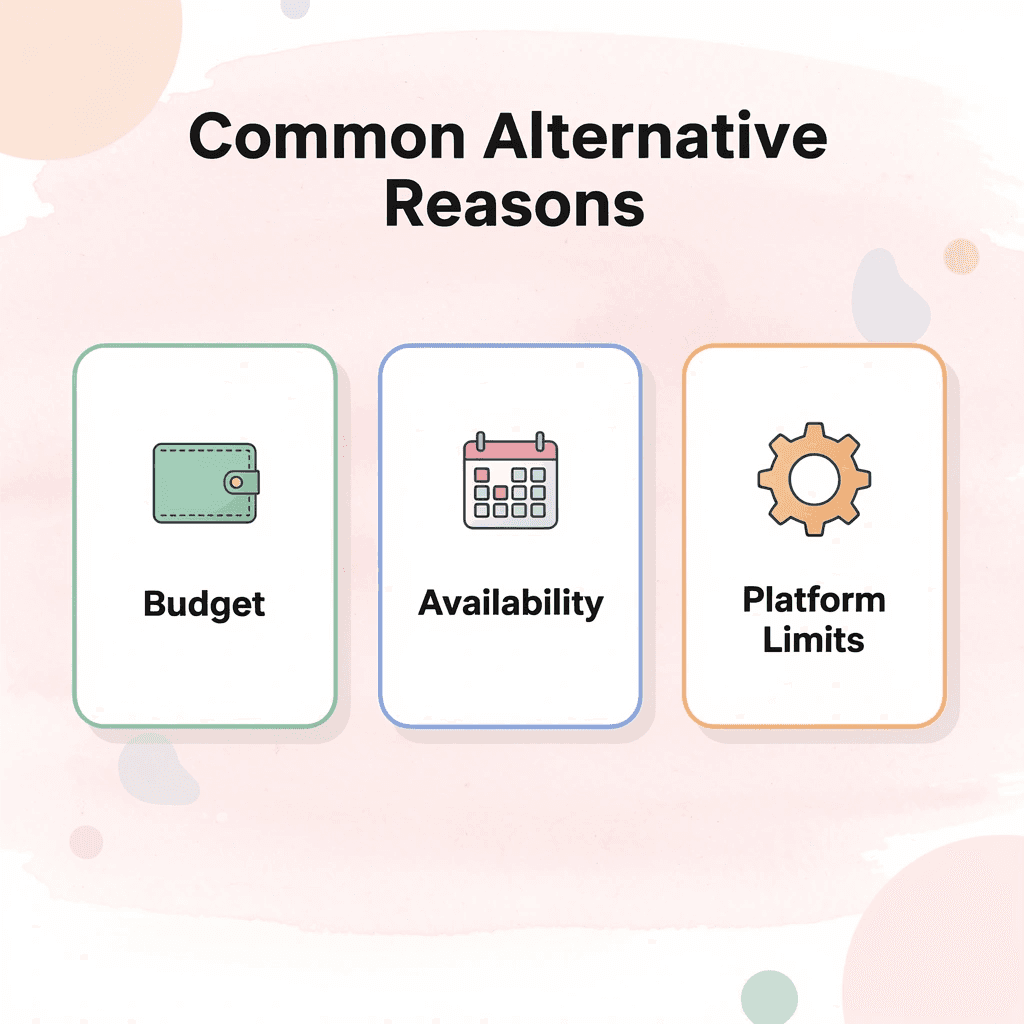
⚠️ Warning: Many learners underestimate the total cost of consistent tutoring sessions, which can range from $15-50 per hour, depending on the tutor's experience and language specialty.
The Financial Weight of Regular Sessions
Three one-hour lessons per week at mid-range rates cost roughly two hundred forty dollars monthly. This recurring expense creates difficult choices for most learners, particularly since research identifies daily exposure as essential for rapid fluency gains. Learners seek alternatives like flexible subscription models or lower per-session pricing to enable more frequent practice opportunities.
Coordination Exhaustion
Booking across time zones, managing last-minute cancellations, and competing for open slots with your preferred instructor create friction in what should be a routine for learning. What begins as energizing becomes administrative work, causing many to skip sessions and lose momentum. Busy professionals and parents find this coordination draining, leading them to abandon consistent practice rather than maintain the scheduling burden. Platforms that offer instant access without calendar management attract learners who want to practice on their own terms, whenever focus and energy align.
Speaking Anxiety and Performance Pressure
Talking with an unfamiliar teacher can make many students anxious about speaking. The stress of performing during every lesson discourages learners from booking sessions or participating fully, which slows confidence development. Shy students and beginners often skip regular practice due to this social pressure. For Arabic learners navigating dialect choice and correct pronunciation, anxiety intensifies when tutors lack a clear conversation plan. Kalam removes this pressure by providing pre-made conversations and pronunciation exercises that let you practice speaking without the stress of live performance, allowing you to work through real conversations at your own pace until confidence builds naturally.
Instructor Inconsistency
When teachers are unavailable, students must switch between different instructors, requiring repeated introductions, adaptation to varying teaching styles, and disconnected feedback. Without a consistent teacher, tracking progress and providing personalized help that builds on prior learning becomes difficult. Students seeking steady progress look for platforms that guarantee the same teacher or structured classes to ensure cumulative learning.
What are the Criteria for Evaluating Language Learning Platforms?
Good evaluation starts with asking what you'll do with the language. Platforms that promise complete fluency often hide practical conversation skills under grammar drills and vocabulary lists that don't translate to real-world use. The right criteria separate tools that build speaking confidence from those that keep you stuck in study mode.

When evaluating language learning platforms, focus on core functionality that matches your specific learning goals. Interactive speaking practice, real-time feedback, and conversation simulation matter more than features that don't improve fluency. The best platforms prioritize practical communication skills over theoretical knowledge of grammar.
Evaluation Criteria | What to Look For | Red Flags |
|---|---|---|
Speaking Practice | Real-time conversation, pronunciation feedback | Only text-based exercises |
Content Quality | Native speaker audio, cultural context | Robotic voices, outdated scenarios |
Progress Tracking | Skill-based metrics, conversation readiness | Generic completion percentages |
Practical Application | Real-world scenarios, job-specific vocabulary | Academic-only focus |

Teaching Method and Skill Focus
The foundation lies in how a platform approaches language learning. Some focus on reading and writing through translation exercises, while others center on listening comprehension and speaking from day one. According to Grand View Research, the global online language learning market was estimated at USD 22,115.7 million in 2024 and is projected to reach USD 54,833.2 million by 2030, yet most platforms still default to vocabulary memorization over conversational fluency. To speak confidently in real situations, prioritize platforms that coach pronunciation and dialogue structure rather than endless word lists. Research shows measurable gains in receptive and productive skills when learners practice speaking early and often, not after months of passive study.
Content Depth and Cultural Relevance
Real-world materials help you learn faster than isolated drills. Check if lessons show how native speakers talk, including cultural details, common phrases, and when to use certain expressions. For Arabic learners, this matters: a platform teaching Modern Standard Arabic through formal texts alone won't prepare you for casual conversations in Cairo or Beirut. Good lessons connect new material to real situations you'll face—ordering food, shopping in markets, discussing work—so your practice feels like preparing for actual conversations rather than schoolwork.
Interface Design and Accessibility
Problems with navigation hurt consistency faster than hard lessons do. Messy layouts, slow load times, or confusing lesson flows force you to manage the tool rather than learn the language. Clean design with intuitive controls lets you focus entirely on speaking and listening, especially during short practice sessions. Mobile-friendly interfaces that work smoothly across devices let you practice whenever you have time, turning waiting moments into progress without technical problems draining your motivation.
Personalization and Adaptive Learning
Generic lesson paths ignore where you're starting from and how fast you learn, forcing you through material you already know or skipping important basics. Strong platforms use placement tests and adaptive algorithms to focus on your specific weak areas while skipping repeated content. This maintains challenge levels in the productive zone where growth happens fastest and respects your time. Flexibility in lesson length and focus areas lets you choose between daily fifteen-minute sessions or deeper weekend practice blocks.
Engagement Features and Practice Quality
Interactive elements transform studying into a sustainable habit. Speech recognition, immediate feedback on pronunciation, and spaced repetition help you retain information without stress. For Arabic, platforms that teach speaking through real conversations help reduce the performance anxiety that stops many learners from practicing regularly. Kalam eliminates the pressure of live tutoring by offering pre-made conversation lessons with pronunciation coaching, allowing you to practice real-world dialogue at your own pace until you feel confident. The platforms that work best make speaking practice feel easy, not scary, from the beginning.
Related Reading
Persian Vs Arabic
Best Way To Learn Arabic
How To Speak Arabic
Modern Standard Arabic
11 Best Italki Alternatives for Language Learning in 2026
Choosing beyond iTalki means deciding what matters most: structured self-paced lessons, live human interaction, or community-driven exchanges. According to LRNkey, over 10 million language learners use iTalki worldwide, yet thousands seek alternatives that better match their schedules, budgets, or learning styles. The platforms below deliver measurable results through different approaches: gamified apps, tutor marketplaces, and peer networks, each addressing specific friction points that traditional tutoring leaves unresolved.

1. Kalam
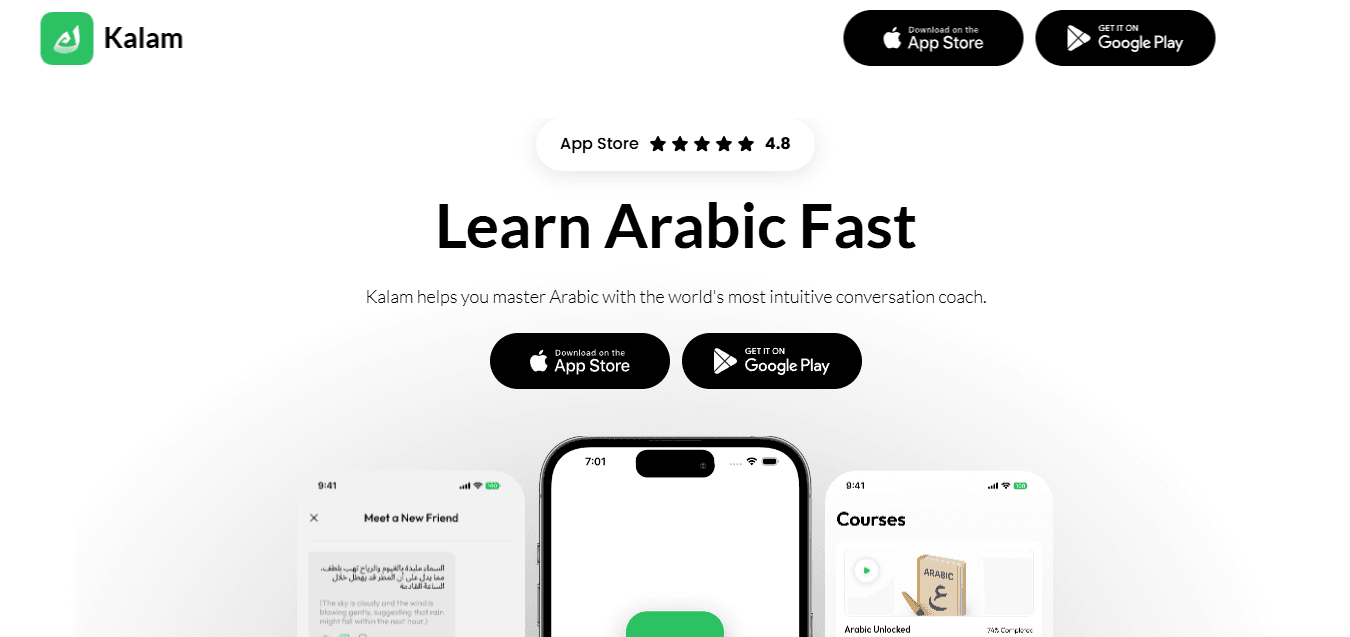
Kalam is a dedicated platform for mastering Arabic conversation through an intuitive coach designed for real-world speaking practice. It empowers learners to build fluency with short, consistent sessions that fit into daily routines. Trusted by more than 10,000 members worldwide, Kalam delivers a targeted approach for anyone prioritizing practical Arabic speaking skills.
Key Features
World's Most Intuitive Conversation Coach: Kalam features the world's most intuitive conversation coach, which guides users through natural Arabic dialogues to build speaking confidence without complicated setups or overwhelming rules.
Focused Mastery of Arabic: The entire platform is designed to help learners master Arabic, with every element tailored to develop strong conversational skills in this language.
Making Speaking Arabic Easy: Kalam is crafted with a clear mission: to make speaking Arabic as easy as possible, stripping away barriers so users can communicate naturally from the early stages.
Short Daily Lessons for Practice: Users can achieve steady progress by completing just a few lessons each day, keeping practice sessions brief yet highly effective for building skills over time.
Consistent Daily Practice Approach: The structure encourages regular short sessions that promote fast learning through repeated conversational exposure rather than long study marathons.
Mobile App Delivery: Kalam operates as a dedicated mobile app that delivers the full conversation-coaching experience directly on smartphones, enabling convenient access anywhere.
Immediate Start Capability: Learners can download the app and begin practicing Arabic right away, eliminating delays and letting users jump into lessons instantly upon signup.
Trusted by Over 10,000 Members: The platform has earned the trust of more than 10,000 members globally, reflecting real user validation of its effectiveness for Arabic conversation goals.
Global User Reach: With members located all over the world, Kalam supports a diverse international community of Arabic learners from different backgrounds and time zones.
Practical Conversational Emphasis: Every lesson emphasizes real conversation practice, helping users develop the speaking fluency needed for everyday interactions in Arabic.
Pros
Delivers an intuitive coach that simplifies Arabic speaking practice for faster results.
Fits easily into busy schedules with its short daily lesson format.
Builds real conversational skills through focused, practical exercises.
Trusted by a large global community of over 10,000 users.
Provides immediate mobile access with no lengthy setup required.
Keeps learning simple and motivating by removing unnecessary complexity.
Cons
Specialized exclusively in Arabic.
Best For
Learners aiming to master spoken Arabic for travel, work, or personal goals. Users who prefer quick daily conversational practice to lengthy traditional classes. Beginners and intermediate speakers seeking intuitive coaching. Global users want a straightforward mobile tool backed by a proven community.
Accessibility
Kalam is fully accessible via its mobile app on iOS devices with no geographic restrictions. Its active community of over 10,000 members from around the world makes it ideal for anyone with a smartphone who wants to start practicing Arabic immediately.
2. Duolingo
Duolingo serves as a dynamic educational technology service offering free, game-inspired lessons across languages and related skills. It emphasizes accessibility by breaking learning into short segments that fit any schedule, and uses motivational techniques to help users steadily develop skills in a fun way.
Key Features
Lessons available in more than 40 languages, covering common options like Spanish and French, as well as rarer ones such as Navajo.
Gamified system with points, streaks, leaderboards, and rewards to maintain daily engagement.
Adaptive technology that adjusts lesson difficulty based on individual progress and performance.
Spaced repetition exercises that reinforce vocabulary and grammar retention over time.
Short, bite-sized activities focused on listening, speaking, reading, and writing practice.
Built-in speaking recognition for pronunciation feedback during interactive drills.
Cross-platform access with seamless syncing between mobile apps and web version for on-the-go use.
Pros
Completely free core experience with no mandatory payments for basic lessons.
Highly engaging format that turns routine practice into an addictive habit.
Strong mobile optimization for learning anytime, anywhere.
Regular content updates and new language additions keep the material fresh.
Excellent for building vocabulary foundations quickly.
Community forums and forums provide extra motivation and tips.
Cons
Limited depth in advanced conversational or grammar explanations.
Speaking practice relies on AI rather than live human feedback.
Can feel repetitive or superficial for intermediate and higher learners.
Occasional ads in the free version may disrupt flow.
Less emphasis on cultural context compared to live tutor sessions.
Best For
Absolute beginners and casual learners wanting fun, consistent daily practice.
Budget-conscious users who need flexible, no-cost options to supplement other methods.
Those who enjoy gamification and short sessions to maintain streaks.
Accessibility
Free with optional Super Duolingo subscription (around $7–$12 monthly for ad-free and extras); available on iOS, Android, and web; global reach with support for dozens of interface languages.
3. Busuu
Busuu delivers an interactive language solution that blends proven teaching methods with real-world practice. It stands out by linking learners directly to native speakers for authentic conversation, making it a practical bridge between app-based study and live interaction.
Key Features
Structured lessons covering vocabulary, grammar, and conversational skills in 14+ languages.
Direct connections to native speakers for meaningful feedback on writing and speaking.
Community-driven corrections where users review each other’s exercises.
Video and audio content featuring varied native voices for realistic pronunciation.
AI-assisted tools for transcription and instant pronunciation feedback.
Business-focused modules for professional communication improvement.
Mobile-first design with progress tracking and personalized study plans.
Pros
Combines self-study with human interaction for balanced skill development.
User-friendly interface praised for ease of navigation.
Strong support resources and a responsive help team.
Effective for building practical conversation confidence.
Flexible for both individual learners and corporate training.
Regular updates keep content relevant to current language use.
Cons
Subscription costs more than fully free alternatives.
Fewer languages are offered compared to broader platforms.
The quality of community feedback can vary depending on user activity.
Some advanced features require the paid plan.
Less emphasis on rare or less commonly taught languages.
Best For
Learners seeking a mix of structured lessons and native speaker practice.
Professionals aiming to improve workplace communication skills.
Users who value community input and peer corrections.
Accessibility
Subscription-based starting around $13–$18 monthly; web and mobile apps (iOS/Android); widely available worldwide with multi-language support.
4. Rosetta Stone

Rosetta Stone remains a pioneer in immersive language education, leveraging technology to simulate natural acquisition without heavy reliance on translations. Its focus on intuitive learning through context helps users think directly in the target language.
Key Features
Immersive method using images, audio, and context instead of English translations.
Comprehensive courses across 25+ languages with progressive difficulty levels.
Advanced speech recognition for accurate pronunciation training.
Live online tutoring add-ons available for personalized sessions.
Brain-training exercises to boost memory and retention.
Offline download options for lessons on mobile devices.
Detailed progress analytics and milestone tracking.
Pros
Proven track record with millions of users worldwide.
Strong emphasis on listening and speaking from day one.
High-quality audio and visual materials feel professional.
Works well alongside other reinforcement tools.
Reliable customer support and user-friendly dashboard.
Lifetime access options in some plans for long-term value.
Cons
Higher price point than many app alternatives.
Can feel slow or frustrating for complete beginners without guidance.
Less flexible scheduling compared to on-demand tutor platforms.
Limited social or community elements.
Grammar explanations are minimal and inferred rather than explicit.
Best For
Visual and intuitive learners who prefer immersion over rules.
Self-motivated users committed to a consistent, structured program.
Those wanting a polished, software-like experience for core skills.
Accessibility
Subscription from about $15–$20 monthly or lifetime plans; available on web, iOS, and Android; global access with strong support for major languages.
5. Classgap
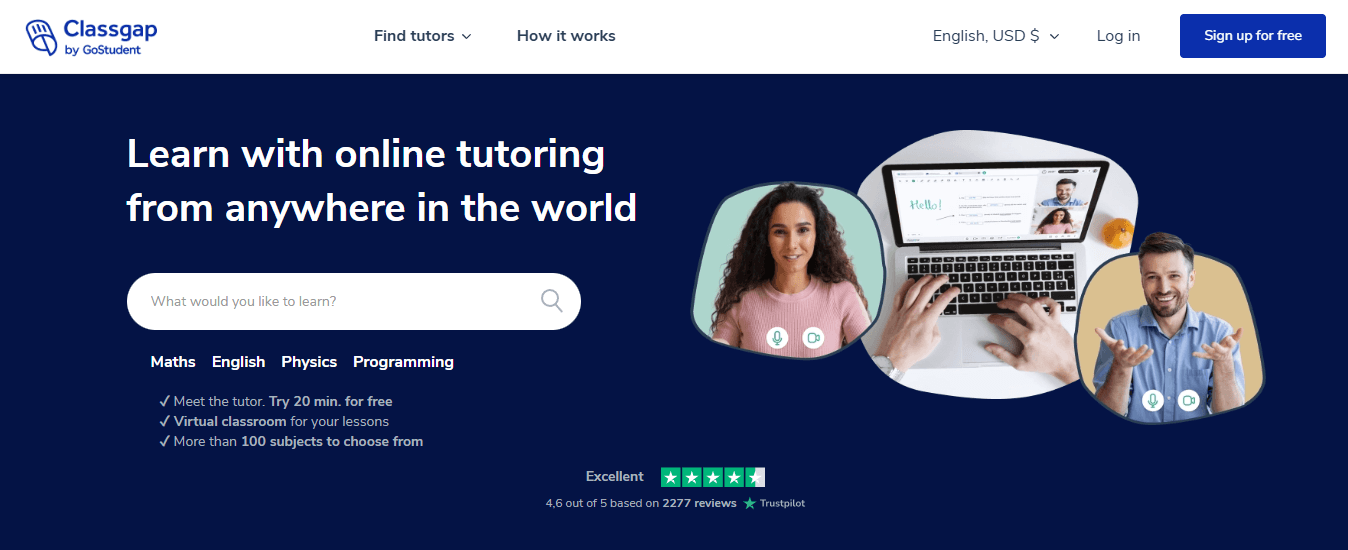
Classgap functions as a dedicated online tutoring marketplace designed for personalized private lessons. It connects students with qualified instructors worldwide for tailored language sessions in a virtual classroom environment.
Key Features
Wide selection of native and certified language tutors across dozens of languages.
Pay-per-lesson pricing with no long-term commitments.
Integrated virtual classroom with screen sharing, whiteboard, and file exchange.
Free 20-minute trial lessons to test compatibility with tutors.
Flexible scheduling for sessions at any time zone.
Progress reports and lesson recordings for review.
Support for over 100 subjects, including languages, with easy filtering by expertise.
Pros
Highly personalized one-on-one instruction similar to premium tutor sites.
Affordable rates are often set by tutors themselves (typically $10–$20 per hour).
Intuitive platform tools enhance interactive learning.
Quick matching process and responsive support.
Options for both short-term and ongoing lessons.
Strong user ratings for teacher quality and adaptability.
Cons
Tutor availability can vary by language and time slot.
No built-in gamification or self-study content.
Requires proactive searching for the right instructor.
Platform fees may apply to certain promotions.
Less emphasis on group or community activities.
Best For
Students want affordable, customized private tutoring without subscriptions.
Learners who need flexible scheduling around work or school.
Those seeking structured feedback on specific weaknesses.
Accessibility
Pay-as-you-go with free trials; web-based with mobile-friendly access; operates globally, especially strong in Europe and Latin America.
6. TusClasesParticulares
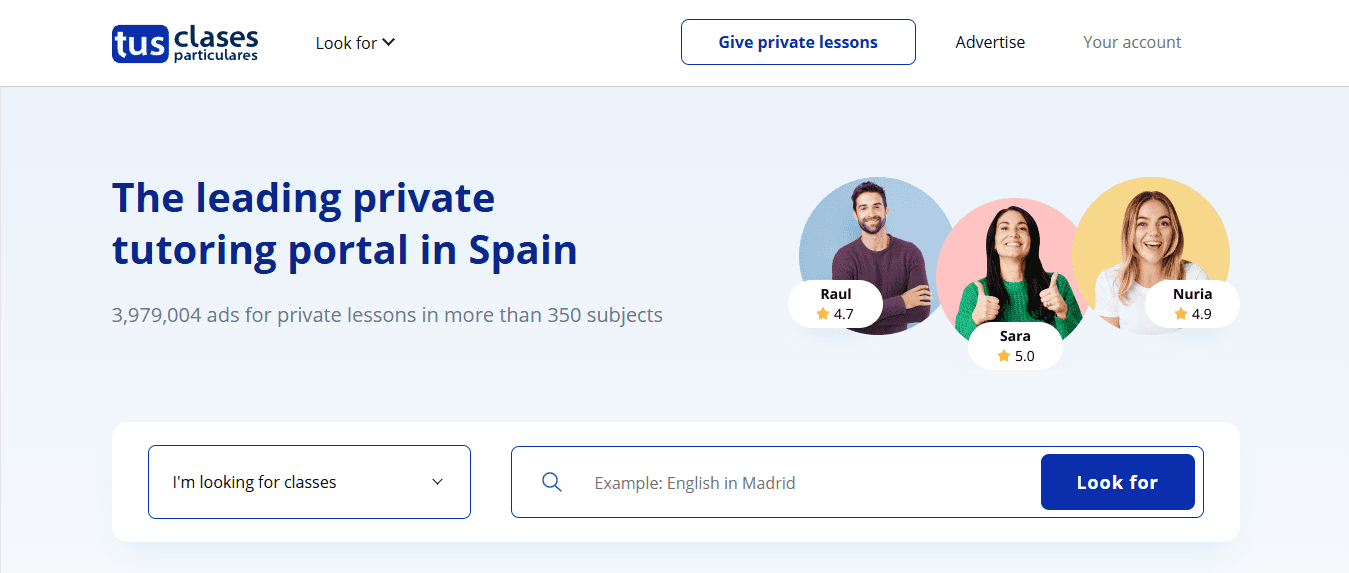
TusClasesParticulares operates as a versatile platform for private language instruction, offering both online and in-person options. It specializes in connecting learners with local or virtual teachers for practical, one-to-one sessions tailored to individual goals.
Key Features
Mix of online video lessons and face-to-face meetings in select regions.
Broad tutor database with filters for language, level, and teaching style.
Pay-per-class model with competitive hourly rates.
Easy booking system and instant messaging with instructors.
Lesson customization based on student needs and objectives.
Availability of trial sessions or introductory classes.
Support for multiple languages with emphasis on conversational practice.
Pros
The hybrid format allows in-person options where available.
Straightforward interface and quick tutor matching.
Cost-effective for targeted skill improvement.
Positive feedback on teacher professionalism and results.
Flexible for all proficiency levels.
Helpful for regional learners seeking nearby instructors.
Cons
Stronger presence in Spanish-speaking markets, limiting some global options.
In-person availability depends heavily on location.
Variable tutor quality without strict platform vetting.
Fewer advanced tech tools compared to dedicated apps.
Potential language barriers in non-primary markets.
Best For
Learners prefer a blend of virtual and local in-person classes.
Budget-focused users in Europe or Latin America seeking private instruction.
Those who want hands-on practice with immediate corrections.
Accessibility
Per-lesson payments with low entry costs; web and app access; primarily available in Spanish-speaking countries with international online options.
7. YouTube
YouTube functions as a vast, free video-sharing platform that doubles as a powerful self-study tool for language learners. It offers countless tutorials, authentic content from native speakers, and cultural insights that complement structured lessons or tutor sessions.
Key Features
Thousands of free language-specific channels with lessons for every level and topic.
Authentic native-speaker videos, vlogs, music, and podcasts for real-world listening practice.
Interactive subtitles and auto-generated captions in many languages for better comprehension.
Ability to slow down playback speed or loop sections for focused pronunciation work.
Community comments and discussions that provide extra explanations and tips.
Playlists and recommended videos that create personalized learning paths.
Cross-device access with offline download options for mobile viewing.
Pros
Completely free with no subscription required for core use.
An endless variety of content keeps learning fresh and engaging.
Exposure to natural speech, slang, accents, and cultural context.
Flexible pacing—pause, rewind, or repeat as needed.
Supports multiple learning styles through visual, audio, and text elements.
Regular uploads mean content stays current with trends and language use.
Cons
Content quality varies widely; some videos contain inaccuracies or poor teaching.
Mostly passive learning, with no built-in interactive exercises or feedback.
Requires self-discipline to stay focused amid distractions and ads.
No structured curriculum or progress tracking.
An overwhelming number of options can make it hard to choose effective resources.
Best For
Self-taught learners who enjoy immersive, entertaining content alongside other methods.
Intermediate and advanced users seeking listening and cultural exposure.
Budget-conscious students want supplementary practice on specific topics.
Accessibility
Free (with optional YouTube Premium for ad-free and offline features, around $14 monthly); available on web, iOS, Android, and smart TVs; global access with support for many interface languages.
8. HiNative
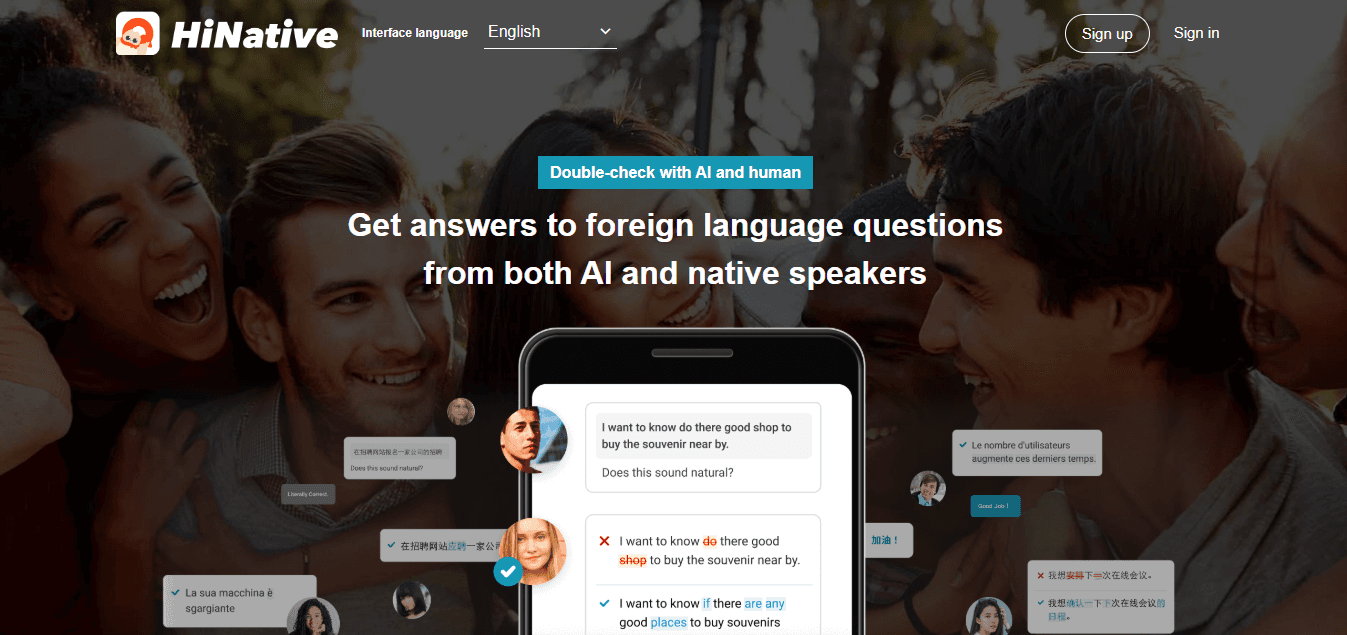
HiNative operates as a community-driven Q&A platform where language learners ask questions and receive direct input from native speakers worldwide. It excels at providing quick, authentic feedback on real usage questions.
Key Features
Post questions about vocabulary, grammar, pronunciation, or cultural nuances.
Native speaker responses with example sentences and audio recordings.
“Does this sound natural?” feature for checking written or spoken phrases.
Support for over 110 languages with a global user base.
Audio pronunciation help and corrections from proficient speakers.
Bookmarking and search tools to revisit useful answers.
Mobile app with notifications for timely replies.
Pros
Free access to real native insights and corrections.
Fast responses from a helpful international community.
Builds cultural understanding alongside language skills.
Simple interface focused purely on practical questions.
Encourages active learning through asking and answering.
Minimal ads and generous free features.
Cons
Some premium features (like full audio on all posts) require payment.
Answer quality depends on community activity and can vary.
No structured lessons or full curriculum.
Potential for irrelevant or low-effort responses.
Limited speaking practice beyond short audio submissions.
Best For
Learners at any level who need quick clarification on specific doubts.
Users supplementing apps or classes with real-world usage checks.
Curious students interested in slang, etiquette, and cultural context.
Accessibility
Mostly free with an optional premium subscription; iOS and Android apps plus a web version; available globally across supported languages.
9. Palabea

Palabea serves as a social network designed for language enthusiasts to connect over shared hobbies and interests while practicing languages together. It emphasizes casual, interest-based exchanges rather than formal lessons.
Key Features
Profile matching based on languages and common hobbies or topics.
Text, voice, and video chat options for organic conversations.
Groups and forums centered around specific interests or languages.
Language exchange tools to pair learners with complementary goals.
Content sharing, such as photos, stories, or cultural posts.
Progress tracking through interaction history.
Mobile-friendly design for on-the-go social learning.
Pros
Fun, low-pressure way to practice through real conversations.
Combines language learning with personal interests for better motivation.
Builds friendships and cultural connections worldwide.
Free core features with community-driven content.
Variety of communication formats to suit different comfort levels.
Helps develop natural speaking and listening in context.
Cons
Success depends heavily on finding active, compatible partners.
Less structured than dedicated learning apps or tutor platforms.
Potential for inconsistent response times or mismatched expectations.
Limited moderation in some social interactions.
Smaller user base compared to larger exchange apps in certain languages.
Best For
Social learners who want language practice tied to hobbies like music, travel, or sports.
Intermediate users seeking casual conversation partners.
Those preferring a community feel over solitary study.
Accessibility
Free with possible in-app purchases; primarily mobile apps (iOS/Android); global, but user density varies by language and region.
10. Tandem
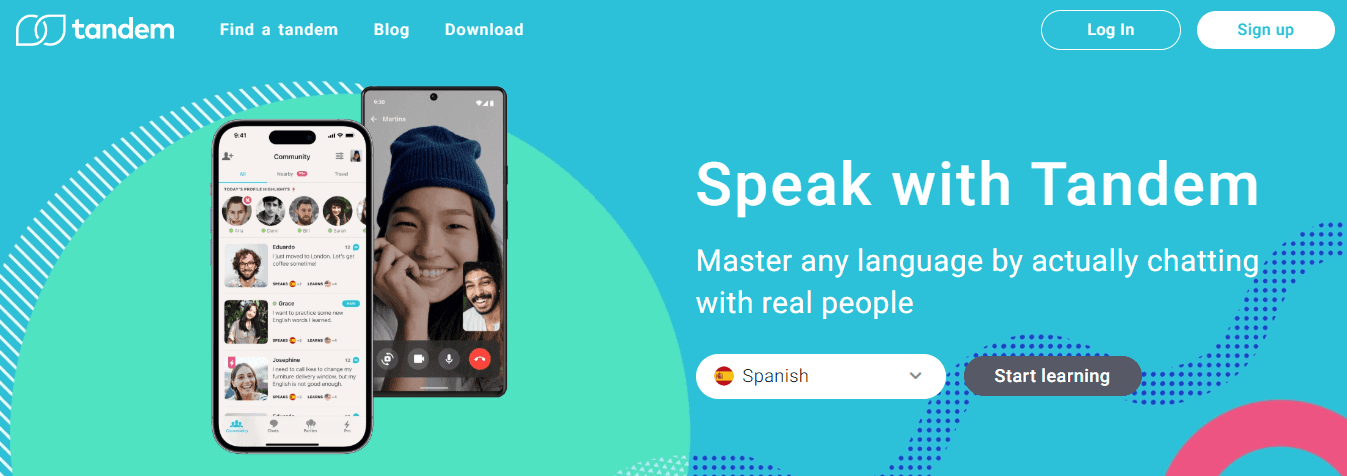
Tandem is a popular language exchange app often described as the “Tinder for languages.” It connects users for mutual practice through text, voice messages, and video calls in a casual, social format.
Key Features
Profile-based matching by native and target languages plus interests.
In-app translation and correction tools during chats.
Text messaging, voice notes, and live video/audio calls.
Safety features include photo verification and reporting.
Language goals and icebreaker prompts to start conversations.
Community events or topic-based rooms in some versions.
Progress insights based on interaction time and languages practiced.
Pros
Authentic, real-time speaking practice with native speakers.
Free basic use with a large, active global community.
Fun and motivating social elements reduce the pressure to learn.
Built-in correction features help improve accuracy.
Supports multiple communication styles for different preferences.
Good for building confidence in everyday conversation.
Cons
The quality of partners varies; some chats may not focus on learning.
The free version has feature and visibility limitations.
Risk of off-topic or non-serious interactions.
Requires good self-motivation to steer conversations productively.
Occasional technical issues with calls or matching.
Best For
Learners prioritize speaking and listening practice through exchanges.
Social users are comfortable with casual video or voice chats.
Intermediate learners wanting to apply classroom knowledge in real talks.
Accessibility
Free with premium subscription options; iOS and Android apps; worldwide availability with strong user bases in major languages.
11. Mondly
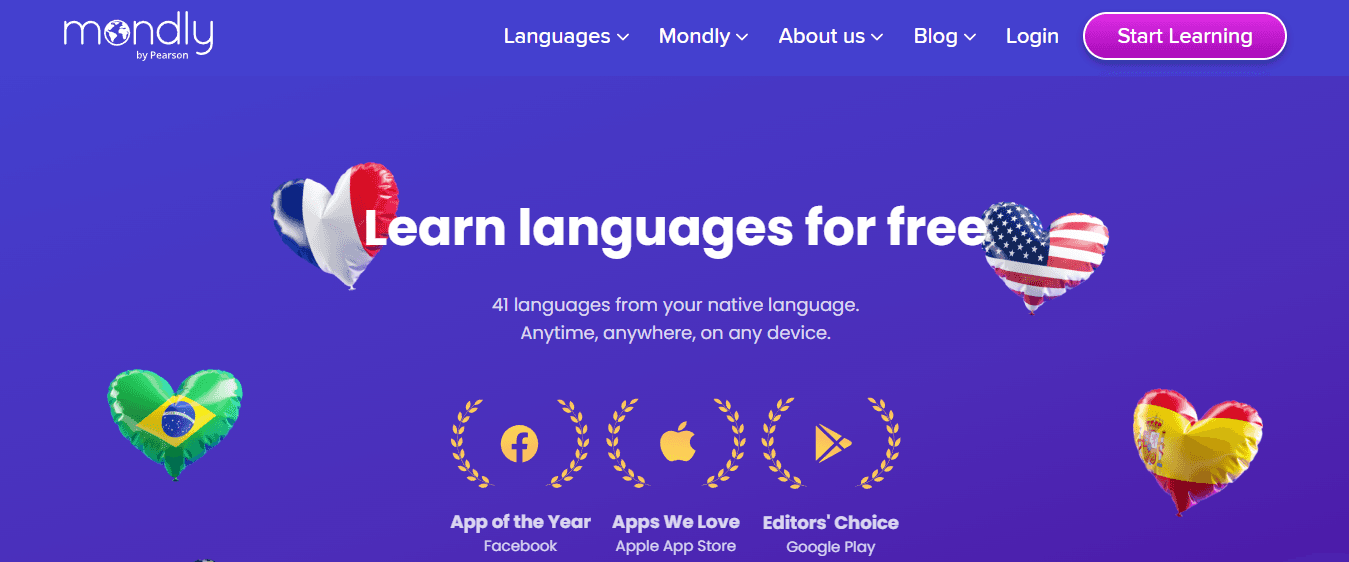
Mondly provides interactive, bite-sized lessons with a focus on practical conversations and innovative tech like AR and VR. It aims to make daily practice quick and engaging for busy users.
Key Features
Short 10-15 minute lessons on real-life topics and dialogues.
AR and VR modes for immersive object naming and scenario practice.
Chatbot for simulated conversations and speaking drills.
Spaced repetition and review system for better retention.
Coverage of 40+ languages with clear audio from native voices.
Gamified elements and daily goals to maintain streaks.
Offline access for downloaded lessons.
Pros
Fast, flexible sessions that fit into tight schedules.
Innovative AR/VR features add excitement to vocabulary building.
Emphasis on useful phrases rather than isolated words.
Affordable pricing, including lifetime options in some plans.
Strong audio quality and pronunciation support.
User-friendly interface with visual and interactive elements.
Cons
Lighter on in-depth grammar explanations.
Limited depth for advanced learners seeking complex topics.
VR requires compatible hardware for a full experience.
The free version offers only limited access.
Some users find the layout busy or navigation initially confusing.
Best For
Busy beginners and intermediate learners want quick daily practice.
Visual and tech-curious users who enjoy AR/VR elements.
Travelers or professionals need practical conversation skills.
Accessibility
Subscription-based (affordable monthly or lifetime plans); iOS, Android, and web; global access with support for many languages.
How to Choose the Best Italki Alternative
Match your learning style to what the platform does best. Choose a platform with a structured curriculum if you need clear lesson progression. Pick one with tools that coach pronunciation through real dialogue if speaking confidence matters most. Or choose pay-per-lesson models and free tiers if budget flexibility is important to you.

🎯 Key Point: The most effective language learning platform is the one that aligns with your specific goals and learning preferences. A platform with advanced features won't help if it doesn't match your learning style. "Students who choose platforms that match their learning preferences show 23% better completion rates and higher satisfaction scores compared to those using mismatched platforms." — Language Learning Research Institute, 2024

Learning Style | Best Platform Type | Key Features to Look For |
|---|---|---|
Structured Learner | Curriculum-based platforms | Progressive lessons, clear milestones, skill tracking |
Conversation-Focused | Speaking-emphasis platforms | Live practice, pronunciation tools, dialogue coaching |
Budget-Conscious | Flexible pricing models | Pay-per-lesson, free tiers, no long-term contracts |
⚠️ Warning: Don't choose a platform based solely on price or popularity. A cheap platform that doesn't match your learning style will actually cost you more time and deliver fewer results than investing in the right fit from the start.
Match Platform Strengths to Your Actual Goals
The platform that works well for exam preparation often fails at helping people have real conversations. Professional test prep requires grammar drills, writing feedback, and timed practice under formal conditions. Casual conversation requires exposure to natural dialogue, pronunciation coaching, and low-pressure repetition of speaking. Over 10,000 tutors available across multiple subjects and languages still leaves learners frustrated when their chosen instructor specializes in academic writing, but they need help ordering coffee in Cairo. Determine what you want to use the language for first, then evaluate whether each platform's methodology builds that specific skill.
Evaluate True Cost Beyond Subscription Price
Advertised rates obscure the true cost of achieving fluency. A platform charging $8 monthly but requiring daily hour-long sessions costs more in time than a $20 service delivering results in 15-minute bursts. Factor in cancellation fees, minimum commitment periods, and whether you pay per lesson or unlock content through subscriptions. Commission structures affect tutor availability and pricing differently than flat-rate platforms, shaping both your hourly cost and instructor incentives.
Why do vocabulary apps fail to prepare you for real conversations?
Most Arabic learners use vocabulary apps for months before realizing they still struggle during actual conversations. Apps build reading skills and grammar knowledge, creating an illusion of progress through completed lessons and accumulated words. The gap between what you recognize on screen and what you can say in real time widens. Kalam closes this gap by coaching conversational Arabic through pre-built dialogues from your first session, letting you practice real-world scenarios immediately rather than waiting until vocabulary lists feel complete enough to attempt speaking.
Test Interface Friction Before Committing
Clunky navigation drains motivation faster than difficult content. Download the app or create a free account, then try booking a lesson, starting a practice session, or navigating between features. Notice where you hesitate, where buttons fail to respond, or where the flow breaks your concentration. Platforms optimized for mobile practice load quickly, sync progress across devices, and let you resume exactly where you stopped. Technical friction compounds over weeks, transforming minor annoyances into reasons to abandon practice. Choosing the platform is only half the decision; the dialect you practice shapes every conversation you'll have.
Learn Arabic in Any Dialect Today with Kalam
Most learners seeking iTalki alternatives struggle to find consistent, affordable conversation practice for irregular schedules. Kalam solves this by serving as your on-demand conversation coach, offering short daily lessons built around authentic dialogue without appointments or hourly rates.
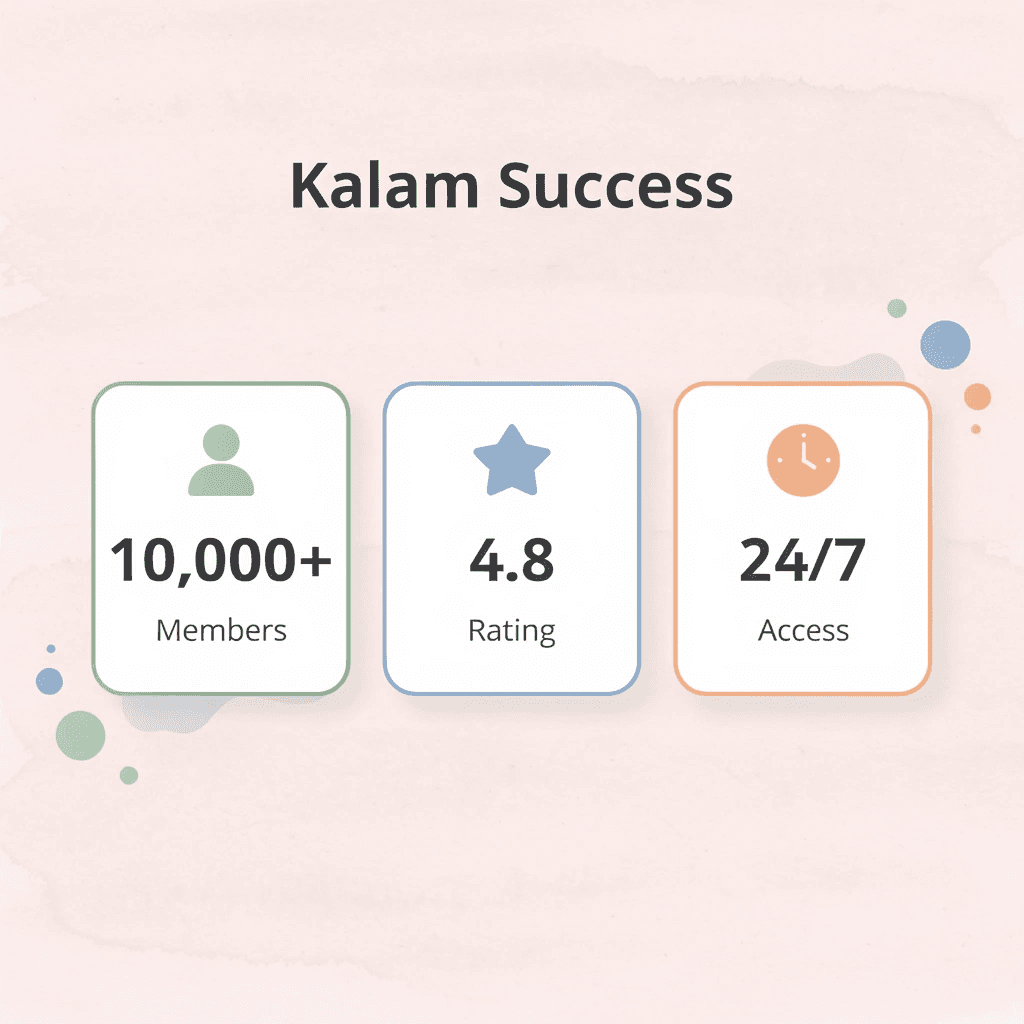
🎯 Key Point: Kalam offers realistic conversational scenarios tailored to different contexts—Egyptian Arabic for travel, Levantine for family, Gulf for work, or Modern Standard Arabic for formal settings. You engage with interactive speaking drills, watch professional video lessons explaining cultural nuances, answer comprehension questions, review with flashcards, and chat with an AI tutor that responds to your specific mistakes.
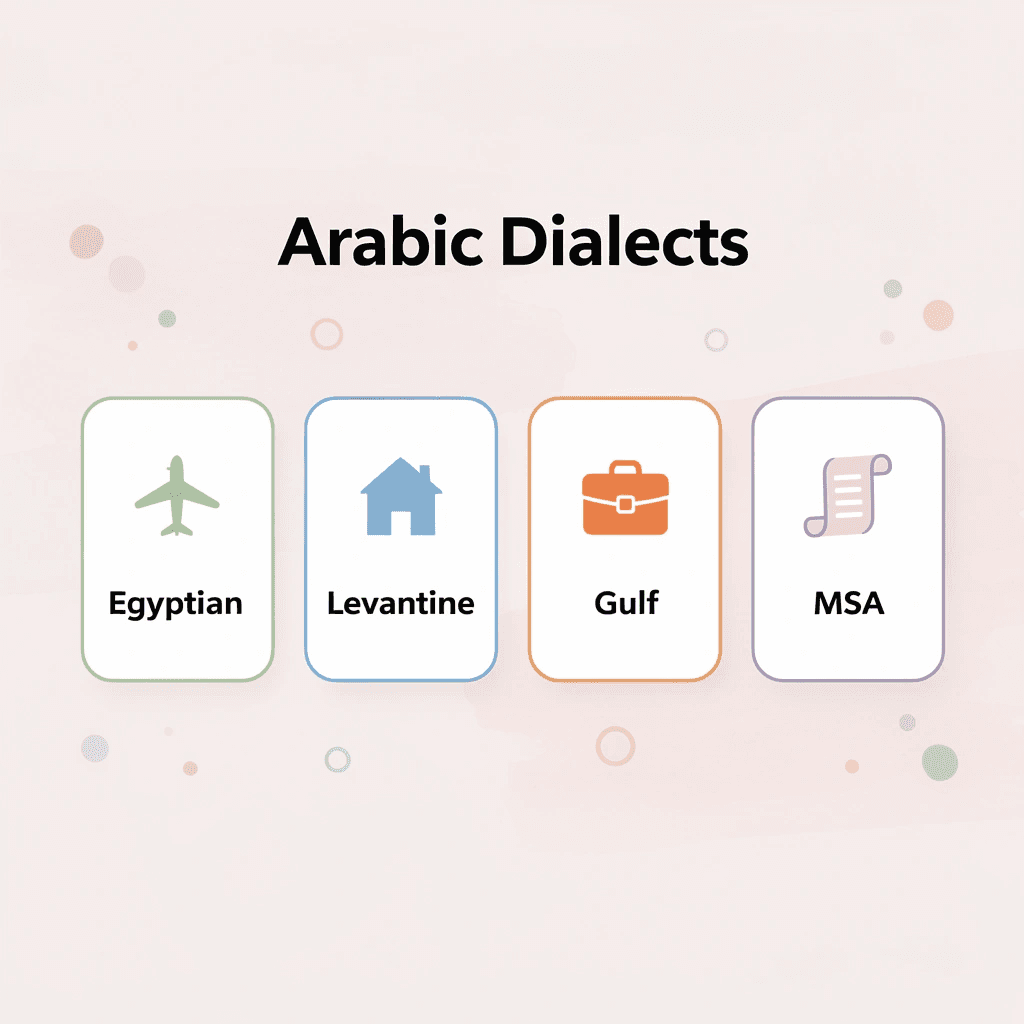
"With over 10,000 members worldwide and a 4.8 App Store rating, Kalam removes the financial and logistical barriers that prevent consistent practice." Pronunciation support catches errors in real time and coaches you toward natural speech patterns without the anxiety of live tutoring. You avoid coordination exhaustion, recurring tutor expenses, and the speaking pressure that deters beginners from booking lessons.
💡 Tip: Kalam's approach eliminates the traditional barriers of language learning—no more scheduling conflicts, expensive hourly rates, or the intimidation factor that comes with live conversation practice. Start learning Arabic today with Kalam.

Related Reading
Basic Arabic Phrases
Arabic Basics
Arabic Vs Hebrew
Best App To Learn Arabic
Arabic Vowels