Learn Arabic Fast with AI Conversation Practice

Kalam's Arabic AI responds in the dialect you're learning, not just Modern Standard Arabic. Practice real-world conversations with instant pronunciation feedback designed for dialectal sounds.

No scheduling, no judgment—just natural speaking practice whenever you're ready. Join 1,000,000+ learners who've moved beyond textbook drills and started actually speaking Arabic.

1,000,000+ learners
4.7 on the App Store
How Kalam's AI Works

Arabic AI That Adapts to Your Learning Style

  1. Real-Time Listening and Pronunciation Feedback

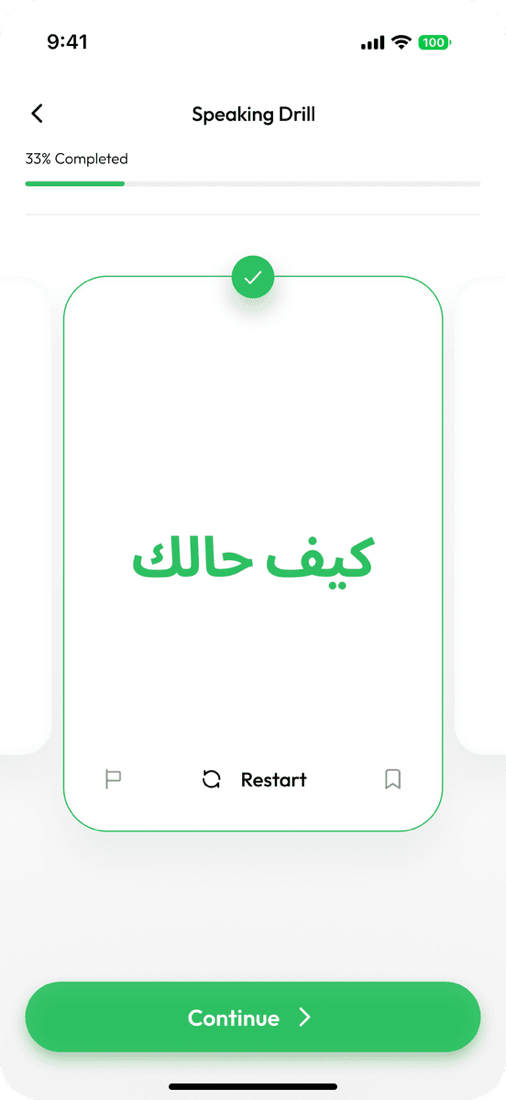
    Speak naturally and the Arabic AI evaluates your pronunciation instantly. Receive specific corrections on sounds unique to Egyptian, Levantine, or Gulf Arabic—not generic feedback that misses dialectal nuances.

    Progress only when you pronounce correctly. This builds muscle memory and confidence faster than passive listening or repetition drills.

  2. Dialect-Specific Responses

    The Arabic AI adapts to the dialect you're studying. If you're learning Egyptian Arabic, you'll hear authentic Cairo street phrases, not formal textbook language that native speakers rarely use.

    Responses mirror how people actually talk in everyday situations. Patterns you learn will feel familiar when you travel or speak with family.

  3. Adaptive Difficulty Based on Your Level

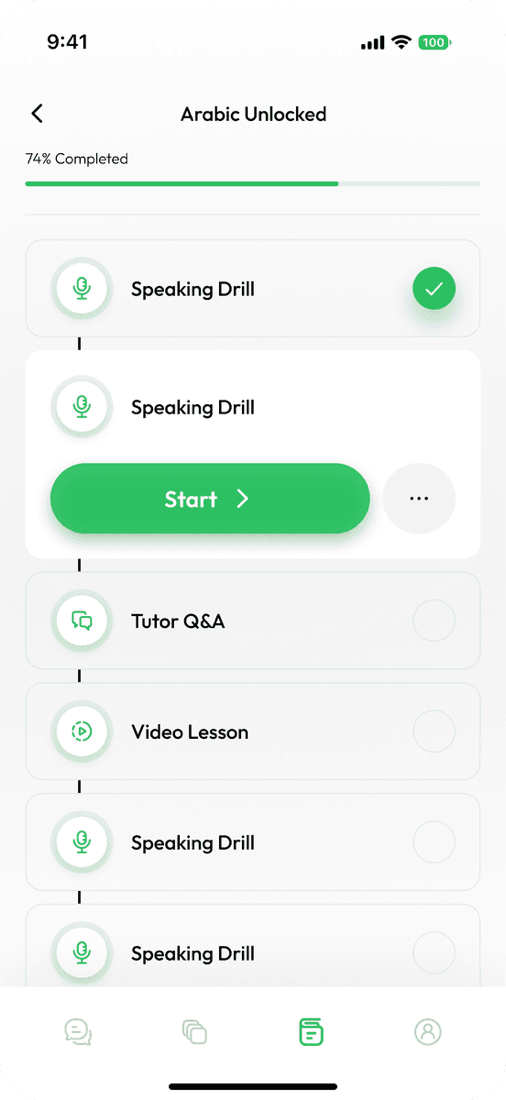
    Lessons adjust as you improve. Early conversations use simple vocabulary and slower pacing, then complexity increases as your fluency grows without overwhelming you.

    The Arabic AI tracks which sounds and structures you struggle with, then reinforces them in future sessions. Learning stays challenging without becoming frustrating.

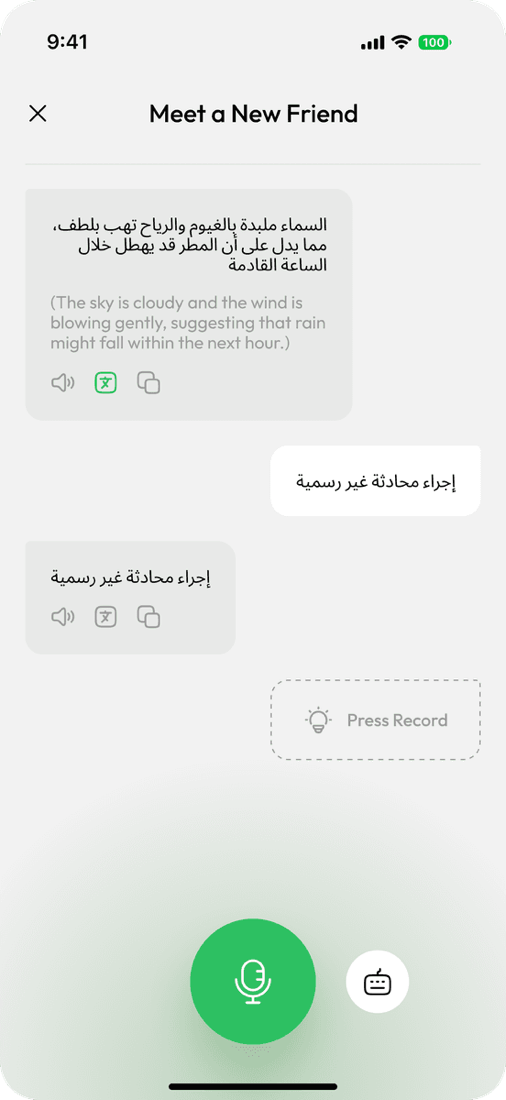
  4. Open-Ended FreeTalk Mode

    Move beyond scripted drills. FreeTalk lets you discuss any topic—ordering food, talking about your day, asking for directions—and the Arabic AI responds naturally like a conversation partner.

    This mirrors real-life conversations where you can't predict what someone will say next. Build practical fluency, not just test-taking skills that disappear in actual dialogue.

See How It Works
AI Comparison

Why Kalam Outperforms Generic Language Tools

Try Kalam Free
01

Built for Dialects, Not Just Modern Standard Arabic

Most AI language tools teach Modern Standard Arabic, which native speakers rarely use in daily conversation. Kalam's Arabic AI trains you in Egyptian, Levantine, or Gulf dialects from day one.

Sound natural when ordering coffee in Cairo or chatting with friends in Beirut. Generic tools leave you speaking like a news broadcaster instead of a real person.

02

Structured Learning Path vs. Unguided Chat

ChatGPT can answer Arabic questions, but it won't build your skills systematically. Kalam combines structured lessons with conversational practice, so you always know what to learn next without guessing.

Daily recommendations keep you progressing without decision fatigue. No more wasting time wondering what to practice or if you're actually improving.

03

Pronunciation Feedback Designed for Arabic Sounds

Generic speech recognition wasn't built for Arabic's unique phonetics—sounds like ع and ح trip up most AI tools. Kalam's model specifically recognizes and corrects these dialectal sounds that matter most.

Master pronunciation faster because the feedback targets what actually matters in spoken Arabic. Other tools miss these nuances entirely or treat them as interchangeable.

04

Always Available, No Scheduling Required

Language exchange partners cancel or reschedule frequently, disrupting your momentum.

Kalam's Arabic AI is ready when you are—10 minutes in the morning, 15 minutes before bed, or during your commute. Learning fits your life, not the other way around.

FreeTalk Feature Deep Dive

Practice Real Conversations, Not Scripted Responses

  1. Talk About Anything, Anytime

    FreeTalk doesn't limit you to preset topics. Discuss your weekend plans, ask the Arabic AI to roleplay a market vendor, or practice job interview phrases—the conversation adapts to whatever you need.

    This builds the mental flexibility required for real-world Arabic. No more freezing up when someone asks an unexpected question or changes topics mid-conversation.

  2. Zero Judgment, Infinite Patience

    Making mistakes with family or native speakers feels embarrassing. FreeTalk lets you stumble, repeat yourself, and try again without anyone judging your accent or grammar errors.

    The Arabic AI corrects you gently and moves forward. Build confidence before speaking with real people so your first conversations feel natural, not nerve-wracking.

  3. Contextual Responses That Feel Natural

    The Arabic AI remembers what you've said earlier in the conversation and responds accordingly. If you mention traveling to Jordan, it might suggest Levantine phrases for your trip or ask follow-up questions.

    Conversations flow like they would with a helpful language partner. Instead of repeating isolated sentences, you're actually communicating and building real dialogue skills.

  4. Reinforces What You've Learned in Lessons

    FreeTalk works best after completing structured drills. Use it to apply new vocabulary in realistic scenarios, cementing what you practiced earlier without boring memorization exercises.

    Spaced repetition happens naturally as you use the same words across different conversations. Retention improves because you're using words in context, not just reviewing flashcards.

Start a Free Conversation
Pronunciation Mastery

Master Arabic Pronunciation with Instant Feedback

Try Pronunciation Practice
01

Corrections on Dialectal Sounds That Trip Up Learners

Sounds like ع, ح, and ق vary drastically between Egyptian, Levantine, and Gulf Arabic. Kalam's Arabic AI identifies when you're pronouncing them incorrectly for your chosen dialect and guides you to the right articulation.

Generic language apps treat these as interchangeable. Learn the distinctions that actually matter to native speakers so you sound natural, not confused.

02

Speak Correctly to Progress

Lessons only advance when your pronunciation meets the threshold. This prevents bad habits from forming and ensures you're building correct muscle memory from the start.

Immediate feedback means you correct mistakes in seconds, not weeks. No more practicing errors hundreds of times before realizing something's wrong.

03

Visual and Audio Guidance for Difficult Sounds

Hear the difference, then adjust your articulation until they match and the visual feedback aligns.

This visual reinforcement accelerates learning for people who struggle with audio-only feedback. Understanding exactly what to change makes correction faster and less frustrating.

Learning Journey

Your Path from Beginner to Confident Speaker

  1. Start with Guided Drills and Essential Phrases

    Early lessons focus on greetings, introductions, and common questions. Learn how to say 'Where is the bathroom?' before tackling complex grammar rules or abstract vocabulary.

    Pronunciation practice starts immediately. Correct habits form early, so you don't need to unlearn mistakes later when they're harder to fix.

  2. Build Vocabulary Through Real-Life Dialogues

    Video lessons immerse you in realistic scenarios—ordering at a restaurant, asking for directions, making small talk. Words stick because you see them used in context, not isolated on flashcards.

    Each lesson introduces 5-10 new words tied to a specific situation. Remember vocabulary because it's connected to actions and real moments, not random word lists.

  3. Apply Skills in Open-Ended Conversations

    Once you've completed enough drills, FreeTalk unlocks. Use your growing vocabulary in unscripted conversations where the Arabic AI adapts to whatever you want to discuss or explore.

    This transition from guided to freeform practice mirrors how children learn languages. Gain fluency naturally instead of memorizing grammar rules that feel disconnected from real speech.

  4. Track Progress with Visible Milestones

    Daily streaks, completed lesson counts, and pronunciation accuracy scores show exactly how much you've improved. Seeing progress keeps motivation high when learning feels slow or frustrating.

    Know when you're ready for real conversations. Confidence builds as metrics prove you're advancing, not just guessing whether you're actually getting better.

Start Your Journey

Trusted by Thousands of Arabic Learners Worldwide

“Kalam is my new favorite way to learn Arabic. The app feels super well-made, and you can tell the people behind it really care. I love that I can practice speaking whenever I'm out and about — it's way more natural than just memorizing words.”
Abdullah ShebaitaKalam learner · App Store review

“Has all the features I've been looking for. Loving its simplicity and efficiency — it's also great for people looking to travel!”

Yousuf RadwanApp Store review

“It has been such a breeze learning Arabic through Kalam! I have been on a learning journey and finally found something that just works.”

Deno HawariApp Store review

4.7★★★★★

6,800+ ratings on the App Store1,000,000+ learners and counting
FAQ

Common Questions About Learning with Arabic AI

Can't find what you're looking for? Email our team, we read everything.

How Does Kalam's Arabic AI Differ from ChatGPT?

ChatGPT can answer Arabic questions, but it doesn't provide structured lessons, pronunciation feedback, or dialect-specific training. Kalam's Arabic AI is purpose-built for language learning with daily recommendations and progress tracking.

Follow a clear curriculum instead of guessing what to practice next. Pronunciation evaluation happens in real time, which ChatGPT cannot provide.

Will the AI Understand My Accent as a Beginner?

Yes. Kalam's Arabic AI is trained on varied pronunciations from learners at all levels, including beginners with heavy accents. The system adapts to your starting point and guides you toward native-like pronunciation gradually.

Early feedback focuses on the most important sounds first. As you improve, the Arabic AI becomes more precise in its corrections without overwhelming you.

Can I Learn Egyptian, Levantine, and Gulf Arabic with the Same AI?

Yes. Select which dialect you want to focus on, and the Arabic AI responds in that dialect's vocabulary and pronunciation patterns. Switch dialects anytime if your goals change.

Each dialect has unique sounds and phrases. The Arabic AI adjusts its corrections and vocabulary based on your chosen focus, so you're learning authentic spoken Arabic for your target region.

Is AI Conversation Practice Enough, or Do I Need a Human Tutor?

Kalam's Arabic AI handles daily practice, pronunciation correction, and conversational fluency—the bulk of what you need to become proficient. Many learners use it as their primary tool and only add occasional tutor sessions for cultural nuances or advanced topics.

For most learners, consistent Arabic AI practice produces faster results than infrequent tutor sessions.

How Long Does It Take to Have a Real Conversation in Arabic?

Most learners can handle basic conversations—greetings, ordering food, asking directions—within 4-6 weeks of daily practice. Fluency depends on how much time you dedicate and your prior language experience.

Daily 15-minute sessions show measurable progress faster than sporadic hour-long sessions. The Arabic AI adapts pacing to your improvement rate, so you're always challenged without feeling overwhelmed.

Does Kalam Teach Modern Standard Arabic or Only Dialects?

Kalam focuses on spoken dialects—Egyptian, Levantine, and Gulf—because that's what native speakers use in daily life. Modern Standard Arabic appears in news and formal writing but rarely in conversation.

If your goal is to speak with people, order food, or travel confidently, dialects are far more useful. MSA is valuable for reading, but it won't help you chat with a taxi driver in Cairo.

What Makes Kalam Better Than Duolingo or AlifBee for Arabic?

Duolingo and AlifBee use speech recognition for pronunciation but lack true conversational AI. They teach through multiple-choice questions and matching games, not real dialogue practice.

Kalam's Arabic AI holds actual conversations where you can't predict the next question. This builds fluency and listening comprehension that gamified drills can't replicate.

Your family's Arabic is waiting for you.

Answer a few quick questions and get a learning plan built around your dialect. It takes two minutes.