Learn Levantine Arabic the Way Your Family Speaks

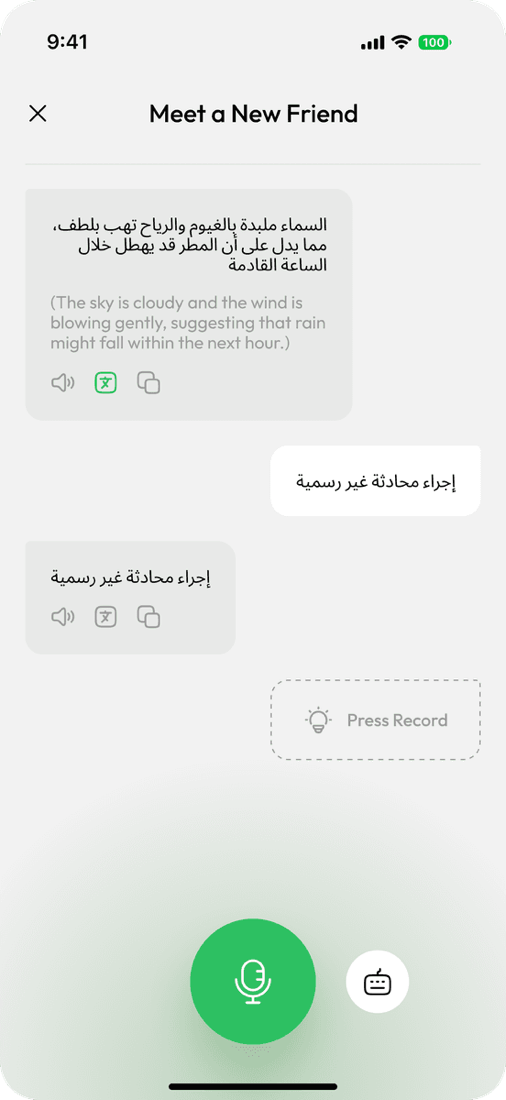
Practice real conversations with an AI partner trained on the Levantine Arabic your family speaks. Build confidence through interactive speaking drills that mirror actual family gatherings and community interactions.

Join over a million learners reconnecting with their heritage through daily practice that fits your schedule. Start speaking confidently in weeks, not years!

1,000,000+ learners
4.7 on the App Store
Why Levantine Arabic Matters

Connect With Your Roots Through the Language of the Levant

Start Your Heritage Journey
  1. The Language Your Family Knows

    If your relatives are from Syria, Lebanon, Jordan, or Palestine, this is the Levantine Arabic they grew up speaking. Learning this dialect means you'll actually understand your grandmother's stories, participate in family debates, and feel like a full member at gatherings instead of sitting quietly on the sidelines.

    The Levant's dialect carries the weight of your family history and cultural identity in every phrase.

  2. Widely Understood Across the Arab World

    Levantine Arabic is recognized throughout the Middle East, second only to Egyptian in reach. Arabic speakers from Morocco to Iraq will understand you, making it practical for travel and broader cultural connection.

    Access Levantine music, poetry, and storytelling traditions that have shaped Arab culture for generations.

  3. Thrive in Diaspora Communities

    Major cities like Dearborn, Detroit, and São Paulo have vibrant Levantine communities where this dialect is the social currency. Speaking it opens doors to cultural events, community gatherings, and deeper friendships.

    Move from observer to participant in the social fabric that connects diaspora Arabs worldwide.

  4. Rich Cultural and Musical Heritage

    The Levant is known for its melodic, musical quality that makes conversations feel like poetry. This dialect carries centuries of storytelling tradition, from Fairuz's lyrics to the spoken word that fills family kitchens.

    Understanding this dialect means accessing cultural expressions that translation can never fully capture.

Phrase guide

Levantine Arabic vs textbook Arabic

The same everyday phrases, the way a textbook says them and the way people actually say them.

EnglishModern Standard ArabicLevantine Arabic
How are you? كيف حالك؟kayfa ḥāluk? كيفك؟kīfak?
What do you want? ماذا تريد؟mādhā turīd? شو بدّك؟shu baddak?
I don't know لا أعرفlā aʿrif ما بعرفma baʿref
Now الآنal-ān هلّقhalla'
Good جيدjayyid منيحmnīḥ
A lot / very كثيرًا / جدًاkathīran / jiddan كتيرktīr
How Kalam Teaches Levantine Arabic

Master Conversational Skills Through AI-Powered Practice

  1. Speak to Move Forward

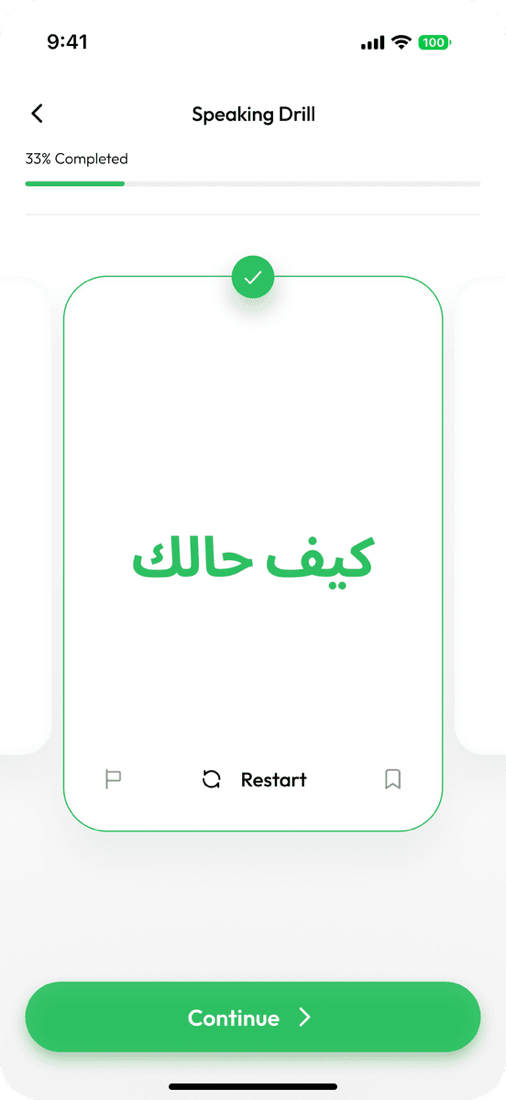
    Every lesson requires you to speak out loud and pronounce words correctly to progress. No multiple choice questions or passive listening — just real practice that builds muscle memory for authentic pronunciation.

    The AI listens and responds in real-time, catching pronunciation mistakes before they become habits.

  2. Real-Life Conversations From Day One

    Vocabulary drills teach words in isolation that you'll struggle to use in actual conversations. Kalam throws you into authentic dialogues — ordering food, greeting relatives, making plans with friends — so you learn how words fit together naturally.

    Each conversation builds on previous lessons, reinforcing what you've learned while introducing new phrases in context.

  3. Interactive Speaking Drills That Adapt to You

    Practice sessions adjust based on your performance, spending extra time on sounds or phrases you find challenging.

    Daily recommendations guide you to lessons that match your current skill level and learning pace.

  4. Track Progress and Stay Motivated

    Watch your speaking confidence grow with progress metrics that show exactly how many conversations you've completed and how your pronunciation accuracy improves. Visual feedback keeps you motivated even when learning feels difficult.

    Streaks and milestones celebrate consistency, making daily practice a habit rather than a chore.

Try a Free Lesson
Levantine Arabic vs Other Dialects

Why This Dialect Fits Your Goals

Start Learning Levantine Arabic
  1. Regional Variations Within the Levant

    Lebanese, Syrian, Jordanian, and Palestinian Arabic share a common foundation with minor local variations. Kalam teaches the shared Levantine base, so you'll understand family members from any of these countries.

    Local expressions and accent variations come naturally through exposure — the core grammar and vocabulary remain consistent across the region.

  2. Levantine vs Egyptian Arabic

    Egyptian Arabic dominates media and entertainment, making it the most widely understood dialect. Levantine Arabic is more melodic and shares closer ties to Modern Standard Arabic in certain constructions.

    Choose Egyptian if you're drawn to Cairo's film industry or popular culture. Choose Levantine if your family roots or personal connections lie in Syria, Lebanon, Jordan, or Palestine.

  3. Levantine vs Gulf Arabic

    Gulf dialects from Saudi Arabia, UAE, and Kuwait sound distinctly different from Levantine and use unique vocabulary influenced by Persian and English.

    Levantine speakers will be understood in the Gulf, but Gulf speakers may need adjustment time to follow Levantine conversations at full speed.

  4. Understanding Across Dialects

    All Arabic dialects share roots in Modern Standard Arabic, so speakers can generally communicate across regions with some effort. Levantine's clarity and proximity to MSA make it relatively accessible to other Arabic speakers.

    Your Levantine skills transfer well when traveling or connecting with Arabs from other regions.

Who This Is For

Built for Heritage Learners and Diaspora Communities

Find Your Learning Path
01

Reconnect With Family Across Generations

You grew up hearing Levantine Arabic at family gatherings but never learned to speak it fluently. Now you sit quietly while cousins and aunts converse, wishing you could join in instead of asking for translations.

Kalam helps you bridge that gap so you can participate fully in family conversations, understand your grandmother's stories firsthand, and connect with relatives without language barriers.

02

Prepare for Travel to the Levant

Planning a trip to Syria, Lebanon, Jordan, or Palestine becomes less intimidating when you can navigate basic conversations. Order food confidently, ask for directions, and connect with locals beyond tourist phrases.

Travelers using Kalam report feeling more immersed in their experience and building genuine connections rather than relying on English or gestures.

03

Engage Fully in Diaspora Communities

Living in cities like Dearborn or joining Levantine community events feels different when you speak the language. Social circles open up, cultural events become more meaningful, and you shift from outsider to insider.

Speaking Levantine Arabic signals belonging and respect, transforming how community members interact with you.

04

Busy Schedules Welcome

Traditional classes demand fixed schedules that don't fit modern life. Kalam works around your calendar with lessons that take just minutes.

Practice during your commute, lunch break, or before bed — progress happens in small, consistent sessions rather than marathon study blocks.

Cultural Context and Expressions

Speak With Cultural Fluency, Not Just Grammar

Explore Sample Lessons
  1. Hospitality and Social Customs

    Levantine culture revolves around generosity and hospitality, reflected in how people greet guests and offer food. Certain phrases carry social weight — refusing coffee or tea the first time is expected etiquette, and accepting on the second or third offer shows politeness.

    Kalam teaches these cultural nuances alongside vocabulary so you navigate social situations with confidence and respect.

  2. Regional Expressions and Idioms

    Direct translations miss the flavor of Levantine expressions that paint pictures through metaphor. Phrases about coffee, bread, and family pepper everyday conversation with cultural meaning.

    Learning these idioms makes you sound natural rather than textbook-correct, showing you understand the culture behind the words.

  3. Poetry and Storytelling Traditions

    The Levant has produced some of the Arab world's most celebrated poets and storytellers. Everyday conversation borrows from this literary tradition with eloquent turns of phrase and rhythmic speech patterns.

    Kalam exposes you to this musical quality so your speech carries the natural cadence that makes Levantine Arabic distinctive.

  4. Family and Community Language

    Family relationships have specific vocabulary and forms of address that show respect and affection. Addressing elders, joking with siblings, and speaking to children each require different registers.

    Understanding these distinctions prevents awkward mistakes and helps you communicate with appropriate warmth or formality.

Real Progress From Learners Like You

“Kalam is my new favorite way to learn Arabic. The app feels super well-made, and you can tell the people behind it really care. I love that I can practice speaking whenever I'm out and about — it's way more natural than just memorizing words.”
Abdullah ShebaitaKalam learner · App Store review

“Has all the features I've been looking for. Loving its simplicity and efficiency — it's also great for people looking to travel!”

Yousuf RadwanApp Store review

“It has been such a breeze learning Arabic through Kalam! I have been on a learning journey and finally found something that just works.”

Deno HawariApp Store review

4.7★★★★★

6,800+ ratings on the App Store1,000,000+ learners and counting
FAQ

Your Questions About Learning Levantine Arabic

Can't find what you're looking for? Email our team, we read everything.

Is Levantine Arabic the Same Across Syria, Lebanon, Jordan, and Palestine?

The core structure remains consistent across all four countries, with minor regional variations in accent and certain vocabulary choices. Someone from Amman will understand someone from Beirut without difficulty, though they might notice slight pronunciation differences.

Kalam teaches the shared foundation, so you'll communicate effectively with family and friends from any Levantine country. Local expressions come naturally through exposure once you have the base.

Will People From Other Arab Countries Understand Me?

Yes! Levantine Arabic is widely understood throughout the Arab world, second only to Egyptian in recognition. Arabs from Morocco to Iraq will follow your conversations, though they might ask you to slow down occasionally.

The dialect's clarity and proximity to Modern Standard Arabic makes it relatively accessible to speakers of other dialects. Your communication won't be limited to the Levant.

Should I Learn Lebanese, Syrian, Jordanian, or Palestinian Specifically?

Start with the core Levantine foundation that Kalam teaches. The differences between these sub-dialects are minor — mostly accent variations and a few local expressions.

Once you're comfortable with the base, you'll pick up regional nuances naturally through conversation with family or media consumption. Trying to learn one specific sub-dialect first actually makes progress slower and more confusing.

How Long Until I Can Have Real Conversations?

Most learners handle basic exchanges within 2-3 weeks of daily practice. Simple greetings, ordering food, and answering common questions come quickly when you focus on speaking rather than just vocabulary memorization.

Full conversational fluency depends on your practice consistency and prior language experience, but learners report meaningful family interactions within 2-3 months. The key is daily speaking practice, not marathon study sessions.

What Makes Kalam Different From Apps Like Duolingo?

Duolingo and similar apps focus on vocabulary drills and multiple choice questions that don't prepare you for real conversations. Kalam requires you to speak out loud in every lesson, building pronunciation and conversational flow from day one.

Other apps teach Modern Standard Arabic or lump all dialects together. Kalam offers dedicated Levantine instruction with AI conversation practice, something competitors don't provide. One member put it clearly: "I've tried apps like Duolingo, but it's essential to focus on speaking and pronunciation. Kalam immerses you in real-life dialogues."

Do I Need to Know Arabic Script?

Not to get started! Kalam focuses on spoken conversation first, using transliteration to help you begin speaking immediately. Arabic script literacy comes later as an optional layer.

Most heritage learners prioritize speaking and understanding over reading and writing initially. The app meets you where you are and lets you add script learning when you're ready.

Can I Use This If I Only Understand a Little Arabic?

Absolutely! Many heritage learners recognize words and phrases from family but can't speak confidently. Kalam starts at your level and builds on that passive knowledge.

The app's adaptive learning identifies what you already understand and fills gaps systematically. Your existing exposure actually accelerates early progress.

What If I Don't Have Time for Daily Lessons?

Lessons take 5-10 minutes, fitting easily into commutes, lunch breaks, or evening routines. Consistency matters more than duration — three 7-minute sessions per week beat one 60-minute marathon.

Learners report that the app's simplicity makes daily practice feel manageable rather than overwhelming. One member shared: "The combination of simplicity and accuracy helps me stay balanced and on track, even on the busiest of days."

Start speaking Levantine Arabic today.

Answer a few quick questions and get a learning plan built around your dialect. It takes two minutes.