01 Real Conversations Use Egyptian Arabic
MSA is the language of news broadcasts and formal writing. Egyptians switch to their dialect the moment they step out of a meeting or finish reading an article.
If you want to have actual conversations with people in Cairo, speak the way they speak at home and in the streets.
02 Common Phrase Comparison
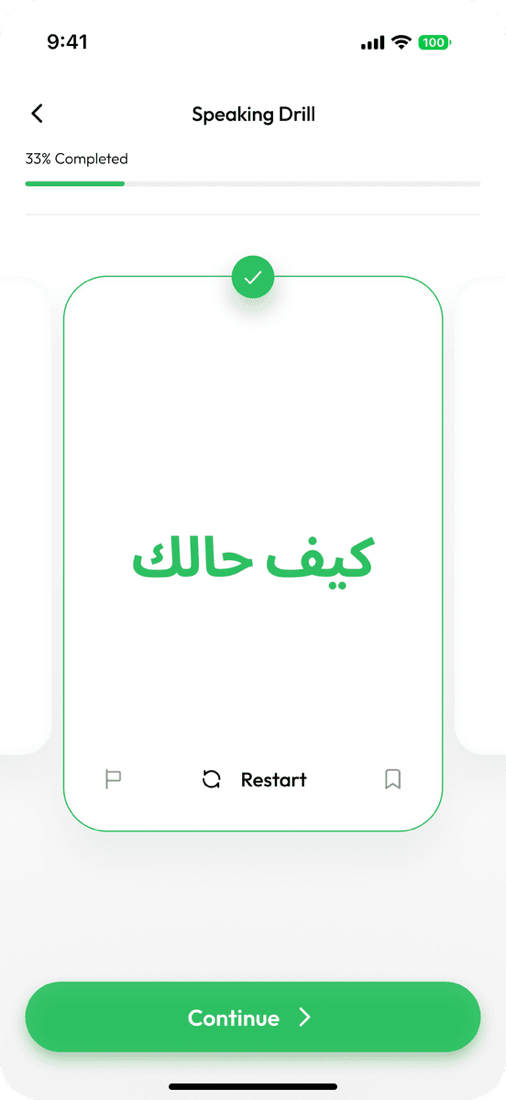
In MSA, you say 'kayfa haluk' for 'how are you.' In Egyptian Arabic, people say 'izzayyak' or 'izzayik.' The difference is not subtle—it's the difference between sounding like a textbook and sounding like a person.
See exactly what Egyptians say in daily life versus what formal Arabic teaches. The gap is why so many learners feel stuck after years of study.
03 Start with the Dialect You'll Actually Use
Learning MSA first makes sense if you plan to read classical literature or work in formal diplomacy. For everyone else, starting with a spoken dialect gets you to real conversations faster.
Once you master one dialect, picking up others becomes much easier. Egyptian Arabic gives you the strongest foundation because it's so widely understood.
04 Pronunciation and Rhythm Are Different
Egyptian Arabic has its own pronunciation patterns and sentence rhythm. The letter 'qaf' becomes a glottal stop, and verb conjugations shift in ways MSA never taught you.
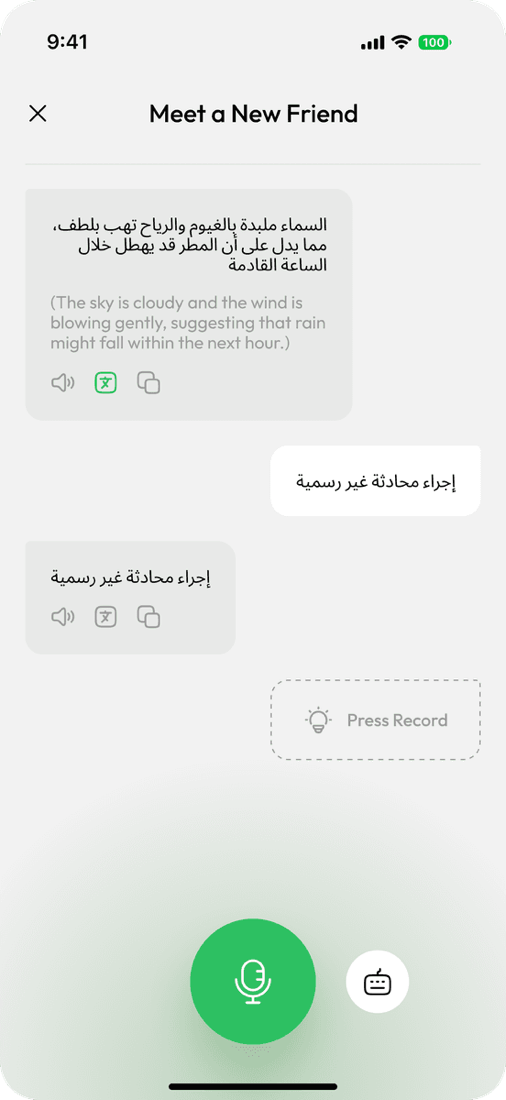
Kalam's AI conversation partner catches these differences and gives you real-time feedback so you sound natural, not like you're reading from a script.
 Kalam