Learn the Arabic Dialects People Actually Speak

Practice ordering food, greeting relatives, and navigating daily situations in your chosen dialect. Every lesson uses real-world scenarios you'll encounter tomorrow, not textbook examples you'll never use.

Your pronunciation improves with every drill. Interactive speaking exercises give instant feedback, so you sound natural when it matters most.

1,000,000+ learners
4.7 on the App Store
Why Dialects Matter

Why Learning Arabic Dialects Changes Everything

Start Learning Your Dialect
  1. MSA Is for Reading, Dialects Are for Speaking

    Modern Standard Arabic appears in news broadcasts, formal writing, and academic contexts. Walk into a Cairo cafe or a Beirut market, and you'll hear Egyptian or Levantine Arabic instead.

    Your grandmother doesn't speak MSA at family dinners. Your future colleagues won't use it during lunch breaks. Real conversations happen in dialects, and that's what Kalam teaches.

  2. Different Dialects for Different Regions

    Egyptian Arabic reaches across the Arab world thanks to decades of influential media and film. Levantine Arabic covers Syria, Lebanon, Jordan, and Palestine with its distinctive melodic rhythm.

    Gulf Arabic dominates Saudi Arabia, UAE, Kuwait, Qatar, and Bahrain, essential for anyone relocating for work. Each dialect has unique vocabulary, pronunciation, and grammar that MSA simply doesn't prepare you for.

  3. Learning One Dialect Opens Doors to Others

    Fluency in Egyptian Arabic makes understanding Levantine or Gulf dialects significantly easier. The linguistic patterns you master in one dialect transfer naturally, accelerating your learning curve for additional varieties.

    Many learners start with Egyptian for its wide recognition, then branch into family-specific dialects. Kalam makes switching between dialects simple as your goals evolve.

  4. Heritage Learners Need Authentic Dialects

    Reconnecting with your roots means speaking the way your family speaks. MSA creates distance where you want connection, making conversations feel formal and unnatural.

    Kalam bridges the gap between you and your heritage. Learn the exact phrases your relatives use, understand family jokes, and participate fully in gatherings without translation gaps.

Dialect Offerings

Choose the Right Dialect for Your Goals

Dialect-specific CTAs: Start Learning Egyptian Arabic, etc.
01

Egyptian Arabic: The Most Widely Understood

Egyptian Arabic reaches more Arabic speakers than any other dialect, thanks to Cairo's cultural influence across film, music, and television. If you want one dialect that works almost everywhere, Egyptian Arabic delivers maximum versatility.

Perfect for heritage learners with Egyptian roots or anyone seeking broad comprehension across the Arab world. Your pronunciation and vocabulary will be recognized from Morocco to Iraq.

02

Levantine Arabic: Melodic and Widely Spoken

Levantine Arabic covers Syria, Lebanon, Jordan, and Palestine with a distinctive sound that feels musical and expressive. Arab diaspora communities worldwide often speak Levantine, making it ideal for connecting with family abroad.

Known for its approachability and warmth, Levantine Arabic works beautifully for both heritage learning and travel preparation. The dialect opens doors across the Eastern Mediterranean and beyond.

03

Gulf Arabic: Essential for the Arabian Peninsula

Gulf Arabic dominates Saudi Arabia, UAE, Kuwait, Qatar, and Bahrain, where millions relocate for business and opportunity. If you're moving to Dubai, Riyadh, or Doha, this dialect becomes essential for professional and social success.

Beyond formalities, Gulf Arabic lets you participate in local culture, understand colleagues naturally, and navigate daily life with confidence. Your integration accelerates when you speak the language around you.

04

Jordanian Arabic: A Distinct Levantine Voice

Jordanian Arabic carries unique features within the broader Levantine family, with pronunciation and vocabulary that reflect Jordan's specific cultural identity. Heritage learners with Jordanian family find authenticity here that general Levantine doesn't capture.

Planning to live in Amman or connect with Jordanian communities? This dialect makes those relationships deeper and more genuine from the start.

How Kalam Teaches Dialects

Practice Real Conversations with AI Precision

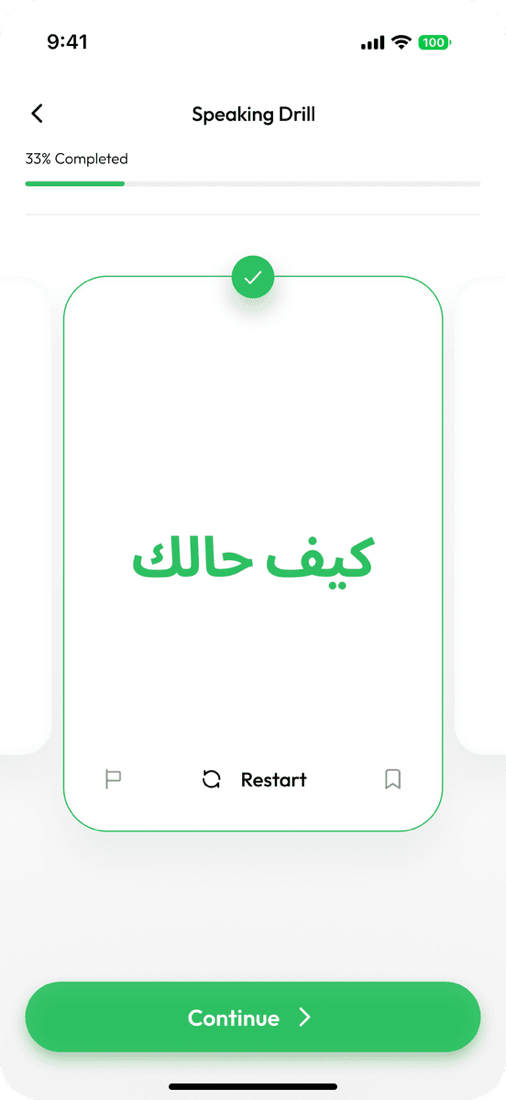
  1. Speak to Move Forward Through Each Lesson

    Every lesson requires you to speak the words correctly before progressing. This speaking-first approach builds pronunciation confidence from day one, eliminating the passive listening trap that keeps learners silent.

    The AI evaluates your pronunciation in real time, offering specific feedback that sharpens your accent and intonation naturally. You're not just repeating phrases into the void.

  2. Interactive Drills Mirror Real Situations

    Order coffee, greet neighbors, ask for directions, negotiate prices at the market. Each drill immerses you in scenarios you'll actually encounter, making practice feel relevant and immediately useful.

    Context matters for dialect learning. Kalam teaches not just words, but when and how to use them appropriately in real social settings.

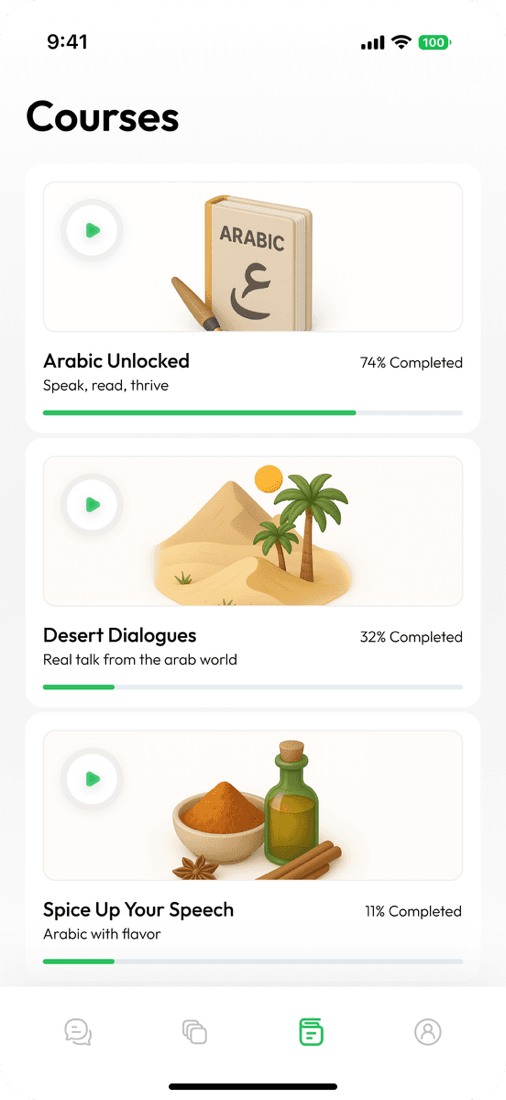
  3. Track Progress with Daily Recommendations

    Personalized daily suggestions keep you moving forward without decision fatigue. The app analyzes your performance and recommends the next lesson that matches your current skill level.

    Progress tracking shows exactly how far you've come. Visual milestones celebrate achievements and maintain motivation as your conversational ability grows week after week.

  4. Cultural Context Embedded in Every Lesson

    Language learning without cultural context leaves you grammatically correct but socially awkward. Kalam weaves cultural nuances into lessons, explaining when formality matters and when casual speech fits better.

    Understanding the culture behind the dialect accelerates comprehension. You'll recognize why certain phrases exist, making vocabulary stick faster and conversations flow more naturally.

Try a Free Lesson

Join 1,000,000+ Members Learning Real Arabic

“Kalam is my new favorite way to learn Arabic. The app feels super well-made, and you can tell the people behind it really care. I love that I can practice speaking whenever I'm out and about — it's way more natural than just memorizing words.”
Abdullah ShebaitaKalam learner · App Store review

“Has all the features I've been looking for. Loving its simplicity and efficiency — it's also great for people looking to travel!”

Yousuf RadwanApp Store review

“It has been such a breeze learning Arabic through Kalam! I have been on a learning journey and finally found something that just works.”

Deno HawariApp Store review

4.7★★★★★

6,800+ ratings on the App Store1,000,000+ learners and counting
Comparing Learning Approaches

Why Dialect-First Learning Works Better

Choose Your Dialect Now
01

MSA-First Approach Delays Real Conversations

Traditional programs teach Modern Standard Arabic first, promising it will make dialects easier later. In practice, MSA creates a detour, teaching grammar and vocabulary you'll rarely use in spoken conversation.

Months spent on MSA mean months not speaking with real people. Reading ability improves but you stay silent in social situations where dialects dominate.

02

Dialect-First Gets You Speaking Immediately

Starting with Egyptian, Levantine, or Gulf Arabic means your first lesson teaches phrases you'll use tomorrow. Every drill prepares you for actual conversations, not theoretical future ones.

Pronunciation matters from the start. Learning dialect sounds and rhythms early prevents the need to unlearn MSA patterns later when you finally want to speak casually.

03

Comprehension Spreads Across Dialects Naturally

Fluency in one dialect makes others accessible. The grammatical patterns, core vocabulary, and conversational strategies transfer smoothly, letting you understand multiple varieties even if you've only studied one deeply.

Egyptian learners often understand Levantine media easily. Gulf speakers grasp Egyptian humor without formal study. Dialects share more than they differ, and active knowledge of one unlocks passive comprehension of others.

04

MSA Remains Accessible When You Need It

Dialect fluency doesn't prevent MSA acquisition. When you need to read formal texts or follow news broadcasts, MSA patterns become much easier to learn with a spoken foundation already in place.

Many dialect learners add MSA reading skills later, finding the grammar less abstract when they already understand how Arabic works in conversation. Start with speaking, expand to formal contexts naturally.

FAQ

Common Questions About Learning Arabic Dialects

Can't find what you're looking for? Email our team, we read everything.

Which Arabic Dialect Should I Learn First?

Your goals determine the best starting point. If your family speaks a specific dialect, start there for authentic connection. If you're moving for work, choose the dialect of your destination city.

Egyptian Arabic offers the widest comprehension across the Arab world, making it ideal for travelers or anyone seeking maximum versatility. Levantine works beautifully for diaspora communities in North America and Europe. Gulf Arabic becomes essential for anyone relocating to the Arabian Peninsula. Our dialect quiz can guide you through the decision in under two minutes.

Can I Switch Between Dialects After I Start?

Absolutely. Many learners start with one dialect and add another as their needs evolve. Your progress saves across all dialects, and pronunciation skills transfer naturally.

Switching costs nothing and takes seconds. If you begin with Egyptian for its broad reach, then realize you need Levantine for family visits, your account adapts instantly. The core conversational patterns you've mastered apply across dialects, making each additional variety easier to learn than the first.

Will Learning a Dialect Limit My Arabic Understanding?

No. Dialect fluency actually expands comprehension. Once you speak Egyptian Arabic confidently, understanding Levantine media or Gulf conversations becomes far easier than starting from zero.

Dialects share core vocabulary and grammatical structures. Active mastery of one dialect unlocks passive comprehension of others, even without formal study. You'll recognize patterns, guess meanings from context, and adapt naturally to unfamiliar varieties. MSA also becomes more accessible when you already understand how Arabic works in conversation.

How Is Kalam Different from Duolingo or Other Apps?

Duolingo, Rosetta Stone, and most language apps teach Modern Standard Arabic, which nobody speaks at home. Kalam teaches Egyptian, Levantine, Gulf, Jordanian, and Moroccan Arabic, the dialects people use every day.

Our AI conversation partner gives real-time pronunciation feedback, not just vocabulary matching. Practice ordering food, greeting neighbors, and navigating real social situations from lesson one. Other apps focus on reading and writing first; Kalam prioritizes speaking from the start. If your goal is real conversations, dialect instruction makes all the difference.

Do I Need to Learn Modern Standard Arabic First?

No. Starting with a dialect gets you speaking faster and builds a foundation for MSA later if you need it. MSA-first approaches delay real conversation for months while you master formal grammar.

Think of MSA as literary English: useful for reading newspapers and formal speeches, but not how people talk casually. Dialects are the everyday language of family dinners, coffee shops, and taxi rides. If you want to speak with real people, dialect-first makes the most sense. You can always add MSA reading skills later, and they'll be easier to learn with spoken fluency as your foundation.

How Long Does It Take to Have a Basic Conversation?

Most learners handle simple exchanges like greetings, ordering food, and asking directions within their first few weeks of consistent practice. Daily lessons take just minutes but compound quickly.

Your pace depends on consistency more than hours logged. Fifteen minutes every day beats hour-long sessions once a week. Kalam's daily recommendations keep you progressing at the right speed, and pronunciation feedback sharpens your accent from the start. Within a month of regular practice, expect to feel confident in basic social situations.

Is Egyptian Arabic Really Understood Everywhere?

Egyptian Arabic is the most widely recognized dialect across the Arab world, thanks to decades of Egyptian media, film, and music. From Morocco to Iraq, people understand Egyptian even if they speak other dialects locally.

That said, understanding doesn't mean everyone speaks Egyptian back to you. In the Levant, people might respond in Levantine Arabic, but mutual comprehension usually works fine. If maximum reach matters most to you, Egyptian delivers the best return. For family or work contexts, prioritize the specific dialect you'll encounter daily.

Can I Learn Multiple Dialects Simultaneously?

We recommend mastering one dialect first to build confidence and fluency. Once you're conversational in Egyptian or Levantine, adding Gulf or Jordanian becomes significantly easier because foundational patterns transfer.

Trying to learn two dialects simultaneously risks confusion early on when pronunciation and vocabulary differences matter most. Focus on one variety until you're comfortable holding basic conversations, then explore additional dialects. Your first dialect takes the longest; subsequent ones come faster as your ear attunes to Arabic's rhythms and structures.

Your family's Arabic is waiting for you.

Answer a few quick questions and get a learning plan built around your dialect. It takes two minutes.