Learn Jordanian Arabic Fast

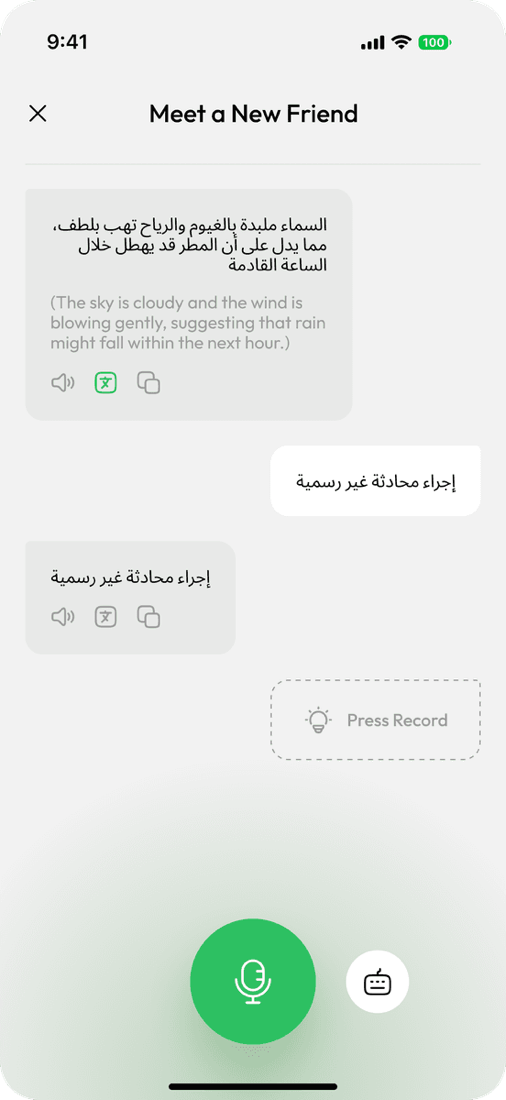
Practice real conversations with an AI coach trained on Jordanian Arabic. You'll speak the way people do in Amman, Irbid, and Jordanian neighborhoods across the US and Europe.

Join 1,000,000+ members learning through speaking drills that get you talking from day one. No vocabulary lists, just real conversations you'll actually use.

1,000,000+ learners
4.7 on the App Store
Why Learn Jordanian Arabic

Why Choose the Jordanian Dialect

Start Your First Lesson
  1. Connect with Your Jordanian Heritage

    Your family in Detroit, Chicago, or back in Jordan speaks a specific way. Learning Jordanian Arabic means understanding the exact expressions, humor, and warmth they use every day.

    Move from understanding fragments to holding full conversations with grandparents, aunts, uncles, and cousins. You'll finally feel part of the conversation instead of sitting on the sidelines.

  2. Clarity That Makes Learning Easier

    Jordanian Arabic is known for being clearer and more accessible than other Levantine variants. Pronunciation is distinct, vowels are pronounced more fully, and the rhythm feels natural to learners.

    Many students find Jordanian easier to grasp than Syrian or Lebanese dialects. It's an ideal entry point into Levantine Arabic that builds your confidence faster.

  3. Essential for Life in Jordan

    Planning to move to Amman, study in Jordan, or spend extended time with family there? You need the local dialect. Standard Arabic won't help you order at a café or chat with neighbors.

    Jordanian Arabic lets you navigate daily life confidently, from markets to medical appointments to making friends. You'll feel at home instead of struggling through basics.

  4. Recognized Across Levantine Communities

    While uniquely Jordanian, the dialect is mutually intelligible with Syrian, Lebanese, and Palestinian Arabic. Once you speak Jordanian, understanding other Levantine speakers comes naturally.

    It's a gateway into the broader Levantine world while staying true to your specific cultural roots. You get the best of both worlds.

How Kalam Teaches the Jordanian Dialect

Practice Real Jordanian Conversations with AI

  1. Speak to Move Forward

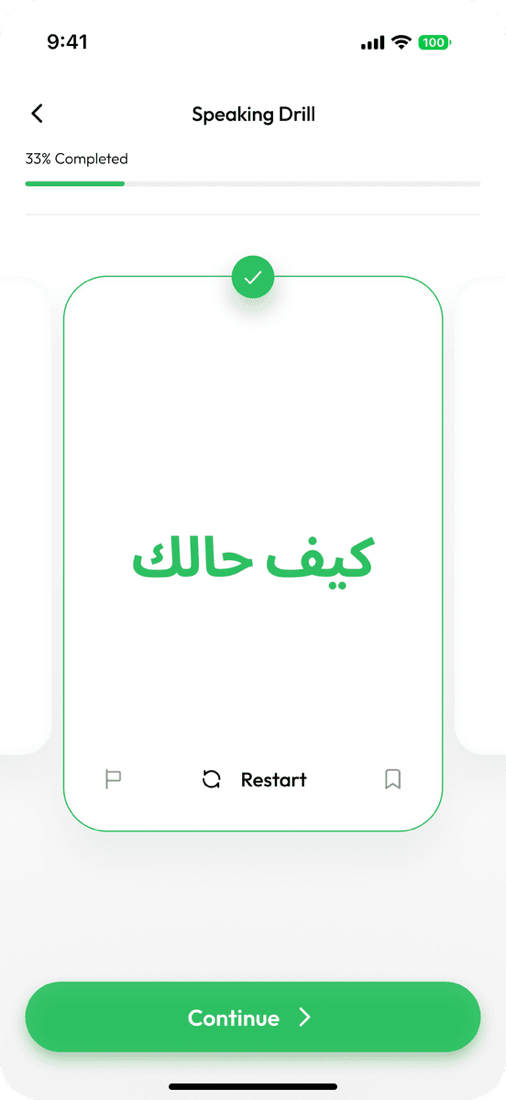
    Every lesson requires you to speak out loud. The AI listens to your pronunciation and only advances when you say the word or phrase correctly.

    Practice the specific sounds and rhythms of Jordanian Arabic, not generic MSA or another dialect. You'll build muscle memory for speaking naturally in real situations.

  2. Complete Interactive Drills Daily

    Short, focused exercises fit into busy schedules. Practice ordering food, greeting neighbors, or asking for directions using phrases Jordanians actually say.

    Each drill builds on the last, so you develop confidence for speaking naturally. Learning feels effortless when you practice just a few lessons a day.

  3. Track Your Progress with Daily Recommendations

    Kalam shows you exactly where you are in your learning journey and what to practice next. You'll see improvement in days, not months.

    Daily recommendations keep you consistent without overwhelming you. Steady progress happens naturally when the app guides you through what matters most.

  4. Immersed in Real-Life Dialogue

    Unlike apps that drill vocabulary lists, Kalam drops you into conversations Jordanians have every day. Learning through context is how native speakers do it.

    This approach builds confidence faster because you're practicing what you'll actually use with family or in Jordan. No wasted time on phrases you'll never say.

Try Your First Drill
Understanding Jordanian Arabic

What Makes Jordanian Arabic Unique

Explore Sample Lessons
  1. Part of the Levantine Family

    Jordanian Arabic shares core grammar and vocabulary with Syrian, Lebanese, and Palestinian dialects. All are mutually intelligible, meaning speakers understand each other naturally.

    Learning Jordanian gives you access to the entire Levantine region while preserving the specific flavor of Jordan. You're building broader skills, not limiting yourself.

  2. Distinct Vocabulary and Expressions

    Certain words and phrases are uniquely Jordanian, shaped by Bedouin heritage and local culture. These distinctions matter when speaking with Jordanian family or communities.

    Kalam teaches you these specific expressions so you sound authentic, not like you learned from a Lebanese or Syrian course. The difference is noticeable to native speakers.

  3. Clearer Pronunciation Patterns

    Jordanian speakers tend to pronounce vowels more fully than some other Levantine dialects. This clarity makes it easier for learners to hear distinctions and mimic sounds accurately.

    The rhythm and intonation feel approachable, which is why many teachers recommend starting with Jordanian when learning Levantine Arabic. You'll pick it up faster.

  4. Rooted in Jordanian Culture

    The dialect reflects Jordanian hospitality, humor, and social norms. Phrases often carry cultural context that goes beyond literal translation.

    Understanding these nuances helps you connect authentically with Jordanian speakers, whether in Amman or diaspora communities. Language and culture go hand in hand.

Phrase guide

Jordanian Arabic vs textbook Arabic

The same everyday phrases, the way a textbook says them and the way people actually say them.

EnglishModern Standard ArabicJordanian Arabic
How are you? كيف حالك؟kayfa ḥāluk? كيفك؟kīfak?
What do you want? ماذا تريد؟mādhā turīd? شو بدّك؟shu biddak?
I don't know لا أعرفlā aʿrif ما بعرفma baʿref
Now الآنal-ān هسّاhassa
Good جيدjayyid منيحmnīḥ
Man / guy رجلrajul زلمةzalameh
Who This Tool Is For

Is Jordanian Arabic Right for You?

See If Kalam Fits You
01

Heritage Learners Reconnecting with Family

You grew up hearing Jordanian Arabic but never learned to speak it fluently. Now you want full conversations with parents, grandparents, and extended family without switching to English.

This course gives you the exact dialect your family uses. You'll finally participate in conversations, understand jokes, and feel culturally connected instead of sitting quietly.

02

Travelers and Future Residents

Planning an extended stay in Jordan for work, study, or family reasons? Tourist Arabic won't cut it when you're living day to day in Amman or other cities.

Learning the local dialect means navigating markets, making friends, and handling practical situations with confidence. No more relying on English or gestures for everything.

03

Diaspora Community Members

You're part of a Jordanian community in the US, Canada, or Europe and want to engage more deeply. Speaking the dialect strengthens your connection to community events, gatherings, and friendships.

Kalam helps you move from observer to participant in your own cultural community. You'll feel like you truly belong.

04

Levantine Arabic Learners Seeking Clarity

You've tried learning Levantine Arabic but found other dialects confusing or hard to follow. Jordanian is known for clearer pronunciation and more accessible rhythm.

Starting with Jordanian gives you a solid foundation that makes understanding other Levantine dialects easier later. It's the smartest entry point into the Levantine world.

Trusted by Jordanian Arabic Learners Worldwide

“Kalam is my new favorite way to learn Arabic. The app feels super well-made, and you can tell the people behind it really care. I love that I can practice speaking whenever I'm out and about — it's way more natural than just memorizing words.”
Abdullah ShebaitaKalam learner · App Store review

“Has all the features I've been looking for. Loving its simplicity and efficiency — it's also great for people looking to travel!”

Yousuf RadwanApp Store review

“It has been such a breeze learning Arabic through Kalam! I have been on a learning journey and finally found something that just works.”

Deno HawariApp Store review

4.7★★★★★

6,800+ ratings on the App Store1,000,000+ learners and counting
Sample Conversation

See What You'll Learn: A Typical Jordanian Exchange

Try a Free Conversation
  1. Everyday Greetings in Amman

    Start with common phrases Jordanians use every day. Learn how to greet neighbors, ask how someone is doing, and respond naturally in social settings.

    These aren't textbook phrases. They're the exact expressions you'll hear walking through Amman or visiting family in Jordan.

  2. Ordering Food and Making Requests

    Practice conversations that happen in restaurants, cafés, and markets. Learn how to order dishes, ask for recommendations, and navigate menus confidently.

    Kalam teaches you the polite forms and casual expressions Jordanians actually use when interacting with service staff and vendors. You'll sound like a local, not a tourist.

  3. Asking for Directions and Getting Around

    Master the phrases you need to find your way in Jordanian cities. Ask for directions, understand responses, and confirm you're headed the right way.

    These practical conversations prepare you for real situations you'll face if you're traveling or living in Jordan. No more getting lost or relying on others.

  4. Family Conversations and Storytelling

    Learn how to participate in family gatherings, understand stories your relatives tell, and share your own experiences in Arabic.

    This is where heritage learners feel the biggest change. Moving from passive listener to active participant in family conversations transforms relationships.

Jordanian Arabic vs Other Dialects

How Jordanian Fits into Levantine and Modern Standard Arabic

Start with Jordanian Arabic
01

Jordanian Within the Levantine Family

Jordanian, Syrian, Lebanese, and Palestinian Arabic all belong to the Levantine dialect family. They share core grammar, most vocabulary, and are mutually intelligible.

Learning Jordanian means understanding speakers from Damascus, Beirut, and Ramallah naturally. Each region has its own flavor, but the foundation is the same.

02

Jordanian vs Modern Standard Arabic

MSA is the formal Arabic of news, literature, and official settings. Jordanian Arabic is what people speak at home, in shops, and with friends.

If your goal is conversation with family or daily life in Jordan, the dialect is what you need. MSA won't help you order coffee or chat with neighbors.

03

Jordanian vs Egyptian or Gulf Arabic

Egyptian and Gulf dialects differ significantly from Levantine Arabic in pronunciation, vocabulary, and grammar. If your family is Jordanian, learning Egyptian won't give you the right expressions or sounds.

Kalam teaches specifically Jordanian Arabic, so you'll speak the way your family and community do. Not a different regional variant that won't feel natural to them.

04

Why Start with Jordanian

Jordanian's clarity and accessible rhythm make it one of the best entry points into Levantine Arabic. Once you master Jordanian, picking up Syrian or Lebanese becomes intuitive.

Many teachers recommend starting here because the pronunciation patterns are easier to hear and reproduce than other Levantine dialects. You'll build confidence faster.

FAQ

Common Questions About Learning Jordanian Arabic

Can't find what you're looking for? Email our team, we read everything.

How Is Jordanian Arabic Different from Other Levantine Dialects?

Jordanian shares core grammar and most vocabulary with Syrian, Lebanese, and Palestinian Arabic, but has unique expressions, pronunciation patterns, and cultural references shaped by Jordanian heritage. The dialect is known for clearer vowel pronunciation and a rhythm that many learners find easier to follow.

If your family is Jordanian, these distinctions matter. Learning Jordanian ensures you sound authentic in conversations with relatives and Jordanian communities, not like you learned from a different Levantine course.

Will Other Levantine Speakers Understand Me if I Learn Jordanian?

Yes, absolutely. All Levantine dialects are mutually intelligible, meaning speakers from Jordan, Syria, Lebanon, and Palestine understand each other naturally in conversation.

Learning Jordanian gives you a solid foundation in Levantine Arabic. Once you speak Jordanian confidently, understanding and adapting to Syrian or Lebanese becomes intuitive.

Is Jordanian Arabic Easier to Learn Than Other Dialects?

Many learners and teachers find Jordanian more accessible than other Levantine variants because of its clearer pronunciation and fuller vowel sounds. The rhythm feels natural and easier to mimic for non-native speakers.

While no dialect is objectively easier, Jordanian's clarity makes it an excellent entry point into Levantine Arabic. You'll build confidence faster because you can hear and reproduce sounds more accurately.

Do I Need to Learn Modern Standard Arabic First?

No. If your goal is speaking with family or navigating daily life in Jordan, learning the dialect first makes the most sense. MSA is the formal language of news and literature, but Jordanians speak the dialect in everyday situations.

Kalam focuses on conversational fluency from day one so you'll practice what you'll actually use. You can always learn MSA later if your goals expand to formal reading or writing.

Can I Use Kalam if I'm a Complete Beginner?

Yes. Kalam is designed for learners at all levels, including absolute beginners. The app starts with foundational phrases and pronunciation, building up gradually as you gain confidence.

The AI coach adapts to your pace so you're never overwhelmed. You'll start speaking from the first lesson, even if you've never studied Arabic before.

How Long Does It Take to Have Basic Conversations in Jordanian Arabic?

Most members report being able to hold simple conversations within a few weeks of consistent practice. Daily drills that focus on speaking accelerate progress compared to traditional vocabulary-memorization methods.

Your timeline depends on how much time you dedicate, but Kalam's conversation-first approach means you're practicing real exchanges from day one. Not just building passive knowledge that doesn't help you speak.

What if I Want to Switch to a Different Dialect Later?

Jordanian is part of the Levantine family, so learning it gives you a strong foundation in that entire dialect group. If you later want to focus on Syrian or Lebanese, the transition will feel natural because the core structure is the same.

Starting with Jordanian doesn't lock you in. It gives you transferable skills that apply across Levantine Arabic and makes learning other dialects much easier.

Does Kalam Teach the Arabic Script or Just Transliteration?

Kalam includes both Arabic script and transliteration to support different learning preferences. You'll see how words are written in Arabic while also having pronunciation guides to help you speak accurately.

The focus is on conversation and speaking fluency, so the app prioritizes helping you sound natural over mastering written Arabic. Though the script is there for those who want it.

Start speaking Jordanian Arabic today.

Answer a few quick questions and get a learning plan built around your dialect. It takes two minutes.