Learn Maghrebi Arabic Fast

Practice speaking North African Arabic with an AI partner trained on how people actually talk in Casablanca, Algiers, and Tunis. Each conversation builds your confidence to navigate markets, connect with relatives, and handle daily interactions.

Progress comes from speaking out loud, not memorizing word lists. Kalam listens to your pronunciation and moves you forward when you say it right.

1,000,000+ learners
4.7 on the App Store
Why Maghrebi Arabic Matters

Why Learn Maghrebi Arabic

Start Your First Lesson
  1. Connect With Family Across North Africa

    If your family is from Morocco, Algeria, or Tunisia, Darija is what they speak at home and in the streets. MSA won't help you join conversations at family gatherings or understand what's happening around the dinner table.

    Finally participate in the language that connects you to your heritage. Relatives notice when you make the effort to speak their dialect.

  2. Navigate Morocco Beyond Tourist Areas

    French works in Casablanca hotels, but Maghrebi Arabic opens doors in medinas, mountain villages, and local markets. Travelers who speak Darija experience a different country than those who rely on French alone.

    Order food with confidence, negotiate prices, and have real exchanges with shopkeepers and taxi drivers. The experience shifts from transactional to personal.

  3. Master the Most Distinct Arabic Dialect

    Maghrebi Arabic is famously challenging—even Egyptian and Levantine speakers struggle to understand Moroccan Darija. Heavy Berber and French influence makes it structurally unique among Arabic dialects.

    Learning it properly from the start saves you from confusion later. Understand the code-switching between Arabic and French that happens naturally in North African conversation.

  4. Speak the Language of Three Countries

    Morocco, Algeria, and Tunisia share core dialect structures despite regional variations. Once you learn Maghrebi Arabic, you can communicate across North Africa's 100 million speakers.

    Gain access to a massive Arabic-speaking region that other learners overlook. Most apps ignore North African dialects entirely.

How Kalam Teaches Darija

How You'll Learn Maghrebi Arabic

  1. Speak to Move Forward

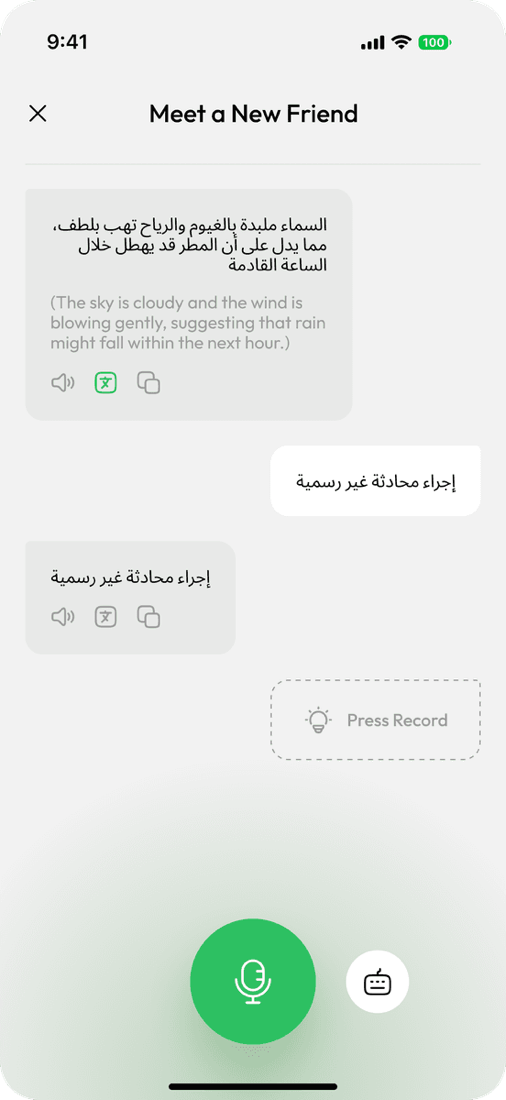
    Practice by speaking out loud, not tapping through multiple-choice questions. Kalam's AI listens to your pronunciation and only advances you when you say the phrase correctly.

    Every lesson requires you to produce the sounds yourself. Passive listening doesn't build speaking confidence—active pronunciation does.

  2. Complete Your Drills

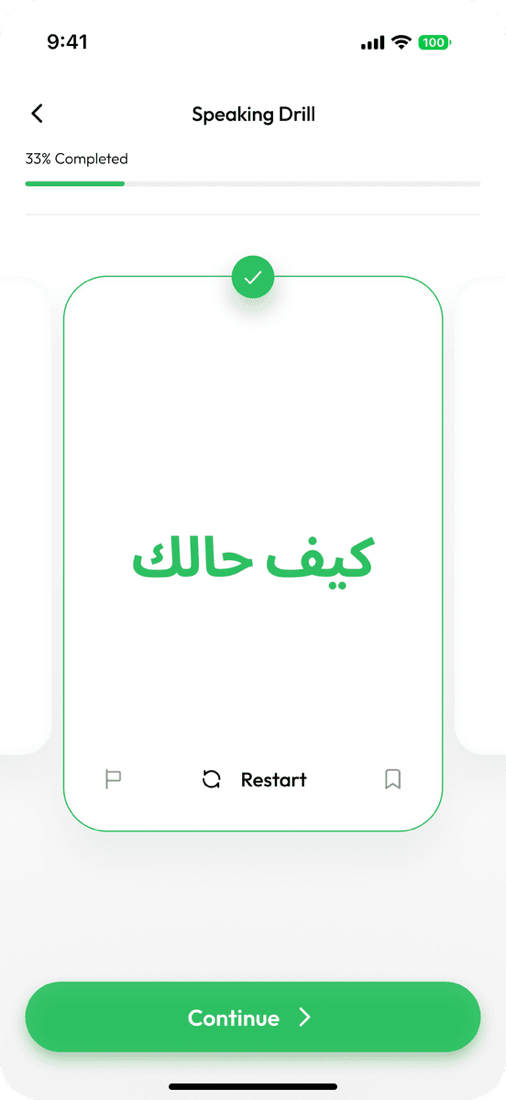
    Daily drills focus on pronunciation and conversational flow. Short practice sessions keep you consistent without overwhelming your schedule.

    See progress in days, not months. Speaking practice accelerates fluency faster than passive study ever could.

  3. Learn Through Real-Life Dialogue

    Lessons immerse you in conversations you'll actually have in Morocco or with family. Learn to order at cafes, ask for directions, greet relatives, and handle everyday exchanges that matter.

    Each dialogue teaches phrases in context, not isolated vocabulary. Remember better because you're learning language as it's used, not as it appears in textbooks.

  4. Track Your Progress

    Kalam shows you exactly how much you've practiced and which conversations you've mastered. Daily recommendations keep you moving forward without guesswork.

    Progress tracking builds momentum. Watch your streak grow and feel motivated to maintain consistency.

Try a Free Conversation
Regional Coverage and Dialect Variations

Moroccan, Algerian, and Tunisian Arabic

Start Learning Darija
  1. Moroccan Darija Foundation

    Kalam's Maghrebi Arabic curriculum centers on Moroccan Darija, the most widely spoken variant and the most distinct from other Arabic dialects.

    Moroccan Darija forms the foundation because it prepares you for the most challenging dialect variations. Once you understand Moroccan patterns, Algerian and Tunisian variants become easier to recognize.

  2. Algerian and Tunisian Comprehension

    While Moroccan Darija is the primary focus, you'll develop comprehension skills for Algerian and Tunisian variations. All three countries share core grammatical structures and much of the foundational vocabulary.

    Regional differences exist in pronunciation and some word choices, but mutual intelligibility is high. Recognize patterns across borders and adapt to local variations naturally.

  3. French-Arabic Code-Switching

    North African conversation naturally blends Arabic and French, a legacy of colonial history and modern bilingualism. Kalam teaches you to recognize and use this code-switching as native speakers do.

    Understand when French words appear in Arabic sentences and why. This prepares you for real conversations in cities like Casablanca, Algiers, and Tunis where bilingualism is the norm.

  4. Berber Influence Recognition

    Maghrebi Arabic carries significant Berber (Tamazight) substrate influence in pronunciation and vocabulary. Learn to recognize these elements and understand how they shape North African Arabic differently from Eastern dialects.

    This linguistic awareness helps you sound more natural and understand why Maghrebi Arabic feels so different from Egyptian or Levantine varieties.

Phrase guide

Maghrebi Arabic vs textbook Arabic

The same everyday phrases, the way a textbook says them and the way people actually say them.

EnglishModern Standard ArabicMaghrebi Arabic
How are you? كيف حالك؟kayfa ḥāluk? لاباس؟ / كي داير؟labas? / ki dāyer?
What do you want? ماذا تريد؟mādhā turīd? شنو بغيتي؟shnu bghiti?
I don't know لا أعرفlā aʿrif ما عرفتشma ʿreftsh
Now الآنal-ān داباdāba
Good جيدjayyid مزيانmezyān
A lot / very كثيرًا / جدًاkathīran / jiddan بزافbezzāf
Who This Course Is For

Who Learns Maghrebi Arabic With Kalam

Join 1,000,000+ Learners
01

Heritage Learners Reconnecting With Family

You grew up hearing Darija at family gatherings but never learned to speak it fluently. Your parents or grandparents came from Morocco, Algeria, or Tunisia, and you want to finally join conversations instead of just understanding fragments.

Heritage learners make up a significant portion of Kalam's community, especially among diaspora populations in France, Belgium, Spain, Canada, and the United States. Learn the dialect your family actually speaks, not the formal Arabic taught in universities.

02

Morocco-Bound Travelers and Expats

Planning extended travel or work in Morocco and know that French alone won't give you the full experience. Speaking Darija changes how locals interact with you, from market vendors to taxi drivers to new friends.

Travelers who invest in learning Maghrebi Arabic before arrival report deeper cultural immersion and more authentic connections. Navigate beyond tourist zones with confidence.

03

Arabic Learners Seeking Dialect Diversity

Already speak Egyptian or Levantine Arabic and want to expand your dialectal range. Maghrebi Arabic challenges you with its unique phonology, Berber influences, and French integration.

Adding a North African dialect to your repertoire makes you more versatile across the Arabic-speaking world. Understand linguistic patterns that other learners miss entirely.

04

North Africa Researchers and Culture Enthusiasts

Your work or studies focus on North African culture, history, or society. Speaking the local Arabic dialect gives you direct access to perspectives and sources that English and French research can't provide.

Language opens cultural doors that remain closed to outsiders. Engage with North African media, literature, and communities on their terms.

What Learners Say About Kalam

“Kalam is my new favorite way to learn Arabic. The app feels super well-made, and you can tell the people behind it really care. I love that I can practice speaking whenever I'm out and about — it's way more natural than just memorizing words.”
Abdullah ShebaitaKalam learner · App Store review

“Has all the features I've been looking for. Loving its simplicity and efficiency — it's also great for people looking to travel!”

Yousuf RadwanApp Store review

“It has been such a breeze learning Arabic through Kalam! I have been on a learning journey and finally found something that just works.”

Deno HawariApp Store review

4.7★★★★★

6,800+ ratings on the App Store1,000,000+ learners and counting
Getting Started With Maghrebi Arabic

Start Speaking Darija Today

Start Learning Maghrebi Arabic
  1. Begin With Your First Conversation

    Your first lesson introduces basic Maghrebi Arabic greetings and common phrases. Speak from day one, building confidence through immediate practice rather than weeks of passive study.

    Just say the word correctly to keep progressing through the lesson. The AI waits for your pronunciation and gives you instant feedback.

  2. Practice a Few Lessons a Day

    Each lesson includes speaking drills that reinforce pronunciation and conversational rhythm. Short daily sessions fit into busy schedules without overwhelming you.

    Complete your drills at your own pace. Morning coffee, lunch break, evening wind-down—Kalam adapts to when you have five minutes.

  3. Track Your Progress and Get Daily Recommendations

    Kalam suggests which lessons to tackle next based on your progress and goals. Never wonder what to study—the app guides you forward.

    Progress tracking shows your consistency and mastery. Watching your streak grow keeps motivation high and learning fun.

  4. Join a Global Community of Arabic Learners

    Join over a million members learning Arabic through conversation practice. The community spans heritage learners, travelers, expats, and language enthusiasts from every continent.

    Kalam users support each other's learning journeys. You're not alone in mastering one of the world's most challenging and rewarding language families.

FAQ

Common Questions About Learning Maghrebi Arabic

Can't find what you're looking for? Email our team, we read everything.

Is Maghrebi Arabic Really Different From Other Arabic Dialects?

Yes, Maghrebi Arabic, especially Moroccan Darija, is the most distinct Arabic dialect. Heavy Berber and French influence creates pronunciation patterns and vocabulary that even fluent Egyptian and Levantine speakers struggle to understand. If you learn Egyptian Arabic and travel to Morocco, you'll find yourself lost in basic conversations.

The grammatical core is still Arabic, but the phonology and lexicon diverge significantly. Learning Maghrebi Arabic properly from the start saves you from confusion later. Understand code-switching between Arabic and French, recognize Berber loanwords, and navigate the unique sound changes that define North African speech.

Will Learning Moroccan Arabic Help Me in Algeria and Tunisia?

Yes, with some regional variation. Morocco, Algeria, and Tunisia share core dialect structures and much of the foundational vocabulary. Once you learn Moroccan Darija, you'll have strong comprehension of Algerian and Tunisian variants, though pronunciation and some word choices differ.

Moroccan Darija is the most challenging of the three, so starting there prepares you well for the others. Algerians and Tunisians will understand you even if your accent leans Moroccan. The mutual intelligibility is higher than between Egyptian and Maghrebi Arabic.

Should I Learn Modern Standard Arabic First?

No, if your goal is conversation with family or travel in North Africa. Modern Standard Arabic is the formal written language used in media and literature, but nobody speaks it at home or in the streets. Learning MSA first won't help you order food in Marrakech or understand your Moroccan relatives.

Start with the dialect you need. You can always add MSA later if you want to read Arabic news or literature. Most heritage learners and travelers see faster, more practical results by focusing on spoken dialect from day one.

How Long Does It Take to Learn Conversational Maghrebi Arabic?

Most learners achieve basic conversational ability in three to six months with consistent daily practice. Kalam's speaking-first method accelerates fluency by focusing on pronunciation and dialogue from the beginning, rather than spending months on grammar rules and vocabulary lists.

Progress depends on practice frequency and previous language experience. Heritage learners with passive comprehension often reach conversational fluency faster than complete beginners. The key is daily speaking practice, even if just five to ten minutes per session.

Can Kalam Help Me Understand French-Arabic Code-Switching?

Yes, Kalam teaches you to recognize and use the natural French-Arabic blending that happens in North African conversation.

Learn which French words commonly appear in Maghrebi Arabic and why. This prepares you for real conversations where someone might start a sentence in Darija and finish with a French phrase. Understanding this code-switching is essential for sounding natural and following everyday dialogue.

Is Kalam Suitable for Complete Beginners?

Yes, Kalam is designed for learners at all levels, including complete beginners. You don't need any prior Arabic knowledge. The app starts with basic greetings and common phrases, building your confidence through immediate speaking practice.

Beginners benefit most from Kalam's pronunciation-focused approach because you develop correct habits from day one. You won't have to unlearn bad pronunciation patterns later. The AI gives instant feedback, so you always know if you're saying it right.

What Makes Kalam Different From Apps Like Duolingo?

Kalam focuses exclusively on speaking practice through AI conversation, while apps like Duolingo emphasize vocabulary drills and written exercises. For dialect learning, speaking out loud is essential. You need to produce the sounds yourself, not just recognize words on a screen.

Duolingo teaches Modern Standard Arabic, which won't help you in Morocco. Kalam teaches Maghrebi Arabic, the dialect people actually speak in North Africa. Our users consistently report that immersion in real-life dialogues builds conversational confidence faster than traditional vocabulary-focused methods.

Can I Use Kalam if I Only Have a Few Minutes Per Day?

Yes, Kalam is designed for busy schedules. Most lessons and drills take five to ten minutes. Short, consistent practice sessions are more effective than occasional long study marathons. Build speaking confidence through daily repetition, not through cramming.

The app gives you daily recommendations so you always know what to practice next. Morning coffee, lunch break, evening relaxation—Kalam fits into whatever window you have. Progress tracking keeps you motivated even when sessions are short.

Start speaking Maghrebi Arabic today.

Answer a few quick questions and get a learning plan built around your dialect. It takes two minutes.