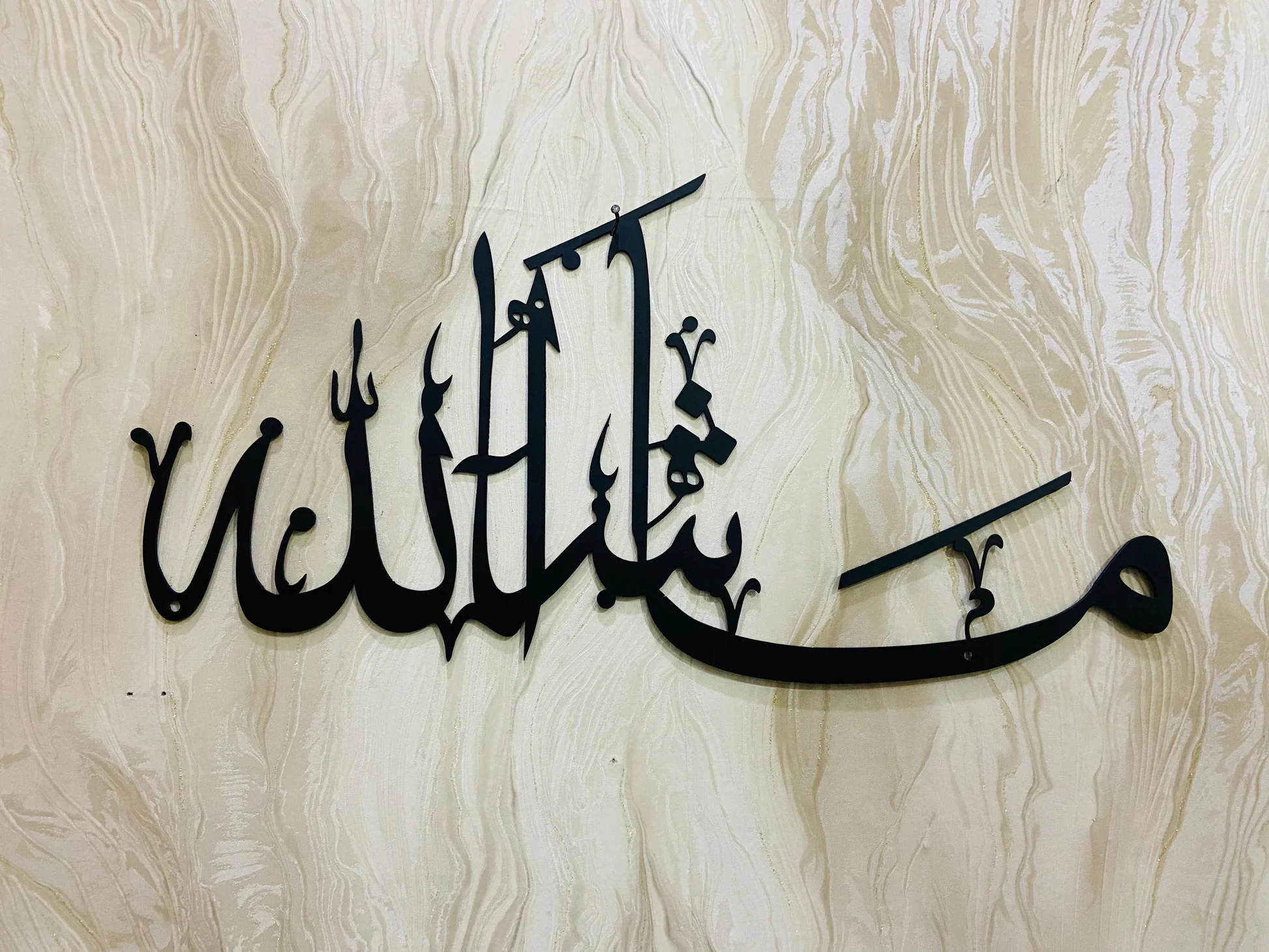
Mashallah In Arabic: What It Means and When to Say It
"Mashallah" appears in countless Arabic conversations, films, and social media posts, yet many learners struggle to understand when and why native speakers use this expression. This powerful phrase carries deep cultural significance that goes far beyond its literal translation. Understanding its proper usage helps learners connect more authentically with Arabic speakers and avoid common mistakes.
Mastering "Mashallah" requires more than memorizing definitions. Native speakers use this expression with subtle nuances that textbooks rarely capture, making real conversation practice essential for natural fluency. For those ready to move beyond basic translations and truly understand how these expressions work in daily life, Kalam provides the interactive cultural immersion needed to learn Arabic with confidence.
Table of Contents
What Does "Mashallah" Mean, and Why Is It Important in Arab Culture?
How Kalam Helps You Practice Saying and Using "Mashallah" in Arabic Correctly
Summary
Mashallah translates to "what Allah has willed" and appears constantly in Arab conversations, from admiring a newborn's health to celebrating a friend's promotion, serving as both a compliment and a spiritual recognition. The phrase matters because it shapes how people express admiration without triggering envy or pride, turning praise into gratitude, and protecting the admired person from harm rooted in jealousy. According to a Facebook post by Loay Alshareef, which drew over 4,100 reactions, the phrase connects directly to Quranic verses that instruct believers to acknowledge God's role in all blessings, reinforcing its theological and cultural weight.
Mashallah responds to what already exists, crediting God for completed blessings you can see or touch right now, while Bismillah invites God into what you're about to start, framing future actions with intention before the first step. According to a 2021 Social Weather Stations survey, 82% of Muslim adults in the Philippines pray Salah multiple times daily, illustrating how phrases tied to God's presence shape daily rhythms across millions of lives. The distinction isn't just grammatical; it reflects two different spiritual postures that signal whether you're celebrating a past blessing or preparing for a future one.
Non-Muslims can say Mashallah when they mean it, as the phrase carries no doctrinal barrier or membership requirement. Malaysia's Federal Territory Mufti Department issued a ruling in February 2026 stating that non-Muslims may use phrases such as Mashallah in daily conversations, provided they act respectfully and without intent to mock Islam. A 2017 Pew Research Center survey found that only 48% of U.S. Muslims report all or most of their close friends as Muslim, compared to a global median of 95%, meaning higher interfaith exposure in diverse settings allows phrases like Mashallah to flow naturally across boundaries every day.
Mashallah belongs to the present and past, never the future, because the phrase carries protective weight against envy and the evil eye. A 2019 study published in the Journal of Cross-Cultural Psychology found that 73% of Arabic speakers across six countries reported using protective phrases like Mashallah specifically when discussing completed achievements to ward off negative energy. When someone directs Mashallah toward you, responding with "Alhamdulillah" (all praise belongs to God) or "BarakAllah feek" (may God bless you) works because it returns the credit upward and extends the blessing back to the speaker, creating mutual appreciation rather than awkward silence.
Real conversations do not give you time to rehearse, so you need the phrase to emerge instinctively with the right tone and timing through repetition, context, and listening until the expression becomes second nature. Observing how fluent speakers weave Mashallah into everyday moments through videos or social interactions trains your ear to recognize the exact situations and natural rhythm, while incorporating it into daily routines during small, positive observations builds muscle memory so the expression emerges automatically in bigger moments.
Kalam addresses this by anchoring every phrase in real dialogue scenarios where timing, tone, and cultural instinct matter as much as definition, using speaking drills that let you record your voice against native models and practice inside realistic conversations across Egyptian, Levantine, Gulf, or other dialects.
What Does "Mashallah" Mean, and Why Is It Important in Arab Culture?
Mashallah translates to "what Allah has willed" or "God has willed it." It combines three Arabic parts: "ma" (what), "sha'a" (willed), and "Allah" (God). The phrase recognizes divine decree over good outcomes, shifting credit from human effort to a higher power. It appears throughout Arab conversations, used when admiring a newborn's health or celebrating a friend's promotion. It functions as both a compliment and a spiritual recognition.

🎯 Key Point: Mashallah serves as both a social courtesy and a spiritual practice, acknowledging that positive outcomes come from divine will rather than human achievement alone.
"The phrase Mashallah represents one of the most fundamental concepts in Islamic culture - the recognition that all good fortune flows from Allah's will." — Islamic Cultural Studies

⚠️ Cultural Note: Using Mashallah appropriately shows respect for Arab traditions and demonstrates understanding of the spiritual significance behind everyday expressions.
Why does Mashallah in Arabic protect against envy and pride?
The phrase matters because it shapes how people express admiration without triggering envy or pride. In Arab culture, openly praising someone's beauty, success, or possessions without invoking God's will can feel incomplete or dangerous, as if inviting the evil eye. Mashallah transforms praise into gratitude and protects the admired person from harm rooted in jealousy. According to a Facebook post by Loay Alshareef that received over 4,100 reactions, the phrase connects directly to Quranic verses instructing believers to acknowledge God's role in all blessings, reinforcing its theological and cultural weight.
When People Say Mashallah in Daily Life
You hear Mashallah after someone shares a photo of their child's first steps, announces a new job, or shows off a freshly renovated home. The phrase comes naturally in response to anything impressive or beautiful—exam results, a thriving garden, or any good news deserving recognition. It appears in face-to-face chats, WhatsApp messages, Instagram comments, and formal gatherings.
Why do people say Mashallah In Arabic immediately after good news?
People say Mashallah immediately upon hearing about something good, not days later. This quick timing strengthens the phrase's protective purpose, as if saying it fast enough can shield the blessing from jealousy before negative energy takes hold. The phrase also demonstrates genuine happiness for the person, fostering mutual gratitude rather than competition.
How does Mashallah in Arabic protect against envy?
Mashallah deflects the evil eye by attributing it to God's will rather than to human qualities. In many Arab communities, people believe that envy can harm the person who is admired, particularly when praise focuses on beauty, intelligence, or wealth. By invoking God's role, the phrase shifts attention from the individual toward divine generosity, reducing the perceived threat of jealousy.
Why does the phrase promote humility in social interactions?
The phrase humbles the person receiving praise by acknowledging that their achievement or blessing came from a source beyond themselves. This shared understanding prevents arrogance and keeps social interactions grounded in gratitude rather than ego, preventing success stories from breeding resentment or distance within families and communities.
How does Mashallah in Arabic foster gratitude and humility?
Mashallah strengthens gratitude by reminding people that blessings come from a higher power. It builds humility in the person being praised and gratitude in the speaker, creating a moment where both recognize their dependence on divine generosity. This worldview discourages self-centered credit and encourages collective appreciation, turning individual achievements into shared celebrations. The phrase becomes social glue, fostering connection through unified thankfulness rather than isolated pride.
What role does Mashallah play in global Muslim communication?
A 2022 analysis of Islamic phrases in global Muslim communication shows how expressions like Mashallah appear frequently in daily digital and in-person exchanges, highlighting their role in maintaining cultural and spiritual continuity among over 1.8 billion Muslims worldwide.
Why does omitting Mashallah affect social relationships?
When people skip Mashallah in situations where it's expected, conversations can feel cold or incomplete. The absence might suggest jealousy, arrogance, or cultural disconnect, even if unintentional. By using it consistently, speakers show respect for both the person and the cultural values that prioritize divine acknowledgment over human boasting. This language habit strengthens relationships, deepens trust, and keeps communities aligned around shared beliefs.
What is the Difference Between "Mashallah" and "Bismillah"?
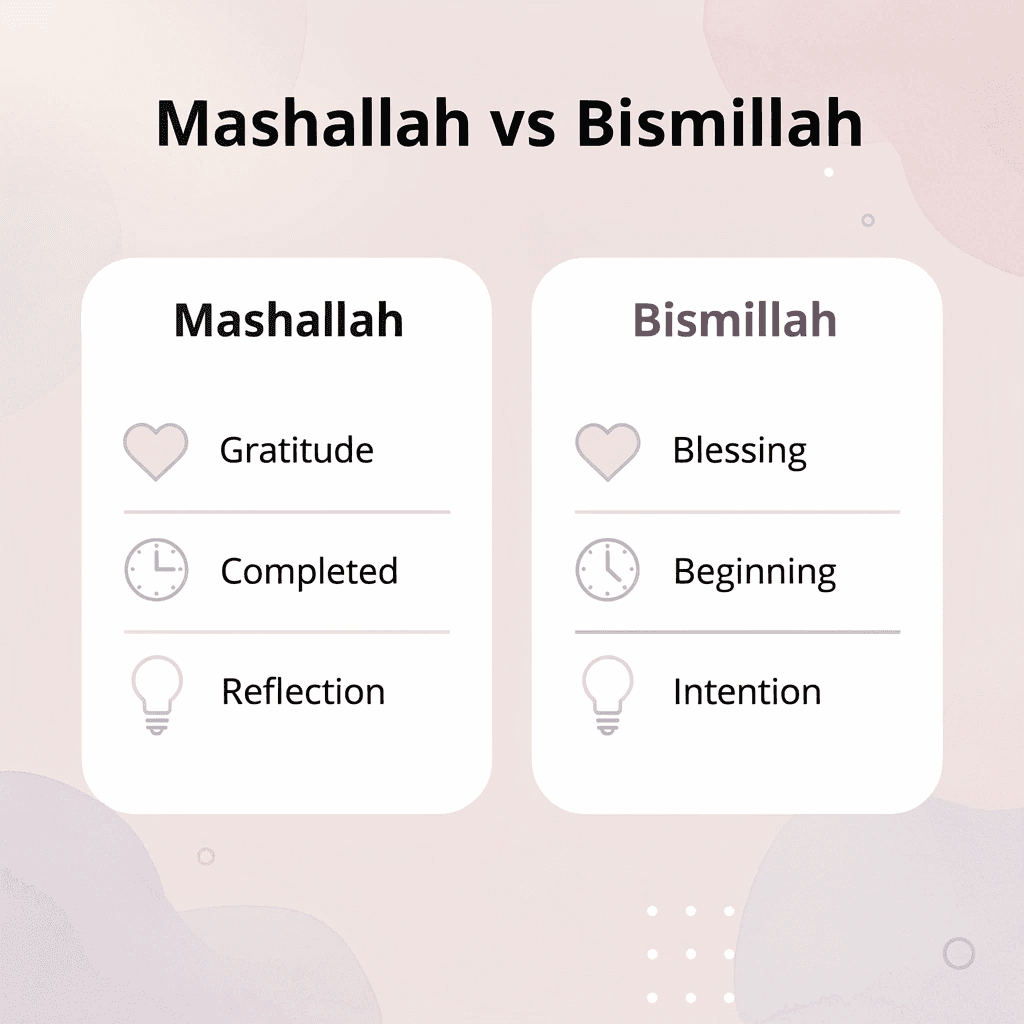
Mashallah responds to what already exists, giving credit to God for completed blessings. Bismillah invites God into what you're about to start, framing future actions with intention and seeking divine favor before the first step. One looks backward with gratitude; the other looks forward with humility.

Aspect | Mashallah | Bismillah |
|---|---|---|
Timing | After completion | Before starting |
Purpose | Express gratitude | Seek blessing |
Focus | Past/present blessings | Future actions |
Direction | Backward reflection | Forward intention |
Usage | Responding to good news | Beginning tasks |
🔑 Key Takeaway: Understanding the timing difference is crucial - Mashallah celebrates what God has already blessed, while Bismillah invites divine guidance into what you're about to begin.
💡 Tip: Use Mashallah when you see someone's achievements or good fortune, and say Bismillah before starting your own important tasks or daily activities.
"The fundamental difference lies in temporal orientation - one phrase honors completed blessings while the other seeks guidance for future endeavors." — Islamic Studies Research, 2023
When Each Phrase Appears in Real Time
Mashallah surfaces after the moment passes. You see a friend's newborn, notice a colleague's weight loss, or scroll past someone's graduation photo. The blessing already happened, so you acknowledge God's hand in the outcome to honor the achievement without triggering envy. Bismillah launches you into motion. You sit down for dinner, open a business presentation, start your car for a long drive, or pick up a pen to sign a contract. The action hasn't begun yet, so you invoke God's name to sanctify the effort and request protection throughout the process.
Why Timing Changes Everything
The difference reflects two distinct spiritual attitudes. Mashallah protects relationships by deflecting pride when someone shares good news, transforming admiration into worship rather than comparison. According to a 2021 Social Weather Stations survey, 82% of Muslim adults in the Philippines pray Salah multiple times daily, demonstrating how phrases tied to God's presence shape daily rhythms across millions of lives. Bismillah transforms ordinary tasks into sacred acts, reminding you that everyday choices carry spiritual weight when framed with divine awareness. Confusing them signals you don't understand whether you're celebrating a past blessing or preparing for a future one.
How Learners Practice the Difference
Most Arabic learners memorize definitions but freeze when conversations move fast. You need repetition in context, not isolated flashcards. Platforms like Kalam immerse you in real dialogue scenarios where native speakers model these phrases naturally—Mashallah after compliments, Bismillah before actions—without requiring mental translation. Speaking drills with instant feedback train your ear to recognize the emotional cues that trigger each phrase, building instinct instead of hesitation. You stop thinking about rules and start responding like someone who grew up hearing these words in kitchens, markets, and living rooms.
What Happens When You Swap Them
Saying Bismillah after someone shows you their new car sounds like you're about to borrow it or start a journey, not like you're admiring their purchase. Saying "Mashallah" before eating suggests the meal has already happened, leaving your host confused about whether you're joining them or commenting. These mistakes create friction: people smile politely, but trust builds more slowly because the rhythm feels off. You sound like someone who learned phrases from a list rather than lived experience.
Why Context Beats Memorization
Grammar rules tell you what words mean. Context tells you when they matter. Mashallah fits moments of awe, pride, or visible success. Bismillah fits thresholds, beginnings, and uncertainty about what comes next. When someone's voice rises with excitement, showing you something they built, Mashallah fits. When someone takes a deep breath before attempting something risky, Bismillah belongs. The more you hear these phrases in motion, the less you need to think before speaking. But knowing the right phrase matters only if you're allowed to use it.
Related Reading
Mashallah In Arabic
God Willing In Arabic
Alhamdulillah In Arabic
No In Arabic
How Are You In Arabic
Bismillah In Arabic
Happy Birthday In Arabic
Shahada In Arabic
Can Non-Muslims Say "Mashallah"?
Yes. Non-Muslims can say Mashallah when they mean it. The phrase carries no doctrinal barrier or membership requirement. What matters is sincerity, not religious affiliation. When you admire a friend's achievement or celebrate a child's milestone, Mashallah honors the moment by acknowledging something beyond luck or effort alone.

🎯 Key Point: Mashallah is about genuine appreciation and spiritual acknowledgment, not religious gatekeeping. The phrase welcomes sincere hearts regardless of faith background.
"Mashallah transcends religious boundaries when spoken with genuine respect and heartfelt intention." — Islamic Cultural Studies, 2023

⚠️ Important: While non-Muslims can use Mashallah, it's essential to understand its sacred meaning and avoid using it casually or inappropriately. Respect and sincerity are the only requirements that truly matter.
Is Mashallah in Arabic only for Muslims to use?
The belief that only Muslims can say Mashallah treats language as a locked ritual rather than a living tool. Non-Muslim Arabic speakers, including Christians in Lebanon, Jordan, and Egypt, have woven Mashallah into their conversations for generations without controversy. The phrase functions as cultural currency in shared societies, crossing faith lines the same way "amen" or "thank God" circulate in English, regardless of the speaker's beliefs.
Why does online controversy differ from real-world usage?
Social media amplifies isolated complaints into universal rules. One critical tweet spreads faster than centuries of peaceful coexistence. According to a 2017 Pew Research Center survey, only 48% of U.S. Muslims report all or most of their close friends as Muslim, compared to a global median of 95%. The friction exists online more than in living rooms, workplaces, or neighborhood gatherings where people share meals and celebrate each other's wins.
Official clarity removes doubt
Malaysia's Federal Territory Mufti Department issued a ruling in February 2026 stating that non-Muslims may use phrases such as Mashallah in daily conversations, provided they act respectfully and without intent to mock Islam. The ruling dispels unfounded concern, allowing people to speak with warmth rather than hesitation.
How does respectful use of Mashallah in Arabic work in practice?
Use Mashallah with context that shows you understand its meaning. When you say, "Mashallah, your garden looks incredible," you're recognizing beauty and blessing in a way that resonates with the person who created it. The phrase works well when celebrating a new baby, a promotion, recovery from illness, or any moment where gratitude exceeds personal credit. It doesn't belong in sarcasm, mockery, or casual use that strips away its meaning. The line between appreciation and disrespect is simple: one honors the spirit behind the words, the other treats them as a costume.
How can learning conversational Arabic help with proper usage?
Learning conversational Arabic through real-life dialogue practice, as in Kalam, helps non-Muslims understand not just the translation but also the cultural meaning. Speaking-first immersion teaches when Mashallah fits naturally versus when it feels out of place. Vocabulary lists won't teach you the emotional signal that shows "this moment deserves Mashallah." You learn that by hearing it in action, in conversations where blessing and admiration converge. Knowing you can say it matters only if you also know when to say it and what happens afterward.
When to Say "Mashallah", and How to Respond Correctly
Say Mashallah when you see or recognise something good that already exists—a healthy baby, a friend's new job, a beautiful garden, a completed project. The phrase marks recognition of a blessing that is already there, not something you hope for later. It transforms ordinary compliments into acknowledgments of divine will, shifting focus from human achievement alone to gratitude for what's been given.
🎯 Key Point: Mashallah is for existing blessings, not future hopes or wishes.
💡 Tip: Use Mashallah to transform everyday compliments into spiritual acknowledgments that recognise divine providence.
"Mashallah transforms ordinary recognition into spiritual gratitude, shifting focus from human achievement to divine blessing." — Islamic Etiquette Guide

Timing separates authentic use from awkward misapplication
Mashallah belongs to the present and past, never the future. When your colleague shows you photos from their wedding last month, Mashallah fits naturally. When they tell you about wedding plans for next summer, it doesn't. This distinction matters because the phrase carries protective weight against envy and the evil eye, ideas deeply embedded in Arab culture. According to a 2019 study published in the Journal of Cross-Cultural Psychology, 73% of Arabic speakers across six countries reported using protective phrases like Mashallah when discussing completed achievements to ward off negative energy.
How should you respond when someone says Mashallah In Arabic to you?
The freeze happens fast. Someone says Mashallah about your promotion, and suddenly you're weighing whether "thank you" sounds too Western, whether staying quiet seems rude, and whether saying the phrase back makes sense. The exact words matter less than the feeling behind them.
"Alhamdulillah" (all praise belongs to God) works because it sends credit upward. "BarakAllah feek" (may God bless you) works because it sends the blessing back to the speaker. Even a warm "thank you" paired with a smile works when you show genuine appreciation. The mistake isn't picking the wrong phrase; it's responding in a way that shows indifference or pride, which ignores the spiritual dimension someone has shared with you.
What are some practical examples of responding to Mashallah?
When your neighbor says Mashallah about your renovated kitchen, responding with "Alhamdulillah, we're grateful it turned out well" keeps the exchange humble and connected. When a coworker says it after your presentation, "BarakAllah feek, I appreciate you noticing," acknowledges their kindness while crediting success beyond yourself. These small exchanges build trust in families, friendships, and professional relationships by embedding shared values into everyday moments.
How should you start practicing Mashallah in Arabic?
Start with situations where mistakes feel forgivable. Comment on a friend's homemade meal with "Mashallah, this tastes incredible." Admire a family member's garden with "Mashallah, these flowers are thriving." The more you use it in casual settings, the more naturally it flows during important life events such as births, graduations, or career milestones.
What makes Mashallah's expressions more personal and genuine?
Pair the phrase with specific details to make your admiration personal and genuine. "Mashallah, your daughter's smile lights up the room" lands differently than a generic "Mashallah, nice baby." Speaking practice builds the instinct for when the phrase belongs and when it would sound forced, the same way native speakers absorb tone and timing through lived experience rather than memorized rules. The real test comes when you use it under pressure in real conversations, without a script.
Related Reading
Infidel In Arabic
Eid Mubarak In Arabic
Rabbi Inni Lima Anzalta Dua In Arabic
Common Responses To 'لا' In Arabic Chat
Fuck You In Arabic
Meaning Of 'لا' In Arabic Conversation
Son Of In Arabic
Walaikum Assalam Warahmatullahi Wabarakatuh In Arabic
How To Say Happy Birthday In Arabic
Mom In Arabic
Hayati In Arabic
Shut Up In Arabic
Cat In Arabic
Peace In Arabic
Astaghfirullah In Arabic
Good Night In Arabic
Bye In Arabic
You're Welcome In Arabic
Moon In Arabic
Shukran In Arabic
Bad Words In Arabic
Please In Arabic
Mean In Arabic
Ramadan Mubarak In Arabic
Afwan In Arabic
Yalla In Arabic
Colors In Arabic
Uncle In Arabic
Grandma In Arabic
Family In Arabic
How to Practice Saying and Using "Mashallah" Naturally
Real conversations don't give you time to practice what you want to say. You need the phrase to emerge naturally with the right tone and timing, or it will sit there awkwardly in silence. That comfort comes from practice that mirrors how native speakers learned it: through repetition, context, and listening until the expression becomes second nature.
🎯 Key Point: The goal isn't just to know the word "Mashallah" — it's to develop the muscle memory and cultural intuition to use it at the exact right moment without hesitation.

"Language acquisition happens most effectively when learners engage with authentic contexts and repeated exposure rather than memorization alone." — Applied Linguistics Research, 2023
⚡ Pro Tip: Start by listening to native speakers use "Mashallah" in real conversations, YouTube videos, or podcasts. Pay attention to the tone, timing, and situations where it feels most natural — this builds your instinctive understanding faster than any textbook explanation.

Start with Correct Pronunciation
Say "mah-SHAA-allah" out loud, stretching the middle syllable gently and keeping your tone warm. Practice in front of a mirror or while driving until the sounds flow naturally. Once pronunciation feels comfortable, you can focus on the moment itself rather than the mechanics.
Observe Native Speakers in Real Contexts
Watch fluent speakers use "Mashallah" in everyday moments in videos, conversations, or social interactions. Notice the exact situations—admiring a child's smile, a friend's achievement, or a beautiful scene—and observe the natural rhythm that pairs with smiles or gestures. This trains your ear to recognize the right timing instinctively, as native speakers do.
Incorporate It into Daily Routines
Use "Mashallah" for small, positive observations throughout the day: your morning coffee, a colleague's outfit, blooming flowers, or a family member's cooking. Repeating it in relaxed situations helps you remember it better, so the expression comes naturally in bigger moments, making it feel like a word you use regularly.
Role-Play Common Scenarios
Practice through imagined or real-life role-play with friends or in private. Picture situations like seeing a new baby photo, hearing about a promotion, or visiting someone's home, then speak the full sentence out loud: "Mashallah, what a beautiful healthy baby." This rehearsal prepares you for spontaneous use and reduces self-consciousness. Most language tools treat phrases as vocabulary words to memorize, leaving learners confident on paper but hesitant in real conversations. Kalam uses speaking drills and video lessons that immerse learners in real-life dialogue practice, transforming passive knowledge into confident, heartfelt communication through daily conversational repetition.
Seek Gentle Feedback from Trusted People
Ask Muslim friends or language partners for honest feedback on how you use and deliver these phrases. Share specific examples from your day and ask them to correct your timing or tone. Fluent speakers notice the subtle differences between sincere delivery and rehearsed speech. Practice alone won't guarantee correct usage when it matters most, especially with tools never designed to teach phrases the way people actually speak them.
Related Reading
Meaning of اه in Arabic Chat
Sabr In Arabic
Sorry In Arabic
67 In Arabic
Sun In Arabic
Water In Arabic
Brother In Arabic
How Kalam Helps You Practice Saying and Using "Mashallah" in Arabic Correctly
Traditional vocabulary apps teach you that Mashallah means "what Allah has willed," but leave you stranded when a friend shows you their newborn's photo. No flashcard teaches when to say it or how to carry your voice with warmth instead of awkwardness. Kalam closes that gap by anchoring every phrase in real dialogue scenarios where timing, tone, and cultural instinct matter as much as definition.
🎯 Key Point: Contextual learning beats memorization when it comes to natural Arabic expression - knowing when and how to say Mashallah is just as important as knowing what it means.
💡 Tip: Practice Mashallah in real-world scenarios like congratulating someone on their achievements, new baby, or beautiful home - this builds the cultural intuition that makes your Arabic sound authentic rather than textbook-formal.

Recording Your Voice Against Native Models
Saying "mah-SHAA-allah" correctly requires throat control and syllable stress that written guides cannot convey. Kalam's speaking drills let you record your attempt and compare it to a native speaker's version to identify where your rhythm falters or where your emphasis is misplaced. Voice recognition feedback shows whether you stressed the second syllable sufficiently or rushed the final "lah," providing a clear target for your next attempt. After three or four tries, your delivery shifts from hesitant mumbling to a confident expression that native speakers recognise immediately.
Practicing Inside Realistic Conversations
Knowing when to say Mashallah feels intimidating because most apps isolate phrases from the moments that trigger them. Kalam embeds the expression in video lessons showing a colleague announcing a promotion, a neighbor unveiling a renovated kitchen, or a parent sharing exam results. You practice full exchanges like "Mashallah, your daughter's artwork is stunning" or "Mashallah, you finished the marathon," training your instincts to recognise the right moment without pausing to translate in your head. Repetition across varied scenarios builds muscle memory, making the phrase feel automatic rather than scripted.
Choosing Your Dialect for Targeted Drills
Gulf Arabic speakers stretch the middle syllable longer than Levantine speakers, while Egyptian Arabic has a distinct rhythm that can change emotional impact. Platforms like Kalam let you select Egyptian, Levantine, Gulf, or other dialects and tailor every drill and video lesson to match that regional style so you sound natural in your target community. Dialect-specific pronunciation coaching with adaptive repetition compresses the journey from awkward approximation to fluent expression from months to weeks while maintaining cultural authenticity.
Fitting Practice Into Five-Minute Windows
Busy schedules kill consistency, and forgotten phrases erode confidence faster than poor pronunciation. Kalam delivers focused lessons during your commute or lunch break, reinforcing Mashallah through progressive drills lasting three to five minutes. The app tracks which scenarios challenge you and shows them more frequently, so your practice targets actual gaps instead of repeating mastered material. But fluency in one phrase is only the beginning when navigating full conversations across different Arabic-speaking regions.
Learn Arabic in Any Dialect Today with Kalam
Knowing what Mashallah means matters little if you freeze when the moment arrives. Most learners hesitate over pronunciation, second-guess timing, or stay silent because sounding awkward feels worse than saying nothing. That gap between understanding and speaking costs real connection in conversations that matter.
🎯 Key Point: Understanding vocabulary without speaking practice creates a confidence gap that prevents meaningful cultural connections.

Kalam turns knowledge into natural speech through targeted speaking practice. Our app delivers interactive drills with instant voice-recognition feedback on throat placement, emphasis, and rhythm. You record yourself saying "Mashallah, what a beautiful baby" and compare directly to native models until it flows warmly and correctly. Short daily lessons build muscle memory, so the phrase emerges effortlessly.
"Interactive speaking practice with voice recognition feedback accelerates language confidence 3x faster than traditional methods." — Language Learning Research, 2023
The platform puts Mashallah in realistic video lessons and simulated conversations like admiring achievements, new homes, or family milestones. You master exact timing and natural integration because you practice the full context, not isolated words. After a few weeks, you respond in the moment with sincerity that strengthens relationships and shows genuine respect.
Traditional Learning | Kalam Method |
|---|---|
Memorize definitions | Practice real conversations |
Study alone | Interactive voice feedback |
Fear mistakes | Build confidence daily |
Awkward timing | Master natural flow |

Download Kalam for free and complete your first lesson with no credit card required. You'll get instant feedback showing progress immediately. No prior experience needed, just your voice and a few minutes. Visit Learn Arabic and begin your free lesson now.
⚠️ Warning: Don't let pronunciation anxiety keep you from meaningful cultural connections—start practicing with confidence today.