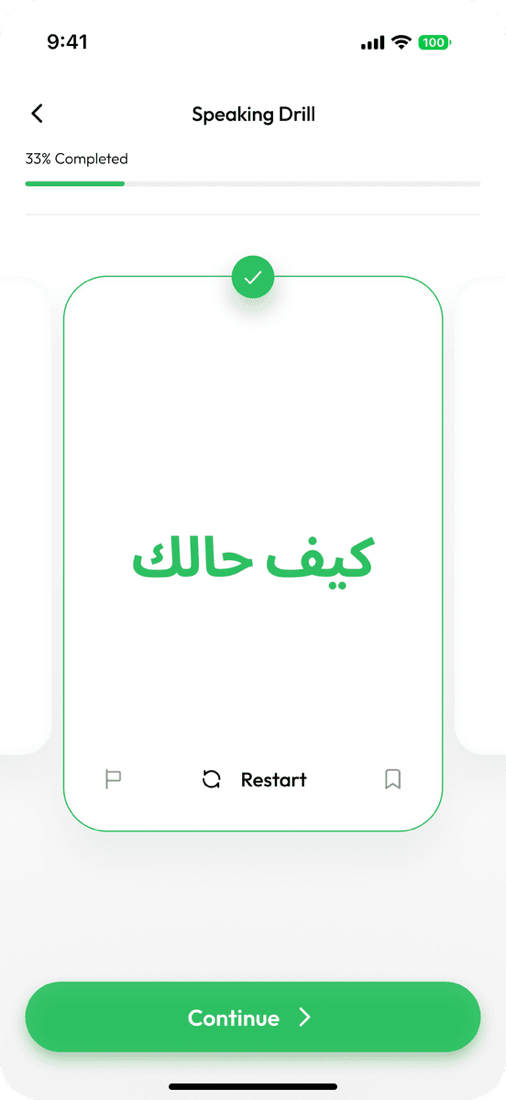
Learn Gulf Arabic Fast

Practice real conversations that mirror daily life in the Gulf — ordering food, talking to colleagues, navigating services. Gulf Arabic unlocks connection in ways English never will, even in Dubai or Riyadh's international hubs.

1,000,000+ learners
4.7 on the App Store
Why Gulf Arabic Matters

Why Gulf Arabic Is Essential for GCC Life

Start Learning Today
  1. The Everyday Language of the Gulf Countries

    Gulf Arabic is what you'll hear in markets, offices, and family gatherings across Saudi Arabia, UAE, Kuwait, Qatar, and Bahrain. MSA helps with reading formal documents, but Gulf Arabic gets you through daily life and builds real relationships.

    Expats who skip dialect training often stay stuck in English-only circles. Learning the local dialect opens doors to genuine connection and respect in professional and social settings.

  2. Essential for Expats Relocating to the Gulf

    If you're moving to Dubai, Riyadh, Doha, or Kuwait City for work, Gulf Arabic becomes your key to navigating everything beyond tourist zones. Ordering lunch, chatting with taxi drivers, and small talk with colleagues all require the dialect, not textbook phrases.

    Integration happens faster when you speak the language locals use every day. It's the difference between surviving as an outsider and thriving as part of the community.

  3. Connect with Your Gulf Heritage

    For heritage learners, Gulf Arabic is the language your family speaks at home and during visits back to the region. Speaking it fluently deepens your bond with relatives and restores cultural connection that distance may have weakened.

    Understanding jokes, participating in conversations, and feeling truly present during family gatherings instead of relying on translations or staying quiet becomes possible when you speak the dialect.

  4. Distinct Pronunciation and Vocabulary

    Gulf Arabic has unique phonetic features and Bedouin-influenced vocabulary that set it apart from Egyptian or Levantine dialects. Distinct pronunciation patterns and colloquial terms specific to the Arabian Peninsula shape how people communicate.

    Learning the right dialect from day one prevents confusion and ensures your Arabic matches what people around you actually speak.

How Kalam Teaches Gulf Arabic

Master Gulf Arabic Through Real Conversations

  1. Speak From Lesson One

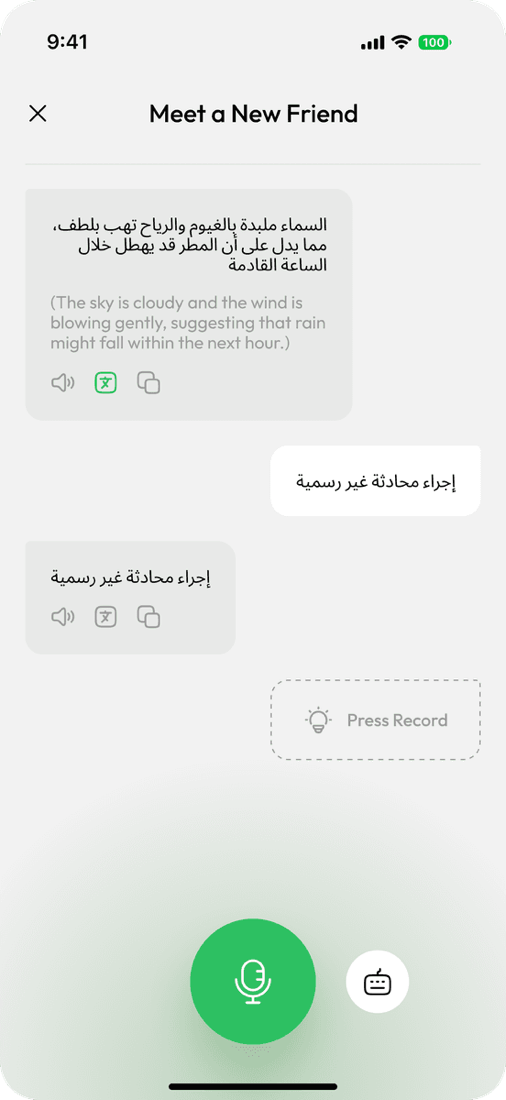
    Practice Gulf Arabic out loud during every lesson, not just memorize vocabulary lists. Our AI conversation coach listens to your pronunciation and only advances the lesson when you say the word correctly.

    Speaking practice builds muscle memory and confidence faster than passive learning. Feeling ready for real conversations within days, not months, is how most learners describe their experience.

  2. Interactive Drills That Match Daily Life

    Every exercise mirrors situations you'll actually face — ordering coffee, asking for directions, making small talk with colleagues. No rehearsing textbook dialogues that no one uses in real life.

    Drills adapt to your progress, so you're always challenged but never overwhelmed. Daily recommendations keep you on track even on your busiest days.

  3. Video Lessons with Real Gulf Dialogues

    Watch native speakers engage in everyday conversations, then practice the same exchanges yourself. Video lessons immerse you in the rhythm, tone, and cultural context of how people actually talk in the GCC.

    Seeing and hearing authentic dialogue accelerates comprehension and helps you pick up on social cues that written lessons miss entirely.

  4. Track Your Progress and Stay Consistent

    Visual progress tracking shows you how far you've come and keeps motivation high. Watching your speaking accuracy improve week over week reinforces the habit of daily practice.

    Consistency matters more than intensity. A few lessons a day builds fluency faster than sporadic cramming sessions.

  5. Simple Lessons That Fit Your Routine

    Kalam strips away the complexity that makes language learning feel overwhelming. Lessons are short, focused, and designed to fit into your routine without disrupting your day.

    No wasted time on grammar drills or conjugation tables that don't help you speak. Every minute you spend in the app translates directly to conversational ability.

Try Your First Lesson Free
Who Benefits From Gulf Arabic

Built for Expats, Professionals, and Heritage Learners

Start Learning Gulf Arabic
  1. Expats Relocating to the Gulf

    Moving to Dubai, Riyadh, Doha, or Kuwait City within weeks or months means you need Arabic that works immediately. Gulf Arabic gets you through apartment hunting, setting up services, and navigating daily errands without relying on English or translators.

    The faster you learn the dialect, the sooner you'll feel settled and confident. Kalam prepares you before you even land, so day one feels manageable instead of overwhelming.

  2. Business Professionals Working in the GCC

    Professional relationships in the Gulf deepen when you make the effort to speak Arabic, even at a basic level. Colleagues and clients respect the initiative, and you'll build trust faster than expats who never leave their English comfort zone.

    Gulf Arabic also helps you understand workplace culture, pick up on conversational cues, and participate in informal discussions that often shape business decisions.

  3. Heritage Learners Reconnecting with Family

    If your family is from Saudi Arabia, UAE, Kuwait, Qatar, or Bahrain, Gulf Arabic is the language that brings you closer to your roots. Finally understanding family conversations, participating actively during visits, and carrying forward a piece of your identity becomes possible.

    Learning your heritage dialect restores connection that distance or generational gaps may have weakened. It's a bridge back to culture, family, and belonging.

  4. Long-Term Residents Ready to Integrate

    Living in the Gulf for months or years but still operating mostly in English means you're missing out. Learning the dialect transforms your experience by moving you beyond expat bubbles and into authentic engagement with neighbors, shopkeepers, and local communities.

    Integration becomes real when you speak the language people use every day. Gulf Arabic turns you from a temporary visitor into someone who truly belongs.

Gulf Arabic vs. Other Dialects

How Gulf Arabic Compares to Egyptian and Levantine

Learn the Gulf Dialect
01

Spoken Across Saudi Arabia, UAE, Kuwait, Qatar, and Bahrain

Gulf Arabic is mutually intelligible across the entire GCC region, so learning it prepares you for any of the Gulf countries. Whether you're in Riyadh, Dubai, Doha, or Kuwait City, the dialect remains consistent enough for smooth communication.

Other dialects like Egyptian or Levantine are more widely understood globally but aren't the primary language in the Gulf. If you're living or working in the GCC, Gulf Arabic is the practical choice.

02

Distinct Pronunciation and Vocabulary Roots

Gulf Arabic features phonetic patterns and Bedouin-influenced vocabulary that set it apart from other regional dialects. Harder consonant sounds and unique colloquial terms specific to the Arabian Peninsula shape everyday speech.

Trying to use Egyptian or Levantine Arabic in the Gulf creates communication friction and signals that you're not tuned into the local culture. Speaking the native dialect shows respect and effort.

03

Less Widely Taught Than Egyptian or Levantine

Most Arabic learning apps focus on Egyptian or Levantine dialects because of their broader media presence. Gulf Arabic remains underserved in the language learning market, making Kalam one of the few resources specifically designed for GCC learners.

If you need Gulf Arabic for work, family, or relocation, generic Arabic courses won't prepare you for the dialect you'll actually hear every day.

04

The Right Dialect for GCC Life

MSA helps with formal reading and writing, but it's not what people speak in daily life. Gulf Arabic is the language of grocery stores, taxi rides, coffee shops, and casual workplace conversations.

Learning the dialect first gets you conversational faster. Adding MSA later if your work requires formal Arabic for documents or presentations is always an option.

Phrase guide

Gulf Arabic vs textbook Arabic

The same everyday phrases, the way a textbook says them and the way people actually say them.

EnglishModern Standard ArabicGulf Arabic
How are you? كيف حالك؟kayfa ḥāluk? شلونك؟shlōnak?
What do you want? ماذا تريد؟mādhā turīd? وش تبي؟wesh tibi?
I don't know لا أعرفlā aʿrif ما أدريma adri
Now الآنal-ān الحينal-ḥīn
Good جيدjayyid زينzēn
A lot / very كثيرًا / جدًاkathīran / jiddan وايدwāyed
Cultural Context and Regional Insights

Understand Gulf Culture Through Language

Start Learning Gulf Arabic
  1. Gulf Hospitality and Social Norms

    Hospitality is central to Gulf culture, and understanding how to greet people, accept offers, and show gratitude in Arabic strengthens every interaction. Small gestures like saying the right phrase at the right time build rapport and signal cultural awareness.

    Learning conversational etiquette helps you navigate social situations with confidence, whether you're attending a business lunch or visiting a colleague's home.

  2. Business Etiquette in the GCC

    Professional relationships in the Gulf often blend business and personal connection. Speaking Arabic, even at a basic level, shows respect and effort that colleagues and clients genuinely appreciate.

    Picking up on conversational cues, understanding meeting dynamics, and participating in informal discussions that shape decisions and build trust over time becomes natural when you speak the dialect.

  3. Regional Identity and Bedouin Heritage

    Gulf Arabic reflects the Bedouin heritage that shapes the region's linguistic and cultural identity. Vocabulary and expressions often reference desert life, tribal traditions, and values like honor and generosity.

    Understanding these cultural layers makes your Arabic more authentic and helps you connect on a deeper level with people who value their heritage.

  4. Navigate Daily Life with Confidence

    From ordering food to asking for directions, cultural context shapes how you communicate in everyday situations. Knowing when to be formal, when to be casual, and which phrases carry extra weight helps you avoid awkwardness.

    Language and culture are inseparable. Kalam teaches both, so you're not just speaking words — you're speaking in a way that makes sense to the people around you.

See How Learners Succeed with Kalam

“Kalam is my new favorite way to learn Arabic. The app feels super well-made, and you can tell the people behind it really care. I love that I can practice speaking whenever I'm out and about — it's way more natural than just memorizing words.”
Abdullah ShebaitaKalam learner · App Store review

“Has all the features I've been looking for. Loving its simplicity and efficiency — it's also great for people looking to travel!”

Yousuf RadwanApp Store review

“It has been such a breeze learning Arabic through Kalam! I have been on a learning journey and finally found something that just works.”

Deno HawariApp Store review

4.7★★★★★

6,800+ ratings on the App Store1,000,000+ learners and counting
FAQ

Your Questions About Learning Gulf Arabic, Answered

Can't find what you're looking for? Email our team, we read everything.

What Is Gulf Arabic and Where Is It Spoken?

Gulf Arabic is the dialect spoken across Saudi Arabia, UAE, Kuwait, Qatar, Bahrain, and parts of Oman. It's the everyday language of the GCC region and the Arabic you'll hear in markets, offices, and social settings throughout these countries.

While Modern Standard Arabic is used for formal writing and media, Gulf Arabic is what people actually speak in daily life. Learning this dialect prepares you for real-world conversations in the Gulf.

Do I Need Gulf Arabic If Everyone Speaks English in Dubai?

English works for basic transactions, but Gulf Arabic unlocks deeper connection and cultural integration. Expats who only speak English stay in international bubbles and miss out on genuine relationships with local colleagues, neighbors, and communities.

Speaking the dialect shows respect, builds trust, and opens doors socially and professionally. Feeling more at home and less like an outsider happens when you can communicate in the local language.

Is Gulf Arabic Hard to Learn?

Gulf Arabic is no harder than other Arabic dialects, and immersion in the GCC accelerates learning naturally. Kalam structures practice around real-life scenarios, so you're learning phrases you'll actually use instead of memorizing grammar rules.

Most learners see progress within days because every lesson focuses on speaking. The app adapts to your pace, so you're challenged but never overwhelmed.

Will Gulf Arabic Work in All GCC Countries?

Yes, Gulf Arabic is mutually intelligible across Saudi Arabia, UAE, Kuwait, Qatar, and Bahrain. While there are minor regional variations, the dialect remains consistent enough for smooth communication throughout the GCC.

Learning Gulf Arabic prepares you for any of these countries, so you won't need separate courses if you relocate within the region.

Should I Learn MSA or Gulf Arabic First?

If you're relocating to the Gulf or need Arabic for daily life, start with Gulf Arabic. MSA helps with reading formal documents but won't prepare you for conversations with taxi drivers, shopkeepers, or colleagues.

Adding MSA later if your work requires formal or written Arabic is always an option. Starting with the dialect gets you conversational faster and makes your time in the Gulf more rewarding from day one.

How Is Kalam Different From Duolingo or Other Apps?

Kalam is one of the few apps that teaches Gulf Arabic specifically. Duolingo, AlifBee, Busuu, and most competitors focus on MSA, which doesn't prepare you for daily conversations in the GCC.

Kalam also prioritizes speaking practice over vocabulary drills. Every lesson uses AI conversation coaching to help you pronounce words correctly and build conversational fluency through real-life scenarios.

How Long Does It Take to Learn Gulf Arabic?

Timelines vary based on your goals, but most learners gain basic conversational ability within weeks of daily practice. Kalam's focus on speaking accelerates progress because you're building muscle memory and confidence from lesson one.

Consistency matters more than intensity. A few lessons a day builds fluency faster than sporadic cramming sessions, and progress tracking keeps you motivated along the way.

Can I Use Kalam If I'm a Complete Beginner?

Yes, Kalam is designed for learners at all levels, including complete beginners. Lessons start with foundational pronunciation and basic phrases, then build progressively toward more complex conversations.

The AI coach adapts to your pace, so you're never left behind or held back. Feeling confident speaking Gulf Arabic is achievable even if you've never studied any form of Arabic before.

Start speaking Gulf Arabic today.

Answer a few quick questions and get a learning plan built around your dialect. It takes two minutes.