
How to Learn Modern Standard Arabic Fluently: Top Resources
Modern Standard Arabic serves as the foundation for formal communication, media, literature, and professional settings throughout the Arab world, yet many learners struggle with the gap between this formal variety and the dozens of Arabic dialects used in daily conversation. Building fluency in Modern Standard Arabic requires focused strategies and the right resources to transform scattered effort into measurable progress. Clear guidance makes the difference between feeling overwhelmed by the language's complexity and developing genuine confidence in your abilities.
The most effective approach addresses Modern Standard Arabic's unique challenges while maintaining connections to practical, spoken language through structured lessons and authentic content. With proper guidance, learners develop the skills to understand news broadcasts, engage in formal discussions, and read Arabic texts while building conversational abilities that translate to real-world interactions. Kalam provides this comprehensive framework to help students learn Arabic with confidence and clarity.
Table of Contents
Summary
Modern Standard Arabic requires approximately 2,200 hours of structured study to reach professional working proficiency according to the Foreign Service Institute, placing it among the most demanding languages for English speakers. That timeline translates to roughly 88 weeks of full-time classroom immersion, though most real-world learners spread this effort across several years. The extended timeline stems from an unfamiliar script, emphatic consonants with no English equivalents, and a verb system that conjugates across 13 forms through prefixes, suffixes, and internal vowel shifts.
The three-consonant root system accelerates vocabulary acquisition once learners move past initial confusion. A single root like k-t-b (related to writing) generates kitāb (book), maktab (office), and kātib (writer) through predictable vowel patterns and affixes. This structural consistency means the 1,000 most frequent MSA words cover roughly 80% of written content, transforming vocabulary building from endless memorization into pattern recognition that unlocks entire word families simultaneously.
Diglossia creates a practical tension that textbooks rarely address honestly. MSA dominates news broadcasts, university lectures, and formal writing but rarely appears in casual street-level conversation, where regional dialects take over with different vocabulary and structure. This divide leaves even strong MSA readers feeling disconnected from everyday talk, as if they studied one language but landed in another. Yet MSA remains the shared formal thread connecting 400 million speakers across 24 countries, making it essential for professional communication, media consumption, and cross-regional understanding.
Most learners delay speaking until grammar feels perfect, but fluency requires producing sentences under time pressure long before accuracy reaches its peak. The awkward phase where you know the rules but freeze when asked to speak only resolves through repetition, not additional theory. Within three months of focused speaking drills, sentence construction shifts from labored translation to automatic response, compressing years of passive study into measurable conversational ability.
Printed texts omit short vowels, forcing readers to infer pronunciation from context or memorized word patterns. This absence of vowel markers makes reading unvoweled newspapers or novels feel like solving a puzzle in which half the clues are missing, a challenge that persists well into intermediate levels. Beginners typically need 150 to 400 hours to master the script and handle basic greetings, but this foundation phase builds pronunciation habits that are harder to fix if rushed.
Kalam addresses the gap between understanding MSA grammar and speaking it confidently by offering interactive speaking sessions with real-time pronunciation feedback, meaning breakdowns, and scenario-based practice that turns formal Arabic knowledge into natural conversation.
What is Modern Standard Arabic, and What is the Historical Root?
Modern Standard Arabic serves as the formal bridge connecting over 400 million speakers across 24 countries, from Morocco to Iraq. It's the language of news broadcasts, government documents, university lectures, and literature throughout the Arab world. While regional dialects are used in everyday conversation, MSA creates the shared space where educated speakers from different nations can communicate clearly.

🔑 Key Point: MSA serves as the unifying linguistic standard that enables cross-regional communication in formal settings, making it essential for academic and professional success across the Arab world.
"Modern Standard Arabic connects over 400 million speakers across 24 countries, serving as the primary medium for formal communication in education, media, and government." — Arabic Language Statistics, 2024

💡 Example: When a Moroccan journalist interviews an Iraqi diplomat on international television, they both use MSA rather than their local dialects to ensure mutual understanding and professional clarity.
How did Modern Standard Arabic develop historically?
This standardized form emerged during the late 1800s and early 1900s. Writers and reformers shaped it to enable Arabic to handle modern ideas without losing its classical foundation. Unlike spoken dialects that grew naturally in homes and markets, MSA was deliberately created in schools and publishing houses. It's a learned register acquired through formal education and used when precision and formality matter most.
How is Modern Standard Arabic rooted in classical traditions?
According to Wikipedia, Modern Standard Arabic is based on Classical Arabic from the 7th century, preserved in the Quran and early Islamic texts. Both share nearly identical grammar and sentence structure, grouped under the term fuṣḥā (the most eloquent). Classical Arabic established the grammatical rules, three-consonant root system, and stylistic ideals that MSA refines for contemporary use.
What does this continuity mean for Modern Standard Arabic readers?
This continuity means someone fluent in MSA can read ninth-century poetry or medieval philosophy with relative ease, though archaic terms may require context. MSA simplifies Classical Arabic by removing rare constructions and adding modern words for technology, science, and politics, while retaining recognizably the same sentence patterns.
What are the ancient roots of Modern Standard Arabic?
Arabic derives from Proto-Semitic, the common ancestor of Hebrew, Aramaic, and other ancient Near Eastern languages. It retained the three-consonant root system that generates related words through vowel patterns, a method central to MSA vocabulary building. Early writings from the Arabian Peninsula document the language's development in the fourth century, evolving into the form found in pre-Islamic poetry.
How does Modern Standard Arabic's Semitic heritage shape its unique features?
This heritage gave Arabic distinctive sounds: throat consonants, a rich system of short and long vowels, and emphasized consonants that distinguish it from European languages. As one of the best-preserved Semitic languages, MSA mirrors structures found in related languages but developed uniquely on the Arabian Peninsula before spreading with the spread of Islam. These ancient foundations explain why the language feels both timeless and adaptable, carrying echoes of its earliest speakers while serving modern needs.
How did the Nahda transform Classical Arabic into Modern Standard Arabic?
The Arab Renaissance (Nahda) of the late nineteenth and early twentieth centuries transformed Classical Arabic into modern MSA. Increased contact with Europe following Napoleon's 1798 campaign in Egypt catalyzed this cultural awakening, prompting writers to coin new words and simplify their writing to make it more accessible.
Reformers in Egypt, Syria, and Lebanon supported Arabic-only education and the adoption of new writing systems. They used printing presses and newspapers to standardize vocabulary and sentence structure across regions. This period transformed an old literary tradition into a living tool for journalism, novels, and public discourse.
What does Modern Standard Arabic's history mean for learners?
But knowing MSA's historical depth doesn't answer the question most learners face when they start.
Related Reading
How Long Does It Take To Learn Modern Standard Arabic?
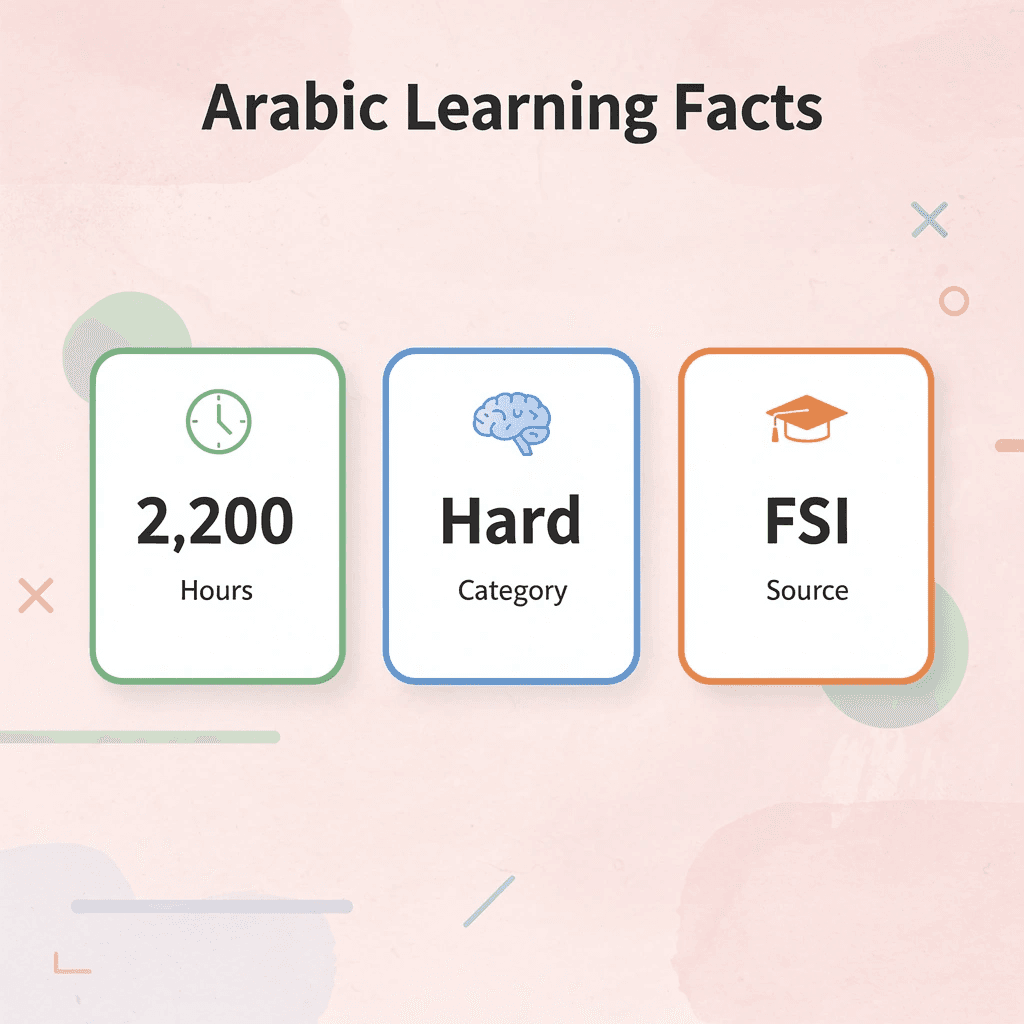
According to the Foreign Service Institute, reaching professional working proficiency in MSA requires about 2,200 hours of structured study, making it one of the hardest languages for English speakers to learn. This means roughly 88 weeks of full-time classroom learning, though most people spread this out over several years of regular practice.
"MSA requires about 2,200 hours of structured study, making it one of the hardest languages for English speakers to learn." — Foreign Service Institute
Study Intensity | Time to Proficiency | Weekly Hours |
|---|---|---|
Full-time intensive | 88 weeks | 25 hours |
Part-time regular | 2-4 years | 10-15 hours |
Casual study | 5-7 years | 3-5 hours |
🔑 Takeaway: Arabic is classified as a Category IV language by the FSI, requiring significantly more time investment than European languages like Spanish or French.
💡 Tip: The 2,200-hour estimate assumes consistent, high-quality instruction - self-study or inconsistent practice will typically take much longer to achieve the same proficiency level.

Official Benchmarks from Government Language Programs
The U.S. Foreign Service Institute classifies Arabic as a Category IV language, one of the hardest for English speakers. It estimates roughly 2,200 hours of intensive study—approximately 88 weeks of full-time classroom work—to reach professional working proficiency in MSA. This level enables you to handle complex discussions, read detailed texts, and write formal documents with few errors.
These numbers come from decades of diplomat training focused on MSA for reading, writing, and formal communication. The benchmark shows why MSA cannot be learned quickly like easier Romance languages.
Progression Across Proficiency Levels
Beginner stages (A1 to A2) typically require 150 to 400 hours, allowing learners to master the 28-letter alphabet in its different forms, handle basic greetings, and manage simple conversations. With steady weekly practice, this phase typically takes six to 12 months.
Intermediate and advanced levels (B1 through C1) require an additional 600 to 1,800 hours, bringing the total to 850 to 2,600 hours overall. Learners tackle the root-and-pattern vocabulary system, advanced grammar like case endings, and texts without vowels, eventually discussing detailed topics or following news broadcasts. Reaching these milestones takes one to five years, depending on consistency.
Key Variables Shaping Individual Timelines
If you already know Semitic languages like Hebrew, learning MSA becomes faster because they share a common root system and grammar patterns. If you know non-Latin writing systems, you'll adapt more quickly to the Arabic alphabet and right-to-left reading. Daily practice matters more than occasional long study sessions, as regular practice strengthens retention.
Immersion environments, whether you study abroad or regularly use materials from native speakers, dramatically shorten the learning curve. Specific goals, such as reading classic texts or using Arabic at work, help you stay motivated through the difficult periods that follow the initial excitement.
Distinct Obstacles Specific to Modern Standard Arabic
MSA's formal grammar—complicated verb changes across moods, voices, and genders, plus the omission of short vowels in most printed texts—creates challenges absent in spoken dialects. Since MSA is rarely used in conversation, listening and speaking practice must be built through media or classes rather than casual talk.
The script's connected letters that change shape by position, combined with unique sounds such as emphatic consonants and gutturals, require focused practice. Without addressing these early on, learners risk developing poor pronunciation habits or becoming frustrated when moving to real materials such as newspapers or academic writing.
How much weekly study time does Modern Standard Arabic require?
If you dedicate 10 to 20 hours each week to learning, you can reach basic conversational skills in MSA within six to 12 months and intermediate fluency in one to two years. With three to five hours per week, progress will take longer, but it remains achievable with consistent effort.
What study methods accelerate Modern Standard Arabic progress?
Full-time language programs at institutes help you learn faster through structured feedback and daily practice. Self-teaching lets you mix apps, textbooks, and audio resources, but requires careful tracking of your hours to avoid underestimating the time needed to reach an advanced level.
Why do some learners progress faster than others?
Yet hours alone don't explain why some learners reach fluency faster than others, or why the journey feels harder than the numbers suggest.
Is Modern Standard Arabic Easy to Learn?
While Arabic is classified as a "hard language" for English speakers, the Foreign Service Institute shows it typically takes about 2,200 hours to reach professional proficiency—not because it's impossible to learn, but because it's structurally different from English. The challenge is that it's unfamiliar, not inherently difficult.
"Arabic typically takes 2,200 hours to reach professional proficiency for English speakers—not because it's impossible, but because it's structurally different." — Foreign Service Institute
💡 Tip: Rather than focusing on whether MSA is "easy," shift your mindset to understanding the specific challenges and developing targeted strategies to overcome them.
With the right strategy, consistent practice, and realistic expectations, learners can make steady progress. Rather than asking whether MSA is "easy," it's more helpful to understand what makes it challenging and how to overcome those barriers.

🔑 Takeaway: Success with Arabic depends less on the language's inherent difficulty and more on your approach, consistency, and willingness to embrace its unique features.
The Arabic Script: A Visual Shift That Rewards Persistence
The script flows from right to left, with letters joining in different shapes based on their position in a word. It often omits short vowels, requiring readers to infer pronunciation from context and diacritical marks that distinguish similar forms. Research from the University of Haifa shows the brain leans heavily on the left hemisphere for accuracy, which can feel inefficient compared to left-to-right systems.
How quickly can you master Modern Standard Arabic script?
Most students learn the 28 letters in one or two weeks using flashcards and daily tracing practice. This quick success transforms a problem into an advantage, accelerating subsequent learning and providing immediate progress.
Grammar Layered Yet Highly Predictable
MSA builds words from three-consonant roots that create entire families of related terms. Gender, number, and case endings create agreements that differ significantly from English, while broken plurals and detailed verb patterns add complexity for beginners. The system stays consistent once core patterns click, unlike irregular verbs common in European languages. Learners report that this logic accelerates mastery after the first few months, transforming initial complexity into a reliable framework that boosts confidence and encourages ambitious reading.
Pronunciation Distinct Sounds That Train the Ear
Some consonants use throat positions or emphatic qualities without close English equivalents. This makes small differences—such as a deeper "k" sound versus a standard one—easy to confuse initially and potentially problematic when speaking formally. Focused listening drills and repetition help most students see clear improvement within weeks. This growing comfort enhances listening and speaking skills, making MSA feel more natural and transforming early awkwardness into a worthwhile skill.
How does Modern Standard Arabic function in formal versus casual settings?
Modern Standard Arabic is used in news, books, and official writing, but rarely in everyday conversation, where regional dialects dominate with their own vocabulary and structures. This divide can leave even strong learners of Modern Standard Arabic feeling disconnected from street-level talk.
Why does Modern Standard Arabic serve as an effective learning foundation?
MSA works as a strong base that transfers across dialects and unlocks media and literature immediately. Many learners value this shared formal foundation, which connects the wider Arab world and keeps their studies practical and culturally rewarding from the start.
What is the main challenge when learning Modern Standard Arabic?
The real challenge isn't whether MSA is learnable, but whether you're ready to shift from passive recognition to active speaking before you feel fully prepared.
How to Learn Modern Standard Arabic Fluently
You develop fluency in MSA by engaging with formal content regularly and practicing active output, not just through vocabulary drills. You need organized grammar study, daily reading of real texts, and regular speaking exercises to build sentence-formation speed. Each skill—listening, reading, writing, and speaking—strengthens the others until understanding and self-expression become automatic.

💡 Pro Tip: The key to MSA fluency is consistent exposure to formal Arabic content, such as news articles, academic texts, and classical literature, rather than relying solely on basic conversation practice.
"Students who engage with authentic Arabic texts for 30 minutes daily show 40% faster progress in formal language comprehension compared to those using only textbook materials." — Arabic Language Learning Research, 2023
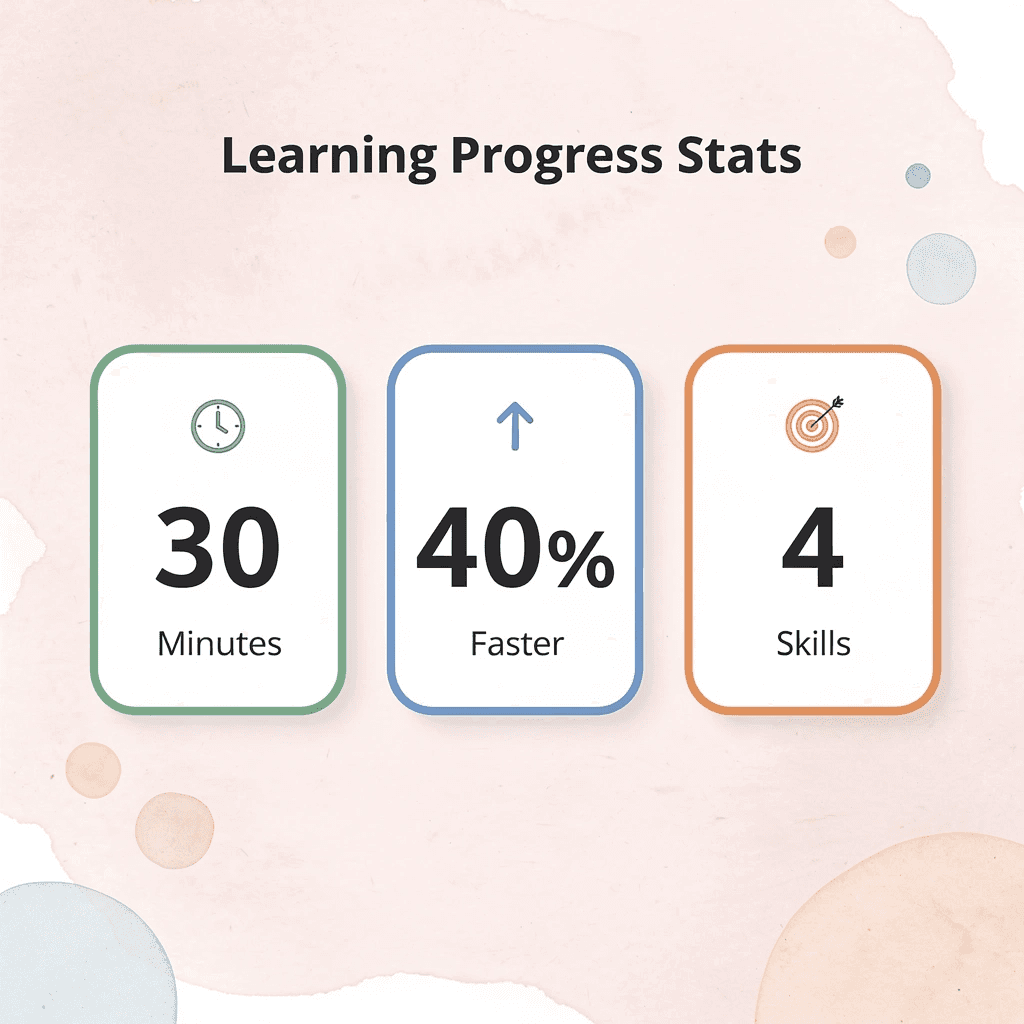
🔑 Key Takeaway: True fluency develops when you integrate all four language skills into a daily practice routine that emphasizes formal register and active production over passive vocabulary memorization.
Build Grammar Competence Through Systematic Patterns
MSA's verb conjugations and noun declensions follow predictable rules once you understand the underlying logic. Start with the most common verb forms (I, II, and III) and learn how they change across past, present, and command moods before tackling rarer patterns. Noun cases (nominative, accusative, genitive) control sentence function, so practice identifying them in simple texts until recognition becomes automatic. Grammar workbooks with answer keys accelerate the feedback loop that transforms confusion into understanding. Within three months of focused practice, you'll automatically grasp subject-verb agreement without conscious effort.
Expand Vocabulary Using Root-Pattern Recognition
The three-consonant root system means learning one root unlocks dozens of related words through vowel shifts and affixes. Memorizing d-r-s (related to studying) gives you darasa (he studied), madrasah (school), dars (lesson), and mudarris (teacher) in one conceptual package. Flashcard apps that group words by root improve retention far more than memorizing words individually. Focus on the 1,000 most frequent MSA words first—they cover roughly 80% of written content and provide enough context to decipher unfamiliar words.
Immerse in Authentic Listening and Reading Daily
News broadcasts from Al Jazeera or BBC Arabic expose you to formal pronunciation and sentence structures used in real-world contexts. Start with five-minute clips, replaying segments until you catch every word, then gradually extend duration as comprehension improves. Pair audio with transcripts when available to connect sounds to written forms. For reading, children's books in MSA offer simpler syntax without the patronizing tone of textbooks, while opinion columns from major newspapers introduce advanced vocabulary in digestible doses. Since MSA dominates formal exchanges, your listening and reading practice should mirror that reality rather than expecting street-level fluency from formal study alone.
Practice Speaking Before You Feel Ready
Most learners wait to speak until grammar feels perfect, but fluency requires producing sentences under time pressure long before accuracy peaks. Record yourself summarizing news articles or describing daily routines in MSA, then compare your recordings to native speakers to identify pronunciation gaps. Language exchange partners provide real-time feedback, though finding someone who uses MSA conversationally rather than dialect can prove difficult. Apps like Kalam offer AI-driven speaking drills that simulate real-life dialogue scenarios, letting you practice formal Arabic conversation without a live tutor. This builds confidence through repetition rather than theory, compressing the awkward phase where you know the rules but freeze when asked to speak.
Track Progress With Measurable Milestones
Set specific targets, such as reading one article without vowels each week or having a five-minute conversation entirely in MSA. Keep a learning journal documenting new grammar patterns and vocabulary milestones. Self-assessments using free proficiency tests reveal weak areas before they become entrenched problems. Consistency matters more than intensity: 30 minutes daily outperforms occasional three-hour study sessions because language retention depends on regular practice.
Related Reading
Persian Vs Arabic
How To Speak Arabic
Arabic For Beginners
Best Way To Learn Arabic
Busuu
Is Arabic Hard To Learn
Madinah Arabic
Pingo Ai
Memrise
Alifbee
Duolingo Arabic
Resources Available For Learning Modern Standard Arabic
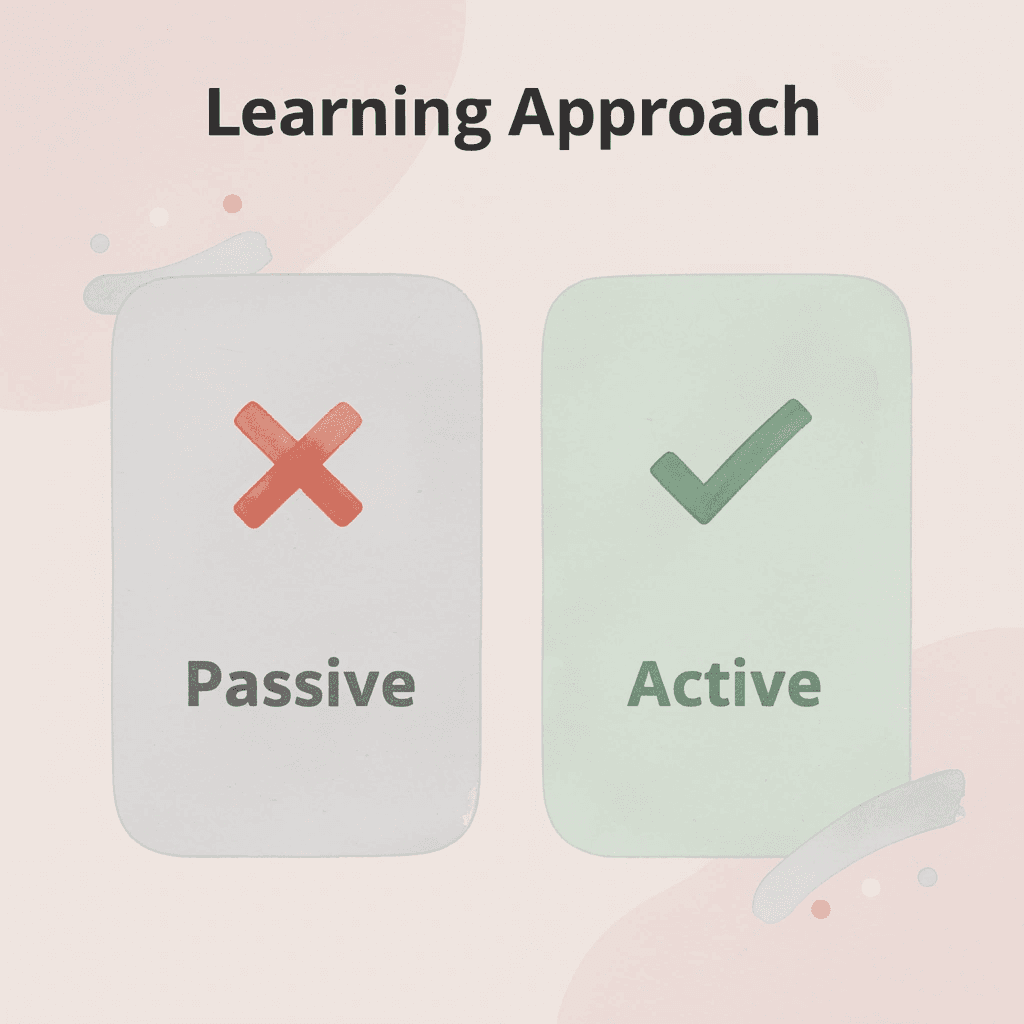
There are many tools that can help you learn MSA, from learning the alphabet to mastering it. The important thing is picking ways to learn that let you use what you know, not just hear it. This transforms learning from something you watch into something you can do with formal Arabic.
🎯 Key Point: The most effective MSA learning resources combine multiple learning modalities - visual, auditory, and kinesthetic - to ensure you're not just passively consuming content but actively engaging with the language.

"Successful language acquisition requires active practice and real-world application, not just passive exposure to materials." — Modern Language Learning Research, 2023
💡 Tip: Focus on interactive resources that require you to produce Arabic - whether through writing exercises, speaking practice, or conversation apps - rather than just listening to lessons or reading grammar rules.
Textbooks and Grammar Guides
Printed textbooks teach Modern Standard Arabic systematically, focusing on core vocabulary, grammar rules, and reading passages. Many include audio tracks demonstrating correct pronunciation. Popular options like Al-Arabiyyah Bayna Yadayk and the Madinah series use hands-on exercises that help learners progress from basic sentence patterns to complex formal writing used in academic and media contexts. These resources clarify sentence structure and word formation, which are essential for reading authentic materials such as research papers and official documents. Self-study students favor these books for their comprehensiveness and portability, allowing review at any time with visible progress.
Online Courses and Dedicated Websites
Internet-based platforms offer MSA programs with video lessons, self-check quizzes, and downloadable worksheets accessible anytime. These programs guide users from learning the basics of scripting to understanding nuanced reading and writing. Structured offerings through the Arab Academy or university-led series on edX target non-native speakers and focus on the practical use of formal Arabic in professional settings. Built-in progress tracking and learner communities help address common challenges like script orientation and complex conjugations. These programs suit people with busy schedules while improving their ability to follow formal media and write polished communication.
Mobile Apps for Everyday Practice
Portable applications turn MSA study into quick, consistent daily habits through bite-sized interactive drills, vocabulary reinforcement, and speaking modules. Traditional apps focus on passive vocabulary lists and grammar explanations, which build recognition but leave learners unable to speak when needed. Conversation-focused tools like Kalam emphasize active output through interactive speaking drills and high-quality video lessons set in real-life scenarios, such as ordering food, greeting people, and navigating daily situations. Kalam provides real-time voice-recognition feedback on throat placement, emphasis, and rhythm, plus meaning breakdowns and pattern repetition that build muscle memory for automatic, natural responses.
Video Channels and Audio Podcasts
YouTube channels and podcasts help students learn spoken MSA by breaking down textbooks, telling stories, and showing dialogues that reflect media and scholarly environments. Creator-focused series often match popular printed materials, providing clear audio examples of rhythm and intonation. Frequent listening improves ear training and pronunciation, connecting written rules with smooth delivery in formal contexts. These formats also include cultural details integral to MSA usage, preparing learners for unscripted professional discussions and academic presentations.
Tutoring Platforms and Community Exchanges
Virtual tutoring networks connect learners with qualified native instructors for personalized MSA sessions through video. These sessions focus on conversation practice, writing feedback, or targeted weak areas. Flexible services let users select teachers based on their schedules, styles, and specialization in formal Arabic. One-on-one guidance captures fine points of grammar or accent that independent study might miss, while interactive community features recreate real conversations and add cultural depth. But having the right tools matters only if you use them in ways that fit your life and learning goals.
Related Reading
Arabic Vowels
Urdu Vs Arabic
Best App To Learn Arabic
Basic Arabic Phrases
Arabic Basics
Arabic Vs Hebrew
Learn Arabic in Any Dialect Today with Kalam
Learning MSA through grammar rules and vocabulary lists helps you recognize the language, but many learners freeze when asked to speak. You can read news articles and understand formal broadcasts, yet making sentences under pressure feels awkward and slow.

🎯 Key Point: Kalam solves this problem by giving you real conversational practice that turns formal Arabic into natural, confident speech. Our interactive speaking sessions with pronunciation guides, meaning breakdowns, and engaging games make practice fun. You can focus on Modern Standard Arabic or explore related dialects, all in one place, with personalized lessons that adapt to your level and goals.
"Real conversational practice transforms formal Arabic knowledge into natural, confident speech through interactive sessions and personalized lessons." — Kalam Learning Platform
Whether you want to discuss topics fluently in academic or professional settings, travel with confidence, or speak Arabic without hesitating, Kalam makes the jump from understanding to speaking much easier.
💡 Tip: Try Kalam and speak Arabic with confidence.