Does Duolingo Have Arabic? 6 Alternatives to Try in 2026
Duolingo offers Modern Standard Arabic, but most native speakers use regional varieties like Egyptian, Levantine, or Gulf Arabic in daily conversation. These Arabic dialects can sound completely different from MSA, leaving learners unable to understand casual conversations or communicate naturally with locals. Standard courses focus heavily on formal grammar rather than the spoken language people actually use in markets, cafes, and social settings.
Learning conversational Arabic requires a platform designed specifically for spoken dialects rather than academic study. The right approach emphasizes real-world communication skills that help learners understand and respond naturally in everyday situations. For those ready to master practical Arabic conversation, Kalam offers an effective way to learn Arabic through focused dialect training.
Table of Contents
Summary
Duolingo's Arabic course has attracted 6.99 million users and contains 798 lessons, making it one of the platform's more popular offerings. Despite this accessibility, the course covers only 25 to 46 skills compared to the 100-plus units available for languages like Spanish or French, leaving learners with insufficient vocabulary and grammar to handle conversations beyond scripted exchanges. The brevity creates early wins that don't compound into conversational ability, amplifying frustration when users complete everything available yet still can't discuss basic daily topics.
Modern Standard Arabic serves as the written and broadcast standard across the Arab world, but it's rarely spoken in everyday life. The gap between MSA and spoken dialects like Egyptian, Levantine, or Gulf Arabic creates a jarring disconnect where learners can read menus perfectly but struggle to order coffee because waiters use colloquial phrases never encountered in formal study. This mismatch doesn't just slow progress; it makes invested time feel wasted when the first real interaction reveals that months of MSA practice bear little resemblance to actual street conversations.
Gamification metrics measure consistency, not competence. Streaks, points, and leaderboards create powerful motivation to open apps daily, but these systems prioritize habit over depth, leading users to watch their streaks climb into the hundreds while assuming they're advancing toward fluency. The illusion collapses when attempting real conversations reveals that months of effort haven't prepared learners to ask for directions or introduce themselves naturally, a moment when perceived progress collides with actual ability.
Platforms that fail learners prioritize input over output, focusing on vocabulary lists and grammar charts rather than on retrieval practice under pressure. Recognition feels like progress because you can nod along or pick correct answers from multiple choices, but it collapses the moment you need to form a sentence yourself without a script. Effective language acquisition requires speaking out loud within the first few lessons to train production, not just consumption.
Speech-first methodologies compress the gap between study time and conversational readiness by training the skill learners actually want to use. Transfer failure, where students know words but freeze in conversation, stems from insufficient retrieval practice, the exact breakdown that keeps app-based learners from graduating to real interactions. Platforms that center pronunciation drills and spoken dialogue build conversational reflexes that reading-focused exercises leave underdeveloped.
Multi-dialect support addresses the practical frustration of learning a formal language that no one actually speaks in markets or taxis. Choosing a platform that only teaches MSA is like learning Shakespearean English to order coffee; you'll sound formal and often confusing to native speakers who expect colloquial phrases. Kalam addresses this by offering scenario-based practice in MSA, Egyptian, and Levantine dialects, with conversational AI and pronunciation feedback that reflect real-world contexts from day one.
What is Duolingo, and What Does It Offer?
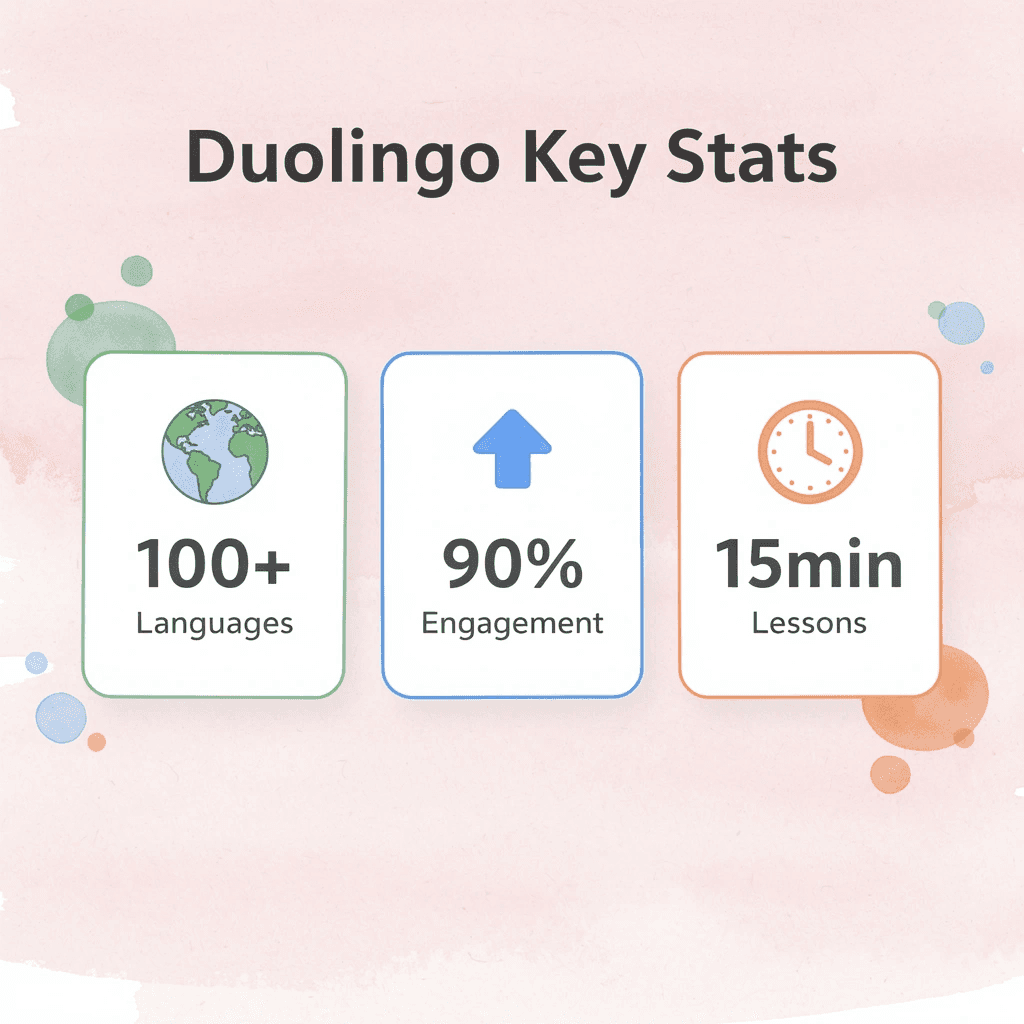
Duolingo is a language-learning platform that transforms lessons into short, game-like activities designed to build daily habits. It's free with ads and offers courses in over 100 languages, using gamification (streaks, points, leaderboards) to maintain engagement.
🎯 Key Point: Duolingo's gamification approach transforms traditional language learning into an addictive daily routine that feels more like playing a game than studying.

"Gamified learning increases student engagement by 90% and improves knowledge retention through consistent daily practice." — Educational Technology Research, 2023
Feature | What It Offers |
|---|---|
Languages Available | 100+ languages, including popular and rare options |
Lesson Format | 5-15 minute bite-sized, interactive exercises |
Cost | Free with ads, Premium subscription available |
Gamification | Streaks, XP points, leagues, and achievements |
💡 Tip: The platform's real strength lies in its ability to make language learning feel effortless through micro-lessons that fit into any busy schedule, making it perfect for building long-term learning habits.
How Duolingo Structures Learning
The platform breaks lessons into small exercises that mix reading, writing, listening, and speaking. You earn experience points for completing lessons, maintaining daily streaks, and competing in weekly leaderboards. Spaced repetition reviews difficult words, while adaptive algorithms adjust difficulty based on your performance. It feels like playing a mobile game rather than studying, which explains its appeal over traditional textbooks.
What Languages Can You Learn?
Duolingo covers major languages like Spanish, French, German, Japanese, and Mandarin, plus less common options such as Hawaiian, Navajo, and constructed languages like Klingon. Many courses reach intermediate proficiency levels with expanded content, including Advanced Stories and DuoRadio for deeper listening practice. For Arabic, Duolingo offers Modern Standard Arabic (MSA), the formal written language used across media and official contexts, but it emphasizes memorization of vocabulary and reading comprehension over conversational fluency.
Why does vocabulary-first learning fail for Arabic fluency?
Most language apps, including Duolingo, build lessons around vocabulary acquisition and grammar rules, assuming memorizing enough words will naturally lead to speaking. Yet learners report that the app becomes "repetitive and boring over time, turning language learning into a chore rather than an engaging activity."
You might recognize written phrases or understand isolated words. But when someone speaks quickly in a real conversation—especially in a dialect—the gap between what you've practiced and what you need becomes clear. Daily streaks keep you logging in, but logging in isn't the same as gaining conversational confidence.
How do speaking-focused platforms address these gaps?
Platforms like Kalam focus on speaking practice and pronunciation drills from day one. Rather than memorizing vocabulary lists, you practice real conversations through interactive speaking exercises and video lessons that demonstrate how Arabic is spoken in everyday life.
This closes the gap between study time and conversation readiness, since you're training the skill you want to use. But here's the question most learners don't ask until months in: does Duolingo offer the specific Arabic you need to understand your neighbors, travel with confidence, or connect with family?
Does Duolingo Have Arabic?
Yes, Duolingo offers a free Arabic course for English speakers on both mobile and desktop. The course teaches Modern Standard Arabic (MSA), the formal version used in news broadcasts, literature, and official communication across the Arab world. You can start learning the Arabic script, basic vocabulary, and sentence structure upon signing up.

🎯 Key Point: Duolingo's Arabic course is completely free and teaches Modern Standard Arabic, which is understood across all 22 Arabic-speaking countries.
The Arabic course has attracted 6.99 million users, making it one of the platform's most popular offerings. With 798 lessons spanning alphabet mastery, everyday vocabulary, grammar fundamentals, and cultural context, the course progresses from script recognition to conversations about family, food, travel, and daily routines.
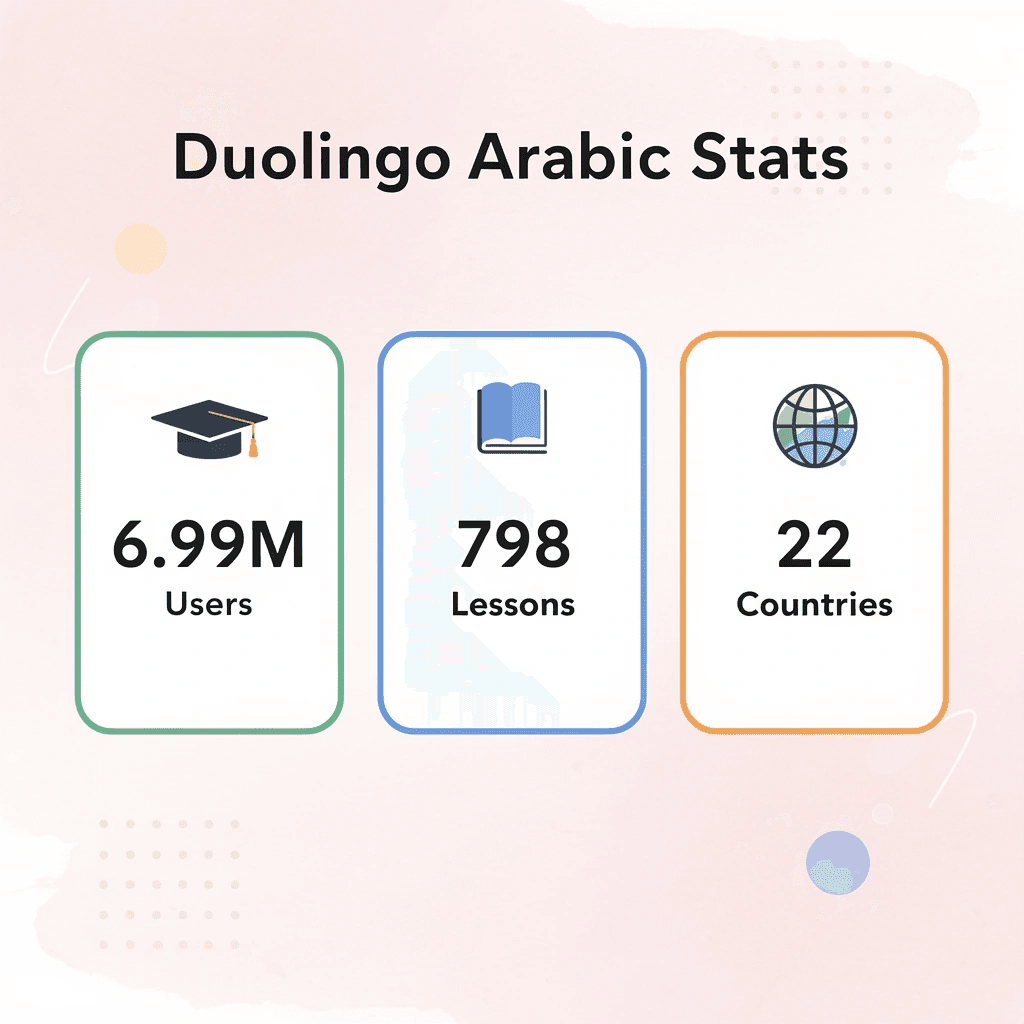
"With 6.99 million users enrolled, Duolingo's Arabic course represents one of the platform's most significant investments in non-European language education."
💡 Tip: Start with 15-20 minutes daily to build consistency with the Arabic script before moving to more complex grammar lessons.

What Makes Duolingo's Arabic Course Different
Duolingo prioritizes reading and word recognition over speaking practice. It teaches the Arabic alphabet early through matching exercises, audio clips, and pictures, helping you recognise letters in isolation, at word starts, in the middle, and at word ends before forming full words. This approach effectively builds reading skills from the beginning, but may slow progress for those seeking conversational fluency quickly.
Gamification maintains motivation through streaks, leaderboards, and achievement badges. Daily reminders and a low-pressure format enable practice during commutes or lunch breaks, removing barriers for beginners nervous about the Arabic script while building confidence through consistent wins.
Why does MSA create such a disconnect from real conversations?
Modern Standard Arabic functions as a lingua franca across Arabic-speaking countries but is rarely spoken in everyday life. In Cairo, Beirut, or Riyadh, people speak Egyptian, Levantine, or Gulf dialects instead. The gap between MSA and spoken dialects is pronounced: you might read a menu perfectly but struggle to order coffee because the waiter uses everyday phrases you've never encountered.
This creates a frustrating contradiction: you spend months building vocabulary and grammar knowledge, only to discover real conversations require a different skill set. MSA gives you access to written content and formal settings, but won't prepare you for the taxi driver's rapid questions or your neighbor's casual greetings.
How do dialect-focused platforms address what Duolingo Arabic lacks?
Platforms like Kalam address this by centering lessons on spoken dialects and pronunciation drills, thereby developing conversational skills that MSA-focused apps neglect.
But even if you accept MSA's limitations, another question arises: why do so many learners quit Duolingo's Arabic course within weeks?
Related Reading
Why Do Beginners Seek Alternatives to Duolingo for Learning Arabic?
The disconnect hits hardest when you try to speak. You've completed dozens of lessons and earned your streak badge, but when someone asks you a question in Arabic, nothing comes out. The words you learned don't connect to the sounds you can produce, and your app-built confidence disappears. That gap between recognition and production sends most beginners searching for alternatives.

🎯 Key Point: The biggest challenge with app-based learning is the speaking barrier - you can recognize Arabic words but struggle to actually produce them in conversation.
"The gap between passive recognition and active production is where most language learners get stuck, especially with Arabic's unique phonetic challenges." — Language Learning Research, 2023

💡 Tip: Look for Arabic learning methods that prioritize speaking practice and pronunciation training from day one, rather than focusing solely on vocabulary recognition.
Limited Course Depth Stops Growth Early
Duolingo's Arabic path covers roughly 25 to 46 skills, depending on the version, much shorter than the 100-plus units available for Spanish or French. You learn the alphabet and basic phrases, then exhaust the material. This brevity leaves insufficient vocabulary range and grammar variety to handle anything beyond scripted exchanges. Early progress feels rewarding, but doesn't build conversational ability. The frustration peaks when you've completed everything available yet still can't hold a basic conversation about your day.
Modern Standard Arabic Creates a Dialect Mismatch
The course teaches formal MSA, the written and broadcast standard across the Arab world, but not the spoken dialects people use in markets, taxis, or casual conversation. You invest months learning structures rarely heard in everyday settings, then discover that Egyptian, Levantine, or Gulf Arabic sounds completely different from what you practiced. During your first real interaction, the other person's rapid-fire colloquialisms bear little resemblance to your carefully constructed MSA sentences. That disconnect makes your time feel wasted, driving you toward apps that teach the dialect you'll encounter.
Speaking Practice Gets Crowded Out by Script Mastery
Exercises focus on reading and typing because Arabic script demands attention, but that mental work leaves little room for output skills. Audio exists, but lacks the depth and variety needed to build confidence in pronunciation or train your ear to different speeds and accents. Many learners report completing hundreds of days of streaks while still struggling to speak basic sentences. Platforms like Kalam address this by centering lessons on pronunciation drills and spoken dialogue, training conversational reflexes that reading-focused apps leave underdeveloped.
Gamification Masks Hollow Progress
Streaks, points, and leaderboards create powerful motivation to open the app every day, but they measure practice frequency, not proficiency. You watch your streak climb into the hundreds and assume you're improving at the language, yet the reward system prioritizes habit over learning.
When you try to have a real conversation, months of effort haven't prepared you to ask for directions or introduce yourself naturally. That gap between perceived progress and actual ability leads to burnout and sends beginners seeking resources that deliver genuine speaking skills rather than digital badges.
What works better than Duolingo for conversational Arabic?
But if Duolingo's limitations are this clear, why do millions still start there, and what works better for conversational Arabic?
Related Reading
6 Alternatives to Duolingo for Learning Arabic in 2026
Beginners frustrated with Duolingo's focus on written exercises and lack of conversation seek platforms that emphasize speaking from the start, support different dialects, or provide clear learning paths beyond streaks. Six alternatives address key gaps that hinder progress: insufficient listening practice, limited speaking and writing opportunities, and focus on only one form of Arabic, which prevents learners from using the language in real situations.
🎯 Key Point: The best Duolingo alternatives prioritize conversational skills and dialect variety over gamification.
💡 Tip: Look for platforms offering speaking practice from day one rather than after completing multiple lessons.
"Traditional language apps focus too heavily on written exercises while real-world Arabic requires strong listening and speaking skills from the beginning." — Language Learning Research, 2024

1. Kalam
Kalam is a conversation-focused Arabic learning app designed as an intuitive speaking coach, helping users master the language quickly through immersive practice rather than rote drills. It prioritizes real-life conversations and skips unnecessary fluff, making it especially effective for beginners frustrated with apps that deliver only superficial progress.
Key Features of Kalam
Realistic Conversational AI — Practice with AI partners in tailored scenarios to overcome Duolingo’s lack of speaking output and the resulting freeze in real conversations.
Immersive Speaking Drills — Active production exercises that build strong retrieval practice, addressing shallow encoding and transfer failure.
Video Lessons with Interactive Transcripts — Authentic video content that improves listening at natural speeds, solving the limited audio exposure that causes comprehension struggles.
Smart Flashcard Review System — Spaced repetition focused on high-frequency phrases to ensure long-term retention beyond short-term streaks.
Short, Daily Bite-Sized Lessons — Flexible 5–15 minute sessions that fit busy schedules and break the cycle of starting strong then quitting due to overwhelming or boring content.
Multi-Dialect Support — Practice in Modern Standard Arabic (MSA) plus practical spoken dialects such as Egyptian, Levantine, and others, directly fixing the MSA-only limitation that leaves learners unable to understand or join real daily conversations.
AI Language Partner for Free Chat — Open-ended conversations with an AI tutor that simulate real interactions, reducing the isolation and lack of feedback common in solo apps.
Debate & Discussion Modes — Guided debates on interesting topics to develop critical thinking and fluid expression in Arabic.
Personalized Adaptive Pathways — The app adjusts to your level and weaknesses, preventing plateaus and the illusion of progress without actual skill growth.
Progress Tracking with Achievements — Clear milestones and speech-skill metrics that provide genuine motivation and visible improvement, unlike empty gamification points.
Best For
Beginners and early intermediate learners who are frustrated with gamified apps that create streaks without speaking confidence. It is ideal for those seeking practical, conversational Arabic for travel, culture, work, or daily interactions across different Arab regions.
Pros
Strong emphasis on speaking and real conversation from day one, solving transfer failure.
Support for multiple dialects makes learning immediately useful.
Engaging, fluff-free format reduces boredom and dropout.
Personalized and flexible for busy adults.
High user satisfaction with fast perceived progress toward fluency.
Cons
Primarily app-based, so the desktop experience may be limited.
Accessibility
Available on the App Store for iOS (iPhone and iPad). Easy signup and quick start with a free trial or limited free lessons. Paid subscription unlocks complete access. Designed for just a few minutes a day, making it highly accessible for consistent daily practice.
2. Pimsleur Arabic
Pimsleur Arabic delivers an audio-first method that builds speaking and listening confidence quickly through spaced repetition of real conversational patterns. It tackles Duolingo’s pain of limited output practice and MSA-only focus by prioritizing how natives actually speak, reducing the freeze-ups in real interactions that many beginners experience after months on gamified apps.
Key Features
30-minute daily audio lessons focused on speaking and listening.
Built-in spaced repetition for long-term retention.
Emphasis on correct pronunciation and intonation.
Gradual introduction of grammar through context rather than rules.
Available in MSA, Egyptian, and Levantine dialects.
Offline audio access for on-the-go practice.
Progress tracking with core conversation skills.
Pros
Excellent for commuters or auditory learners.
Builds real conversational ability fast.
Minimal screen time required.
Strong cultural context in dialogues.
Cons
Higher cost than free apps.
Limited reading and writing focus.
Less visual engagement for some users.
Accessibility
Available via app and online on iOS, Android, and web. Offers a free trial; subscriptions run around $15–20/month or less with annual plans. Library access is possible in some areas.
3. Mango Languages
Mango Languages stands out for its conversational approach with strong support for multiple Arabic dialects, directly solving Duolingo’s limitation of sticking mostly to Modern Standard Arabic and offering weak real-world speaking transfer. It helps beginners avoid months of frustration from formal-only content by providing practical dialogues and cultural notes that prepare users for actual travel or interactions.
Key Features
Dedicated courses in Modern Standard Arabic plus Egyptian, Levantine, and Iraqi dialects.
Interactive dialogues with native speaker audio.
Grammar explanations integrated into conversations.
Cultural insights and etiquette tips.
Review sessions with spaced repetition.
Speech recognition for pronunciation feedback.
Offline mode for downloaded lessons.
Pros
Excellent dialectal variety rarely found on a single platform.
User-friendly interface with clear progression.
Strong focus on practical, everyday language.
Often free through public libraries.
Cons
Subscription required for full access in many cases.
Less gamified than Duolingo, which may feel less fun initially.
Reading practice is present but not as script-intensive early on.
Accessibility: Web, iOS, and Android apps. Many users access it for free with library cards; individual subscriptions are affordable, typically under $10–$ 15/month.
4. ArabicPod101
ArabicPod101 provides extensive audio and video podcast-style lessons with a mix of MSA and dialects, addressing Duolingo’s shallow depth and lack of natural listening exposure, which can cause beginners to struggle with real-speed speech. It combats the recurring failure pattern by offering thousands of lessons at different levels, helping learners build comprehension and cultural understanding more quickly.
Key Features
Hundreds of audio and video lessons from beginner to advanced.
Focus on both MSA and spoken dialects (e.g., Egyptian Arabic and Moroccan Arabic).
PDF lesson notes and transcripts.
Vocabulary builders and flashcards.
Cultural and grammar insights in each episode.
Community forum for questions.
Mobile app with offline downloads.
Pros
Massive content library for long-term use.
Engaging a host-led format keeps motivation high.
Good balance of listening, vocabulary, and explanations.
Flexible learning at your own pace.
Cons
Can feel overwhelming due to the volume of content.
Premium features require a subscription.
Less structured path than some linear courses.
Accessibility
Free account with limited lessons; Premium subscription unlocks full access (pricing typically $8–25/month depending on plan length). Available on web, iOS, and Android.
5. Rocket Arabic
Rocket Arabic offers a structured, comprehensive course with strong audio components and interactive exercises, fixing Duolingo’s issues with limited progression and weak speaking transfer by guiding learners through clear modules that build practical conversation skills step by step. Beginners escape the cycle of short, game-like lessons that do not scale by gaining tools for real dialogues and retention.
Key Features
In-depth audio lessons with native speakers.
Interactive voice recognition exercises.
Detailed grammar and vocabulary sections.
Cultural notes and real-life scenarios.
Progress tracking and review tools.
Focus primarily on Egyptian Arabic with practical usage.
Downloadable materials for offline study.
Pros
Very thorough and systematic approach.
Strong emphasis on pronunciation and speaking.
Lifetime access with one-time purchase option.
Good for self-paced learners who want depth.
Cons
Higher upfront cost for lifetime access.
Primarily one dialect focus (Egyptian).
The interface feels a bit dated compared to newer apps.
Accessibility
Web-based with mobile support. Offers a free trial; one-time payment for lifetime access or subscription options in the $100–200 range, depending on promotions.
6. Busuu
Busuu combines structured lessons with real native-speaker feedback, directly addressing Duolingo’s isolation and lack of conversational practice, leaving beginners unable to apply what they learn. It reduces missed opportunities in real interactions by connecting users with corrections and community support, improving their confidence and accuracy in Arabic.
Key Features
Comprehensive lessons covering reading, writing, speaking, and listening.
Writing and speaking exercises reviewed by native Arabic speakers.
Grammar explanations and vocabulary practice.
Community chat and language exchange features.
Personalized review plans.
Certification and progress certificates.
Support for both MSA and some practical usage.
Pros
Human feedback boosts accuracy and confidence.
Balanced skill development.
Social elements increase motivation.
Available in a free tier with solid content.
Cons
Waiting time for native corrections.
Premium is needed for unlimited features.
Less audio immersion than pure podcast apps.
Accessibility
Free plan available; Premium subscription (around $10–15/month). Works on web, iOS, and Android apps.
But with six strong alternatives available, how do you actually decide which platform matches your learning style, schedule, and Arabic goals?
How to Choose the Best Arabic Language Learning Platform
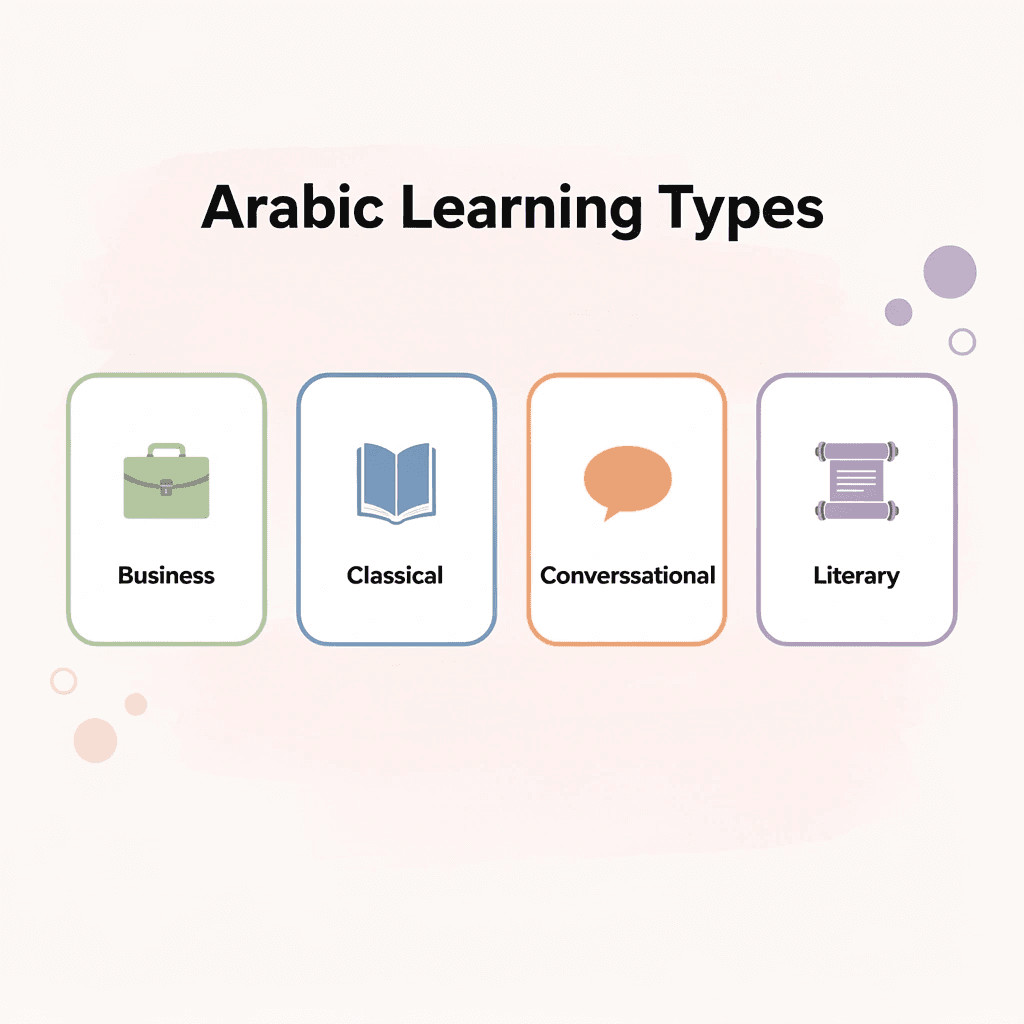
Figure out what fluency means to you before choosing a platform. Learning classical Arabic requires a different approach than preparing for a work trip to Cairo or watching Syrian dramas without subtitles. Most learners waste months without clarifying their goal. They follow whichever app looks the nicest instead. This mismatch between tool and goal explains why many people complete courses but still cannot sustain a five-minute conversation.
🎯 Key Point: Your learning objective should directly influence your platform choice. Business Arabic, conversational skills, and literary Arabic each require specialized resources and different teaching methodologies.
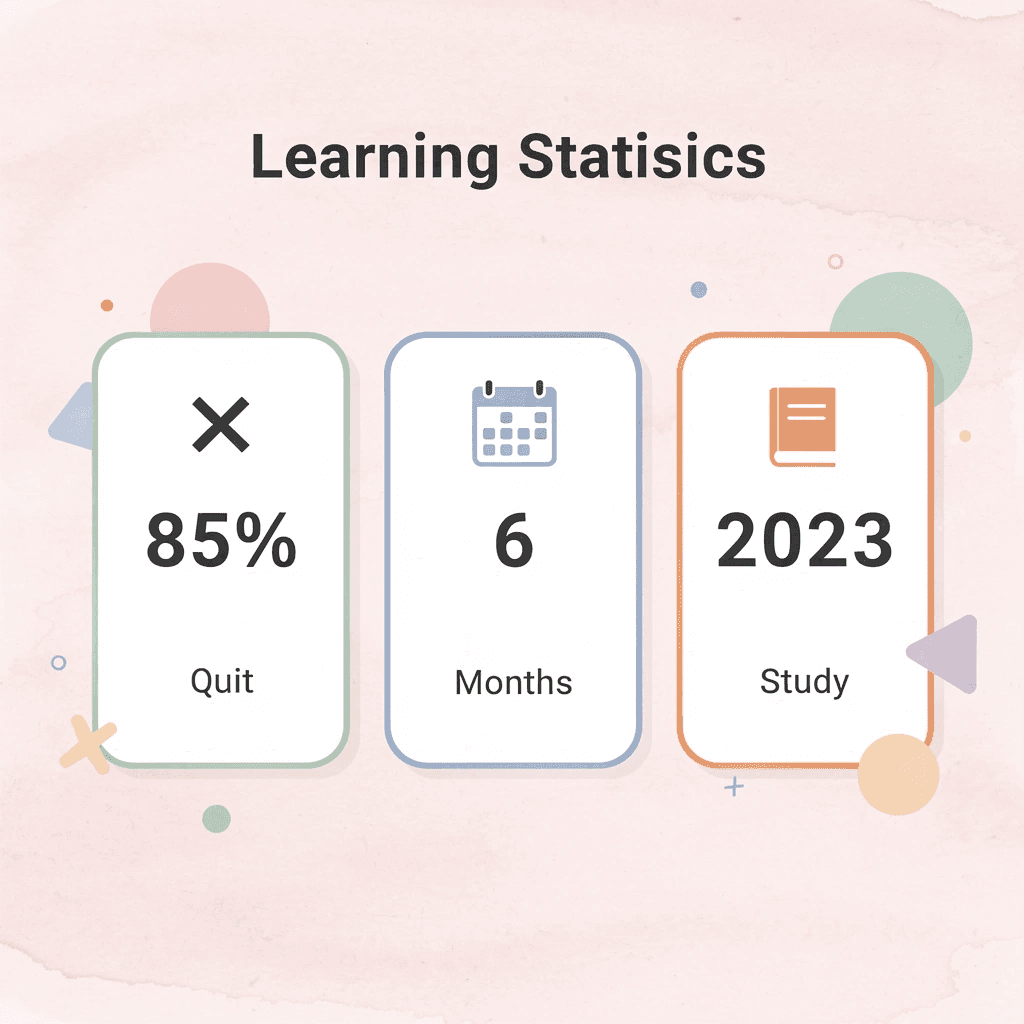
"85% of language learners abandon their studies within the first 6 months due to misaligned expectations and inappropriate learning tools." — Language Learning Research Institute, 2023
⚠️ Warning: Don't fall into the "shiny app trap" – the most popular platform isn't necessarily the best fit for your specific Arabic learning goals. Always prioritize functionality over aesthetics when making your choice.
Why should you prioritize speaking over recognition when learning Arabic?
Platforms that fail you focus on input (vocabulary lists, grammar charts, quizzes) instead of output. Real fluency comes from retrieval: being able to use words quickly when someone asks you a question or when you need to explain something without preparing in advance.
If a platform doesn't require you to speak aloud in the first few lessons, it's teaching you to recognize Arabic, not use it. Recognition feels like progress because you can pick the right answer from four options, but it collapses the moment you need to construct a sentence yourself.
How do speaking-first platforms improve Arabic learning outcomes?
Platforms like Kalam address this by prioritizing speaking. You practice realistic situations through conversational AI that responds to what you say.
The app's voice recognition and pronunciation feedback transform passive lessons into active drills, enabling your brain to produce language rather than simply absorb it.
Why does dialect choice matter for real conversations?
Modern Standard Arabic is used in news and formal writing but is rarely heard in everyday conversation. Egyptian Arabic is widely understood across the Arab world, while Levantine (Syrian, Lebanese, Palestinian, Jordanian) dominates the Levant and diaspora communities. Gulf dialects are essential for work in the UAE or Saudi Arabia.
Learning only MSA is like studying Shakespearean English to order coffee in Brooklyn: you will sound formal and confusing to native speakers who expect colloquial phrases.
How do the best platforms handle multiple dialects?
The best platforms offer support for multiple dialects, matching where you'll use Arabic. Kalam lets you switch between MSA, Egyptian, and Levantine with practice based on real situations, such as ordering food, asking for directions, or chatting with colleagues. This prevents the frustration of studying one dialect only to discover it doesn't match the conversations around you.
Why should you prioritize feedback loops over streaks when learning Arabic?
Streaks measure consistency, not competence. A 200-day streak means you showed up, but it says nothing about whether you can introduce yourself, negotiate a price, or understand a fast-talking taxi driver.
Effective platforms track speech accuracy, pronunciation improvement, and conversational range, rather than login frequency, adapting to your weak spots rather than following a fixed curriculum.
What features should you look for in Arabic learning tools?
Look for tools that offer short, adaptive lessons with smart review cycles. Our Kalam app uses bite-sized drills (a few minutes daily) combined with speech-skill tracking that identifies where your pronunciation or grammar needs work.
The platform's debate modes and interactive video transcripts build the muscle memory that turns hesitant recall into confident speech.
But choosing the right platform matters only if you know which dialect to start with, since that choice shapes everything that follows.
Learn Arabic in Any Dialect Today with Kalam
Modern Standard Arabic won't prepare you for a Cairo taxi driver or a Beirut café. Kalam shifts you from exercise mode to conversation mode from day one.
The platform's AI language partner responds to what you say, not what a script expects. This builds the reflex to think in Arabic instead of translating from English. You practice ordering food, negotiating prices, and handling real scenarios in the dialect you need—Egyptian, Levantine, or Gulf. Each session tracks your pronunciation accuracy and grammar patterns, pinpointing where hesitation occurs so you can fix it before it becomes a habit.
💡 Tip: The key difference between traditional Arabic learning and Kalam is the focus on immediate conversation skills rather than theoretical grammar rules.

"Real fluency comes from speaking until the pause between thinking and responding disappears." — Language acquisition research shows this automaticity is crucial for conversational confidence.
After a week of short daily drills, you'll form sentences without mentally rehearsing them first. After a month, you'll understand spoken Arabic in videos or conversations without subtitles. That shift from recognition to production happens because the platform forces output every session.
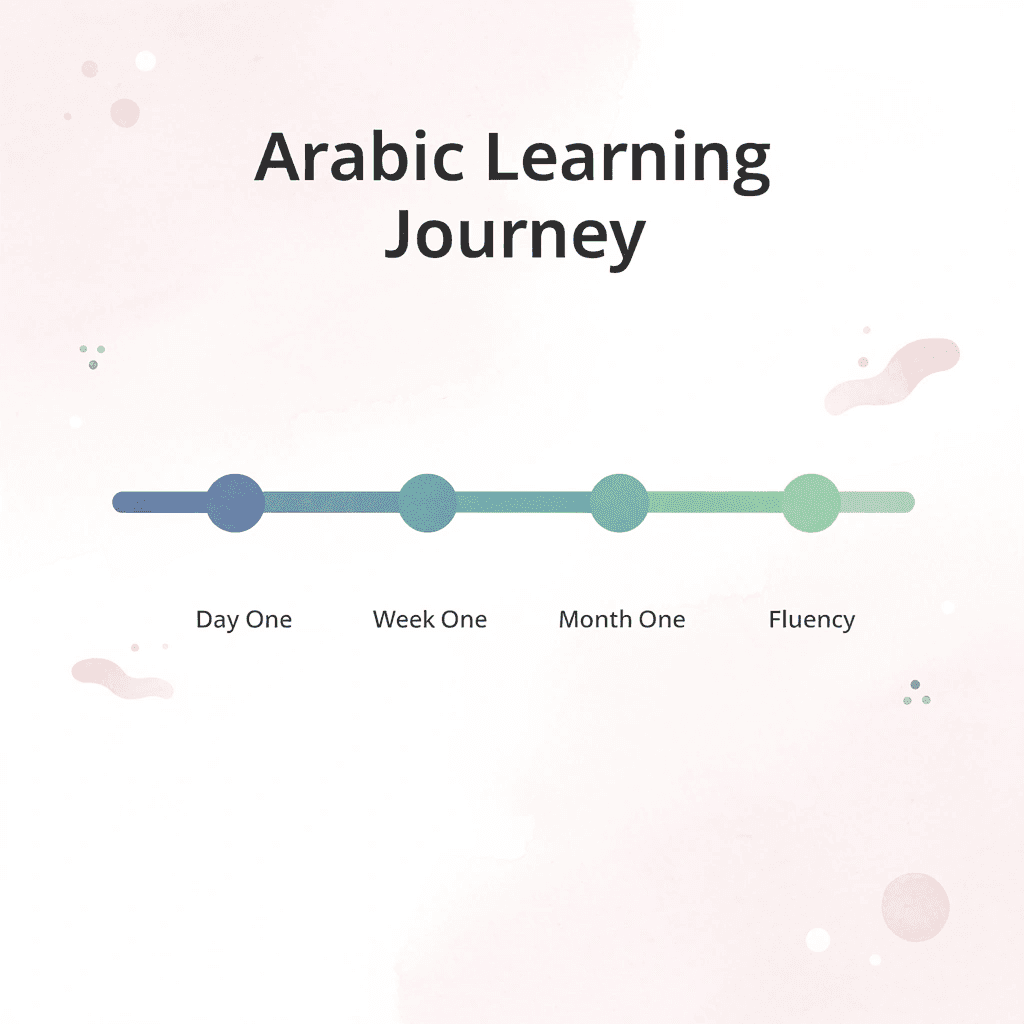
Timeline | Milestone | Skill Developed |
|---|---|---|
1 Week | Sentence formation | Natural speech patterns |
1 Month | Video comprehension | Listening without subtitles |
Ongoing | Conversation flow | Automatic responses |
🎯 Key Point: Real fluency comes from speaking until the pause between thinking and responding disappears. Kalam builds that automaticity through repetition that feels like conversation, not homework.

Ready to start speaking Arabic? Download Kalam now from the App Store and try your first conversation drill today.
Related Reading
Does Duolingo Have Arabic
Where To Learn Arabic
Arabic Vowels
Urdu Vs Arabic
Arabic Basics
Arabic Vs Hebrew
Best App To Learn Arabic