16 Best Duolingo Arabic Alternatives to Learn Arabic in 2026
Many Arabic learners experience a frustrating disconnect when they complete lessons on apps like Duolingo, only to struggle with real conversations. These platforms typically teach Modern Standard Arabic, but native speakers use Arabic dialects in everyday communication that sound vastly different from textbook lessons. The gap between app-based learning and practical speaking skills leaves students unprepared for genuine interactions.
Effective Arabic learning requires conversation practice with native speakers, systematic grammar instruction, and exposure to the specific dialects used in daily life. Success comes from structured courses that prioritize speaking skills over gamified exercises and provide personalized feedback on pronunciation and usage. For learners ready to move beyond basic vocabulary drills toward genuine fluency, platforms like Kalam offer the comprehensive approach needed to learn Arabic confidently.
Summary
Modern Standard Arabic creates a disconnect that frustrates learners once they step outside controlled exercises. Duolingo teaches exclusively MSA, the formal register used in news and literature, but native speakers rely on regional dialects such as Egyptian, Levantine, and Gulf Arabic for nearly all daily interactions. This leaves learners linguistically correct on paper but completely unprepared to order coffee in Cairo or chat with colleagues in Beirut, driving many to seek platforms that teach how people actually talk.
Vocabulary recognition doesn't translate to speaking ability without active production practice. Apps that prioritize matching exercises and multiple-choice questions build shallow neural pathways where learners recognize hundreds of words on screen but freeze when someone asks a simple question. According to Quantumrun's analysis, the global language learning apps market reached $6.34 billion in early 2026, yet most platforms still optimize for downloads rather than conversational outcomes, creating an illusion of progress through streaks and points that rarely correlate with real-world fluency.
Gamification mechanics often distract from meaningful language acquisition. Points, hearts, and leaderboards create addictive daily habits, but repetitive formats reward pattern recognition over deep comprehension. Learners can maintain 200-day streaks while barely retaining vocabulary because exercises feel designed to keep you opening the app rather than pushing toward measurable proficiency standards that matter outside the game, prompting serious students to migrate toward structured programs with spaced repetition and contextual immersion.
Effective platforms balance all four language skills through research-backed methodology. Strong alternatives integrate listening comprehension through authentic audio, speaking practice with immediate pronunciation feedback, reading fluency with progressively complex texts, and structured writing exercises, rather than drilling isolated vocabulary. According to MMR Statistics, the online language learning market reached $24.56 billion in 2025 and is projected to hit $63.43 billion by 2032 at a 14.52% CAGR, yet the gap between market size and learner satisfaction reveals how many tools prioritize engagement over actual outcomes.
Dialect availability determines real-world conversational utility more than curriculum size. Egyptian dominates the media and is broadly understood across the Arab world; Levantine facilitates social connections in the eastern Mediterranean; and Gulf varieties matter for business contexts in the Arabian Peninsula. Platforms that teach only MSA leave learners conversationally awkward, despite technical correctness, unable to use colloquial expressions or understand the pronunciation patterns that define everyday speech, making parallel dialect tracks essential for practical fluency.
Active speaking practice from day one compresses the gap between knowing words and using them. Platforms that center lessons on pronunciation comparison, real-life dialogue scenarios, and interactive drills force simultaneous engagement of the mouth and the brain, building muscle memory and auditory patterns that passive recognition exercises cannot replicate. Kalam addresses this by structuring every session around speaking drills with native-model comparison, video demonstrations in context, and dialect-specific practice that turns short daily efforts into confident conversations rather than into a collection of badges.
Table of Contents
What is Duolingo Arabic, and How Does It Work?
Why Do Users Seek Duolingo Arabic Alternatives?
What are the Criteria for Evaluating Language Learning Platforms?
16 Best Duolingo Arabic Alternatives to Learn Arabic in 2026
How to Choose the Best Duolingo Arabic Alternative
Learn Arabic in Any Dialect Today with Kalam
What is Duolingo Arabic, and How Does It Work?
Duolingo Arabic teaches Modern Standard Arabic through game-like lessons covering reading, writing, listening, and basic speaking. The course introduces Arabic script step by step, combines vocabulary practice with sentence translation, and uses points, streaks, and leaderboards for motivation. It's free, works on mobile and web, and adjusts difficulty based on your performance.

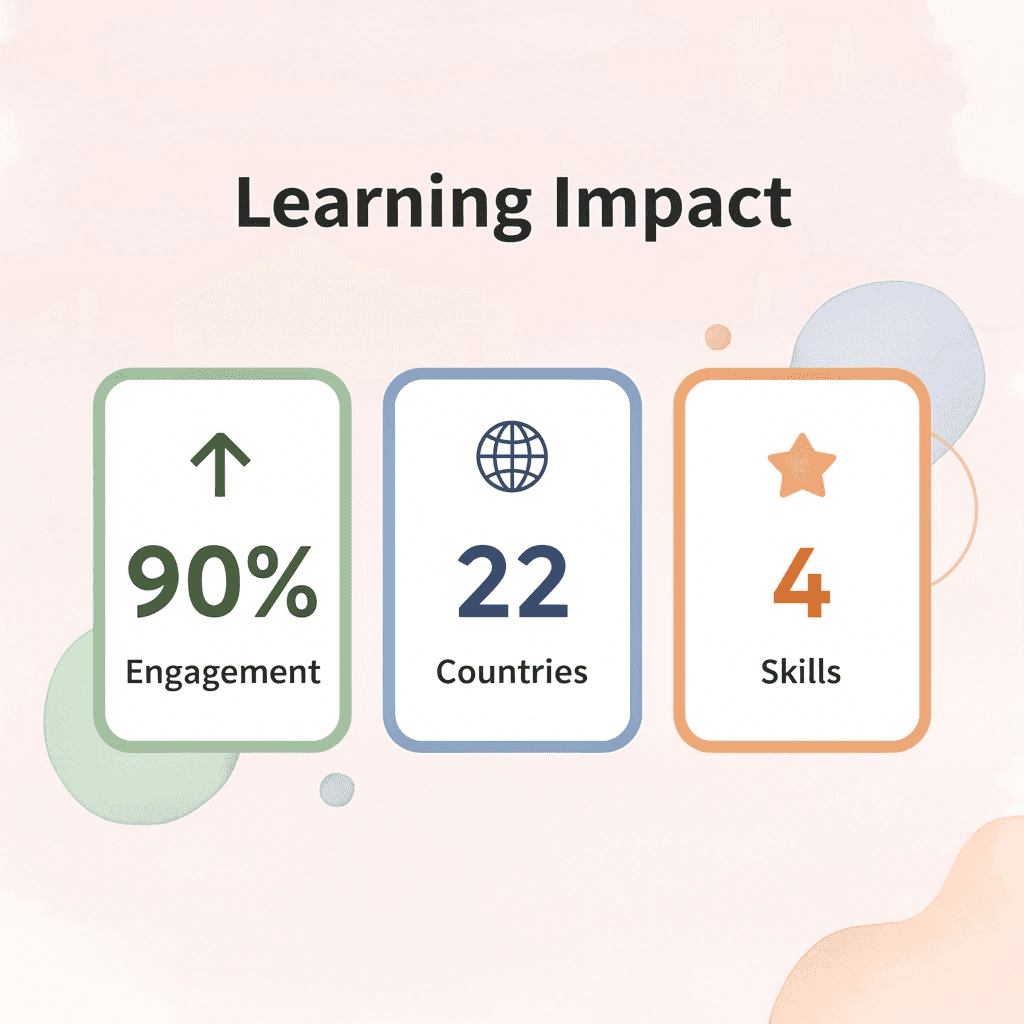
🎯 Key Point: Duolingo Arabic focuses on Modern Standard Arabic, which is the formal written language used across 22 Arabic-speaking countries and in international media.
"Gamification in language learning can increase engagement rates by up to 90% compared to traditional methods." — Educational Technology Research, 2023
Feature | Description |
Script Learning | Step-by-step introduction to the Arabic alphabet |
Skills Practice | Reading, writing, listening, speaking |
Gamification | Points, streaks, leaderboards for motivation |
Adaptive Learning | Difficulty adjusts based on your performance |
Accessibility | Free access on mobile and web platforms |

💡 Tip: The adaptive difficulty system means the app will automatically adjust lesson complexity based on your accuracy rates and response times, ensuring you're always challenged but never overwhelmed.
How does Duolingo Arabic use gamification to motivate learners?
The course uses short, game-like lessons instead of traditional study. You earn experience points, maintain streaks to build habits, and climb weekly leaderboards. A mascot named Duo sends reminders and celebrates milestones. Limited "hearts" add gentle stakes, pausing lessons after mistakes until hearts are restored through review. Immersive Adventures let learners role-play real scenarios, such as ordering food or asking for directions, using learned vocabulary.
Teaching the Script Without Overwhelm
Arabic's writing system presents a major early challenge: letters change shape by position in a word, and the script reads right to left. Duolingo introduces letters gradually, provides immediate practice combining them into simple words, then adds more. Each unit includes targeted phonetic drills to distinguish similar sounds and link them to written forms. Short vowels appear explicitly at the start before learners gradually rely on context. This approach helps beginners overcome initial intimidation faster than many self-study methods, with users frequently praising how quickly they begin reading and writing basic words with confidence.
Where the Limits Show
The course teaches Modern Standard Arabic, the formal Arabic used in news, books, and official documents across the Arab world. MSA serves as a common bridge language that learners can understand regardless of what local dialect they encounter.
Why do Duolingo Arabic learners struggle with conversations?
Duolingo's Arabic course reaches over 400 million possible learners, but many find that after months of regular practice, they struggle with real conversations. The platform builds vocabulary recognition and script familiarity well, but speaking fluency requires consistent repetition, quick pronunciation correction, and dialogue practice that mirrors the rhythm of actual conversation. Duolingo's short speaking exercises and limited feedback cannot replicate the pressure and flow of talking with another person.
What happens when learners move beyond the app?
When learners move from Duolingo's controlled exercises to real-world content, such as news channels or street conversations, the gap becomes clear. Many feel they're spinning their wheels, knowing around fifty words after four months but lacking the structural understanding and conversational confidence to use them smoothly. The gamified progress tracking through XP, streaks, and levels may not reflect actual functional language ability, creating false advancement or frustration when real-world application fails. Apps like Kalam address this by prioritizing speaking and pronunciation through interactive drills, video lessons, and real-life conversation practice that build the muscle memory and confidence needed for smooth dialogue rather than vocabulary recognition alone. The real question is why so many committed learners eventually seek something else.
Why Do Users Seek Duolingo Arabic Alternatives?
Users leave Duolingo Arabic when gamified lessons fail to develop conversational ability. After months of consistent practice, many learners freeze when speaking with native speakers or understanding everyday dialogue. This gap between completion percentages and functional fluency drives serious students toward platforms that prioritize speaking practice, dialect exposure, and deeper grammatical understanding.

🎯 Key Point: The biggest frustration with Duolingo Arabic isn't the quality of lessons—it's the disconnect between completing exercises and actually being able to hold conversations with native speakers.
"After months of consistent practice, many learners still freeze when speaking with native speakers or understanding everyday dialogue." — Language Learning Research, 2024

⚠️ Warning: Gamified progress can create a false sense of advancement. Green streaks and XP points don't necessarily translate to real-world communication skills that learners actually need.
Modern Standard Arabic Without the Streets
Duolingo teaches only Modern Standard Arabic, the formal register used for news broadcasts, literature, and official ceremonies. You'll read Al Jazeera headlines fluently but sound out of place ordering coffee in Cairo or chatting with friends in Beirut. Native speakers use regional dialects such as Egyptian, Levantine, and Gulf Arabic in everyday conversations, leaving MSA learners grammatically correct but socially awkward. The platform offers no instruction in colloquial expressions, slang, or pronunciation patterns that define spoken Arabic across different countries.
Shallow Vocabulary Pools and Grammar Shortcuts
The course limits vocabulary to a few hundred core words and simplifies Arabic's complicated grammar, but explanations lack depth. You'll recognize common nouns and basic verb forms, but struggle to write sentences or understand the root-pattern system that unlocks thousands of related words. According to Quantumrun's language-learning market analysis, the global language-learning apps market reached $6.34 billion in early 2026, driven partly by users seeking deeper learning beyond beginner-level content. Duolingo's structure offers no clear path from recognizing "مرحبا" to confidently discussing abstract ideas or reading unvoweled texts. Intermediate learners hit this limit and seek programs with step-by-step curricula, abundant example sentences, and detailed explanations of case endings, verb conjugations, and sentence patterns.
Speaking Practice That Doesn't Speak Back
The app relies on scripted audio clips and isolated phrase repetition with binary feedback, never simulating the unpredictable flow of real conversations. It lacks pressure to think quickly, correction of intonation errors, and exposure to varied accents and speeds that learners encounter outside the app. After six months of daily streaks, many users report confidently reading simple texts but panicking when asked a basic question in Arabic. Platforms like Kalam address this by centering lessons on interactive speaking drills, video demonstrations from native speakers, and real-life dialogue scenarios that build muscle memory and confidence that Duolingo's text-heavy approach cannot replicate.
Gamification That Distracts More Than It Teaches
Points, hearts, and leaderboards create addictive daily habits, but the repetitive matching and multiple-choice format becomes mechanical rather than meaningful. You can maintain a 200-day streak while barely retaining vocabulary because exercises reward pattern recognition over deep comprehension. Serious learners eventually recognise this illusion of progress and move toward structured programs with spaced repetition algorithms, contextual immersion, and measurable benchmarks tied to actual language proficiency standards rather than arbitrary XP thresholds. Choosing an alternative requires knowing what separates effective platforms from expensive distractions.
Related Reading
What are the Criteria for Evaluating Language Learning Platforms?
Strong evaluation criteria separate platforms that entertain from those that build real language skills. Focus on: research-backed teaching methodology, content depth beyond vocabulary lists, intuitive design that removes friction from daily practice, personalization to your level and goals, engagement features that sustain motivation, transparent pricing, and progress tracking showing measurable skill growth. These dimensions predict whether a platform delivers conversational fluency or colorful badges.

Teaching Methodology That Builds All Four Skills
Good language learning platforms balance listening, speaking, reading, and writing rather than drilling isolated vocabulary. Look for evidence that the approach builds understanding through real audio, trains pronunciation with immediate feedback, develops reading fluency with progressively challenging texts, and strengthens writing through structured composition practice.
According to MMR Statistics, the global online language learning market is valued at $24.56 billion in 2025 and projected to reach $63.43 billion by 2032, growing at a CAGR of 14.52%. Yet most platforms still prioritize passive recognition over active production. Programs that integrate communicative exercises, contextual grammar explanations, and spaced repetition create neural pathways that support real conversation rather than test performance.
Content Depth and Real-World Relevance
Good content comes from how native speakers actually talk in everyday situations rather than from textbooks and academic ideas. Check whether lessons cover practical topics like using transportation, having conversations at work, or understanding cultural differences that textbooks don't teach. Correct grammar matters, but so does learning everyday expressions, regional variations, and natural speech patterns. Platforms that include video from native speakers, practice conversations in real-life situations, and provide cultural context prepare you for real interactions rather than controlled exercises. When content feels immediately applicable, you remember it better, and practice becomes preparation for real moments you can already envision.
Intuitive Design That Removes Learning Friction
An interface should fade into the background so your full attention stays on the language itself. Clean navigation, fast loading, logical lesson sequences, and mobile optimization matter because every moment spent figuring out the app is a moment not spent learning Arabic. Simple controls and clear instructions reduce cognitive load, allowing you to channel your mental energy toward pronunciation practice and grammar patterns instead of hunting for the next exercise. Thoughtful design makes the path from login to productive practice direct, which influences whether you open the app daily or abandon it.
Personalization and Adaptive Learning Paths
Generic curricula waste time reviewing what you already know and skip gaps you haven't filled. Strong platforms use placement tests or adaptive algorithms to identify your current level, then adjust difficulty and focus areas based on performance. Customization options—lesson length, specific topics, skill emphasis—let you control your learning journey. Platforms like Kalam center lessons around interactive speaking drills and real-life conversation scenarios tailored to your pronunciation weaknesses and dialogue confidence gaps, building the muscle memory that vocabulary apps miss. When the program fits your actual needs rather than forcing you through a one-size-fits-all sequence, motivation stays high, and progress accelerates.
Engagement Features That Sustain Motivation Without Distraction
Gamification works when it supports learning rather than replacing it. Look for speech recognition that corrects pronunciation immediately, spaced repetition that surfaces vocabulary before you forget it, interactive dialogues that simulate conversational pressure, and community elements that create accountability without anxiety about comparison. Immediate feedback on mistakes prevents errors from becoming habits. The best platforms blend fun with purpose, where points and streaks reflect genuine skill development rather than time spent clicking through exercises.
Transparent Pricing and Demonstrated Value
Clear pricing without surprise fees lets you compare true costs against features and outcomes. Flexible subscriptions, meaningful free trials, or lifetime access options should match your budget and commitment level. Value emerges when you can measure progress that justifies the investment, rather than when marketing obscures costs. Platforms delivering consistent skill growth without expensive add-ons earn trust and long-term commitment. Fair pricing, combined with visible results, creates confidence that your money and time are advancing fluency.
Related Reading
Persian Vs Arabic
Best Way To Learn Arabic
How To Speak Arabic
Modern Standard Arabic
16 Best Duolingo Arabic Alternatives to Learn Arabic in 2026
Choosing the right Arabic platform means matching your learning style and goals to tools that build speaking confidence, not just vocabulary recognition. The sixteen alternatives below span conversation-focused apps, tutor marketplaces, immersive audio programs, and specialized vocabulary builders, each addressing gaps left open by Duolingo. Whether you need dialect practice for Egyptian street conversations, pronunciation feedback for Levantine business meetings, or structured MSA lessons for reading Al Jazeera, these platforms prioritize real-world fluency over gamified streaks.
1. Kalam
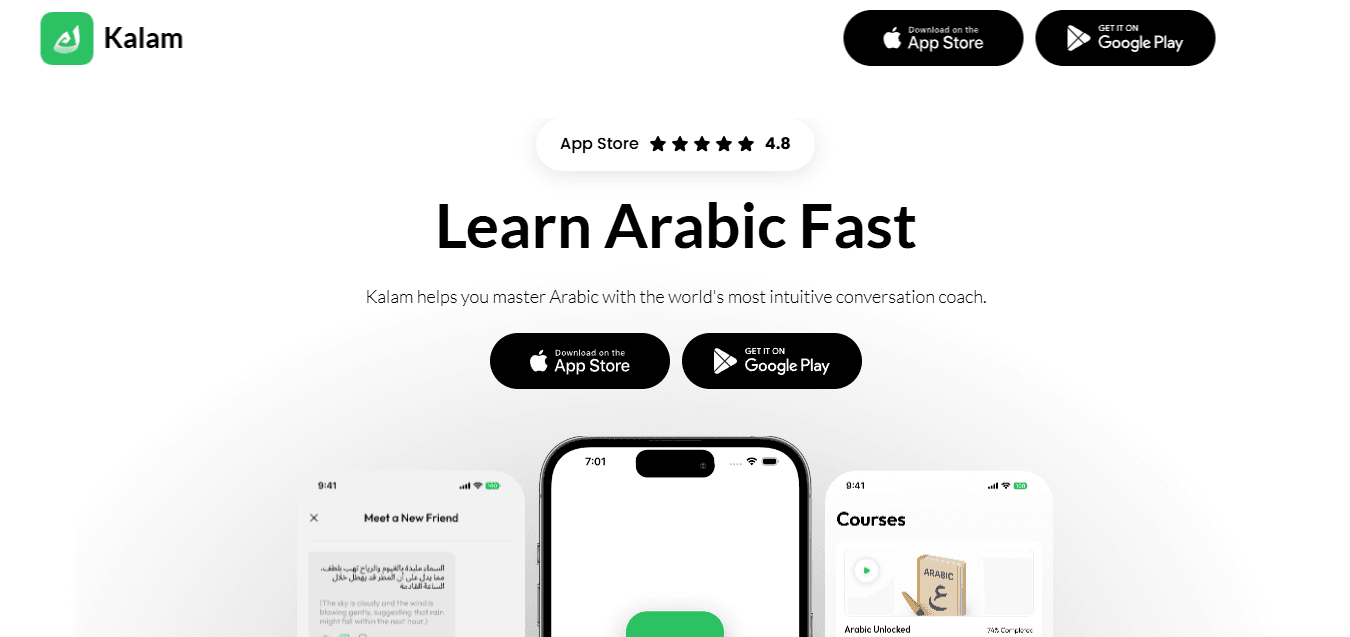
Kalam positions itself as the world's most intuitive conversation coach, designed specifically to help users learn Arabic fast and master the language through focused speaking practice. It emphasizes making spoken Arabic as easy and natural as possible by centering every lesson around real-life conversations rather than isolated drills or heavy grammar rules. The platform supports learners who want to build confidence quickly with short, daily sessions that turn beginners into conversational participants.
Key Features
Interactive Speaking Drills — Kalam places speaking at the core of every lesson from day one. Users engage in targeted pronunciation exercises that train in throat placement, emphasis, rhythm, and intonation by comparing their speech directly to native-speaker models, building muscle memory for natural responses.
Video Lessons — High-quality video content demonstrates real Arabic dialogues in context. These lessons show how phrases function in everyday situations, helping learners see and hear the language in action rather than just reading rules.
Real-Life Conversation Practice — Lessons simulate practical scenarios such as greeting people, ordering food, or navigating daily interactions. This approach bridges the gap between knowing words and actually using them confidently when speaking with others.
Dialect-Specific Learning — Users can choose from a wide range of Arabic varieties, including Egyptian (great for media), Levantine (for social conversations), Gulf Arabic (useful for business), or Modern Standard Arabic. Lessons adapt to the selected dialect, so practice feels relevant to personal goals like travel or family connections.
Pronunciation Feedback — The app provides immediate guidance on producing correct sounds, including guttural letters and sentence melody. Feedback highlights differences from native speech, helping users adjust and improve accuracy session by session.
Meaning Breakdowns — Every phrase comes with clear explanations of how words and expressions work in actual use. This helps learners understand cultural nuances and practical application without getting lost in abstract grammar.
Short Daily Lessons — Designed for busy schedules, Kalam encourages just a few focused sessions per day. This bite-sized format supports consistent habit building while avoiding overwhelm, leading to steady progress toward fluent everyday Arabic.
Interactive Exercises and Games — Engaging activities, including questions and review elements, keep practice enjoyable. These tools reinforce vocabulary and patterns through repetition in conversational contexts rather than rote memorization.
Flashcard Review — Built-in review tools use spaced repetition principles to strengthen retention of phrases and vocabulary encountered in speaking drills, ensuring learned material stays fresh and ready for real conversations.
Habit Tracking and Progress Monitoring — The platform includes tools to monitor daily streaks, session completion, and overall advancement. This feature helps users stay motivated and see tangible improvements in their speaking confidence over time.
Why Kalam Stands Out as One of the Best for Speaking-Focused Arabic Learning in 2026
Kalam excels particularly for learners who feel stuck with traditional apps that delay real speaking until later stages. By making conversation the foundation rather than an afterthought, it develops auditory patterns, intonation, and response automaticity early on. The ability to select and practice in specific dialects (Egyptian, Levantine, Gulf, or MSA) makes it highly practical for real-world use, whether for media consumption, social interactions, business, or travel. Its combination of video lessons, instant pronunciation guidance, and short daily sessions creates an efficient path to natural, effortless Arabic without unnecessary textbook-style content. With a strong 4.8 rating on the App Store and trust from over 10,000 users worldwide, Kalam delivers a focused, confidence-building experience that turns passive knowledge into active speaking ability faster than many broader language platforms.
Pros
Strong emphasis on speaking and pronunciation from the very first lesson
Flexible dialect options tailored to different learner needs and regions
Short, engaging sessions that fit easily into daily routines
Practical, real-life scenarios that build immediately usable skills
Clear feedback and breakdowns that accelerate natural conversation flow
Cons
Full advanced features and unlimited access likely require a paid plan after the trial period (7-day trial available)
Accessibility
Available as a mobile app on iOS (with a direct App Store download). It offers a 7-day free trial, habit tracking in the free version, and paid options that include early access to new features and live coaching. The clean, intuitive interface supports quick, on-the-go daily practice. A free habit-tracking mode allows users to start building consistent Arabic-speaking habits right away.
2. Ling
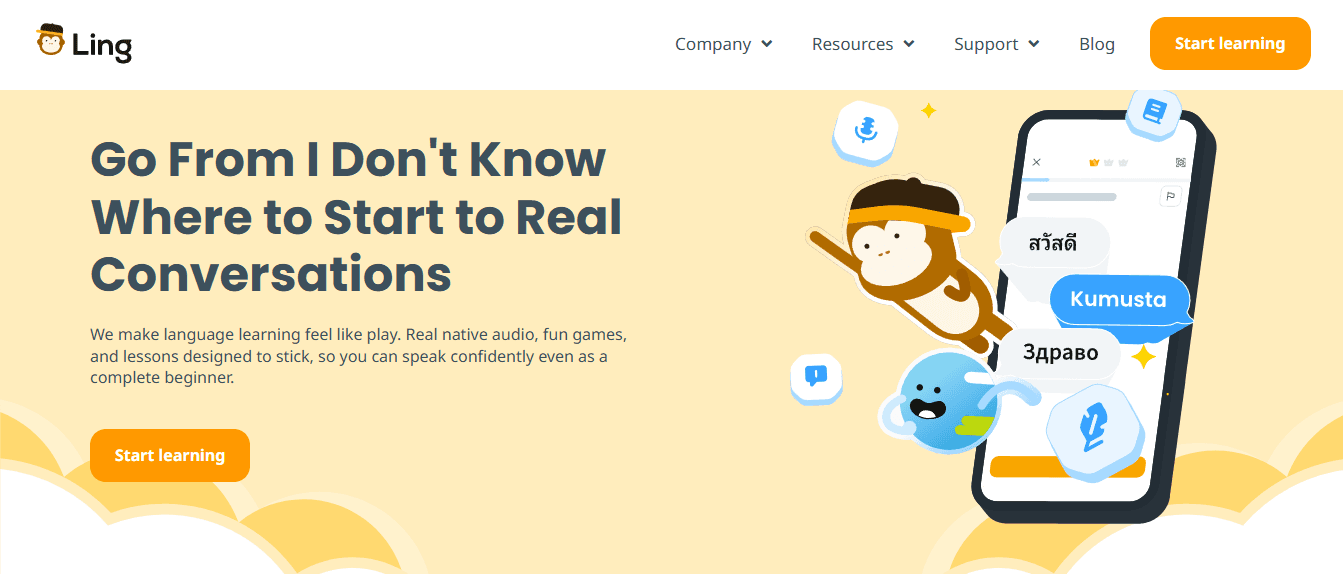
Ling delivers an approachable mobile experience that introduces Arabic fundamentals through lively, bite-sized activities while steadily expanding your command of vocabulary and structure. It stands out for guiding users from absolute basics into more complex territory without overwhelming them, relying on pattern recognition rather than rote textbook rules.
Key Features
Five progressive units spanning beginner through expert levels
Gradual vocabulary expansion tied to everyday themes
Grammar absorption via natural sentence patterns across dialogues
Interactive exercises and hands-on activities throughout each lesson
Built-in quizzes for regular self-assessment
AI-powered chatbot dedicated to pronunciation refinement
Authentic native-speaker audio recordings for listening practice
Pros
Highly engaging format that feels more like play than study
Quick daily sessions fit easily into packed routines
Strong emphasis on real conversational phrases from the start
Clear progress tracking with streaks and rewards
Cons
Depth may feel limited once learners reach advanced stages
Full access requires a premium subscription after the free trial period
Accessibility
Available as a free-to-start mobile app on both iOS and Android devices, with optional paid upgrades for unlimited lessons and ad-free use.
3. Busuu
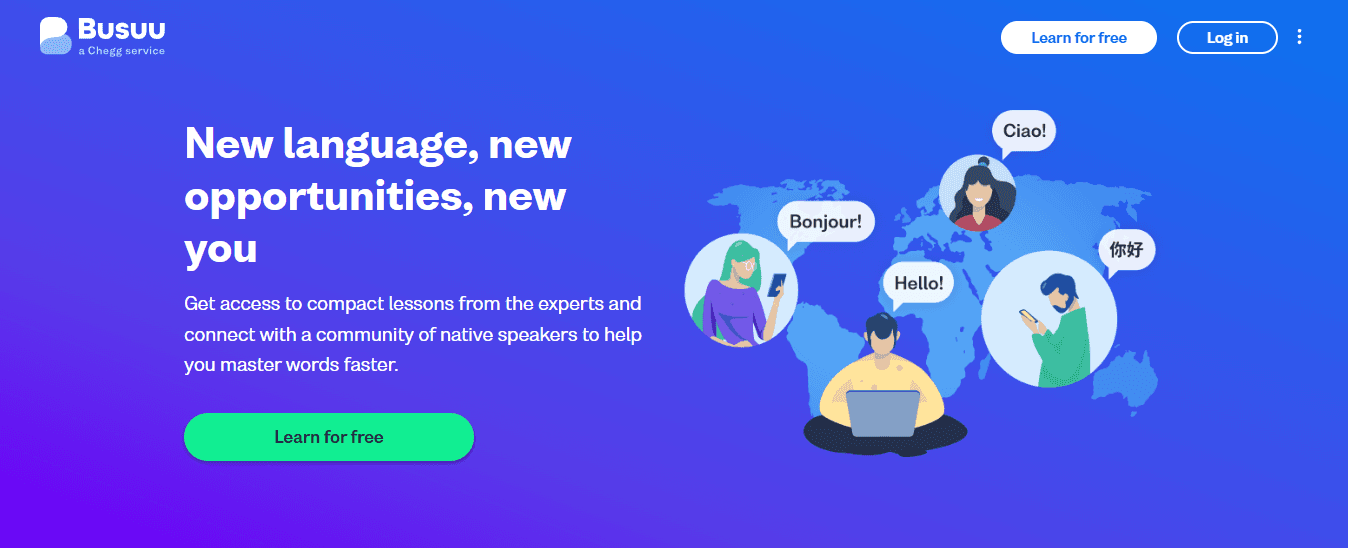
Busuu excels for learners who prefer quick, focused sessions and direct interaction with native Arabic speakers. Its short modules make consistent practice realistic even on tight schedules, while community feedback helps refine speaking and writing in authentic contexts.
Key Features
Condensed lessons designed for short daily bursts
Interactive games and quizzes covering listening, speaking, reading, and writing
Direct connections to native Arabic speakers for conversation practice
Writing feedback from community members
Premium study planner with personalized goal setting and progress reports
Alphabet and pronunciation modules for script mastery
CEFR-aligned structure from A1 to B2 levels
Pros
Excellent community support accelerates real-world skill building
Culturally relevant content keeps motivation high
Flexible pacing suits commuters or busy professionals
Free tier provides substantial core content
Cons
The Arabic course library is smaller compared to the more popular languages
Some exercises can feel repetitive without premium features
Accessibility
Free basic courses available via iOS and Android apps plus web access; premium subscription unlocks the full study plan and advanced tools.
4. italki
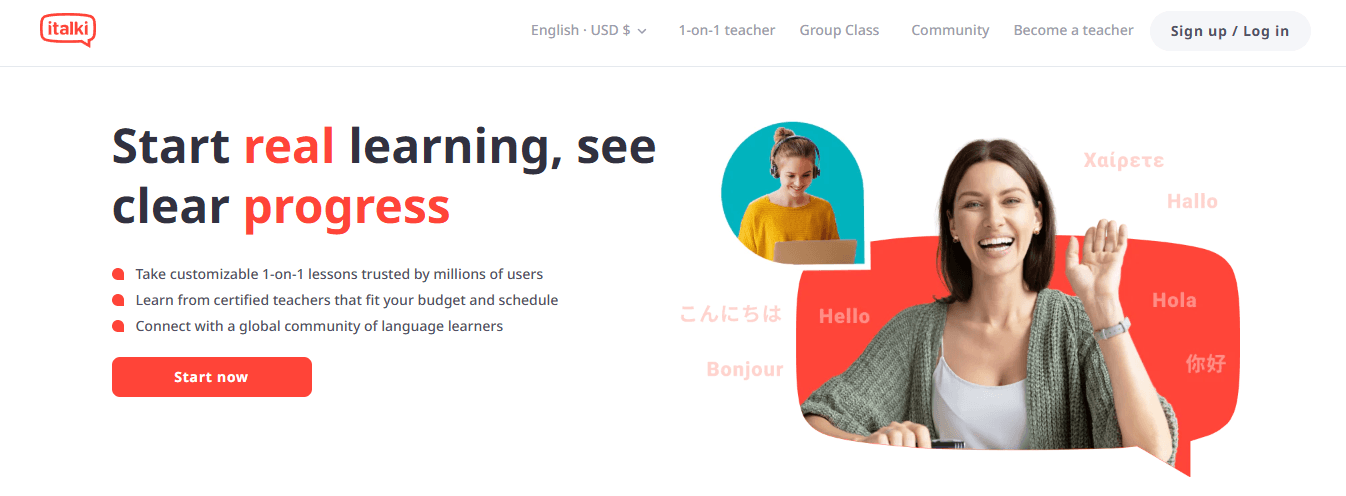
italki is a flexible online marketplace that connects learners directly with experienced Arabic teachers and conversation partners. It removes the barriers of fixed class schedules and lets you customize every session around your exact needs and availability.
Key Features
One-on-one lessons with qualified native or professional instructors
Pay-per-lesson pricing with no long-term commitments
Trial sessions at reduced rates to test different tutors
Wide selection of Arabic teachers specializing in MSA or dialects
Community forums like the Arabic League for peer advice
Scheduling freedom to fit any time zone or lifestyle
Option to combine professional teachers with community tutors
Pros
Highly personalized instruction accelerates speaking confidence
Affordable entry point with lessons starting under $10
Ability to focus on specific dialects or goals, like travel in Arabic
No subscription pressure—pay only for what you use
Cons
Requires self-motivation to maintain consistent practice
Quality varies by tutor selection, so research is essential
Accessibility
Web-based platform accessible on any device (desktop, tablet, or mobile browser); no app download required, with instant booking and video lessons.
5. Drops
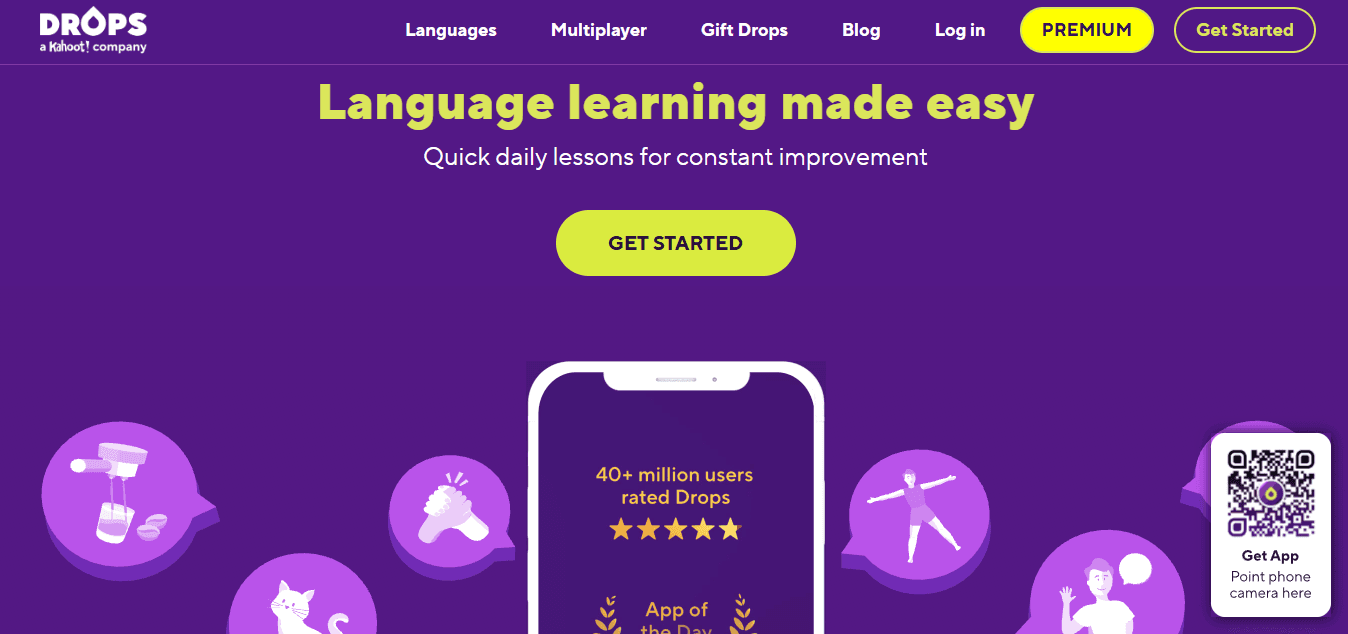
Drops focuses on visual, game-style vocabulary acquisition through short, memorable sessions that feel more like entertainment than homework. It shines for visual learners who want to absorb thousands of Arabic words and phrases quickly while on the move.
Key Features
Over 2,000 Arabic words taught via spaced repetition
Beautiful visual illustrations for every term
5-minute daily challenges and interactive mini-games
Audio clips supporting listening comprehension
Themed collections covering travel, food, culture, and daily life
Offline mode for learning without internet
Progress tracking with streak counters and review reminders
Pros
Extremely engaging and low-pressure format
Ideal supplement for building core vocabulary fast
Supports multiple Arabic dialects in select packs
Works seamlessly for beginners or travelers
Cons
Primarily vocabulary-focused, with limited grammar or full conversations
The free version restricts daily practice time
Accessibility
Mobile app available on iOS and Android; free with generous daily limits and an optional premium for unlimited access and extra content.
6. ArabicPod101
ArabicPod101 offers structured audio and video lessons created by dedicated Arabic teachers, functioning more like portable classroom sessions than typical gamified apps. It provides in-depth explanations, cultural notes, and support for both Modern Standard Arabic and the popular Egyptian dialect.
Key Features
Lessons led by real instructors with clear explanations
Downloadable lesson notes and transcripts for review
Hundreds of video and audio recordings
Offline content access for travel or low-connectivity areas
Coverage of the Egyptian dialect alongside MSA
Cultural insights integrated into practical dialogues
Progressive series from beginner to advanced topics
Pros
Authentic teacher-led instruction builds listening and speaking naturally
Excellent for commuters who prefer audio learning
Dialect options give practical advantages for specific regions
Lifetime access to materials once purchased
Cons
Less gamified, so it may feel more academic than fun for some
The full library requires a paid subscription
Accessibility
Available via mobile app and web platform on iOS, Android, and desktop; free sample lessons with premium membership for complete access.
7. Rocket Arabic
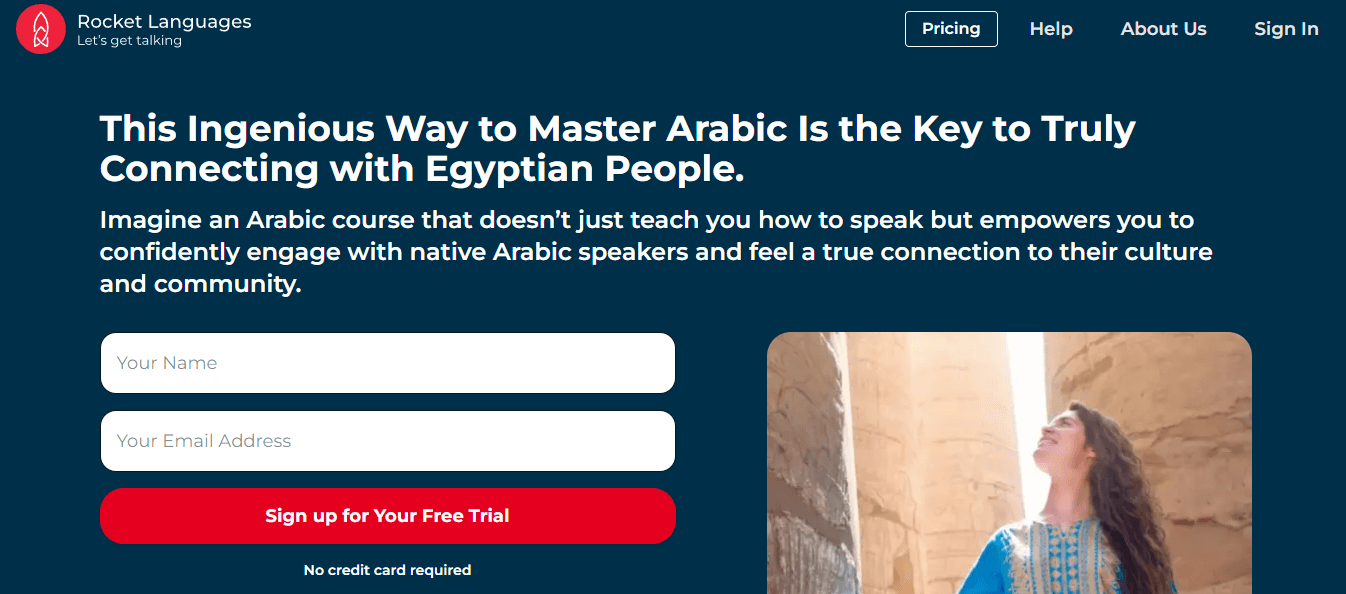
Rocket Arabic stands out as a comprehensive, conversation-driven program with a strong emphasis on the Egyptian dialect, helping users sound natural through interactive audio lessons and real-life dialogues. It combines speaking practice with cultural insights, making it ideal for learners who want to communicate confidently rather than just memorize isolated words.
Key Features
Voice recognition technology for instant pronunciation feedback
Hundreds of audio lessons focused on everyday conversations
Role-playing activities to practice both sides of the dialogue
Integrated writing and reading modules for script mastery
Cultural notes explaining Middle Eastern and North African customs
Mobile app with gamification elements like leaderboards
Lifetime access after one-time purchase, including all future updates
Pros
Excellent focus on speaking and natural Egyptian Arabic dialogues
High-quality, realistic audio from native speakers
Comprehensive materials that build practical skills quickly
No recurring subscription fees
Cons
Higher upfront cost compared to monthly subscription apps
Limited community interaction and forums can feel inactive
Less emphasis on Modern Standard Arabic for formal contexts
Accessibility
Available via web platform and dedicated mobile app on iOS and Android; includes a free trial period to test before committing.
8. 50 Languages – Learn Arabic
50 Languages delivers a straightforward, no-frills approach to building foundational Arabic vocabulary and phrases through simple bilingual lessons. It prioritizes quick, practical learning for real-life situations like travel, shopping, or basic interactions, making it a solid choice for beginners who want fast results without complex interfaces.
Key Features
100 free lessons covering everyday topics and situations
Audio recordings paired with text for listening and speaking practice
Bilingual format showing Arabic alongside your native language
Simple interface focused purely on learning without distractions
Downloadable MP3 files for offline use on any device
Coverage of basic vocabulary for common scenarios (hotel, restaurant, etc.)
Support for multiple native language interfaces beyond English
Pros
Completely free core content with generous lesson access
Quick setup and easy daily practice suitable for short sessions
Practical phrasebook-style content useful for immediate travel needs
Lightweight app that runs smoothly on older devices
Cons
Minimal interactive elements or gamification
Lacks advanced grammar explanations or deep conversation practice
Interface feels dated compared to modern apps
Accessibility
Free mobile app available on iOS and Android, plus web access; premium upgrades are inexpensive for additional tools.
9. Rosetta Stone

Rosetta Stone remains a trusted name in immersive language learning, using image-based contextual lessons to build Arabic skills intuitively without heavy translation. It focuses on Modern Standard Arabic to establish a strong foundation, with bite-sized sessions and advanced speech tools that support independent practice.
Key Features
Immersive method teaching through pictures and context
TruAccent speech recognition for accent improvement
Bite-sized lessons accessible online or offline
Real-world conversation simulations
Optional live online tutoring add-on
Progress tracking across reading, writing, listening, and speaking
Consistent structure designed for long-term retention
Pros
Polished, professional interface with reliable technology
Strong for building a visual vocabulary and basic comprehension
Works well for self-paced learners who prefer immersion
Offline capability and lifetime access options available
Cons
Can feel repetitive and lacks explicit grammar rules
Primarily teaches Modern Standard Arabic with limited dialect focus
May frustrate absolute beginners unfamiliar with the Arabic script
Accessibility
Available on web, iOS, and Android apps; subscription or lifetime purchase models with a money-back guarantee period.
10. LingQ
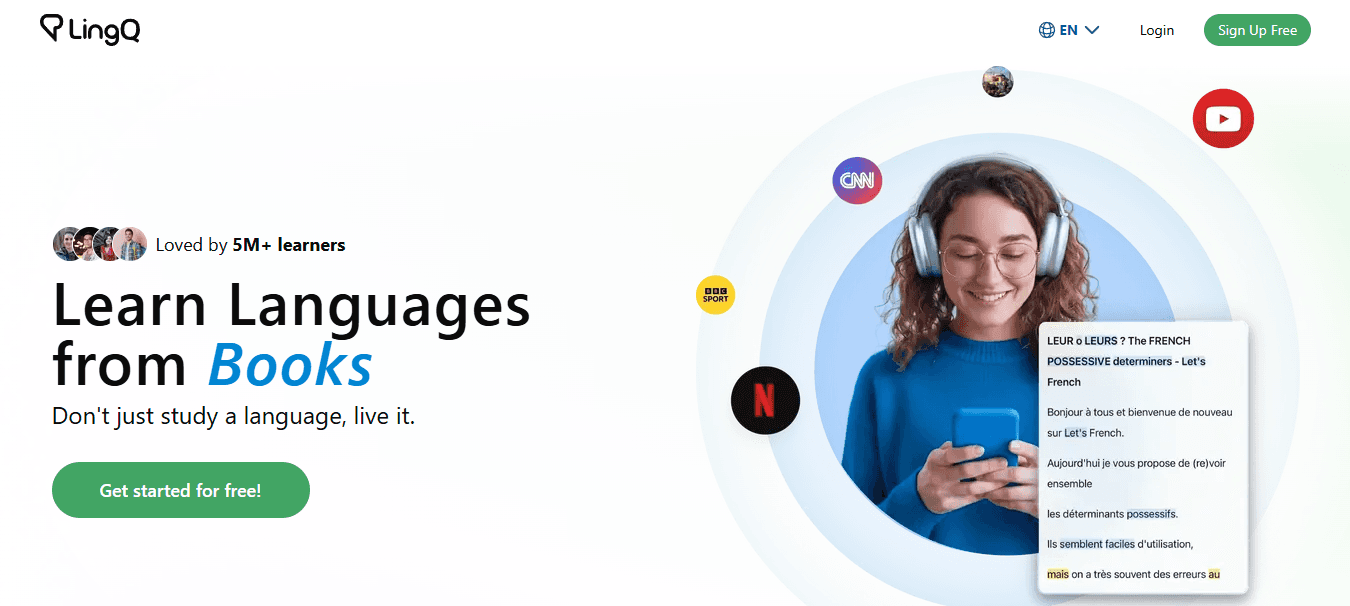
LingQ excels at immersive learning through vast amounts of real-world Arabic content, allowing users to read, listen, and build vocabulary at their own pace. It supports extensive input from authentic materials like articles, podcasts, and videos, making it particularly effective for intermediate learners transitioning to fluency.
Key Features
Massive library of Arabic texts, audio, and videos from real sources
Import your own content (blogs, books, news) for personalized study
Spaced repetition system for reviewing difficult words and phrases
Custom word database and lookup tools
Progress tracking with known-word statistics
Community forum for connecting with other Arabic learners
Flexible pacing with adjustable difficulty levels
Pros
Ideal for extensive reading and listening practice in context
Supports both Modern Standard Arabic and some dialect exposure
Great for self-directed learners who enjoy authentic materials
Works across devices with cloud syncing
Cons
Steeper learning curve for complete beginners
Less structured guidance compared to traditional courses
Premium subscription required for full library access
Accessibility
Web-based, with mobile apps on iOS and Android; a free tier with limited daily limits, a premium for unlimited features.
11. Pimsleur
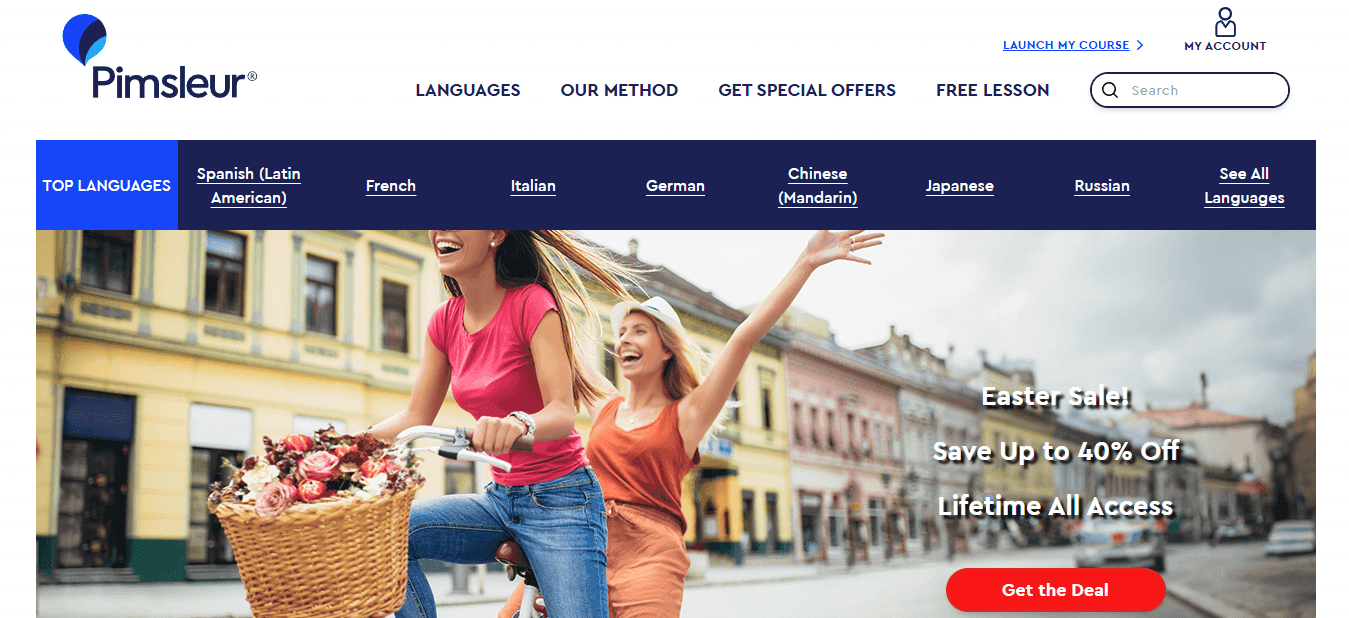
Pimsleur uses its renowned audio-based method to develop intuitive listening and speaking abilities through graduated intervals and real-life conversations. It offers dedicated courses in Modern Standard Arabic, Egyptian Arabic, and Eastern (Levantine) Arabic, giving learners the flexibility to choose the variety that best fits their goals.
Key Features
Core audio lessons centered on conversational practice
Gradual introduction of vocabulary and grammar through repetition
Three distinct Arabic courses: MSA, Egyptian, and Levantine
Phonetic approach supporting Arabic reading skills
Supplementary materials like flashcards and quick reviews
30-minute daily lesson format for consistent habit building
Focus on practical, everyday dialogue scenarios
Pros
Highly effective for developing natural speaking confidence quickly
Excellent dialect options, especially for Levantine learners
Pure audio focus works well during commutes or multitasking
Strong emphasis on retention through scientifically spaced repetition
Cons
Limited visual or reading support in core lessons
Can feel repetitive without supplementary materials
Requires consistent daily listening commitment for best results
Accessibility
Available via mobile app and audio downloads on iOS, Android, and other devices; subscription or per-level purchase options.
12. Memrise
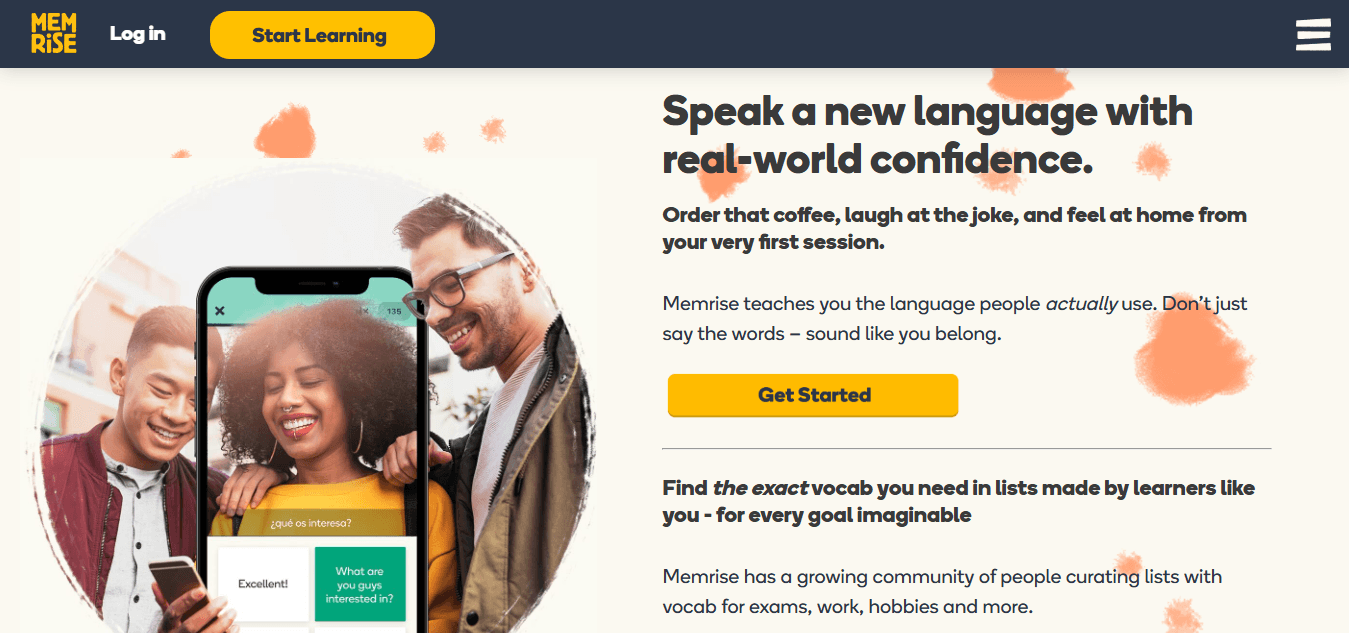
Memrise functions as a dynamic flashcard and video-based platform that leverages spaced repetition and authentic native-speaker clips to build strong retention of Arabic vocabulary. It stands out for its user-generated and curated courses that feel lively and relevant, making it a solid step up from basic gamified apps for learners who want memorable, practical phrases.
7 Key Features
Hundreds of Arabic flashcard sets with native-speaker video clips
Spaced repetition system for efficient long-term memory
User-created and official courses tailored to different goals and dialects
Gamified elements like points, leaderboards, and daily goals
Listening and speaking practice through real audio and pronunciation tools
Customizable pace and review sessions
Support for multiple Arabic varieties, including Egyptian and others
Pros
Engaging native videos makes vocabulary feel alive and contextual
Strong free tier with substantial content available without payment
Effective for building practical, everyday Arabic quickly
Flexible for beginners and intermediate learners alike
Cons
Heavy vocabulary focus with lighter grammar instruction
Some user-generated content varies in quality and accuracy
Can become repetitive without mixing other study methods
Accessibility
Free mobile app on iOS and Android, with an optional premium subscription for advanced features and an ad-free experience; also accessible via the web.
13. Tandem
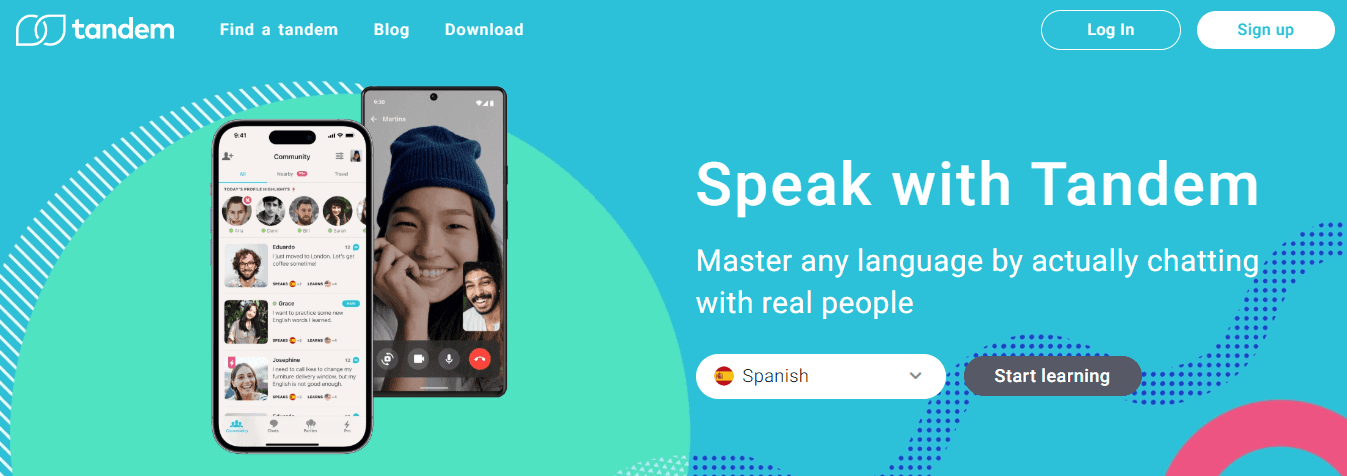
Tandem connects learners directly with native Arabic speakers for authentic language exchange through messaging, voice, and video. It emphasizes real conversations and mutual correction, helping users improve speaking, listening, and cultural understanding in a supportive community setting.
7 Key Features
Matching with native speakers based on language goals and interests
Text, audio, voice notes, and video call options
Built-in translation and correction tools to aid communication
Voice recording for pronunciation feedback
Language parties and topic-based discussion clubs
Profile customization to find compatible partners
Safety features and community guidelines for positive exchanges
Pros
Provides genuine speaking practice unavailable in solo apps
Free core features with helpful translation support
Builds confidence through natural, low-pressure conversations
Great for cultural insights alongside language skills
Cons
Success depends on finding consistent, motivated partners
Occasional quality variation in exchanges
Requires some existing basics to participate effectively
Accessibility
Free mobile app on iOS and Android, with premium upgrades for extra tools; a web version is also available for broader device access.
14. Hans Wehr App

The Hans Wehr App brings the authoritative Arabic-English dictionary to your device, allowing quick lookups by root letters or full words. It serves as an essential reference tool for intermediate and advanced learners navigating Modern Standard Arabic texts, news, or coursework.
Key Features
Comprehensive root-based dictionary search
Full-text lookup in Arabic or English
Offline functionality for use anywhere
Detailed entries with examples and explanations
Compact and lightweight compared to a physical book
Support for classical and modern vocabulary
Easy navigation and bookmarking of frequent terms
Pros
Gold-standard resource trusted by serious Arabic students
Significantly faster and more portable than printed versions
Deepens understanding of Arabic’s root system for better long-term mastery
Free or low-cost access in most versions
Cons
Best suited for those with some prior Arabic knowledge
Not a full learning course—purely a lookup tool
The interface in some versions can feel basic
Accessibility
Available as mobile apps on iOS and Android; several free or affordable versions exist for instant download and offline use.
15. Beelinguapp
Beelinguapp uses parallel bilingual texts and native narration to turn reading into an immersive, story-driven experience. It helps learners absorb vocabulary and grammar naturally through real books, articles, and tales without traditional drills.
Key Features
Side-by-side text in Arabic and your native language
Native-speaker audio narration with adjustable speed
Wide variety of stories, books, and real-life content
Comprehension quizzes and review games
Karaoke-style highlighting that follows the audio
Progress tracking and daily reading goals
Support for multiple proficiency levels
Pros
Natural, enjoyable way to improve reading and listening
Authentic materials keep motivation high
Generous free content available
Effective for building an intuitive understanding of sentence flow
Cons
Limited speaking or writing practice
Requires basic reading ability in Arabic script to start comfortably
Some texts may feel less structured for absolute beginners
Accessibility
Mobile app on iOS and Android; a free tier with substantial stories, plus an optional premium tier for full library access.
16. Clozemaster
Clozemaster targets intermediate and advanced learners with context-based sentence games that expand vocabulary through fill-in-the-blank exercises. It emphasizes learning words in realistic sentences rather than isolated lists, accelerating fluency in practical usage.
Key Features
Thousands of Arabic sentences for contextual practice
Cloze deletion exercises (fill in missing words)
Spaced repetition and review modes
Multiple game formats and difficulty levels
Progress tracking with fluency statistics
Support for Modern Standard Arabic with some dialect exposure
Customizable sessions and daily challenges
Pros
Excellent bridge from beginner apps to real fluency
Strong focus on sentence-level understanding and retention
Engaging for learners who enjoy game-like repetition
Free access to a large portion of content
Cons
Less ideal for complete beginners without prior basics
Limited explicit grammar explanations
Interface feels more functional than polished
Accessibility
Free mobile app and web platform on iOS, Android, and desktop; premium options unlock additional features and unlimited play.
How to Choose the Best Duolingo Arabic Alternative
Figure out what Duolingo didn't give you. If you've finished months of lessons but get stuck when someone says "hello" in Arabic, you need speaking practice. If you understand MSA news broadcasts but can't follow a Cairo taxi driver, you need exposure to different dialects. If you know 500 words but can't write an original sentence, you need deeper grammar knowledge. Your specific frustration points to the exact skill your next platform must address.
🎯 Key Point: Your biggest struggle with Arabic reveals which skill area needs targeted improvement: speaking practice, dialect exposure, or grammar mastery.
💡 Pro Tip: Test yourself in real scenarios—watching Arabic YouTube, joining language exchange apps, or reading news—to identify your weakest areas before choosing your next learning platform.

Match Platform Strengths to Your Real Goals
Travel preparation, professional relocation, and heritage connection require different tools. A two-week trip to Morocco demands survival phrases, cultural context, and Darija basics. A business professional in Dubai needs Gulf Arabic formality, workplace vocabulary, and confidence in meetings. A heritage learner reconnecting with grandparents benefits from Levantine conversational practice and cultural storytelling. Arabic ranks among the top 10 most popular languages studied globally, yet most platforms treat all learners identically despite their different end goals. The right alternative recognizes your timeline, context, and definition of success up front rather than forcing everyone through a generic curriculum.
Prioritize Active Production Over Passive Recognition
The familiar approach relies on matching exercises, multiple-choice, and translation drills because they feel productive and measurable. As vocabulary grows, this creates a dangerous illusion where you recognize hundreds of words on screen but can't recall a single phrase when someone asks your name. Recognition builds slower, shallower neural pathways than production does. Platforms like Kalam flip this by centering every lesson around speaking drills, pronunciation comparison, and real-life dialogue scenarios that force your mouth and brain to work simultaneously, compressing the gap between knowing words and using them from months to weeks.
Test With Trial Periods Before Committing Financially
Most platforms offer seven-day trials or limited free tiers that reveal interface friction, content quality, and teaching philosophy faster than marketing pages. Use the trial as if you'd already paid. Notice whether you finish sessions feeling energized or drained, whether corrections feel helpful or discouraging, and whether progress tracking motivates or confuses you. If you skip practice during the trial week, the full subscription will gather dust. The platform that pulls you back daily without guilt or gamification tricks is worth your money and time.
Why does dialect availability matter for your target region?
Modern Standard Arabic works for formal writing and media, but daily life happens in regional dialects with distinct vocabulary, pronunciation, and grammar. Egyptian dominates film and music across the Arab world. Levantine (Syrian, Lebanese, Palestinian, Jordanian) connects you across the eastern Mediterranean.
How does Duolingo Arabic compare to specialized dialect platforms?
Gulf varieties matter for Arabian Peninsula business. Platforms that teach only MSA leave you conversationally awkward: unable to order coffee or joke with colleagues naturally. Strong alternatives either specialize deeply in a single dialect or offer parallel tracks, so your practice builds usable skills. But choosing the right platform matters only if you know how to use it effectively.
Learn Arabic in Any Dialect Today with Kalam
Choosing a platform is only the beginning. The change happens when you stop treating Arabic practice as something to fit into your day and start building your day around short, focused conversations that feel less like study and more like preparation for moments that matter. You need a system that respects your limited time while refusing to let you hide behind recognition exercises that never force your mouth to move or your brain to construct sentences under pressure.
🎯 Key Point: Most learners stay trapped downloading apps and completing lessons for weeks, then panic when someone speaks to them naturally. The familiar approach keeps you comfortable with multiple-choice questions and vocabulary matching because those formats feel productive and measure. As months pass, this pattern creates a dangerous gap where you recognize hundreds of words on a screen but can't recall a single phrase when a colleague greets you in Arabic or a taxi driver asks where you're headed. Recognition without production builds shallow pathways that collapse the moment real conversation begins.

"Recognition without production builds shallow pathways that collapse the moment real conversation begins." — Language Learning Research, 2023
Kalam solves this by refusing to let you practice passively. Every lesson centers on speaking drills that compare your pronunciation to native models, video demonstrations that show how phrases work in actual dialogue, and real-life scenarios that force you to construct responses rather than selecting from preset options. The platform lets you practice Egyptian for media comprehension, Levantine for social fluency, Gulf Arabic for business contexts, or Modern Standard for formal settings. Kalam delivers pronunciation feedback, highlighting which sounds need adjustment; meaning breakdowns explaining cultural context; and interactive exercises that keep practice enjoyable.
Dialect | Best For | Key Features |
|---|---|---|
Egyptian | Media comprehension | Video demonstrations, cultural context |
Levantine | Social fluency | Real-life scenarios, pronunciation feedback |
Gulf Arabic | Business contexts | Professional phrases, interactive exercises |
Modern Standard | Formal settings | Grammar focus, academic vocabulary |
⚠️ Warning: Trusted by over 10,000 members worldwide and rated 4.8 on the App Store, Kalam turns short daily sessions into steady speaking confidence. You're building the muscle memory and auditory patterns that let you respond naturally when someone asks your name, order coffee without rehearsing silently first, or joke with colleagues instead of nodding politely while your brain scrambles to translate.
Ready to stop recognizing Arabic and start speaking it? Download Kalam today and choose the dialect that matches your goals. Learning Arabic becomes simple when you practice speaking from day one rather than waiting until you feel ready.
Related Reading
Basic Arabic Phrases
Best App To Learn Arabic
Arabic Vs Hebrew
Urdu Vs Arabic
Arabic Vowels
Arabic Basics