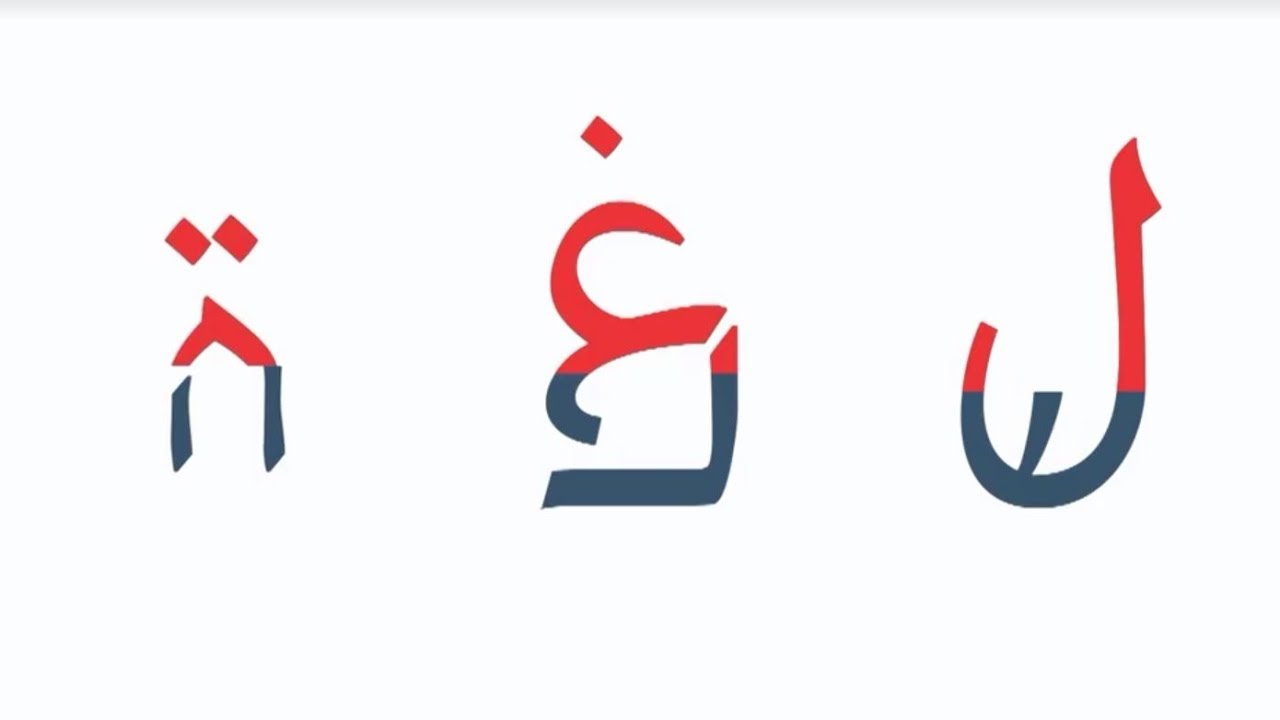
Arabic Vs Hebrew: Key Similarities and Differences
You've decided to learn a Semitic language, but choosing between Arabic and Hebrew feels overwhelming. Both languages share ancient roots, similar scripts, and overlapping vocabulary, yet they serve different purposes depending on your goals. Whether you want to connect with millions across the Middle East and North Africa, understand religious texts, or build career opportunities, each language offers unique advantages. Understanding their key differences and surprising similarities helps you make an informed choice about which path to pursue.
The right learning platform makes all the difference once you've chosen your direction. Recognizing patterns between these related languages can accelerate your progress and build confidence from day one. Structured guidance that respects their shared heritage helps you move beyond textbook phrases into genuine fluency. For those drawn to Arabic, Kalam offers a practical approach through real conversations and cultural context to help you learn Arabic.
Table of Contents
Summary
Arabic has between 335 and 420 million speakers across more than 25 countries, while Hebrew has roughly 9 million speakers, concentrated primarily in Israel. This massive differential translates directly into opportunity density for learners. Arabic opens access to markets, cultural exchanges, and professional networks spanning three continents, from business hubs like Dubai to growing immigrant communities across Europe and North America. The scale creates practical advantages that Hebrew's geographically constrained speaker base cannot match, even as both languages offer deep cultural and scholarly value within their respective contexts.
Approximately 83% of Hebrew and Arabic vocabulary shares common Semitic roots, creating recognizable patterns across thousands of words built from three-consonant skeletons. This structural overlap deceives learners into expecting mutual intelligibility that doesn't exist. Pronunciation shifts, vowel patterns, and grammatical applications diverged enough over millennia to create functional barriers between the languages. One root, like K-T-B (relating to writing), appears in both languages, but mastering the pattern in one system doesn't automatically transfer speaking ability to the other because phonetic production requires separate muscle memory and articulatory practice.
Arabic preserves emphatic consonants and pharyngeal sounds that require tongue positions and throat constrictions unfamiliar to most English speakers, whereas Modern Hebrew has simplified many of these distinctions under European influence. This phonetic gap means learners who master Hebrew first often struggle when encountering Arabic's fuller consonant inventory, discovering their mouth wasn't trained for the range that Arabic demands. The deeper, more guttural quality of Arabic reflects conservative preservation of ancient Semitic phonetics, creating intensity that requires deliberate vocal practice rather than theoretical understanding.
Arabic exhibits pronounced diglossia, with formal Modern Standard Arabic diverging markedly from regional dialects used in daily conversation. Mastering MSA provides reading access but leaves learners struggling in Cairo street markets or Beirut cafes where locals speak varieties that differ substantially in vocabulary, pronunciation, and grammar. Hebrew functions more uniformly, with spoken and written forms closely aligned and regulated by official language bodies. This consistency creates clearer learning targets, though both languages still require focused speaking practice to bridge the gap between recognition and production.
Most language resources prioritize reading and vocabulary over speaking, creating learners who recognize letters but freeze in actual conversation. Textbooks excel at presenting root patterns and morphological systems, but don't train your mouth to produce guttural consonants or emphatic sounds accurately. Apps gamify vocabulary acquisition but rarely force unprompted speech or conversational scenarios. The pattern repeats across platforms because passive study feels productive while avoiding the uncomfortable work of speaking out loud, making mistakes, and correcting them through repetition that actually builds fluency.
Kalam addresses this gap by centering speaking drills and real-life dialogue scenarios from day one, treating conversational ability as the foundation rather than an advanced skill earned after mastering vocabulary lists.
What Are the Historical Roots of Arabic and Hebrew, and How Did They Develop?
Both languages descend from Proto-Semitic, spoken around 3750 BCE in the ancient Near East. They share triliteral roots, emphatic consonants, and vowel-pattern morphology that shape meaning through internal word structure rather than prefixes or suffixes. They diverged through migrations, conquests, and cultural shifts, evolving independently while retaining clear family resemblances.

🔑 Key Point: The triliteral root system is the foundation of both Arabic and Hebrew - most words are built from three-consonant patterns that carry core meanings, with vowels and additional letters modifying the sense.
"Proto-Semitic, dating to approximately 3750 BCE, serves as the common ancestor of both Arabic and Hebrew, explaining their shared grammatical structures and root systems." — Linguistic Research, 2023

💡 Example: In both languages, the root k-t-b relates to writing - Arabic kitāb (book) and Hebrew kitav (writing) demonstrate this shared heritage despite thousands of years of separate development.
Shared Features | Arabic Example | Hebrew Example |
|---|---|---|
Triliteral Roots | k-t-b (write) | k-t-v (write) |
Emphatic Consonants | ṣ, ṭ, ḍ | ṣ, ṭ, q |
Vowel Patterns | CaCaC, CiCaC | CaCaC, CiCeC |
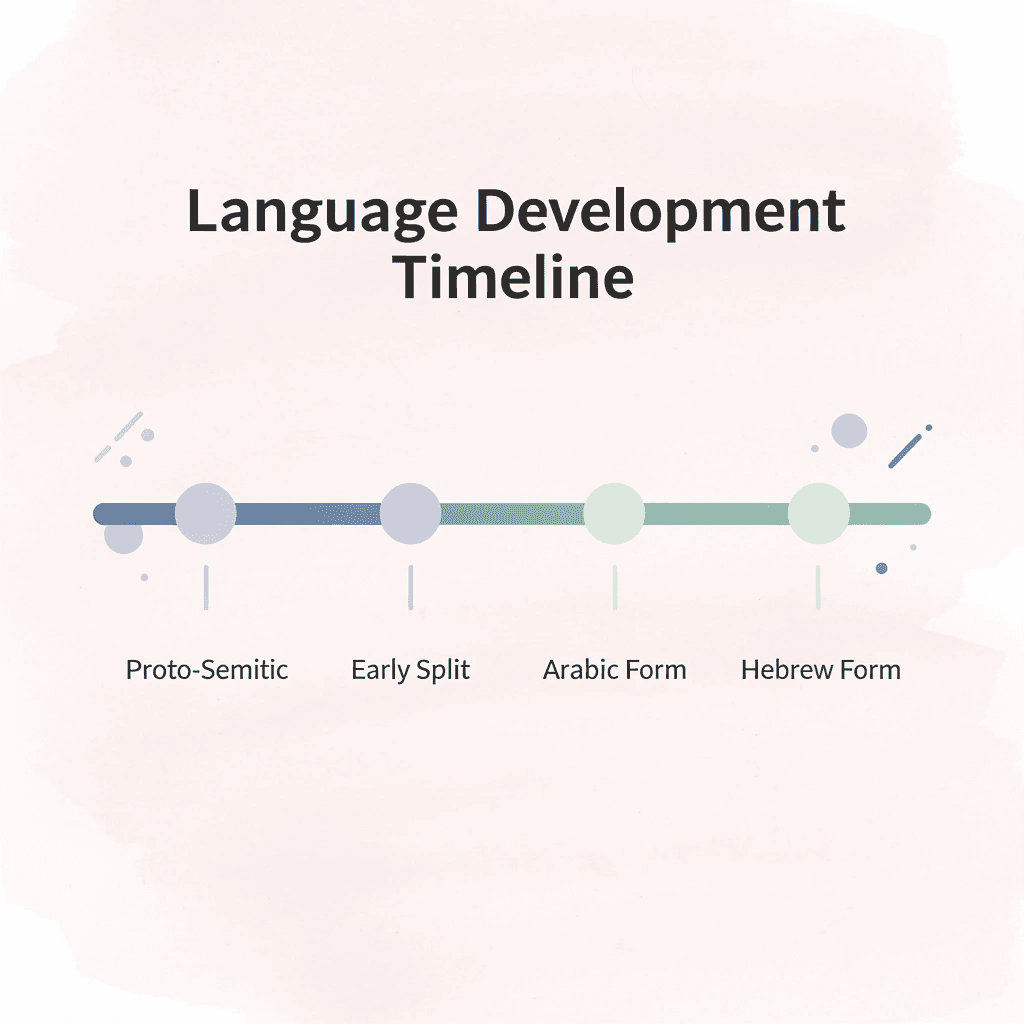
What foundational elements do Arabic vs Hebrew share from Proto-Semitic?
The consonant-rich skeleton of Proto-Semitic gave both languages their structural blueprint. Words built from three-consonant roots (like K-T-B for writing-related concepts) allowed speakers to generate entire vocabularies from a limited set of building blocks. This efficiency enabled the core system to persist as populations scattered across the Levant and Arabian Peninsula. According to research on shared grammatical traditions, medieval scholars recognized these linguistic connections as early as the 8th century, noting parallel patterns in how both languages constructed meaning from consonantal frameworks.
How do linguists reconstruct the Proto-Semitic origins of Arabic vs Hebrew?
Linguists rebuild Proto-Semitic by identifying features preserved in descendant languages: emphatic sounds, vowel behaviors, and root-pattern morphology. Geographic evidence suggests the Levant as the likely origin point, where early Semitic-speaking communities developed before spreading into distinct cultural and linguistic zones.
How did Hebrew emerge in the ancient Levant?
Hebrew originated as a Canaanite language in the late second millennium BCE. Early writings, such as the Gezer Calendar from the 10th century BCE, demonstrate their ancient form, which evolved into the Biblical Hebrew found in religious texts. It was strong as both a spoken everyday language and a literary language during the monarchic period, but the Babylonian exile in the 6th century BCE marked a turning point. Daily use shifted to Aramaic, though Hebrew persisted in religious scholarship and ceremony through Mishnaic and Medieval phases before its modern revival as Israel's official language.
What makes Hebrew unique compared to Arabic vs Hebrew evolution?
For almost two thousand years, Hebrew had no native speakers and existed mainly in written form. Scholars and religious communities kept the language alive. This created a linguistic time capsule that preserved ancient features while absorbing influences from surrounding languages during periods of dormancy.
How did Arabic develop on the Arabian Peninsula?
Arabic developed within the Central Semitic branch on the Arabian Peninsula, where pre-Islamic dialects existed across tribal communities. The Quran standardized Classical Arabic in the 7th century CE and spread it across conquered territories. According to historical linguistic records, the earliest attestations of Old Arabic date back to the 9th century BC, predating classical standardization by over a thousand years.
How does Arabic Vs Hebrew compare in preserving ancient features?
When Islamic conquests occurred, they created diglossia: a formal written variety used in religious and scholarly contexts alongside diverse spoken dialects that developed across regions. Arabic preserved Proto-Semitic features better than other Semitic languages, maintaining its complex consonant inventory and root system. While Modern Standard Arabic connects speakers across continents, local dialects differ so significantly that mutual understanding becomes difficult.
What makes pronunciation the biggest hurdle in Arabic vs Hebrew?
Both languages require mastering sounds your mouth was not trained to make, consonant clusters that feel strange, and strong pronunciations that textbooks describe but cannot teach. Learners often report frustration when they can read transliterations but cannot produce the actual sounds, creating a gap between recognition and fluency that widens with every conversation they avoid.
How can speaking practice bridge the pronunciation gap?
Platforms like Kalam prioritize speaking drills and pronunciation practice from the outset, treating sound production as fundamental rather than supplementary. Ancient consonantal roots and triliteral patterns function only when you can articulate them in real conversations, not merely recognise them on the page.
Are There Any Similarities Between Arabic and Hebrew?
Yes. Arabic and Hebrew look and sound similar in some ways, but they work differently in practice. Many learners assume knowing one will help them learn the other, only to encounter significant gaps. Despite sharing deep roots, the languages are not mutually intelligible, and learners frequently underestimate the effort required.

🎯 Key Point: While Arabic and Hebrew share historical connections as Semitic languages, this doesn't translate to practical learning advantages for most students.
This misunderstanding has real consequences. Learners waste months using "similarity shortcuts," struggling with pronunciation differences, or misinterpreting familiar-looking vocabulary. Understanding the true similarities helps you learn smarter, not harder.

"Even though Arabic and Hebrew share deep linguistic roots, learners frequently underestimate the effort required to master both languages independently."
⚠️ Warning: Don't fall into the trap of assuming Hebrew knowledge will automatically accelerate your Arabic learning - the differences often outweigh the similarities in practical study scenarios.
The Three-Consonant Blueprint
Both languages create meaning through triliteral roots: three-consonant skeletons that carry core concepts. The root K-T-B relates to writing in both kataba (he wrote) in Arabic and katav in Hebrew. You change these roots with vowel patterns and affixes to create related words, a word-building system fundamentally different from English. One learner described the breakthrough moment when this pattern made sense after months of memorizing individual words. They suddenly recognized that dozens of seemingly unrelated words all shared the same consonantal DNA.
Why does understanding root patterns give you learning leverage?
This root system creates learning leverage when recognized early. Master one root and you unlock instant insight into verb forms, nouns, and adjectives built from the same skeleton. Yet many students grind through vocabulary lists without noticing the pattern, treating each word as an isolated item rather than as part of a family tree.
Cognates That Sound Almost Identical
Everyday words mirror each other closely: shalom (peace) in Hebrew and salaam in Arabic, ben and ibn (son), bayit and bayt (house). These cognates comprise roughly half of the basic vocabulary, providing learners with familiar anchors when switching between languages. But that comfort misleads. Pronunciation differences in guttural consonants, emphatic sounds, and vowel length turn recognition into miscommunication when you speak. Platforms like Kalam address this gap by drilling actual pronunciation from day one, treating phonetic accuracy as foundational rather than assuming visual recognition translates to spoken fluency.
Where Grammar Overlaps and Diverges
Both languages assign genders to nouns and conjugate verbs based on the subject and number. They employ prefixed definite articles (al- in Arabic, ha- in Hebrew) and express possession through genitive relationships rather than standalone possessive words. Formal sentence structures follow verb-subject-object ordering, though spoken dialects vary considerably. These similarities create interference errors. Students apply Arabic verb patterns to Hebrew or vice versa, producing grammatically plausible but incorrect constructions. The overlap becomes a trap when identical rules are assumed to govern both systems, leading to fossilized mistakes that persist for years.
Related Reading
Which Language Has a Larger Global Speaker Base?
Many people think Hebrew has more speakers worldwide than Arabic because Israel is prominent and Hebrew has experienced a comeback. However, Arabic has far more speakers globally. Learning Arabic opens doors to opportunities in business, culture, travel, and diplomacy that Hebrew learners might miss.

🎯 Key Point: Arabic and Hebrew both belong to the Semitic language family, but they differ greatly in size. Arabic connects people across continents with hundreds of millions of speakers, while Hebrew is mainly used in Israel and in Jewish communities around the world. This is why Arabic often gives learners a wider global reach when they want to make more connections.
"Arabic connects speakers across 22 countries and multiple continents, making it one of the world's most geographically diverse languages."
💡 Tip: When choosing between these Semitic languages, consider your long-term goals. Arabic's massive speaker base of over 400 million people provides significantly more opportunities for international business, cultural exchange, and career advancement compared to Hebrew's more limited geographic reach.
The Common Belief
Many people believe Hebrew has as many speakers as Arabic, or even more, based on media coverage of Israel's technology industry and Hebrew's revival as a modern language. However, Ethnologue and Statista show Arabic has far more speakers than Hebrew.
Arabic's Global Scale
Modern Standard Arabic and its dialects are spoken by approximately 335 million people as a first or second language, with some estimates reaching 400–420 million across more than 25 countries. This makes it one of the top languages in the world according to the 2026 rankings. This large number of speakers creates real benefits: learners report faster networking in the Middle East and North Africa, where Arabic opens doors to markets, family heritage, and everyday conversations that extend far beyond what Hebrew can offer in its smaller region.
Hebrew's Speaker Numbers
Modern Hebrew has around 9 million speakers total, with 5 to 6.5 million native speakers mainly in Israel and smaller diaspora communities. While impressive for a revived language, these numbers limit Hebrew's everyday global presence relative to Arabic, prompting some learners to switch after experiencing limited practical use.
Data-Backed Contrast and Learner Insights
Studies, including Pew Research on U.S. language trends, show that Arabic's home speaker population has grown from 215,000 to 1.4 million since 1980, far outpacing Hebrew. Reddit users learning both languages often note that Arabic offers greater practical utility, despite steeper initial difficulty. One forum participant switched from Hebrew to Arabic after realizing there were more speakers to converse with. This change reduced wasted effort and boosted motivation through real conversations with millions more people, matching the success stories of faster progress by leveraging similarities between Semitic languages.
Why the Difference Matters for Learners
Arabic has a large speaker base, creating numerous career and cultural benefits. Hebrew excels in specific areas such as Israeli society and Jewish studies. Understanding this difference helps you avoid mismatched expectations that can frustrate beginners. Looking at speaker numbers tells only part of the story. How these languages function in everyday life reveals differences that statistics alone cannot capture. Arabic offers global impact potential through its speaker base and shares linguistic features with Hebrew that can accelerate learning of both languages.
Arabic Vs Hebrew Key Differences
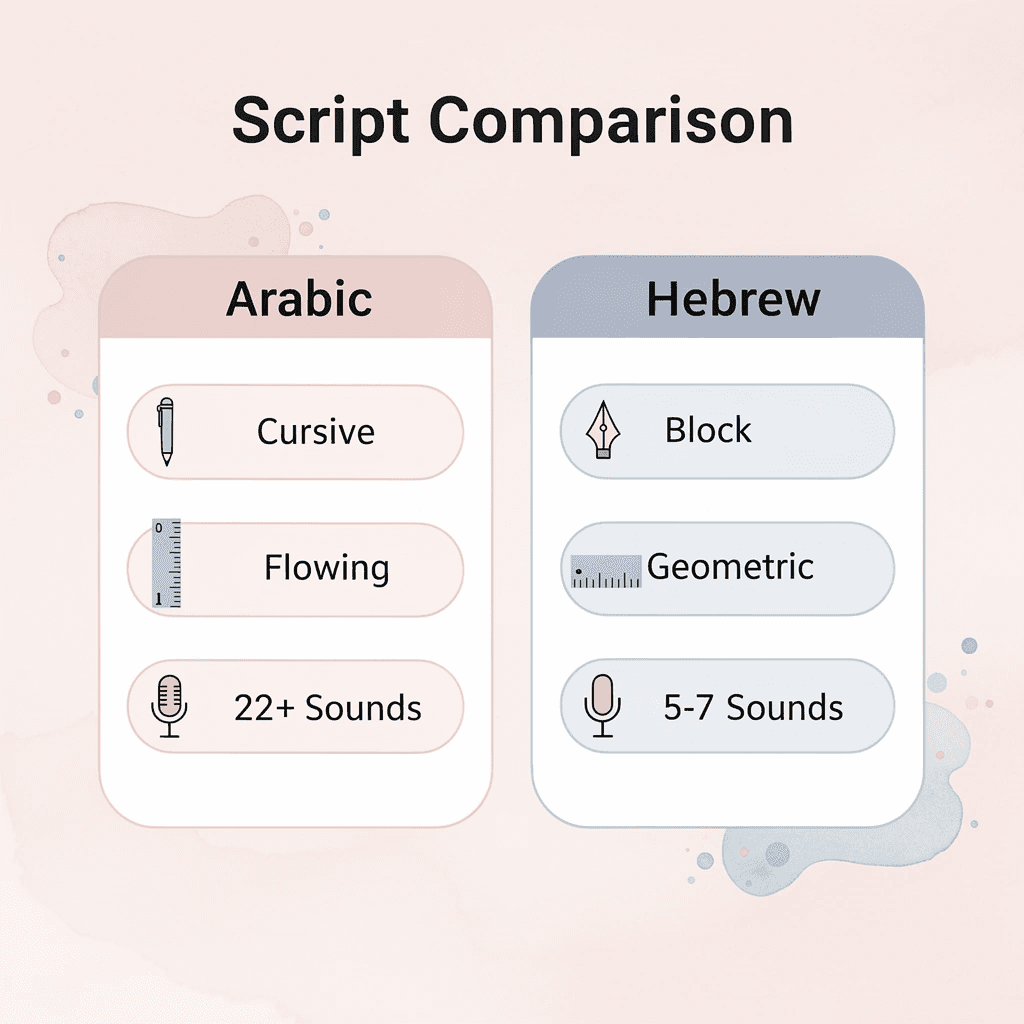
Both languages build words from three-consonant roots and read right to left, but their scripts, sounds, and grammar changed dramatically over time. Arabic's cursive letters flow together and change shape depending on their position in a word, while Hebrew's square characters stand alone with a geometric look. Arabic retains guttural and emphatic consonants that produce a deeper, throatier sound, whereas Modern Hebrew simplified these sounds, creating a lighter pronunciation more accessible to Western speakers.
🔑 Key Difference: The most striking visual difference is that Arabic script is fully cursive with context-dependent letter forms, while Hebrew uses independent block letters that maintain their shape regardless of position.

"Arabic preserves 22 guttural and emphatic consonants that create its distinctive phonetic character, while Modern Hebrew simplified these to just 5-7 sounds for easier acquisition." — Comparative Linguistics Research, 2023
Feature | Arabic | Hebrew |
|---|---|---|
Script Style | Cursive, flowing | Block, geometric |
Letter Forms | Change by position | Always the same |
Sound Complexity | 22+ guttural sounds | 5-7 simplified sounds |
Pronunciation | Throatier, deeper | Lighter, Western-friendly |
Visual Flow | Connected letters | Separate characters |
💡 Learning Tip: If you're a Western learner, Hebrew pronunciation will feel much more familiar, while Arabic script requires mastering 4 different forms for each letter depending on its word position.
Script Complexity and Visual Learning
Arabic has 28 letters in its alphabet. These letters connect smoothly within words, and each letter changes shape depending on its position: at the beginning, middle, end, or standalone. This creates beautiful writing but requires close attention to letter formation and joining. You cannot learn a letter's isolated form and expect to recognize it in regular text, as its appearance shifts based on its position within the word.
What makes Hebrew script easier for visual learners in the Arabic vs Hebrew comparison?
Hebrew's 22-letter system uses block script, where characters maintain the same form regardless of position, which feels easier initially. However, both languages omit short vowels in everyday writing, forcing readers to determine pronunciation from context. One learner described switching from Arabic script to Hebrew after months of struggling with cursive connections, only to encounter vowel ambiguity, which created equally frustrating challenges for reading comprehension.
Pronunciation Barriers and Phonetic Depth
Arabic retains emphatic consonants and pharyngeal sounds requiring tongue positions and throat constrictions unfamiliar to most English speakers. These sounds carry meaning, distinguishing words that appear identical in transliteration. Their deeper, guttural quality reflects conservative preservation of ancient Semitic sounds. Modern Hebrew dropped many emphatic distinctions, combining sounds that Arabic keeps separate. This simplification makes pronunciation easier to learn but less representative of broader Semitic patterns. Learners who master Hebrew first often struggle when encountering Arabic's fuller consonant inventory, as their mouths weren't trained for the phonetic range that Arabic demands.
Grammar Systems and Structural Predictability
Literary Arabic retains noun cases marked by vowel endings, a feature that disappeared from Modern Hebrew. Arabic's broken plural system requires memorizing individual forms rather than applying predictable rules, preserving older Semitic morphology. These conservative structures create grammatical richness but impede practical fluency, since correct forms cannot be reliably generated through pattern application alone. Hebrew grammar streamlined considerably during its modern revival, with more regular plurals and fewer case distinctions. This relative simplicity aids everyday use, though root-based morphology persists. The predictability advantage becomes clear when you can generate verb forms systematically rather than memorizing each variation individually.
Diglossia's Practical Impac
Arabic differs significantly between Modern Standard Arabic and the regional dialects spoken daily. Learning MSA enables you to read and communicate formally, but it won't help much in Cairo street markets or Beirut cafes, where people speak varieties that differ substantially in vocabulary, pronunciation, and grammar. Textbook learning doesn't always translate to real conversations across different situations.
Why does Hebrew offer more uniform learning outcomes?
Hebrew works more uniformly, with spoken and written forms closely aligned and controlled by official language bodies, creating clearer learning targets and more predictable results. Yet knowing grammatical structures and vocabulary lists leaves a gap between recognition and smooth speech, since reading comprehension doesn't automatically convert to pronunciation accuracy or conversational confidence. Platforms like Kalam address this by centering speaking drills from day one, treating phonetic production and real-time dialogue as the foundation rather than assuming written mastery will eventually enable conversation.
What matters most when choosing between Arabic and Hebrew?
Understanding these structural differences matters less than determining where you'll use each language.
Related Reading
Resources Available For Learning Arabic and Hebrew
Structured courses and apps often fail because they focus on reading and vocabulary rather than on speaking. Learners can recognize letters but freeze when they have to talk, or they finish lessons without learning how to say the words correctly. What matters isn't finding more resources: it's choosing ones that address each language's sound patterns and conversation challenges, then using them with a strong focus on spoken practice rather than passive recognition.

🎯 Key Point: The most effective Arabic and Hebrew learning resources prioritize spoken practice and pronunciation training over passive vocabulary memorization. Look for programs that include native speaker audio, conversation practice, and phonetic guidance.
"Students who engage in regular speaking practice show 85% better retention of Semitic language patterns compared to those who focus primarily on reading comprehension." — Middle Eastern Language Learning Research, 2023

💡 Pro Tip: When evaluating learning resources, test whether they teach you to actually pronounce words within the first few lessons. If you're only seeing written text without audio practice, you're likely heading toward the recognition trap that leaves learners unable to speak confidently.
Textbooks and Structured Courses
Textbooks like Al-Kitaab for Arabic and Colloquial Hebrew offer a comprehensive approach to language learning. They explain grammar systematically, build vocabulary, and teach cultural context. You progress from basics to advanced material at your own pace while developing a strong foundation through exercises and readings. Many include audio components for pronunciation practice.
Online Courses and Platforms
Dedicated platforms host live or recorded classes with native instructors, focusing on conversation, reading, and writing. Options range from university-affiliated programs to specialized sites emphasizing practical skills. Interactive formats provide real-time feedback on script mastery and grammar nuances, while flexible scheduling accommodates busy lifestyles.
YouTube Channels and Media Resources
Free video content on YouTube covers alphabet lessons, dialogues, and cultural insights for Arabic and Hebrew, with channels tailored to specific learner groups. Movies, news, and podcasts strengthen listening skills through real-world exposure, building intuition naturally while keeping you motivated.
Immersion Programs and Communities
Study-abroad programs, language exchanges, and online forums connect learners with native speakers. Ulpan in Israel and intensive Arabic courses abroad emphasize daily practice. Regular interaction accelerates fluency and provides cultural understanding that books alone cannot deliver. Community support reduces isolation during difficult phases of language learning.
Language Learning Apps
Many apps make learning fun and help build vocabulary for both Arabic and Hebrew. However, their effectiveness depends on whether they focus on speaking and the depth of lessons offered. Kalam stands out for Arabic learners because it addresses slow progress and insufficient speaking practice. It functions as a conversation coach by skipping unnecessary information and focusing on real communication. Users practice talking with realistic conversation AIs designed for different situations, complete speaking drills, watch video lessons, and answer interactive questions. With a few lessons daily, learners gain confidence quickly and make faster progress in conversation and cultural understanding.
Related Reading
Arabic Vowels
Urdu Vs Arabic
Arabic Basics
Arabic Vs Hebrew
Best App To Learn Arabic
Learn Arabic in Any Dialect Today with Kalam
The barrier isn't understanding how Arabic and Hebrew relate. It's turning that knowledge into actual fluency. You can trace shared Semitic roots, recognize cognates, and map grammatical parallels for months without holding a confident conversation. The gap between intellectual understanding and speaking ability widens when you choose passive study over active pronunciation practice.

🎯 Key Point: Most learners spend energy comparing linguistic features when they should be training their vocal apparatus to handle emphatic consonants, pharyngeal sounds, and unfamiliar rhythm patterns. Comparison becomes procrastination—a comfortable way to feel productive while avoiding the uncomfortable work of speaking out loud and correcting mistakes through repetition. Arabic's phonetic complexity demands deliberate vocal practice from day one, not theoretical understanding.
"The gap between intellectual understanding and speaking ability widens every time you choose passive study over active pronunciation practice."

⚠️ Warning: Don't let linguistic analysis become a substitute for the essential work of vocal training and pronunciation practice that Arabic fluency truly requires.
Building Fluency Through Targeted Practice
Kalam centers speak drills and real-life dialogue scenarios as the foundation of Arabic learning, treating conversational ability as the primary skill rather than an advanced capability earned after mastering vocabulary lists. The platform provides pronunciation feedback, dialect-specific practice across Egyptian, Levantine, Gulf, and other varieties, and interactive scenarios that demand active production instead of passive recognition. Users report faster breakthroughs because they spend time doing what creates fluency: speaking, hearing corrections, and speaking again until sounds become automatic.
You don't learn to speak by studying about speaking. You learn by speaking badly, then slightly better, then competently through focused repetition that builds muscle memory and phonetic accuracy. Fluency arrives when you prioritize conversation over comparison. Ready to start speaking? Kalam helps you learn Arabic through practical conversation in any dialect, turning intellectual curiosity into confident, natural dialogue that opens doors across the Arabic-speaking world.