Urdu Vs Arabic: A Guide on Key Similarities and Differences
Choosing between Urdu and Arabic requires understanding their shared script and vocabulary, as well as their fundamental differences. Both languages borrow heavily from each other, yet Arabic belongs to the Semitic family while Urdu stems from Indo-European roots with Persian and Arabic influences. The complexity increases when considering how Arabic dialects vary significantly from Modern Standard Arabic, affecting practical communication across different regions.
Arabic provides access to religious texts, facilitates communication across multiple Middle Eastern countries, and offers insight into the linguistic foundation that shaped the development of Urdu. The language opens doors to diverse communities and provides cultural understanding that extends beyond basic communication. For those ready to begin this journey, Kalam provides a structured platform to learn Arabic with practical skills from day one.
Table of Contents
Summary
Arabic emerged from Semitic roots in the Arabian Peninsula and belongs to the Afro-Asiatic language family, while Urdu developed from Indo-Aryan dialects in northern India and sits within the Indo-European family. Despite sharing the same right-to-left script and a roughly 60% vocabulary overlap due to centuries of Islamic influence, the two languages operate on fundamentally incompatible grammatical structures. Arabic builds meaning through three-consonant roots that shift vowels and prefixes, while Urdu layers prefixes and suffixes onto stable word stems using postpositions and subject-object-verb sequences that mirror Hindi rather than Semitic patterns.
Arabic reaches 335 million speakers worldwide and serves as the official language across 25 countries spanning North Africa, the Middle East, and parts of the Horn of Africa, placing it fifth among global languages. Urdu has 246 million total speakers, concentrated primarily in Pakistan and northern India, placing it tenth on the same ranking. The gap reflects not just population size but also the geographic and institutional reach each language commands, with Arabic functioning as both a state language and a liturgical medium for over a billion Muslims worldwide, while Urdu remains tethered to South Asia despite passionate diaspora communities in the UK, Canada, and the Gulf states.
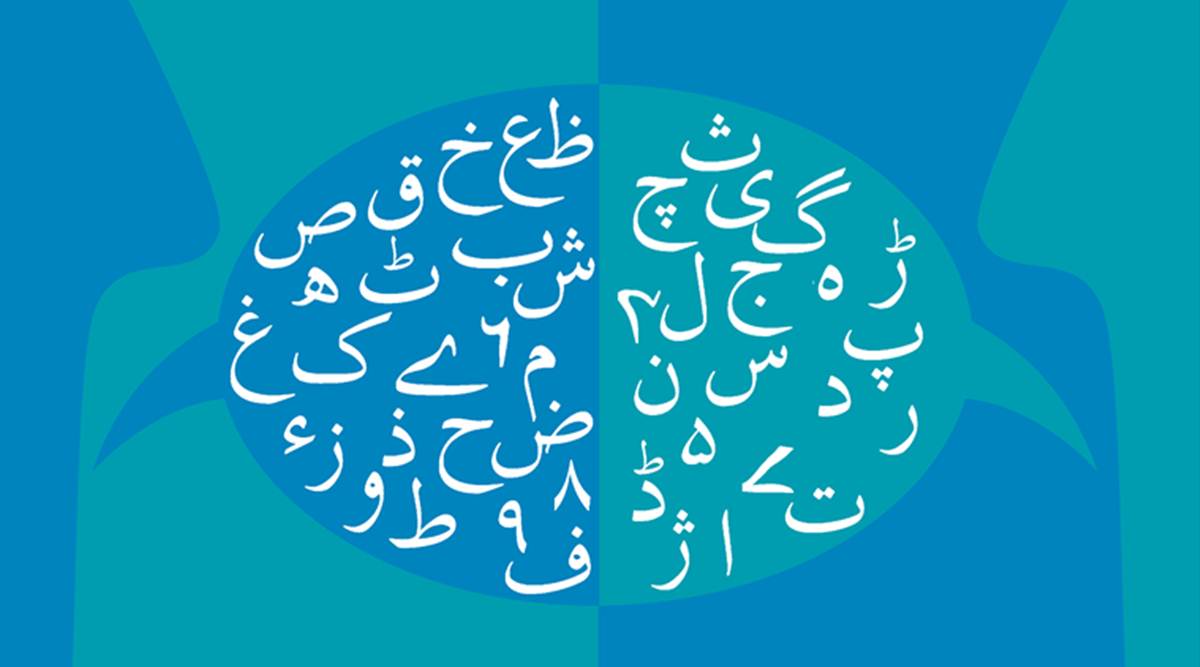
The shared script creates false confidence because Urdu adds ten additional characters to capture sounds like "p," "ch," "g," and retroflex consonants that Arabic never needed, and uses the flowing Nastaliq calligraphic style instead of Arabic's cleaner Naskh forms. Even directly borrowed vocabulary shifts sound when Urdu speakers adopt Persian pronunciation habits, with deep emphatic consonants flattening and vowel lengths changing to fit South Asian speech patterns. A word like "qalam" becomes "kalam" in everyday Urdu speech, and "salat" shifts to "namaz" through Persian influence, creating false cognates that confuse listeners on both sides.
Most learners stall after recognizing borrowed words because passive watching of video lessons and memorizing vocabulary lists doesn't build speaking reflexes or train the ear for natural speech rhythms. Textbooks excel at explaining grammatical rules but demand discipline without providing real-time correction, while language exchange platforms require scheduling commitment that self-paced resources avoid. Scattered resources create gaps rather than fluency, as learners jump between disconnected materials without a structured path that prioritizes conversational patterns over written exercises.
Arabic's diglossia complicates the advantage of a larger speaker base, because Standard Arabic dominates formal settings while everyday conversation happens in regional dialects that differ sharply from the written form. Urdu speakers use a more unified spoken and written register, so the language studied in textbooks matches what learners hear on the street. This structural difference means Arabic learners face an extra layer of adaptation between classroom study and actual conversation that Urdu learners avoid.
Kalam addresses this by focusing on spoken Arabic through daily lessons and real dialogue practice, building pronunciation habits and listening comprehension that work across multiple dialects without the gap between formal study and natural conversation.
What Are the Historical Roots of Arabic and Urdu, and How Did They Develop?
Arabic and Urdu developed along different paths that converged through history. Arabic emerged from ancient Semitic roots in the Arabian Peninsula and became crucial for religion and learning. Urdu grew from Indo-Aryan dialects in northern India and absorbed Persian and Arabic influences during centuries of Muslim rule, creating a rich literary language spoken across South Asia.

🎯 Key Point: While Arabic emerged as a pure Semitic language, Urdu represents a unique fusion of Indo-Aryan, Persian, and Arabic elements that developed over centuries of cultural exchange.
"Arabic became the sacred language of Islam and the medium of scholarly discourse across the Islamic world, while Urdu evolved as a bridge language that connected diverse communities in South Asia." — Linguistic Historical Studies, 2019

💡 Example: The word "kitab" (book) exists in both languages but traveled from Arabic into Urdu through Persian intermediaries, showing how these languages interconnected through trade, conquest, and cultural exchange.
Arabic’s Semitic Foundations
Arabic is a Central Semitic language within the Afro-Asiatic family, sharing distant ties with Hebrew and Aramaic. Linguists trace its origins to Proto-Semitic ancestors spoken across the ancient Near East. Early dialects developed among nomadic tribes of the Arabian Peninsula in relative isolation. Iron Age inscriptions already show features that later defined the language, demonstrating its remarkable consistency over time.
The Emergence of Old Arabic Dialects
Old Arabic dialects became fixed in the Arabian Peninsula during the centuries before Islam, gradually displacing other Ancient North Arabian languages. Early written evidence includes inscriptions from the first few hundred years CE in scripts derived from Nabataean predecessors. Bedouin poets in the Hejaz and Najd regions developed a poetic koine that served as a shared literary form across tribes, preserving complex grammar and rich vocabulary that would later support the language's classical standard.
Islam’s Role in Standardizing Classical Arabic
When the Quran was revealed in the early seventh century CE, it elevated one Meccan dialect to the status of Classical Arabic, thereby fixing its grammar and vocabulary. Scholars such as Abu al-Aswad al-Du'ali created systematic rules and diacritical marks to preserve the exact pronunciation. This standardization made Arabic the sacred and administrative language of the fast-growing Islamic empire. By the late eighth century, comprehensive grammars such as Sibawayhi's al-Kitab ensured the language remained uniform as it spread beyond Arabia.
Arabic’s Spread and Modern Evolution
Starting in the seventh century, Muslim conquests spread Arabic across the Middle East, North Africa, and beyond. As it spread, Arabic absorbed words from Persian, Greek, and Turkish, developing distinct regional dialects. In the nineteenth century, the Nahda renaissance modernized the vocabulary for science and technology, creating Modern Standard Arabic. Modern Standard Arabic serves as the written and formal spoken language across Arab nations, while everyday conversation relies on colloquial dialects. Academies in Cairo, Damascus, and other cities continue refining terms to keep the language current in the digital age.
Urdu’s Indo-Aryan Origins
Urdu belongs to the Indo-Aryan branch of the Indo-European family. It derives from medieval Apabhramsha forms of earlier Prakrit and Sanskrit, with its grammatical core tracing directly to Khari Boli, the everyday speech of the Delhi region in northwestern India. Local dialects such as Braj Bhasha and Haryanvi supplied the foundational structure, giving Urdu its sentence patterns and core vocabulary, which remain unmistakably Indic despite later borrowings.
Urdu’s Birth During Medieval Muslim Rule
Urdu developed in the twelfth and thirteenth centuries around Delhi when Muslim conquerors from Central Asia and Persia mixed with local populations. The resulting language, called Hindavi or Rekhta, combined Khari Boli grammar with Persian and Arabic words, creating a practical bridge language for communication.
Poet Amir Khusrau (1253–1325) became the first major literary figure to write in this new language, producing dohas and riddles that demonstrated its mixed character. Under the Delhi Sultanate, soldiers, traders, and Sufis used it daily, helping the language spread quickly.
Literary Growth and Persian-Arabic Enrichment
From the 1500s through the 1700s, Mughal rulers supported Urdu and established it as a refined court language, particularly in Lucknow and Delhi. Writers employed the Nastaliq form of the Perso-Arabic script and incorporated thousands of Persian and Arabic words for poetry, philosophy, and government documents.
The word "Urdu" derives from a Turkish word meaning "camp" or "army," reflecting its origins among military and urban groups. By the early 1800s, British colonial leaders established it as an official language in northern India, cementing its status as an important literary language.
Contemporary Forms and Cultural Legacies
Today, Arabic functions as both a unifying classical standard and a family of spoken dialects across more than twenty countries, while Urdu serves as Pakistan's national language and a major literary force in India. Both continue to borrow and adapt, reflecting ongoing cultural exchanges. Their connected histories—Arabic supplying religious and scholarly depth, Urdu weaving it into South Asian artistic expression—remind us that languages mirror the movements of people, ideas, and empires across centuries. The script they share tells only part of the story.
Are There Any Similarities Between Urdu Vs Arabic?
Many learners assume that because Urdu and Arabic look similar, learning one will help with the other, only to discover they still can't understand much. Urdu and Arabic do share clear similarities through history, faith, and cultural exchange. However, they come from different language families, so their overlaps remain mostly surface-level in script and certain words.

🎯 Key Point: Understanding these real similarities helps learners avoid frustration and build on what they already know. The shared elements between these languages can serve as stepping stones, but expecting a complete transfer will be disappointing.
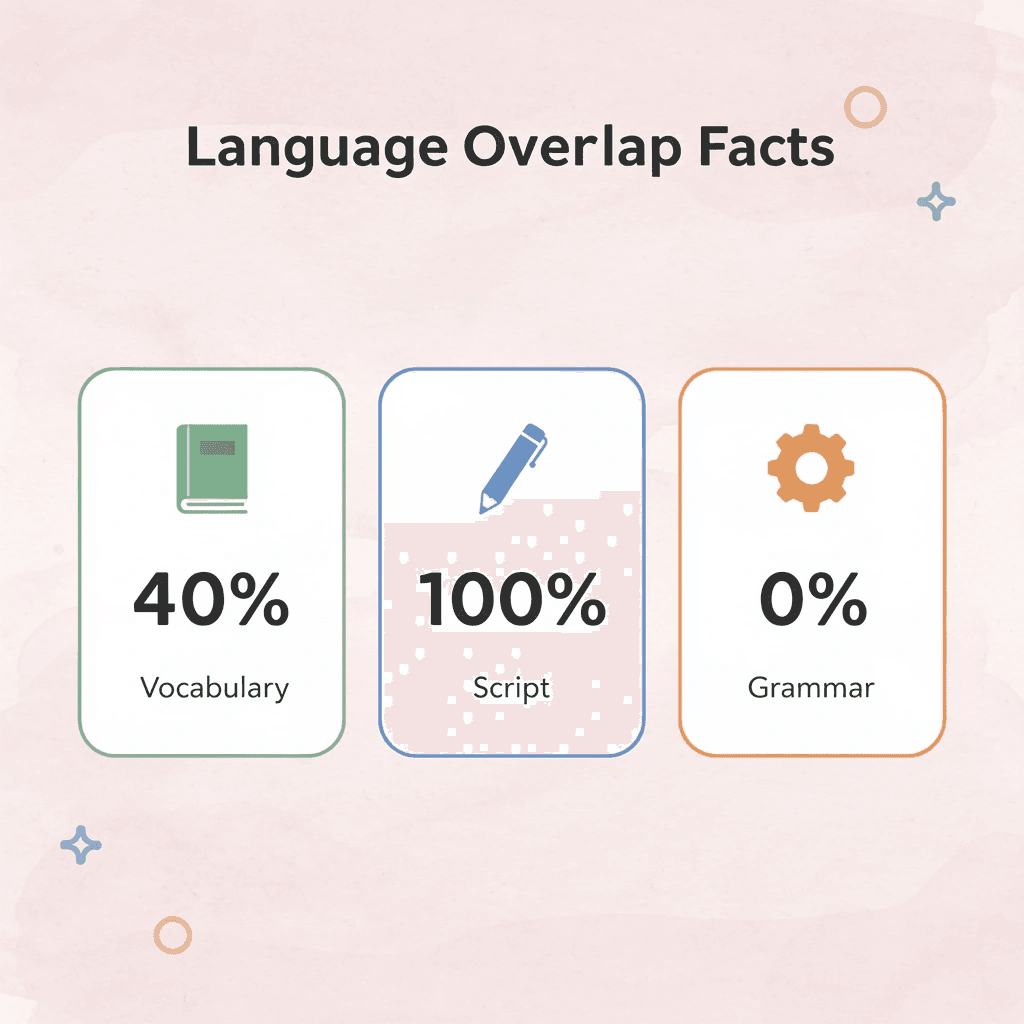
"While Urdu borrows approximately 40% of its vocabulary from Arabic, the grammatical structures remain fundamentally different due to their distinct language family origins." — Linguistic Studies Research, 2023

💡 Tip: Focus on the genuine connections between Urdu and Arabic rather than assuming total overlap. The Arabic script, religious terminology, and borrowed vocabulary create real advantages, but grammar, sentence structure, and pronunciation require separate mastery.
Similarity | Urdu | Arabic | Learning Advantage |
|---|---|---|---|
Script System | Arabic script (modified) | Arabic script (original) | ✅ High - shared letters |
Religious Terms | Borrowed from Arabic | Original Arabic | ✅ Medium - direct vocabulary |
Grammar Structure | Indo-European base | Semitic structure | ❌ Low - completely different |
Pronunciation | Persian/Hindi influence | Semitic sounds | ❌ Low - distinct sound systems |
The Familiar Right-to-Left Script
Both languages run right-to-left, giving Urdu speakers an instant advantage when opening an Arabic book or app. This shared direction eliminates the disorientation that English learners experience and makes early practice feel natural. Urdu uses the flowing Nastaliq style while Arabic often uses the cleaner Naskh form. Many letters look nearly identical, allowing readers to recognise shapes and sounds quickly, though Urdu includes extra letters for local Indian sounds.
Big Overlap in Shared Words
About 30 percent of everyday Urdu words come from Arabic through Persian, arriving over centuries of trade and rule. Words like kitab (book), kalam (pen), and sabr (patience) appear in conversations, prayers, and schoolwork. These borrowed words span religion, learning, feelings, and everyday matters, making them recognizable to Urdu speakers. However, subtle shifts in meaning or usage can cause confusion in extended conversations.
Same Writing Direction That Builds Confidence
The right-to-left flow matches perfectly in both languages, so switching between Urdu newspapers and Arabic texts feels smooth from day one. Learners notice this feature immediately and feel less confused than with languages that run the opposite way, enabling early practice to build into steady progress rather than requiring constant relearning.
Strong Links from Shared Islamic Roots
Arabic, the language of the Quran, flowed into Urdu during centuries of Muslim rule in northern India through rulers, poets, and scholars who brought religious terms, laws, and ideas into local speech and writing. This faith connection creates a living bridge for millions who pray, read poetry, or study texts in both languages. Everyday phrases and wise sayings cross over easily, forming a daily cultural tie.
Small Grammar Touches from Borrowed Words
Urdu retains special Arabic patterns for plurals and forms in borrowed words, applying them only to loanwords rather than to its own rules. These patterns add depth without altering broader sentence structure. This shows how deeply Arabic influenced Urdu in specific areas, helping advanced students find connections. Yet Urdu's core grammar remains Indo-Aryan, so complete sentences follow different patterns.
Real Boost for Smart Learners
Knowing Urdu gives students a clear advantage with writing systems and hundreds of words. Many people in Pakistan and India pick up Arabic basics faster than people elsewhere. The shared elements can cut early study time in half and create quick wins that keep students motivated. The overlaps don't replace full work on sounds and rules, but learners who use them as a ready-made map master both languages with less wasted effort and greater success in school, work, or travel. Understanding who speaks each language reveals why these similarities matter.
Related Reading
Which Language Has a Larger Global Speaker Base?
Arabic is spoken by hundreds of millions of people across multiple continents, while Urdu, despite its cultural depth and strong regional presence, has a smaller global speaker base. According to Ethnologue and Statista language rankings, Arabic ranks among the top 5 most spoken languages with 335 million speakers worldwide, compared to Urdu's roughly 246 million speakers, concentrated in South Asia and diaspora communities.
🔑 Key Takeaway: Arabic has a 40% larger global speaker base than Urdu, making it a more strategic choice for international communication and career opportunities.
Many learners misjudge opportunity, assuming Urdu has a global reach similar to Arabic due to script familiarity and cultural overlap. Job markets, media reach, and international usage tell a different story.
⚠️ Warning: Don't let script similarities fool you - Arabic's global presence in business, diplomacy, and media far exceeds Urdu's regional influence.
"Arabic ranks among the top 5 most spoken languages with 335 million speakers worldwide, compared to Urdu's roughly 246 million speakers." — Ethnologue & Statista Language Rankings
Language | Global Speakers | Primary Regions | International Status |
|---|---|---|---|
Arabic | 335 million | Middle East, North Africa, Global | UN Official Language |
Urdu | 246 million | South Asia, Diaspora | Regional Official Language |
Arabic’s Total Speaker Count
Standard Arabic has 335 million speakers worldwide, including native speakers and those who learn it for school, news, or religious purposes, according to the 2026 Ethnologue ranking and Statista. The number of speakers remains stable because Arabic is the official written language in more than 20 countries and communities worldwide, enabling millions to learn it as a second language.
Urdu’s Speaker Numbers
Urdu has 246 million total speakers, making it the tenth most spoken language in the world according to 2026 lists from Ethnologue and Statista. Most speakers live in Pakistan and India, where it holds national or scheduled language status. The language is growing mainly because of second-language speakers in South Asia who use it for business, media, and government. The total number of speakers is smaller than that of Arabic because Urdu is spoken across a smaller geographic area.
How the Data Sources Compare the Two
Both Ethnologue and Statista measure total usage—first- and second-language speakers—to provide a fair global view. This method ranks Standard Arabic fifth overall and Urdu tenth, with consistent rankings across these independent studies confirming Arabic's wider reach without mixing in separate dialects, while Urdu's numbers reflect its concentrated strength in two populous nations.
Why Arabic Pulls Ahead
Arabic benefits from its role as the language of the Quran and as a medium of formal communication across the Arab world. Students in many countries study it in school and use it for official purposes, creating steady second-language growth that Urdu does not match. Urdu shines as a poetic and everyday bridge in South Asia, yet its speaker base depends on local populations rather than spreading as a universal standard, keeping overall numbers slightly lower.
What This Means for Language Learners
Arabic opens doors to 335 million possible conversations across the Middle East, North Africa, and global Muslim communities. Urdu connects you to 246 million people in one of the world's fastest-growing regions. Data helps you choose the language that matches your goals rather than relying on assumptions. Raw speaker counts only hint at how these languages function in daily life, where the comparison becomes revealing.
Related Reading
Urdu Vs Arabic Key Differences
Urdu and Arabic share some vocabulary and write from right to left, yet they are fundamentally different languages with distinct roots and rules. Understanding their key differences helps learners avoid confusion and choose the right language for travel, work, or faith.

🎯 Key Point: While Urdu borrows heavily from Arabic vocabulary, it belongs to the Indo-European language family, making it structurally closer to Hindi and Persian than to Arabic.
"Arabic serves as the liturgical language for over 1.8 billion Muslims worldwide, while Urdu functions as the national language of Pakistan and is spoken by approximately 230 million people globally." — Ethnologue, 2023

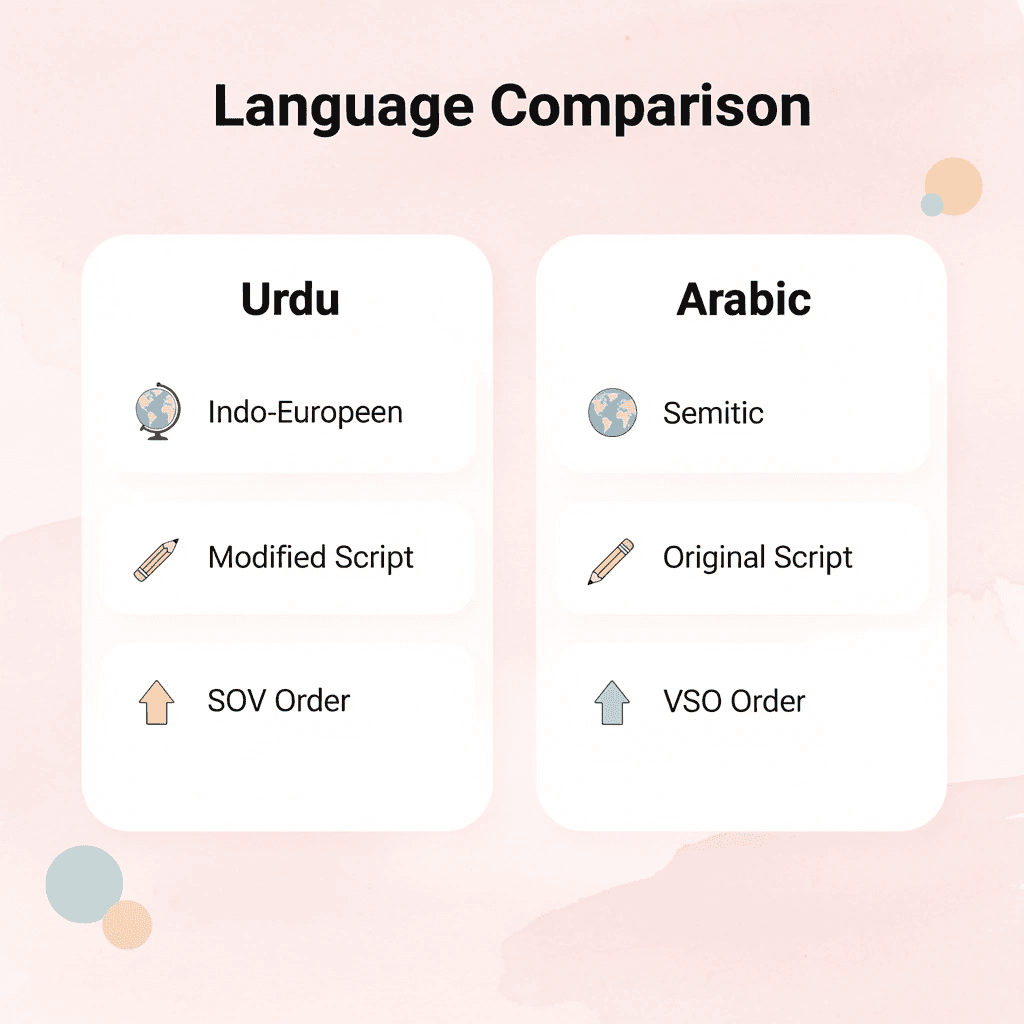
Aspect | Urdu | Arabic |
|---|---|---|
Language Family | Indo-European | Semitic |
Writing System | Modified Arabic script | Arabic script |
Grammar Structure | Subject-Object-Verb | Verb-Subject-Object |
Primary Regions | Pakistan, India | Middle East, North Africa |
Religious Significance | Cultural/Literary | Quranic/Liturgical |
Learning Difficulty | Moderate for Hindi speakers | High for non-Semitic speakers |
💡 Tip: If you're learning Arabic for religious purposes, focus on Classical Arabic and Quranic vocabulary. For Urdu, prioritize conversational phrases and Bollywood expressions to build practical fluency faster.
Language Families and Roots
Arabic belongs to the Semitic branch of the Afro-Asiatic family and grew from ancient tribes in the Arabian Peninsula thousands of years ago. Its core relies on three-letter bases that shape words, creating a tight, logical structure. Urdu is a member of the Indo-Aryan branch of the Indo-European family and developed in northern India around the 12th century as a local language mixed with Persian and Arabic terms. Its foundation mirrors Hindi, with sentence structure and basic vocabulary closer to South Asian languages than Middle Eastern ones.
Script and Alphabet Size
Both languages run right-to-left, but Arabic uses the clean Naskh style and has 28 basic letters. This simpler set matches its original sounds and appears in books, news, and the Quran across many countries. Urdu shapes the same base into flowing Nastaliq script and adds 10 or more letters to cover sounds like "p," "ch," "g," and "zh" that Arabic never needed. These extra letters allow Urdu to accommodate Indian words smoothly while remaining recognizable to Arabic readers.
Pronunciation Styles
Even shared words change sound when they move from Arabic to Urdu because Urdu follows Persian phonetic patterns more closely. Arabic retains its crisp consonants and vowels, so native speakers may perceive Urdu versions as softer or slightly altered. Urdu speakers often soften the deep "q" sound or treat certain "s" letters like Persian ones, creating subtle differences that can confuse listeners. These shifts appear in everyday speech, prayers, and songs where precise sounds matter.
Grammar and Sentence Rules
Arabic builds sentences around a root-and-pattern system that changes word forms for tense, gender, and number through complex endings and prefixes. Every part agrees in gender and number. Urdu uses a simpler Indo-Aryan grammar with a subject-object-verb order and postpositions rather than case endings. Its structure mirrors Hindi, keeping sentences straightforward even when Arabic loanwords appear.
Vocabulary Layers and Shifts
About 30 percent of Urdu words derive from Arabic, though many shift in meaning in South Asian contexts. A word meaning one thing in Arabic prayer or law can carry a different meaning in Urdu poetry or everyday speech. These borrowed words strengthen Urdu's religious and scholarly vocabulary, while basic everyday words remain Indic. The mix creates helpful overlaps for students but also false friends that confuse readers expecting exact matches.
Regional Roles and Daily Reach
Arabic is the official language in over 20 countries and is spoken by millions worldwide, particularly in Muslim communities. As the language of the Quran and modern media, it is used across the Middle East, North Africa, and beyond for business, study, and faith. Urdu is Pakistan's national language and an important literary force in India, serving over 200 million people in South Asia through poetry, films, and news. Its strength derives from cultural and local connections rather than wide official use outside the region.
Why do learners struggle with speaking despite knowing grammar rules?
Many learners believe that learning grammar rules and memorizing vocabulary will enable conversation. Yet they freeze when a native speaker asks a simple question. Platforms like Kalam focus on speaking drills and real-life dialogue instead of textbook exercises. We train your ear and mouth to respond naturally rather than translate in your head. Daily pronunciation practice builds the reflex that vocabulary apps miss entirely, because fluency lives in rhythm and response, not recognition.
Resources Available For Learning Urdu and Arabic
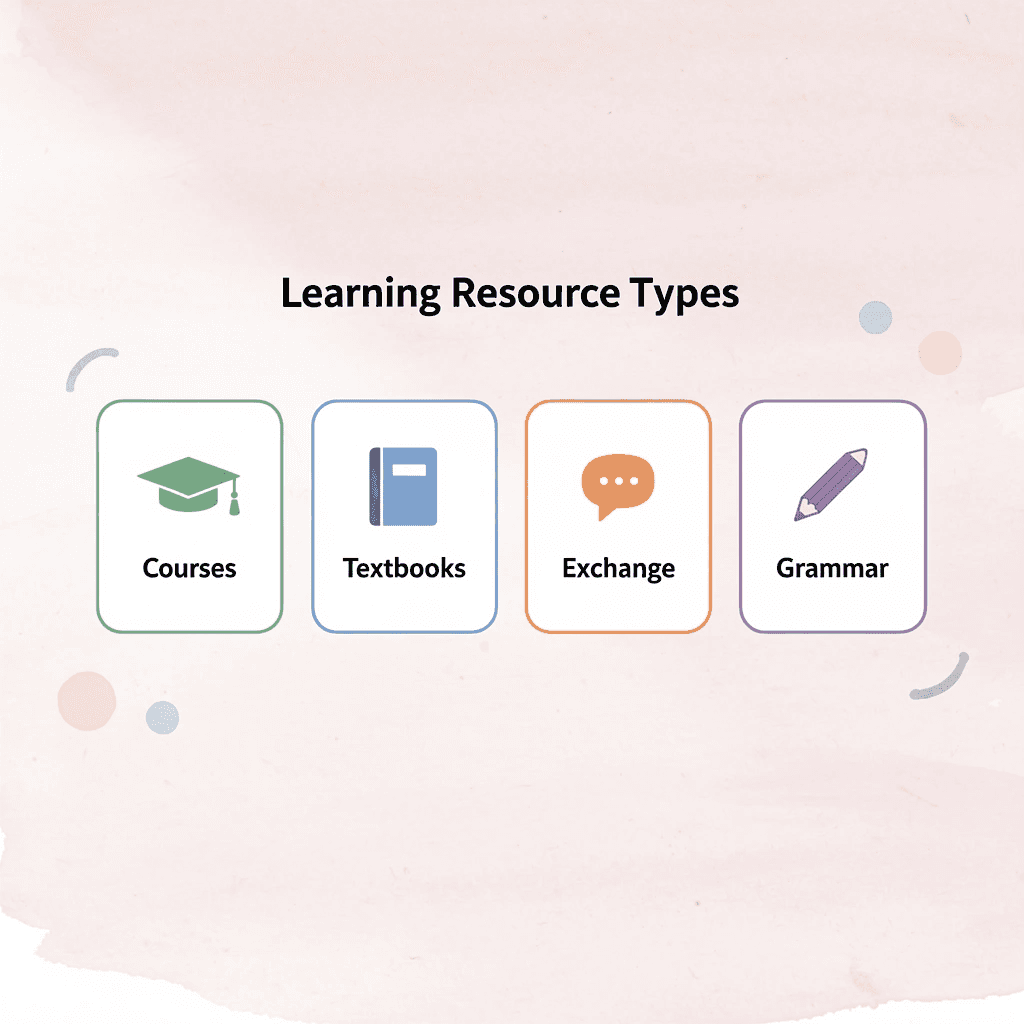
Structured courses with video lessons, classic textbooks with audio support, and language exchange platforms offer clear paths to learn Urdu and Arabic. Grammar guides build the foundation that conversation practice activates. The challenge lies not in finding materials (hundreds exist online and in print) but in choosing the right mix for your learning style and goals.
Online Courses and Platforms
Websites like Coursera, Udemy, and specialized language portals offer organized Arabic and Urdu programs with video explanations, interactive quizzes, and progress tracking. These platforms break down complex grammar into digestible lessons, pairing written exercises with audio clips for pronunciation. Self-paced study removes classroom deadline pressure, but many learners plateau after a few months because passive watching doesn't build speaking reflexes. Interactive quizzes catch common mistakes early, turning confusing verb conjugations and case endings into recognizable patterns, though they rarely prepare you for the speed and spontaneity of real conversation.
Textbooks and Grammar Guides
Classic resources like Mastering Arabic by Jane Wightwick or Teach Yourself Urdu by David Matthews provide in-depth information on sentence structure, verb patterns, and word roots, with hundreds of written exercises. These books excel at explaining the why behind grammar rules, equipping serious students with the analytical tools that apps lack. Many include companion audio files to help you hear correct pronunciation while working through drills. Textbooks demand sustained focus—progress feels slower than apps with games and rewards, and without a tutor, learners often get stuck on confusing points for days.
YouTube Channels and Podcasts
Free channels like ArabicPod101, UrduPod101, and independent creators offer listening practice, cultural context, and speaking drills that make languages feel authentic rather than academic. Regular episodes train your ear to understand natural speech rhythms and regional accents that textbooks present as formal examples. Podcasts suit learning during commutes or walks, covering everyday topics like ordering food, asking directions, or discussing family. The downside is inconsistent quality: different creators maintain different standards, and without a structured plan, learners jump between beginner and intermediate content without building a strong foundation.
Language Exchange and Tutors
Platforms like italki, Tandem, and HelloTalk connect you with native Urdu or Arabic speakers for live practice sessions with instant feedback on pronunciation and grammar. One-on-one tutors adapt lessons to your specific needs: business vocabulary, literary reading, or conversational fluency, in ways pre-recorded courses cannot match. Real-time correction fixes bad habits before they become permanent. The challenge lies in finding tutors who explain grammar concepts clearly rather than simply correcting errors, and sessions require a commitment to scheduling that self-paced resources avoid.
How can structured apps improve Urdu vs Arabic learning consistency?
Most learners mix resources, hoping consistency will develop naturally, but scattered content creates gaps rather than fluency. Apps like Kalam solve this by focusing on spoken Arabic through daily lessons and spaced repetition, building listening comprehension and pronunciation reflexes that textbooks and passive videos miss. Learners follow a structured path prioritizing real conversation patterns, turning daily practice into natural recall without managing multiple platforms.
Related Reading
Arabic Vowels
Urdu Vs Arabic
Arabic Basics
Arabic Vs Hebrew
Best App To Learn Arabic
Learn Arabic in Any Dialect Today with Kalam
Recognizing overlap between Urdu and Arabic matters little without consistent practice that trains your mouth and ear. Most learners plateau because they treat language as a puzzle to solve rather than a skill to build through repetition.

🎯 Key Point: Kalam turns scattered knowledge into speaking ability by focusing on daily Arabic practice through real dialogue, not vocabulary lists. It builds pronunciation habits and listening comprehension across multiple Arabic dialects. You hear how words sound in context, repeat them until they feel natural, and train your ear to catch meaning without mentally translating every phrase.
"Conversation patterns over grammar drills move you toward fluency faster by focusing practice time on what actually matters for real communication."
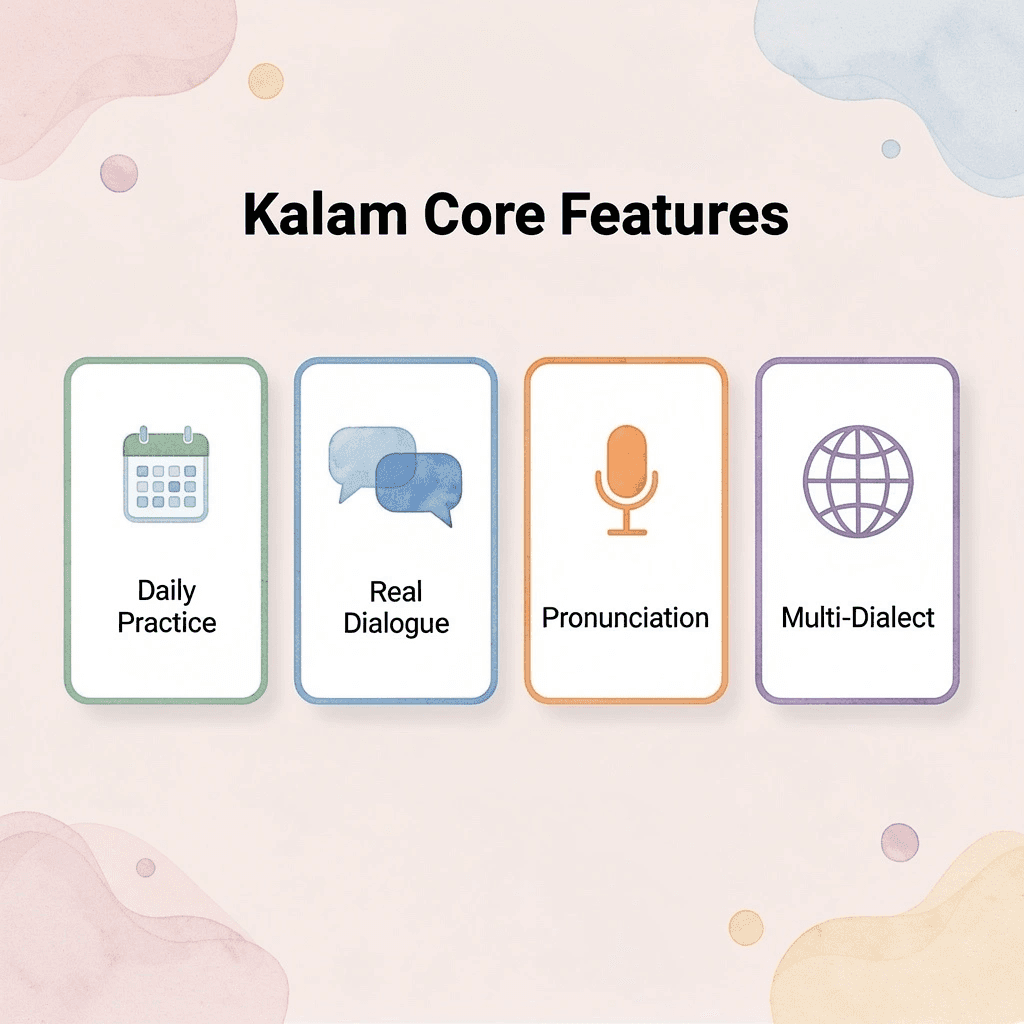
The platform prioritizes conversation patterns over grammar drills, so you spend time on what drives fluency. Pronunciation guides show exactly how sounds form, meaning breakdowns clarify usage in real sentences, and interactive exercises keep you engaged without juggling multiple resources.
💡 Tip: Consistency builds fluency faster than intensity. A few minutes daily trains your brain to recall phrases automatically rather than construct them word by word, turning hesitant translation into a confident response. Passive recognition becomes active speaking ability because you've trained the reflex that textbooks and passive videos miss.